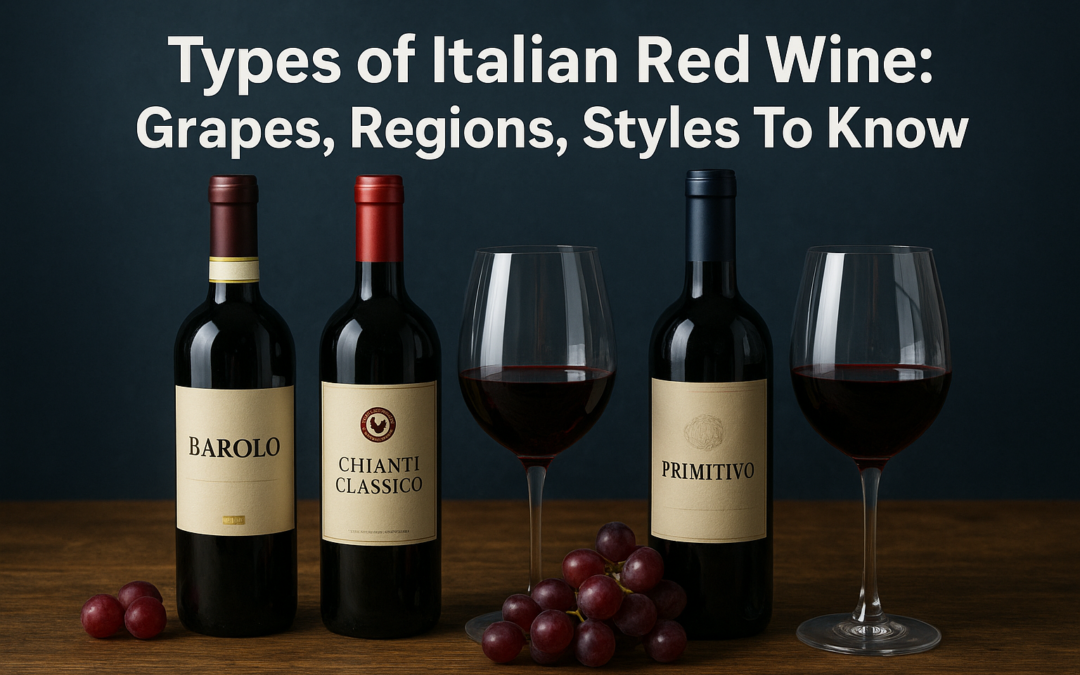
Italy produces more wine than any other country on Earth, and its red wines stand among the most celebrated bottles you’ll find on any menu. At La Dolce Vita Cucina, we pair these wines with our homemade pasta and premium cuts because we understand that the right glass elevates every bite. But with hundreds of grape varieties grown across twenty distinct regions, understanding the types of Italian red wine can feel overwhelming, even for experienced drinkers.
The truth is, you don’t need to memorize every vineyard or vintage to appreciate what’s in your glass. What you do need is a solid foundation in the major grapes, regions, and styles that define Italian winemaking. Whether you’re selecting a bottle for our 16oz Ribeye or building your home collection, knowing a Barolo from a Brunello will change how you experience these wines.
This guide breaks down the essential Italian red wines worth knowing, from bold Nebbiolo-based bottles in the north to sun-drenched Primitivo from the south. You’ll learn which grapes grow where, what flavors to expect, and how to match these wines with food. Consider it your practical roadmap to one of the world’s greatest wine traditions.
Why Italian red wine types matter
Understanding Italian red wine isn’t about showing off at dinner parties. It’s about knowing what you’re paying for and what flavors will hit your palate before you pull the cork. When you grasp the differences between a Tuscan Sangiovese and a Piedmontese Nebbiolo, you stop gambling on bottles and start making confident choices that match your taste preferences and your budget. This knowledge transforms wine selection from guesswork into a skill you can apply whether you’re dining at La Dolce Vita Cucina or shopping for your home cellar.
Understanding terroir impacts your glass
Italian winemakers don’t just grow grapes differently across regions. They work with fundamentally different climates, soils, and elevations that shape how each wine tastes. A Montepulciano d’Abruzzo from the Adriatic coast carries bright cherry notes and moderate tannins because the grapes ripen in coastal breezes and clay-rich soil. Compare that to an Amarone from Veneto, where grapes dry for months before pressing, concentrating sugars and creating a wine with fig, raisin, and chocolate flavors that can overwhelm lighter dishes. You need to recognize these regional differences because they determine whether a wine will complement your meal or clash with it.
The same grape grown in different Italian regions produces wines so distinct that you might not recognize them as relatives.
Price and quality follow clear patterns
Knowing the major types of Italian red wine helps you spot value and avoid overpriced bottles. A Chianti Classico Riserva costs more than a basic Chianti because it comes from specific vineyard zones and ages longer before release, developing complexity that justifies the premium. Meanwhile, wines labeled with their region alone, like a simple Rosso di Toscana, often deliver solid everyday drinking at lower prices because they don’t meet the strict requirements of higher classifications. You can use this classification system to find bottles that match your occasion without overspending on unnecessary prestige or settling for disappointing quality.
Food pairing becomes predictable
Different Italian red wines contain varying levels of tannin, acidity, and alcohol that interact with food in specific ways. A high-tannin Barolo cuts through the richness of our 16oz Ribeye because those tannins bind with fat and protein, cleansing your palate between bites. A lighter Valpolicella, with bright acidity and softer tannins, pairs better with tomato-based pasta dishes because the acidity mirrors the tomatoes without overwhelming delicate flavors. Once you understand how structure changes across wine types, you can predict pairings without trial and error, making every meal more satisfying.
How to read Italian red wine labels
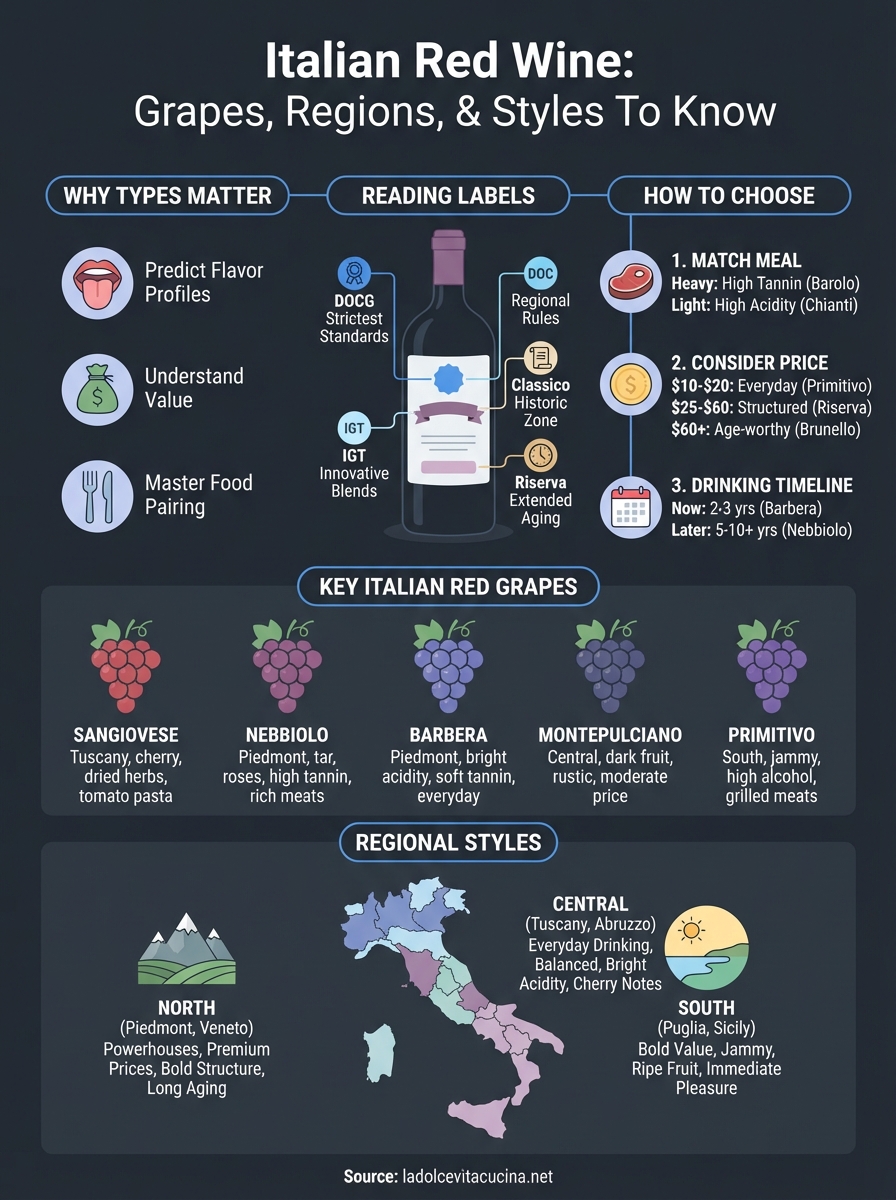
Italian wine labels pack more information than most American bottles because they follow a strict classification system that tells you exactly where the wine comes from and how it was made. You’ll see terms like DOC, DOCG, and IGT prominently displayed, along with regional names that signal specific grape blends and aging requirements. Understanding these markers transforms label reading from confusion into a practical skill that helps you predict what’s inside the bottle before you buy it. The system isn’t designed to confuse you, but it does require knowing which elements actually matter and which are just marketing.
Denomination levels tell you quality standards
The letters DOC (Denominazione di Origine Controllata) and DOCG (Denominazione di Origine Controllata e Garantita) appear on labels for wines that meet specific production rules for their region. DOCG represents the highest classification, reserved for wines like Barolo and Brunello di Montalcino that follow the strictest standards for grape varieties, yields, and aging. DOC wines meet regional requirements but with slightly more flexibility in production methods. IGT (Indicazione Geografica Tipica) appears on bottles that don’t follow traditional rules, often because winemakers experiment with non-native grapes or unconventional blends, though these wines can still deliver excellent quality at lower prices.
DOCG doesn’t automatically mean better wine, but it guarantees the producer followed centuries-old regional standards.
Geographic names reveal wine style
When you see Chianti Classico on a label, you’re looking at a wine from specific communes between Florence and Siena, not just any Chianti production zone. The "Classico" designation means the grapes came from the historical heartland where Sangiovese grows best. Terms like Riserva indicate extended aging beyond minimum requirements, typically resulting in softer tannins and more complex flavors. You’ll also find vineyard names or cru designations on premium bottles, pointing to single-estate wines that showcase particular terroir characteristics worth the higher price.
Producer information guides your choice
The winery name and bottling information tell you who made the wine and whether they controlled production from grape to glass. Look for "imbottigliato all’origine" or "estate bottled," which confirms the producer grew the grapes and made the wine rather than buying fruit from other growers. Understanding these different types of Italian red wine labels helps you identify producers who maintain quality control throughout the entire process, leading to more consistent results in your glass.
Key Italian red grapes to know
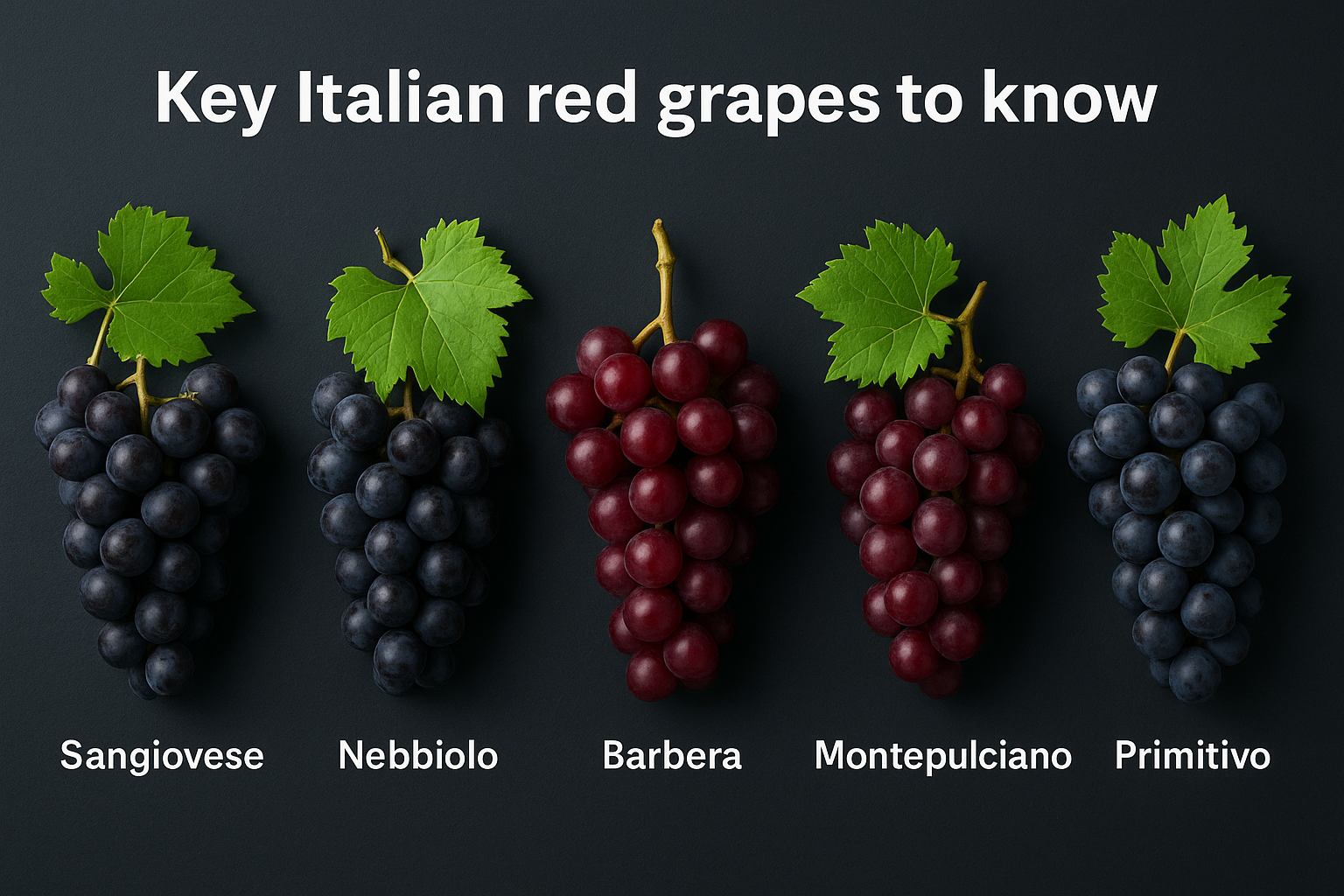
Five grape varieties dominate Italian red wine production, and knowing them helps you predict flavors before opening any bottle. Sangiovese, Nebbiolo, Barbera, Montepulciano, and Primitivo account for the majority of red wines you’ll encounter on shelves, each bringing distinct characteristics shaped by centuries of cultivation. You don’t need to memorize every regional clone or obscure variety, but understanding these foundational grapes gives you a reliable framework for exploring all types of Italian red wine with confidence.
Sangiovese drives Tuscan classics
Sangiovese produces Chianti, Brunello di Montalcino, and Vino Nobile di Montepulciano, making it Italy’s most planted red grape. You’ll taste bright cherry, dried herbs, and earthy notes with firm tannins that make these wines perfect partners for tomato-based dishes and aged cheeses. The grape’s high acidity cuts through rich foods while its tannin structure develops beautifully with age, transforming harsh young wines into smooth, complex bottles after five to ten years in your cellar.
Nebbiolo creates powerful northern wines
Nebbiolo grows almost exclusively in Piedmont, where it becomes Barolo and Barbaresco, two of Italy’s most celebrated wines. These bottles deliver intense flavors of tar, roses, and red fruit backed by massive tannins that demand aging or pairing with rich meats like our 16oz Ribeye. You’ll pay premium prices for Nebbiolo wines because the grape requires specific hillside exposures and long growing seasons that limit production to small zones.
Nebbiolo wines taste harsh when young but reward patience with extraordinary complexity after a decade in the bottle.
Three workhorses deliver everyday value
Barbera provides bright acidity and soft tannins in affordable everyday reds from Piedmont. Montepulciano creates dense, rustic wines in central Italy with black fruit flavors and moderate prices. Primitivo, genetically identical to California’s Zinfandel, ripens in southern heat to produce jammy, high-alcohol wines with prune and spice notes that pair well with grilled meats and bold sauces.
Regional styles you’ll see on shelves
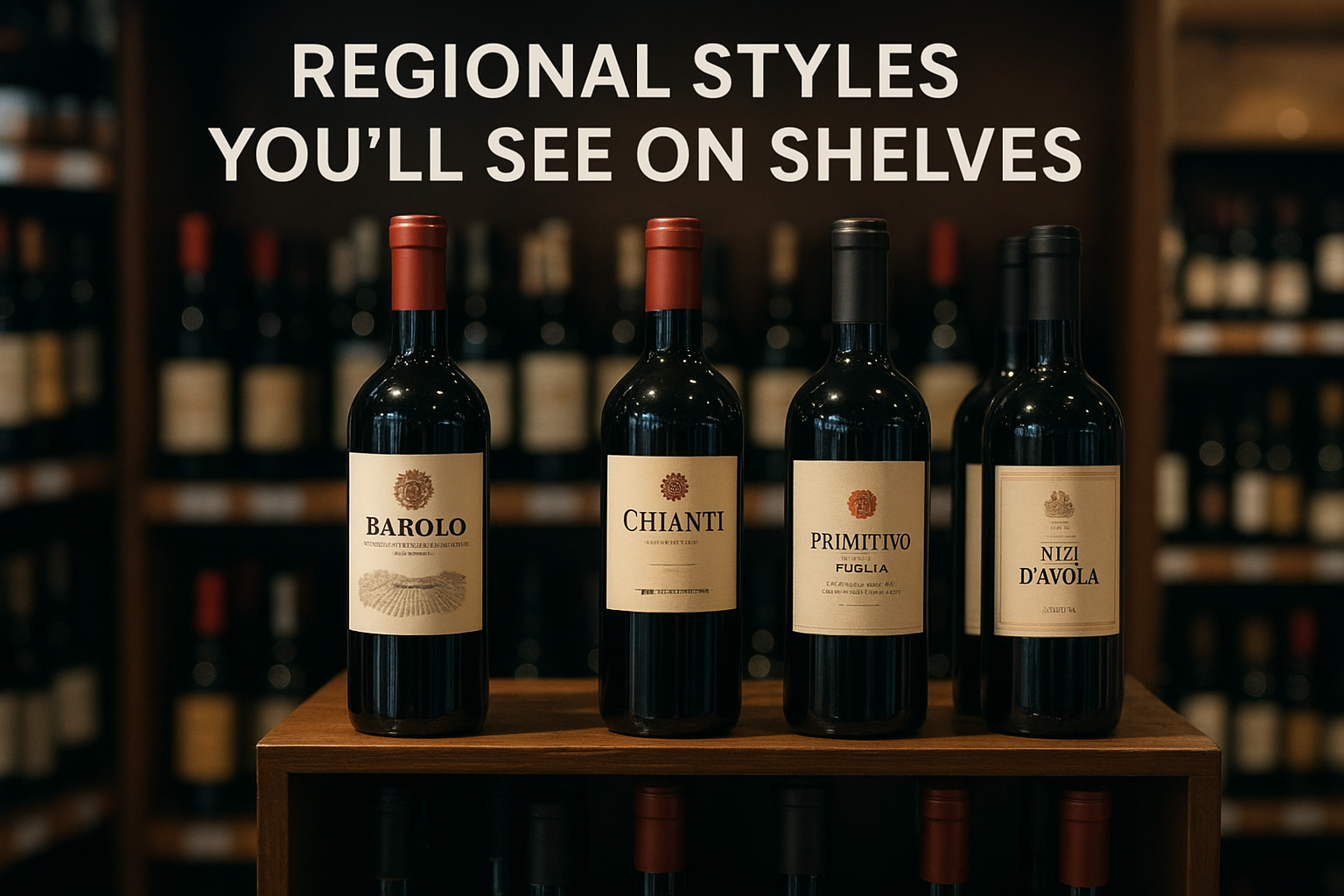
Italian wine regions create distinct flavor profiles based on climate, elevation, and winemaking traditions that span centuries. When you browse bottles at a wine shop or scan our list at La Dolce Vita Cucina, you’ll notice geographic labels that signal specific styles worth understanding. These regional differences affect everything from tannin levels to aging potential, helping you predict what you’ll taste before you order.
Northern powerhouses command premium prices
Piedmont in northwest Italy produces Barolo and Barbaresco from Nebbiolo grapes, creating wines with massive structure and aging potential that justify their higher costs. You’ll find these bottles priced between $40 and $200 because the steep hillside vineyards and extended barrel aging required for production limit supply. Veneto’s Amarone della Valpolicella uses dried grapes to concentrate sugars and flavors, resulting in rich wines with alcohol levels reaching 16% and complex notes of fig, chocolate, and spice.
Central Italy offers everyday drinking
Tuscany dominates this category with Chianti and Brunello di Montalcino, both Sangiovese-based wines that balance bright acidity with cherry fruit and earthy undertones. Basic Chianti starts around $12 and delivers solid quality for pasta nights, while Chianti Classico Riserva ranges from $25 to $60 with extra aging that softens tannins. Montepulciano d’Abruzzo from the Adriatic coast provides rustic, food-friendly reds at $10 to $20 that pair well with tomato-based dishes.
Regional styles among types of Italian red wine vary more than most wine countries because Italy’s geography spans alpine peaks to Mediterranean islands.
Southern wines deliver bold value
Puglia and Sicily produce Primitivo and Nero d’Avola in hot climates that ripen grapes to high sugar levels, creating jammy wines with ripe fruit flavors and substantial alcohol. These bottles typically cost $10 to $20 and offer immediate drinking pleasure without requiring cellar time, making them practical choices for casual meals and gatherings.
How to choose the right bottle for you
Selecting from the hundreds of types of Italian red wine available becomes straightforward when you follow three practical criteria that match your immediate needs. You don’t need expert tasting skills or years of study to pick bottles you’ll actually enjoy. Instead, focus on what you’re eating, what you’re spending, and when you plan to drink the wine, and you’ll eliminate most poor choices before reaching the checkout counter.
Match wine to your meal
Start with your main protein and work backward to find compatible wines. Heavy dishes like our 16oz Ribeye or braised short ribs demand high-tannin wines such as Barolo, Barbaresco, or Amarone that cut through fat and stand up to bold flavors. Tomato-based pasta and lighter fare pair better with Sangiovese-driven wines like Chianti or Montepulciano d’Abruzzo, where bright acidity complements the dish without overwhelming it. Grilled meats and robust sauces work well with jammy southern wines like Primitivo or Nero d’Avola.
Consider your price range
You’ll find quality Italian reds at every price point if you know where to look. Budget $10 to $20 for everyday drinking wines from Puglia, Sicily, or basic Chianti that deliver solid flavor without complexity. Spend $25 to $60 for Chianti Classico Riserva or quality Montepulciano when you want more structure and aging potential. Reserve $60 and above for celebrated bottles like Barolo, Brunello, or Amarone that justify their cost through exceptional terroir and extended aging.
You pay for aging potential and restricted production zones, not just prestige, when buying premium Italian reds.
Factor in drinking timeline
Buy wines you’ll actually drink within your realistic timeframe. Young Primitivo, Barbera, and basic Chianti taste best within two to three years of vintage and don’t improve with extended cellaring. Nebbiolo-based wines and Brunello require five to ten years before their harsh tannins soften into complexity worth the wait. If you lack proper storage or patience, stick with wines designed for immediate consumption rather than age-worthy bottles that disappoint when opened too early.
Final thoughts
Understanding the major types of Italian red wine transforms you from someone who orders blindly to someone who makes confident selections based on grape varieties, regional characteristics, and food pairing logic. You now recognize why a Nebbiolo-based Barolo costs more than a Primitivo, how terroir shapes flavor profiles, and which bottles deliver immediate pleasure versus those requiring patience. This knowledge applies whether you’re building a home collection or choosing the perfect pairing for dinner.
Italian reds offer something for every palate and budget, from everyday drinking wines at $10 to age-worthy classics commanding triple digits. The real pleasure comes from applying what you’ve learned by tasting different regions and grapes until you discover your personal preferences. Visit us at La Dolce Vita Cucina to explore these wines paired with our homemade linguini, premium steaks, and authentic Italian dishes that showcase why food and wine traditions evolved together.