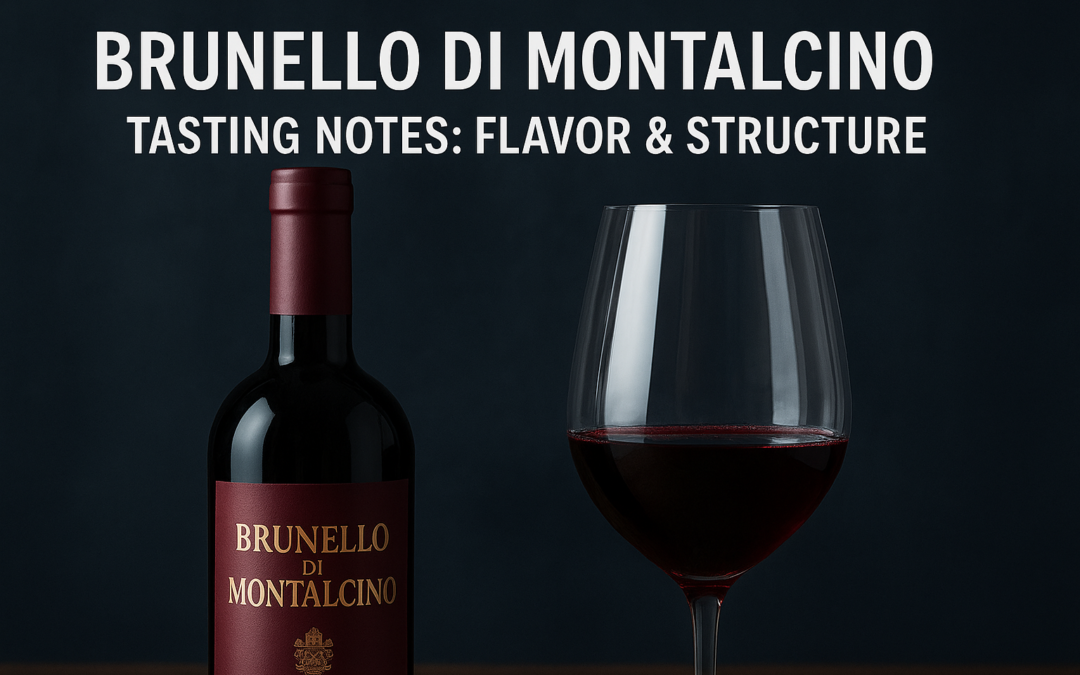
Brunello di Montalcino is one of those wines that stops you mid-sip. Made exclusively from Sangiovese Grosso grapes in Tuscany’s Montalcino region, it carries a depth and complexity that rewards anyone willing to pay attention. But reading brunello di Montalcino tasting notes for the first time can feel like decoding a new language, cherry, leather, tar, dried herbs, all in the same glass.
At La Dolce Vita Cucina, we pair wines like Brunello with dishes built on the same Italian traditions that shaped the wine itself, homemade pasta, premium cuts, and seafood, right here in Chicago’s Portage Park neighborhood. Understanding what’s in your glass makes every bite at the table hit differently. That connection between food and wine matters to us.
This article breaks down the flavor profiles, aromas, and structural characteristics, tannins, acidity, finish, that define Brunello di Montalcino across different styles and vintages. Whether you’re choosing a bottle for a special dinner or tasting one for the first time, you’ll walk away knowing exactly what to look and taste for. No sommelier certification required, just genuine curiosity and a good palate.
Why Brunello tasting notes matter
When you spend anywhere from $50 to several hundred dollars on a bottle, understanding what you’re tasting changes the entire experience. Brunello di Montalcino tasting notes give you a framework, something to anchor your senses to so the wine opens up rather than leaving you puzzled. Without that context, you might miss the iron-laced minerality underneath the fruit, or the way the tannins shift from gripping to silky as the wine breathes.
Tasting notes help you make smarter buying decisions
A solid set of brunello di montalcino tasting notes tells you more than "this wine is good." It tells you whether a specific vintage runs leaner or richer, whether the tannins need more time in the bottle, and whether the wine fits the meal you’re planning. That detail matters when you’re choosing between a young, structured bottle and one that’s already softened with age.
The difference between a wine you enjoy and one you remember often comes down to knowing what to look for before it touches your lips.
Producers like Biondi-Santi and Casanova di Neri release wines with dramatically different structural profiles even in the same vintage. Tasting notes help you navigate those differences and pick the right bottle for the right moment, whether that’s a long dinner or a celebratory table.
Tasting notes connect you to the wine’s story
Brunello carries centuries of agricultural and cultural history in its glass. The Montalcino hillside, the specific slope a vineyard sits on, the harvest conditions that year, all of it shapes what lands on your palate. Reading tasting notes trains you to recognize those regional and varietal signatures over time, so each glass becomes more readable rather than less.
Your ability to identify dried cherry versus fresh cherry, or cedar versus tobacco, builds through repetition. The more you read notes and taste with deliberate attention, the faster your palate develops a reliable reference point for this extraordinary wine.
What Brunello di Montalcino tastes like
Brunello delivers a layered, savory experience that goes well beyond simple fruit. At its core, you’re tasting a wine shaped by Sangiovese Grosso’s natural tension between richness and restraint, which is exactly what makes brunello di montalcino tasting notes so useful before you pour your first glass.
The core flavor profile
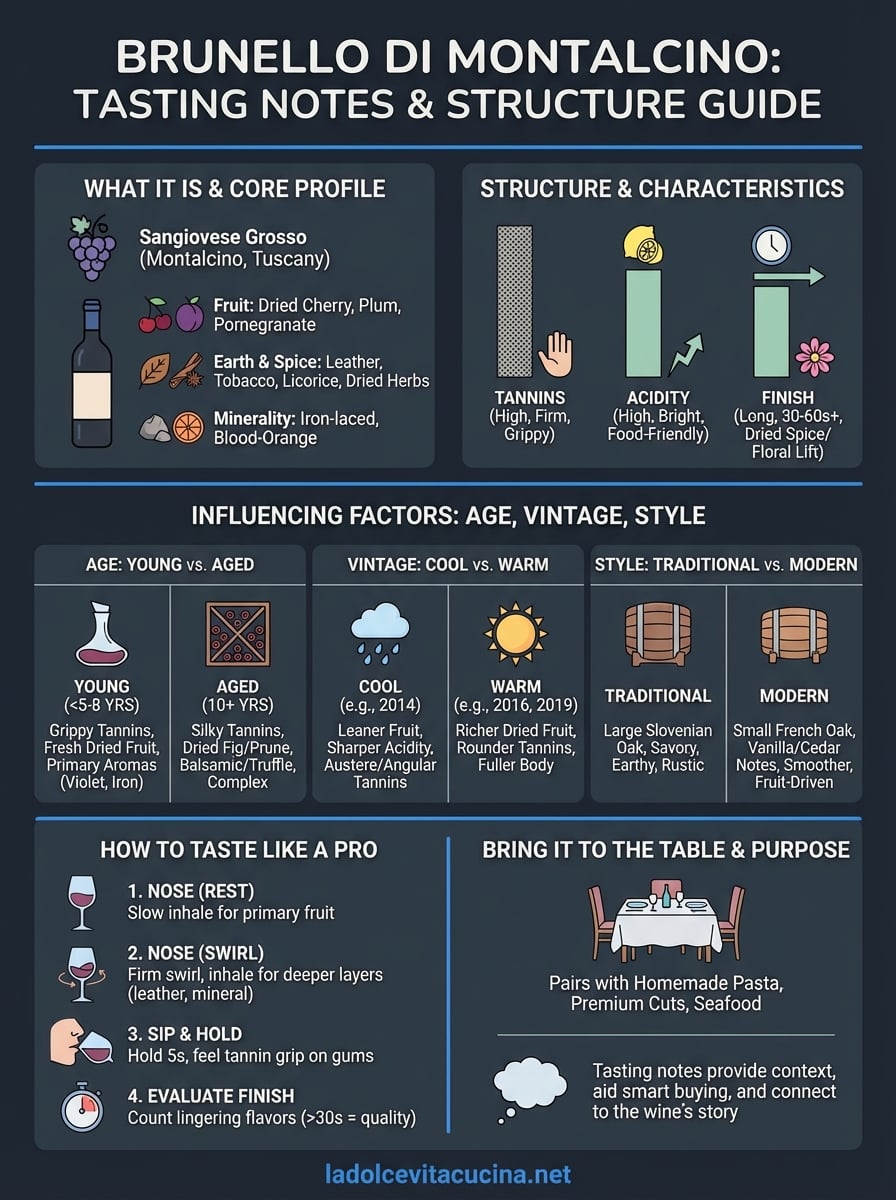
The most consistent flavors you’ll find across bottles are dried cherry, plum, and pomegranate on the fruit side, alongside deeper notes of leather, tobacco, licorice, and dried herbs like sage or rosemary. Many bottles also carry an iron or blood-orange minerality that reflects the galestro and clay soils of the Montalcino hillside. That earthy, almost rustic quality is not a flaw; it’s a regional signature worth recognizing.
The savory and mineral notes in Brunello are what separate it from softer, fruit-forward Italian reds, and they’re the characteristics that pair so well with food.
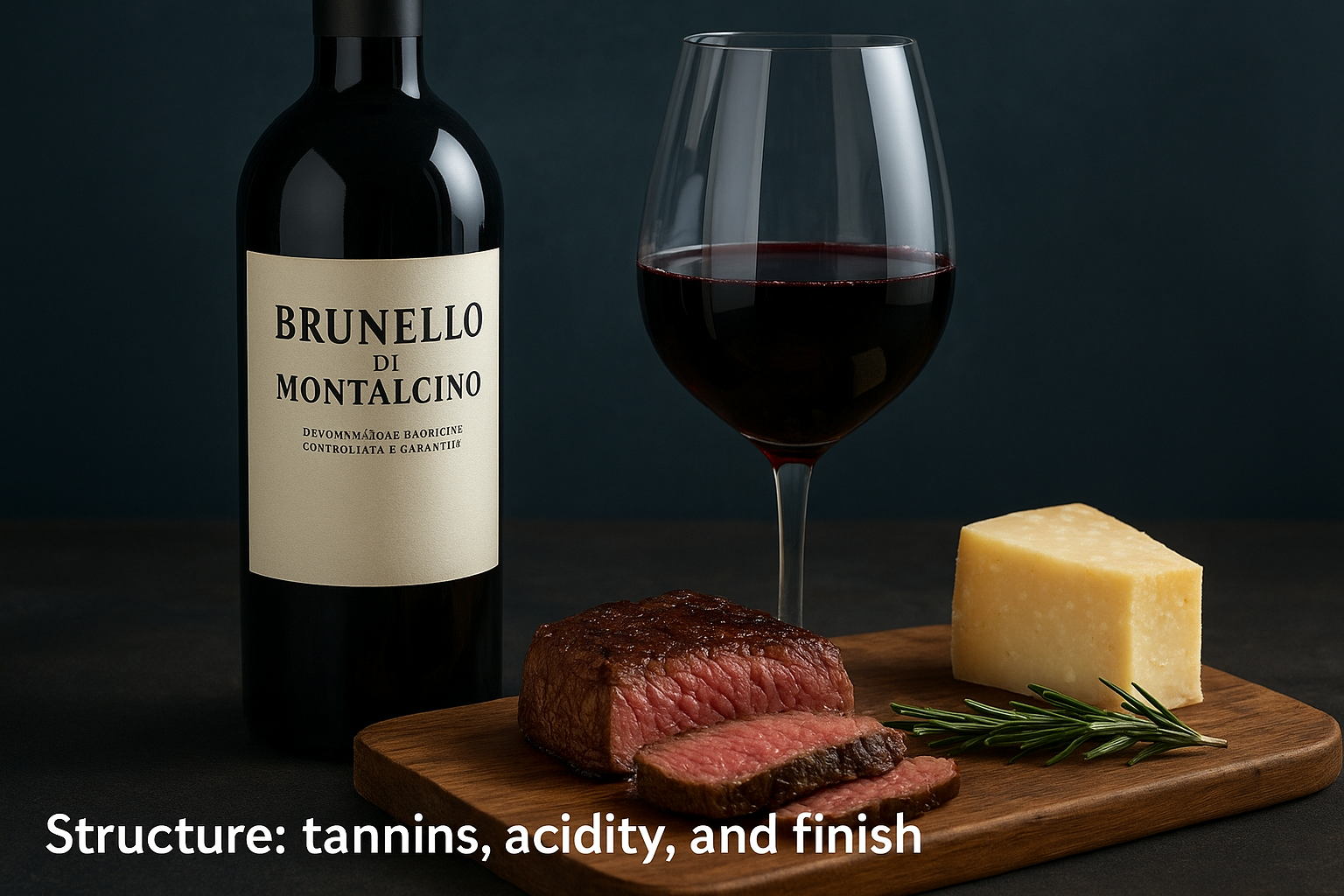
Structure: tannins, acidity, and finish
Brunello is high in both tannins and acidity, which gives it a firm, almost chewy texture when young. Those tannins can feel grippy and dry on your gums in a newly released bottle, but they integrate over time into something much smoother. The acidity keeps the wine bright and food-friendly, cutting through rich sauces, aged cheeses, and red meat without losing its center. The finish is long, often lasting 30 to 60 seconds, with dried spice and a faint floral lift at the end.
How to taste Brunello like a pro
Tasting Brunello with deliberate attention turns a glass of wine into a real learning moment. Build your own impression before you consult any brunello di montalcino tasting notes. Working through the wine in a structured sequence gives you a personal baseline, which makes reading critics’ descriptions far more useful afterward.
Nose the glass in two stages
Start with the glass at rest and take one slow inhale. Your first pass picks up primary fruit: dried cherry, plum, and faint floral notes. Resist reaching for complex descriptors yet.
Then swirl firmly for ten seconds and nose the glass again. That second pass reveals deeper layers: leather, tobacco, and the iron-tinged minerality that marks Brunello’s terroir. The gap between those two passes is where most of the wine’s character lives.
Sip, hold, and evaluate
Take a moderate sip and let it rest on your palate for five full seconds before swallowing. Focus on where the tannins land, typically along your gums, and how firmly they grip. That texture tells you a lot about the wine’s age and its remaining potential.
The length of the finish after you swallow is one of the clearest quality signals in any serious Brunello.
After swallowing, count the seconds the flavor lingers. Anything over 30 seconds signals a well-structured bottle. Notice whether you taste dried spice or a faint floral lift at the very end, since both are reliable Brunello signatures worth tracking across bottles.
How age changes Brunello in the glass
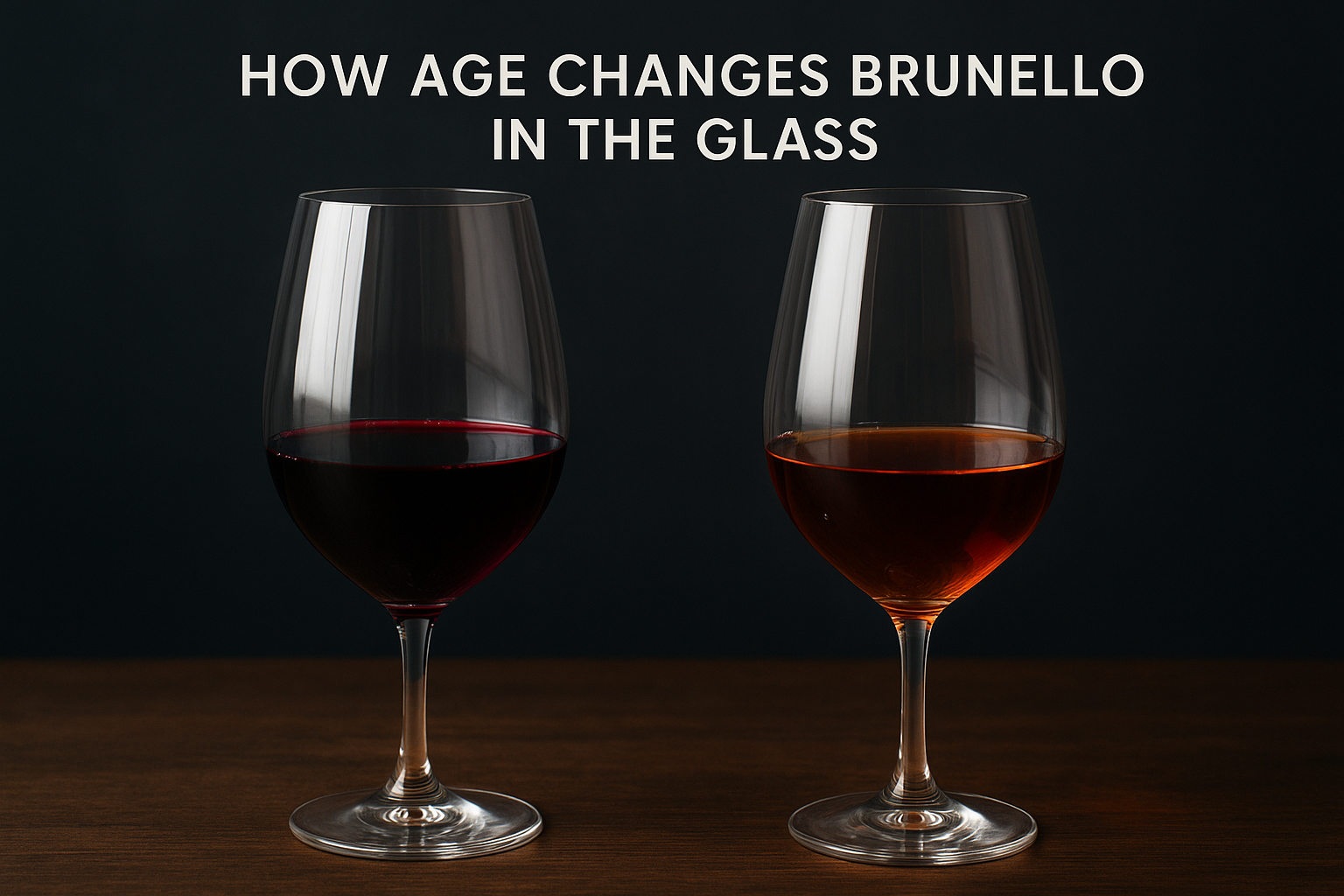
Age transforms Brunello more dramatically than almost any other Italian red. When you read brunello di montalcino tasting notes from a bottle under five years old versus one with fifteen or more years in the cellar, you’re essentially reading about two different wines built from the same grape.
Young Brunello: structure over softness
A Brunello released within its first five to eight years hits your palate with firm, gripping tannins and bright, almost sharp acidity. The fruit reads as fresh dried cherry and pomegranate rather than the deeper dried fruit you find with age. The aromas are more primary: red fruit, iron, and fresh florals like violet or rose. That structural intensity is not a flaw; it signals a wine with real aging potential still ahead of it.
Decanting a young Brunello for at least two hours opens it up significantly, giving you a preview of what the bottle will become.
Aged Brunello: complexity takes over
Once Brunello crosses the ten-year mark, the tannins soften into a smooth, silky texture that feels completely different on your gums. The fruit shifts toward dried fig, prune, and orange peel, and the savory notes, including leather, tobacco, and dried herbs, move into the foreground. You’ll also notice a balsamic or truffle quality emerging in older bottles, which is one of the most distinctive markers of well-aged Sangiovese Grosso done right. That evolution is exactly why serious collectors hold these bottles for a decade or more before opening them.
How vintage and style shift the profile
Not every bottle of Brunello tastes the same, and vintage year and production style are the two biggest reasons why. Checking brunello di montalcino tasting notes from a specific vintage gives you a reliable prediction of what’s actually in the glass before you open it.
Vintage variation: cool years versus warm years
Cool vintages like 2014 produce Brunello with leaner fruit, sharper acidity, and more angular tannins, making the wine feel almost austere when young. Warm vintages like 2016 or 2019 push the profile toward richer dried fruit, rounder tannins, and a fuller body that feels more approachable earlier. Neither style is better in absolute terms; they simply suit different meals and different moments at the table.
A warm-vintage Brunello pairs naturally with braised red meat, while a cooler-vintage bottle handles leaner proteins and tomato-based sauces with more precision.
Traditional versus modern production styles
Traditional Brunello producers age their wine in large Slovenian oak casks for extended periods, which preserves the wine’s savory, earthy character and keeps the fruit secondary. Modern producers often use smaller French oak barrels, which adds vanilla and cedar notes and softens the tannins faster. Your palate will pick up the difference immediately. Traditional bottles taste more rustic and mineral-forward, while modern-style bottles feel smoother and slightly more fruit-driven from the first pour.
Bring Brunello to the table
Now you have a real foundation for reading brunello di montalcino tasting notes with confidence. You know what flavors to expect, how structure signals quality, and why vintage year and production style change everything about the wine in your glass. That knowledge turns every bottle into something more than just a drink; it becomes a conversation between the wine and the food you’re sharing it with.
Brunello belongs at a table built around great Italian cooking, which is exactly what we focus on at La Dolce Vita Cucina. Our homemade pasta, premium cuts, and seasonal seafood give this wine the kind of food pairing it was made for. Whether you’re celebrating something worth remembering or just treating yourself to a proper weeknight dinner, the right wine and the right dish make the whole evening land.
Reserve your table at La Dolce Vita Cucina and bring a bottle worth talking about.