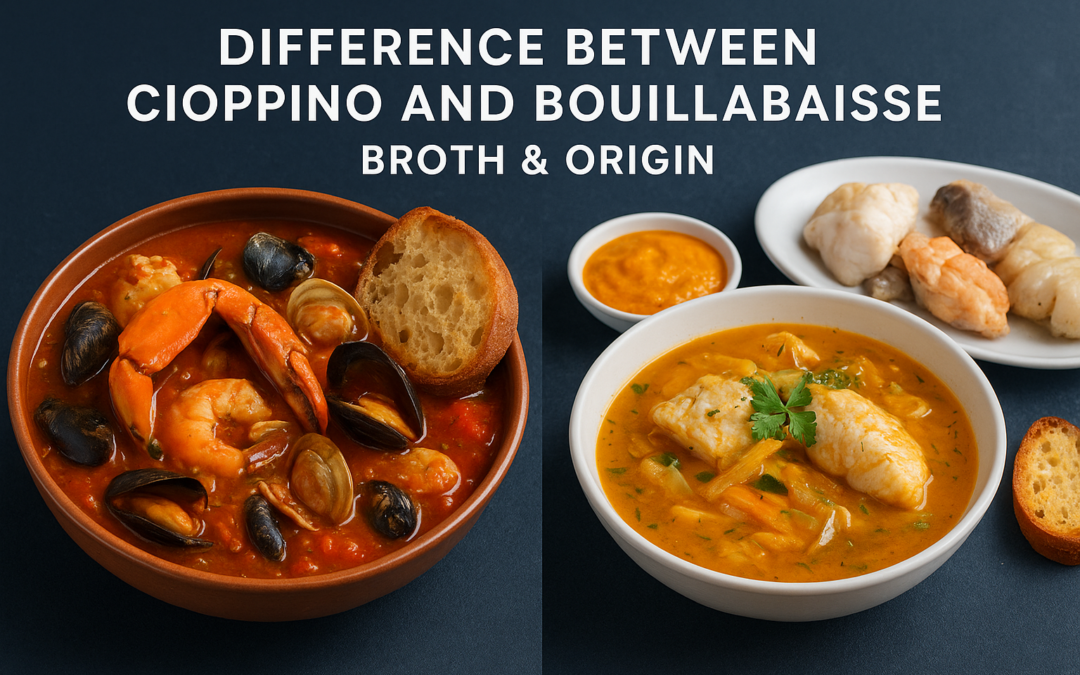
At first glance, cioppino and bouillabaisse look like the same dish, a steaming bowl of seafood swimming in a rich, aromatic broth. But spend a minute with both, and the contrasts start to sharpen. The difference between cioppino and bouillabaisse comes down to origin, broth, technique, and the seafood traditions that shaped each one. One was born on the docks of San Francisco’s Italian immigrant community; the other traces back centuries to the fishing ports of Marseille, France.
At La Dolce Vita Cucina, our kitchen in Chicago’s Portage Park neighborhood draws heavily from Italian culinary roots, from homemade pasta to premium seafood preparations. Cioppino, with its bold tomato-based broth, sits squarely in the Italian-American tradition we celebrate every day. That connection gives us a particular appreciation for how these two iconic stews diverge despite their surface similarities.
This article breaks down everything that separates cioppino from bouillabaisse: their cultural backstories, how each broth is built, what goes into the pot, and how they’re traditionally served. By the end, you’ll know exactly what sets them apart, and which one speaks to your palate.
Quick answer: the main differences
If you want the short version before diving into the full detail, here it is: cioppino is an Italian-American stew built on a tomato-heavy broth, and bouillabaisse is a French Provençal dish built around saffron, fennel, and white wine. Both stews center on fresh seafood, but the flavors, the cooking traditions, and even the way each one lands on your table are genuinely different. One is a bold, rustic bowl from the San Francisco waterfront; the other is a carefully structured dish from the Mediterranean port city of Marseille.
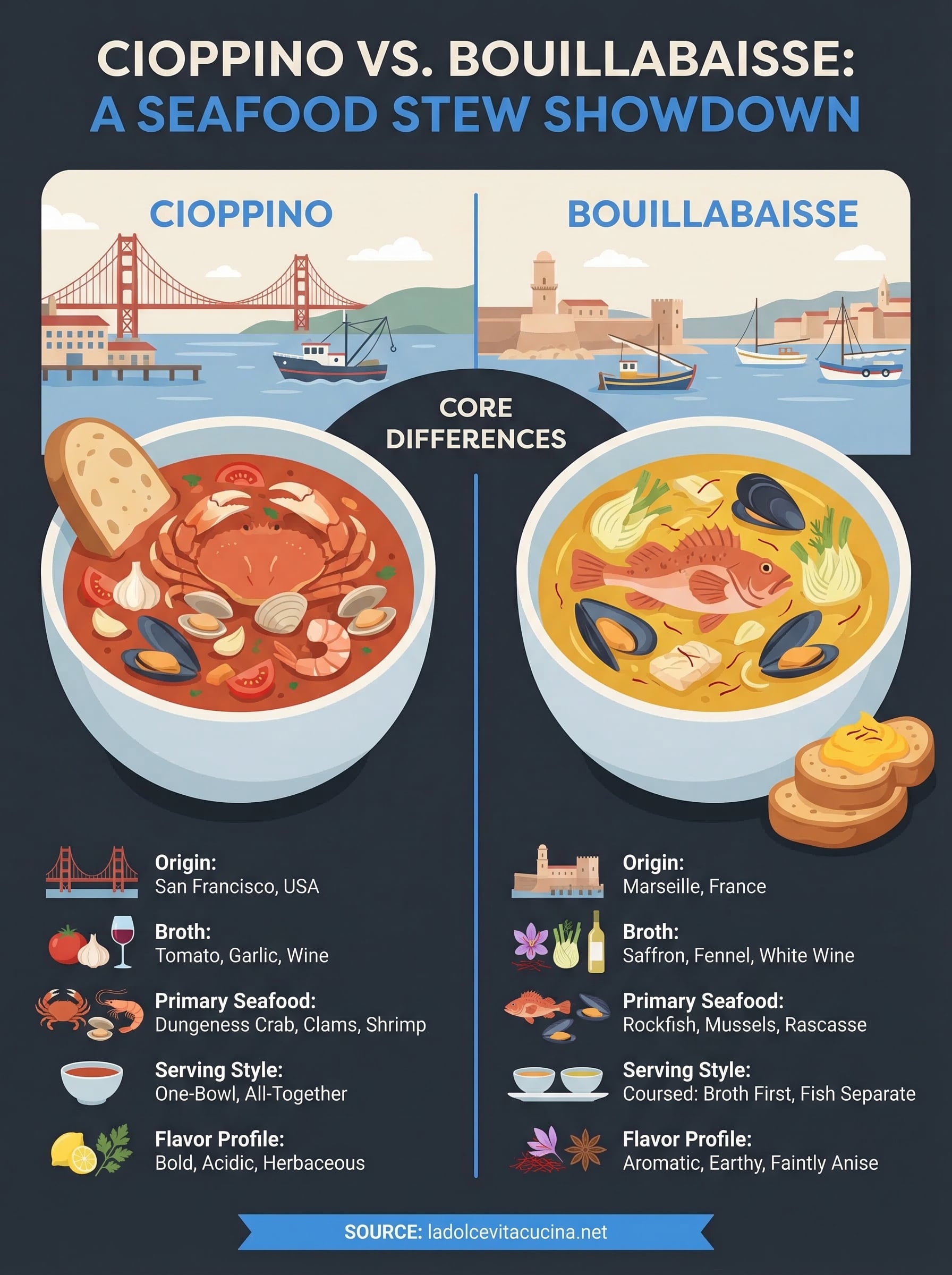
The table below shows the core difference between cioppino and bouillabaisse in a single view:
| Feature | Cioppino | Bouillabaisse |
|---|---|---|
| Origin | San Francisco, USA | Marseille, France |
| Broth base | Tomato, wine, garlic | Saffron, fennel, white wine |
| Primary seafood | Dungeness crab, clams, shrimp | Rockfish, mussels, rascasse |
| Serving style | One bowl, everything together | Broth and fish served separately |
| Accompaniment | Sourdough or crusty bread | Rouille on toasted croutons |
| Flavor profile | Bold, acidic, herbaceous | Aromatic, earthy, faintly anise |
Broth: tomato base versus saffron base
The broth is the clearest point of separation between the two stews. Cioppino builds its base with crushed tomatoes, garlic, and wine, producing a bright and acidic liquid that carries the natural sweetness of the seafood without masking it. The result is a direct, hearty flavor that reflects the Italian-American pantry it came from.
Bouillabaisse depends on saffron, the spice that turns the broth a warm golden color and adds a faint floral and earthy depth that a tomato base simply cannot produce.
Fennel, pastis, and fresh orange peel push the bouillabaisse broth further into Provençal territory, giving it layers that develop slowly as the fish releases its juices into the pot. You get a complex, aromatic bowl that takes time to read, compared to the more immediate punch of cioppino.
Seafood selections and the order they reach your table
Cioppino typically arrives as a single loaded bowl packed with Dungeness crab, manila clams, mussels, shrimp, scallops, and white fish, all cooked together so the broth absorbs flavor from every piece. Bouillabaisse follows a more deliberate structure: the golden broth comes first, often poured tableside over toasted bread spread with rouille, and the fish arrives separately on a platter. You build each spoonful yourself.
That difference in service style reflects the cultures behind each dish. Cioppino is communal and generous. Bouillabaisse is formal and sequential, closer to a composed dining experience than a one-pot supper.
Origins and cultural roots
The cultural gap between cioppino and bouillabaisse explains a lot about the difference between cioppino and bouillabaisse in flavor and technique. Each stew reflects the specific community and coastline that created it, shaped by available ingredients, immigrant habits, and local fishing traditions.
Cioppino: born on the San Francisco waterfront
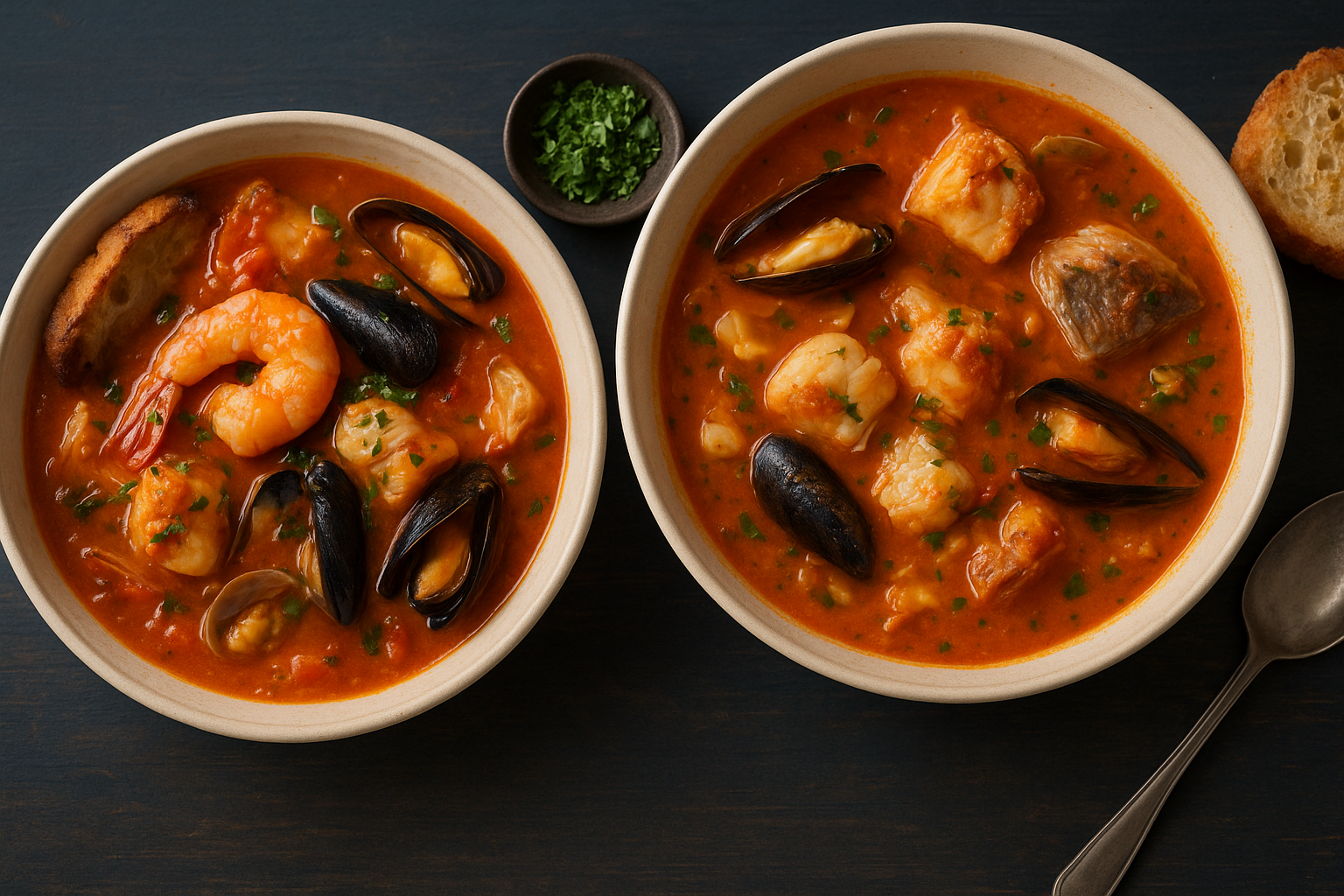
Italian fishermen who settled in San Francisco’s North Beach neighborhood during the late 1800s created cioppino from whatever they pulled out of the bay each day. The name likely comes from the Genoese dialect word "ciuppin," meaning to chop or cut down. When a fisherman returned with a smaller haul, others on the wharf would chip in scraps from their own catch to help build a communal pot.
That spirit of sharing is baked into the dish itself, which is why cioppino still arrives as a generous, overflowing bowl rather than a structured, coursed meal.
Bouillabaisse: rooted in ancient Marseille
Bouillabaisse carries a much longer recorded history, stretching back to ancient Greek and Roman times along the coast of what is now southern France. Marseille fishermen used it as a practical way to cook bony rockfish and scraps that were too tough to sell at market. The word itself comes from the Provençal "bolhabaissa," which refers to the technique of boiling and then lowering the heat to finish the cook.
Over centuries, the dish evolved from a simple fisherman’s meal into a celebrated regional recipe that Marseille locals now protect with detailed traditional guidelines, specifying which fish belong in an authentic pot and how the broth must be prepared.
Broth base and signature flavors
The broth is where the difference between cioppino and bouillabaisse becomes impossible to ignore. You can taste the geography in each bowl, one shaped by Italian-American pantry staples, the other by the spice routes and herb gardens of southern France.
Cioppino’s tomato-driven base
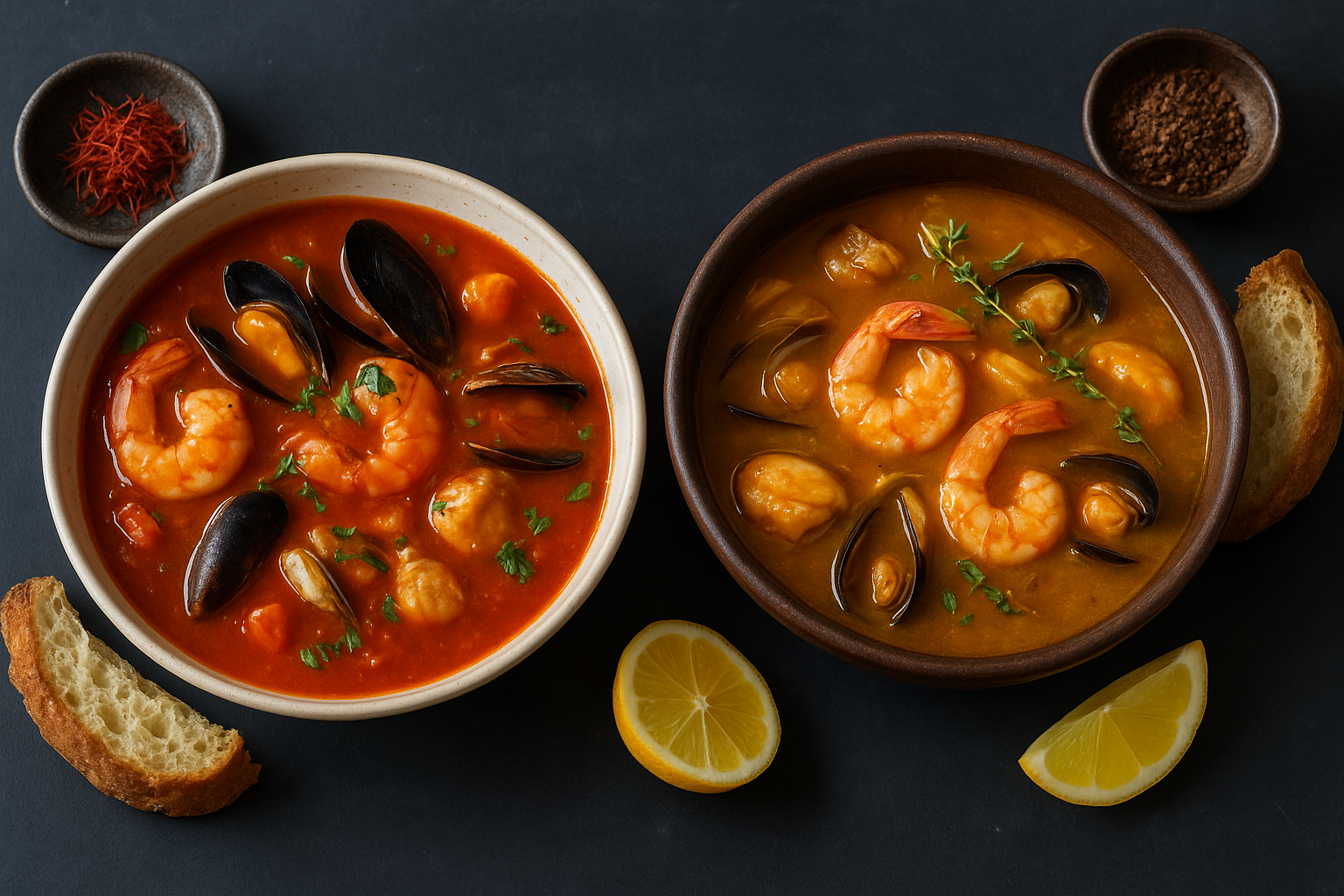
Cioppino starts with crushed or whole San Marzano-style tomatoes, garlic, onion, and a generous pour of dry white or red wine. The tomatoes give the broth its signature acidity and deep red color, two qualities that immediately signal warmth and boldness. As the seafood cooks, the natural sweetness from clams and crab blends into that acidic base, softening it without losing the punch.
Fresh herbs like basil, parsley, and oregano reinforce the Italian-American flavor profile most people recognize from a good marinara, just loosened into a brothy consistency with enough body to soak a full slice of sourdough.
Bouillabaisse’s saffron and fennel depth
Bouillabaisse reaches its defining character through saffron, fennel, and often a splash of pastis or Pernod. Saffron turns the broth a rich amber-gold and adds a faint floral bitterness you cannot replicate with any substitute.
That combination of saffron and fennel creates a layered, aromatic broth that rewards slow, attentive eating rather than quick spoonfuls.
Orange peel and thyme round out the Provençal flavor base, giving the finished broth a brightness that cuts through the richness of the fish. You get something that feels lighter than cioppino on first sip, but builds real complexity with each taste.
Seafood, aromatics, and add-ins
The ingredients you put in the pot reveal another clear layer of the difference between cioppino and bouillabaisse. Each dish draws from its local fishing waters, which means the seafood lists look different and the supporting aromatics are built around entirely separate culinary traditions.
What goes into cioppino
Cioppino traditionally features Dungeness crab as its centerpiece, a nod to the San Francisco Bay fishing culture that created the dish. Alongside the crab, you typically find manila clams, mussels, shrimp, scallops, and firm white fish like halibut or cod. The aromatics lean heavily on garlic, onion, fresh parsley, basil, and oregano, all cooked down in olive oil before the tomatoes and wine go in.
The combination of sweet crab and briny clams pulling flavor into that tomato base is what gives cioppino its unmistakable richness.
What goes into bouillabaisse
Bouillabaisse centers on firm, bony Mediterranean fish that can hold up to the long broth simmer, traditionally rascasse (scorpionfish), sea robin, and weever fish. In practice outside Marseille, you will often see monkfish, John Dory, and mussels standing in for the harder-to-source regional varieties. The aromatics shift dramatically toward fennel fronds, leek, celery, saffron threads, fresh thyme, bay leaf, and dried orange peel, all building that signature Provençal depth.
Bouillabaisse also leans on rouille, a garlicky saffron-tinted aioli spread on toasted croutons, as an essential finishing add-in that you stir into the broth or eat alongside each spoonful.
How each stew gets served and eaten
The serving style is one of the most telling parts of the difference between cioppino and bouillabaisse. Each dish reflects the culture and dining habits of its origin, and the way it arrives at the table tells you something real about what kind of meal you’re about to have.
Cioppino: the one-bowl approach
Cioppino lands on your table as a single, loaded bowl with every element already combined. The crab, clams, shrimp, and fish all sit together in that tomato-wine broth, fully cooked and ready to eat. You typically get a thick slice of sourdough or crusty bread on the side to drag through the bottom of the bowl and catch the last of the broth.
This all-in-one presentation reflects the communal, no-formality spirit of the San Francisco fishing community that invented the dish.
Eating cioppino is a hands-on experience. If whole crab is in the pot, you crack it yourself, which means most restaurants will bring you a bib and a small cracker without you needing to ask.
Bouillabaisse: the coursed presentation
Bouillabaisse follows a structured, two-part service that separates the broth from the fish. The kitchen pours the golden saffron broth first into your bowl, often over toasted croutons spread with rouille. The fish and shellfish then arrive separately on a platter, and you add them to your bowl at your own pace.
That layered approach gives you more control over each spoonful and encourages you to experience the broth on its own before the fish changes its character.
Make your pick and enjoy the bowl
Now that you understand the difference between cioppino and bouillabaisse, the choice comes down to what you want from the bowl. If you want bold acidity, loaded seafood, and a hands-on meal, cioppino is your pick. If you want layered aromatics and a more structured eating experience, bouillabaisse is the better call.
Both stews reward good ingredients and honest cooking. Neither is objectively better; they simply reflect different coastlines and different culinary traditions built around the same raw material: fresh seafood pulled from local waters.
If the Italian side of this conversation has you craving something closer to home, come eat with us at La Dolce Vita Cucina in Chicago’s Portage Park neighborhood. Our kitchen brings that same commitment to quality seafood and Italian-rooted cooking to every plate we send out.