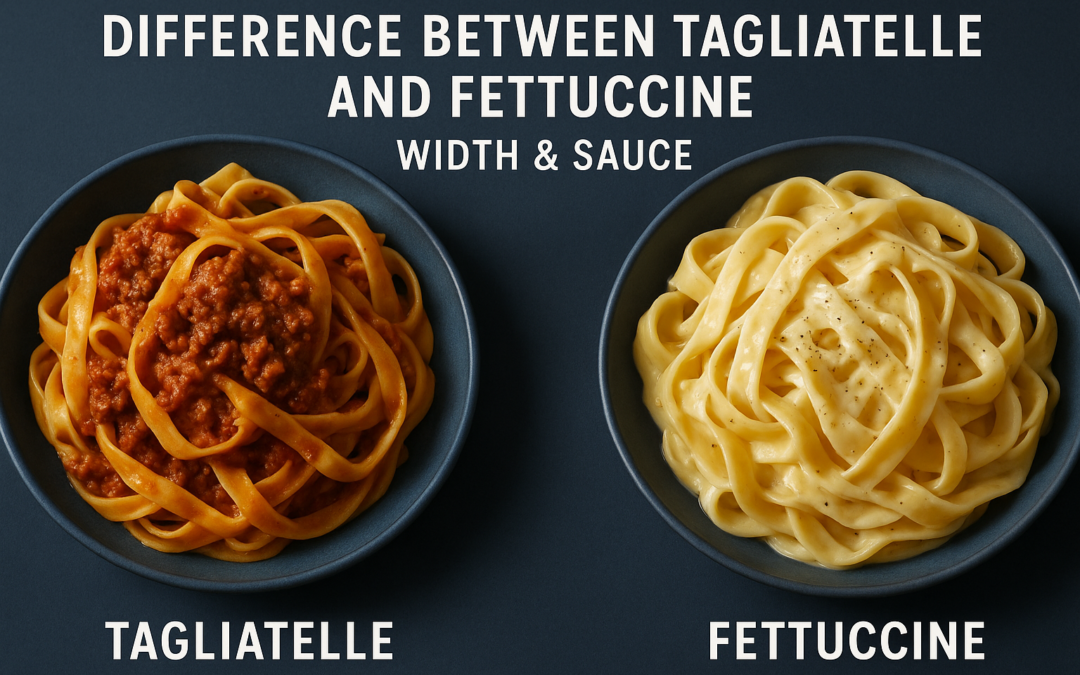
Both are long ribbons of pasta. Both traditionally contain eggs. Both pair beautifully with rich, meaty sauces. So what’s the difference between tagliatelle and fettuccine? This question comes up often at La Dolce Vita Cucina, where we roll fresh tagliatelle by hand in our Portage Park kitchen. The answer involves subtle but meaningful distinctions in width, thickness, and regional heritage that affect how each pasta carries sauce and delivers texture.
These two shapes share enough similarities to cause genuine confusion. They’re both flat, both typically egg-based, and both belong to the broader family of ribbon pastas. Yet regional Italian traditions shaped them into distinct forms, tagliatelle emerged from Bologna’s kitchens while fettuccine became a Roman staple. Understanding these roots helps explain why each pasta behaves differently when paired with specific sauces.
This guide covers the practical details: exact width measurements, thickness variations, ingredient compositions, and ideal sauce matches for each. You’ll also find clear guidance on whether these pastas work as substitutes in recipes, and when swapping one for the other might change your dish more than you’d expect.
Why the difference matters for texture and sauce
You might think a few millimeters in width won’t change your dinner experience. In reality, the physical dimensions of pasta directly influence how sauce clings, how the pasta feels in your mouth, and even how quickly it cooks. The difference between tagliatelle and fettuccine becomes most obvious when you twirl your fork: wider ribbons carry more sauce per bite while narrower ones create a different balance between pasta and coating.
How width affects sauce distribution
The surface area of each pasta strand determines how much sauce stays on your fork. Tagliatelle, at roughly 6 to 10 millimeters wide, offers more flat space for heavier sauces to adhere. This makes it ideal for slow-cooked ragùs that need somewhere substantial to cling. Fettuccine measures slightly wider at 7 to 13 millimeters, giving it even more capacity to hold onto cream-based preparations like Alfredo. The extra width also means fettuccine requires more sauce overall to coat properly, while tagliatelle achieves good coverage with less.
When you match pasta width to sauce consistency, each bite delivers the ratio Italian cooks have perfected over centuries.
Thickness and bite sensation
Tagliatelle typically rolls out thinner than fettuccine, creating a more delicate bite that breaks cleanly between your teeth. This thinner profile also means faster cooking times and a texture that feels lighter despite being an egg pasta. Fettuccine’s slightly thicker body gives you more substantial chewiness, the kind of texture that holds up during longer simmer times when you toss it directly into a pan of sauce. The thickness difference affects how much sauce penetrates the pasta too: thinner tagliatelle absorbs flavors more readily while thicker fettuccine maintains more distinct boundaries between pasta and sauce.
Tagliatelle vs fettuccine at a glance
The difference between tagliatelle and fettuccine boils down to measurements you can see and feel. These two ribbon pastas look nearly identical at first glance, but their distinct dimensions create separate identities in traditional Italian cooking. Before diving into regional histories and sauce theories, you need a clear reference point for what actually sets them apart on your plate.
Quick comparison chart
| Feature | Tagliatelle | Fettuccine |
|---|---|---|
| Width | 6-10 mm | 7-13 mm |
| Thickness | Thinner, more delicate | Slightly thicker, more substantial |
| Regional origin | Bologna, Emilia-Romagna | Rome, Lazio |
| Typical egg content | Standard egg dough | Standard egg dough |
| Classic sauce | Bolognese ragù | Alfredo, butter-based |
| Texture | Lighter bite, breaks cleanly | Chewier, more resistant |
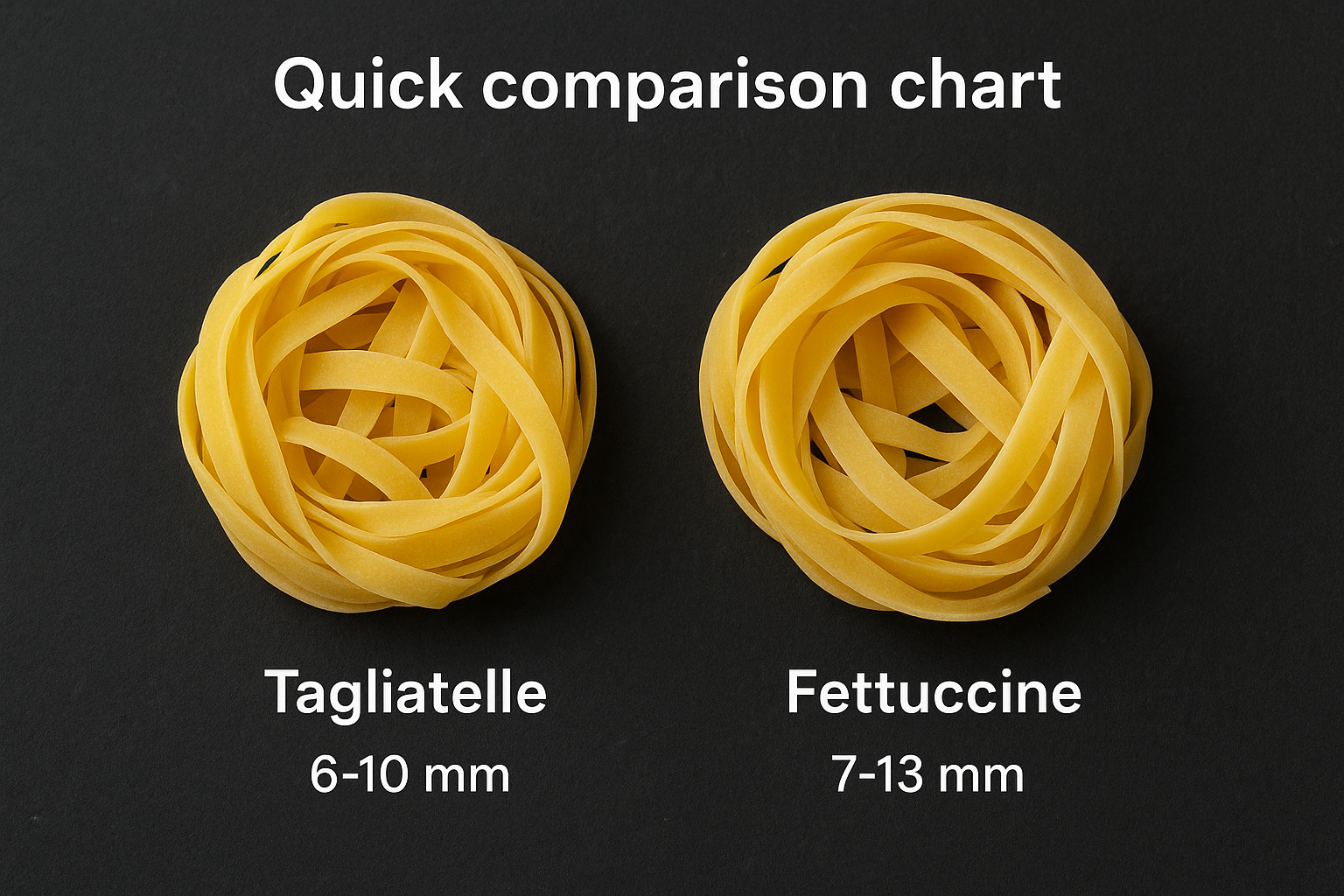
Both pastas use similar flour-to-egg ratios, but local traditions shaped how thin each gets rolled. You’ll notice tagliatelle cooks slightly faster due to its thinner profile, while fettuccine holds its shape longer when tossed in hot pans. The width difference might seem minor until you compare how much sauce each strand carries per forkful.
When you plate them side by side, fettuccine appears broader and more robust while tagliatelle looks more refined.
Origins and dough ingredients
Geography shapes pasta just as much as flour and eggs do. The difference between tagliatelle and fettuccine starts with where Italian grandmothers first rolled out each shape, and those regional traditions still dictate which pasta appears on menus across Italy today. Both pastas belong to the egg-enriched ribbon family, but their birthplaces influence subtle variations in how cooks prepare them.
Regional birthplaces
Tagliatelle emerged from Bologna’s kitchens in the Emilia-Romagna region, where pasta makers developed precise standards for width and thickness. Local legend even ties the shape’s proportions to Lucrezia Borgia’s hair, though this story matters less than the region’s official specifications registered with the Bologna Chamber of Commerce. Fettuccine claims Rome and the broader Lazio region as its home, where cooks rolled pasta slightly wider and thicker to complement the capital’s butter-heavy sauces. These geographic origins explain why you’ll find tagliatelle paired with meat ragù in northern trattorias while Roman restaurants default to fettuccine for cream-based dishes.
Egg dough similarities
Both pastas start with the same foundational ingredients: tipo 00 flour and whole eggs. Traditional recipes call for approximately one egg per 100 grams of flour, creating a rich yellow dough that provides structure and flavor. You won’t find significant ingredient differences between the two, the variations come from rolling technique and final dimensions rather than what goes into the bowl.
The real distinction lies in how thin you roll the dough and how wide you cut the ribbons.
Width, thickness, and texture differences
The physical measurements distinguish these pastas more clearly than origin stories or sauce traditions. When you hold a strand of each in your hands, you’ll notice the difference between tagliatelle and fettuccine immediately through both visual width and how the pasta flexes. These dimensions create distinct behaviors during cooking and eating, from how quickly water penetrates the dough to how your teeth break through each bite.
Measuring the physical differences
Tagliatelle measures 6 to 10 millimeters wide and rolls out to approximately 0.8 to 1 millimeter thick. Fettuccine spans 7 to 13 millimeters in width with a thickness closer to 1 to 1.2 millimeters. You can verify these measurements by laying dried pasta on a ruler or comparing fresh-cut ribbons side by side. The width difference becomes obvious when you fan out several strands: fettuccine occupies more plate real estate per portion.
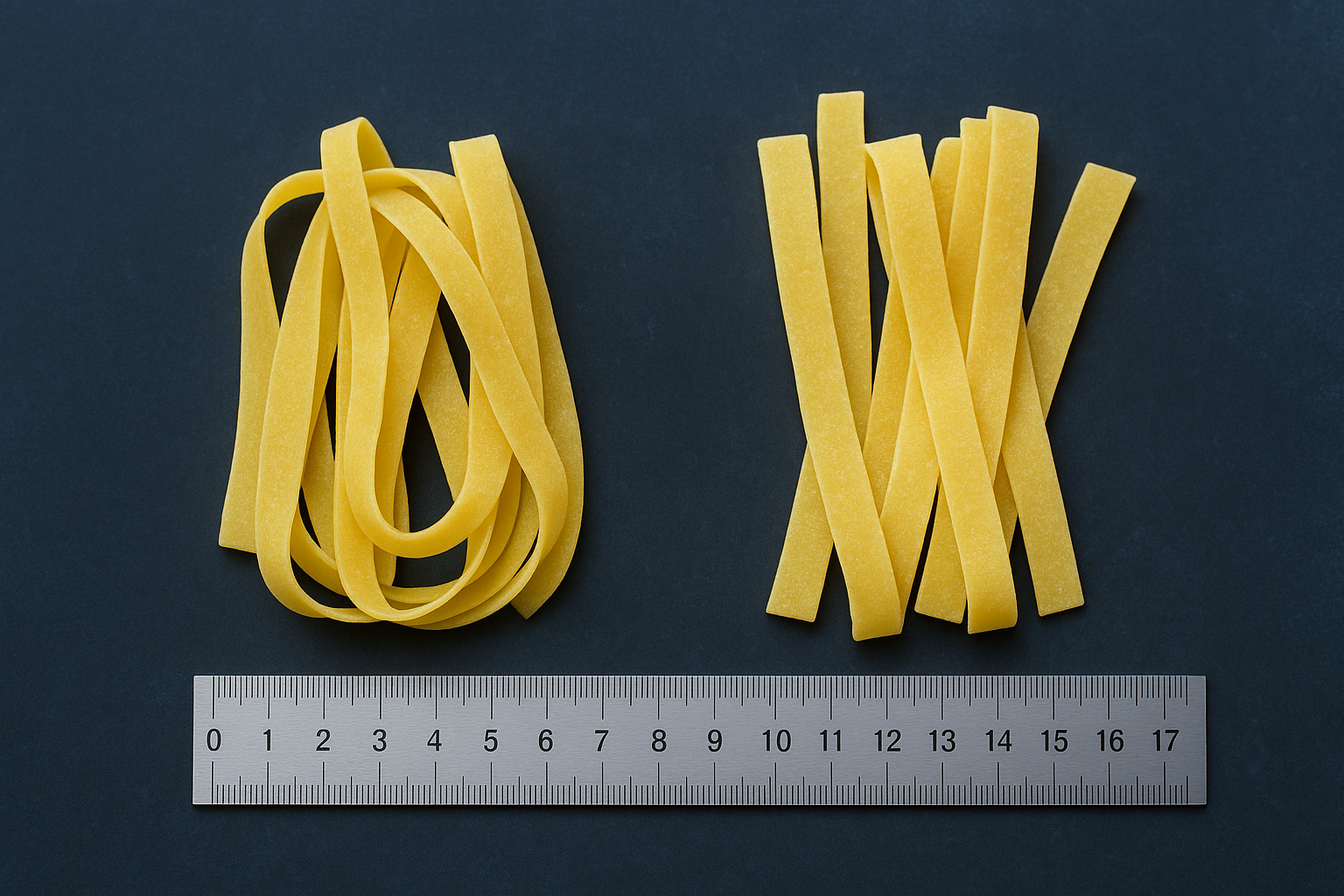
These measurements aren’t arbitrary, they represent centuries of Italian cooks calibrating pasta dimensions to match regional sauce styles.
What you’ll feel when eating
Your fork captures fewer individual strands of fettuccine because each ribbon takes up more space. Tagliatelle creates a lighter mouthfeel that breaks cleanly against your palate, while fettuccine delivers more resistance and chewiness. Both textures satisfy in different ways depending on whether you want delicate elegance or substantial bite.
Best sauce pairings and smart substitutions
The difference between tagliatelle and fettuccine extends beyond measurements to how each pasta interacts with specific sauces. Italian cooks developed these shapes to complement particular preparations, and understanding those traditional pairings helps you decide when substitution makes sense and when it might compromise your dish. Both pastas handle rich, coating sauces well, but their width and thickness differences create distinct results.
Traditional pairings by region
Bologna reserves tagliatelle for slow-cooked meat ragù, where the thinner pasta absorbs sauce while maintaining structure. You’ll find this combination everywhere in Emilia-Romagna during Sunday dinners and special occasions. Rome pairs fettuccine with butter and Parmigiano, creating the dish Americans call Alfredo, though the original Roman version uses only those two ingredients plus pasta water. Fettuccine also works beautifully with carbonara and cacio e pepe, where the wider ribbons provide enough surface area for egg-based or cheese sauces to cling properly.
When you can swap them
You can substitute these pastas in most recipes without major consequences. The finished dish will taste nearly identical, though you might notice textural differences if you’re paying close attention. Swap tagliatelle for fettuccine when you want slightly more delicate bites in cream sauces, or use fettuccine instead of tagliatelle when you need pasta that holds up to extended tossing in hot pans.
The width difference matters less than matching any ribbon pasta to sauces thick enough to coat flat surfaces.
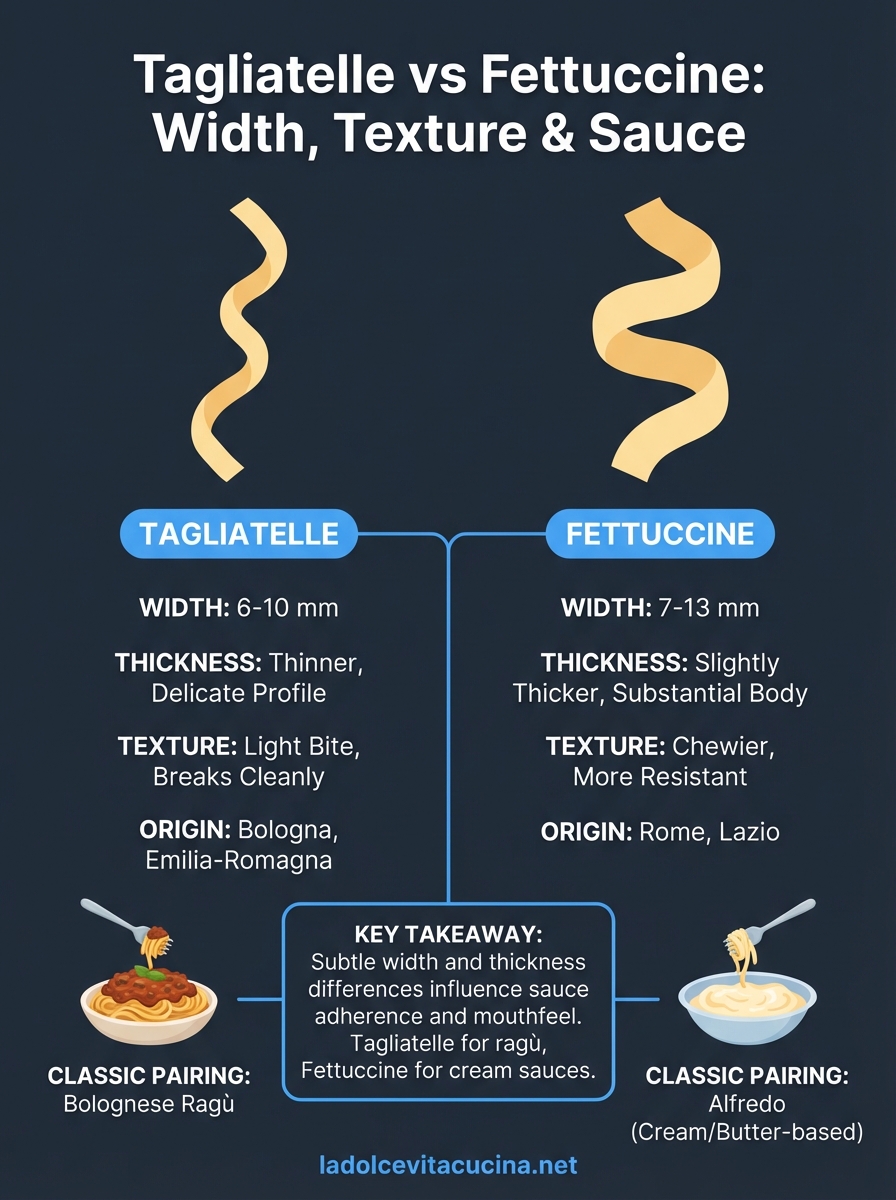
A simple way to choose for dinner tonight
You now understand the difference between tagliatelle and fettuccine well enough to make confident choices in your own kitchen. Pick tagliatelle when you want a lighter, more delicate ribbon that pairs beautifully with meat ragù or lighter tomato sauces. Choose fettuccine when you’re preparing cream-based dishes or need pasta that stands up to vigorous tossing in hot pans with butter and cheese.
Both pastas deliver authentic Italian flavors when prepared properly, and swapping one for the other won’t ruin your meal. The key lies in matching any ribbon pasta to sauces thick enough to coat flat surfaces, whether you measure 6 millimeters or 12 millimeters across. If you’d rather skip the guesswork entirely and taste how professional chefs handle these nuances, stop by La Dolce Vita Cucina in Portage Park, where we roll fresh tagliatelle by hand and pair it with traditional Bolognese that honors its northern Italian roots.