

You stand at your home bar with a bottle of Campari, wondering how to make a Negroni that matches what you’ve tasted at your favorite Italian restaurant. The iconic red cocktail seems deceptively simple, yet you’re not quite sure about the ratios or technique that make it taste just right.
The good news? A classic Negroni requires just three ingredients in equal parts: gin, Campari, and sweet vermouth. This elegant Italian aperitivo takes only minutes to prepare and doesn’t demand any fancy bartending skills. The key lies in understanding the proper stirring technique and knowing how to express those aromatic orange oils over the finished drink.
This guide walks you through every step of making an authentic Negroni, from measuring your ingredients to achieving that perfect balance of bitter and sweet. You’ll learn the essential technique, discover why each ingredient matters, and explore popular variations that let you customize this timeless cocktail to your taste.
The three essential ingredients
When you learn how to make a Negroni, you need to understand that this cocktail relies on perfect balance between just three components. Each ingredient plays a distinct role: the gin provides botanical backbone, the Campari delivers signature bitterness, and the sweet vermouth adds complexity and rounds out the flavor profile. You don’t need expensive bottles to start, but quality matters since each ingredient takes up one-third of your drink.
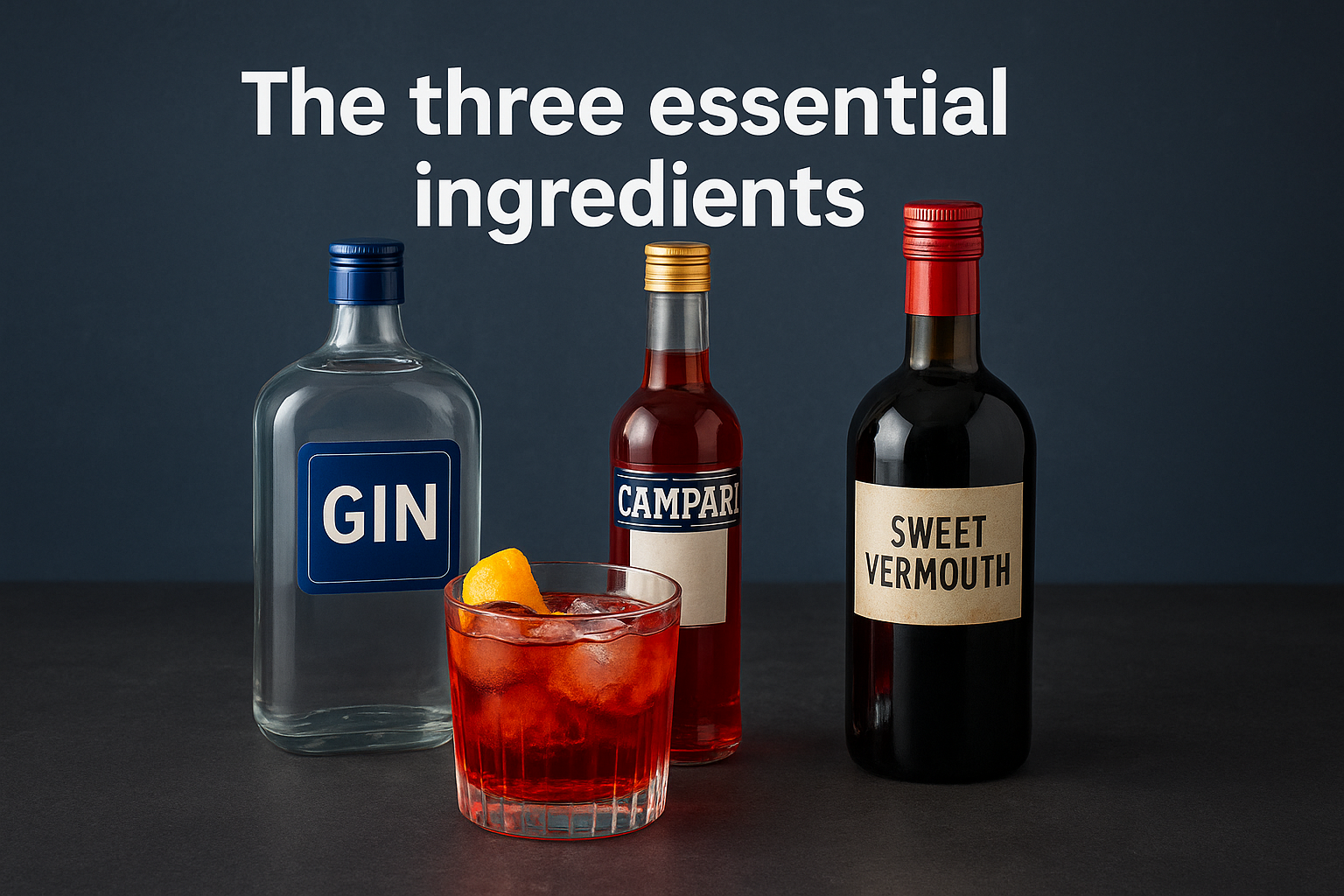
Gin
Your base spirit should be London Dry gin with a minimum proof of 80 to 90. The juniper-forward profile cuts through the Campari’s intensity and complements the vermouth’s sweetness. Classic choices include Beefeater, Tanqueray, or Gordon’s, but you can experiment with more botanical gins once you’ve mastered the basic recipe. Avoid overly floral or cucumber-forward gins that might clash with the bitter elements.
Campari
This bright red Italian bitter forms the heart and soul of your Negroni. Campari brings complex herbal bitterness with notes of orange peel, cherry, and gentian root. No substitutes truly replicate its flavor, though Aperol creates a lighter, sweeter variation if you prefer less intensity. The distinctive color comes from Campari itself, so your cocktail should always have that iconic ruby-red hue.
"The equal parts ratio of gin, Campari, and vermouth creates the signature balance that makes a Negroni unforgettable."
Sweet vermouth
You need Italian sweet vermouth (rosso or rouge) to complete your trinity. Brands like Carpano Antica Formula, Cocchi di Torino, or Cinzano Rosso work beautifully. The vermouth adds herbal sweetness and body that binds the gin and Campari together. Store your bottle in the refrigerator after opening, as vermouth is a fortified wine that oxidizes quickly and loses flavor within a few weeks.
Step 1. Measure the gin, Campari, and vermouth
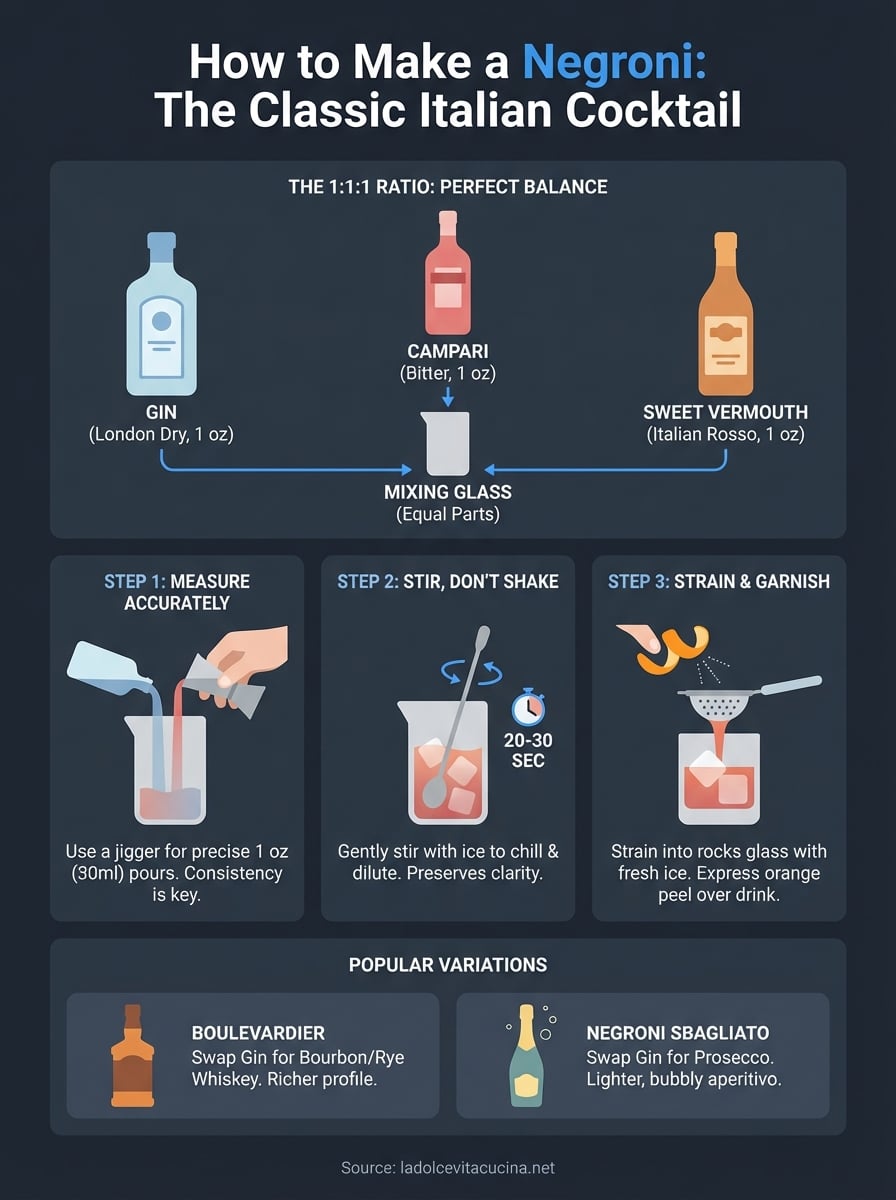
The first step in how to make a Negroni involves precise measurement of your three equal parts. You need 1 ounce (30ml) of each ingredient for a standard serving. This 1:1:1 ratio creates the iconic balance that defines a proper Negroni. Grab a jigger or measuring tool before you start pouring.
The classic ratio
Your measurements should be exactly equal across all three spirits. Pour 1 ounce of gin into your mixing glass first, followed by 1 ounce of Campari, and finish with 1 ounce of sweet vermouth. You can scale this up to 1.5 ounces each if you prefer a stronger drink, but maintain the equal proportions. The beauty of this recipe lies in its simplicity.
"Equal parts mean equal flavor impact, so each ingredient gets its moment to shine in your glass."
Using a jigger for accuracy
Invest in a double-sided jigger that measures 1 ounce on one side and 0.5 ounces on the other. This tool ensures consistent results every time you make your cocktail. Free-pouring might seem professional, but accurate measuring creates the perfect balance between bitter, sweet, and botanical notes. Count your pours if you use a standard bottle pour spout, which typically dispenses about 1 ounce per four-second pour.
Step 2. Stir the mixture with ice
Once you’ve combined your three equal parts in a mixing glass, you need to chill and dilute the mixture properly. Add plenty of ice cubes to the glass, filling it about two-thirds full. The stirring process brings down the temperature while adding just enough water to soften the bold flavors and create a silky texture.
Why you stir instead of shake
Your Negroni requires gentle stirring rather than aggressive shaking. Stirring preserves the clear, jewel-like appearance of the cocktail while achieving proper dilution. Shaking would create air bubbles and cloudiness that detract from the drink’s elegant presentation. The technique also maintains the spirit-forward character without over-diluting the mixture.
"Stirring creates the smooth texture and clarity that define a properly made Negroni."
Timing your stir
Stir continuously for 20 to 30 seconds using a bar spoon in smooth, circular motions. You want to chill the drink thoroughly without adding too much water. The mixing glass should feel cold to the touch when you’re finished. Count about 30 rotations if you prefer a specific metric. Your cocktail reaches the ideal temperature when the outside of the glass frosts slightly.
Step 3. Strain and express the orange peel
Your final step transforms the chilled mixture into a properly finished Negroni. Hold a Hawthorne strainer over your mixing glass and pour the contents into a rocks glass filled with fresh ice. You want one large ice cube if possible, as it melts slower and prevents dilution. The straining removes the diluted ice while delivering a perfectly chilled cocktail.
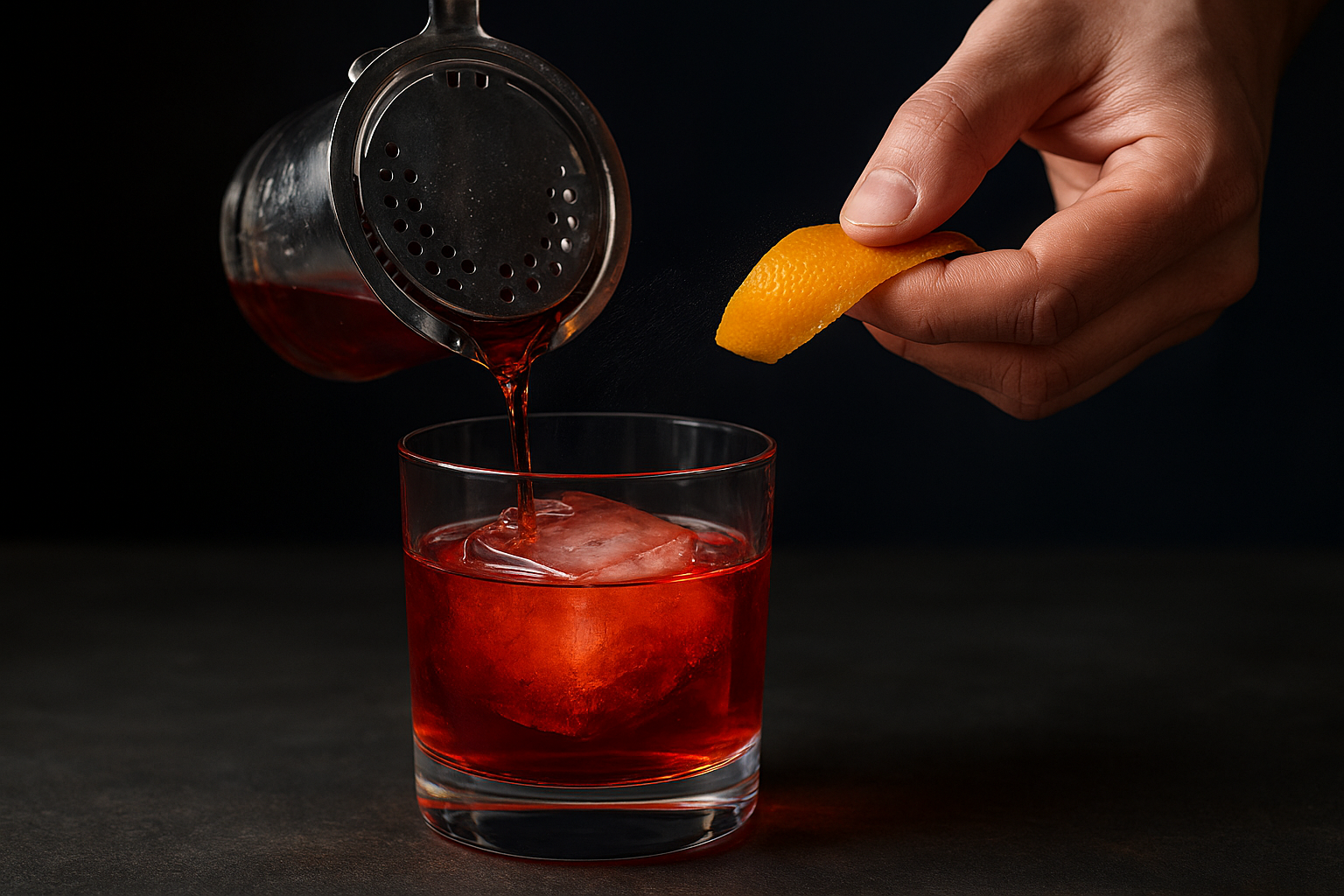
Straining technique
Position your strainer firmly against the rim and pour in one smooth motion. The goal is to catch all ice chips and ensure only the liquid reaches your serving glass. Your Negroni should have a clear, brilliant red color once it settles.
Expressing the orange peel
Cut a wide strip of orange peel about 2 inches long, avoiding the bitter white pith. Hold the peel over your drink with the colored side facing down, then pinch it sharply between your fingers. You’ll see a fine mist of citrus oils spray across the surface. This expression releases aromatic compounds that enhance the drinking experience.
"The orange oils add a bright, citrusy aroma that completes the sensory experience of how to make a negroni."
Rub the peel around the rim of your glass, then drop it into the drink as a garnish.
Popular Negroni variations to try
Once you master how to make a Negroni, you can explore classic variations that maintain the cocktail’s spirit while offering different flavor profiles. These twists follow the same simple technique you’ve learned, but swap one ingredient to create entirely new drinking experiences. Each variation respects the original equal-parts formula while bringing its own character to your glass.
Boulevardier
Replace your gin with bourbon or rye whiskey to create a Boulevardier. Use the same 1:1:1 ratio with whiskey, Campari, and sweet vermouth. This American cousin delivers deeper, oakier notes with vanilla and caramel undertones from the whiskey. The bitter Campari still shines through, but the whiskey adds warmth and richness. Garnish with an orange peel just like the original.
"The Boulevardier trades botanical brightness for rich, whiskey-driven depth while keeping the Negroni’s bitter-sweet balance intact."
Negroni Sbagliato
Swap your gin for prosecco or sparkling wine to make a Sbagliato, which means "mistaken" in Italian. This lighter, effervescent version uses 1 ounce each of Campari and sweet vermouth, topped with 2 to 3 ounces of prosecco. Build it directly in your glass over ice rather than stirring. The bubbles create a refreshing aperitivo that’s perfect for warm afternoons.
Time to serve
You now have everything you need to make a perfectly balanced Negroni in your own kitchen. The three equal parts of gin, Campari, and sweet vermouth create a cocktail that’s both simple to execute and sophisticated to sip. Your stirring technique, proper dilution, and that final orange peel expression transform basic ingredients into a classic Italian aperitivo.
Practice makes your home bartending skills sharper with each pour. Start with the traditional recipe, then explore variations like the Boulevardier or Sbagliato once you’ve mastered how to make a Negroni. The beauty of this drink lies in its consistency and reliability.
Want to taste a professionally crafted Negroni alongside authentic Italian cuisine? Visit La Dolce Vita Cucina in Chicago’s Portage Park neighborhood, where our cocktail program celebrates traditional Italian aperitivo culture. Our bartenders prepare each Negroni with precision, and you can enjoy it before diving into homemade pasta and house-made gelato.