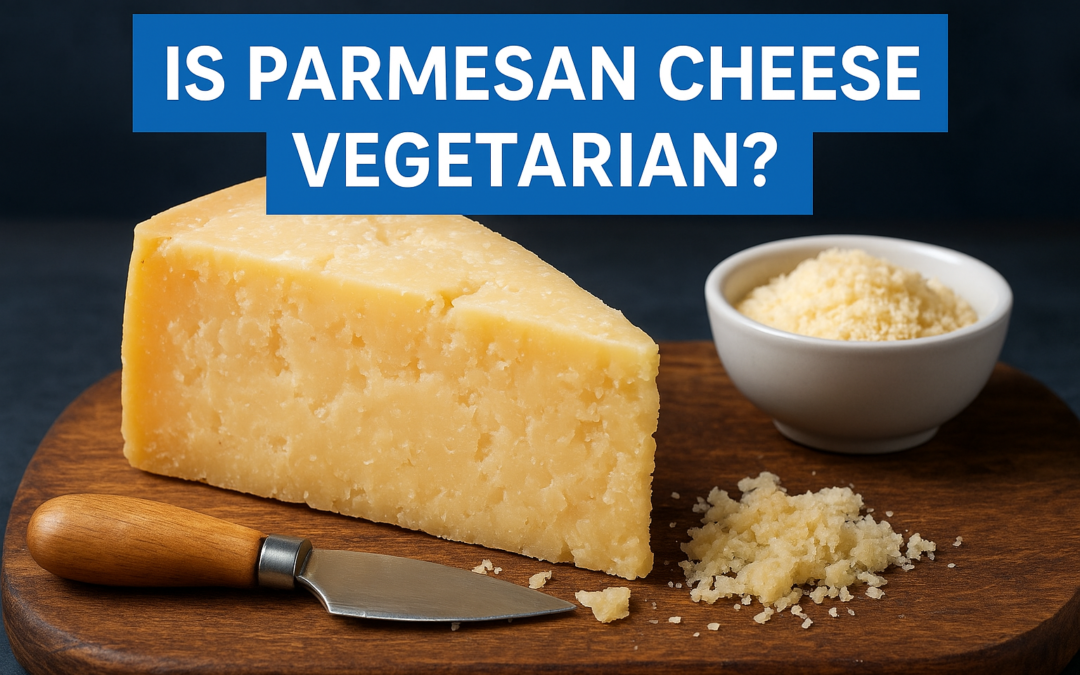
You reach for that container of grated Parmesan at the grocery store and wonder is Parmesan cheese vegetarian. The answer surprises most people. Traditional Parmesan contains animal rennet, an enzyme extracted from the stomach lining of young calves. This ingredient helps milk coagulate into cheese, but it makes authentic Parmigiano-Reggiano off limits for vegetarians. Many cheeses labeled simply as Parmesan use plant-based or microbial alternatives instead, but you need to know how to spot the difference.
This guide shows you exactly what to look for on cheese labels, explains why traditional production methods rely on animal products, and reveals which brands offer genuine vegetarian options. You’ll discover the key differences between Parmigiano-Reggiano and domestic Parmesan varieties, learn how to identify vegetarian rennet alternatives, and find delicious substitutes that deliver that same sharp, salty flavor you crave. Whether you’re shopping for your kitchen or dining out at your favorite Italian restaurant, you’ll know exactly what questions to ask.
Why traditional Parmesan requires animal rennet
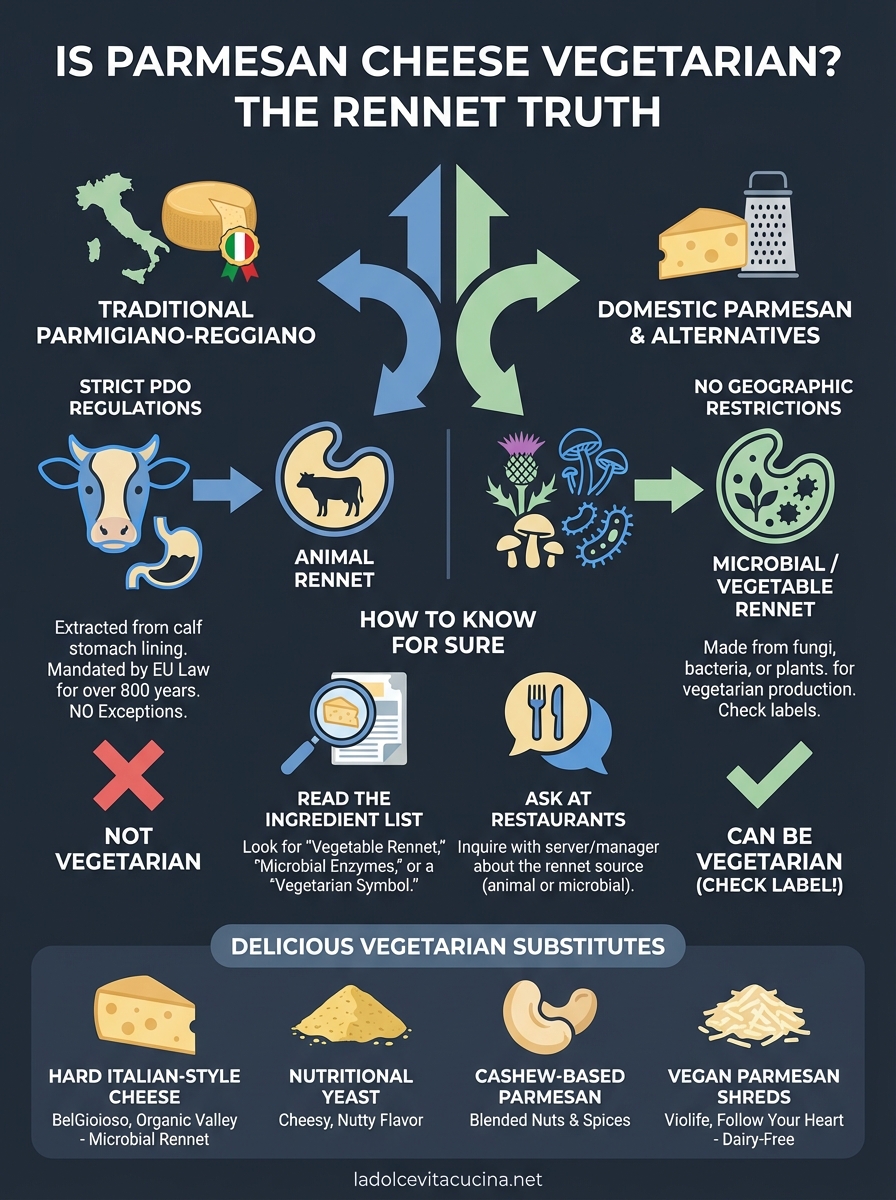
Authentic Parmigiano-Reggiano follows strict production standards that date back centuries. The European Union’s Protected Designation of Origin (PDO) regulations require cheesemakers to use animal rennet extracted from the stomachs of unweaned calves. This isn’t a choice or preference. It’s written into the official specification that defines what Parmigiano-Reggiano can be. You cannot call your cheese Parmigiano-Reggiano if you substitute vegetable or microbial rennet, no matter how perfectly you replicate everything else in the process.
The role of rennet in cheese production
Rennet contains enzymes called chymosin that separate milk into solid curds and liquid whey. When cheesemakers add rennet to heated milk, the proteins bond together and form the foundation of cheese. Traditional animal rennet comes from the fourth stomach of young calves, where these enzymes naturally help them digest their mother’s milk. The same biological process that helps calves break down milk proteins works perfectly for creating the firm, granular texture of aged Parmesan cheese.
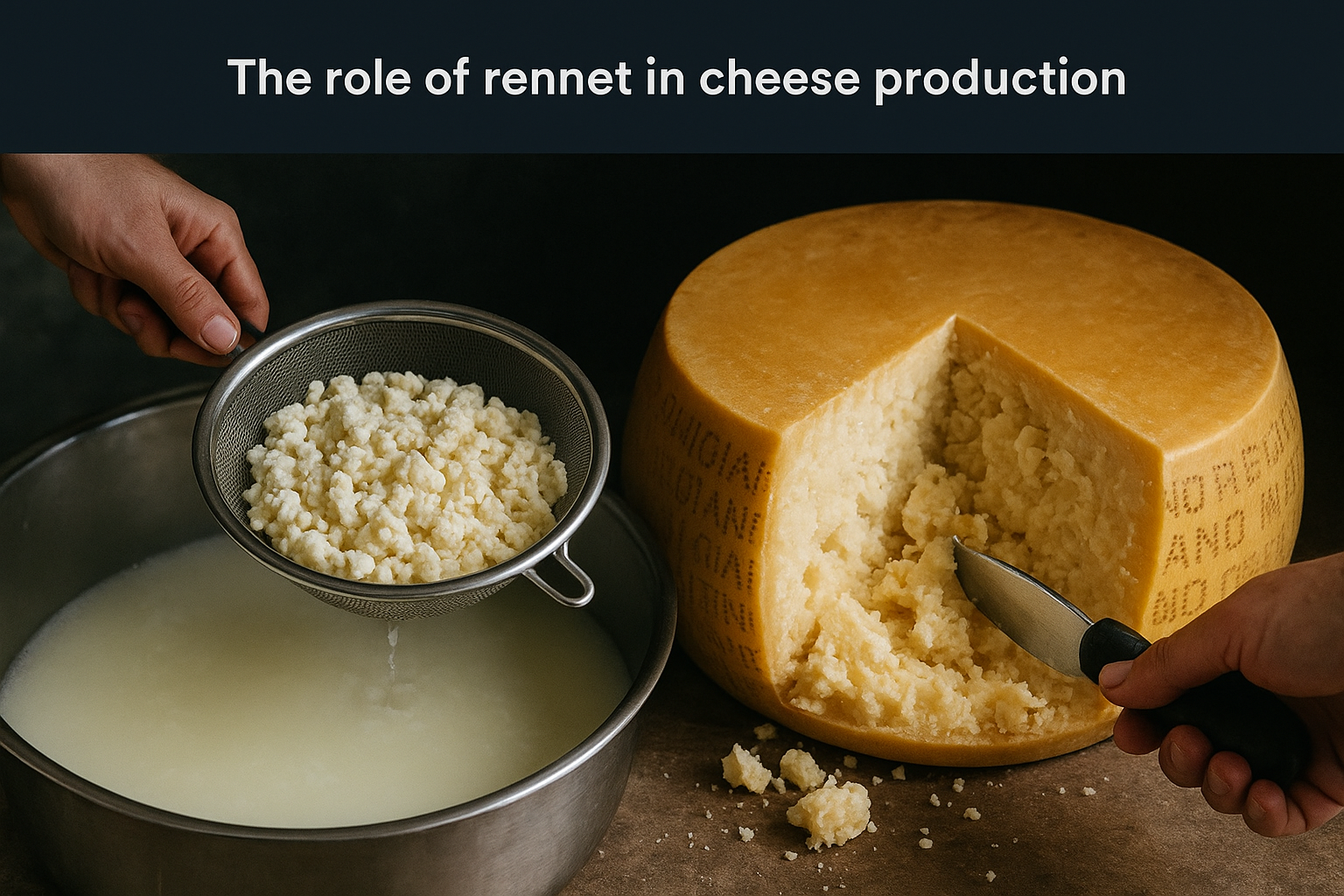
Modern science has created alternatives like microbial rennet from fungi and bacteria, plus vegetable rennet from certain plants. These substitutes perform the same basic function, but they produce subtle differences in flavor development and aging characteristics that devoted cheesemakers can detect.
Traditional production methods prioritize consistency and heritage over accommodating dietary restrictions.
Why Parmigiano-Reggiano mandates calf rennet
The PDO certification exists to preserve authentic regional food traditions. Cheesemakers in the designated regions of Italy must follow the exact same methods their predecessors used for over 800 years. This includes using raw milk from specific cow breeds, aging wheels for at least 12 months, and using calf rennet. The regulation protects both the quality standards and the economic interests of Italian producers who maintain these traditional practices.
When you wonder is Parmesan cheese vegetarian, the answer depends entirely on which product you choose. True Parmigiano-Reggiano will never be vegetarian because the PDO rules prohibit any deviation from the historical recipe. Domestic Parmesan products made outside Italy face no such restrictions, which gives manufacturers freedom to use plant-based or microbial rennet alternatives.
How to identify vegetarian-friendly cheese options
You need to check the ingredient list before you buy any cheese labeled as Parmesan. Manufacturers must disclose the type of rennet they use, though the labeling varies widely between brands. Some products state clearly that they contain vegetarian rennet or microbial enzymes, while others simply list "rennet" without specifying the source. When you see generic "rennet" or "enzymes" on the label, assume it comes from animal sources unless the package displays a vegetarian certification symbol.
Reading ingredient labels for rennet types
Look for specific phrases that indicate plant-based coagulants when you examine cheese packaging. Terms like "vegetable rennet," "microbial rennet," "non-animal enzymes," or "thistle rennet" all signal vegetarian-friendly options. Certified vegetarian symbols from organizations like the Vegetarian Society provide quick visual confirmation. Many grocery stores now place vegetarian cheeses in dedicated sections, but you should still verify the ingredients yourself since placement errors happen frequently.
Reading labels carefully protects you from accidentally purchasing cheese made with animal rennet.
Questions to ask at restaurants
Call ahead or speak directly with your server or manager when you dine out and want to confirm is Parmesan cheese vegetarian. Most restaurants use pre-grated cheese from commercial suppliers rather than authentic Parmigiano-Reggiano, which increases your chances of finding a vegetarian option. Kitchen staff can usually check the original packaging or contact their distributor for rennet information. Request specific brand names so you can research the products yourself if the restaurant cannot provide immediate answers about their cheese sources.
The difference between Parmesan and Parmigiano-Reggiano
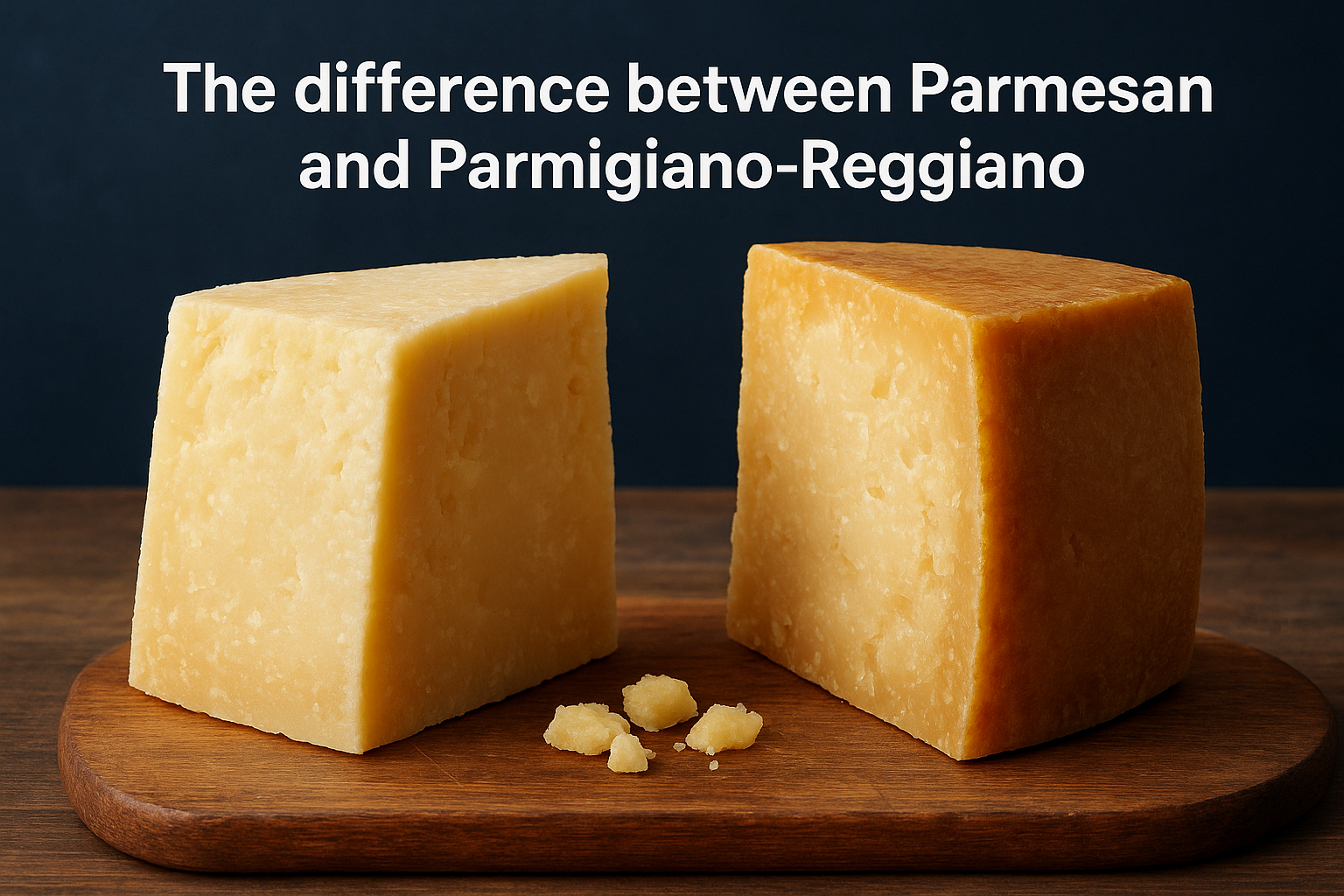
The names sound similar, but Parmigiano-Reggiano and Parmesan represent completely different products with distinct legal protections and production requirements. Parmigiano-Reggiano must come from specific provinces in Italy and follow strict traditional methods that include using animal rennet. Parmesan can be made anywhere outside Europe, giving producers freedom to modify ingredients and techniques while still creating a hard, aged cheese with a similar flavor profile.
Legal protections and naming rights
European Union laws protect Parmigiano-Reggiano as a PDO product, which means only cheese made in the designated Italian regions of Parma, Reggio Emilia, Modena, Bologna, and Mantova can legally carry that name in Europe. American manufacturers can label their cheese as "Parmesan" without geographic restrictions or adherence to Italian production standards. This legal distinction creates fundamentally different products even though grocery stores often stock them side by side on the same shelf.
Geographic protections determine which production methods and ingredients cheesemakers must use.
Production standards and ingredients
When you ask is Parmesan cheese vegetarian, the answer depends on which product you purchase. Parmigiano-Reggiano requires calf rennet and raw milk from grass-fed cows, aged for a minimum of 12 months in temperature-controlled rooms. Domestic Parmesan varieties use pasteurized milk, vegetarian or microbial rennet, and shorter aging periods that reduce production costs. These differences affect texture, flavor complexity, and dietary compatibility. You can find vegetarian Parmesan, but you cannot find vegetarian Parmigiano-Reggiano.
Delicious vegetarian alternatives to Parmesan
You can find excellent vegetarian substitutes that deliver the same sharp, salty flavor without animal rennet. Several brands produce hard Italian-style cheeses using microbial or vegetable rennet that tastes nearly identical to traditional Parmesan. These alternatives work perfectly for pasta dishes, salads, and any recipe where you need that distinctive umami punch.
Hard Italian-style cheeses
BelGioioso and Organic Valley manufacture vegetarian Parmesan using microbial rennet while maintaining traditional aging processes. You get the same granular texture and nutty flavor as conventional Parmesan because these producers follow nearly identical methods except for the rennet source. Look for products labeled specifically as vegetarian or check the ingredient list for microbial enzymes or vegetable rennet. These cheeses grate beautifully, melt consistently, and provide the authentic sharp taste you expect from aged hard cheeses.
Hard aged cheeses made with microbial rennet provide authentic flavor for vegetarian diets.
Plant-based options
Nutritional yeast creates a surprisingly convincing Parmesan substitute when you sprinkle it over pasta or salads. This deactivated yeast delivers a cheesy, nutty flavor with added B vitamins but lacks the texture of aged cheese. Cashew-based Parmesan products blend raw cashews with nutritional yeast, salt, and garlic powder to create a gratable alternative. Brands like Violife and Follow Your Heart produce vegan Parmesan shreds that melt and taste remarkably similar to dairy cheese, making them suitable for people who avoid all animal products while still wondering is parmesan cheese vegetarian.
Final thoughts on choosing cheese
Understanding whether is parmesan cheese vegetarian empowers you to make informed choices that align with your dietary values. Traditional Parmigiano-Reggiano will always contain animal rennet, but domestic Parmesan brands and vegetarian alternatives give you plenty of delicious options. Check ingredient labels carefully, ask questions at restaurants, and trust that hard Italian-style cheeses made with microbial rennet deliver authentic flavor without compromise.
Your cheese choices matter beyond personal preference. Supporting brands that use plant-based coagulants signals demand for vegetarian products while still enjoying the sharp, complex flavors you crave. Knowledge about rennet sources transforms grocery shopping from guesswork into confident decision-making. When you’re ready to experience authentic Italian cuisine prepared with attention to quality ingredients and dietary awareness, visit La Dolce Vita Cucina where our chefs balance traditional techniques with modern sensibilities. You deserve meals that celebrate both exceptional flavor and your personal values.