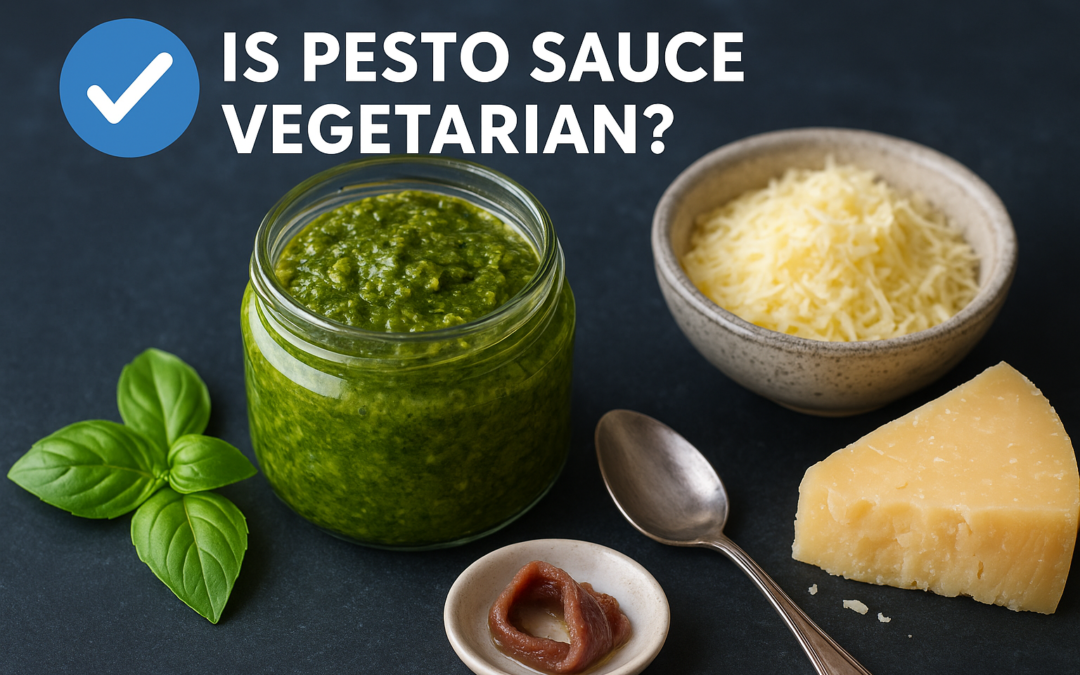
Pesto looks straightforward, basil, pine nuts, olive oil, garlic, and cheese. So when someone asks is pesto sauce vegetarian, the answer should be simple. But it’s not. The cheese in traditional pesto, specifically Parmigiano-Reggiano, is made with animal rennet, an enzyme sourced from the stomach lining of young calves. That single ingredient turns what seems like a plant-friendly sauce into a gray area for vegetarians.
At La Dolce Vita Cucina, our kitchen in Chicago’s Portage Park neighborhood works with Italian ingredients daily, and we know firsthand how often traditional Italian cheeses catch vegetarians off guard. Pesto is one of those dishes that people assume is safe without a second thought. The truth is, whether your pesto qualifies as vegetarian depends entirely on the type of cheese used and, if you’re buying it off a shelf, how carefully you read the label.
This article breaks down exactly what makes classic pesto non-vegetarian, which cheeses use animal rennet versus microbial or vegetable alternatives, and how to find or make pesto that fits a vegetarian diet. We’ll also look at popular store-bought brands so you know what to grab and what to skip next time you’re in the grocery aisle.
Why pesto sauce is not always vegetarian
Traditional pesto comes from Genoa, Italy, and its classic recipe has stayed consistent for centuries. The standard combination is fresh basil, pine nuts, garlic, olive oil, and cheese. On paper, nothing there raises any flags for most people. But the problem sits squarely in the cheese component, specifically in how that cheese is produced at the source rather than what it looks like on an ingredient list.
The role of Parmigiano-Reggiano in traditional pesto
Classic Genoese pesto calls for Parmigiano-Reggiano, sometimes blended with Pecorino Romano for a sharper bite. Both cheeses carry Protected Designation of Origin (PDO) status in Italy, which means their production must follow strict rules set by the EU. One of those rules is the use of animal rennet during the cheesemaking process. Rennet causes milk to coagulate and form curds, and without it, these cheeses cannot legally carry their official names under PDO certification.
This means any pesto made with authentic Parmigiano-Reggiano or Pecorino Romano is technically not suitable for vegetarians who avoid animal slaughter byproducts. Most people ordering pesto at a restaurant or grabbing it off a store shelf never think to ask what cheese went into it, which is exactly how this detail gets missed.
If a pesto recipe or product uses traditional PDO-certified Italian cheeses, it almost certainly contains animal rennet, regardless of how simple or natural the ingredient list looks.
What animal rennet actually is
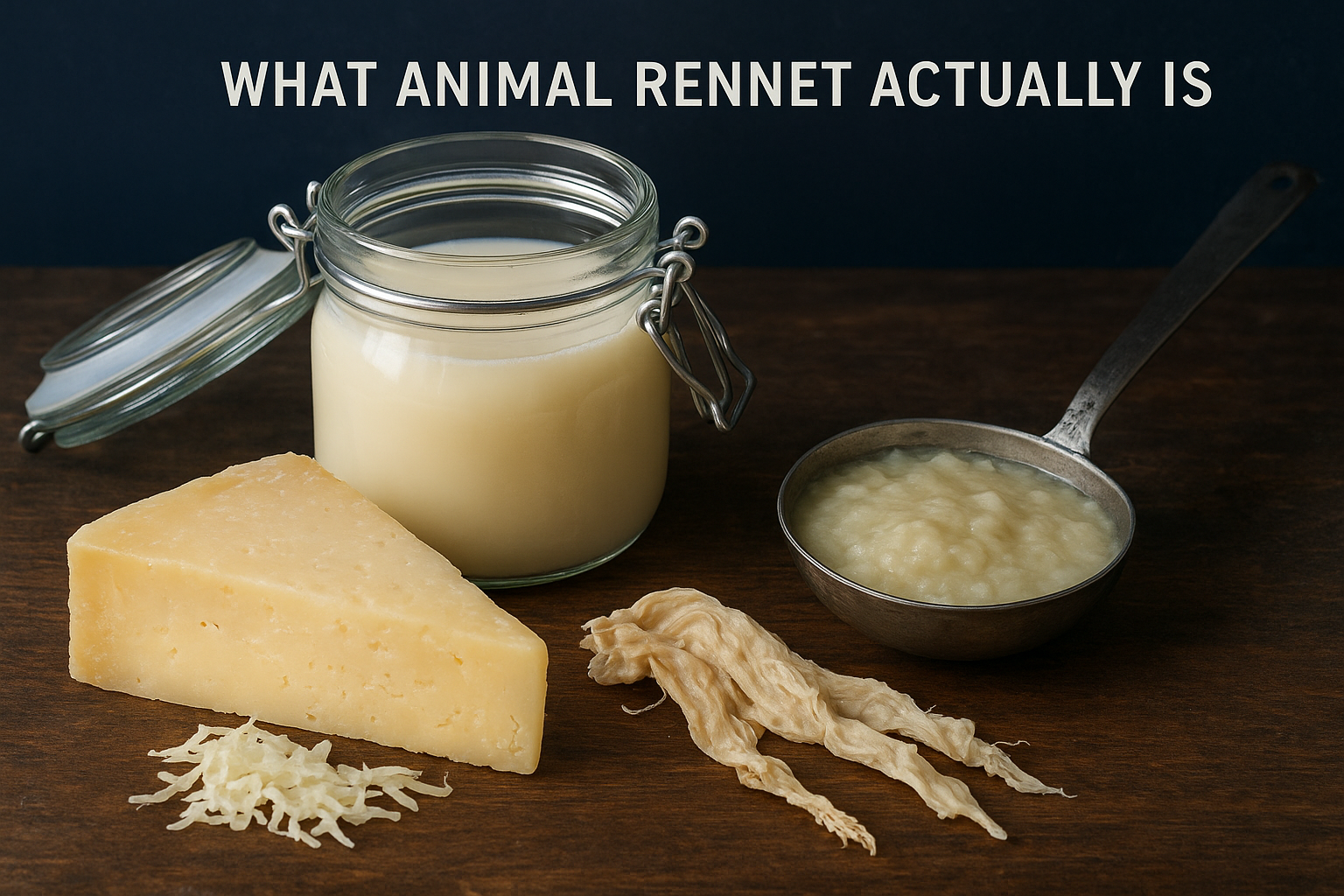
Animal rennet is an enzyme complex extracted from the stomach lining of young ruminant animals, typically calves, kids, or lambs. Cheesemakers use it to separate milk into solids and liquid whey. The process has been standard in European cheese production for centuries, which is part of why it flies under the radar for so many diners and shoppers.
For strict vegetarians and lacto-vegetarians who avoid any ingredient tied to animal slaughter, rennet falls clearly on the wrong side of that line. Some vegetarians are comfortable consuming rennet-containing cheese if their dietary choice is health-focused rather than ethics-focused. But for anyone avoiding slaughter byproducts, Parmigiano-Reggiano and Pecorino Romano are off the table, which takes traditional pesto with them.
Why pesto specifically catches people off guard
When someone asks is pesto sauce vegetarian, the default assumption is yes because it presents itself as a plant-forward sauce. The basil, olive oil, and garlic raise no concerns. The issue is that the cheese carries a hidden non-vegetarian element buried in how it was produced rather than visible in the sauce itself.
Pesto on a menu also rarely specifies which cheese variety the kitchen used. A restaurant may simply list "pesto" without disclosing whether the batch contained Parmigiano-Reggiano, a vegetarian-friendly alternative, or a generic grated blend. Store-bought pestos vary just as widely, with some budget-friendly products using microbial rennet by default while imported or artisan versions stick to the traditional animal rennet cheese. Without checking the label closely, there is no reliable way to tell from appearance or taste alone.
What in pesto can make it non-vegetarian
When you break pesto down ingredient by ingredient, most of it clears any vegetarian standard without issue. Basil, garlic, olive oil, and pine nuts contain nothing animal-derived. The problems come from what gets added to those basics, and in most cases, the non-vegetarian elements are not obvious from looking at the sauce or skimming a short ingredient list.
Animal rennet in the cheese
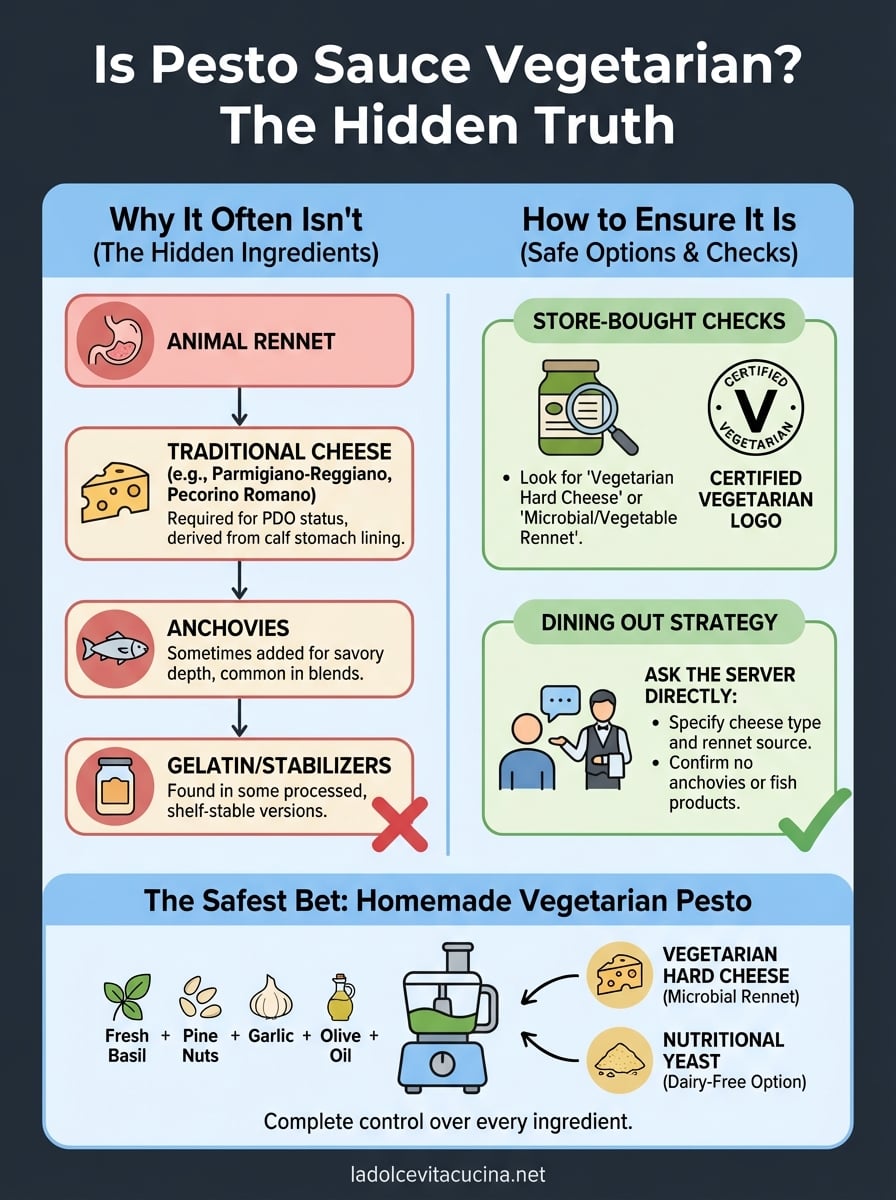
The cheese component is the most common reason pesto fails a vegetarian standard. Parmigiano-Reggiano and Pecorino Romano both require animal rennet under their PDO certification rules, and most traditional pesto recipes call for one or both. Rennet is sourced from the stomach lining of young calves or lambs, making it a slaughter byproduct rather than a simple dairy ingredient. If you are asking is pesto sauce vegetarian, the first thing to check is always which cheese the recipe or product used.
Rennet does not change the smell, taste, or texture of the finished cheese, so there is no way to detect it in pesto without reading the source information directly.
Anchovies in some recipes and blends
Certain pesto recipes and commercial blends add anchovies for extra depth. This is more common in restaurant kitchens and imported European products than in standard grocery store options, but it does appear often enough to matter. Anchovies are a fish ingredient, which rules out that pesto for both vegetarians and vegans. Always ask a server or check the full ingredient list before assuming a restaurant pesto is free of fish.
Gelatin and animal-based stabilizers in processed versions
Some shelf-stable and jarred pesto products use additives to extend texture or shelf life. Gelatin, which comes from animal collagen, occasionally appears in processed food products as a stabilizer. While it is not a standard pesto ingredient, mass-produced versions can include additives that a home cook would never use. Scanning the full ingredient panel rather than just the top few items gives you the clearest picture of what you are actually buying.
How to tell if pesto is vegetarian in the US
Reading a label in the US grocery store takes more attention than most people expect when you are trying to answer is pesto sauce vegetarian for yourself. The US does not require manufacturers to disclose the type of rennet used in cheese, so you often will not see "animal rennet" written plainly on a jar of pesto. What you can do is look for specific signals that point you toward a clear answer without needing a chemistry background.
Check the cheese name on the label
The cheese variety listed in the ingredients is your most direct clue. If the label names Parmigiano-Reggiano, Pecorino Romano, or Grana Padano, you are almost certainly looking at a product that contains animal rennet. These cheeses carry PDO certification from the EU, and that certification requires animal rennet by rule. No amount of marketing language on the front of the jar changes what that cheese name means on the back.
If the ingredients say "Parmesan-style cheese," "grated hard cheese," or simply "cheese," contact the manufacturer directly to ask what type of rennet they used.
Vegetarian-friendly pestos often list vegetarian hard cheese or note microbial rennet specifically because manufacturers targeting that audience know it matters. A product that uses a generic cheese descriptor and makes no mention of rennet type is worth a second look before you buy.
Look for certified vegetarian labels
Some brands carry a certified vegetarian logo on their packaging, which takes the guesswork out of the process entirely. In the US, organizations like the American Vegetarian Association license their logo to products that meet their standards, and seeing that mark on a pesto jar gives you a reliable shortcut.
Ask directly when dining out
At a restaurant, the safest move is to ask your server what cheese the kitchen uses in its pesto and whether the kitchen adds anchovies. Most restaurant staff can get that answer from the kitchen quickly. Framing your question clearly by asking about both the cheese type and any fish ingredients gives you the full picture in one conversation rather than two.
Vegetarian pesto options: store-bought and menus
Once you understand why is pesto sauce vegetarian is not a simple yes or no, finding a product or menu option that actually works for you becomes much more straightforward. Knowing what to look for saves you from standing in the grocery aisle reading three different jars or awkwardly cross-examining your server at dinner.
Store-bought brands worth checking
Several widely available brands in the US use microbial or vegetable rennet in their cheese, which makes their pesto suitable for vegetarians. Barilla’s pesto line uses a Grana Padano-style cheese made without animal rennet, and the label clearly indicates a vegetarian-friendly formulation. Trader Joe’s pesto products have also carried vegetarian certifications on select SKUs, though you should still check the current label since formulations can change between production runs.
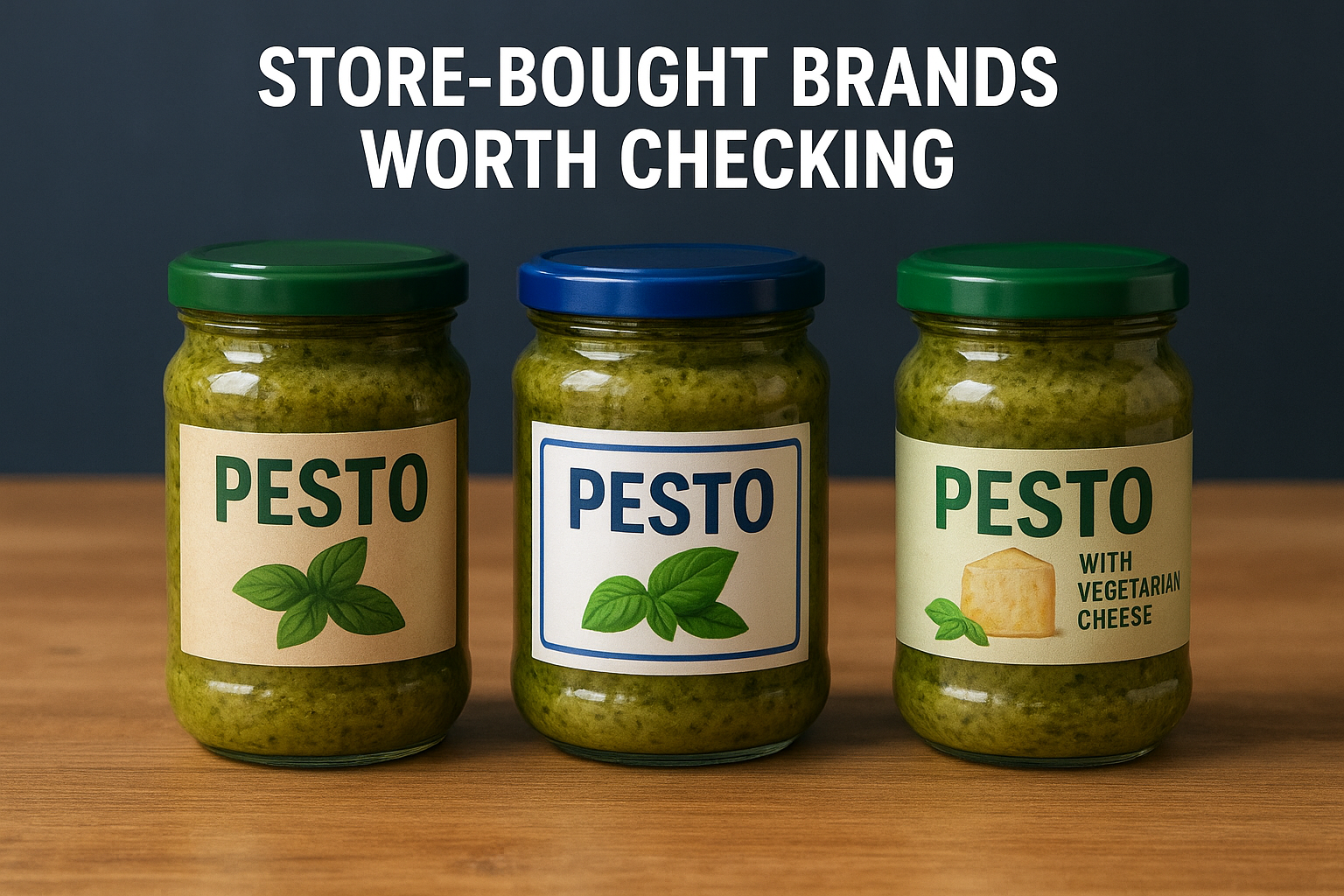
Your best approach with any jarred pesto is to flip it over immediately and scan for both the cheese name and any rennet disclosure before it goes into your cart.
Whole Foods Market’s 365 brand pesto is another option that consistently uses non-animal rennet and often carries a vegetarian label. For imported pestos from Italy, the picture shifts. Many Italian imports use authentic PDO-certified Parmigiano-Reggiano or Pecorino Romano, which means animal rennet by default. Treat any imported artisan pesto as non-vegetarian unless the packaging explicitly states otherwise.
What to look for on restaurant menus
At a restaurant, the menu description rarely tells you enough to make a confident call. Most listings simply say "pesto pasta" or "pesto sauce" without specifying which cheese the kitchen sources or whether anchovies are in the blend. That gap in information is why asking directly is still the most reliable method.
When you ask your server, be specific. Request to know both the cheese variety and whether any fish or anchovies are included in the pesto preparation. Italian restaurants that source quality ingredients are often proud of what they use, and kitchen staff can usually confirm the details quickly. A restaurant that makes its pesto in-house has full control over the ingredients, which also means the chef can often accommodate a substitution with a vegetarian cheese if you ask in advance.
How to make vegetarian pesto at home
Making pesto at home gives you complete control over every ingredient, which means you can answer the question "is pesto sauce vegetarian" with total confidence before it hits the table. The process takes under ten minutes with a food processor and requires no special equipment. The only decision that matters before you start is which cheese you use in place of traditional Parmigiano-Reggiano or Pecorino Romano.
Choose the right cheese substitute
The most practical swap for animal-rennet cheese in pesto is a vegetarian hard cheese, which is widely available in most US grocery stores under that exact label. These products replicate the salty, umami character of Parmigiano-Reggiano without using animal rennet in the production process. Nutritional yeast is another solid option that adds a savory, nutty depth and works especially well if you want a dairy-free result. For a straightforward vegetarian swap that keeps the texture closest to the original, look for blocks or wedges labeled "vegetarian hard cheese" rather than pre-grated products, which sometimes contain anti-caking additives that can affect both texture and final flavor.
Freshly grating your vegetarian cheese directly into the pesto produces a noticeably smoother and more cohesive sauce than buying pre-shredded versions.
The basic vegetarian pesto recipe
Once you have your cheese sorted, the rest of the recipe follows a simple ratio that scales up or down depending on how much you need. Start with 2 cups of fresh basil leaves, 1/3 cup of pine nuts (or walnuts as a budget alternative), 2 garlic cloves, 1/2 cup of your vegetarian hard cheese, and 1/2 cup of extra virgin olive oil. Combine the basil, pine nuts, and garlic in a food processor and pulse until coarsely chopped. Add the cheese and pulse again, then stream in the olive oil while the processor runs until the sauce reaches your preferred consistency.
Season with salt and black pepper to taste, and add a small squeeze of lemon juice if you want a brighter finish. Store the finished pesto in the refrigerator with a thin layer of olive oil on top to prevent oxidation and browning for up to five days.
Final checklist before you buy or order
Answering is pesto sauce vegetarian for any specific product or dish comes down to a short set of checks you can run in under a minute. Before you buy a jar, confirm the cheese name on the back label and look for any vegetarian certification mark. If the label names Parmigiano-Reggiano or Pecorino Romano with no rennet disclosure, treat it as non-vegetarian by default. Before you order at a restaurant, ask your server about both the cheese type and whether anchovies are in the recipe. At home, swap in a labeled vegetarian hard cheese and you control every ingredient from start to finish.
If you want to skip the label-reading entirely and enjoy Italian food made with quality ingredients in Chicago’s Portage Park neighborhood, come visit us at La Dolce Vita Cucina where our team can walk you through exactly what goes into each dish.