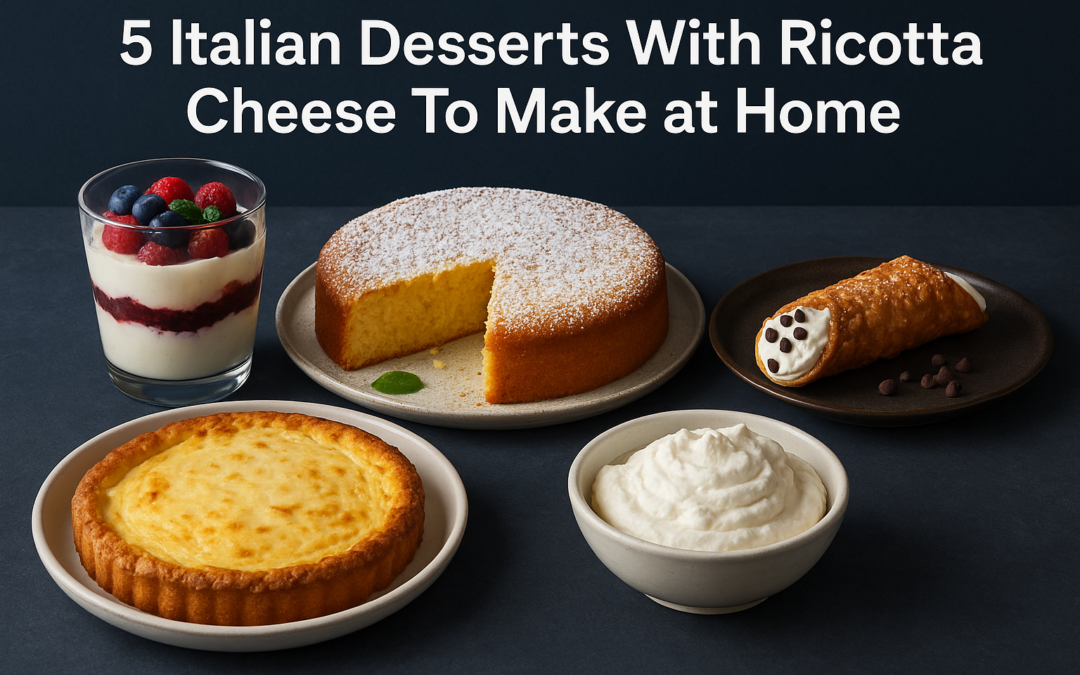
Ricotta cheese is one of Italian baking’s best-kept secrets. Its light, creamy texture transforms simple ingredients into something memorable, which is why Italian desserts with ricotta cheese have remained family favorites for generations, from Sicilian cannoli to Roman-style cheesecake.
At La Dolce Vita Cucina in Chicago’s Portage Park neighborhood, we see firsthand how these traditional recipes bring people together. Our house-made desserts follow the same principles Italian nonnas have used for centuries. And here’s the thing, you don’t need a professional kitchen to master these classics yourself.
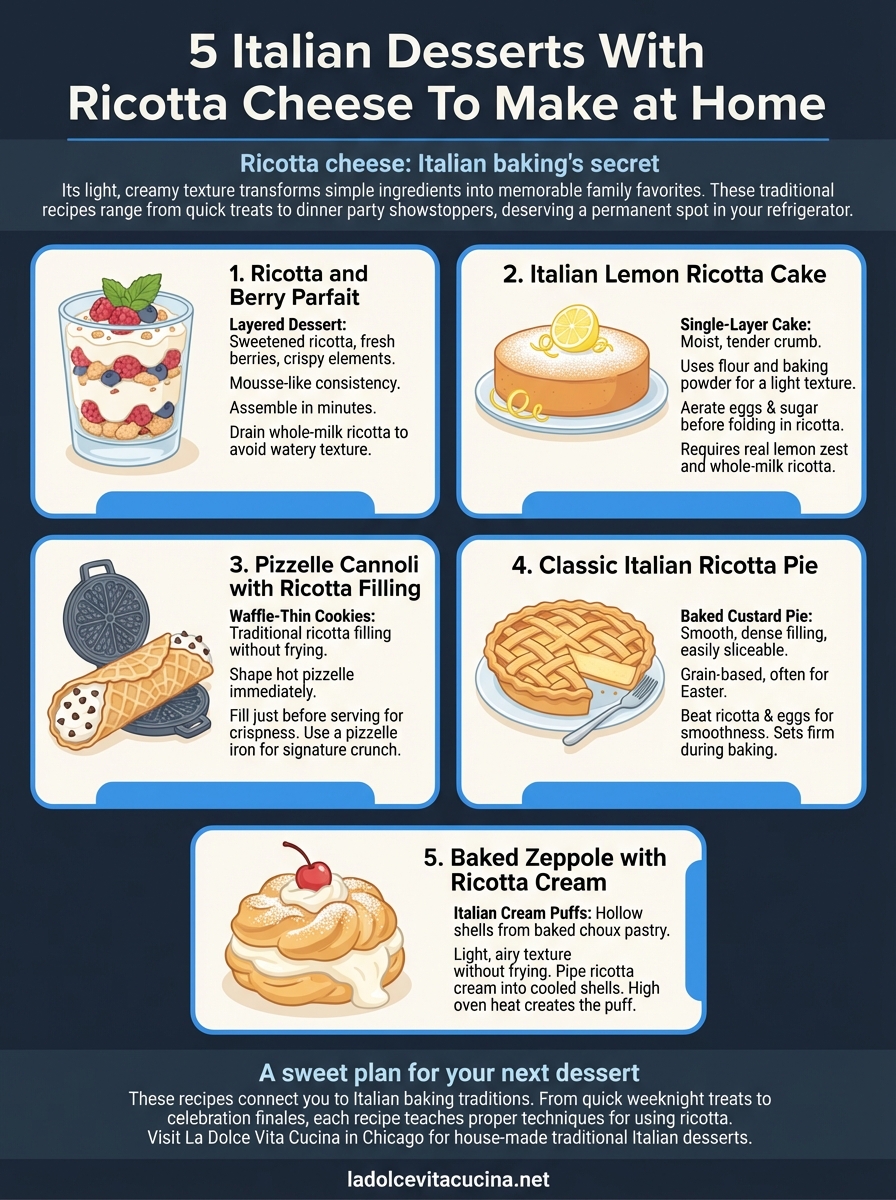
The five desserts below range from quick weeknight treats to showstopping finales for your next dinner party. Each one puts ricotta front and center, proving why this humble cheese deserves a permanent spot in your refrigerator.
1. Ricotta and berry parfait
This layered dessert combines sweetened ricotta with fresh berries and crispy elements for a lighter take on traditional Italian sweets. You can assemble it in minutes, yet it looks impressive enough for guests. The creamy ricotta base balances the tartness of berries without feeling heavy, which makes it a perfect finish after a rich meal.
What it is and why it works
Ricotta and berry parfait draws inspiration from Italian breakfast culture, where ricotta often appears alongside fruit and honey. Unlike American parfaits that rely on yogurt or heavy cream, this version stays true to Italy’s preference for fresh cheese as a dessert base. The ricotta’s mild flavor lets berries shine while adding substance that keeps you satisfied.
Best ricotta to use and how to prep it
You want whole-milk ricotta for this recipe, not the low-fat version that tastes chalky. Drain your ricotta in a fine-mesh strainer for at least 30 minutes before sweetening it. This step removes excess liquid that would otherwise make your parfait watery. Beat the drained ricotta with powdered sugar and vanilla extract until it reaches a mousse-like consistency.
A properly drained and whipped ricotta transforms from grainy to silky in just two minutes of mixing.
Flavor options that keep it Italian
Traditional Italian additions include lemon zest and almond extract for depth. You can fold in crushed amaretti cookies or layer the parfait with balsamic-macerated strawberries for a Venetian twist. Honey works better than granulated sugar when you want that authentic Italian sweetness. Pistachios add color and crunch that remind you of Sicilian desserts.
Step-by-step assembly overview
Start with your drained and sweetened ricotta in a piping bag or zip-top bag with the corner snipped. Layer crushed amaretti or biscotti in clear glasses, then pipe ricotta on top. Add fresh berries, another layer of ricotta, and finish with more berries and a mint sprig. The layering technique takes less than five minutes per glass.
Make-ahead, storage, and serving tips
You can prepare the ricotta mixture up to two days ahead and store it covered in your refrigerator. Assemble parfaits no more than four hours before serving to keep the cookie layers from getting soggy. These Italian desserts with ricotta cheese taste best when slightly chilled but not ice-cold, so pull them from the refrigerator 10 minutes before you plan to serve them.
2. Italian lemon ricotta cake
This single-layer cake brings together ricotta’s creamy texture with bright lemon flavor in a dessert that feels sophisticated without complicated techniques. You’ll find versions of this cake across Italy, from the Amalfi Coast to Tuscany, where lemons and fresh cheese meet in perfect balance. The result is a moist, tender crumb that stays fresh for days.
What it is and how it differs from cheesecake
Italian lemon ricotta cake uses ricotta as a binder rather than the main ingredient, which keeps it closer to traditional cake than dense cheesecake. The batter includes flour and baking powder, creating a light, springy texture instead of the custard-like consistency you get with American-style cheesecake. You bake it in a standard cake pan at a higher temperature, and it doesn’t require a water bath or slow cooling.
Ingredients that matter most
Fresh ricotta and real lemon zest carry this cake, so skip the pre-grated zest and bottled juice. You need whole-milk ricotta that you’ve drained for 20 minutes. Quality olive oil adds moisture without butter’s heaviness, which is common in Italian desserts with ricotta cheese. The lemon juice and zest should come from at least three lemons for noticeable citrus punch.
How to keep it light instead of dense
Beat your eggs and sugar until they double in volume before folding in the ricotta. This aeration step creates the lift that keeps your cake from turning into a brick. Mix the flour gently and stop as soon as you see no dry streaks.
Overmixing develops gluten that makes ricotta cake tough instead of tender.
Step-by-step baking overview
Whisk your dry ingredients separately, then beat eggs with sugar for five minutes. Fold in ricotta, lemon zest, and olive oil before adding the flour mixture. Pour into a greased pan and bake at 350°F for 40 minutes until golden and set.
Variations and serving ideas
Dust with powdered sugar for a classic finish, or glaze with lemon and honey for extra shine. Add fresh berries on top or serve slices with whipped cream. This cake stays moist for three days at room temperature when wrapped well.
3. Pizzelle cannoli with ricotta filling
These waffle-thin cookies become crisp shells for traditional ricotta filling without the deep-frying that authentic cannoli require. You can make pizzelle at home with a specialized iron or find pre-made shells at Italian markets. The method saves time while delivering that signature crunch and creamy contrast that makes cannoli one of the most popular italian desserts with ricotta cheese.

Why this shortcut tastes like the real thing
Pizzelle share cannoli’s thin, crispy texture because both use similar eggy batters that crisp under heat. The anise flavoring in traditional pizzelle complements ricotta filling naturally, just like the wine-based dough of Sicilian cannoli. You skip the frying step and still get that delicate snap when you bite through the shell into cool ricotta.
Ricotta filling basics and flavor add-ins
Start with drained whole-milk ricotta that you’ve pressed in cheesecloth for at least an hour. Beat it with powdered sugar until smooth, then fold in mini chocolate chips or chopped pistachios. Add vanilla extract and orange zest for traditional Sicilian flavors, or try espresso powder for a coffee twist.
How to shape and fill without sogginess
Roll fresh pizzelle into tubes immediately after they come off the iron, before they cool and harden flat. Work quickly because you have only 10 seconds to shape each one. Fill your shells no more than two hours before serving, as the ricotta’s moisture will eventually soften the crisp texture.
Fill cannoli just before serving to maintain that essential textural contrast between crispy shell and creamy filling.
Step-by-step overview with timing
Make your pizzelle batter and cook each cookie for 45 seconds in your preheated iron. Shape while hot, then let them cool completely on a rack. Pipe or spoon ricotta filling into both ends, working from the outside toward the center.
Make-ahead strategy for crisp shells
Store unfilled pizzelle shells in an airtight container with parchment paper between layers for up to three days. Keep them in a cool, dry place away from humidity. Prepare your ricotta filling separately and refrigerate it, then assemble your cannoli right before guests arrive.
4. Classic Italian ricotta pie
This baked custard pie appears at Easter tables and special celebrations across Italian-American households, particularly among families with Southern Italian roots. The smooth, dense filling sets during baking into slices that hold their shape, making it easier to serve than softer italian desserts with ricotta cheese. You’ll find it called pizza rustica in some regions or simply ricotta pie in Italian bakeries.
What it is and when Italians serve it
Italians serve this grain-based pie during Easter week as part of traditional holiday meals, though you’ll also see it at weddings and baptisms. The ricotta custard filling contains eggs and sometimes cooked wheat berries for texture, which differentiates it from lighter cheesecakes. Many families prepare it the day before serving to let flavors develop.
Choosing a crust style and flavor profile
You can use a traditional pastry crust or a sweet cookie-style dough depending on your region’s traditions. Some versions include citrus zest in both crust and filling, while others add cinnamon or vanilla. A lattice top is common for visual appeal.
Getting the filling smooth and sliceable
Beat your ricotta and eggs together thoroughly before adding sugar to eliminate lumps. Strain the mixture if your ricotta feels grainy. The egg ratio determines firmness, so use at least three eggs per pound of ricotta.
A properly set ricotta pie should slice cleanly without weeping liquid or crumbling at the edges.
Step-by-step overview from mix to bake
Line your pie pan with dough, then pour in the beaten ricotta mixture. Top with a second crust or lattice, then bake at 350°F for 55 minutes until set.
Storage, freezing, and serving tips
Store your baked pie in the refrigerator for up to five days wrapped in plastic. You can freeze whole pies for three months. Serve slices at room temperature with espresso.
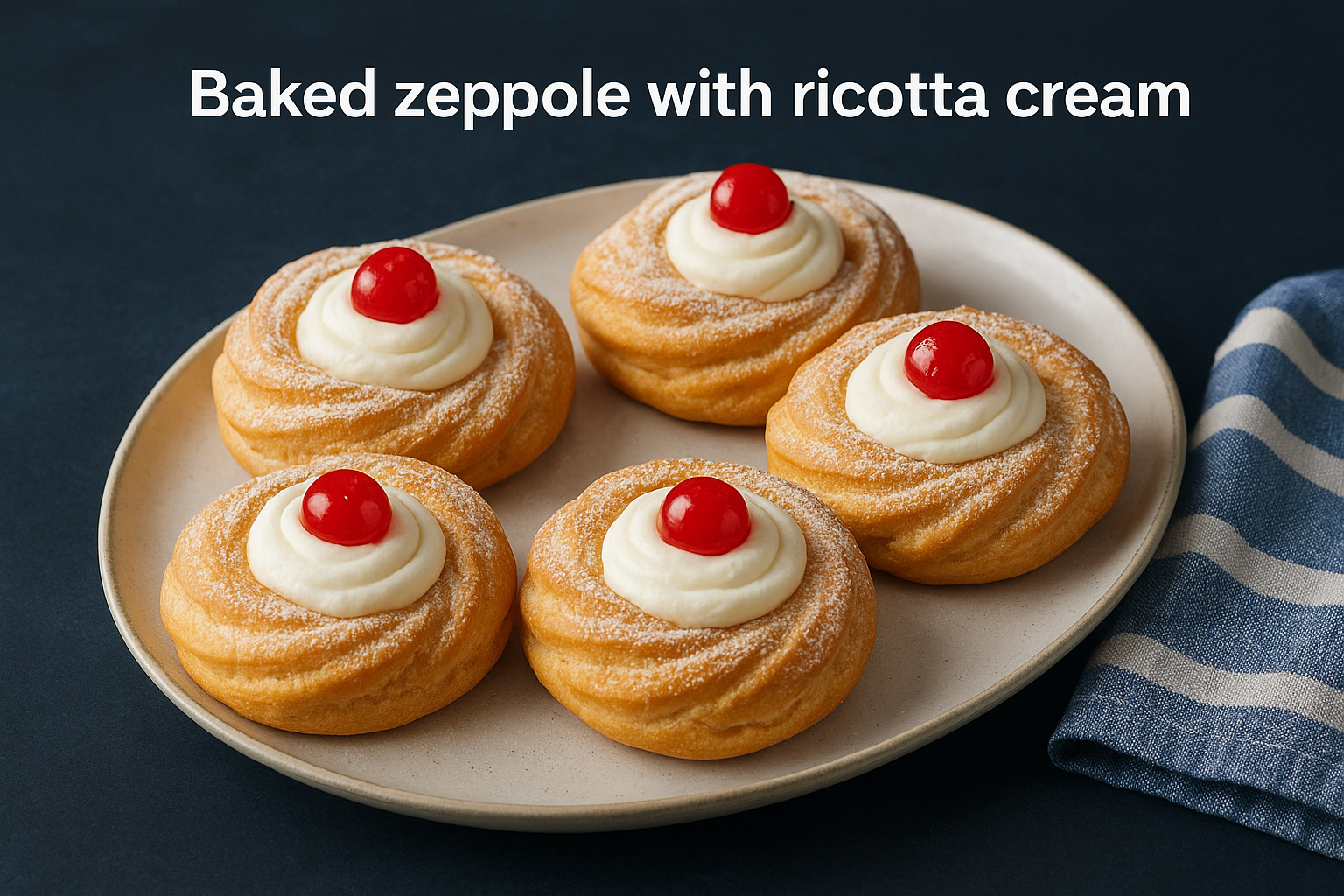
5. Baked zeppole with ricotta cream
These Italian cream puffs traditionally mark St. Joseph’s Day on March 19, though Italian bakeries serve them year-round. You make them from choux pastry that puffs in the oven, creating hollow shells perfect for ricotta-based fillings. The baked method delivers the same light, airy texture as fried versions without standing over hot oil, which makes them one of the more accessible italian desserts with ricotta cheese for home bakers.
What zeppole are and why the baked version works
Zeppole are Italian pastries that originated in Naples, where vendors fry them for religious festivals. Your baked version uses the same choux dough technique that creates pâte à choux, the base for French cream puffs. The high oven temperature turns water in the dough to steam, which pushes the pastry outward to form that signature hollow center.
Ricotta cream filling options
Mix drained ricotta with whipped cream and powdered sugar for a lighter filling, or use straight sweetened ricotta for traditional texture. Add vanilla and lemon zest for classic flavor, or fold in chopped candied orange peel like Neapolitan bakers do.
Step-by-step overview for choux and piping
Cook your butter, water, and flour on the stovetop until the dough pulls from the pan sides, then beat in eggs one at a time. Pipe 3-inch rounds onto parchment and bake at 400°F for 25 minutes.
Resist opening your oven door during the first 20 minutes, or your zeppole will collapse instead of staying puffy.
Troubleshooting hollow or flat zeppole
Flat zeppole mean your dough was too wet or your oven temperature dropped. Make sure each egg incorporates fully before adding the next, and use an oven thermometer to verify accurate heat.
Finishing touches and serving ideas
Pipe ricotta cream into cooled shells from the bottom using a pastry tip, then dust with powdered sugar. Top each with a candied cherry for the traditional presentation.
A sweet plan for your next dessert
These five italian desserts with ricotta cheese give you options for any occasion, from quick weeknight treats to special celebration finales. You now have the techniques for draining ricotta properly, assembling layers that stay crisp, and creating fillings that hold their shape. Start with the ricotta and berry parfait if you want something fast, or try the lemon ricotta cake when you need a dependable crowd-pleaser.
Making these desserts at home connects you to Italian baking traditions that have survived for generations through careful attention to technique and quality ingredients. Each recipe teaches you something different about working with ricotta, whether you’re whipping it into mousse or baking it into custard. Your next dinner party deserves better than store-bought options.
Want to taste how these classics should be made? Visit La Dolce Vita Cucina in Chicago’s Portage Park neighborhood, where we serve house-made Italian desserts that follow the same traditional methods you’ve learned here today.