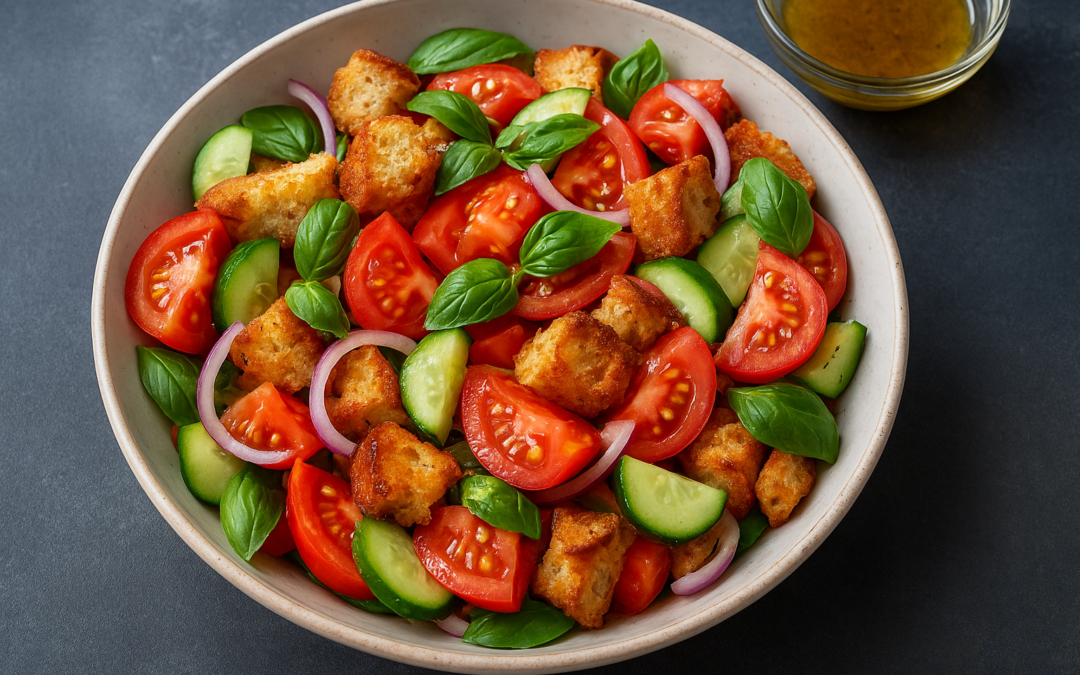
Stale bread never had it so good. A proper panzanella salad recipe turns yesterday’s crusty loaf into something you’ll actually crave, a tangle of toasted bread, peak-season tomatoes, and a sharp red wine vinaigrette that soaks into every bite. It’s the kind of dish that Italian home cooks have been throwing together for centuries, born out of thrift and perfected by taste.
At La Dolce Vita Cucina in Chicago’s Portage Park neighborhood, we build our menu around exactly this philosophy: simple ingredients, treated right, with nothing wasted. Panzanella shows up on our table when tomatoes are at their best, and our kitchen team has strong opinions about how the bread should be prepared, opinions we’re sharing with you here.
This guide walks you through every step, from choosing the right bread and getting that ideal crispy-yet-chewy texture to building a dressing that ties the whole salad together. You’ll get our preferred ingredient ratios, tips on timing (because a soggy panzanella is a sad panzanella), and the small details that separate a forgettable side from a salad worth making all summer long.
What makes a great panzanella salad
Most panzanella problems start before the knife even touches a tomato. The bread and the timing are the two things that most recipes gloss over, and they’re the reason your salad ends up either chalky and dry or a wet, mushy heap. Getting both right is what turns a simple panzanella salad recipe into something people ask you to make again and again throughout the summer.
The bread: texture is everything
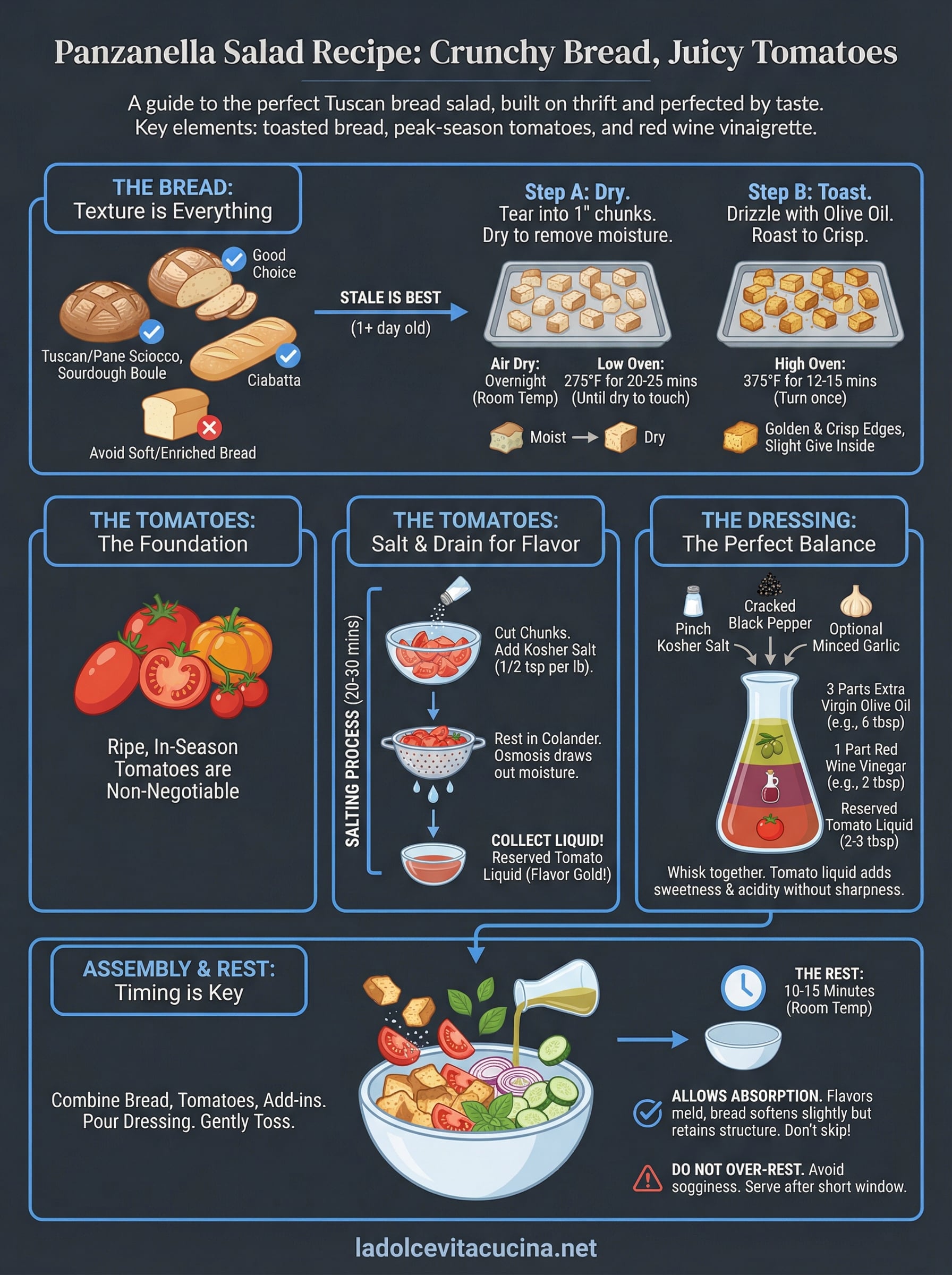
Panzanella is a Tuscan bread salad, and the bread is not a side character. Traditional recipes call for unsalted Tuscan bread (pane sciocco), which has a dense, open crumb and a thick crust that holds up under dressing without falling apart. If you can’t find that, a good sourdough or ciabatta works well. What you want to avoid is soft sandwich bread or anything enriched with butter or milk, because those loaves collapse the moment any liquid touches them.
The bread should be at least one day old before you use it. Fresh bread turns to paste in dressing; stale bread drinks it up while keeping structure.
Cutting the bread into rough 1-inch chunks by hand rather than even slices gives you more surface area and more edges to crisp up in the oven. Irregular shapes also mean the dressing collects in the nooks, which is exactly where you want it.
Tomatoes, dressing, and timing
Ripe, in-season tomatoes are non-negotiable here. Roma tomatoes give you a meatier bite with less liquid; heirlooms bring sweetness and color; cherry tomatoes add a bright pop in every bite. Use whatever variety looks best at your market, but skip anything pale or out of season because the flavor difference is substantial and there’s nowhere to hide it in this salad.
The dressing is red wine vinegar and good olive oil, and those two ingredients carry most of the work. Some cooks add Dijon mustard or minced garlic, which is a reasonable move, but the core ratio matters most: roughly three parts olive oil to one part vinegar. Too much vinegar and the bread turns sharp and harsh. Too little and the whole salad falls flat, tasting more like dressed croutons than something intentional.
Timing is the last piece that separates a good panzanella from a great one. You don’t want to dress everything and serve immediately, but you also don’t want to let it sit for an hour. Ten to fifteen minutes of resting time after assembly lets the bread absorb the dressing and tomato juices without losing all of its texture. That short window is where the flavors actually come together.
Step 1. Dry and toast the bread for crunch
The single biggest mistake people make with a panzanella salad recipe is using bread straight from the bag. Fresh bread has too much moisture already, so when the dressing hits it, you end up with a gummy mess instead of a salad with substance. Your bread needs to lose most of that internal moisture before it ever touches the oven.
How to dry the bread
Tear or cut your bread into rough 1-inch chunks and spread them in a single layer on a baking sheet. The easiest approach is to leave them uncovered at room temperature overnight, which pulls out surface moisture and firms up the crumb without any extra effort. If you’re short on time, a low oven at 275°F for about 20 to 25 minutes achieves a similar result. Either way, your chunks should feel noticeably drier to the touch before you move on.
Dry bread absorbs dressing like a sponge without losing its shape; fresh bread just falls apart under the same pressure.
Here’s a quick reference for drying times based on bread type:
| Bread Type | Room Temperature Drying | Low Oven (275°F) |
|---|---|---|
| Ciabatta | 8 to 12 hours | 20 minutes |
| Sourdough | 10 to 14 hours | 25 minutes |
| Tuscan (pane sciocco) | 8 to 10 hours | 18 to 20 minutes |
How to toast the bread
Once your bread is dry, raise the oven temperature to 375°F and drizzle the chunks with a generous amount of olive oil, tossing them until every surface is coated. Spread them back onto the baking sheet and roast for 12 to 15 minutes, turning once halfway through, until the edges are golden and crisp but the interior still has a little give when you press down.
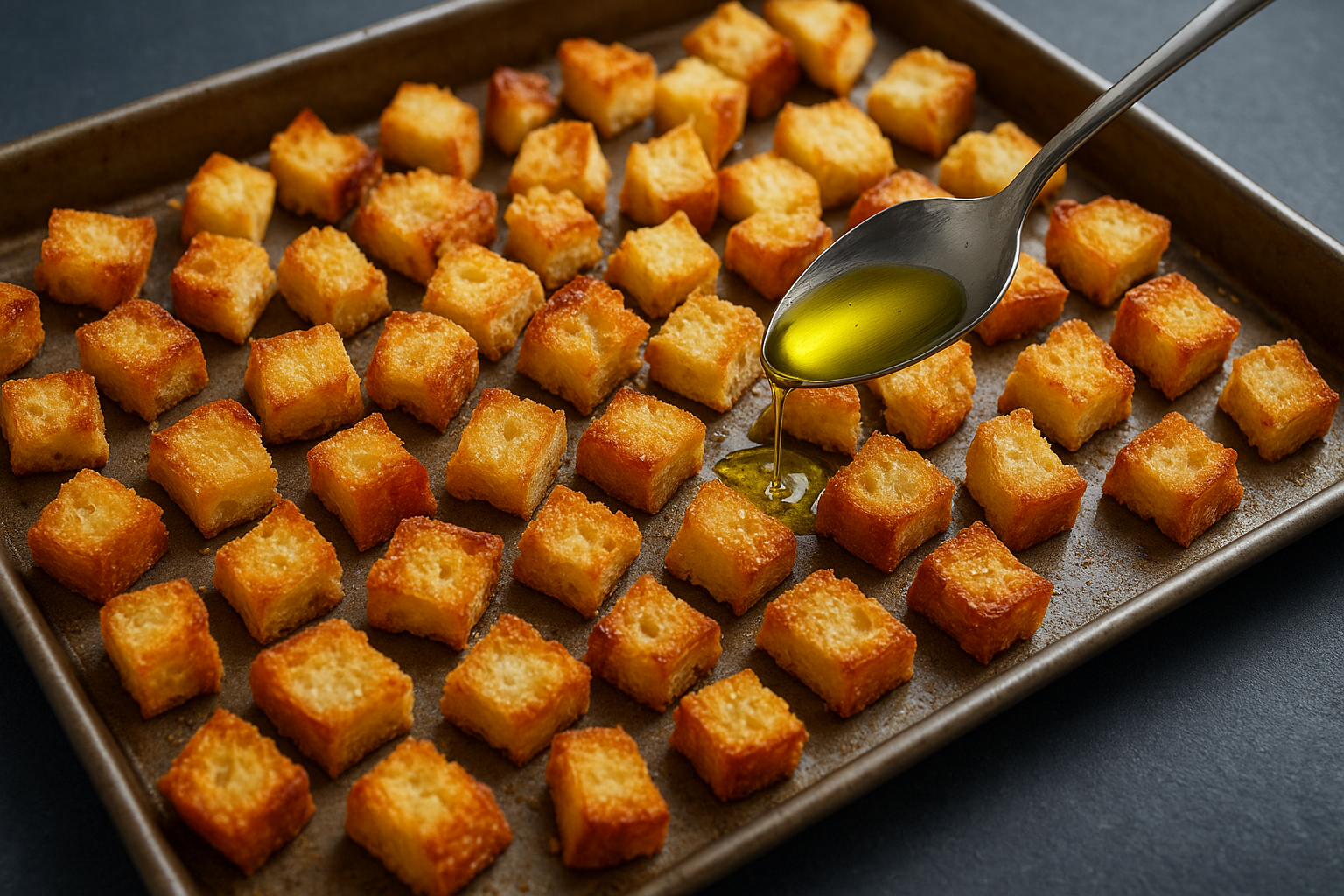
Watch for these signs that your bread is properly toasted and ready:
- Edges are golden brown, not pale or soft
- Chunks don’t flex when you pick them up
- Tapping one on the pan produces a hollow sound
Step 2. Salt the tomatoes to build flavor
Tomatoes carry a lot of water, and in a panzanella salad recipe, uncontrolled moisture is your biggest problem. If you slice your tomatoes and toss them directly into the bowl, they release liquid throughout the salad that dilutes your dressing and softens the bread far too quickly. Salting the tomatoes ahead of time pulls that excess liquid out in a controlled way, and it also concentrates the flavor so each bite tastes like the best tomato you’ve ever had.
Why salting matters
This step does two things at once. First, osmosis draws moisture out of the tomato flesh and into a small puddle in your bowl, moisture you can then collect and use as part of your dressing rather than letting it waterlog the bread. Second, salt breaks down the outer skin slightly, making the tomato more tender and better at absorbing the vinaigrette when you dress the finished salad.
Don’t skip this step if you’re using high-water varieties like beefsteak or heirloom tomatoes; they release far more liquid than Romas, and that liquid will overwhelm the salad without this preparation.
How to salt and drain your tomatoes
Cut your tomatoes into rough chunks about the same size as your bread pieces, anywhere from 3/4 inch to 1 inch. Place them in a colander set over a bowl, sprinkle with a generous pinch of kosher salt (about 1/2 teaspoon per pound of tomatoes), and toss them gently. Let them sit for 20 to 30 minutes at room temperature.
Follow these steps in order for best results:
- Cut tomatoes into 3/4 to 1-inch chunks
- Transfer to a colander set over a bowl
- Add 1/2 teaspoon kosher salt per pound of tomatoes
- Toss gently and let rest for 20 to 30 minutes
- Reserve the collected liquid to add to your dressing
Pat the tomatoes lightly with a paper towel if they look particularly wet on the surface. The reserved tomato liquid is worth keeping; add it to your olive oil and vinegar when you build the dressing in the next step.
Step 3. Make the dressing and assemble the salad
With your toasted bread ready and your salted tomatoes drained, you’re now holding all the components that turn this panzanella salad recipe into something worth eating. The dressing comes together in under two minutes, and the assembly takes maybe five more. What matters here is the order you combine everything, because adding ingredients in the right sequence helps the bread absorb evenly and keeps the texture from falling apart before it reaches the table.
Building the dressing
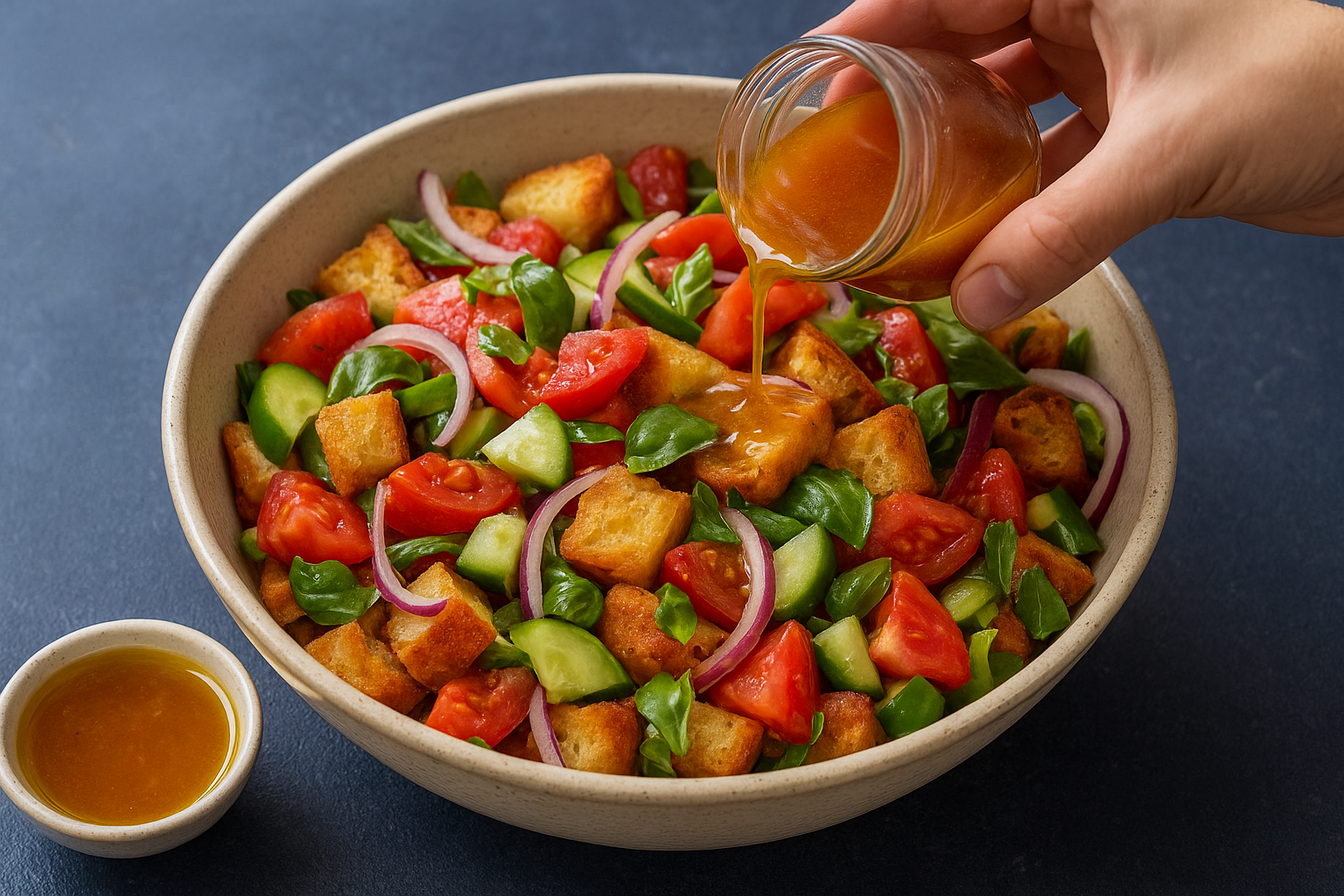
Start with the reserved tomato liquid you collected in the bowl during the salting step. Pour it into a small jar or bowl and add your olive oil and red wine vinegar. The base ratio that works consistently is three parts olive oil to one part red wine vinegar, adjusted slightly with the tomato liquid depending on how much you collected. Add a pinch of kosher salt, freshly cracked black pepper, and one small clove of minced garlic if you want a sharper, more savory edge.
The tomato liquid adds sweetness and acidity that balances the olive oil without making the dressing taste sharp or thin.
Here’s the dressing formula as a quick reference:
| Ingredient | Amount (for 4 servings) |
|---|---|
| Extra virgin olive oil | 6 tablespoons |
| Red wine vinegar | 2 tablespoons |
| Reserved tomato liquid | 2 to 3 tablespoons |
| Kosher salt | 1/4 teaspoon |
| Garlic (minced, optional) | 1 small clove |
Assembling the salad
Combine the toasted bread chunks and drained tomatoes in a large bowl, then pour the dressing over everything at once. Toss the bowl gently so the bread picks up dressing on all sides without breaking apart. Add thinly sliced red onion, torn fresh basil leaves, and a handful of cucumber chunks if you want extra texture and freshness. Give it one final light toss to distribute everything evenly before letting it rest.
Step 4. Rest, serve, and customize without sogginess
Once you finish tossing, set the bowl aside and resist the urge to serve immediately. The bread needs a short window to absorb the dressing and tomato juices fully, and this resting period is what separates a sharp, disjointed salad from one where every component tastes like it belongs together. Skip the rest and you’ll bite into dry bread with wet tomatoes; wait too long and everything turns soft.
How long to rest the salad
Ten to fifteen minutes at room temperature is the target resting time for this panzanella salad recipe. Check the bread at the ten-minute mark by pressing a chunk gently. It should feel slightly moist on the surface but still hold its shape when you pick it up. If it compresses and stays flat, you’ve gone too long.
Resting uncovered keeps condensation from collecting on the surface, which is one of the fastest ways to turn a good salad soggy.
Customizations that hold up
You can add extra ingredients without wrecking the texture, as long as you choose components that don’t release additional liquid into the bowl. The additions below all work well because they contribute flavor and variety without watering down the dressing:
- Torn burrata or fresh mozzarella: add right before serving so it doesn’t weep into the salad during the rest
- Kalamata olives: already cured, so they add salt and richness with no extra moisture
- Thinly shaved fennel: brings crunch and a mild anise note that pairs well with basil
- Capers: a small spoonful cuts through the richness of the olive oil immediately
Avoid watery additions like fresh mozzarella packed in brine (drain and pat it dry first), zucchini, or any ingredient you haven’t patted completely dry. Serve the finished salad in a wide, shallow bowl so you can see every component, and add a final drizzle of olive oil right before it hits the table.
Final bite
This panzanella salad recipe comes down to three decisions: dry the bread properly, salt the tomatoes ahead of time, and give the assembled salad enough rest before you serve it. Get those three right and everything else falls into place. Skip any one of them and the salad tells you immediately, in texture and flavor.
Summer is the obvious season for this dish, but the technique you’ve learned here carries into other meals. The same logic of drawing out moisture and building dressing from the liquid you collect applies across a wide range of Italian cooking. Once you make this once, you’ll start spotting where else those habits fit on the table.
If you want to experience that same approach to Italian food in a fuller way, come eat with us at La Dolce Vita Cucina in Chicago’s Portage Park neighborhood. We’d love to show you what that philosophy tastes like when it comes out of a real kitchen built around honest, straightforward cooking.