
A traditional cappuccino is one of the simplest drinks in Italian coffee culture, espresso, steamed milk, and foam in equal parts. At La Dolce Vita Cucina, our Chicago kitchen respects that simplicity every day. But most Americans encounter their first cappuccino at Starbucks, and Starbucks cappuccino nutrition varies quite a bit depending on what size you order and which milk you choose. That matters if you’re tracking calories, sugar, or caffeine as part of your daily routine.
A standard Grande cappuccino with 2% milk from Starbucks sits around 140 calories, reasonable on its own. Start swapping in whole milk, oat milk, or flavored syrups, though, and the numbers shift fast. The difference between a "healthy" coffee order and a dessert-level drink often comes down to two or three customization choices most people make without thinking.
This guide breaks down the full nutritional picture for every Starbucks cappuccino size and milk option. You’ll find exact calorie counts, sugar grams, fat content, and caffeine levels so you can order with confidence, or, better yet, stop by our Portage Park restaurant for a cappuccino made the Italian way.
Why Starbucks cappuccino nutrition varies
A cappuccino at any coffee shop starts with the same three components: espresso, steamed milk, and milk foam. That simplicity sounds like it should produce consistent nutrition numbers, but Starbucks cappuccino nutrition shifts significantly depending on how each of those elements changes across sizes, milk types, and optional additions. Understanding why the numbers move helps you make smarter choices before you even step up to the counter.
The base recipe: espresso and milk ratios
Starbucks defines a cappuccino as equal parts espresso, steamed milk, and thick milk foam. In theory, that ratio stays constant. In practice, the actual volume of milk poured into your cup changes with each size, and more milk means more calories, fat, and sugar before you add anything else.
A Tall (12 oz) cappuccino uses roughly 4 oz of steamed milk. A Grande (16 oz) uses around 6 oz, and a Venti (20 oz) pushes that to approximately 8 oz. Each additional ounce of 2% milk adds roughly 15 calories, so the size you choose directly controls how much dairy ends up in the drink. Small choices at the counter have a measurable result on your daily intake.
The milk portion, not the espresso, drives most of the calorie difference between a small and large cappuccino.
Espresso shots and their limited impact
Espresso itself contributes very little to the calorie count. A single shot of Starbucks espresso runs about 5 calories, and a double shot sits around 10. Larger cappuccino sizes do use more shots, a Venti gets three shots compared to the Tall’s two, but those extra shots barely move the calorie needle. Fat and sugar from milk and any added syrups do the real nutritional work when total calories climb across sizes.
What espresso does contribute meaningfully is caffeine. That topic gets its own section later, but it’s worth noting now that espresso shots are almost entirely responsible for the stimulant side of your drink. From a pure calorie standpoint, the milk selection you make matters far more than the number of shots you request.
How customizations stack up fast
Beyond size, every customization you request changes at least one macronutrient. Swapping 2% milk for whole milk adds fat and calories. Moving to oat milk or soy milk shifts both the carbohydrate and protein profile compared to dairy. Asking for a flavored syrup, whether vanilla, caramel, or hazelnut, adds sugar quickly: a single pump of Starbucks vanilla syrup contains roughly 20 calories and 5 grams of sugar, and most flavored drinks get two to four pumps by default.
Most customers order at least one modification without registering its nutritional weight. A Grande oat milk cappuccino with two pumps of vanilla syrup looks similar to a plain order but can land 60 to 80 calories higher than the standard 2% version. None of those additions are harmful in isolation, but each one compounds the others. Knowing the individual contribution of every ingredient lets you build a drink that fits your goals rather than finding out the total only after the fact.
Starbucks cappuccino nutrition by size
Before diving into milk swaps and add-ins, knowing the baseline calorie counts by size gives you the most useful foundation. Every number in this section reflects a standard Starbucks cappuccino made with 2% milk and no added syrups or toppings, which is the default preparation at most locations.
The numbers for each size
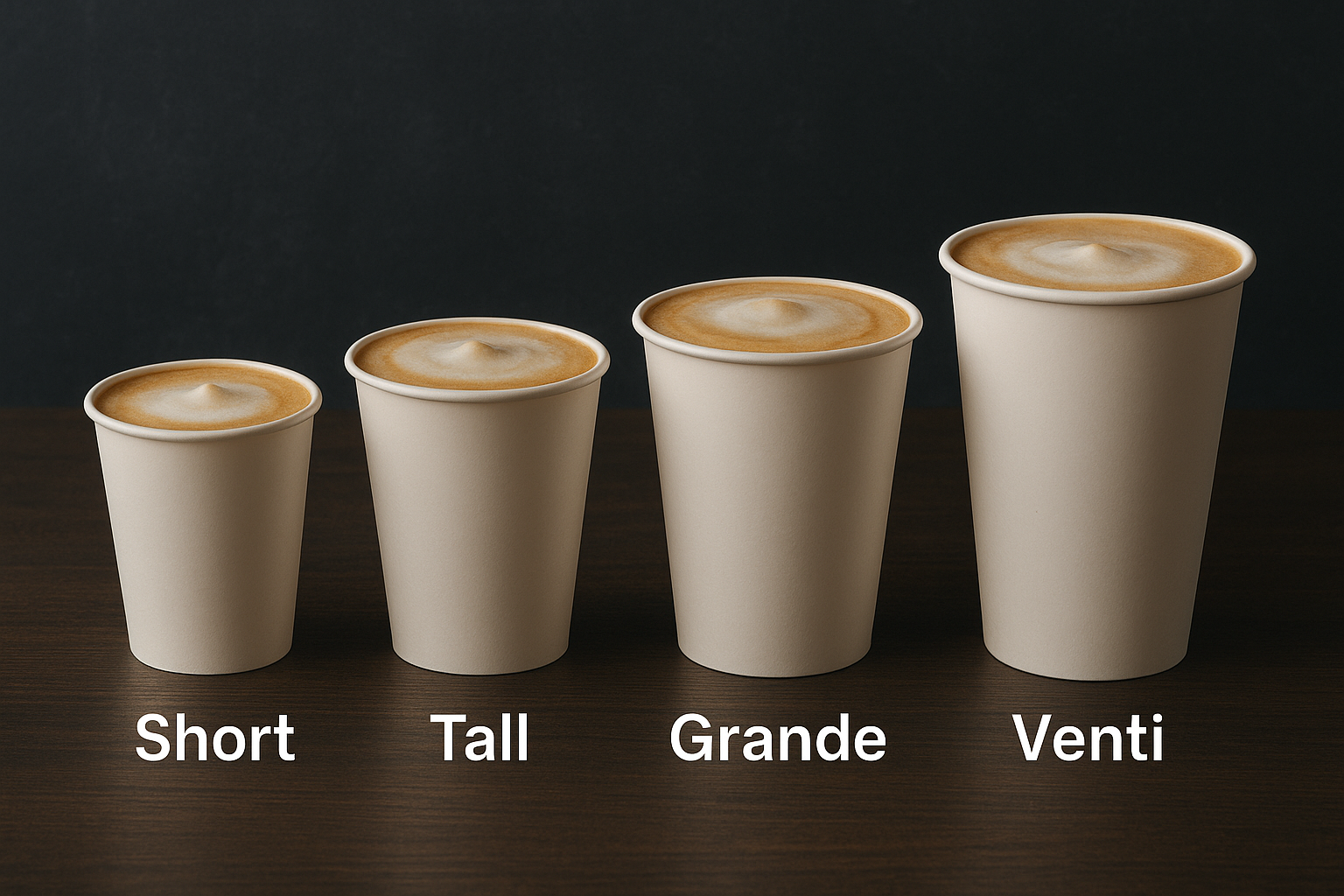
The four available sizes at Starbucks each carry a different nutritional load, and the table below makes those differences easy to compare at a glance. Starbucks cappuccino nutrition scales noticeably from Short to Venti, driven almost entirely by the increasing amount of steamed milk in each cup.
| Size | Calories | Protein (g) | Total Fat (g) | Total Carbs (g) | Sugar (g) |
|---|---|---|---|---|---|
| Short (8 oz) | 60 | 6 | 2.5 | 6 | 6 |
| Tall (12 oz) | 90 | 9 | 3.5 | 9 | 9 |
| Grande (16 oz) | 140 | 13 | 5 | 13 | 13 |
| Venti (20 oz) | 170 | 16 | 7 | 16 | 15 |
The Short size is rarely advertised but still available at the counter. If you want the smallest calorie footprint without switching milk, asking for a Short is the most direct path to cutting roughly 80 calories compared to a Venti.
What the size difference means in practice
Moving from a Tall to a Grande adds 50 calories and about 4 grams of sugar, which sounds minor until you factor in daily habits. If you order a Grande cappuccino five days a week, that single size choice adds up to 250 extra calories over a workweek compared to always ordering a Tall.
Choosing one size smaller is the single easiest, zero-effort way to reduce your cappuccino’s calorie count without changing anything else about the drink.
Protein actually scales up meaningfully as the size increases, which is worth noting if you rely on your morning coffee to contribute to your daily protein intake. A Grande delivers 13 grams of protein from the milk alone, making it a more filling option than smaller sizes for people watching satiety as much as calories. Fat content follows the same upward pattern, with the Venti carrying 7 grams of total fat compared to just 2.5 in a Short.
How milk choices change calories, sugar, and macros
The milk you pick is the single biggest lever you have over Starbucks cappuccino nutrition. Swapping from one milk type to another can shift your calorie count by 30 to 60 calories per drink, raise or lower your sugar intake by several grams, and change whether your cappuccino leans toward more fat or more carbohydrates as its dominant macronutrient. Knowing those differences before you order puts you in control.
Dairy milk options: whole, 2%, and nonfat
Starbucks uses 2% milk as its default, which places it in the middle of the dairy spectrum. Whole milk adds more fat and calories compared to 2%, while nonfat milk strips out nearly all fat and brings calorie counts down noticeably. The table below covers a Grande cappuccino across all three dairy options to make the tradeoffs clear.
| Milk Type | Calories | Total Fat (g) | Sugar (g) | Protein (g) |
|---|---|---|---|---|
| Nonfat | 80 | 0 | 12 | 13 |
| 2% (default) | 140 | 5 | 13 | 13 |
| Whole | 170 | 9 | 12 | 12 |
Nonfat milk cuts fat entirely but raises the sugar-to-calorie ratio because removing fat concentrates the naturally occurring lactose. Whole milk delivers more satiety per sip due to its fat content, which slows digestion and can help you feel full longer after your morning coffee.
Nonfat milk saves you the most calories within the dairy category, but whole milk may keep you fuller longer due to its fat content.
Non-dairy alternatives: oat, almond, soy, and coconut
Plant-based milks each bring a different nutritional profile, and none of them are automatically lower in calories than dairy. Oat milk is the most popular non-dairy option at Starbucks, but it runs higher in carbohydrates and calories than nonfat or 2% dairy milk. A Grande cappuccino with oat milk lands around 150 to 160 calories, slightly above the 2% default, with more carbohydrates and less protein.
Almond milk sits closer to 100 calories for a Grande and cuts fat significantly, making it a strong option if you want to reduce both calories and fat simultaneously. Soy milk offers the best protein content among non-dairy choices, landing near the protein levels of 2% dairy, which makes it a smart pick if protein intake matters to you throughout the day.
Caffeine in a Starbucks cappuccino
Caffeine is one of the most searched aspects of Starbucks cappuccino nutrition, and for good reason. Knowing how much caffeine you’re drinking helps you manage your energy levels, avoid afternoon crashes, and stay within recommended daily limits. The good news is that cappuccinos are one of the more predictable drinks on the Starbucks menu when it comes to caffeine content, because the number you get depends almost entirely on how many espresso shots go into your cup.
How many shots you get per size
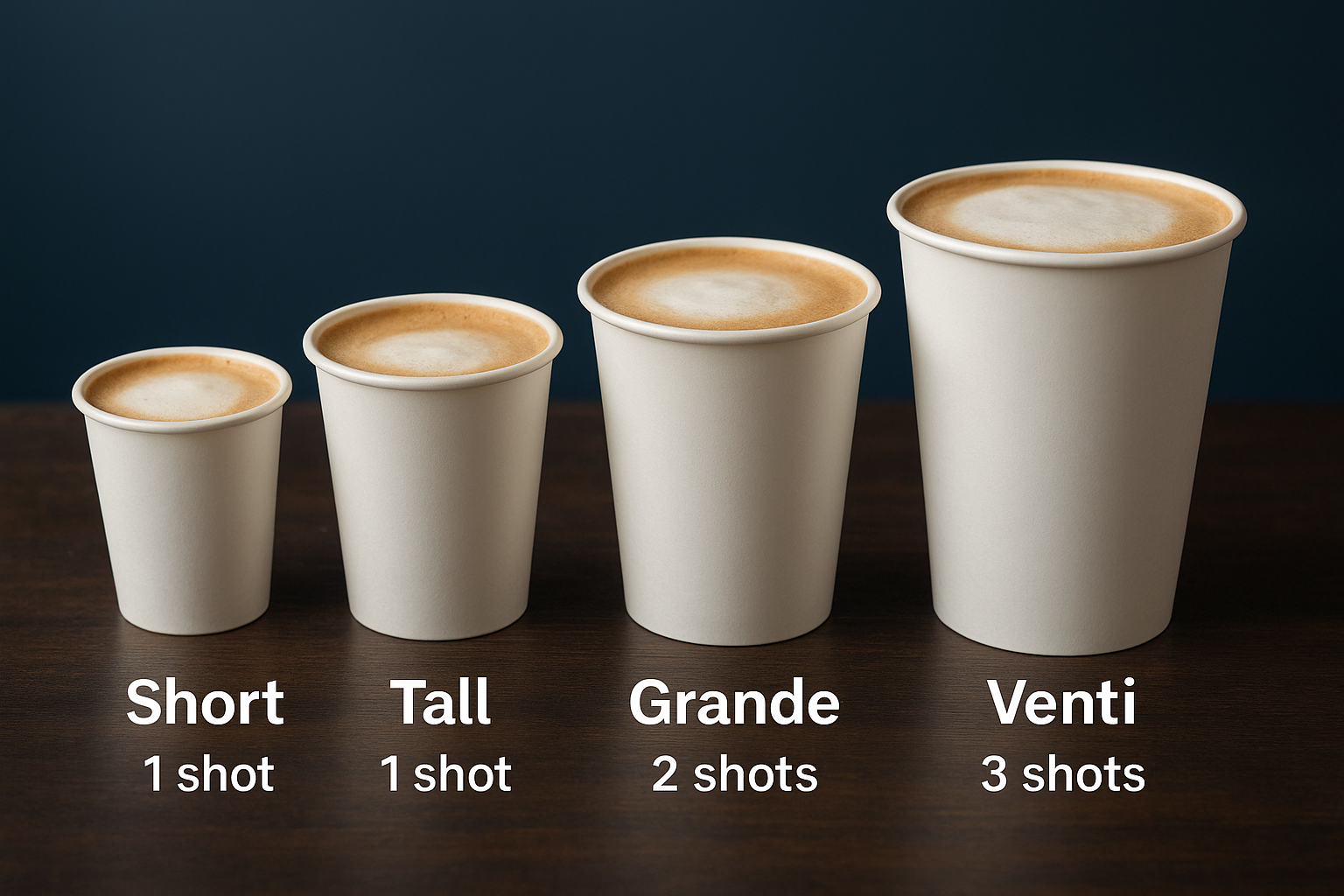
Each Starbucks cappuccino size comes with a set number of espresso shots by default, and each shot contains approximately 75 milligrams of caffeine. That number scales directly with your size choice, making it straightforward to calculate your total caffeine intake before you order.
| Size | Espresso Shots | Caffeine (mg) |
|---|---|---|
| Short (8 oz) | 1 | ~75 mg |
| Tall (12 oz) | 1 | ~75 mg |
| Grande (16 oz) | 2 | ~150 mg |
| Venti (20 oz) | 3 | ~225 mg |
Notice that the Short and Tall both use one shot, so choosing the Tall over the Short does not increase your caffeine intake at all. If you want more caffeine without sizing up, you can request an extra shot for an additional charge, and each added shot brings roughly 75 more milligrams to your total.
Ordering a Grande instead of a Tall effectively doubles your caffeine intake, not because of the size, but because of the extra espresso shot Starbucks adds by default.
What affects your total caffeine intake
The milk type you select has zero impact on caffeine content. Switching from 2% milk to oat milk or almond milk changes your calories and macros, but it does not change how much caffeine ends up in your drink. Similarly, adding flavored syrups or requesting extra foam does not alter caffeine levels in any meaningful way.
The only variables that actually move the caffeine number are the number of espresso shots and the strength of the roast. Starbucks uses its Signature Espresso Roast as the standard for cappuccinos, so unless you specifically request a different roast, your caffeine level stays predictable across orders. If you are sensitive to caffeine, the Tall size with its single shot is the most controlled option on the menu.
How to order a cappuccino for your goals
Knowing the full picture of Starbucks cappuccino nutrition gives you an immediate advantage at the counter. Instead of guessing or scanning the menu board while people wait behind you, you can walk in with a specific plan based on what you actually want from your morning drink. The strategies below are organized by common nutrition goals so you can find your situation and act on it right away.
If your goal is fewer calories
Start with size. Ordering a Tall instead of a Grande saves you 50 calories before you change anything else. From there, switching from 2% milk to nonfat on that same Tall drops you to roughly 50 calories total, which is about as lean as a dairy cappuccino gets at Starbucks without removing milk entirely. Skip any flavored syrups, since even one pump of vanilla adds 20 calories and 5 grams of sugar without contributing anything to satiety or volume.
A Tall nonfat cappuccino with no added syrup is one of the lowest-calorie hot drinks you can order at Starbucks.
If your goal is more protein
Stick with dairy rather than plant-based milk. Soy milk comes closest among non-dairy options, landing near 2% dairy in grams of protein per serving, but standard dairy milk still leads the category overall. Sizing up to a Grande means you pull 13 grams of protein from the milk alone, making it a meaningfully more filling choice than a Tall when you need your coffee to carry more nutritional weight through the morning. That protein also slows digestion slightly, which helps you stay satisfied longer between meals.
If your goal is less sugar
Naturally occurring lactose in milk is the main sugar source in a plain cappuccino, not added sweeteners. Removing fat by choosing nonfat milk slightly concentrates that lactose, so whole milk actually ends up with a marginally lower sugar count per serving despite having more calories. Your most effective tool for cutting sugar is skipping or reducing flavored syrups entirely, since each pump adds about 5 grams of sugar and most flavored orders come with two to four pumps by default. Asking for one pump instead of the standard amount lets you keep a hint of flavor while cutting your sugar intake by 10 to 15 grams in a single request.
Quick recap
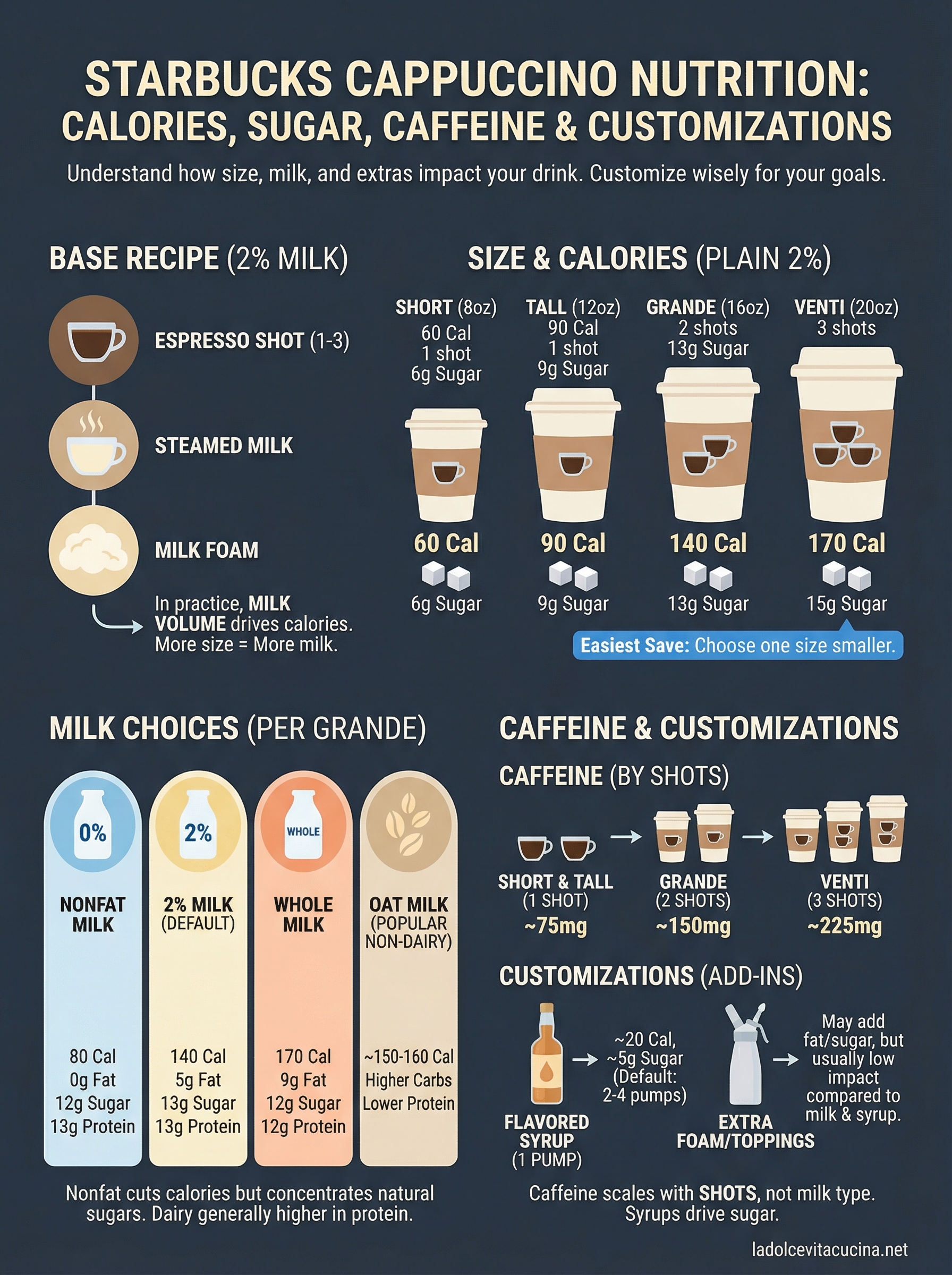
Starbucks cappuccino nutrition comes down to three variables: size, milk type, and added syrups. A plain Grande with 2% milk runs 140 calories, but every customization you request shifts that number in a specific direction. Smaller sizes and nonfat or almond milk cut calories the fastest, while skipping flavored syrups removes sugar more effectively than any milk swap. Caffeine scales with espresso shots, not cup volume, so a Tall and a Short deliver the same 75 milligrams by default.
Your order is entirely within your control once you know what each ingredient contributes. Protein, fat, sugar, and caffeine each have a clear source inside the cup, and you can adjust any one of them with a single word at the counter. If you want to experience espresso crafted with the same respect for ingredients that shapes every cup, come visit us at La Dolce Vita Cucina in Chicago’s Portage Park neighborhood.