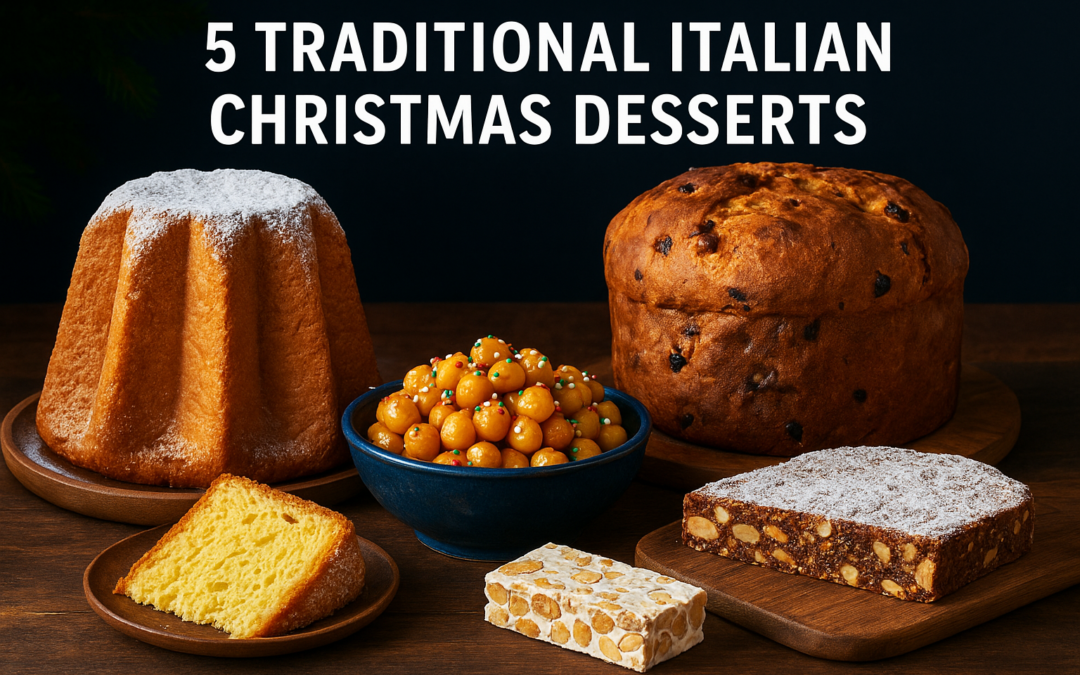
Italian families have gathered around holiday tables for generations, passing down recipes that carry the warmth and sweetness of la dolce vita, the sweet life. Traditional Italian Christmas desserts represent more than just treats; they’re edible heirlooms that connect us to centuries of celebration and craftsmanship.
At La Dolce Vita Cucina in Chicago’s Portage Park, we honor these culinary traditions daily through our house-made gelato and authentic Italian dishes. The same passion for quality ingredients and time-honored techniques guides both our kitchen and the recipes we’re sharing today. Whether you’re planning your holiday menu or simply curious about Italian baking heritage, these desserts deserve a place at your table.
From honey-drenched fried dough to fruit-studded cakes, each sweet tells a story rooted in regional Italian culture. Here are five classic desserts that bring authentic Italian flavor to your Christmas celebration.
1. Panettone
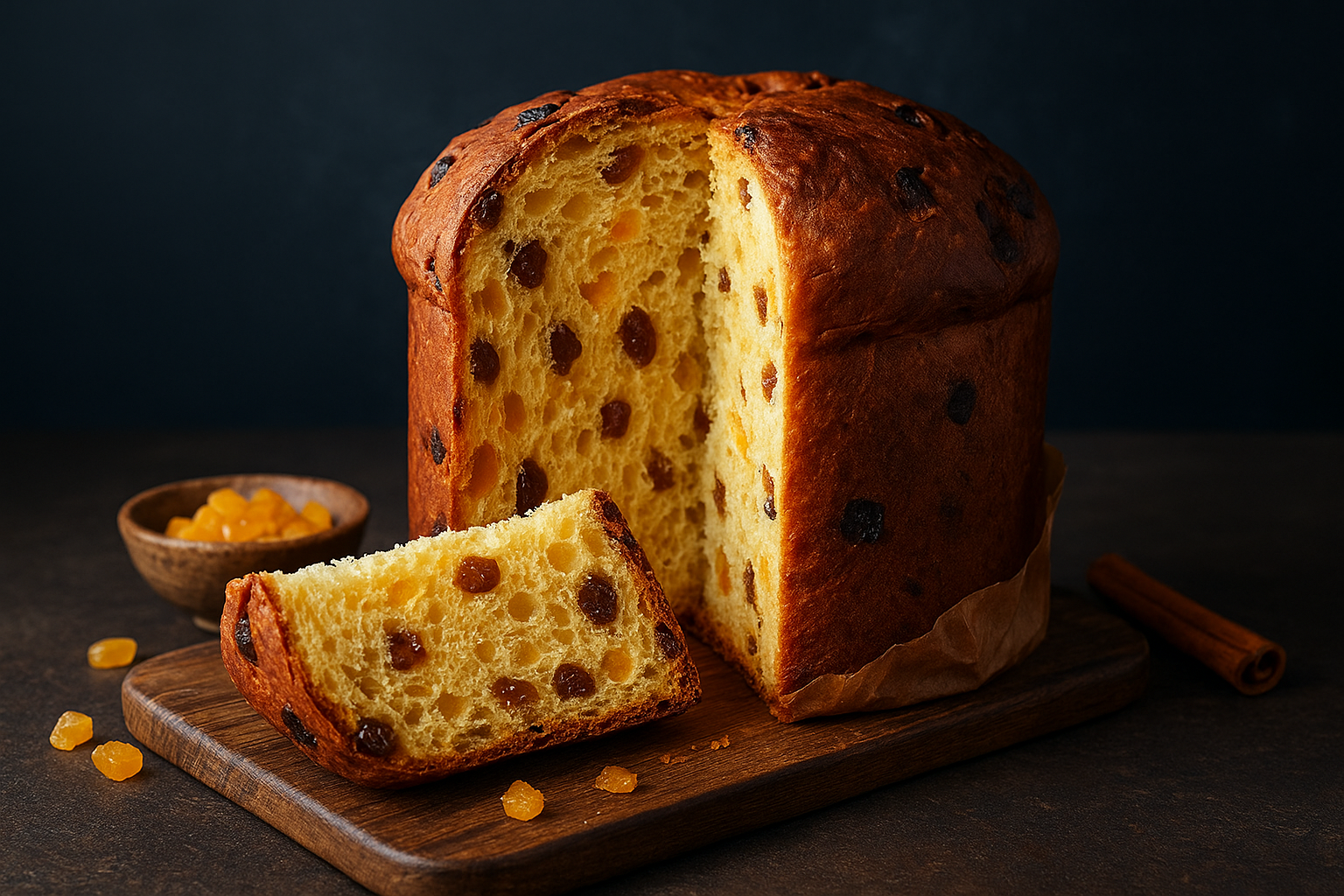
Panettone stands as the most recognizable of traditional Italian Christmas desserts, with its tall domed shape visible in bakeries and homes across Italy from November through January. This sweet bread originated in Milan during the 15th century, though legends about its creation vary from baker’s apprentices to noble kitchens.
What panettone is and where it comes from
You’ll find panettone’s roots deeply planted in Milanese tradition, where bakers developed the multi-day fermentation process that gives this bread its signature texture. The name likely comes from "pan de toni" (Tony’s bread), though historians debate the exact origin story. What remains undisputed is Milan’s centuries-long claim as the bread’s birthplace.
What it tastes like and what it’s made of
The texture feels light and airy inside, almost cloud-like, thanks to natural yeast fermentation that takes 24 to 48 hours. Candied orange peel and raisins stud the golden interior, while eggs and butter create richness without heaviness. Traditional recipes call for vanilla and citrus zest that perfume your kitchen during baking.
"The slow rise creates air pockets that make each slice melt on your tongue, not sit heavy in your stomach."
Classic vs modern panettone variations
Classic versions stick to raisins and candied citrus, but modern bakers experiment with chocolate chips, dried cranberries, or even savory versions with cheese and herbs. Panettone al cioccolato replaces fruit with dark chocolate chunks, while some artisans fill the center with cream or zabaione.
How Italians serve panettone at Christmas
Italian families slice panettone vertically into tall wedges and serve it with sweet wine like Moscato d’Asti or espresso. You can toast slices lightly and spread them with mascarpone or serve them alongside vanilla gelato for dessert.
Make-ahead, storage, and leftover ideas
Wrapped panettone keeps fresh for two to three weeks at room temperature in its original paper wrapper. Store leftover slices in an airtight container, or transform stale pieces into bread pudding or French toast that captures every bit of that expensive loaf.
2. Pandoro
Pandoro brings a different character to traditional Italian Christmas desserts with its star-shaped profile and butterier composition than panettone. This Veronese specialty emerged in the late 1800s, when baker Domenico Melegatti perfected the recipe that became a protected regional product.
What pandoro is and how it differs from panettone
Unlike panettone’s fruit-studded interior, pandoro contains no raisins or candied peel, just pure buttery yellow dough that relies on vanilla and citrus for flavor. The name translates to "golden bread," reflecting both its rich color and luxurious taste. You’ll recognize it instantly by the eight-pointed star mold that creates its distinctive shape.
Texture, flavor, and the signature powdered sugar finish
The crumb feels softer and more cake-like than panettone, with a dense yet tender bite from extra butter and eggs. Bakers dust it heavily with vanilla-scented powdered sugar before serving, creating a snowy appearance that mirrors winter celebrations.
"The powdered sugar coating transforms each slice into a sweet cloud that melts the moment it touches your lips."
Popular fillings and serving styles
You can slice pandoro horizontally into star-shaped layers and fill them with mascarpone cream, chocolate spread, or zabaione. Some families reconstruct it into a tree shape by offsetting the layers.
Tips for baking pandoro successfully at home
Home bakers need patience for the long fermentation and a specialized star-shaped mold that stands upright during baking. Room temperature ingredients blend more smoothly into the enriched dough.
Make-ahead, storage, and leftover ideas
Wrapped pandoro stays fresh for ten to fourteen days at room temperature. Transform leftovers into tiramisu layers or serve toasted slices with fresh berries and whipped cream.
3. Struffoli
Southern Italian families, particularly in Naples and Calabria, pile these honey-glazed fried dough balls into festive mounds at Christmas. Struffoli brings the essence of traditional Italian Christmas desserts to your table through simple ingredients transformed into something spectacular. The dessert dates back to ancient Greece, when similar honey-coated treats traveled to Italy through Greek settlements.
What struffoli is and why it’s a Christmas staple
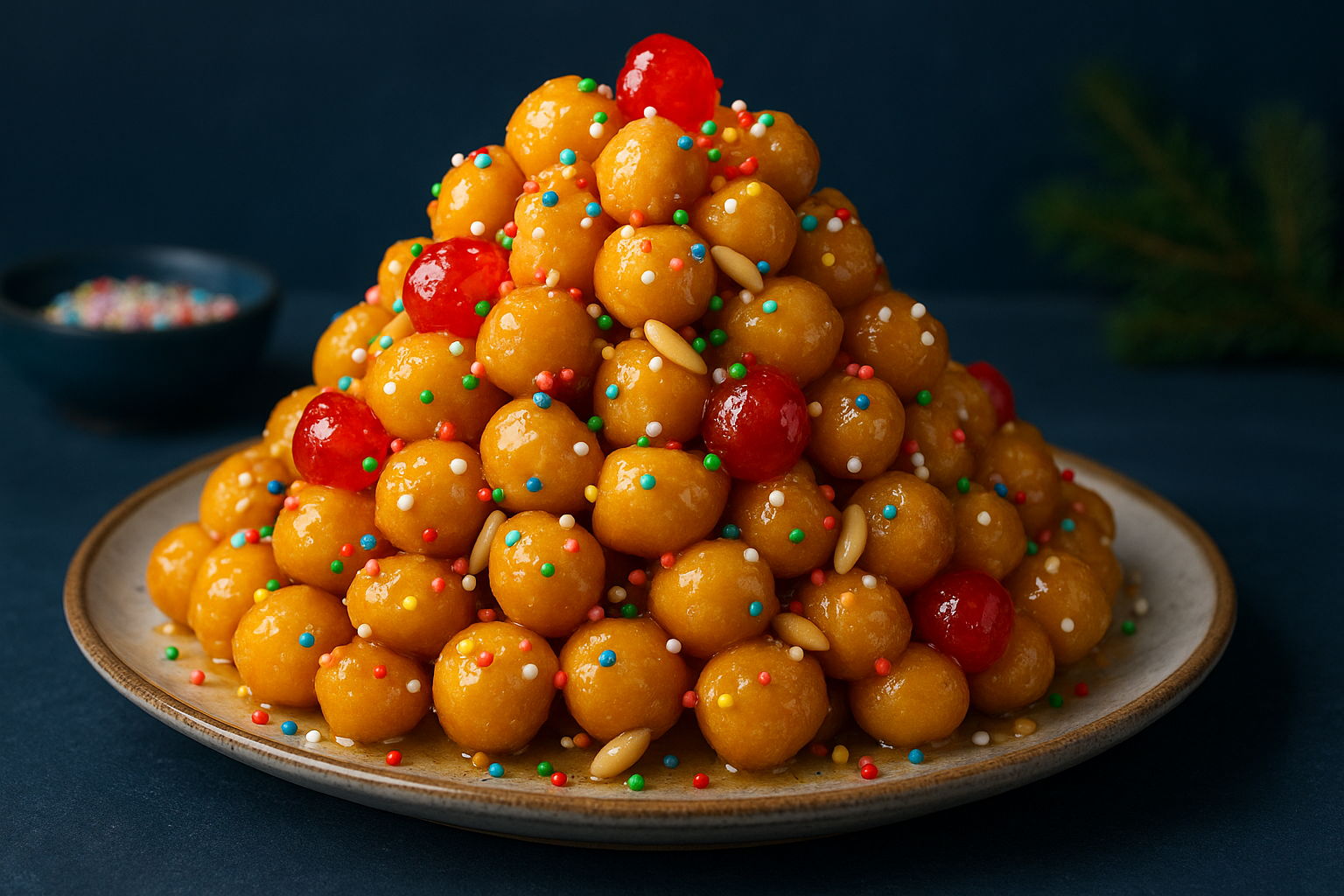
You’ll find struffoli at every Neapolitan Christmas gathering, where these golden fried spheres symbolize abundance and sweetness for the coming year. Families shape the dough into marble-sized balls before frying them to crispy perfection and binding them with warm honey into elaborate towers or wreaths.
Ingredients, texture, and honey coating basics
The dough contains flour, eggs, butter, and citrus zest, creating a base that fries up light and airy inside with a crunchy golden exterior. Warm honey mixed with sugar coats each ball, while the mixture cools into a sticky binding that holds your creation together.
Shapes, toppings, and regional presentation styles
You can arrange struffoli into cone shapes, wreaths, or simple mounds on serving platters. Candied cherries, colored sprinkles, and pine nuts decorate the honey-coated surface, with regional variations adding candied orange peel or cinnamon.
"The contrast between the crisp exterior and honey coating creates texture that keeps you reaching for another piece."
Tips for frying, glazing, and keeping it crisp
Maintain your oil at 350°F for even frying that creates the right texture without absorbing excess grease. Coat the balls with honey while both components stay warm but not hot, which prevents sogginess.
Make-ahead, storage, and serving timeline
You can fry the balls two days ahead and store them in airtight containers before glazing. Assemble struffoli the day you plan to serve it, as the honey coating softens the exterior after 24 hours.
4. Panforte
Tuscany’s contribution to traditional Italian Christmas desserts comes from Siena in the form of panforte, a dense spiced cake packed with nuts, dried fruit, and warming spices. Medieval monasteries created early versions as sustenance for travelers, evolving over centuries into the celebratory treat families share today.
What panforte is and its Siena holiday roots
You’ll discover panforte’s origins in 13th century Siena, where spice merchants and convents collaborated to create this long-lasting confection. The name translates to "strong bread," referencing the intense spice blend that defines every bite. Sienese families consider it essential for Christmas tables, continuing traditions that span eight centuries.
Flavor profile, spice mix, and fruit and nut base
The taste combines warming spices like cinnamon, coriander, and cloves with the sweetness of candied citrus, almonds, and hazelnuts. Honey binds everything together into a chewy, compact texture that concentrates flavor in thin slices.
Panforte nero vs panforte margherita
Panforte nero contains more spices and darker honey, creating an almost black appearance with robust flavor. Panforte margherita uses lighter honey and vanilla, offering gentler sweetness with a pale golden color that Queen Margherita inspired during her 1879 visit to Siena.
How to slice, plate, and pair panforte
Slice panforte into thin wedges using a sharp knife dipped in hot water between cuts. Serve it alongside espresso or sweet vin santo wine that cuts through the richness.
"The concentrated flavors mean a little panforte goes far, making thin slices the perfect portion."
Make-ahead, storage, and gifting tips
Wrapped panforte keeps fresh for several months in a cool, dry place, improving as flavors meld. Slice it into portions and wrap pieces in parchment for thoughtful holiday gifts.
5. Torrone
Torrone completes the lineup of traditional Italian Christmas desserts with its nougat candy texture that ranges from chewy to crunchy. Italian confectioners have crafted this honey and nut treat since ancient Rome, with modern versions emerging in the medieval town of Cremona. You’ll find it wrapped in thin edible wafer paper and packaged in festive boxes throughout December.
What torrone is and the main styles you’ll see
Torrone divides into two main categories: torrone morbido (soft) and torrone duro (hard). The soft version offers a chewy, marshmallow-like texture, while the hard style snaps cleanly when you bite it.
Key ingredients and the chewy vs crunchy difference
Both styles contain honey, egg whites, sugar, and toasted nuts as their foundation. The cooking temperature determines the final texture, with longer cooking at higher heat creating brittle, crunchy nougat and shorter cooking producing chewier results.
Common add-ins and regional variations
Almonds dominate northern Italian torrone, while hazelnuts and pistachios appear in southern versions. Some recipes incorporate chocolate, candied fruit, or citrus zest for additional flavor complexity.
"Quality torrone uses visible whole nuts suspended throughout, not just scattered fragments."
How to choose good torrone or make a simple version
Look for torrone with at least 50% nut content and minimal corn syrup. Home versions require a candy thermometer and patience for precise temperature control.
Storage, serving, and pairing ideas
Wrapped torrone keeps fresh for several months in a cool spot. Break it into bite-sized pieces and serve alongside espresso or sweet wine after your Christmas meal.
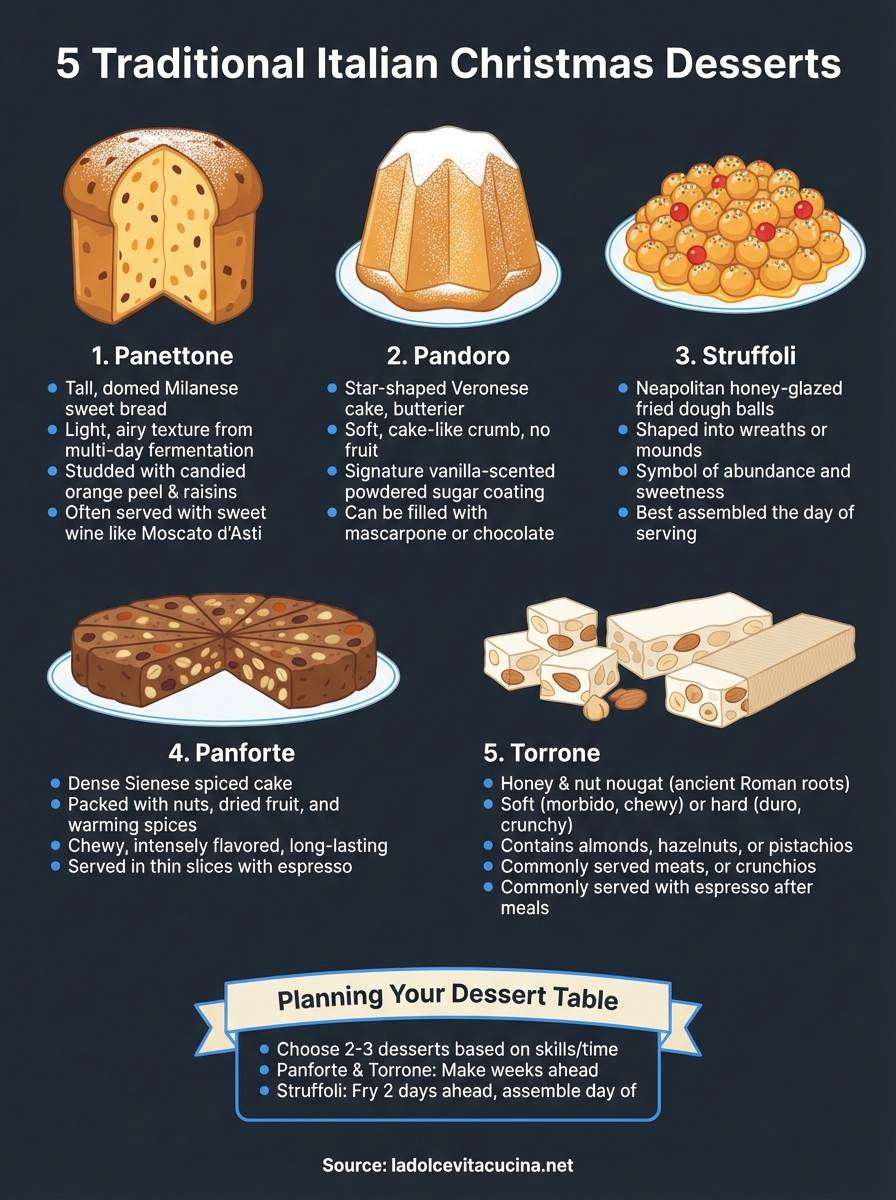
A simple way to plan your dessert table
Your holiday dessert spread doesn’t require every item on this list to succeed. Choose two or three traditional Italian Christmas desserts that match your baking skills and available time. Panettone and pandoro require no preparation if you buy quality versions from Italian bakeries, while struffoli offers a hands-on project that rewards your effort with authentic flavor and impressive presentation.
Plan your timeline by making panforte or torrone several weeks ahead to let flavors develop and deepen. Fry struffoli balls two days before your gathering, then assemble them with honey the day guests arrive. This approach spreads the work across multiple days instead of creating kitchen chaos on Christmas Eve.
If you want to experience authentic Italian flavors without the baking stress, visit us at La Dolce Vita Cucina in Chicago’s Portage Park. Our house-made gelato and traditional Italian dishes celebrate the same craftsmanship that makes these holiday desserts special, bringing la dolce vita to your table year-round.