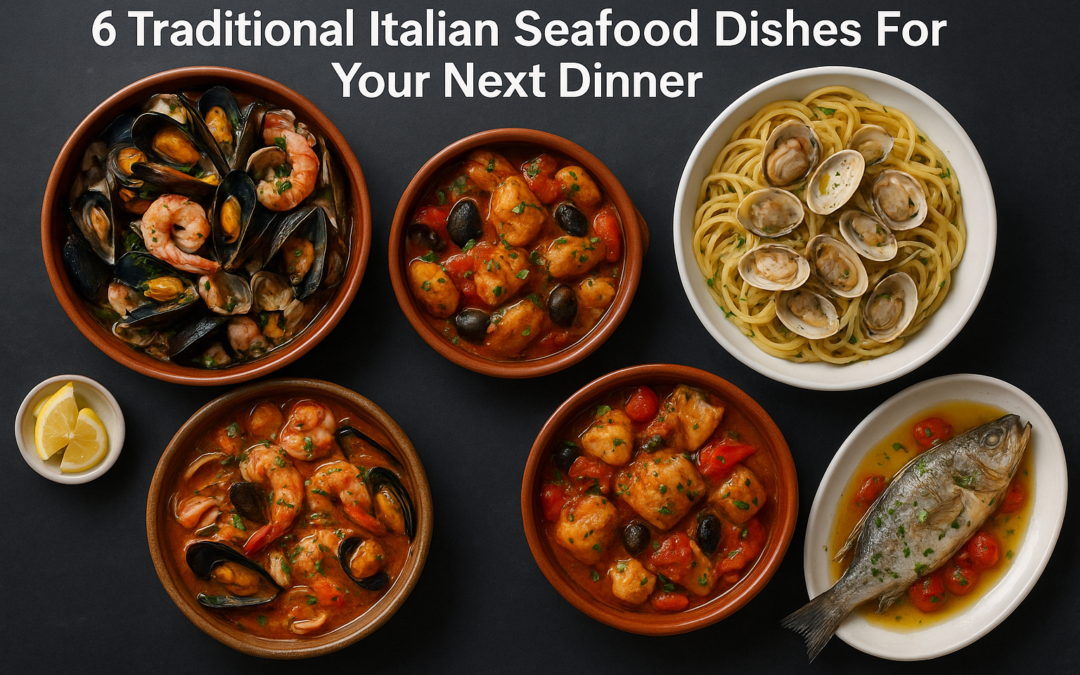
Italian cooking has always had a deep relationship with the sea. From the fishing villages of Sicily to the harbors of Naples, traditional Italian seafood dishes tell the story of generations who built their cuisine around the daily catch. These recipes, many of them centuries old, remain staples on family tables during holidays like the Feast of the Seven Fishes and throughout the year in coastal homes across Italy.
At La Dolce Vita Cucina, our kitchen in Chicago’s Portage Park neighborhood draws directly from these traditions. Dishes like our Loch Duart Salmon and other seafood selections reflect the same respect for quality ingredients and straightforward preparation that defines Italian coastal cooking at its best.
Whether you’re planning a seafood-focused dinner at home or just want to know what makes these classic recipes so enduring, this list covers six dishes worth knowing. Each one has a story, a technique, and a flavor profile that’s stood the test of time, and they’re all easier to make than you’d expect.
1. Frutti di mare at La Dolce Vita Cucina
Frutti di mare is one of the most recognizable traditional Italian seafood dishes, and for good reason. It brings together multiple types of seafood in one preparation, making it both a centerpiece dish and a celebration of what the ocean offers.
What it is and what "frutti di mare" means
"Frutti di mare" translates literally to "fruits of the sea" in Italian. The phrase reflects the Italian view of seafood as something precious and seasonal, harvested rather than mass-produced. You’ll find it served as a pasta dish, a cold salad, or a mixed plate depending on the region and the cook.
What you’ll usually see in an Italian frutti di mare mix
A typical frutti di mare includes mussels, clams, shrimp, squid, and scallops, though the exact mix shifts based on local availability. Common additions include octopus or langoustines for a more layered plate. The goal is variety in both texture and flavor, not uniformity.
| Seafood | Typical Preparation |
|---|---|
| Mussels | Steamed in white wine |
| Squid | Sliced and sautéed |
| Shrimp | Pan-seared or poached |
| Clams | Steamed and deglazed |
| Scallops | Seared quickly over high heat |
How Italians build flavor without hiding the seafood
Italian cooks use garlic, white wine, olive oil, and fresh parsley to season frutti di mare rather than heavy sauces. The technique is restrained by design: you want each piece to taste like itself, not disappear into a coating.
The best frutti di mare lets the seafood lead and the seasoning follow.
Smart seafood swaps if you cook it at home
If fresh langoustines aren’t available, frozen mussels and raw shrimp work well as substitutes without sacrificing too much quality. Your priority should be buying the freshest available option at your local fishmonger rather than forcing an exact combination.
- Buy seafood the same day you plan to cook it
- Avoid pre-cooked frozen shrimp, which turn rubbery quickly
- Fresh clams should close when tapped before cooking
What to order with it at La Dolce Vita Cucina
At La Dolce Vita Cucina in Chicago’s Portage Park, the kitchen applies this same philosophy to its seafood menu. When you visit, ask your server about the current seafood selections on the dinner menu to find out what’s prepared in the Italian coastal style that evening.
2. Spaghetti alle vongole
Spaghetti alle vongole is one of the most beloved traditional Italian seafood dishes and holds a permanent place on trattoria menus from Naples to Venice. It uses just a handful of ingredients to deliver something clean, briny, and deeply satisfying.
What makes it a classic
The dish earns its reputation through simplicity and precision. Clams, garlic, white wine, olive oil, and fresh parsley combine in a way that demands you treat each element carefully. There’s no heavy sauce to hide behind, which is exactly what makes it worth mastering.
Vongole vs clams in the US and what to buy
In Italy, vongole veraci (carpet-shell clams) are the standard. In the US, littleneck clams are your closest substitute and perform well in this recipe. Keep these shopping rules in mind:
- Buy them live and refrigerate until cooking
- Discard any clams that stay open before they hit the pan
- Rinse thoroughly to remove sand and grit
The core technique for a glossy, not watery sauce
Emulsifying starchy pasta water with olive oil is the step most home cooks skip. Add a ladle of cooking water once the clams open, then toss the pasta over heat until the sauce coats every strand. Skipping this produces the thin, watery result that ruins the dish.
The pasta water is your most important ingredient in spaghetti alle vongole.
Common regional variations across Italy
Naples keeps it bianco using white wine only, while some northern cooks add tomato for a rosso variation. Both are legitimate, though the white version is more widely recognized as the traditional preparation across Italy.
What to serve with it and best wine pairings
Pair spaghetti alle vongole with crusty bread to soak up the remaining sauce and a glass of Vermentino or Pinot Grigio. Keep side dishes light and simple so the clams stay the clear focus of the meal.
3. Zuppa di pesce
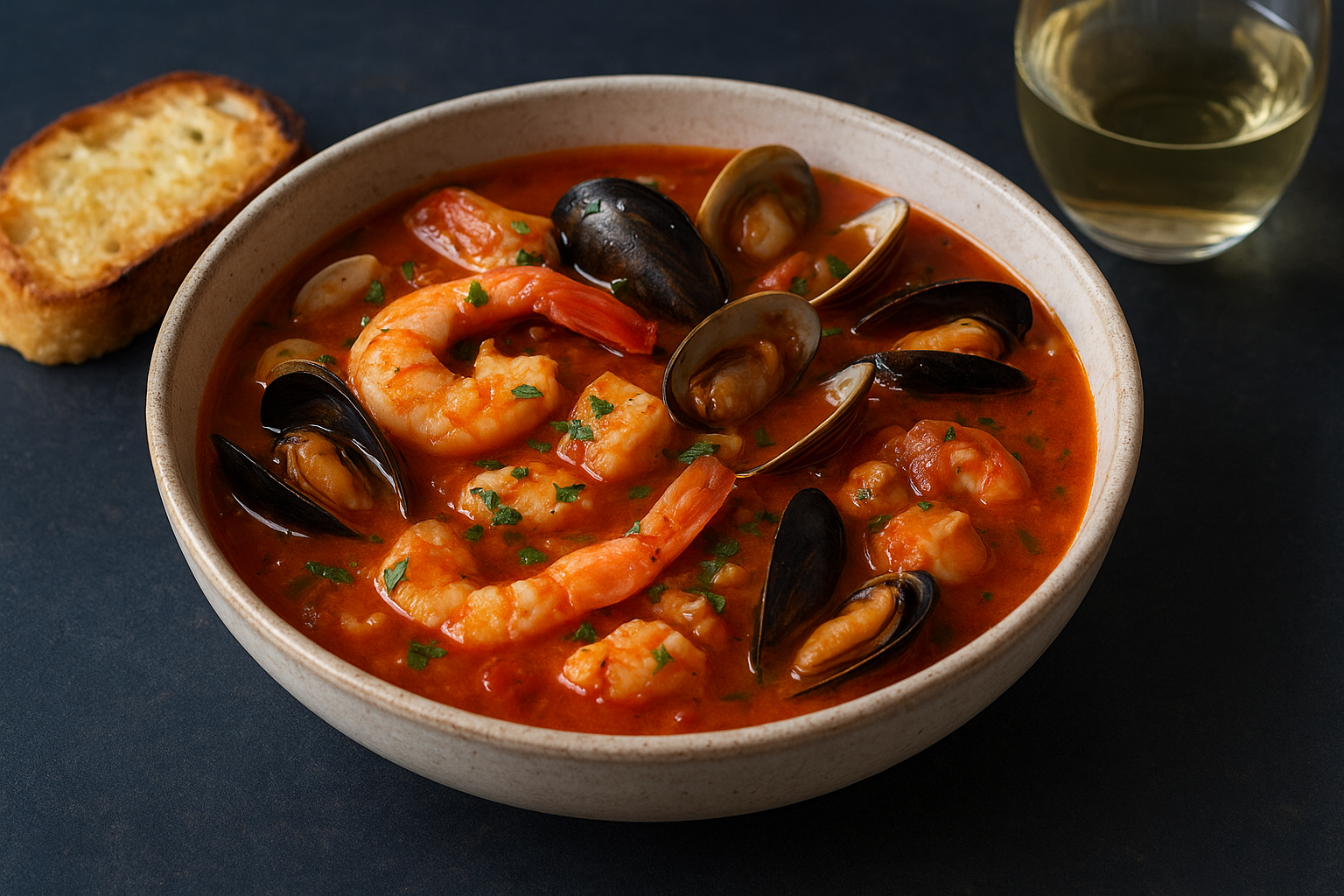
Zuppa di pesce is one of the most satisfying traditional Italian seafood dishes you can make at home. It’s a hearty, broth-based stew built around whatever the local catch offers that day, which means the recipe adapts easily to what’s fresh near you.
What it is and how it differs from cioppino
Zuppa di pesce is an Italian fisherman’s stew with deep roots along the Adriatic and Tyrrhenian coasts. Cioppino is a San Francisco invention developed by Italian immigrants, using more tomato and a thicker base. The Italian original leans lighter, letting the natural seafood broth carry most of the flavor.
The flavor base: tomato, wine, and stock choices
Build your base with crushed San Marzano tomatoes, dry white wine, and a light fish stock. Avoid heavy chicken or beef stock, which overpowers delicate seafood flavors. A small pinch of peperoncino adds gentle heat without turning the dish spicy.
How to layer seafood so nothing overcooks
Add seafood in stages to keep everything tender. Follow this order:
- Firm fish (monkfish, sea bass): add first, cook 5 to 6 minutes
- Clams and mussels: add next, cook 4 minutes
- Shrimp and squid: add last, cook 2 minutes
Add the most delicate pieces at the end and serve the stew immediately once everything opens.
Best fish and shellfish picks for a mixed stew
Strong choices include sea bass, shrimp, littleneck clams, mussels, and squid. Avoid salmon, which breaks apart too easily and carries a bold flavor that fights the broth rather than complementing it.
How Italians serve it and what bread to use
Italians serve zuppa di pesce over thick bread toasted and rubbed with garlic, placed directly in the bowl before ladling. Skip pasta here. A glass of dry Falanghina or Vermentino rounds out the meal cleanly.
4. Baccalà in umido
Baccalà in umido is one of those traditional Italian seafood dishes that shows up on the table during holidays and disappears quickly. It uses salt-cured cod braised slowly in tomatoes and olive oil, and the result is tender, deeply savory, and surprisingly simple to prepare at home.
What baccalà is and why it shows up on holidays
Baccalà is dried and salted cod, a preservation method that dates back centuries in Italy. It earns its place on Christmas Eve tables as part of the Feast of the Seven Fishes tradition, where Catholics historically avoided meat before the holiday.
How to desalt baccalà the right way
You need to soak baccalà in cold water for 24 to 48 hours before cooking, changing the water every 8 hours. Skipping this step leaves the fish too salty to eat and ruins the final dish.
Taste a small piece of raw baccalà after soaking to confirm the salt level before you start cooking.
The traditional tomato and olive oil braise
The base is crushed tomatoes, garlic, and good olive oil cooked together before you add the fish. Simmer the baccalà gently for 20 to 25 minutes until it flakes easily and absorbs the sauce.
Variations you’ll see across regions
Venice adds raisins and pine nuts, while southern regions lean toward olives and capers. Both approaches use the same braising method, so you can adapt the flavor profile to what you prefer without changing the technique.
Side dishes and wine pairings that fit
Serve baccalà in umido with polenta or roasted potatoes to soak up the sauce. A glass of Soave or Verdicchio complements the mild fish without overpowering it.
5. Spaghetti al nero di seppia
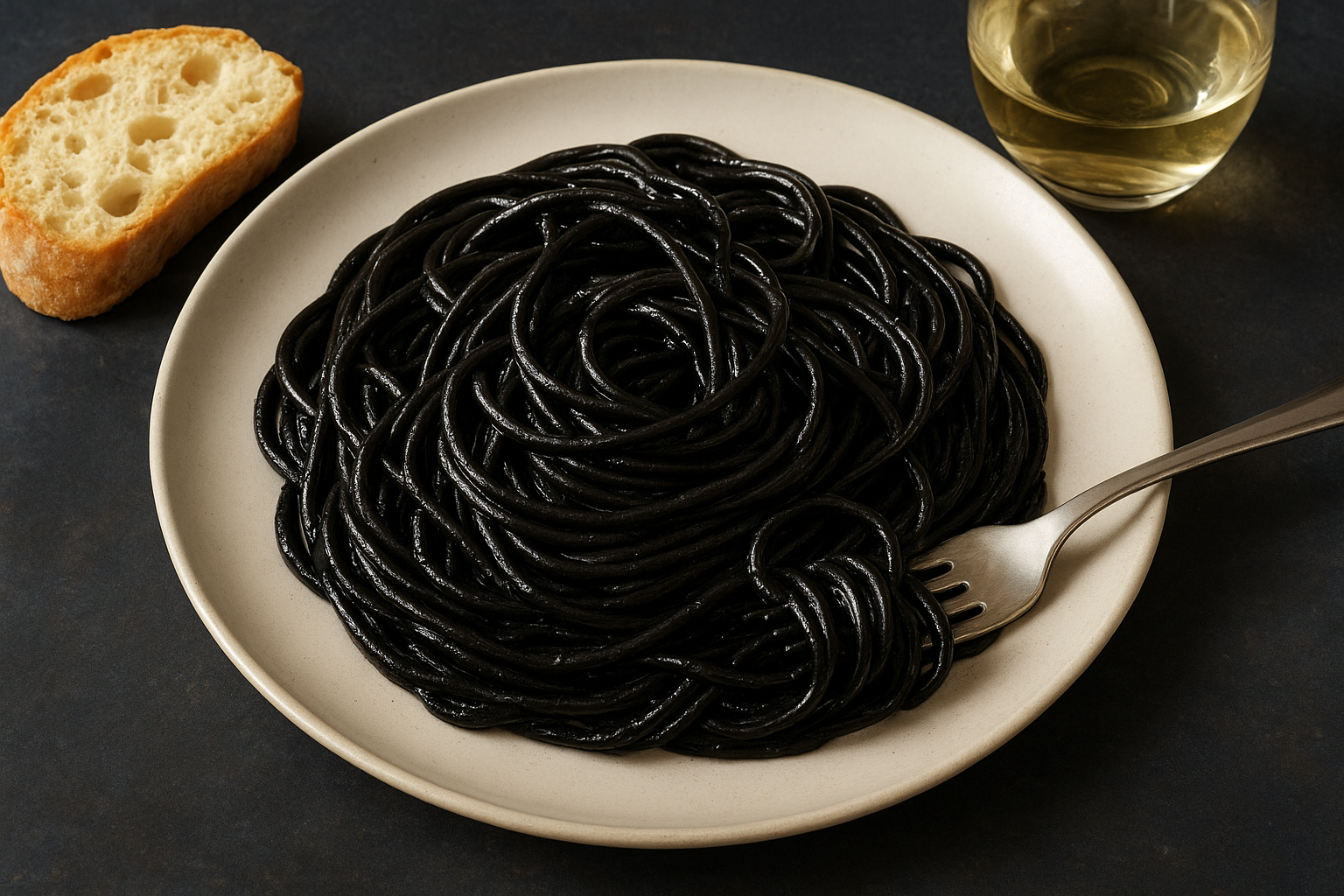
Spaghetti al nero di seppia is one of the most visually striking traditional Italian seafood dishes you can put on a table. The pasta turns completely black from squid ink, and the flavor backs up that dramatic appearance with a clean, briny depth that’s unlike anything else in the Italian kitchen.
What it is and why Italians love squid ink
Squid ink carries a mild oceanic flavor that adds character to pasta without overpowering it. Italians in Venice and Sicily have used it for centuries because it gives a simple dish a distinct identity that no other ingredient can replicate. Two practical reasons it stays on menus:
- It delivers flavor and color in one ingredient
- Jarred squid ink makes it accessible even when fresh squid with intact sacs isn’t available
How it should taste and look when done well
A properly made nero di seppia coats the pasta in a glossy, dark layer with no watery liquid pooling at the bottom of the bowl. The flavor should read as clean and faintly salty, with garlic and olive oil supporting the ink rather than masking it.
A well-made nero di seppia should taste like the sea, not like it’s trying to prove a point.
Handling squid so it stays tender
Squid becomes rubbery fast if you misjudge the timing. Your two reliable options are cooking it under three minutes on high heat or committing to a slow braise of 45 minutes or more. There is no productive middle ground.
Ingredient notes: ink options and pasta choices
Jarred squid ink performs reliably when fresh squid with intact ink sacs isn’t an option. For pasta, use spaghetti or linguine rather than short shapes, which hold the sauce far less effectively and leave you with pooled ink at the bottom.
What to serve alongside it
Keep the plate minimal. Crusty bread cleans up the remaining sauce at the bottom of the bowl. Good wine pairings include:
- Vermentino: light, citrusy, and briny enough to match the ink
- Greco di Tufo: slightly fuller with mineral notes that complement the squid
6. Pesce all’acqua pazza
Pesce all’acqua pazza stands apart from other traditional Italian seafood dishes because it uses almost nothing to achieve something genuinely delicious. The name translates to "fish in crazy water", a reference to the simple, aromatic broth that surrounds the fish as it cooks.
What the dish is and where it comes from
This dish originated along the Naples and Campania coast, where fishermen cooked whole fish directly in seawater with whatever herbs were on hand. The technique evolved into the version you see today, which swaps seawater for a light broth built from tomatoes, garlic, wine, and olive oil.
Best fish to use and what to avoid
Whole sea bass or red snapper deliver the best results because their firm flesh holds up in liquid without falling apart. Avoid oily fish like mackerel or sardines, which release too much fat and turn the broth murky rather than clear and fragrant.
The quick broth: tomatoes, garlic, herbs, and wine
Build the broth with halved cherry tomatoes, sliced garlic, dry white wine, and fresh parsley. Simmer the base for five minutes before adding the fish so the flavors have time to develop.
The broth should be light enough to see through, not thick like a sauce.
How to keep fish moist without overcooking
Baste the fish frequently with the surrounding broth as it cooks, and pull it from the heat the moment it flakes at the thickest point. A whole fish typically needs ten to twelve minutes depending on size.
Serving ideas and wine pairings
Serve directly from the pan with crusty bread to soak up the broth. A glass of Fiano di Avellino matches the dish’s coastal character without overpowering the delicate fish.
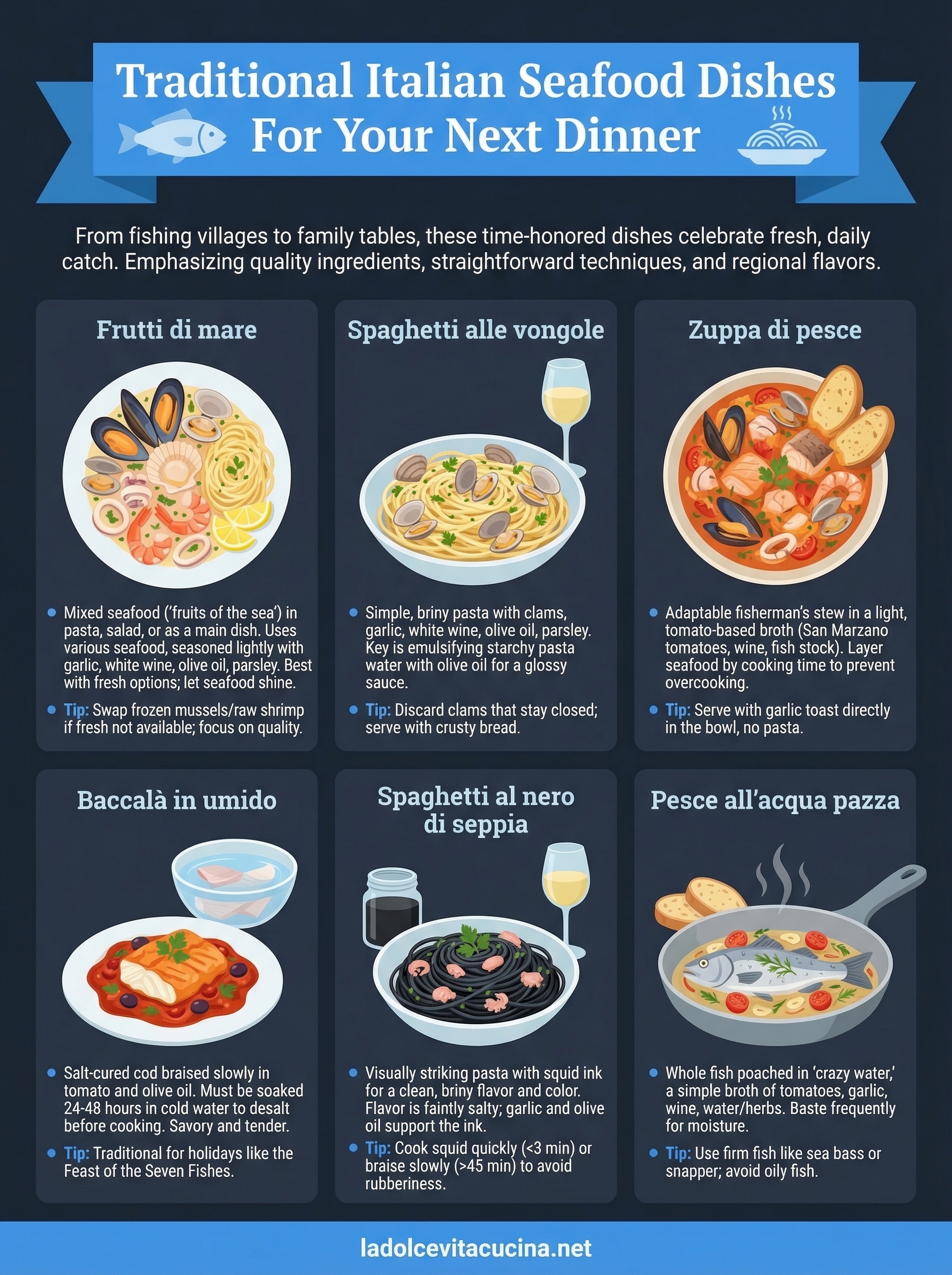
A simple way to pick your dish tonight
Six of these traditional Italian seafood dishes cover a wide range of effort and flavor profiles. If you want something quick and clean on a weeknight, spaghetti alle vongole or pesce all’acqua pazza both come together in under 30 minutes with minimal prep. If you’re planning a holiday meal or a dinner that needs to go the extra distance, baccalà in umido or zuppa di pesce give you more depth and complexity to work with.
Your best starting point is matching the dish to what’s freshest at your fishmonger that day, not to what sounds most impressive on paper. Buy what looks good first, then pick the recipe that fits it. That approach is how Italian cooks have always worked, and it produces better results than any rigid shopping list will.
Ready to skip the prep entirely? Reserve a table at La Dolce Vita Cucina in Chicago’s Portage Park and let the kitchen handle authentic Italian seafood prepared the right way, with quality ingredients and techniques rooted in the same coastal traditions covered here.