
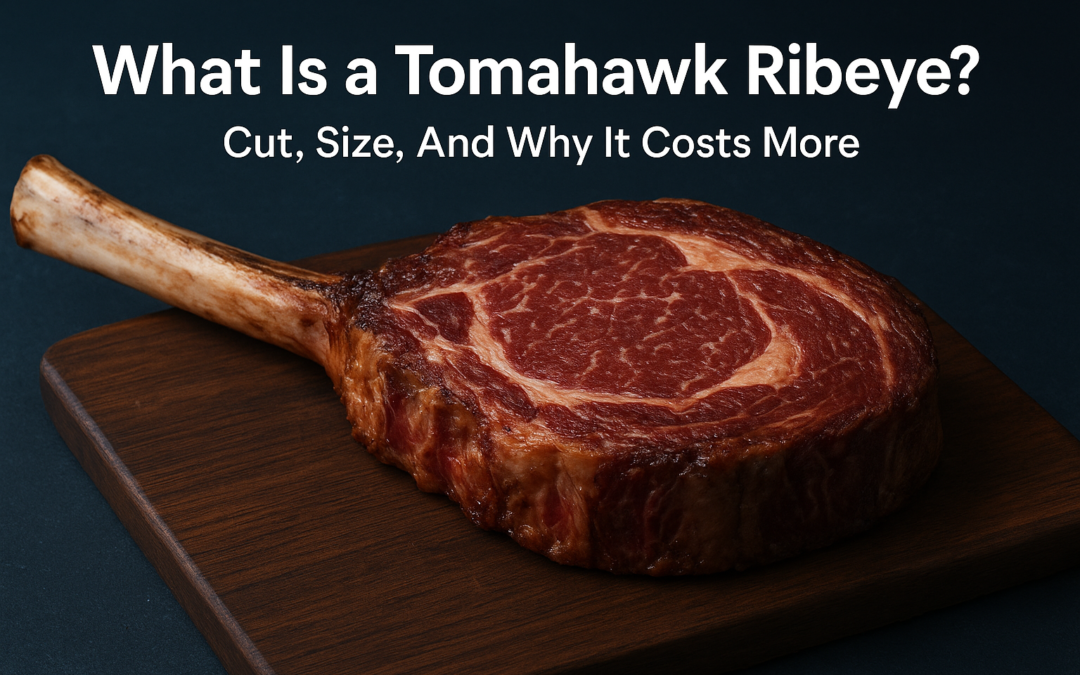
A tomahawk ribeye is one of the most visually striking cuts of beef you’ll ever see on a plate, or a cutting board. With its long, frenched bone extending outward like a handle, it looks more like something you’d find at a medieval feast than a modern steakhouse. But what is a tomahawk ribeye beyond the dramatic presentation? And is it actually worth the premium price tag you’ll find attached to it at restaurants and butcher shops alike?
At La Dolce Vita Cucina, we take our steak seriously. Our menu in Chicago’s Portage Park neighborhood features premium cuts like our 16oz Ribeye, and we field questions about different ribeye styles all the time. The tomahawk is one that comes up often, partly because of its size, partly because of its cost, and partly because people aren’t sure whether they’re paying for flavor or for show.
This article breaks down exactly what makes a tomahawk ribeye different from a standard ribeye or a cowboy steak. We’ll cover how it’s butchered, why the bone stays long, what size to expect, and whether the higher price reflects real value or just presentation. If you’ve been curious about this cut, or deciding whether to order one, you’re in the right place.
What a tomahawk ribeye is
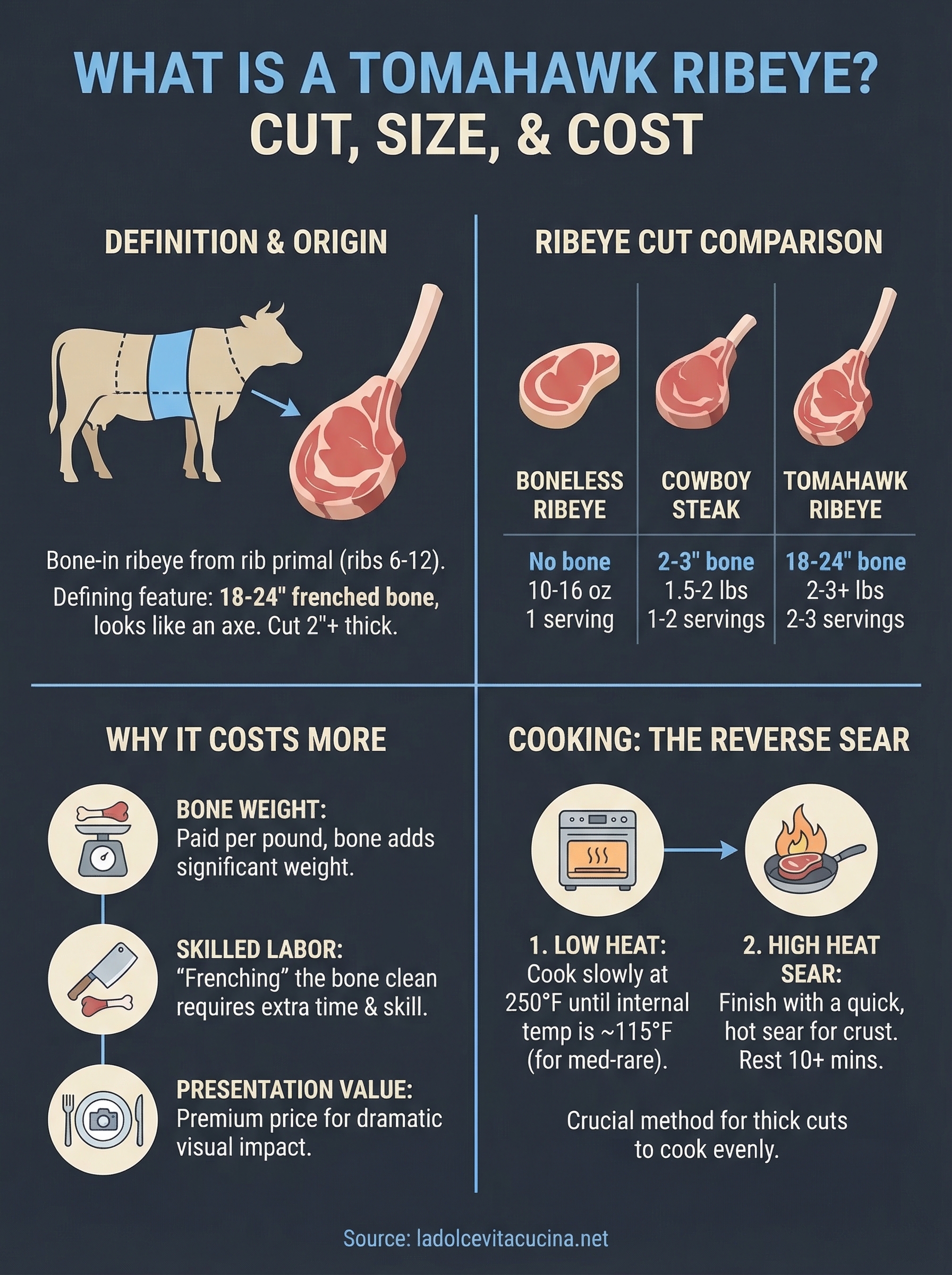
A tomahawk ribeye is a bone-in ribeye steak cut from the rib section of the cow, specifically from ribs six through twelve. What separates it from every other ribeye you’ll find at a butcher or steakhouse is the bone. The butcher leaves the entire rib bone intact, typically between 18 and 24 inches long, trimmed completely clean so it extends straight out from the meat like a handle. That long, frenched bone is exactly where the name comes from: the silhouette of the cut resembles a tomahawk axe, with the thick steak acting as the blade and the rib bone acting as the handle.
The long bone on a tomahawk isn’t a byproduct of butchery. It’s a deliberate choice that places this cut in its own category, separate from every other bone-in ribeye style.
The bone is the defining feature
Most people asking what is a tomahawk ribeye are really trying to understand one thing: what sets it apart from the other ribeyes they’ve already seen? The answer comes down almost entirely to the frenched rib bone. "Frenching" is a butchery technique where the meat and connective tissue are scraped cleanly away from the bone to expose it fully. On a tomahawk, this process is applied to the full length of the rib, leaving a long, clean bone that is visually striking and immediately recognizable.
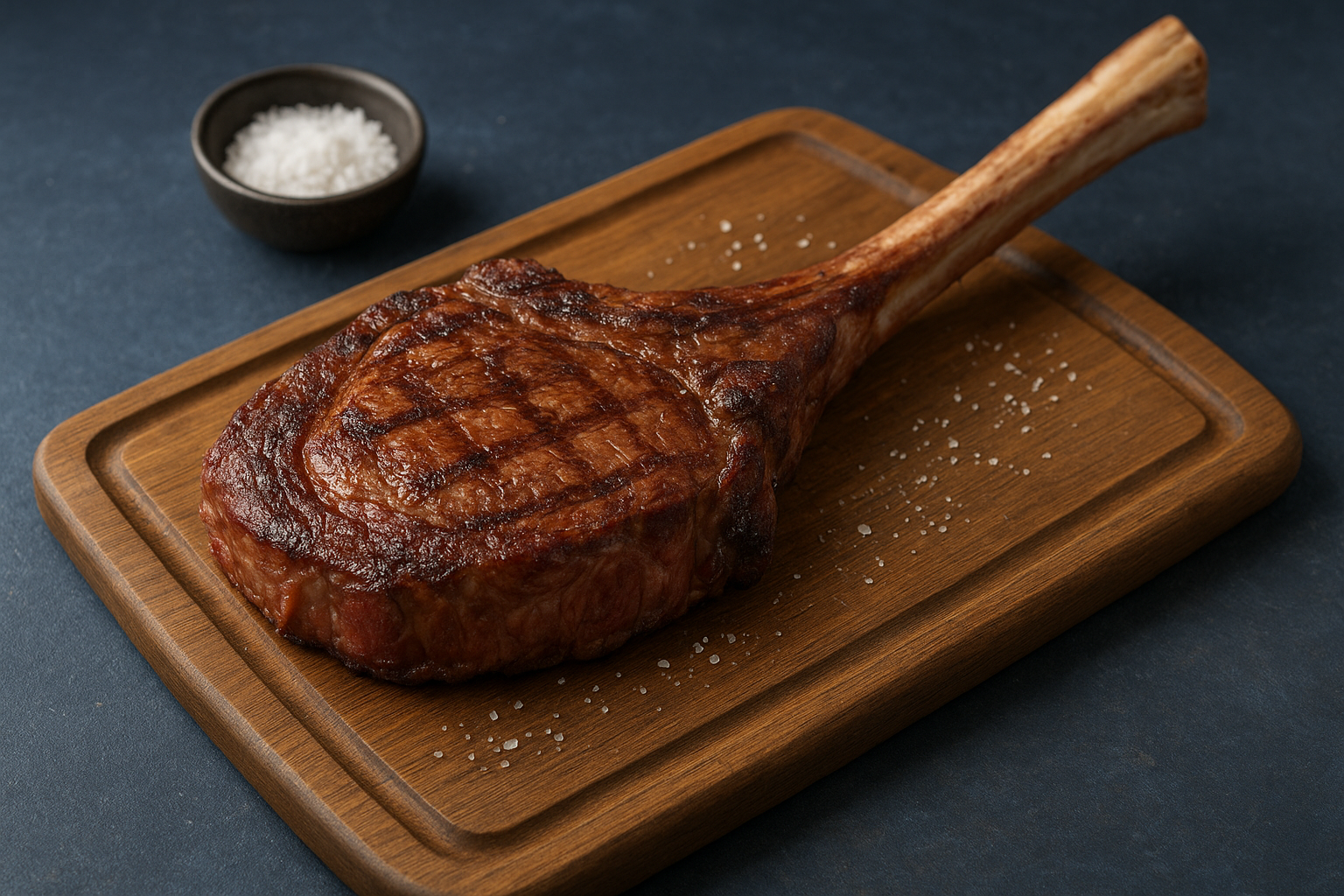
That bone serves no functional purpose when you’re eating the steak. The flavor and texture of the meat itself come from the same section of the animal as any standard ribeye. But the exposed bone does act as a natural handle during cooking and plating, which is why many cooks use it to reposition the steak on a grill without pressing tools directly into the meat. It also retains heat during service, keeping the steak warm longer once it hits the table.
Size and weight
A tomahawk ribeye is a genuinely large cut of beef. Most weigh between 2 and 3 pounds, though some can exceed that depending on the size of the animal and how thick the butcher slices the steak. The meat portion alone is typically cut at least 2 inches thick to match the proportions of the long bone and allow for even cooking throughout the interior.
Here’s a side-by-side comparison of how the tomahawk stacks up against other ribeye cuts in terms of size and presentation:
| Cut | Bone length | Typical weight | Typical thickness |
|---|---|---|---|
| Boneless ribeye | None | 10-16 oz | 1-1.5 inches |
| Cowboy ribeye | 2-3 inches (frenched) | 1.5-2 lbs | 1.5-2 inches |
| Tomahawk ribeye | 18-24 inches (frenched) | 2-3+ lbs | 2+ inches |
That thickness matters beyond just portion size. A steak cut over 2 inches thick requires a fundamentally different cooking approach than the ribeyes most home cooks are used to handling. You can’t simply place it over high heat and call it done in ten minutes. Understanding the size helps you plan both the cooking method and how many people a single tomahawk can actually feed, which is typically two to three people sharing one cut.
Where it comes from on the cow
The tomahawk comes from the rib primal, which is one of the eight primal cuts that butchers use when breaking down a full side of beef. This section runs along the upper back of the animal, between the chuck at the front and the loin toward the rear. When you understand the anatomy, it becomes clear why this part of the animal consistently produces some of the most flavorful and tender steaks available.
The rib primal and its position
The rib primal spans ribs six through twelve on the animal, and the longissimus dorsi muscle runs the entire length of it. This is the same muscle that gives you a boneless ribeye, a cowboy steak, or a tomahawk, depending entirely on how the butcher handles the bone. Because this muscle does very little physical work during the animal’s life, it stays tender and develops a high level of intramuscular fat, which is the marbling you see running through the meat in white threads and flecks.
The position of the rib primal on the animal explains almost everything about why ribeye cuts, including the tomahawk, taste the way they do.
Here’s where the rib primal sits relative to other common primal sections:
| Primal section | Location on animal | Common cuts |
|---|---|---|
| Chuck | Front shoulder | Chuck roast, flat iron |
| Rib | Upper back (ribs 6-12) | Ribeye, tomahawk, prime rib |
| Loin | Behind the rib | T-bone, strip steak, tenderloin |
| Round | Rear leg | Round roast, eye of round |
Why this location produces well-marbled beef
The longissimus dorsi muscle runs along the spine and carries almost no load-bearing responsibility, which is what keeps it tender. Muscles that work harder, like those in the shoulder or leg, develop more connective tissue and less fat. The rib section sits in a protected, low-movement zone, so the muscle fibers stay fine and the fat distributes evenly throughout the cut rather than layering only on the outside. When you ask what is a tomahawk ribeye in terms of eating quality, the answer starts here, with this specific muscle and its location on the animal.
Tomahawk vs ribeye vs cowboy steak
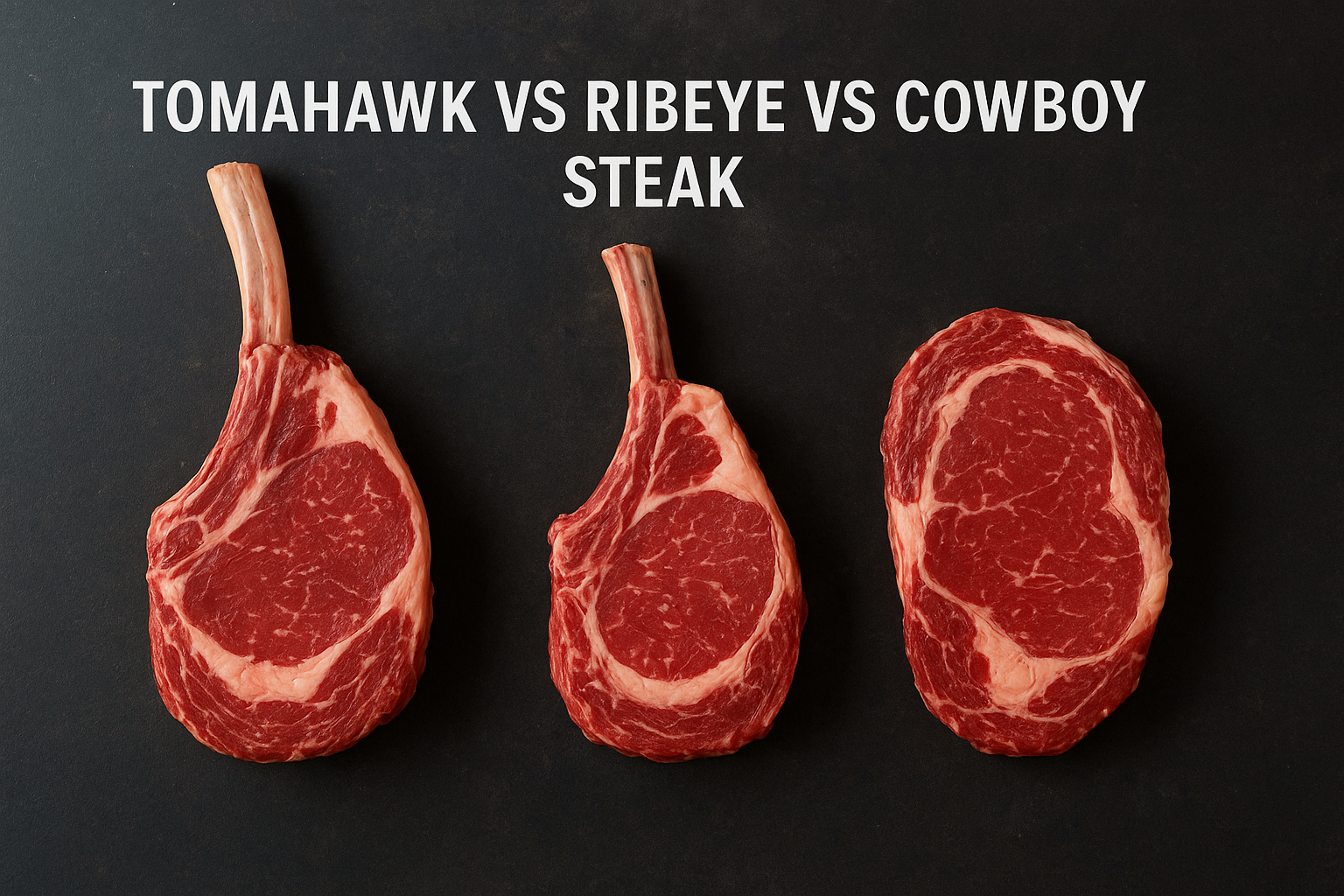
All three cuts come from the same section of the animal: the rib primal, ribs six through twelve. They share the same longissimus dorsi muscle, the same marbling structure, and the same fundamental flavor profile. The differences between them are almost entirely about how the butcher handles the bone during fabrication, which then affects the portion size, the presentation, and ultimately the price you pay.
The cowboy steak: same muscle, shorter bone
A cowboy steak is the closest relative to the tomahawk, and the comparison helps clarify what is a tomahawk ribeye when you line them up side by side. Both are bone-in ribeyes with a frenched rib bone, but a cowboy steak leaves only 2 to 3 inches of bone attached to the meat instead of the full 18 to 24 inches you get with a tomahawk. The result is a steak that’s still visually impressive compared to a boneless cut, but far more practical to cook in a standard pan or on a home grill without managing an oversized handle.
The only structural difference between a cowboy steak and a tomahawk is how much of the rib bone the butcher decides to leave.
Here’s a direct comparison of all three cuts across the factors that matter most when you’re choosing between them:
| Factor | Boneless ribeye | Cowboy steak | Tomahawk ribeye |
|---|---|---|---|
| Bone | None | 2-3 inches frenched | 18-24 inches frenched |
| Weight | 10-16 oz | 1.5-2 lbs | 2-3+ lbs |
| Servings | 1 | 1-2 | 2-3 |
| Pan-friendly | Yes | Yes | Difficult |
How they differ when you eat them
The eating experience across all three cuts is more similar than the visual difference suggests. Because the meat comes from the same muscle with the same fat distribution, your palate won’t detect a dramatic difference in flavor between a tomahawk and a well-marbled boneless ribeye. What you will notice is the thickness of the cut, which affects the final texture, the crust-to-interior ratio, and the juiciness you get when you slice into it.
Thicker steaks like the tomahawk retain more moisture during cooking because the interior reaches temperature more gradually. A boneless ribeye cut at one inch will cook faster and produce a thinner crust relative to the portion, while a tomahawk’s two-inch-plus thickness gives you a deeply seared exterior and a wider band of pink, evenly cooked meat in the center.
Why a tomahawk ribeye costs more
When you ask what is a tomahawk ribeye and compare its price to a standard boneless ribeye at the butcher counter, the gap is often significant. You’re typically looking at $50 to $100 or more for a single tomahawk, depending on where you buy it and what grade the beef carries. That price reflects several compounding factors, not just the size of the steak.
You pay for bone weight by the pound
The most straightforward reason for the higher price is simple: you pay per pound, and a tomahawk carries a lot of bone. That 18 to 24-inch frenched rib bone adds substantial weight to the overall cut, and most retailers price the entire steak at the same per-pound rate as the actual meat. On a 2.5-pound tomahawk, the bone itself might account for half a pound or more of what you’re paying for, which means the edible meat portion costs more per ounce than the listed price suggests.
Understanding the bone weight dynamic is essential before you compare a tomahawk’s price per pound directly to a boneless ribeye.
The frenching process requires skilled labor
Frenching a rib bone to a clean, polished finish takes time and skill. A butcher has to carefully remove all the meat, fat, and connective tissue from the exposed bone without damaging the eye of the steak or shortening the bone. That process adds labor cost to every single tomahawk that leaves the case. A boneless ribeye, by contrast, requires a straightforward separation from the bone with no finish work involved.
Presentation drives premium pricing
Beyond the practicalities, the visual impact of a tomahawk carries market value. Restaurants charge significantly more for a tomahawk than for an equivalent portion of boneless ribeye because the cut commands attention at the table and photographs well. Retailers price it accordingly because the demand supports it. You’re partly buying the experience of a dramatic, shareable centerpiece at the table, and that experience has a real price attached to it whether you’re cooking at home or ordering at a restaurant.
How to cook a tomahawk ribeye at home
Once you understand what is a tomahawk ribeye, the next question is how to cook one without ruining the investment. The thickness of the cut is the main challenge. Standard high-heat methods that work on a one-inch boneless ribeye will leave a two-plus-inch tomahawk charred on the outside and raw in the center. The approach that consistently produces the best results is the reverse sear, which works with the steak’s thickness rather than against it.
The reverse sear method
The reverse sear starts in a low-temperature oven and finishes over high heat. Season the steak generously with kosher salt and black pepper, then place it on a wire rack set over a sheet pan in an oven set to 250°F. Cook until the interior reaches 115 to 120°F for medium-rare, which typically takes 45 to 60 minutes depending on the exact thickness. Then transfer it immediately to a screaming hot cast iron pan or grill and sear each side for about 90 seconds to build the crust.
The reverse sear gives you precise control over the interior temperature before you ever introduce high heat, which is exactly what a thick steak requires.
Here’s a basic temperature guide for the reverse sear process:
| Target doneness | Pull from oven at | Final internal temp |
|---|---|---|
| Rare | 110°F | 120-125°F |
| Medium-rare | 115-120°F | 130-135°F |
| Medium | 125°F | 140-145°F |
Resting and slicing
After the sear, resting the steak for at least 10 minutes is not optional. The muscle fibers need time to relax and reabsorb the juices that moved toward the surface during cooking. Skipping this step means those juices run out the moment you cut in, leaving you with drier, less flavorful meat than the cut deserves.
When you slice, cut perpendicular to the bone and work in thin strips across the grain of the meat. A tomahawk feeds two to three people comfortably, so presenting it sliced on a wooden board lets everyone share without each person trying to manage the full cut on their own plate.
Final thoughts for steak night
Now you know what is a tomahawk ribeye beyond the dramatic presentation. It’s a bone-in ribeye from the rib primal with a full-length frenched rib bone, cut thick enough to feed two or three people and priced to reflect both the bone weight and the labor involved in preparing it. The meat itself shares the same muscle and marbling as every other ribeye on the counter. What you’re adding is scale, a serious cooking challenge, and a centerpiece that earns attention at any table.
If you’d rather skip the prep and let someone else handle the cooking, a great ribeye at a proper restaurant is hard to beat. Visit La Dolce Vita Cucina in Chicago’s Portage Park for a premium steak experience without the cleanup. Our 16oz Ribeye is already on the menu, and our team is ready to make your next steak night well worth the trip out.