
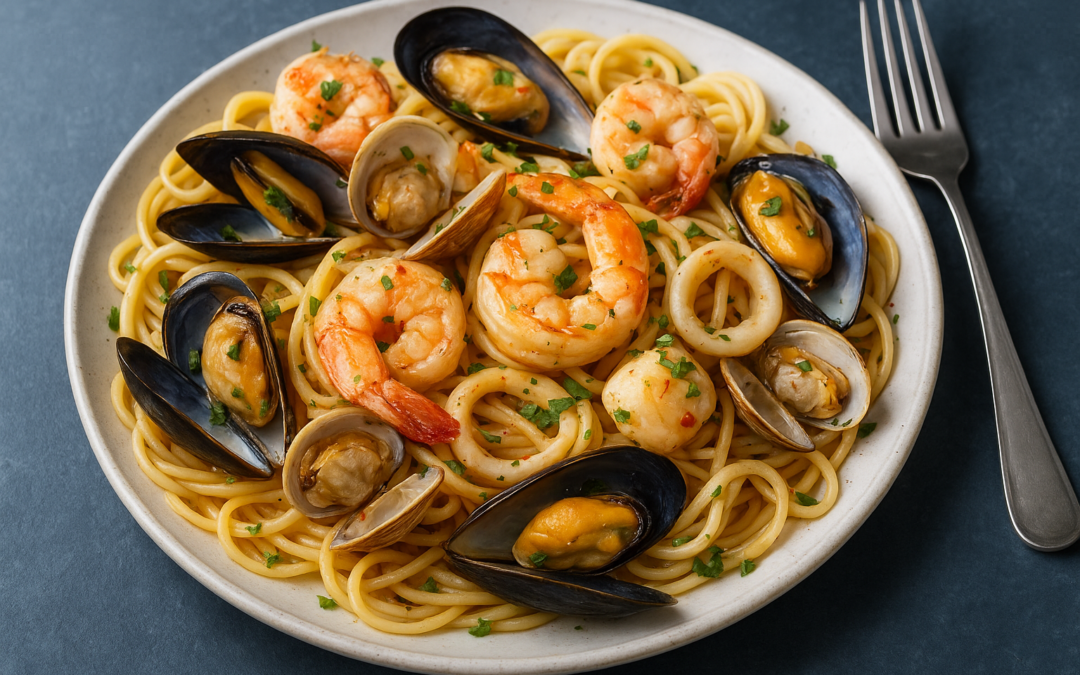
Walk into any coastal Italian restaurant and you’ll likely spot "frutti di mare" on the menu. But what is frutti di mare, exactly? The phrase translates to "fruits of the sea" in Italian, a poetic name for a beloved seafood medley that showcases the Mediterranean’s finest catches.
At La Dolce Vita Cucina in Chicago’s Portage Park neighborhood, we celebrate this tradition as part of our commitment to authentic Italian cuisine. Frutti di mare represents everything we love about Italian cooking: fresh ingredients, simple preparation, and flavors that transport you straight to the Italian coastline.
This guide breaks down the origins of frutti di mare, the seafood typically found in the dish, and practical tips for preparing it with pasta. Whether you’re ordering it at a restaurant or attempting it in your own kitchen, you’ll walk away knowing exactly what makes this classic so special.
What frutti di mare means and what it includes
The literal translation and cultural meaning
When Italians say "frutti di mare," they’re referring to seafood as nature’s ocean harvest. The direct translation is "fruits of the sea," and the phrase captures how coastal communities view their catch: as a natural bounty similar to picking fruit from trees. You’ll hear this term used in Italy to describe any mixed seafood preparation, whether served over pasta, in a soup, or as a standalone seafood platter.
The concept originated in Mediterranean fishing villages where daily catches varied based on the season and weather. Rather than create rigid recipes, cooks worked with whatever the fishermen brought to shore that morning. This flexibility remains central to understanding what is frutti di mare, because authentic preparations change based on availability and regional preferences.
Italian coastal cooking treats seafood variety as a strength, not a limitation.
Core seafood varieties you’ll find
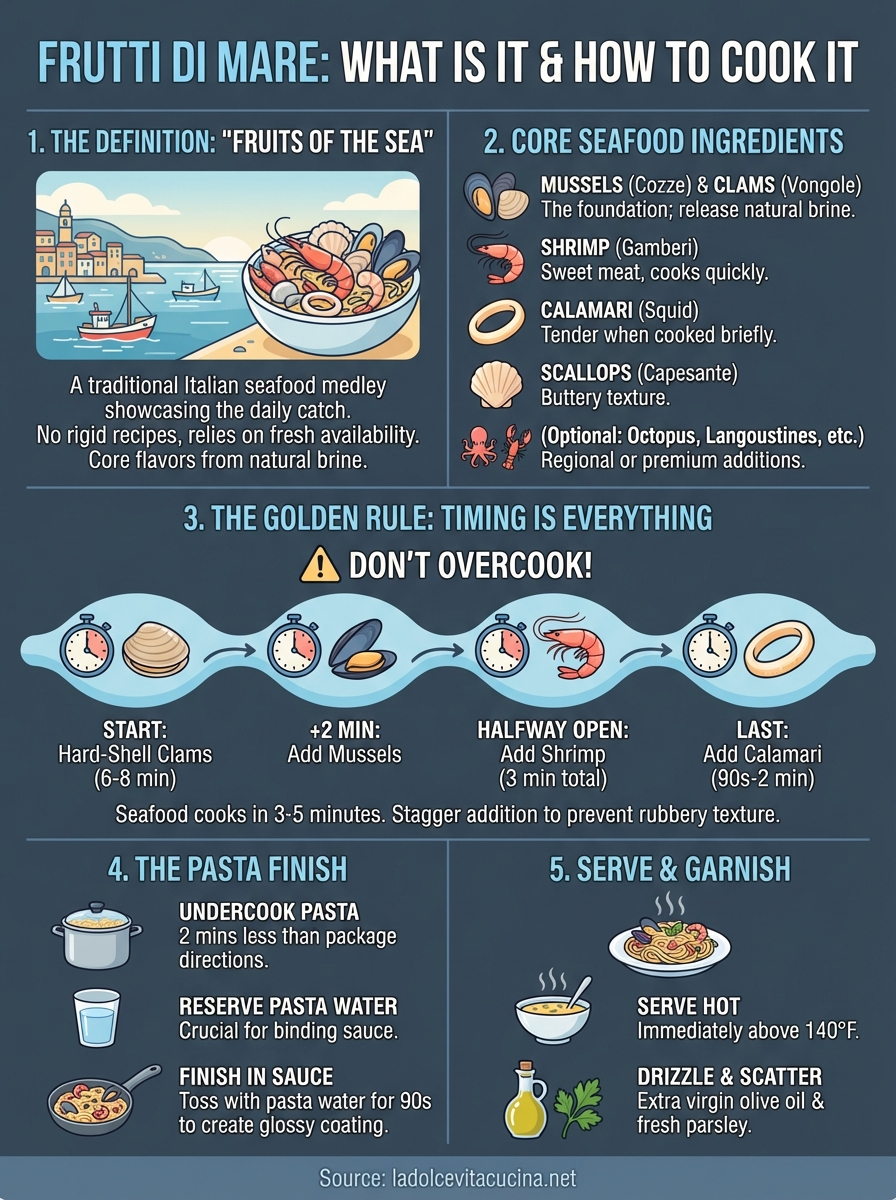
A proper frutti di mare typically combines four to six types of shellfish and seafood. You’ll almost always encounter mussels (cozze) and clams (vongole) as the foundation, since both release natural brine that flavors the entire dish. Most preparations add shrimp (gamberi) for their sweet meat and visual appeal.
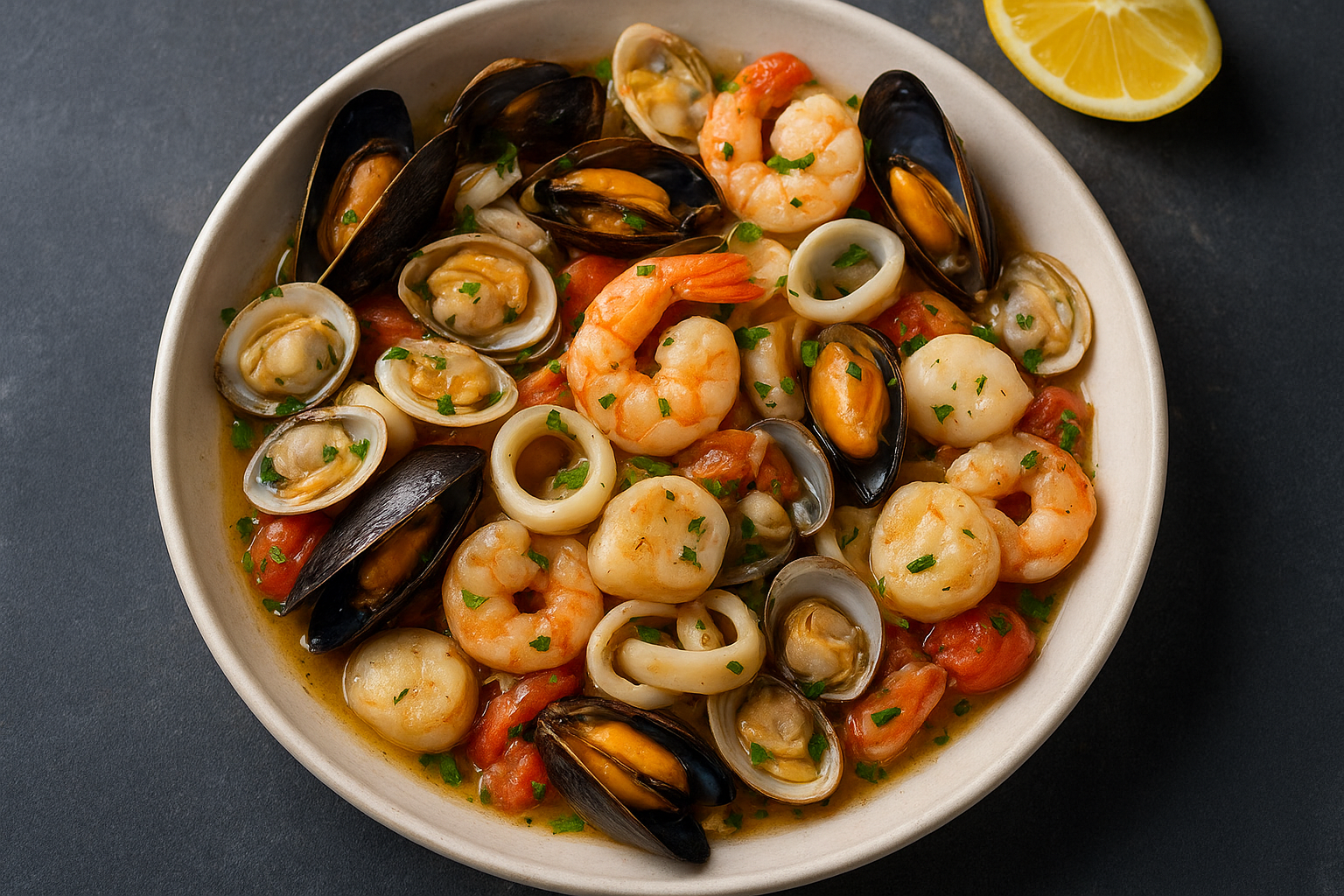
Beyond these staples, you’ll see calamari (squid) cut into rings that turn tender when cooked briefly. Many versions include scallops for their buttery texture, while octopus appears in southern Italian recipes. Some restaurants add langoustines or small lobster for premium presentations, though these aren’t traditional in home cooking.
The seafood mix you choose affects both cooking time and final texture. Hard-shell clams need more time to open than mussels. Shrimp cook in minutes, while octopus requires either quick high heat or slow braising. You want everything to finish simultaneously, which means adding each type at the right moment during preparation.
Regional variations exist throughout Italy’s extensive coastline. Venetian versions favor local lagoon fish, while Sicilian preparations might include swordfish. The Amalfi Coast often adds sea urchin when in season. These differences reflect local waters and fishing traditions rather than strict rules about what belongs in the dish.
Traditional ingredients and easy substitutions
You need specific seafood types to create authentic frutti di mare, but the dish also forgives smart swaps when fresh catches aren’t available. Most recipes start with shellfish that release natural liquid during cooking, which becomes the sauce base. You’ll build on that foundation with firm seafood that holds its shape through cooking.
Standard frutti di mare ingredients
Traditional versions combine five to seven seafood types in equal proportions. Start with one pound each of mussels and clams as your base, choosing varieties like Manila clams or littleneck clams that open reliably. Add twelve large shrimp (about three-quarters of a pound), leaving shells on for extra flavor if you prefer.
Include half a pound of cleaned calamari cut into rings and tentacles. Many cooks add six to eight scallops for sweetness, using sea scallops rather than the smaller bay variety. If you want what is frutti di mare at its most luxurious, throw in four ounces of lobster tail cut into chunks.
Fresh seafood defines this dish, so quality matters more than quantity.
Smart substitutions when you can’t find fresh seafood
Frozen seafood works when fresh isn’t available, but you need to thaw it properly. Thaw frozen shrimp and scallops overnight in your refrigerator, never at room temperature. Pre-cooked frozen mussels save time, though they lack the brininess of fresh ones opening in your pan.
Can’t find certain shellfish? Swap cockles for clams or use squid instead of cuttlefish. Replace expensive scallops with extra shrimp or monkfish chunks that provide similar texture. Skip the lobster entirely and double your shrimp portion for a budget-friendly version that still delivers ocean flavor.
Step 1. Buy, store, and prep seafood safely
Your frutti di mare success starts at the seafood counter, where fresh product makes the difference between a restaurant-quality dish and a disappointing meal. Knowing what is frutti di mare means understanding that seafood quality directly affects flavor and texture, so you need to shop carefully and handle everything properly from purchase to prep.
Shopping for fresh seafood
Look for specific freshness indicators when buying shellfish and seafood. Fresh mussels and clams should close tightly when tapped, and their shells should feel heavy with seawater inside. Reject any with cracked shells or strong ammonia odors. Shrimp should smell like clean ocean water, never fishy, with firm flesh that springs back when pressed.
Check that fresh fish displays sit on crushed ice, not sitting in melted water. Ask your fishmonger when the seafood arrived, and choose varieties that came in that morning. Calamari and octopus should appear glossy and translucent, not dull or slimy to touch.
Fresh seafood smells like the ocean, not like fish.
Storage and safe handling
Store all seafood in your refrigerator’s coldest section (usually the back of the bottom shelf) immediately after purchase. Keep shellfish in breathable containers, never sealed plastic, since they need air circulation. Plan to cook everything within 24 hours of buying it.
Before cooking, scrub mussel and clam shells under cold running water with a stiff brush. Pull off the stringy beards from mussels. Rinse shrimp and pat everything completely dry with paper towels so they sear properly rather than steam. Discard any shellfish that won’t close or any that smell off.
Step 2. Cook frutti di mare without overcooking it
Overcooking ruins seafood faster than any other mistake, turning tender shellfish into rubber and making what is frutti di mare a chewy disappointment. You need to work quickly once heat hits the pan, since most seafood cooks in three to five minutes. Set up all your ingredients before you start cooking, because you won’t have time to search for missing items once the process begins.
Timing each seafood type correctly
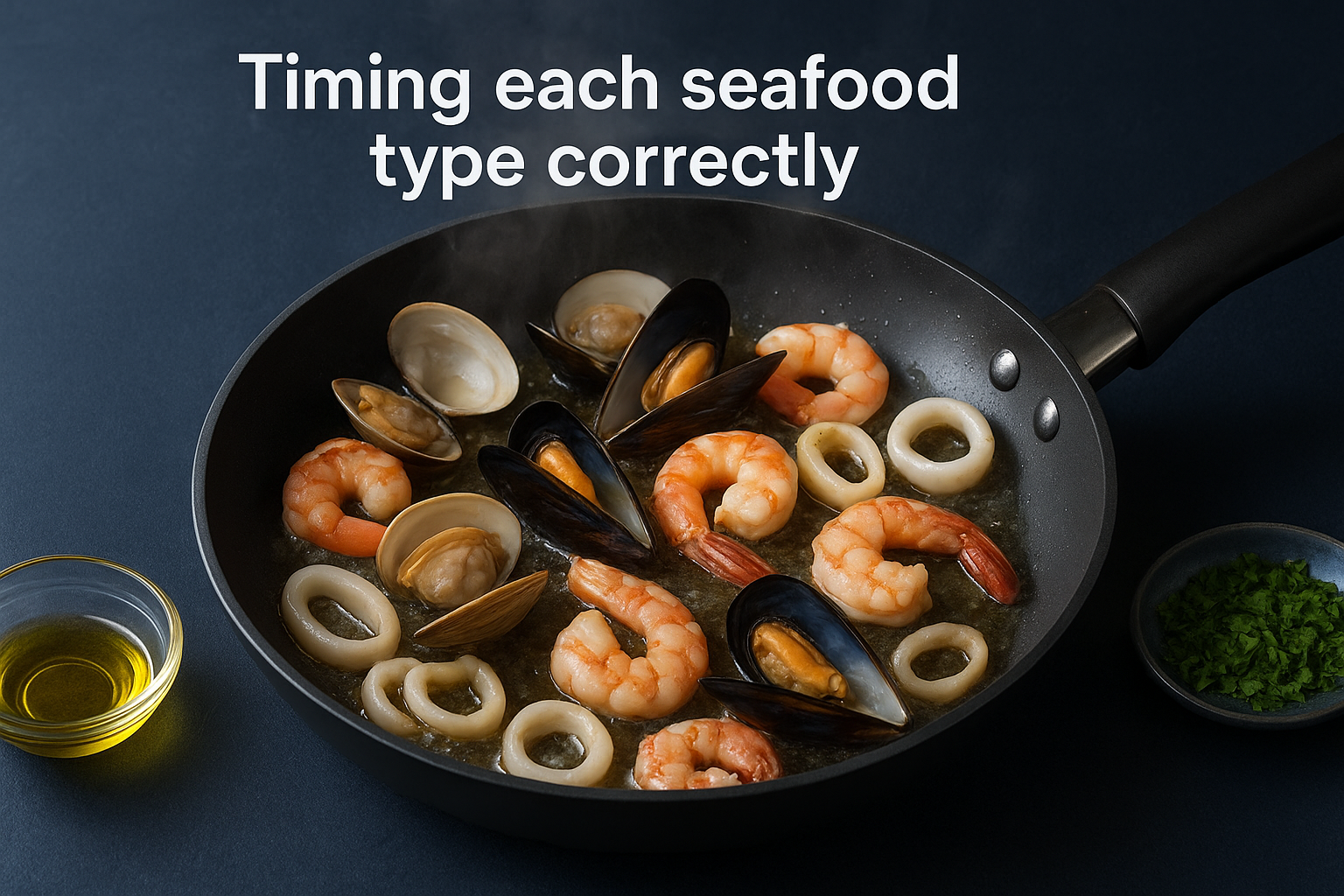
Start your cooking with hard-shell clams first, as they take the longest to open (six to eight minutes). Add mussels two minutes after the clams, since they open faster. Drop shrimp into the pan when your shellfish are halfway open, giving them three minutes total. Calamari needs the shortest time, just 90 seconds to two minutes, so add it last.
Seafood continues cooking after you remove it from heat, so pull it early rather than late.
Watch for visual doneness cues instead of relying solely on timers. Clams and mussels open naturally when cooked through. Shrimp turn opaque and pink, curling into a C-shape (not a tight O, which signals overcooking). Calamari becomes white and slightly firm but still tender when you pierce it with a fork.
Managing heat levels
Keep your pan at medium-high heat throughout cooking, resisting the urge to crank it higher for speed. High heat toughens protein before the inside cooks properly. If liquid boils too vigorously, reduce to medium and cover the pan to trap steam that helps shellfish open.
Step 3. Finish the pasta and serve it right
Understanding what is frutti di mare means knowing that the final assembly determines whether your dish sings or falls flat. You’ve cooked your seafood perfectly, but now you need to marry it with pasta in a way that coats every strand with ocean-flavored sauce. This final step happens quickly, so keep everything moving to prevent the pasta from clumping or the seafood from cooling.
Combining pasta with seafood
Cook your pasta two minutes less than package directions suggest so it finishes in the sauce. When you drain it, reserve one full cup of pasta water before pouring anything down the sink. Add the undercooked pasta directly to your seafood pan along with half a cup of pasta water to create a glossy sauce.
Toss everything together over medium heat for 90 seconds, letting the pasta absorb the seafood liquid while it finishes cooking. The starch from pasta water binds with the natural shellfish brine to create a light coating that clings to each piece. Add more pasta water a splash at a time if the mixture looks dry rather than glossy.
Pasta water transforms separate components into a unified dish.
Garnishing and serving hot
Divide the pasta and seafood among warmed shallow bowls, distributing the shellfish evenly so each person gets variety. Drizzle high-quality extra virgin olive oil over each portion and scatter fresh parsley leaves on top. Serve immediately while everything stays above 140°F, since seafood loses its appeal when lukewarm.
Bring it all together
You now understand what is frutti di mare means and how to execute it properly at home. The dish rewards attention to seafood quality and careful timing more than complex technique. Start by shopping for the freshest catches you can find, then work quickly once your pan heats up to prevent overcooking any component.
Remember that traditional Italian cooking values ingredient quality over elaborate preparation. You don’t need expensive equipment or professional training to create restaurant-quality frutti di mare. Focus on buying fresh seafood, cooking each type for the right duration, and finishing your pasta in the seafood sauce rather than simply placing cooked ingredients on top of plain noodles.
Want to experience authentic frutti di mare without the kitchen stress? Visit La Dolce Vita Cucina in Chicago’s Portage Park neighborhood, where we prepare traditional Italian seafood dishes using time-honored techniques and the finest ingredients available.