
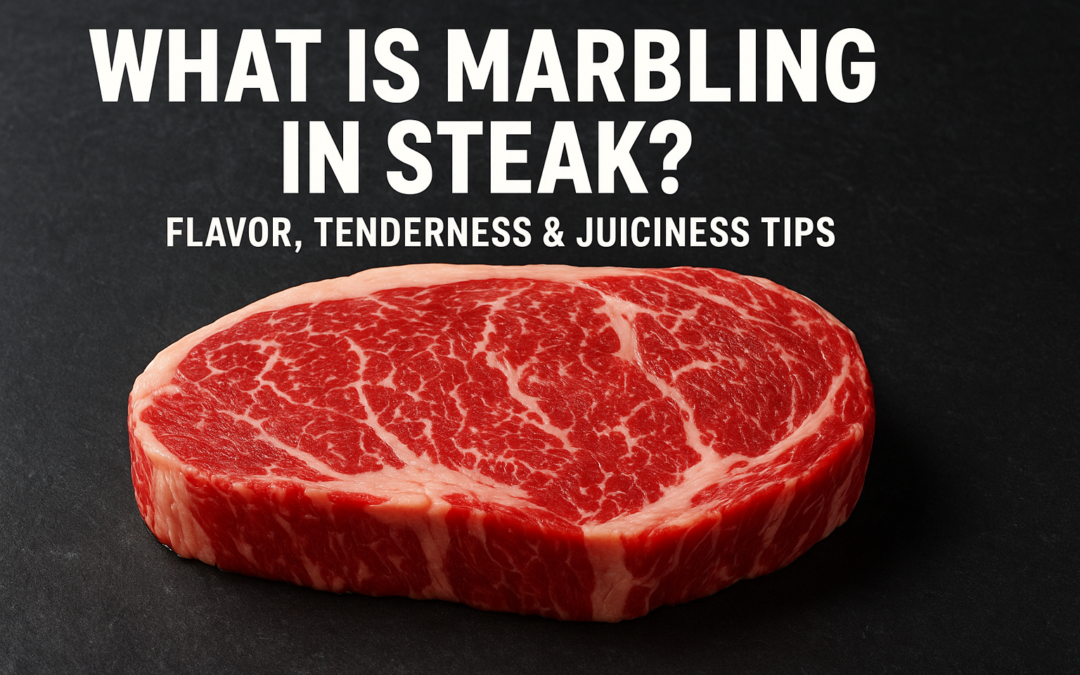
Pick up a well-marbled ribeye and a lean round steak, cook them the same way, and the difference on your plate will be undeniable. That difference comes down to what is marbling in steak, the thin, white streaks of intramuscular fat woven through the meat. It’s the single biggest factor separating a forgettable steak from one that melts across your tongue with rich, beefy flavor.
At La Dolce Vita Cucina, our chef-recommended 16oz Ribeye is a prime example of why marbling matters. We chose it for our Portage Park menu specifically because its fat distribution delivers the kind of tenderness and depth that pairs beautifully with Italian preparation and seasoning.
But marbling isn’t just a restaurant concern, it’s practical knowledge for anyone who buys, cooks, or orders steak. This article breaks down exactly what marbling is, how it differs from the external fat you trim off, why it affects flavor and juiciness, and how grading systems like USDA use it to rank beef quality. By the end, you’ll know how to spot great marbling whether you’re shopping at a butcher counter or scanning a dinner menu.
What marbling is and what it is not
When people ask what is marbling in steak, they usually point to the thin white lines running through a raw cut at the butcher counter. Those lines are intramuscular fat, meaning fat deposited inside the muscle tissue itself, between individual muscle fibers. Unlike the thick fat cap you see around the edge of a sirloin or the connective tissue holding a roast together, intramuscular fat is woven directly into the lean meat in a pattern that resembles marble stone, which is exactly where the term originates.
Intramuscular fat: the fat built into the meat
Intramuscular fat forms during an animal’s growth and distributes itself throughout the muscle fibers, not layered on top of them. When you look at a cross-section of a well-marbled ribeye, you see a network of thin white threads and flecks spread evenly across the red meat. That even distribution is what makes the fat effective. It does not sit in one place you can push aside; it runs through every bite you take.
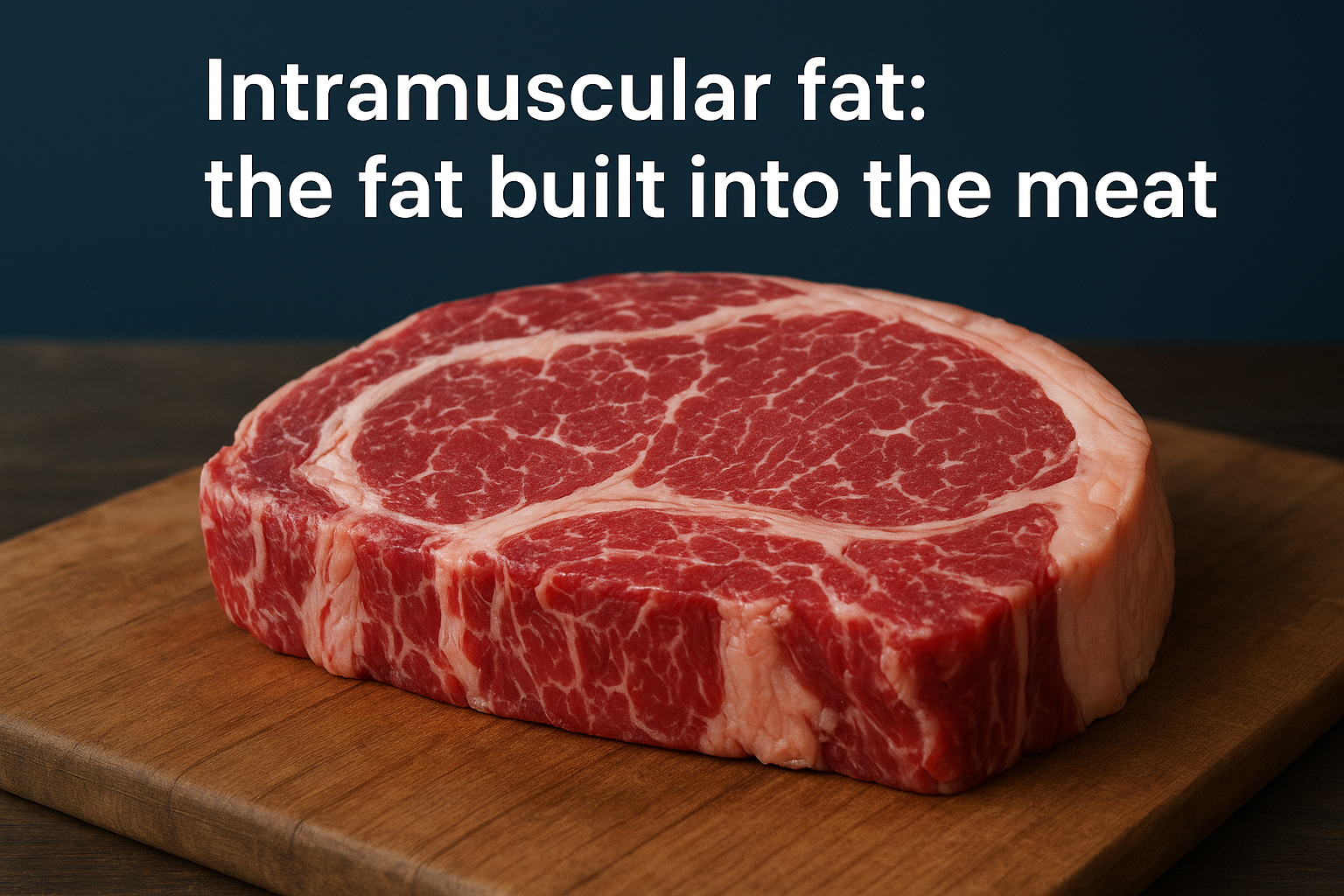
The key distinction is location: marbling sits inside the muscle, which means it cooks alongside the meat rather than dripping away from it.
Cuts like the ribeye and New York strip tend to show the most visible marbling because the muscles they come from do relatively little work during the animal’s life. Less-used muscles accumulate more intramuscular fat over time. Harder-working muscles, such as those in the shoulder or leg, stay leaner and develop tougher, denser fibers instead.
The fat you trim away is not marbling
The fat cap and seam fat you see on the outside or between muscle groups are structurally different from marbling. A butcher can trim that fat away before a steak reaches your plate, and the cut still looks and cooks roughly the same way. You can also cut around it on your plate without changing anything about the interior of the meat.
Marbling cannot be trimmed. It is part of the muscle structure itself, and removing it would mean cutting away the surrounding meat along with it. This is precisely why marbling has such a strong influence on how a steak tastes and feels when you eat it. A leaner cut with no visible marbling simply has less of this internal fat to work with, regardless of how the exterior is prepared or seasoned.
Why marbling changes flavor, tenderness, and juiciness
Understanding what is marbling in steak goes beyond knowing where the fat sits. The real payoff is knowing what that fat does during cooking and how it transforms the eating experience across three measurable dimensions: flavor, tenderness, and juiciness.
How fat releases flavor during cooking
Fat carries fat-soluble flavor compounds that water-based lean meat simply cannot hold in the same way. When a marbled steak hits a hot pan or grill, the intramuscular fat begins to render, releasing those compounds directly into the surrounding muscle fibers. The result is a richer, more complex beefy taste that lean cuts cannot replicate no matter how you season the surface. The rendering fat also feeds the Maillard reaction, deepening the savory crust that forms on the outside of the meat and adding another layer of flavor you taste in every bite.
A lean steak can have excellent seasoning on the outside, but without marbling, the interior stays flat and one-dimensional.
Why marbled meat stays tender and juicy
Tenderness comes down to how easily muscle fibers separate when you chew. Intramuscular fat sits between those fibers and physically interrupts their structure. When it renders during cooking, it lubricates the surrounding tissue, making each bite feel softer and easier to break apart. This is why a well-marbled ribeye requires almost no effort to cut through, while a lean eye of round can feel dense and chewy even at the same internal temperature.
Juiciness works alongside tenderness in a specific way. The rendered fat coats your palate as you chew, creating a sustained sense of moisture that lean cuts simply cannot produce. Water-based juices from lean meat evaporate quickly during cooking, but fat persists through the entire eating experience, which is why a marbled steak still feels satisfying in your last bite.
What causes marbling in beef
Marbling doesn’t happen by accident. Three primary factors determine how much intramuscular fat a steer develops before it reaches the butcher: genetics, diet, and the animal’s activity level. Understanding these factors explains why some cuts and breeds consistently deliver better marbling than others, and why that connects directly to what is marbling in steak at the highest quality levels.
Genetics and breed
Breed is the starting point for any discussion of marbling potential. Wagyu cattle, originally from Japan, carry a genetic predisposition to deposit fat inside muscle tissue at exceptionally high rates. Black Angus is another breed well known in the American market for producing consistently marbled beef, which is why you see the Certified Angus Beef label on restaurant menus so frequently. A steer’s genetics set the ceiling for how much marbling it can develop, regardless of how it’s raised.
Diet and finishing method
What a cow eats in the final months before slaughter has a direct impact on marbling levels. Grain-finished cattle, typically fed corn or barley in a feedlot during the last 90 to 200 days of their lives, accumulate significantly more intramuscular fat than their grass-fed counterparts.
Grass-fed beef tends to be leaner overall, which suits certain cooking methods and flavor preferences but produces less visible marbling than grain-finished beef.
Grass-fed cuts can still show some marbling depending on the breed and length of the grazing period, but the fat distribution rarely reaches the same density as grain-finished beef.
Age and muscle use
Older cattle and less active muscles tend to accumulate more intramuscular fat over time. A younger, more active animal will develop leaner, denser muscle tissue with lower marbling potential, which is why knowing your cut’s source gives you a meaningful advantage when selecting steak.
How marbling gets graded and labeled
Once you understand what is marbling in steak, the next step is knowing how the beef industry measures and communicates it. In the United States, the USDA Agricultural Marketing Service runs the most widely used grading system for beef, and marbling is the primary factor it uses to assign quality grades to a carcass.
USDA quality grades
The USDA evaluates marbling level by examining a cross-section of the ribeye muscle between the 12th and 13th ribs. Based on the amount and distribution of intramuscular fat visible at that point, inspectors assign one of eight official grades. For most consumers, three of those grades matter most:
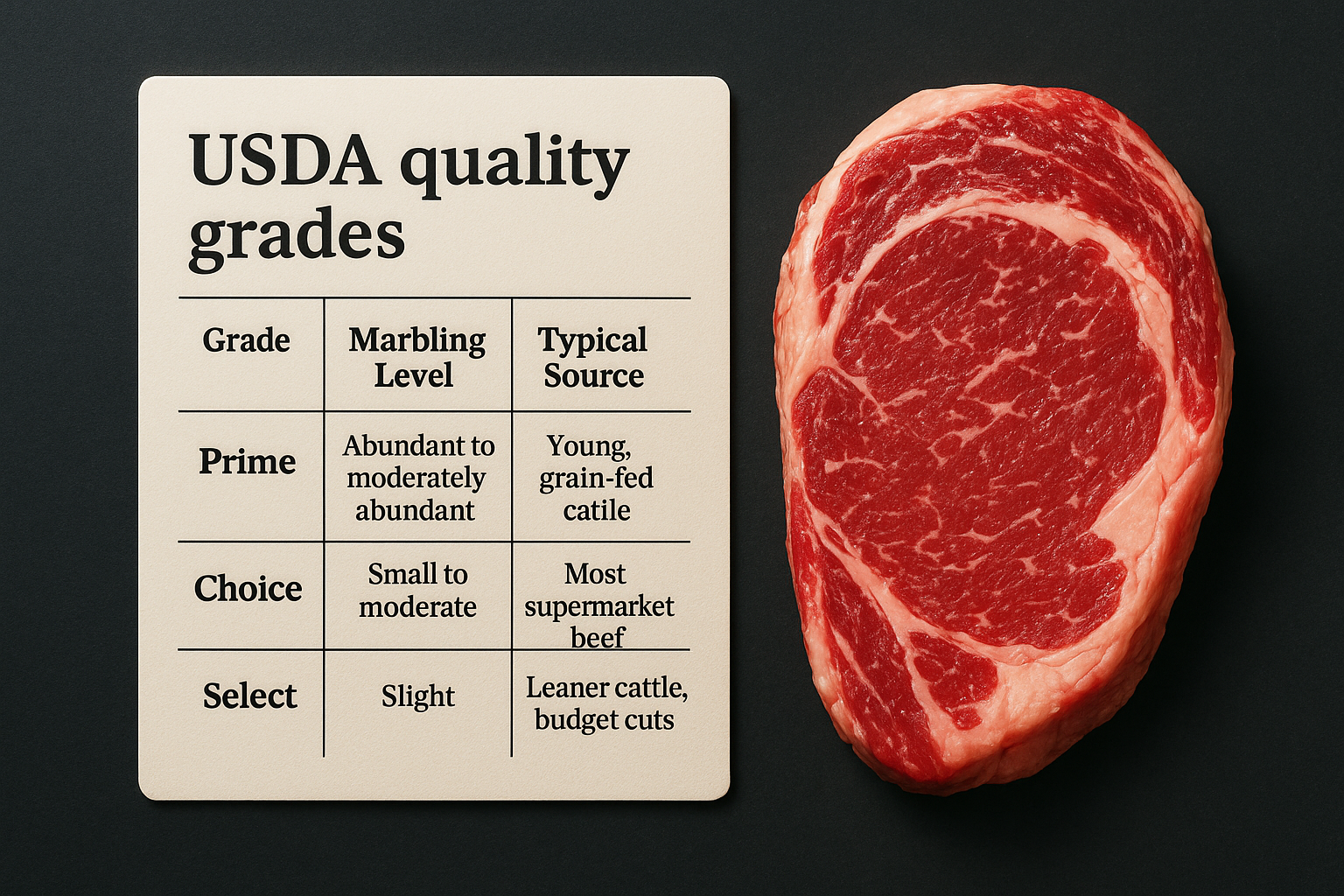
| Grade | Marbling Level | Typical Source |
|---|---|---|
| Prime | Abundant to moderately abundant | Young, grain-fed cattle |
| Choice | Small to moderate | Most supermarket beef |
| Select | Slight | Leaner cattle, budget cuts |
Prime beef makes up roughly 2 to 3 percent of all graded beef in the US, which is why you see it primarily at steakhouses and specialty butchers rather than standard grocery stores.
Prime grade represents the highest marbling available in the American grading system, while Select grade reflects very little intramuscular fat. Choice sits between them and covers the widest range of everyday retail beef.
Wagyu and BMS scoring
Japanese Wagyu beef uses a separate system called the Beef Marbling Standard, or BMS, which runs on a scale from 1 to 12. A score of 1 indicates almost no intramuscular fat, while a BMS score of 12 represents the extraordinary fat density found in the highest-grade Wagyu. Most American Wagyu and Australian Wagyu you encounter at restaurants falls between BMS 6 and 9, still well above what any USDA grade captures on its scale.
How to pick and cook a marbled steak at home
Now that you understand what is marbling in steak, you can put that knowledge to work at the grocery store or butcher counter. Choosing well starts with using your eyes: look for thin white threads spread evenly across the surface of the cut rather than clustered in one spot or absent entirely. Uneven distribution still helps, but even coverage gives you the most consistent results across every bite.
Choosing the right cut
Ribeye and New York strip are your two most reliable choices when you want visible marbling without spending on Wagyu. Both cuts come from muscles that do minimal work on the animal, which directly translates to higher intramuscular fat content and better flavor payoff. If your budget allows, look for USDA Prime or high-end Choice grades, and ask your butcher to show you the cross-section before they wrap it.
A steak that looks pink and consistent from the outside may still have good marbling inside, so always ask to see the cut face-on before you buy.
Cooking to get the most from the fat
High heat and short cooking times work best for marbled cuts because the fat needs to render quickly without drying out the surrounding muscle fibers. A cast iron pan or charcoal grill gives you the surface temperature needed to build a crust while the interior stays at your target doneness. Aim for medium-rare to medium, roughly 130 to 140 degrees Fahrenheit internally, since cooking beyond that point causes the rendered fat to leave the meat faster than the muscle can absorb it, stripping away the juiciness you paid for.
A better steak next time
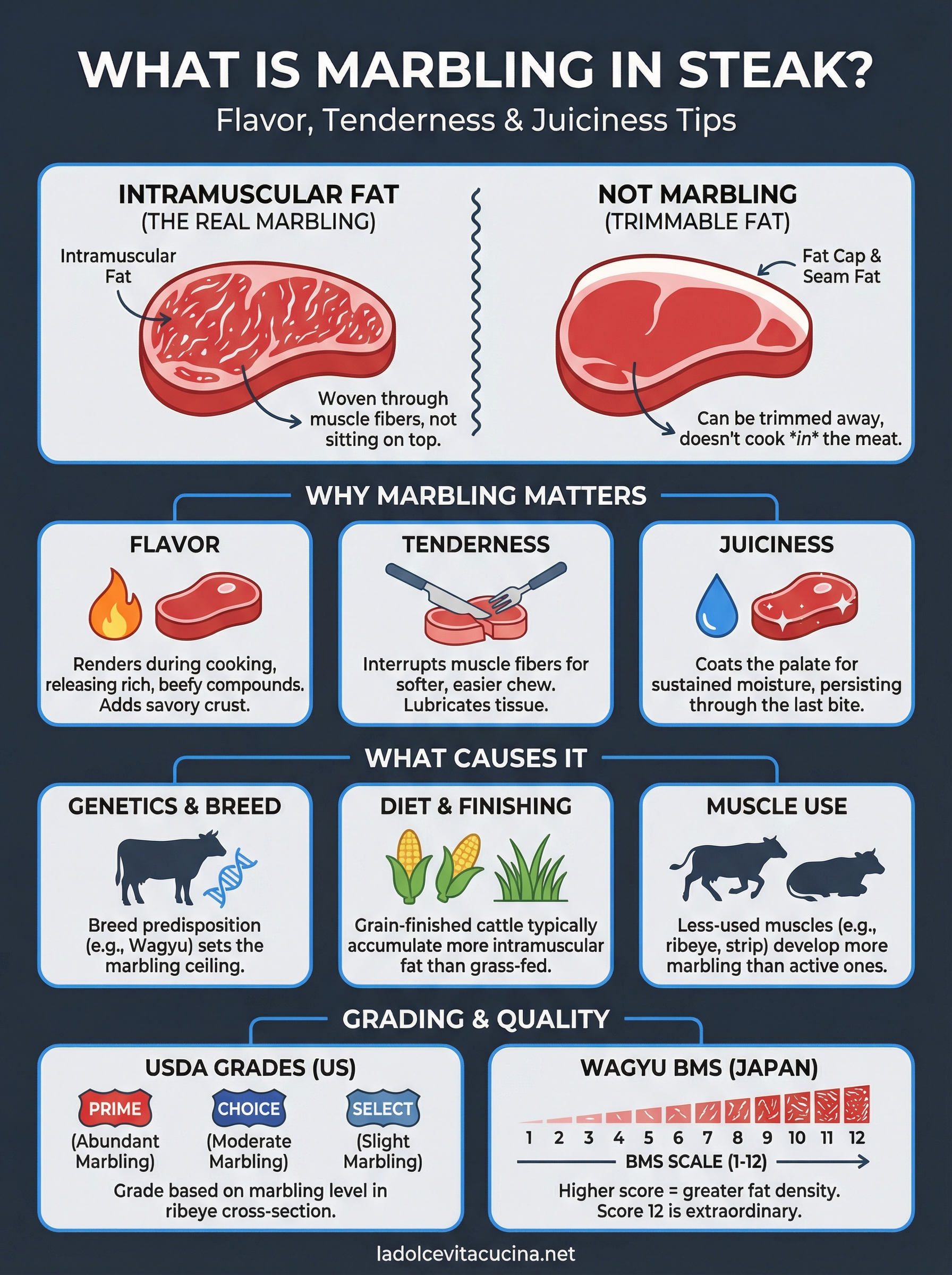
Now you have a complete picture of what is marbling in steak: intramuscular fat woven through muscle fibers that renders during cooking to deliver richer flavor, softer texture, and lasting juiciness. You also know how genetics, diet, and muscle use shape that fat distribution, and how USDA grades and BMS scores help you compare cuts before you buy. Put that knowledge to work the next time you stand at a butcher counter or scan a dinner menu, and you’ll make a noticeably better choice.
If you want to taste how marbling shows up on the plate without running your own experiment at home, come see what a properly sourced ribeye looks like when Italian preparation meets quality beef. Our chef-recommended 16oz Ribeye at La Dolce Vita Cucina is exactly where that knowledge pays off in a real dining experience. Reserve your table at La Dolce Vita Cucina and taste the difference for yourself.