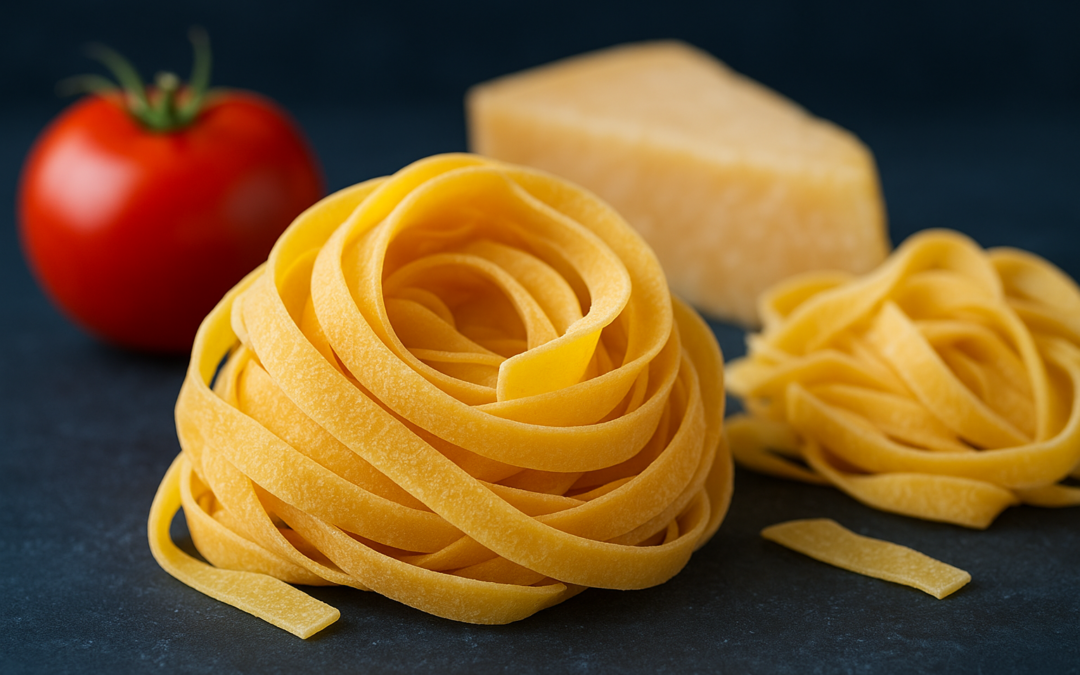
If you’ve ever scanned an Italian menu and wondered what is tagliatelle pasta, you’re not alone. It’s one of those dishes that looks familiar, long, flat, ribbon-like, but sits in a category that often gets confused with fettuccine and other similar cuts. The distinction matters, though, because tagliatelle has its own story, texture, and purpose on the plate.
Tagliatelle is a staple of Emilian cooking, born in the kitchens of Bologna, and it behaves differently than its lookalikes. Its slightly wider, rougher surface clings to rich meat sauces in a way that smoother, narrower pastas simply can’t. That’s exactly why we feature homemade tagliatelle on the menu at La Dolce Vita Cucina in Chicago’s Portage Park neighborhood, it’s a pasta that rewards the effort of making it from scratch.
This article breaks down tagliatelle’s origins, its physical characteristics, how it compares to fettuccine, and why the differences between them actually change what ends up on your fork. Whether you’re ordering it at a restaurant or making it at home, understanding this pasta will sharpen how you think about Italian food.
Why tagliatelle matters in Italian cooking
Tagliatelle isn’t just another pasta shape. It sits at the center of one of Italy’s most defined regional cooking traditions, the food culture of Emilia-Romagna. This northern region, which includes Bologna, Parma, and Modena, built its culinary identity around egg-based doughs, slow-cooked meat preparations, and handmade pasta, and tagliatelle is its signature product. Understanding what is tagliatelle pasta means understanding an entire philosophy of cooking, not just a noodle.
The roots of tagliatelle in Emilia-Romagna
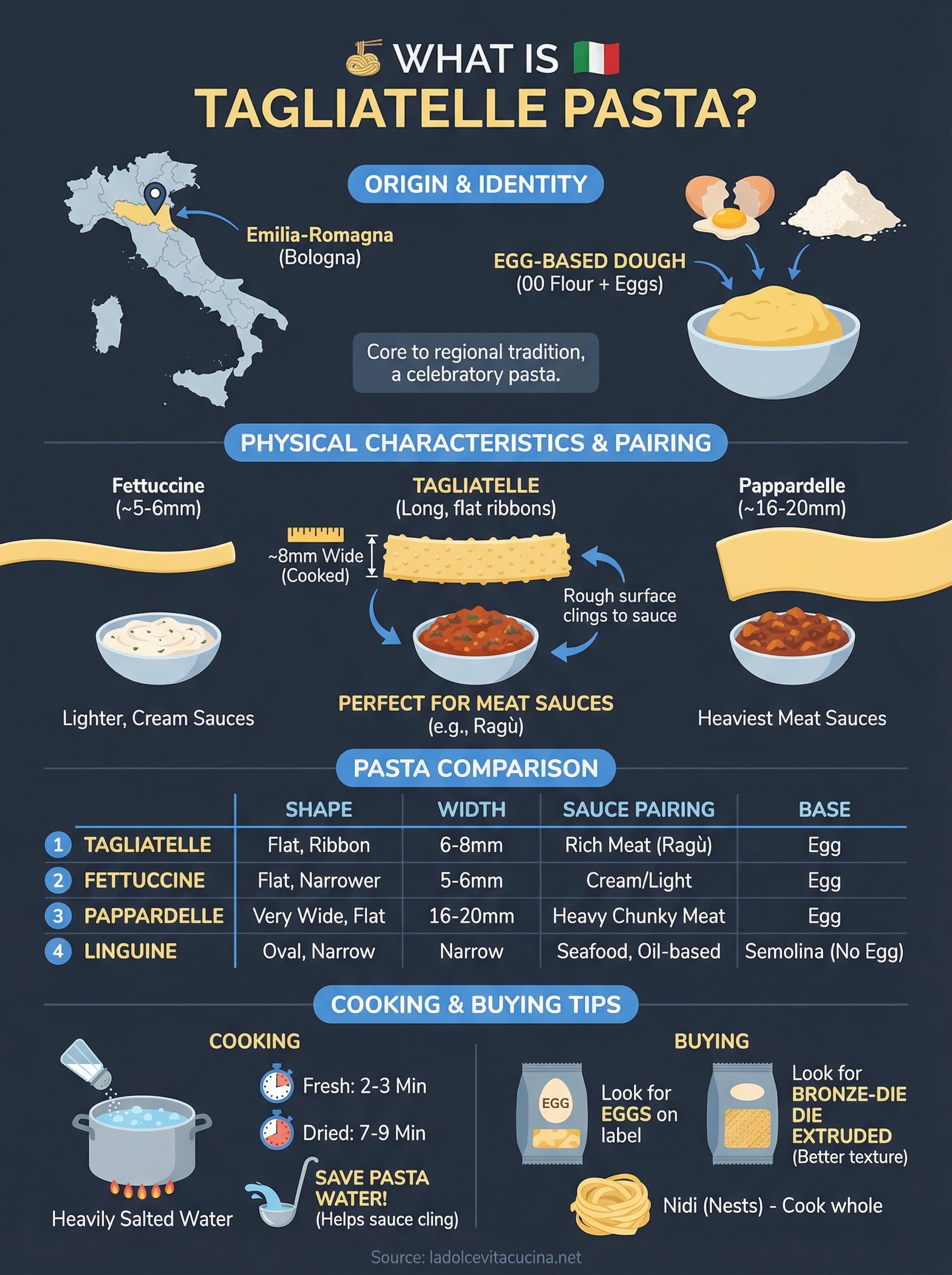
The city of Bologna holds official claim to tagliatelle, and this isn’t just local pride talking. In 1972, the Bolognese chapter of the Italian Academy of Cuisine deposited the official recipe and width specification for tagliatelle with the Bologna Chamber of Commerce. The registered width for a cooked strand is 8 millimeters, which the Academy noted is equal to roughly 1/12,270th of the height of the Asinelli Tower in Bologna. That level of precision tells you how seriously this region takes its pasta.
Tagliatelle is one of the few pasta shapes with a legally registered specification, which signals exactly how central it is to its region’s identity.
The name itself comes from the Italian verb "tagliare," meaning "to cut," which refers to the process of rolling out dough and slicing it into long ribbons. This link between name and method is typical of Italian pasta culture, where the shape reflects the craft, not just the finished product. When you understand where the name comes from, the pasta makes more sense on the plate.
Why tagliatelle is built for meat sauces
The shape of tagliatelle is not accidental. Its flat, wide surface and slightly porous texture from the egg-based dough give it a natural grip that smoother, factory-extruded pastas simply don’t have. When you coat it in a slow-cooked ragù, the sauce doesn’t slide off or collect at the bottom of the bowl. Instead, it clings to every ribbon, making each forkful consistent from start to finish.
This is why tagliatelle al ragù is the traditional pairing in Bologna, not spaghetti Bolognese, which is largely a non-Italian invention. A thick, meat-heavy sauce needs a pasta sturdy enough to carry its weight, and tagliatelle handles that in a way thinner cuts can’t. If you’ve ever noticed that a ragù tastes different depending on which pasta it’s served with, the noodle itself explains a large part of that difference.
The cultural weight behind a simple noodle
Beyond the sauce, tagliatelle carries a sense of occasion in Italian cooking. In Emilia-Romagna, making tagliatelle by hand on a wooden board with a rolling pin is a skill passed down through generations. Sunday meals, family celebrations, and holidays often center on fresh tagliatelle, which places it firmly in the category of food that people make because it matters, not because it’s quick.
That cultural weight is what makes tagliatelle worth learning about in depth. You’re not just asking about a noodle. You’re asking about a food tradition that ties geography, technique, and memory together in a single dish.
How tagliatelle is made and what it’s made of
If you want to understand what is tagliatelle pasta at its core, start with the dough. Tagliatelle is made from egg-based pasta dough, which separates it immediately from pasta shapes made with just semolina and water. The eggs are what give it that golden color, tender bite, and slightly rough surface that makes it so good at holding onto sauces.
The dough: eggs and flour
Traditional tagliatelle uses "00" flour, a finely milled Italian wheat flour, combined with whole eggs. The standard ratio is roughly one egg per 100 grams of flour, though cooks adjust this depending on the size of the eggs and the humidity in the kitchen. Some regional variations include a small amount of semolina for extra firmness, but the egg-and-soft-flour base is the classic approach.
The quality of your eggs directly affects the flavor and color of the pasta, which is why many Italian cooks use farm-fresh eggs with deep orange yolks.
You mix the flour and eggs together until a smooth, elastic dough forms, then let it rest for at least 30 minutes. That resting period is not optional. It lets the gluten relax, which makes the dough easier to roll thin without it springing back.
Rolling and cutting by hand
Traditional tagliatelle is rolled out on a large wooden board using a long rolling pin, not a pasta machine. The goal is a thin, even sheet roughly 2 to 3 millimeters thick. Once the sheet is ready, you dust it lightly with flour, fold it loosely, and cut across the fold to create long ribbons.
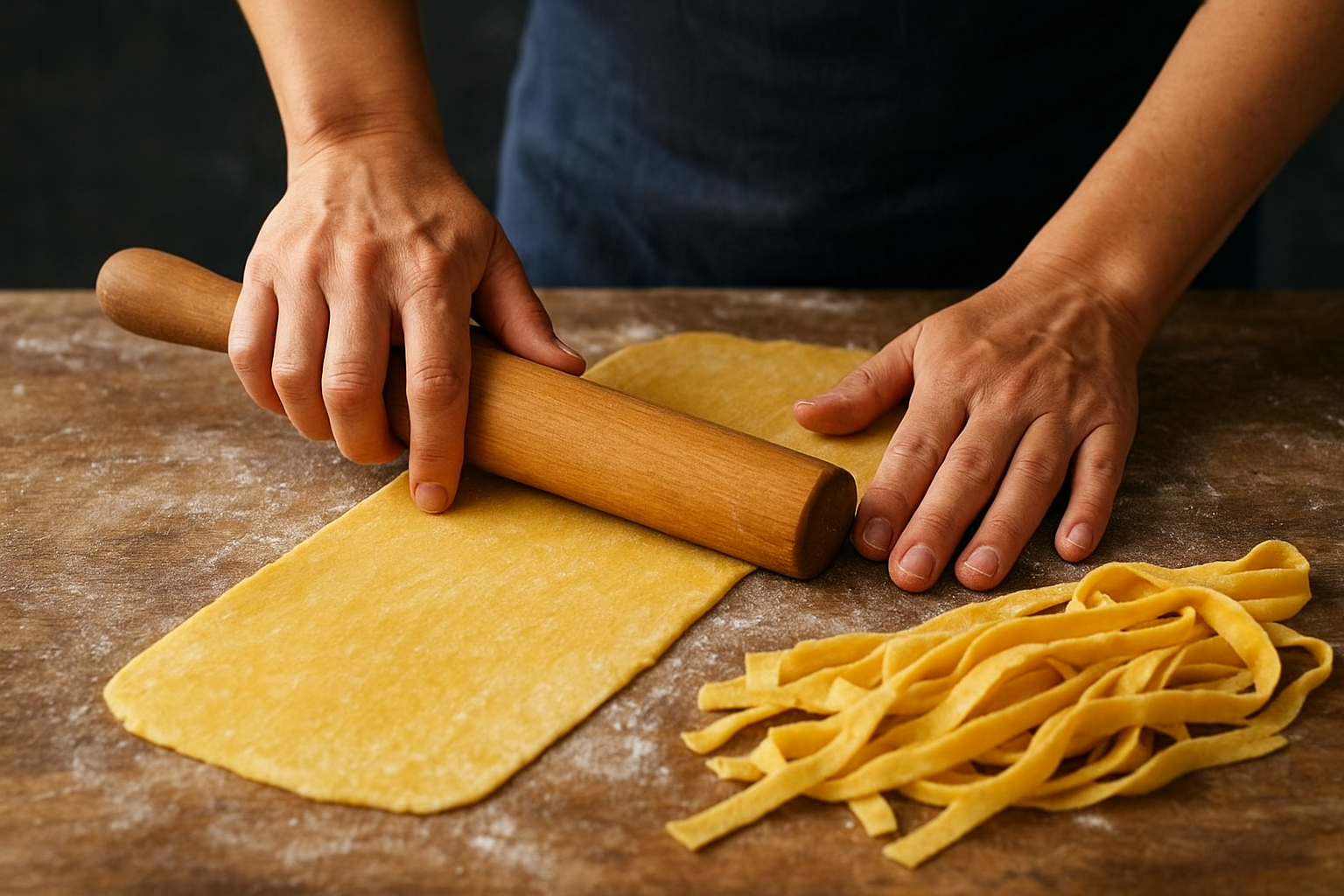
Each ribbon should be about 6 to 8 millimeters wide when unrolled. The slight irregularity you get from hand-cutting is actually an advantage, since the uneven edges give the pasta more surface texture for sauces to grip. Factory-made tagliatelle is available in dried form and uses durum wheat, but fresh, handmade tagliatelle has a different texture and absorbs sauce in a way dried pasta cannot replicate.
How to cook and serve tagliatelle
Cooking tagliatelle correctly takes just as much care as making it. The biggest mistake is overcooking the pasta, which causes it to lose the firm, slightly chewy bite that makes it worth eating in the first place. Fresh tagliatelle cooks much faster than dried, typically 2 to 3 minutes in a large pot of heavily salted boiling water. Dried tagliatelle takes closer to 7 to 9 minutes depending on the brand, but always pull a strand and taste it before you drain the pot. Timing matters more than the number on the clock.
Getting the water right
Before you drop tagliatelle in, the water needs to be aggressively salted. A common guideline is about 1 tablespoon of salt per liter of water. Salting the water is not just about seasoning the pasta from the outside; it also affects the texture of the cooked noodle by firming up its surface slightly as it cooks. Use a wide, large pot so the ribbons have room to move freely and don’t clump together during the first couple of minutes in the water. Stirring once or twice right after the pasta goes in prevents sticking without any oil needed.
Salting your pasta water correctly is one of the most impactful steps in the whole process, more effective than adding extra salt to the sauce afterward.
Matching tagliatelle to the right sauce
Part of understanding what is tagliatelle pasta is knowing what belongs on top of it. Rich, slow-cooked meat sauces like a Bolognese ragù are the traditional pairing because the wide, textured ribbons carry them well without breaking apart. You can also serve tagliatelle with truffle butter, porcini mushrooms, or a light cream sauce, all of which coat the pasta evenly without overpowering its flavor.
When you drain the cooked pasta, save a cup of the starchy cooking water before it goes down the sink. Adding a small splash to your sauce while you toss the tagliatelle helps the sauce cling to each ribbon rather than settle at the bottom of the bowl. Plate with tongs so the ribbons sit loosely and show their natural shape.
Tagliatelle vs fettuccine and other pastas
The most common confusion when asking what is tagliatelle pasta involves fettuccine, since both are long, flat, egg-based ribbon pastas. They look nearly identical at first glance, but the differences in width, origin, and traditional pairings are meaningful enough that choosing the wrong one can change how your sauce sits on the plate.
How tagliatelle and fettuccine differ
Tagliatelle comes from Emilia-Romagna, specifically Bologna, and measures around 6 to 8 millimeters wide in its cooked form. Fettuccine is a Roman pasta and typically runs slightly narrower, closer to 5 to 6 millimeters. Both use egg-based dough, but fettuccine tends to have a smoother, denser texture that works well with cream-based sauces like Alfredo, a pairing you’ll rarely see with tagliatelle in traditional Italian cooking.
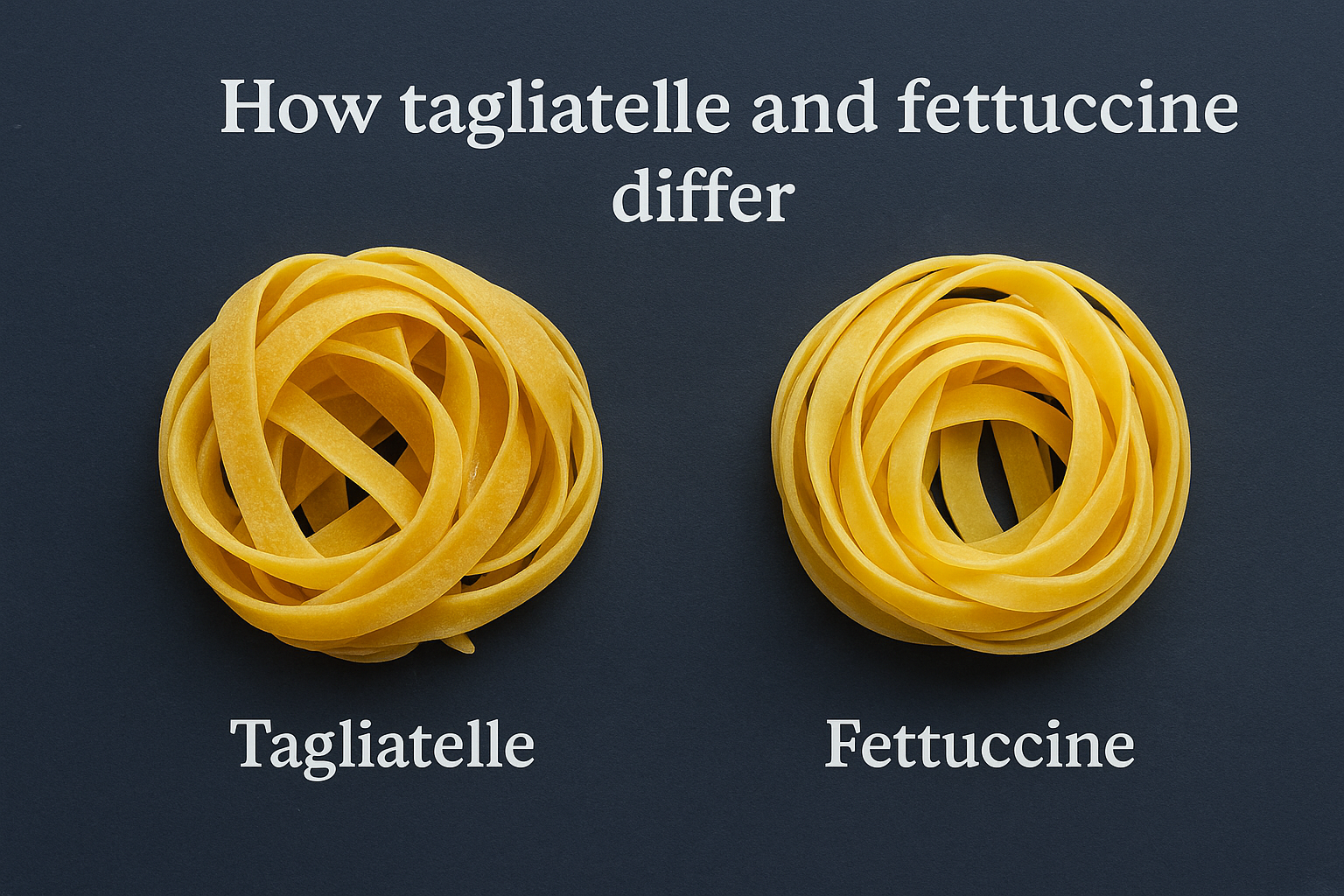
The regional origin of a pasta shape almost always explains the sauce it pairs with, because the local food culture developed both at the same time.
Choosing between them comes down to the weight of the sauce you’re working with. Tagliatelle’s slightly rougher texture and wider surface make it better suited for clinging to heavy meat ragù, while fettuccine’s smoother finish handles lighter, silkier sauces that would overwhelm the chewier northern noodle.
How tagliatelle compares to pappardelle and linguine
Pappardelle is the wider sibling, typically 16 to 20 millimeters across, and it handles the heaviest, chunkiest meat sauces, like wild boar or braised lamb, because the broad surface area can support that weight without the pasta breaking apart under your fork. Tagliatelle sits in the middle ground between fettuccine and pappardelle, which makes it the most versatile of the three for everyday Italian cooking.
Linguine belongs to a different category altogether. It’s made from semolina and water, not eggs, which gives it a springier, firmer bite. Linguine pairs best with seafood and oil-based sauces, like clams or pesto, and its oval cross-section means it behaves completely differently from the flat egg ribbon pastas above.
Common questions and buying tips
One question that comes up regularly when people research what is tagliatelle pasta is whether the pasta you find at a grocery store is worth buying, or whether you should make it yourself. The short answer depends on how much time you have and what you’re cooking, but there are real differences between fresh and dried tagliatelle that affect the finished dish in ways you’ll notice immediately.
Fresh vs dried: which should you buy
Fresh tagliatelle, either made at home or purchased refrigerated from a good Italian market, has a softer, more porous texture that absorbs sauce deeply and cooks in under 3 minutes. Dried tagliatelle is more convenient, has a longer shelf life, and holds up well in heavy, long-simmered sauces because it firms up slightly more during cooking. For a quick weeknight Bolognese, dried tagliatelle from a reliable Italian brand works fine. For a celebration or a dish where the pasta itself is the centerpiece, fresh is worth the extra time.
If you can only find one format, dried tagliatelle made with semolina and egg will get you closer to the fresh texture than a pure semolina option will.
What to look for on the label
When you buy dried tagliatelle, check the ingredient list for eggs or egg yolk, which signals a richer, more traditional product. Pasta made with only semolina and water has a different texture and won’t behave the same way under a thick meat sauce. You also want to look for bronze-die extruded pasta if the package mentions the production method, since that process leaves a rougher surface on each noodle that holds sauce the same way hand-cut pasta does.
Packages labeled "nidi" (meaning nests) contain tagliatelle coiled into compact bundles for storage. They cook identically to straight ribbons; just drop them whole into boiling water and let them loosen on their own rather than breaking them apart beforehand. One nest per person is usually a reasonable starting portion.
Final thoughts
Knowing what is tagliatelle pasta gives you more than a definition. It gives you a lens for understanding why regional Italian cooking works the way it does, where each shape, sauce, and technique connect back to a specific place and tradition. Tagliatelle earns its place on the plate because its width, texture, and egg-rich dough make it genuinely better suited to certain sauces than any substitute.
Whether you’re making it at home or ordering it at a restaurant, the details you’ve read here will help you appreciate what’s in front of you. You’ll notice the way a proper ragù clings to the ribbons, the texture of a well-made egg dough, and the difference between a pasta that was built for a dish versus one that simply approximates it. If you want to try a homemade version done right, come experience it firsthand at La Dolce Vita Cucina in Chicago’s Portage Park neighborhood.