

The classic whiskey sour has earned its spot as a cocktail menu staple, balanced, refreshing, and satisfying every time. But sticking to the original means missing out on some seriously creative whiskey sour variations that can transform your drinking experience. At La Dolce Vita Cucina in Chicago’s Portage Park neighborhood, our happy hour features Italian-inspired cocktails alongside classic favorites, and we appreciate a well-crafted twist on tradition.
Whether you lean toward fruity additions, herbal notes, or an unexpected wine float, the whiskey sour formula provides the perfect canvas for experimentation. These five variations, ranging from maple-sweetened versions to the famous New York Sour, will help you upgrade your next happy hour at home or inspire what you order next time you’re sitting at our bar.
1. Italian amaro whiskey sour
This variation draws on Italian herbal traditions by incorporating amaro, a bittersweet liqueur made from herbs, roots, and citrus peels. The result is a more complex and aromatic cocktail that layers bitter notes over the classic sweet and sour foundation. You’ll find this style pairs particularly well with our Italian-inspired menu at La Dolce Vita Cucina, where bitter aperitifs and digestifs play a central role in the dining experience.
What makes this variation different
The amaro addition transforms the straightforward whiskey sour into something more nuanced and sophisticated. Instead of relying solely on simple syrup for sweetness, you incorporate an herbal liqueur that brings botanical complexity, gentle bitterness, and often hints of orange peel or alpine herbs. This variation appeals to those who enjoy aperitivo culture and want a cocktail with more depth than the original formula provides.
Ingredients and ratios
You’ll need 2 ounces of bourbon or rye whiskey, 3/4 ounce fresh lemon juice, 1/2 ounce simple syrup, and 1/4 to 1/2 ounce of amaro depending on your preferred intensity. The amaro replaces some of the simple syrup, so you’re not adding sweetness but rather swapping it for a more interesting flavor profile. Start with 1/4 ounce if you’re new to amaro, then adjust upward as you develop a taste for the bitter notes.
How to make it step by step
Combine all ingredients in a cocktail shaker with ice and shake vigorously for 15 seconds until well-chilled. Strain the mixture into a rocks glass filled with fresh ice or serve it up in a coupe glass if you prefer a more elegant presentation. The shaking creates a light foam on top, which gives the drink a silky texture that carries the herbal aromatics beautifully.
Adding amaro to a whiskey sour creates layers of flavor that unfold as you sip, making each taste slightly different from the last.
Best whiskey and amaro pairings
Rye whiskey pairs exceptionally well with spicier amaros like Averna or Ramazzotti, while bourbon’s sweetness balances nicely with herbal amaros such as Amaro Nonino or Montenegro. For a lighter touch, try Aperol, which brings orange and rhubarb notes without overwhelming bitterness. The key is matching the whiskey’s intensity with an appropriate amaro weight.
Garnish and serving notes
Garnish with a lemon wheel or twist to emphasize the citrus already present in the drink. You can also add an expressed orange peel if your chosen amaro has strong orange notes, which reinforces those flavors. Serve this variation during the early evening when you want something more thought-provoking than a standard cocktail but still approachable enough for happy hour conversation.
2. Gold Rush
The Gold Rush, created by bartender T.J. Siegel in the early 2000s, replaces simple syrup with honey syrup to create a richer and smoother drinking experience. This variation stands among the most popular whiskey sour variations you’ll find on modern cocktail menus, offering a more refined sweetness that balances the lemon’s acidity without adding cloying sugar notes.
What makes this variation different
Honey syrup brings natural floral notes and a rounder mouthfeel compared to the sharper sweetness of simple syrup. The drink feels more substantial on your palate, with the honey adding body and complexity that plain sugar can’t match. You’ll notice the finish lingers longer, making each sip more memorable than a standard whiskey sour.
Ingredients and ratios
You need 2 ounces of bourbon, 3/4 ounce fresh lemon juice, and 3/4 ounce honey syrup (made with equal parts honey and hot water, then cooled). The honey syrup should be prepared in advance since honey doesn’t dissolve well in cold liquid, and you want a smooth, uniform texture throughout the cocktail.
How to make it step by step
Combine all ingredients in a shaker with ice and shake hard for 15 to 20 seconds until the outside of the shaker frosts over. Strain into a rocks glass over fresh ice or serve up in a coupe glass. The extended shake time ensures the honey syrup fully incorporates with the other ingredients, creating a perfectly balanced drink.
The Gold Rush proves that sometimes the simplest swap creates the most dramatic improvement in a classic cocktail.
Best whiskey and honey choices
Bourbon works better than rye whiskey here because its natural sweetness complements rather than fights the honey. For honey, wildflower or clover varieties provide the best balance, while stronger flavors like buckwheat can overwhelm the drink.
Garnish and serving notes
Garnish with a lemon wheel placed on the rim or floated on top of the drink. You can also add a small piece of honeycomb on a cocktail pick for visual appeal and an extra touch of honey flavor as you sip.
3. New York Sour
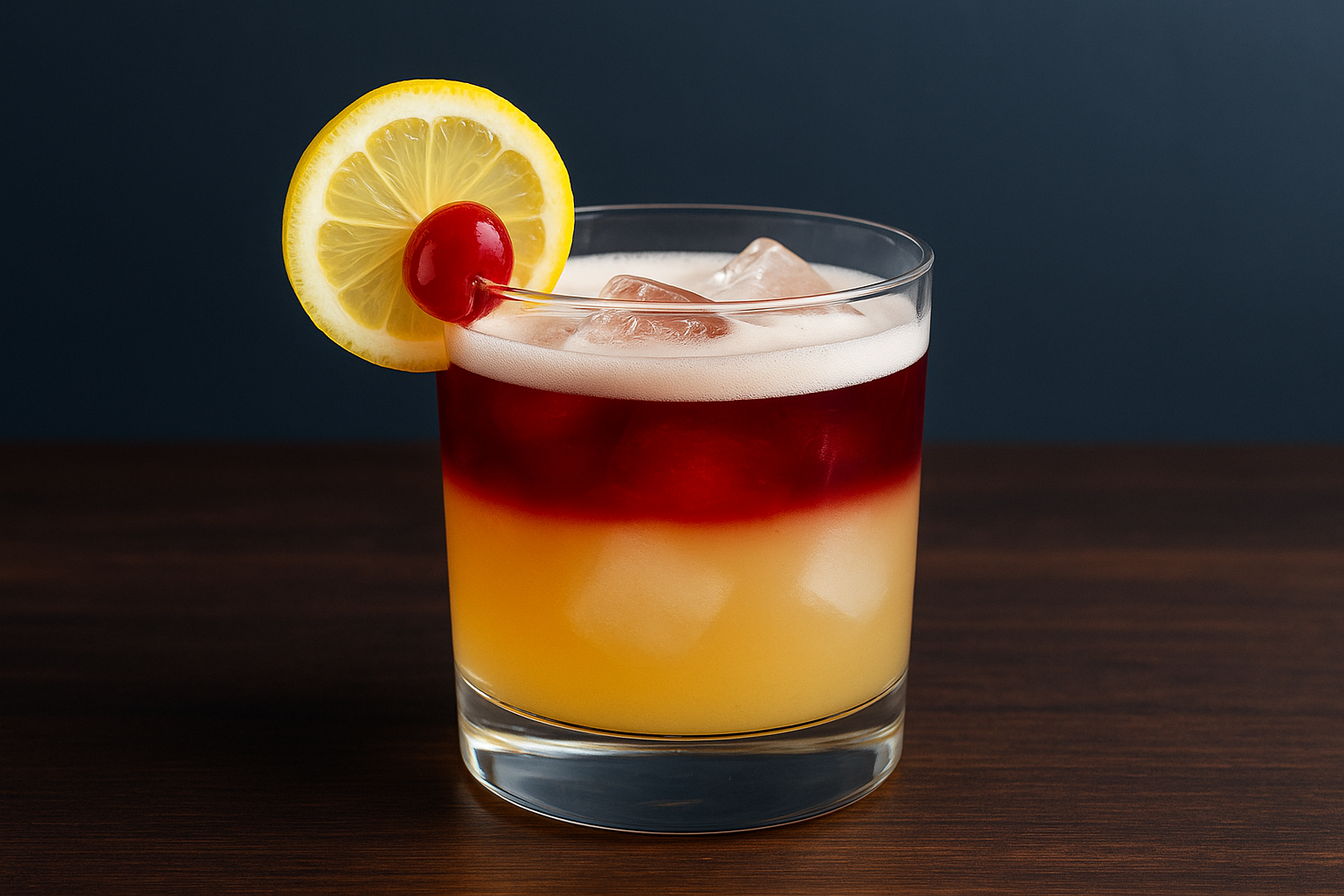
The New York Sour adds visual drama and flavor complexity by floating red wine on top of a classic whiskey sour. This technique, which dates back to the 1880s, creates a stunning layered effect that transforms an everyday cocktail into something special enough for celebration. The wine adds tannins and fruit notes that complement the whiskey’s oak character while the color gradient makes each glass Instagram-worthy without trying.
What makes this variation different
The red wine float introduces dry tannins that cut through the sweetness and add a sophisticated finish you don’t find in other whiskey sour variations. You get the bright citrus hit first, followed by whiskey warmth, then the wine’s structure arrives at the end of each sip. This progression keeps the drink interesting from first taste to last drop.
Ingredients and ratios
You need 2 ounces of bourbon or rye whiskey, 3/4 ounce fresh lemon juice, 3/4 ounce simple syrup, and 1/2 ounce of dry red wine for the float. The base follows the standard sour formula, with the wine added after you’ve already built the drink.
How to make it step by step
Shake the whiskey, lemon juice, and simple syrup with ice for 15 seconds, then strain into a rocks glass over fresh ice. Pour the red wine slowly over the back of a bar spoon held just above the drink’s surface, which creates the signature layered effect.
The red wine float turns a simple whiskey sour into a conversation starter without changing the technique or adding complexity.
Choosing the right red wine float
Dry red wines work best because sweet wines make the drink cloying. Try Malbec for fruit-forward notes or Cabernet Sauvignon for more structure and tannins.
Garnish and serving notes
Garnish with a lemon wheel and cherry on a pick. The layers will naturally mix as you drink, so serve this variation immediately after building it.
4. Penicillin
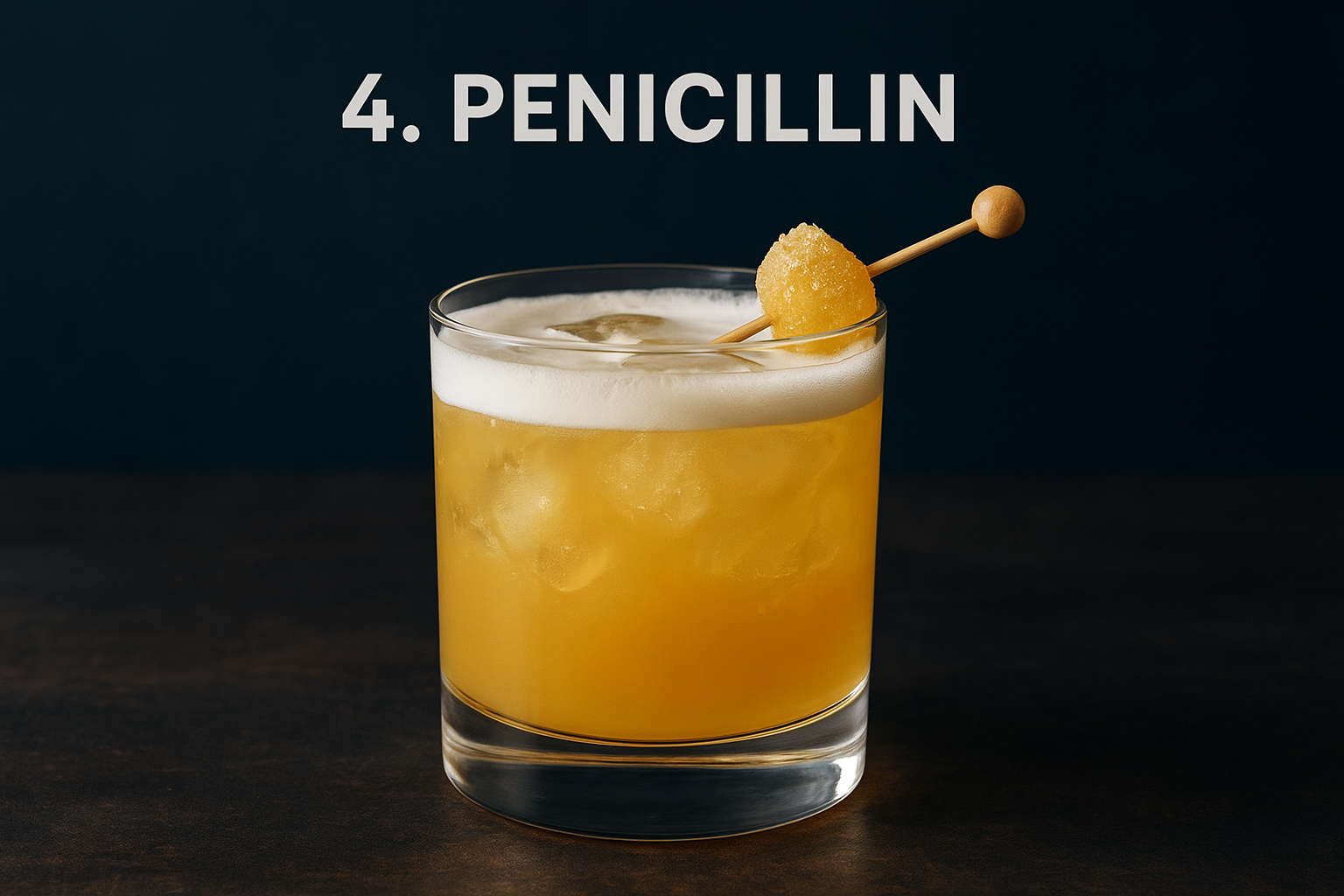
The Penicillin, created by bartender Sam Ross in 2005, brings Scotch whisky into the whiskey sour family with a ginger-honey sweetness and a smoky Islay float. This modern classic stands out among whiskey sour variations as one of the few that uses blended Scotch as its base spirit, delivering a completely different flavor experience from bourbon-based versions. The combination of ginger, honey, and peat smoke creates a warming drink that works particularly well during Chicago’s colder months.
What makes this variation different
Ginger syrup replaces standard simple syrup, adding spicy warmth that changes the entire character of the drink. The Islay Scotch float on top provides aromatic peat smoke without overwhelming the balanced base beneath. You get three distinct flavor experiences in one glass: bright citrus, warming ginger, and mysterious smoke.
Ingredients and ratios
You need 2 ounces of blended Scotch, 3/4 ounce fresh lemon juice, 3/4 ounce honey-ginger syrup, and 1/4 ounce of peaty Islay Scotch for the float. The honey-ginger syrup combines equal parts honey syrup with fresh ginger juice or muddled ginger.
How to make it step by step
Shake the blended Scotch, lemon juice, and honey-ginger syrup with ice for 15 seconds. Strain into a rocks glass over fresh ice, then carefully float the Islay Scotch on top using the back of a bar spoon.
The Penicillin proves that switching your base spirit opens up entirely new possibilities within the whiskey sour framework.
Dialing in smoke, spice, and sweetness
Balance the ginger intensity by adjusting how much fresh ginger you use in your syrup. Laphroaig provides aggressive peat smoke while Caol Ila offers softer smoke that won’t dominate the drink.
Garnish and serving notes
Garnish with candied ginger on a pick or a lemon wheel. The smoke aroma hits you first, so serve this variation when you want something that engages all your senses.
5. Amaretto Sour with bourbon backbone
The traditional amaretto sour suffers from a reputation as an overly sweet, one-note drink that tastes more like candy than a balanced cocktail. Adding bourbon changes everything by introducing oak tannins and spice that counteract the almond liqueur’s sweetness while maintaining the drink’s approachable character. This variation ranks among the most accessible whiskey sour variations for people transitioning from sweeter drinks to more spirit-forward cocktails.
What makes this variation different
The bourbon addition brings depth and structure that pure amaretto can’t deliver on its own. You get almond sweetness up front, whiskey warmth in the middle, and a dry finish that prevents the drink from feeling cloying. This balance transforms the amaretto sour from a dessert-like sipper into something you’d actually order during happy hour at La Dolce Vita Cucina.
Ingredients and ratios
You need 1 ounce of bourbon, 1 ounce amaretto, 3/4 ounce fresh lemon juice, and 1/2 ounce simple syrup. The equal parts bourbon and amaretto create a balanced foundation where neither ingredient dominates.
How to make it step by step
Combine all ingredients in a shaker with ice and shake vigorously for 15 seconds. Strain into a rocks glass over fresh ice, which chills the drink properly while diluting it just enough to soften the sweetness.
Adding bourbon rescues the amaretto sour from its sticky-sweet reputation without losing the almond character people love.
Picking amaretto and bourbon that balance
Disaronno pairs well with most bourbons, while Lazzaroni Amaretto offers a more authentic almond flavor. Choose a mid-range bourbon like Buffalo Trace or Four Roses that won’t overpower the amaretto.
Garnish and serving notes
Garnish with a lemon wheel and cherry on a pick. You can also add a few drops of Angostura bitters on top for visual appeal and additional complexity.
A simple way to pick your next pour
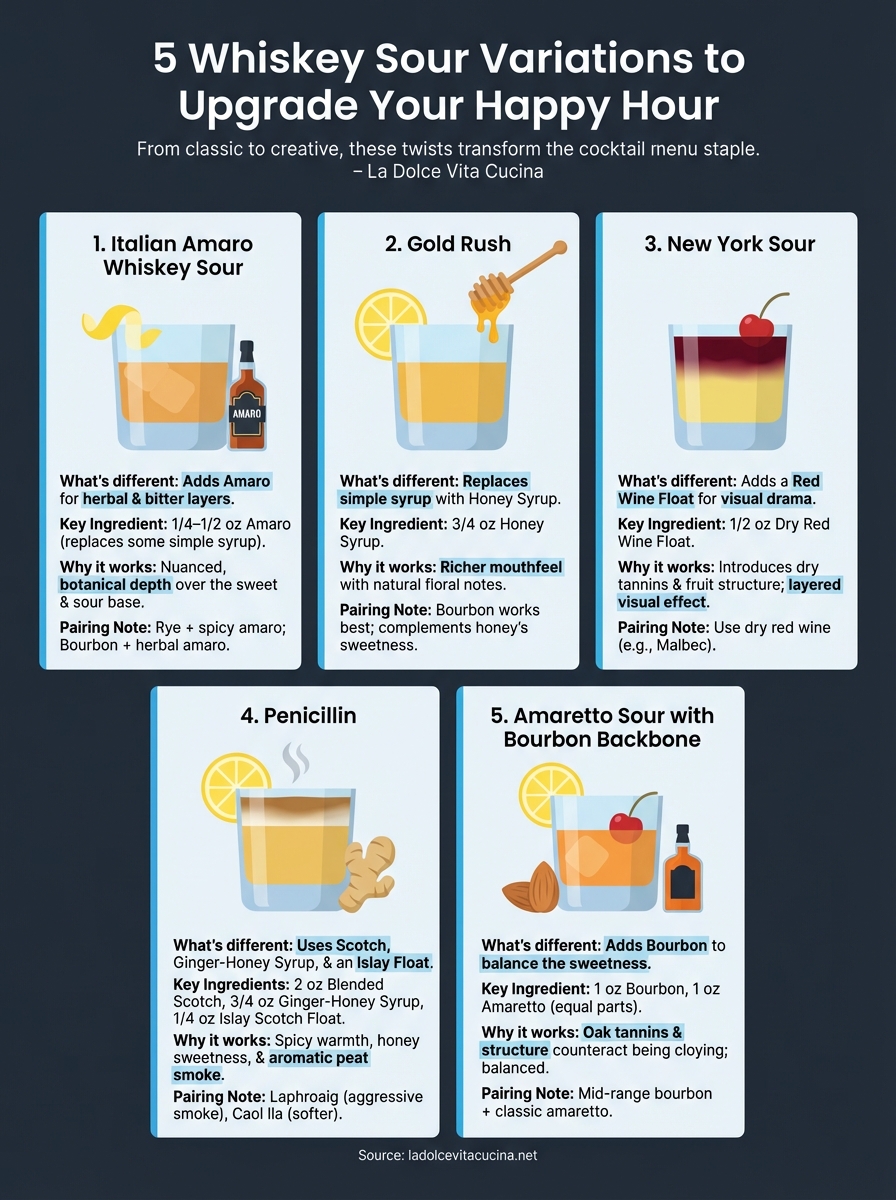
Your choice among these whiskey sour variations comes down to what you’re craving in the moment. Start with the Gold Rush if you want something familiar but elevated, or reach for the New York Sour when you’re entertaining guests who appreciate visual flair. The Italian amaro version fits perfectly when you’re in the mood for aperitivo-style complexity, while the Penicillin delivers warming comfort during cold Chicago evenings.
Think about the base spirit you prefer, the level of sweetness you want, and how adventurous you’re feeling. Each variation builds on the same foundation, so you can’t really go wrong with any choice. When you’re ready to taste these variations made by professionals who understand balance and technique, stop by La Dolce Vita Cucina during our happy hour from Tuesday through Sunday. Our bartenders craft Italian-inspired cocktails alongside classic favorites, giving you the perfect opportunity to explore new takes on whiskey sours while enjoying house-made Italian appetizers in our Portage Park neighborhood location.