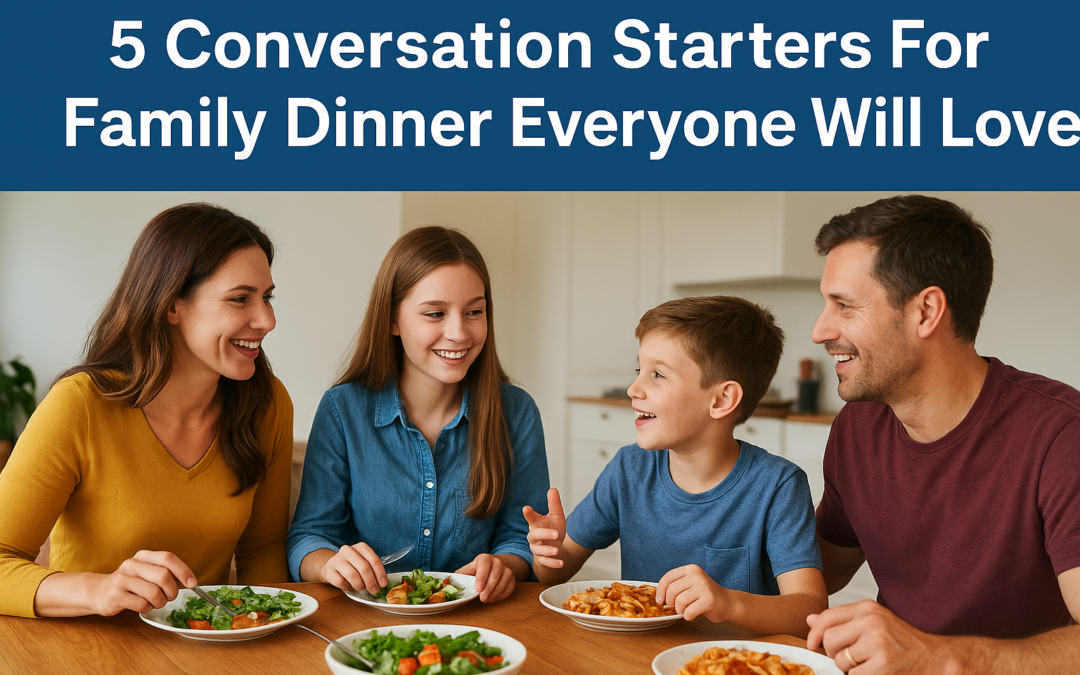
Some of the best meals we’ve served at La Dolce Vita Cucina in Portage Park aren’t remembered for the pasta or the steak, they’re remembered for what happened around the table. A joke that made everyone laugh. A story no one had heard before. That moment when someone finally put their phone down and actually talked. The right conversation starters for family dinner can turn an ordinary meal into something that sticks with your family for years.
The problem is, getting everyone to open up isn’t always easy. Kids shrug. Teenagers give one-word answers. Adults default to "How was your day?" and get nowhere. You need questions that are specific enough to spark a real response, not so heavy that they kill the mood, but not so shallow that they fizzle out after two seconds. That balance is harder to find than most people think.
We put together five go-to conversation starters that work across ages, personalities, and attention spans. Whether you’re cooking at home or sharing a meal out at our table in Chicago, these prompts give your family something better than silence, they give you a reason to linger a little longer.
1. The menu memory game at La Dolce Vita Cucina
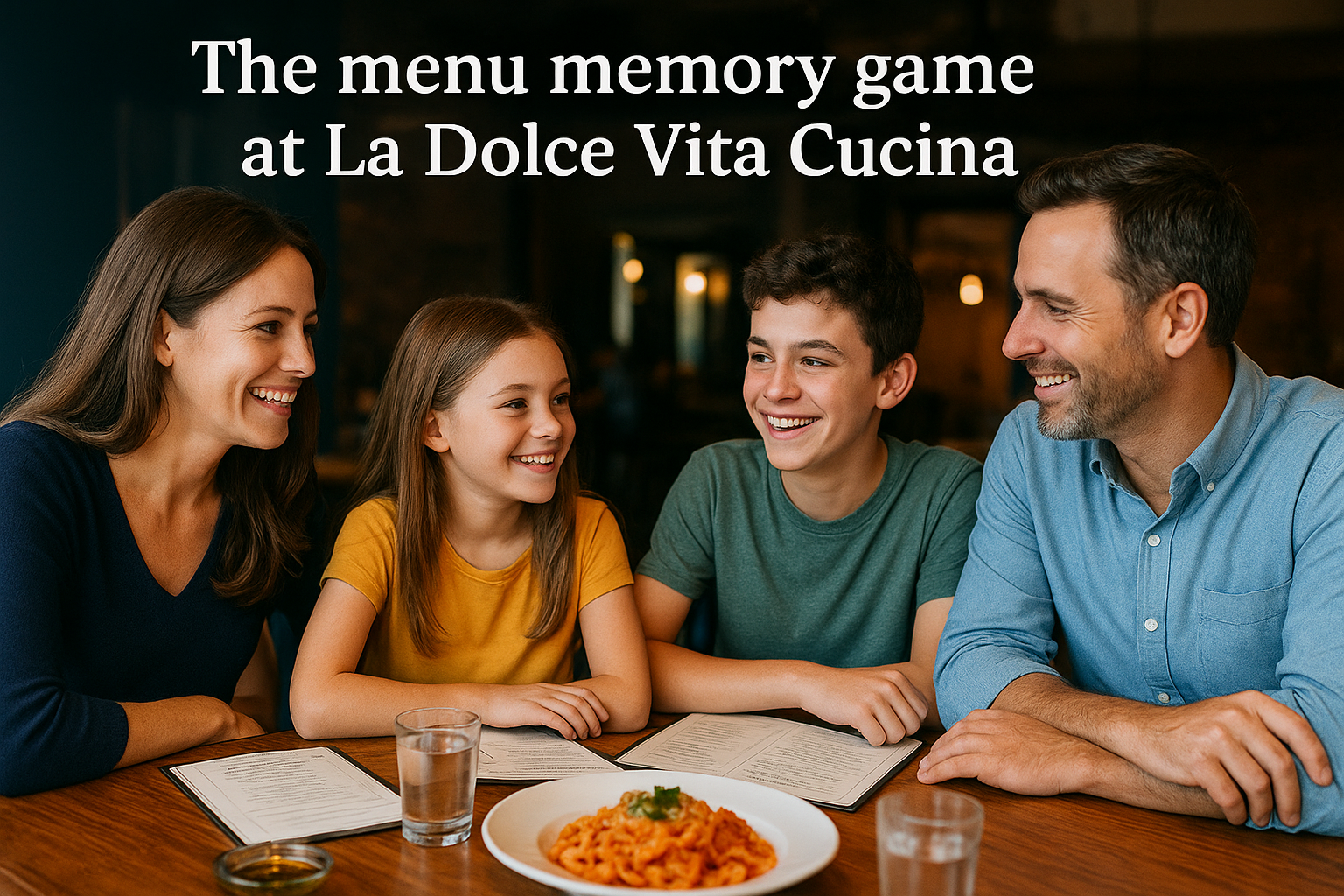
This one works especially well when you’re dining out, but you can easily adapt it for home. As conversation starters for family dinner go, it turns the menu, or even just the food on the table, into a shared memory-making tool. The goal is simple: everyone picks their dream meal and explains why, then tries to guess what everyone else chose. You end up learning things about each other that a standard "how was your day" question never uncovers.
The exact prompt to ask
Ask everyone at the table: "If you could eat one meal for the rest of your life, what would it be and where would you eat it?" At La Dolce Vita Cucina, guests often point to something on our menu and build a whole story around it. The specificity of the prompt forces real answers. Nobody can just say "pizza" and move on without explaining themselves.
The more specific the prompt, the more specific the answer, and that is where the real conversation begins.
Easy follow-ups that keep it going
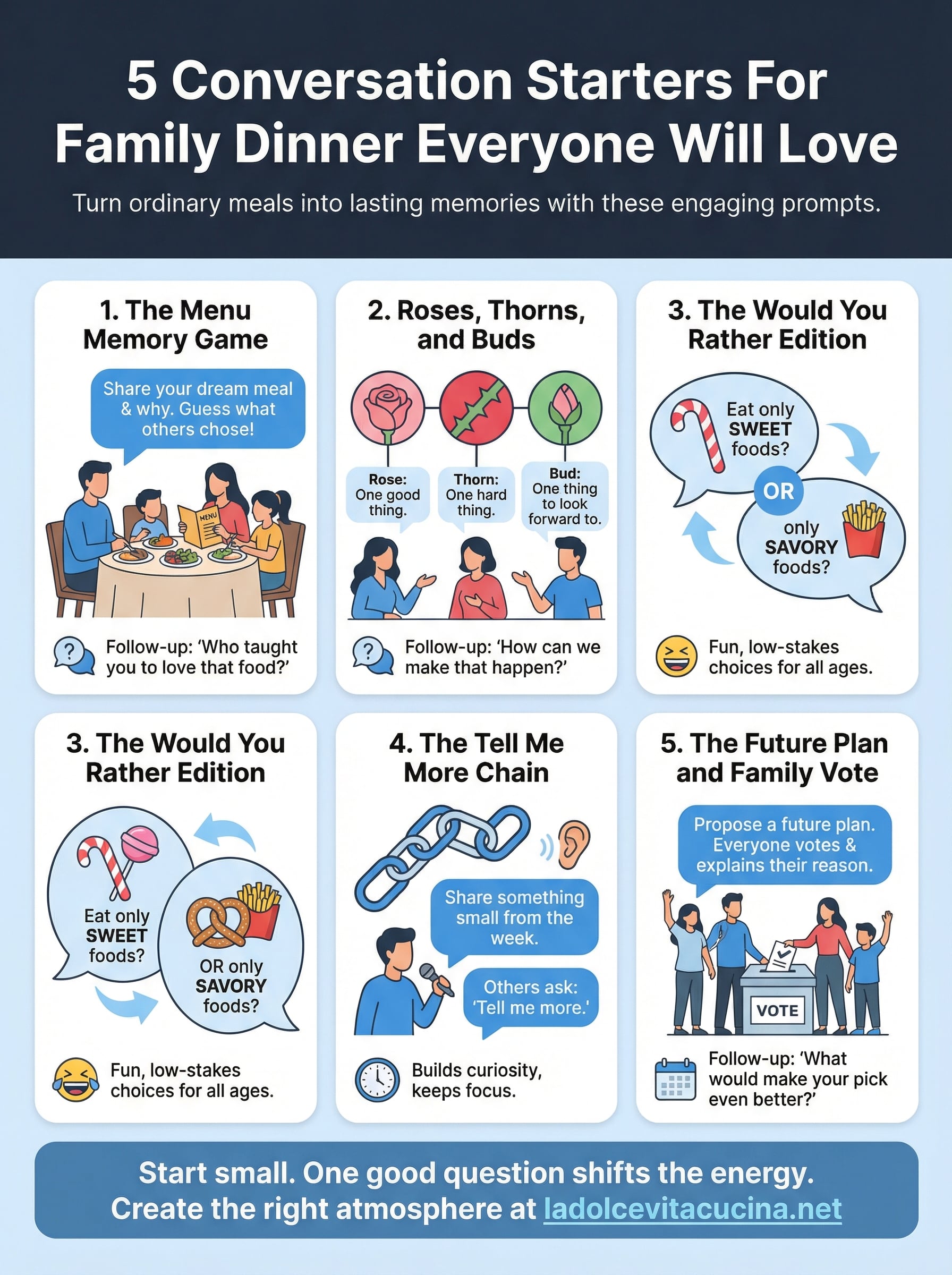
Once everyone shares their dream meal, push a little further. Ask "Who taught you to love that food?" or "What memory does that dish remind you of?" These follow-ups pull stories out of people who would otherwise stay quiet. Food connects directly to personal history, so the conversation tends to build on itself without you having to do much work.
Best for these ages and group sizes
This prompt works well for ages six and up, and it scales easily for both small family dinners and larger gatherings. Younger kids love the fantasy element of picking anything in the world, while teens and adults appreciate that there is no wrong answer. Tables of four to eight people keep the pace moving without losing anyone.
Simple variations for picky eaters and shy talkers
If someone at the table is a picky eater, swap "dream meal" for "dream dessert." It removes pressure and still gets them talking. For shy family members, let them pass on the first round and answer after hearing others, which gives them a model to follow without putting them on the spot.
2. Roses, thorns, and buds
Roses, thorns, and buds is one of the most reliable conversation starters for family dinner because it gives everyone a clear structure to follow. Each person shares one good thing (rose), one hard thing (thorn), and one thing they’re looking forward to (bud). The format removes the pressure of open-ended questions and makes it easy for every age at the table to participate without overthinking.
The exact prompt to ask
Go around the table and ask: "What was your rose, thorn, and bud today?" Give everyone a moment to think before answering. The three-part structure means no one gets stuck trying to summarize their entire day in a single sentence.
A simple framework turns a quiet table into an open conversation without anyone feeling put on the spot.
Easy follow-ups that keep it going
When someone shares their thorn, ask "What would have made that easier?" For buds, follow up with "How can we make that happen?" These questions show your family you are actually listening, and they push the conversation well past a basic check-in.
Best for these ages and group sizes
This prompt suits ages five and up and works for any group size. Younger kids grasp the rose-thorn-bud format quickly because it is concrete and visual, not abstract.
Simple variations for picky eaters and shy talkers
If someone goes blank, let them swap "bud" for a weekend plan they are excited about. Shy talkers do well when you start with yourself first, modeling the format before asking them to share.
3. The would you rather dinner edition
"Would you rather" questions are some of the most underrated conversation starters for family dinner because they work on everyone. No one needs background knowledge, personal history, or a particular mood to answer. The format is pure choice, which makes it fast, fun, and surprisingly revealing about how different people actually think.
The exact prompt to ask
Start with something light: "Would you rather eat only sweet foods for a year or only savory foods?" The food angle keeps it tied to the meal and gets answers flowing quickly. From there, take turns letting each family member suggest the next question, so the game builds on itself without one person carrying all the effort.
The best "would you rather" questions sit right at the edge of impossible to answer, where neither option is obviously better.
Easy follow-ups that keep it going
After someone picks their side, ask "Why?" That single word does most of the work. You can also ask "Would anyone switch answers if the rule lasted ten years instead of one?" Small tweaks to the original question keep the debate going longer than you expect.
Best for these ages and group sizes
This prompt clicks for ages four and up and handles large tables well. Kids love the sillier options, while adults get pulled in by the trickier ones.
Simple variations for picky eaters and shy talkers
If someone freezes, offer them two pre-made choices rather than asking them to come up with one. Shy talkers respond better when the decision feels low stakes and lighthearted, which this format already does naturally.
4. The tell me more chain
The tell me more chain works because it builds genuine curiosity into the structure of the conversation itself. As conversation starters for family dinner go, this one is remarkably low-effort for you to kick off but surprisingly hard to stop once it gets moving. Someone shares something small, and the table keeps asking for more until a full story comes out.
The exact prompt to ask
Pick one person to start and ask: "Tell me something that happened this week that you haven’t mentioned yet." The phrase "haven’t mentioned yet" is deliberate. It nudges people toward fresh material rather than the same stories they’ve already repeated.
The best dinner conversations don’t start with big questions, they start with one small detail that pulls the rest of the story out.
Easy follow-ups that keep it going
After someone shares, the whole table responds with "Tell me more" instead of jumping to their own story. This simple rule keeps the focus on one person long enough for something real to surface before passing the turn.
Best for these ages and group sizes
This prompt works well for ages seven and up and fits tables of any size. Older kids and adults especially respond well because the format respects their pace without demanding too much up front.
Simple variations for picky eaters and shy talkers
For shy family members at your table, adjust the opener to "Tell me one thing you noticed today." Smaller scope means less pressure, and it still opens the door to a fuller conversation.
5. The future plan and family vote
The future plan and family vote gives everyone at the table a voice and a stake in something that actually matters to them. As conversation starters for family dinner go, this one builds excitement because the outcome could be real. You propose a future plan, everyone votes and explains their reasoning, and the discussion builds naturally from there.

The exact prompt to ask
Ask the table: "If we could do one thing together this summer, what would you vote for and why?" The combination of a vote and a reason forces specific thinking rather than vague answers. Everyone gets heard, and no one can opt out with a shrug.
When people know their vote counts, they invest in the conversation from the start.
Easy follow-ups that keep it going
After the votes are in, ask "What would make your pick even better?" or "What would need to happen to make this real?" These questions move the conversation from wishful thinking into real planning, which keeps the energy up long after the plates are cleared.
Best for these ages and group sizes
This prompt works for ages six and up and fits tables of any size. Teens especially respond well because the format gives them genuine input rather than asking them to answer a question with no stakes attached.
Simple variations for picky eaters and shy talkers
If someone goes quiet, narrow the scope to "one thing we could do this weekend" instead of the whole summer. Shorter timelines feel more achievable, which makes it easier for reserved family members to join in.
Ready for dinner talk
You now have five conversation starters for family dinner that work across ages, moods, and group sizes. None of them require preparation, props, or perfect timing. You just need to ask the first question and let the table do the rest. The best conversations start small and build on their own once someone feels safe enough to share.
Pick one prompt at your next meal and see what happens. You don’t need to run through all five in one sitting. One good question is enough to shift the energy at the table from quiet to connected, and that shift is worth more than any elaborate plan.
If you want the kind of setting that naturally encourages everyone to slow down and talk, book a table at La Dolce Vita Cucina. Good food and a relaxed atmosphere make it easier for every conversation to go somewhere real.