
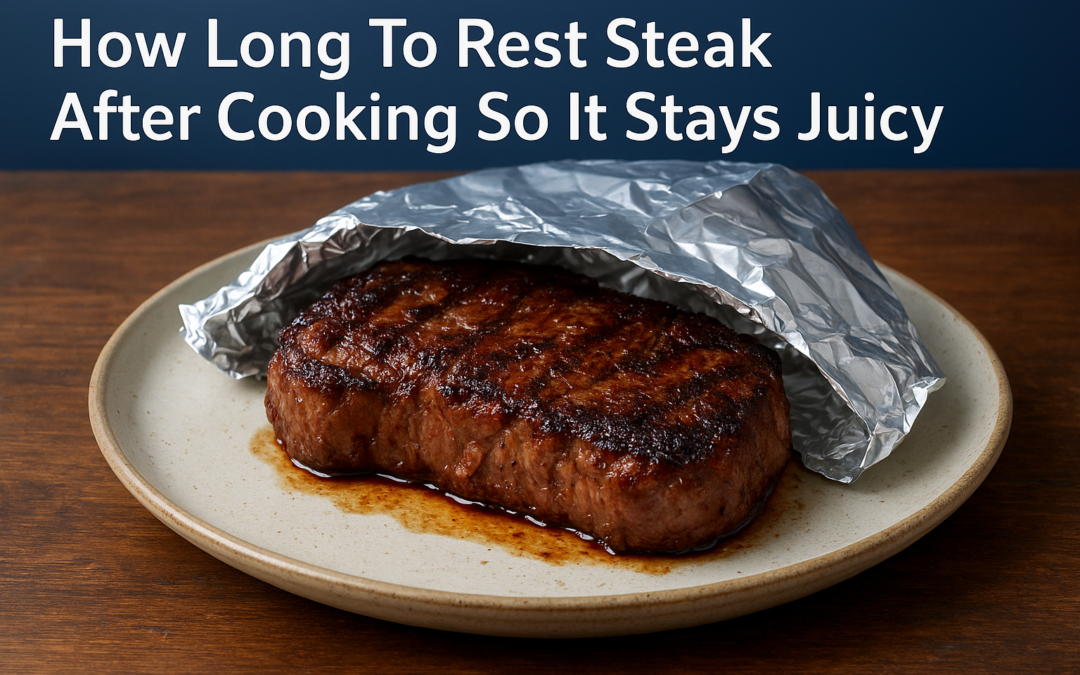
You just pulled a perfectly seared steak off the grill. The crust looks incredible, the aroma fills your kitchen, and every instinct says to cut into it right now. But here’s the thing, knowing how long to rest steak after cooking is the difference between juices staying in the meat and watching them run across your cutting board.
At La Dolce Vita Cucina in Chicago’s Portage Park neighborhood, our kitchen treats steak with serious care. Our chef’s recommended 16oz Ribeye doesn’t go straight from the pan to the plate, it rests first. That pause gives the muscle fibers time to relax and reabsorb their juices, so every bite delivers the tenderness and flavor our guests come back for.
This guide covers exact resting times based on cut and thickness, the science behind why resting actually works, and practical ways to keep your steak warm while it sits. Whether you’re sharpening your skills at home or just curious about what goes into a properly prepared steak, everything you need is right here.
Why resting steak works and what changes in the meat
Most people know they should rest a steak, but far fewer understand what actually happens inside the meat during those minutes off the heat. The science is straightforward, and once you understand it, you’ll stop guessing about how long to rest steak after cooking and start treating the rest period as a required step, not an optional one.
What heat does to muscle fibers
When a steak hits a hot pan or grill, the exterior temperature climbs fast. The intense heat causes the muscle fibers near the surface to contract sharply, squeezing moisture toward the center of the meat. Think of it like wringing out a wet towel. The proteins in the outer layers tighten up, and the liquid inside gets pushed inward under pressure. This process happens quickly and intensifies the longer the steak cooks.
The center of the steak stays cooler during the cook, which means the muscle fibers there remain relatively relaxed compared to the outer layers. This temperature difference between the exterior and interior creates a pressure gradient inside the meat. That gradient is exactly why slicing too early causes juice loss. The pressure pushes liquid out as soon as you create an opening with your knife.
How juices redistribute during rest
Resting gives the temperature gradient inside the steak time to equalize. As the exterior cools slightly and the interior continues to rise from residual heat, the muscle fibers across the whole steak begin to relax at a more uniform rate. Once the tension in the outer fibers releases, the liquid that was squeezed inward gets reabsorbed throughout the meat rather than staying pooled in the center.
A steak sliced immediately after cooking can lose up to 40% of its moisture onto the cutting board, while a properly rested steak loses far less.
This redistribution is what gives a well-rested steak its even, juicy texture from edge to center. The fibers act almost like a sponge rehydrating. When you cut into a rested steak, you’ll notice the juices stay in the meat rather than flooding your board. That difference comes entirely from giving the proteins enough time to settle.
Temperature drop: how much you actually lose
A common reason people skip resting is the fear that the steak will go cold. In practice, a steak loses far less temperature than most people expect during a proper rest. A thick cut like a ribeye resting on a warm plate loses only a few degrees over five to ten minutes. The surface temperature drops, but the internal temperature either holds steady or continues rising slightly due to carryover cooking.
Carryover cooking means the internal temperature of the steak keeps climbing after you remove it from the heat. A steak pulled at 125°F can reach 130°F or more during rest, which is why experienced cooks pull their steaks a few degrees below the target doneness. Understanding this carryover effect actually works in your favor. You get a steak that finishes cooking to the right temperature while the muscle fibers simultaneously relax and reabsorb moisture. Both processes happen at the same time during the rest, making that brief wait one of the most productive steps in the entire cooking process.
Step 1. Choose the right rest time for thickness and cut
Knowing how long to rest steak after cooking comes down to two main factors: thickness and cut type. A thin sirloin needs far less rest than a two-inch tomahawk, and a bone-in cut holds heat differently than a boneless one. Relying on a single blanket rule like "five minutes for every steak" leaves too much to chance and frequently results in either a cold steak or juice-flooded cutting board.
Rest times based on thickness
Thickness is the most reliable starting point when calculating rest time. Thicker cuts trap significantly more residual heat and take longer for the internal temperature to equalize from the seared crust to the center. Use the table below as your baseline guide, and remember that these times assume the steak rests on a warm plate in a standard kitchen environment.
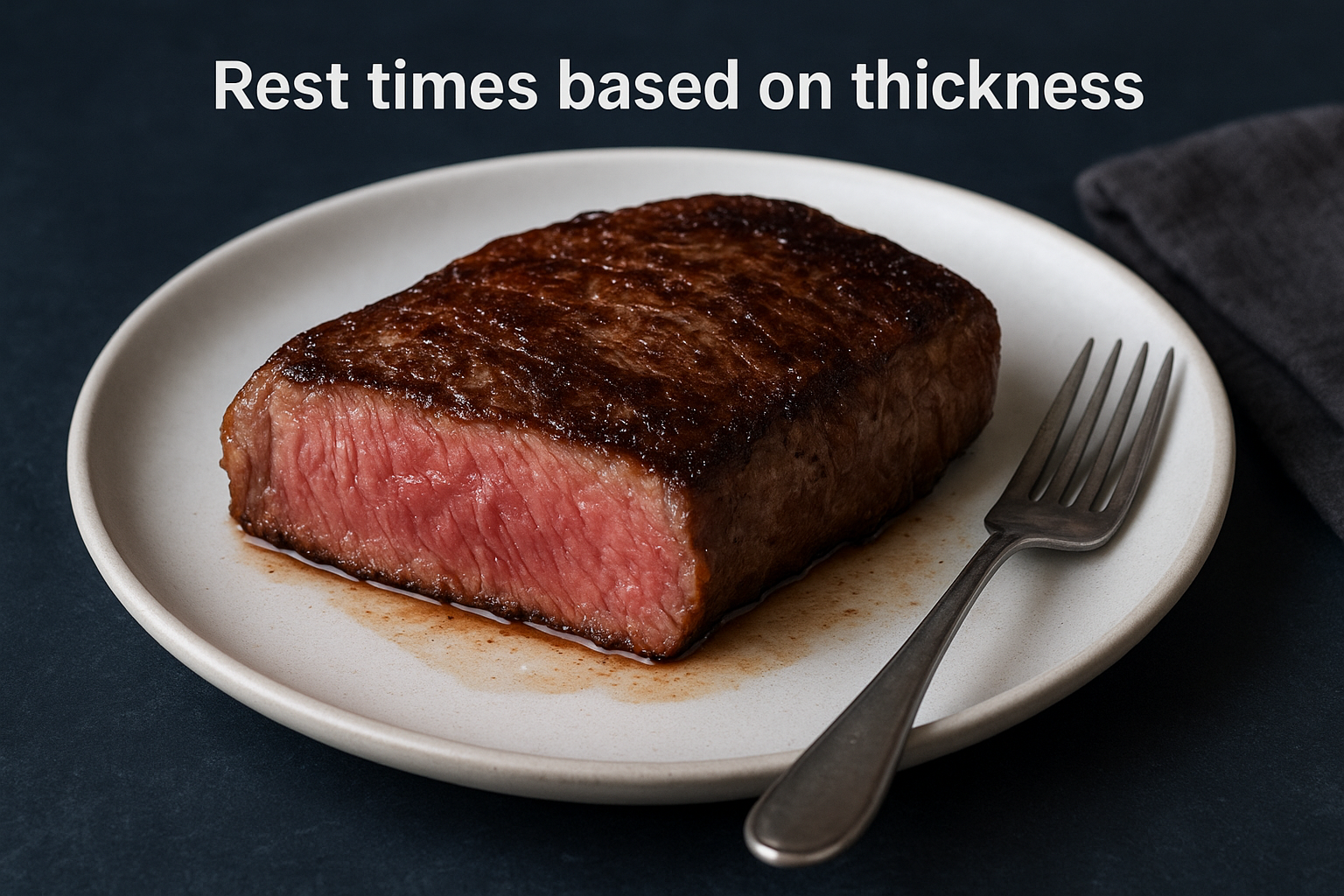
| Steak Thickness | Minimum Rest Time | Recommended Rest Time |
|---|---|---|
| Under 1 inch | 3 minutes | 5 minutes |
| 1 to 1.5 inches | 5 minutes | 7 minutes |
| 1.5 to 2 inches | 7 minutes | 10 minutes |
| Over 2 inches | 10 minutes | 15 minutes |
Pull your steak off the heat 3 to 5 degrees Fahrenheit below your target internal temperature, since carryover cooking continues throughout the rest. A 1.5-inch ribeye pulled at 127°F will typically climb to 130°F to 132°F by the time the rest period ends, landing it in medium-rare territory without any guesswork.
Rest times adjusted by cut
Bone-in cuts like T-bone or tomahawk steaks require extra rest time compared to boneless cuts of the same thickness. The bone acts as a natural insulator, slowing heat transfer from the meat’s interior and extending the time needed for the temperature to fully stabilize throughout the cut. Add two to three minutes to your baseline rest time whenever you work with a bone-in steak.
Lean cuts like filet mignon rest faster than well-marbled cuts like ribeye because they retain less residual heat overall.
Heavily marbled cuts, including New York strip and ribeye, benefit most from reaching the full recommended rest time in the table above. Fat continues to soften slightly during rest, which improves the overall texture in each bite. Leaner cuts can sit toward the shorter end of the range without losing significant moisture, provided you tent them loosely with foil to limit heat loss during the wait.
Step 2. Rest steak the right way without losing the crust
The method you use to rest a steak matters as much as the timing. Poor resting technique can undo everything you did right on the grill or pan, leaving you with a soggy crust, a cold center, or juice pooling on a cold plate before you even slice. Getting this step right is straightforward once you know exactly what to avoid and what to do instead.
Use a warm plate and a loose foil tent
Start by warming your resting plate before the steak comes off the heat. Run hot water over a ceramic plate for about 30 seconds and dry it thoroughly, or set it in a low oven at 150°F for two to three minutes. A cold plate pulls heat out of the steak faster than open air does, which compresses the effective rest window and causes the internal temperature to drop before the muscle fibers finish relaxing.
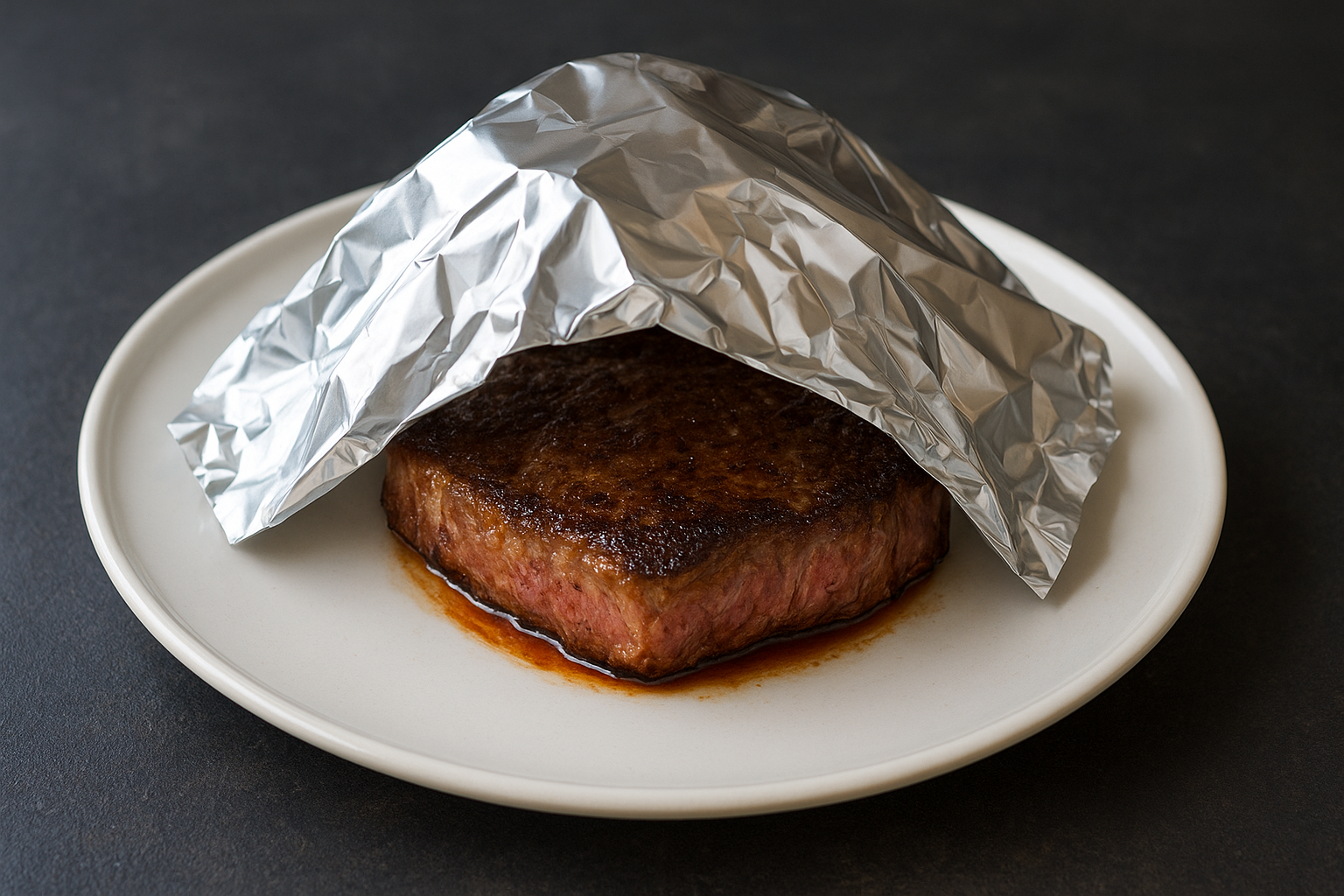
Once the steak is on the warm plate, tent it loosely with a sheet of aluminum foil. The goal is to trap just enough warmth to slow heat loss without sealing steam against the crust. Fold the foil so it sits above the steak like a canopy rather than pressing down against the surface. This small detail keeps your bark and sear intact while still giving the fibers the time they need to reabsorb moisture, which is the entire reason to think carefully about how long to rest steak after cooking in the first place.
Drape the foil loosely. If it presses directly onto the crust and traps steam underneath, you will soften the sear you worked to build.
Avoid the mistakes that ruin your crust
Wrapping the steak tightly in foil is the most common resting error home cooks make. It feels intuitive because it seems like it would lock in more heat, but it traps steam against the surface and turns a crackling sear into a soft, wet exterior by the time you unwrap it. Loose always beats tight when it comes to the foil tent.
Resting on a wire rack placed over a rimmed plate works even better than a flat plate alone if you want maximum crust preservation. Air circulates underneath the steak, preventing the bottom from sitting in any released juices and going soft. This setup takes about 30 seconds to arrange and makes a visible difference in the final texture of the entire crust.
Step 3. Know when to slice and serve for best results
Once your rest timer runs out, you still have two decisions left before the steak reaches the plate: confirming the rest is actually complete and slicing it correctly. Rushing through either step after you’ve already thought carefully about how long to rest steak after cooking wastes the work the rest period just did for you. Both the timing of your knife and the direction you cut have a direct impact on how the steak tastes in the first bite.
How to check if your steak has rested long enough
A quick touch test tells you more than a timer alone. Press the center of the steak gently with your fingertip – if it feels very soft and yields without resistance, the fibers are still actively redistributing moisture and the steak needs another minute or two. When the center springs back with moderate, even resistance, the rest is complete and the muscle fibers have fully settled. Use the checklist below alongside your timer for a reliable read every time.
- The surface no longer looks wet or actively steaming
- The center gives firm but not hard resistance when pressed
- A thermometer inserted into the thickest part reads within 2°F of your target doneness
- No visible juice pools are collecting on the resting plate beneath the steak
If your cutting board floods with juice the moment your knife enters the steak, the rest was too short regardless of how much time passed on the clock.
Slice direction and serving temperature
Always cut against the grain, meaning perpendicular to the direction the muscle fibers run across the steak. You can see the fiber lines clearly on cuts like flank or skirt steak, and slightly less obviously on ribeye. Cutting along the grain leaves long, unbroken muscle fibers in each slice, which makes the steak feel significantly tougher and more difficult to chew, no matter how carefully you cooked and rested it.
Serve the steak on a pre-warmed plate immediately after slicing. Even two to three minutes on a cold surface pulls the temperature down noticeably and firms up the fat in marbled cuts. If you’re plating for several people, slice all portions in one continuous sequence and move them directly to warmed plates rather than slicing one piece, setting it aside, and returning to the board for the next.
Troubleshooting, special cases, and food safety
Even with solid technique, you’ll occasionally run into situations that the standard resting guidelines don’t fully cover. Thin steaks, stuffed cuts, and unusually shaped pieces each require a slightly different approach, and knowing how to handle these edge cases keeps your results consistent no matter what cut you’re working with.
When your steak cools down too fast
A steak that drops below serving temperature during rest is a common frustration, especially in cold kitchens or when you’re juggling multiple dishes at once. The fastest fix is a brief return to a very hot pan for 30 to 45 seconds per side after the rest completes. This re-sear technique restores surface temperature without significantly advancing the internal cook, provided you move quickly and the pan is fully preheated.
Keep your resting area away from cold drafts, open windows, or air conditioning vents, since ambient airflow pulls heat out of a resting steak faster than most cooks expect.
Warm plates placed in a 150°F oven while the steak rests give you another layer of protection, so you don’t lose the temperature you worked to preserve the moment the steak leaves the cutting board.
Thin steaks and unusual cuts
Steaks under three-quarters of an inch thick don’t need much formal resting time, but they still benefit from two to three minutes off the heat before slicing. The redistribution window is shorter because there’s less mass to hold residual heat, but skipping it entirely still leads to noticeable juice loss on the cutting board.
Stuffed cuts like bracciole or any steak rolled around a filling behave like thicker cuts regardless of the outer steak’s actual thickness. Treat them like a 1.5-inch cut and rest for at least seven minutes to allow both the filling and the outer meat to stabilize together.
Food safety minimums you need to know
The USDA sets the minimum safe internal temperature for whole-muscle beef steaks at 145°F, followed by a three-minute rest. That rest period isn’t only about how long to rest steak after cooking for juiciness; it’s part of the actual safety requirement itself and gives enough time for internal temperatures to neutralize harmful bacteria.
Ground beef follows a separate standard at 160°F with no required rest period, which is why burger patties and steaks are treated differently from a food safety standpoint. Always use a reliable instant-read thermometer to confirm your target temperature rather than relying on color or touch alone.
Final take
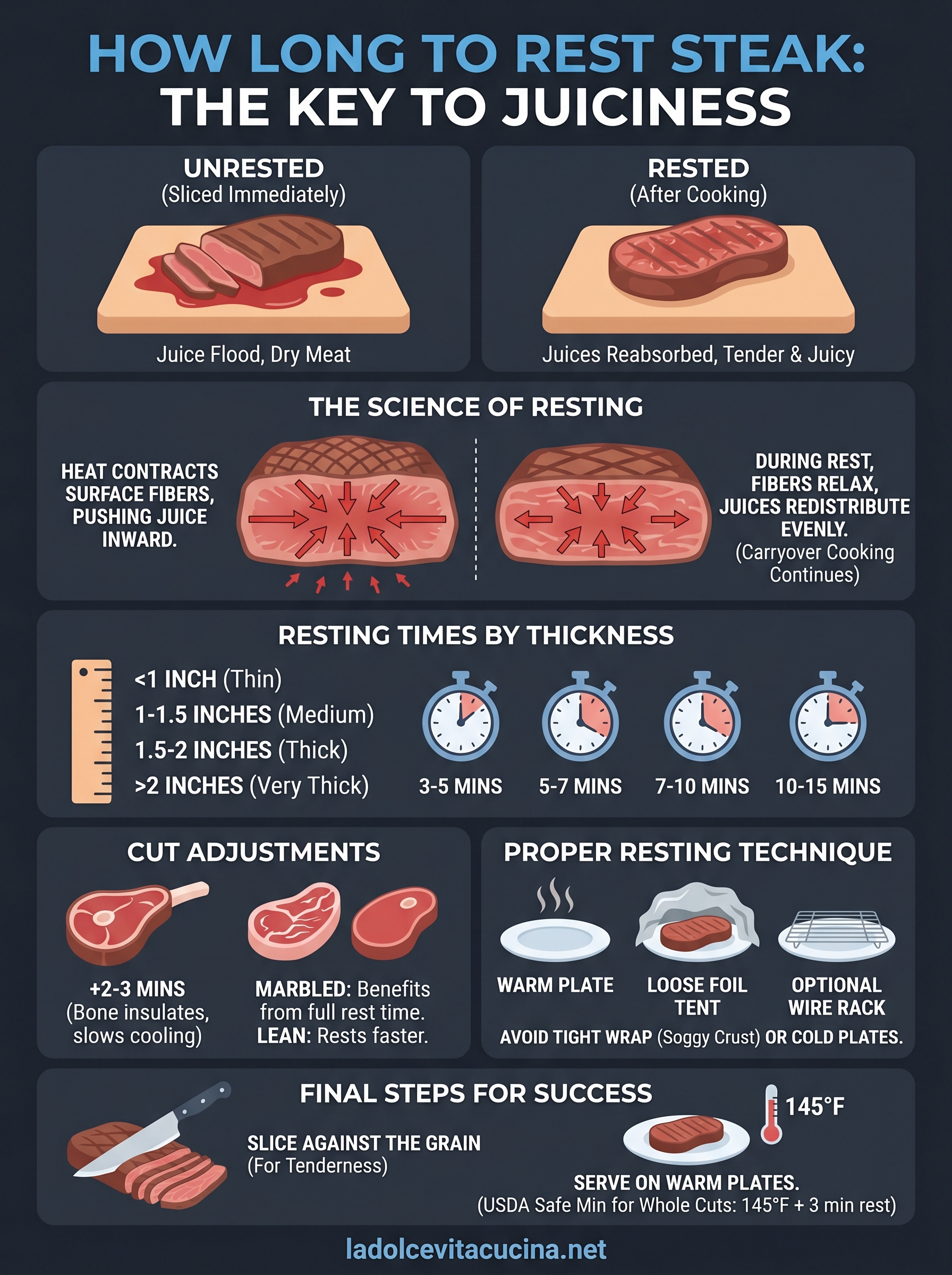
Resting a steak is not a suggestion. It is the step that separates a juicy, properly finished piece of beef from one that floods your cutting board the moment your knife touches it. Thickness and cut type determine how long to rest steak after cooking, a warm plate and loose foil tent keep the crust intact during that window, and slicing against the grain ensures the muscle fiber work you did doesn’t go to waste at the final step.
Your target is straightforward: pull the steak a few degrees below your desired doneness, rest it using the timing guidelines in this article, and serve it on a pre-warmed plate immediately after slicing. Every decision in this guide builds toward that result.
Want to see what properly handled steak looks and tastes like on the plate? Stop by La Dolce Vita Cucina in Chicago’s Portage Park neighborhood and try our chef’s recommended 16oz Ribeye for yourself.