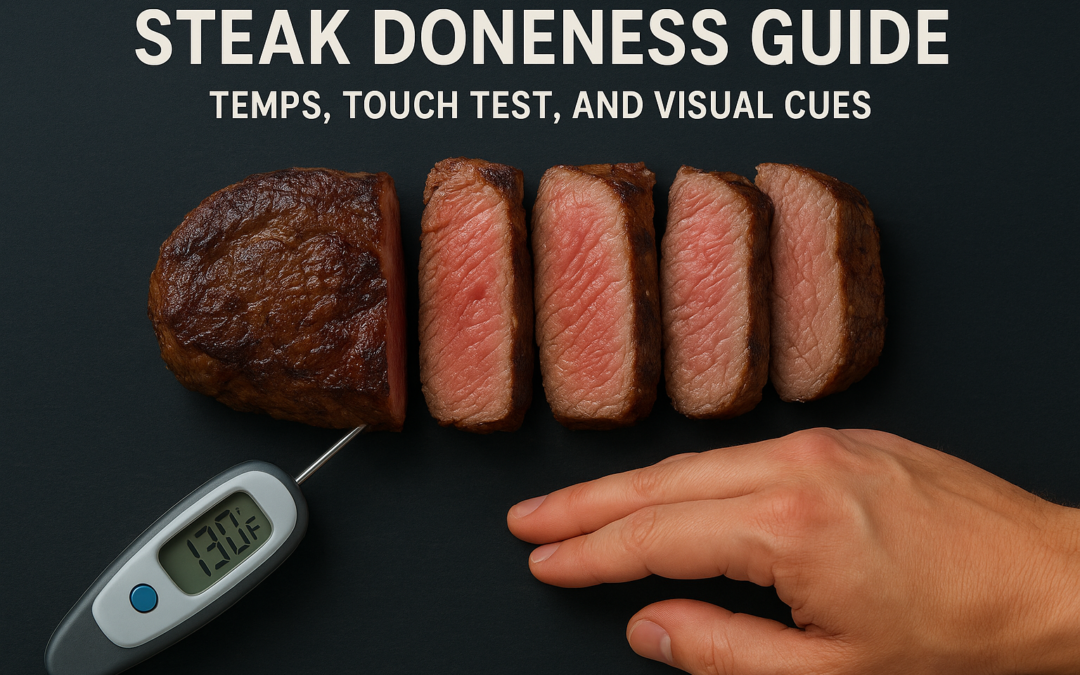
Order a steak at any restaurant, including ours here at La Dolce Vita Cucina in Chicago’s Portage Park, and the first question you’ll hear is "How would you like that cooked?" Your answer determines everything: the color of the center, the texture of each bite, and how much juice stays locked inside. A solid steak doneness guide covers the specifics you need to answer that question with confidence, whether you’re ordering our chef-recommended 16oz Ribeye or firing up your own grill at home.
The difference between a perfect medium-rare and an overcooked disappointment often comes down to just 5–10 degrees of internal temperature. That’s a razor-thin margin, and eyeballing it rarely works. You need reliable reference points, actual numbers, tactile tests, and visual markers, to get it right every time.
This guide breaks down every level of steak doneness from blue rare to well done, covering exact internal temperatures, the classic touch test, and what to look for when you cut in. By the end, you’ll know precisely what each doneness level looks and feels like, and which one brings out the best in your favorite cut.
Why steak doneness matters
Steak doneness is not just a preference. Internal temperature directly controls how proteins behave inside the meat, how much moisture the muscle fibers retain, and how tender or chewy each bite feels. When you nail the right doneness, every element of the steak works together: the fat renders properly, the juices stay distributed evenly, and the texture hits the right level of resistance. Miss it, and you lose either safety or quality, sometimes both.
The science behind temperature and protein
Beef muscle consists of proteins that begin to change structure at specific temperatures. Around 120°F, myoglobin, the protein responsible for beef’s red color, starts to transform. By 160°F, it has fully converted and the meat takes on a gray-brown color throughout. Between those two extremes sits the full doneness spectrum, from the cool red center of a blue-rare steak to the firm, fully cooked interior of well done.
The way proteins coagulate and moisture evaporates at each temperature stage is the core reason why a 10-degree difference in internal temp produces an entirely different eating experience.
Moisture loss follows a similar curve. A steak pulled at 130°F retains significantly more juice than one taken to 160°F. That is not a matter of opinion. It is measurable water content inside the muscle fibers that decreases as heat increases. The more heat you apply, the more those fibers contract and force liquid out. That’s why a well-done steak often feels drier, regardless of the cut or the skill of the cook.
Why your cut choice influences the ideal doneness
Not every steak performs best at the same temperature. Fatty, well-marbled cuts like ribeye can handle a slightly higher internal temp because the fat continues to melt and lubricate the meat throughout the cook. Leaner cuts like sirloin or filet mignon have less fat to compensate for moisture loss, so pulling them earlier at medium-rare keeps them from drying out.
Knowing which cut you’re working with, and pairing it with the right target temperature, is what separates a good steak from a great one. Any reliable steak doneness guide accounts for both the cut and the cooking method, not just a single number applied across every situation.
Steak temperatures by doneness
Every level of doneness maps to a specific internal temperature range, and knowing those numbers gives you a concrete target instead of a guess. This is the core of any steak doneness guide, a hard reference you can use whether you’re cooking at home or deciding what to order at a steakhouse.
The complete temperature chart
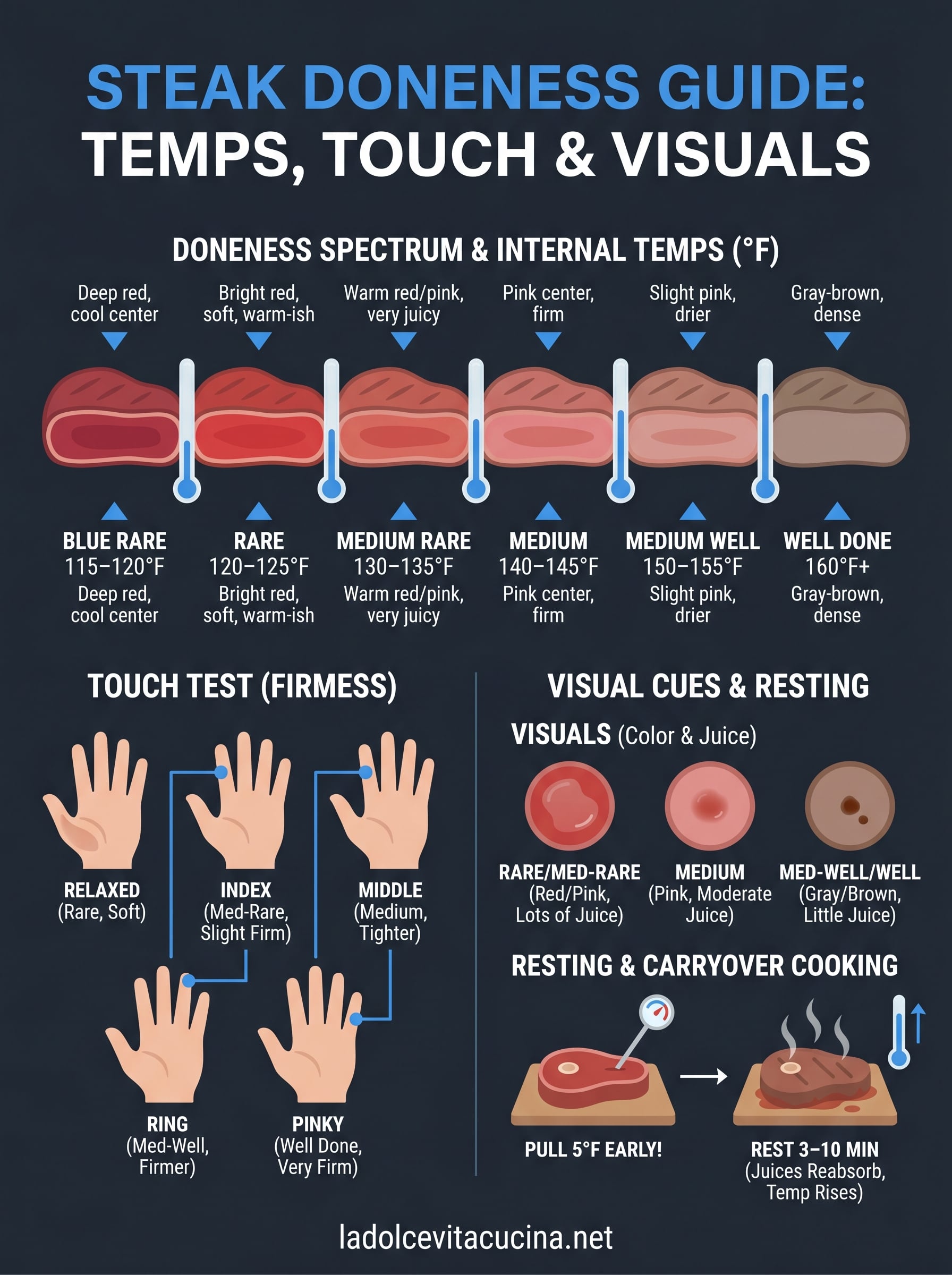
The table below lists each doneness level with its target internal temperature and what you can expect at the center of the steak. Use this as your primary reference every time you cook.
| Doneness | Internal Temp (°F) | Center Description |
|---|---|---|
| Blue Rare | 115–120°F | Deep red, nearly raw, very cool center |
| Rare | 120–125°F | Bright red, soft, slightly warm center |
| Medium Rare | 130–135°F | Warm red to pink, very juicy |
| Medium | 140–145°F | Pink center, firmer texture |
| Medium Well | 150–155°F | Slightly pink, noticeably drier |
| Well Done | 160°F+ | Gray-brown throughout, firm |
Medium-rare, at 130–135°F, is the sweet spot for most cuts because it balances moisture retention with enough heat to render the fat properly.
When to pull the steak off the heat
You should remove your steak from the heat 5 degrees below your target temperature. The internal temperature keeps climbing after you pull it off, a process covered in more detail in the resting section below. If you’re chasing a medium-rare result at 130°F, pull the steak at around 125°F and let the residual heat do the rest. Skipping this step is one of the most common reasons steaks end up overcooked.
Touch test and thermometer method
Two methods give you reliable feedback on doneness before you cut into the meat: the touch test and a meat thermometer. Each one works differently, and knowing both makes you a more adaptable cook. No steak doneness guide is complete without covering these practical techniques, because temperature charts only help if you can accurately measure what’s happening inside the steak.
The touch test explained
The touch test compares the firmness of your steak to the feel of your own hand. Press the fleshy area below your thumb while your hand is fully relaxed, and that soft give matches a rare steak. Bring your thumb to your index finger and press the same spot: the slight firmness you feel mirrors medium-rare. Move to your middle, ring, and pinky fingers, and the muscle tightens progressively, matching medium, medium-well, and well done.
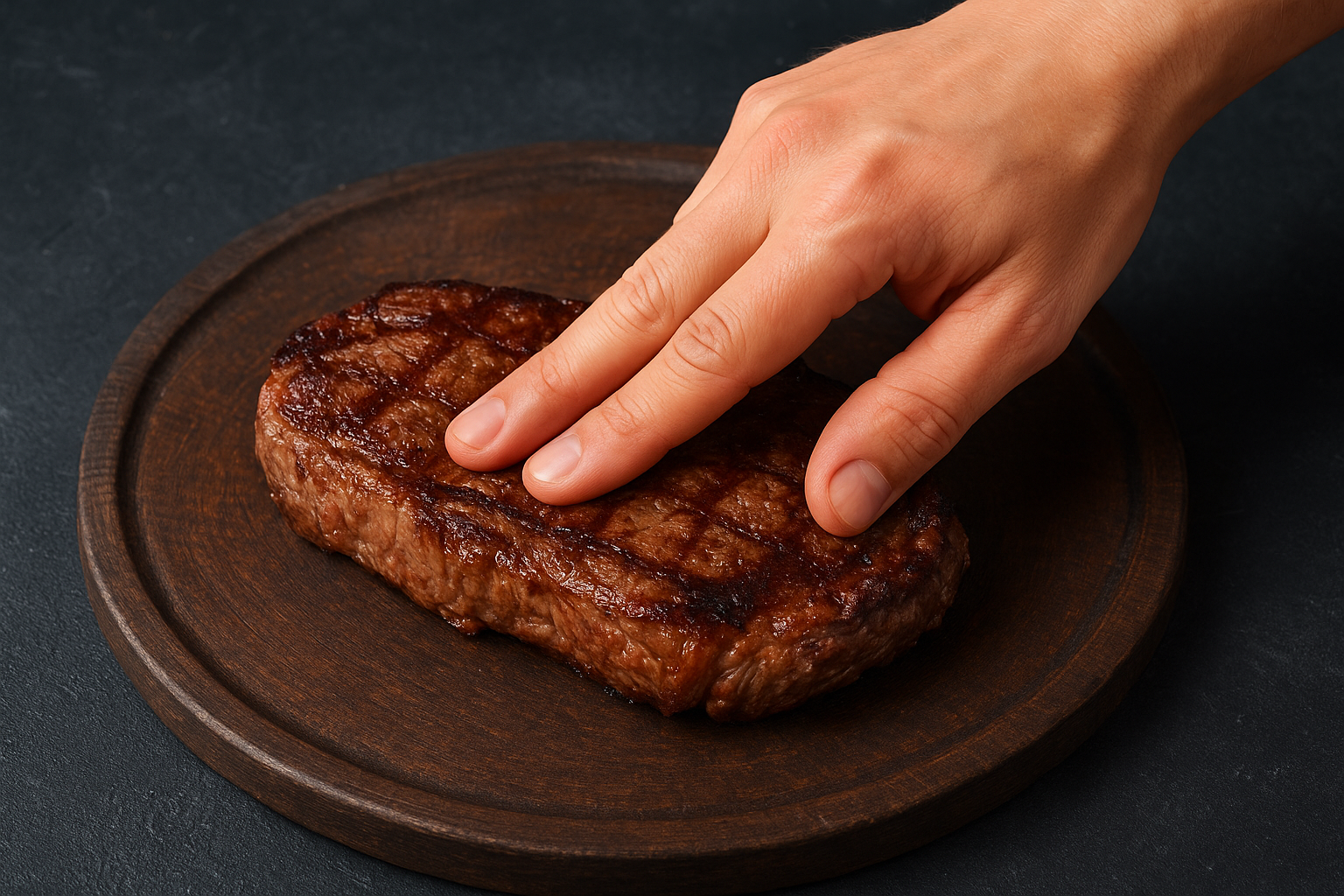
The touch test is a useful backup skill, but it takes practice to calibrate, so pair it with a thermometer until your hands develop consistent muscle memory.
This method works best on thicker cuts where there’s enough surface area to feel a meaningful difference in resistance. Thin steaks cook too quickly for the touch test to give you useful feedback.
Using a meat thermometer
A reliable instant-read thermometer is the single most accurate tool for confirming doneness. Insert the probe into the thickest part of the steak, away from bone and fat pockets, to get a clean reading. Digital thermometers return a result in two to three seconds.
For best results, follow these steps each time:
- Insert the probe horizontally through the side of the steak
- Keep the tip centered, not touching bone or fat
- Read the temperature before you pull the steak from the heat
Visual cues: color, juice, and texture
A thermometer delivers accuracy, but visual cues confirm your read before you even take a bite. The color of the center, the juice on the cutting board, and the feel of the meat under your knife all signal exactly where the steak landed on the doneness scale. Together, these observations complete any steak doneness guide and give you a fast secondary check when a thermometer is not within reach.
Color at the center
Color is the most immediate indicator of doneness. A rare steak shows a bright red center with minimal gray banding at the edges. As temperature rises, that red shifts to pink at medium-rare and medium, fades to light tan at medium-well, and finally reaches a uniform gray-brown at well done. The gray band starts at the outer edge and pushes inward as heat penetrates deeper into the meat.
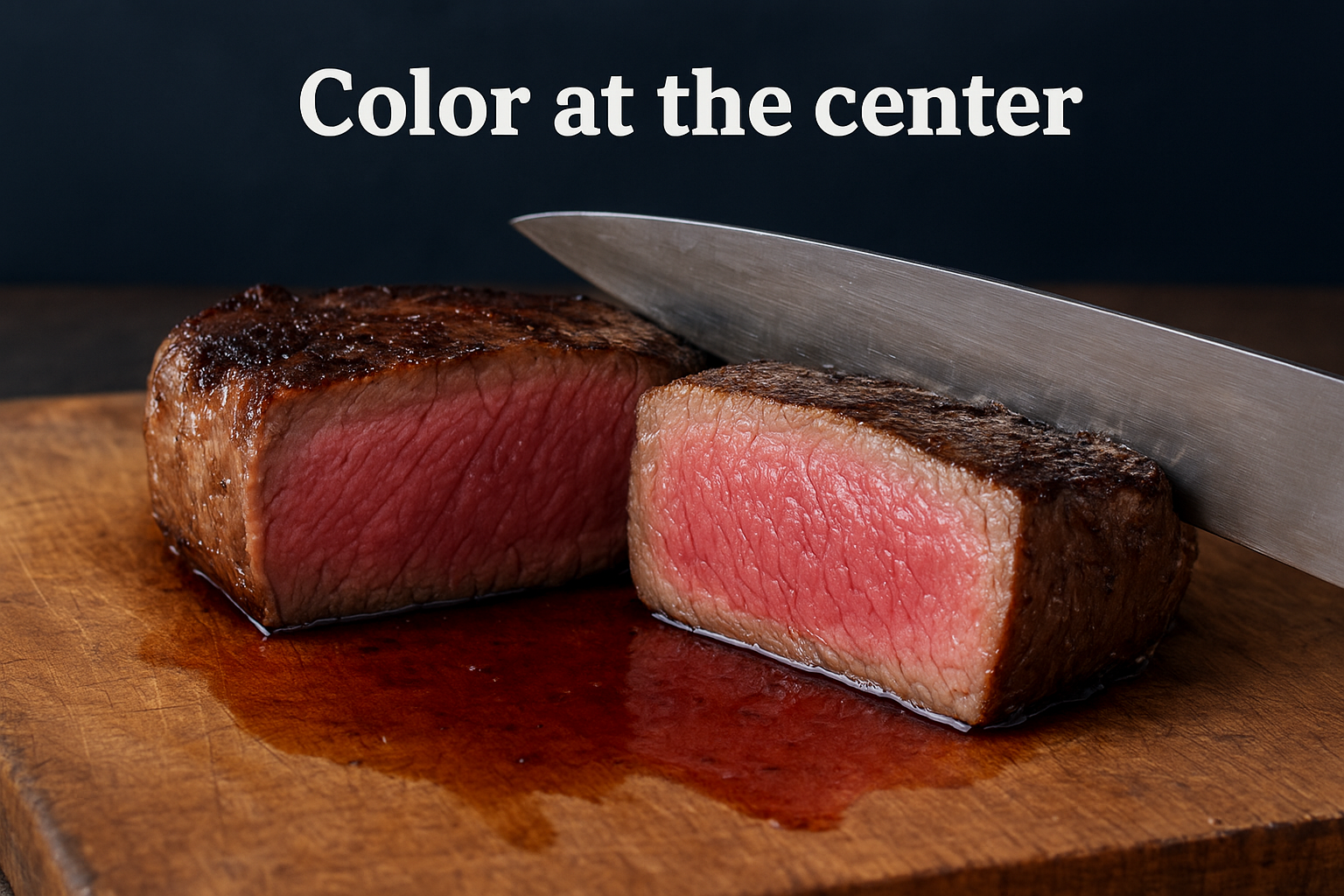
The width of that gray band tells you how deeply heat has cooked the steak, making it a reliable quick check even before you slice all the way through.
Juice and texture
When you cut into a steak, the juice that collects on the board tells you a great deal. Medium-rare and medium steaks release a noticeable pool of clear, rosy liquid. Medium-well and well-done steaks release very little because fully contracted muscle fibers have already forced most moisture out during cooking. Texture follows the same pattern:
- Rare to medium-rare: soft, yielding, and tender under a fork
- Medium: slightly firmer with a bit more resistance
- Medium-well to well done: dense and firm throughout
Resting and carryover cooking
Pulling your steak off the heat is not the finish line. Carryover cooking continues to raise the internal temperature for several minutes after the steak leaves the pan or grill, and skipping the rest period throws off every number in this steak doneness guide.
Why carryover cooking matters
Heat stored in the outer layers of the steak keeps moving inward after you remove it from the heat source. A steak pulled at 125°F can easily reach 130–135°F within three to five minutes of resting. That’s enough of a jump to move from rare all the way to medium-rare without any additional cooking. Understanding this is what separates consistently cooked steaks from ones that overshoot your target every time.
Always pull your steak 5 degrees below your target temperature to account for the heat that continues building during the rest.
How to rest your steak properly
Place the steak on a cutting board or warm plate and leave it uncovered for three to five minutes for thinner cuts, and up to ten minutes for a thick ribeye or similar. Tenting with foil traps steam and softens the crust, so skip it unless the steak has cooled noticeably.
Resting also allows the muscle fibers to relax and reabsorb the juices that moved toward the center during cooking. Cut too soon, and those juices run straight onto the board instead of staying in each bite. Give the steak time, and every slice stays moist and flavorful.
Quick Recap
Steak doneness comes down to three reliable checkpoints: internal temperature, touch, and visual cues. Pull a steak at 125°F for rare, 130°F for medium-rare, 140°F for medium, 150°F for medium-well, and 160°F or above for well done. Always account for carryover cooking by removing the steak 5 degrees below your target, then let it rest before you cut.
Use this steak doneness guide every time you cook, and the guesswork disappears. Your thermometer gives you the hard number, the touch test gives you a quick field check, and the color and juice at the center confirm you hit your mark. Every element works together, and skipping any one of them increases your chances of missing your target.
If you want to enjoy a perfectly cooked steak without managing any of it yourself, come visit us at La Dolce Vita Cucina in Chicago’s Portage Park, where our chef-recommended 16oz Ribeye speaks for itself.