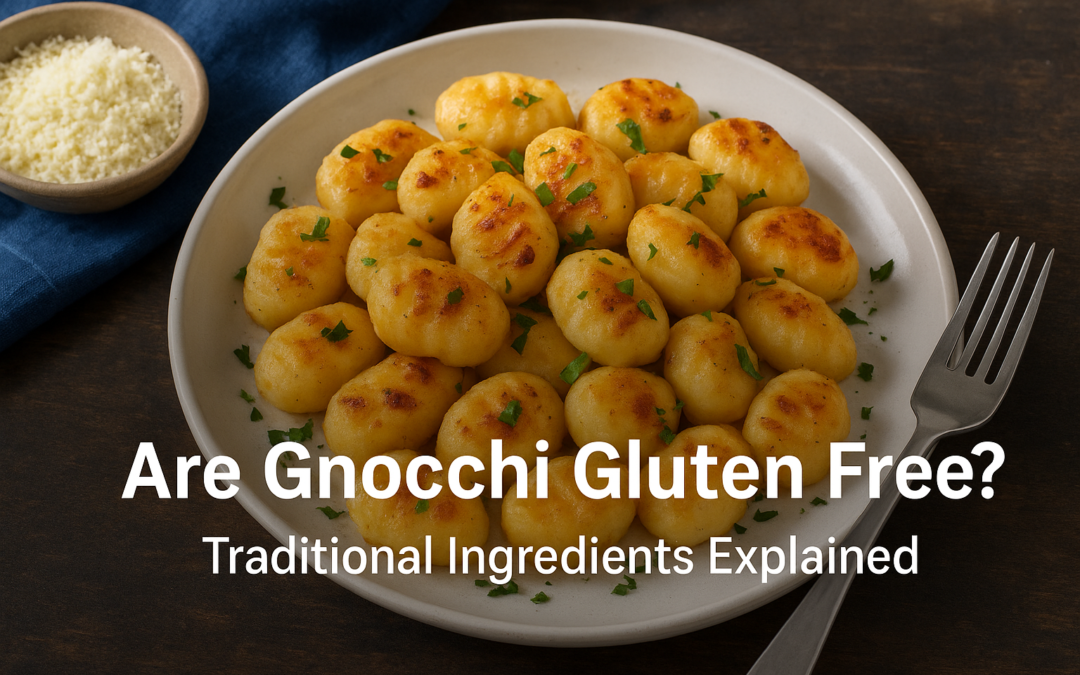
Gnocchi are one of the most beloved comfort foods in Italian cooking, pillowy, satisfying, and endlessly versatile. But if you’re managing a gluten sensitivity or celiac disease, you’ve probably asked yourself: are gnocchi gluten free? The short answer is no, traditional gnocchi contain wheat flour, which means they’re off-limits for anyone avoiding gluten.
At La Dolce Vita Cucina, we serve homemade Italian dishes in Chicago’s Portage Park neighborhood, and we know firsthand how much our guests care about what goes into their food. Understanding ingredients matters, especially when a dietary restriction turns a simple dinner decision into a research project. That’s exactly why we put this guide together, to give you a straight answer backed by real culinary knowledge.
Below, we’ll break down exactly what goes into traditional gnocchi, explain why wheat flour plays such a central role, and walk you through gluten-free alternatives that actually work. Whether you’re cooking at home or scanning a restaurant menu, you’ll leave here knowing exactly what to look for, and what to avoid.
What gnocchi is and why most has gluten
Gnocchi (pronounced "nyoh-kee") are small, soft Italian dumplings that have been a staple of Italian cooking for centuries. Most traditional versions start with cooked, mashed potato mixed with a binding agent to hold everything together. The result is a dense but tender dumpling that absorbs sauce beautifully, making it a favorite in dishes from simple butter-and-sage preparations to hearty tomato ragus.
The basic ingredients in traditional gnocchi
Traditional gnocchi rely on a short list of ingredients, but that list almost always includes all-purpose wheat flour. A classic recipe combines roughly one pound of starchy potatoes with about one cup of flour, one egg, and a pinch of salt. The flour binds the potato mixture so the dumplings hold their shape during boiling and don’t fall apart in the pot.
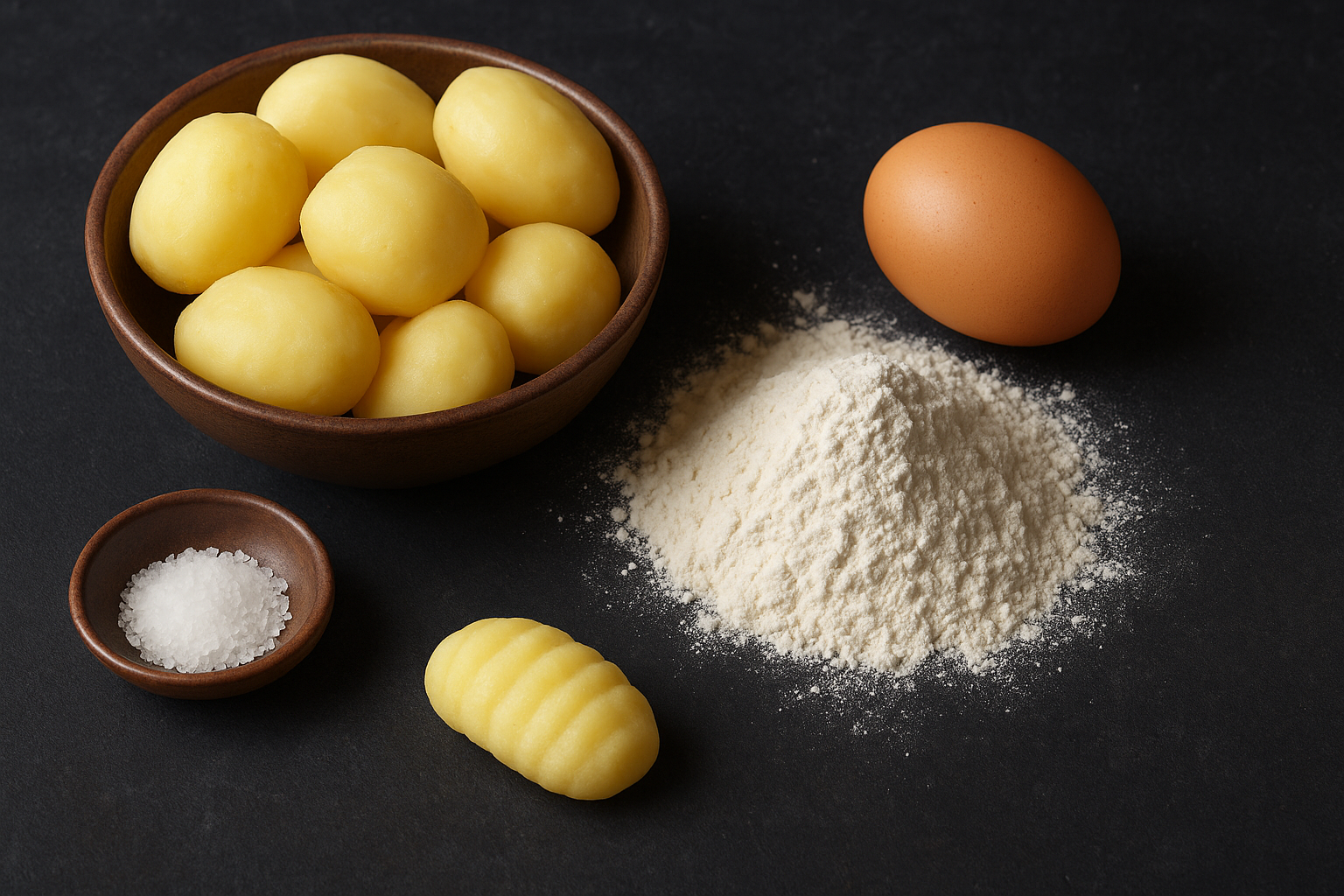
Here’s what a standard gnocchi recipe contains:
| Ingredient | Role | Contains Gluten? |
|---|---|---|
| Starchy potato (russet) | Bulk and flavor | No |
| All-purpose wheat flour | Binding and structure | Yes |
| Egg | Additional binding | No |
| Salt | Seasoning | No |
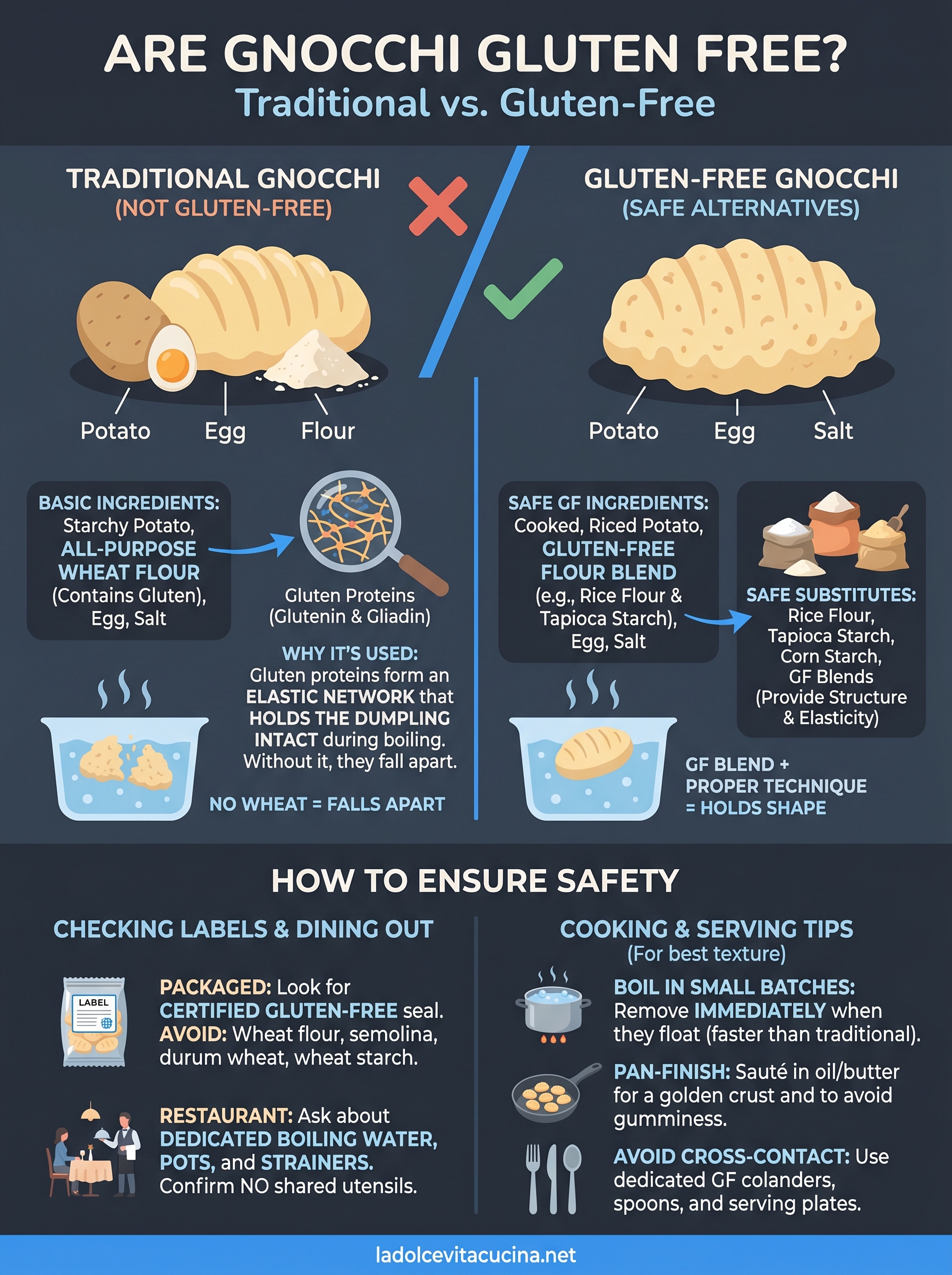
So when you ask are gnocchi gluten free, the honest answer for traditional gnocchi is no. Wheat flour is not an optional ingredient you can simply leave out. Without it, the dumplings fall apart the moment they hit boiling water.
The role wheat flour plays in texture
Wheat flour contains gluten proteins, specifically glutenin and gliadin, which form an elastic network when mixed with liquid. In gnocchi, that network acts like a structural web that holds each dumpling intact through the cooking process. Remove the flour entirely and the potato mixture turns into mush.
This is why swapping in a gluten-free flour blend requires more care than a one-to-one substitution. The texture, hydration, and binding behavior all change.
Some recipes call for semolina flour instead of all-purpose, but semolina also comes from wheat (specifically durum wheat), so it carries the same gluten content. Even Roman-style gnocchi, which skips potato in favor of semolina cooked with milk, is completely off-limits for anyone with celiac disease or a serious gluten sensitivity. The style of gnocchi changes depending on the region and recipe, but the presence of wheat typically does not.
How to tell if gnocchi is gluten-free
Spotting gluten in gnocchi takes more than a quick glance at the packaging. Wheat flour hides under several different names, and cross-contamination is a real risk even when the base recipe looks clean. Before you eat any gnocchi, get in the habit of checking two things: the ingredient list and the production environment.
Check the label for wheat ingredients
When you pick up store-bought gnocchi, flip the package over immediately and scan the full ingredient list. Wheat flour, semolina, durum wheat, and enriched flour all signal gluten. Look for a certified gluten-free symbol backed by third-party testing, which means the product met a threshold below 20 parts per million of gluten as outlined by the FDA’s gluten-free labeling rule. A label that simply says "potato gnocchi" does not guarantee the product is wheat-free.
Watch for these common hidden sources of gluten in packaged gnocchi:
- Wheat starch (even partially hydrolyzed)
- Semolina or durum wheat flour
- Malt extract or malt flavoring
- "Natural flavors" derived from wheat-based sources
If the label reads "may contain wheat" or "processed in a facility with wheat," treat that product as unsafe if you have celiac disease or a serious sensitivity.
Ask the right questions at a restaurant
Asking whether gnocchi are gluten free at a restaurant requires specific, direct questions rather than a general inquiry. Cross-contact from shared boiling water is a common and overlooked issue, and a simple swap of pot or strainer can make a significant difference in your safety.
Use these questions with your server before ordering:
- Do the gnocchi contain wheat flour or semolina?
- Are they made in-house or sourced from a packaged product?
- Does the kitchen use separate water and pots for gluten-free dishes?
- Can the chef confirm no shared utensils or strainers are used during preparation?
Step 1. Choose safe gluten-free gnocchi
Your first decision is whether to make gnocchi from scratch or buy a packaged product. Both routes work, but each comes with different trade-offs in terms of control, convenience, and safety. If you are seriously asking are gnocchi gluten free because of celiac disease or a severe sensitivity, making them yourself gives you the highest level of certainty over every ingredient that goes into the dough.
Make them from scratch with the right flour
When you build your own gluten-free gnocchi at home, you control the flour blend and the cooking environment completely. The most reliable base is a combination of cooked russet potato and a gluten-free flour that provides structure without turning the dumplings gummy. A blend of rice flour and tapioca starch produces the closest texture to a traditional dumpling.
Use this recipe as your starting template:
| Ingredient | Amount | Notes |
|---|---|---|
| Cooked, riced russet potato | 2 cups (about 2 large potatoes) | Cool completely before mixing |
| White rice flour | ½ cup | Provides structure |
| Tapioca starch | 2 tablespoons | Adds elasticity |
| Egg | 1 large | Binds the dough |
| Salt | ½ teaspoon | Season to taste |
Work the dough gently and minimally to avoid making the gnocchi dense. Add flour one tablespoon at a time until the dough just holds together without sticking to your hands.
Pick a certified store-bought brand
Store-bought gluten-free gnocchi saves time when you need a fast weeknight option. Look specifically for packages carrying a certified gluten-free seal from a recognized third-party organization. DeLallo and Jovial both produce potato-based gnocchi made without wheat flour in dedicated gluten-free facilities, which reduces cross-contamination risk significantly.
Always re-read the ingredient list on each purchase, since manufacturers sometimes reformulate products without changing the packaging design.
Step 2. Cook gluten-free gnocchi so it stays pillowy
Gluten-free gnocchi behaves differently from its wheat-based counterpart, and skipping a few key steps will leave you with a gummy, sticky mess instead of light, pillowy dumplings. Once you confirm that your gnocchi are gluten free, cooking technique becomes just as important as the flour blend you chose in Step 1.
Use plenty of salted water and watch the timing
Bring a large pot of generously salted water to a full rolling boil before you add the gnocchi. Crowding the pot drops the water temperature quickly, which causes the dumplings to sit in water too long and absorb excess moisture. Work in small batches of 10 to 12 pieces at a time to keep the boil steady and consistent.
Gluten-free gnocchi typically floats to the surface 30 to 60 seconds faster than traditional gnocchi, so pull them out the moment they rise and do not wait an extra minute.
Use a slotted spoon to lift each batch directly out of the water. Drain them briefly on a plate and move immediately to the next step rather than letting them sit in a colander, which causes sticking.
Finish them in the pan for the best texture
Transfer the boiled gnocchi straight into a lightly oiled or buttered skillet set over medium-high heat. Let them sit undisturbed for 60 to 90 seconds per side so they develop a golden crust on the outside while staying soft in the center. This pan-finishing step removes surface moisture that would otherwise make the dumplings turn pasty.
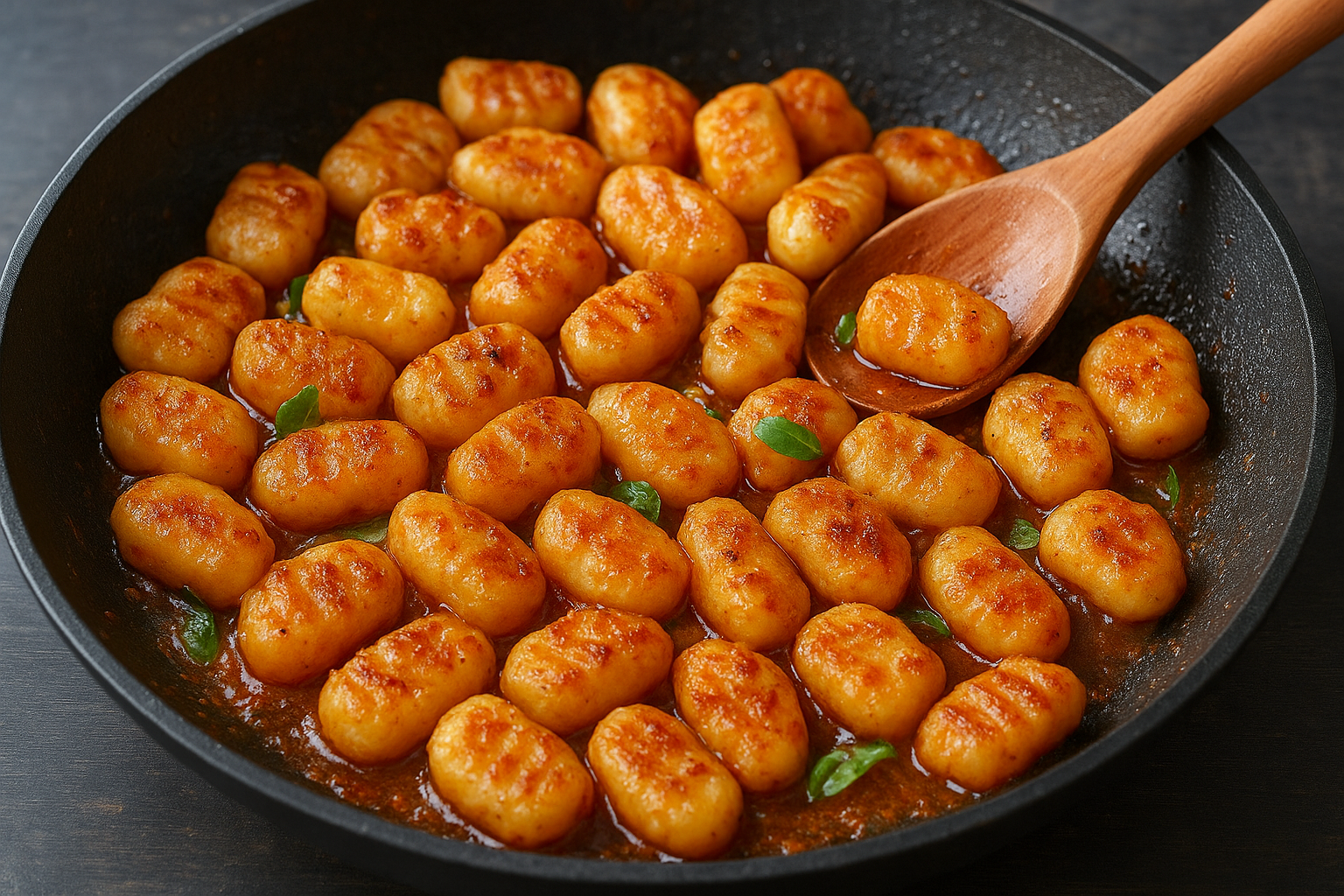
Add your sauce directly to the skillet and toss gently for 30 seconds maximum so the gnocchi absorb flavor without breaking apart.
Step 3. Serve it safely at home or dining out
Cooking gluten-free gnocchi correctly gets you most of the way there, but how you serve them matters just as much. A contaminated spoon or shared saucepan can reintroduce gluten even after you’ve done everything else right. Whether you’re plating at home or ordering at a restaurant, a few deliberate habits are what stand between a satisfying meal and an unwanted reaction.
Keep cross-contact out of your kitchen
Cross-contact happens when a gluten-containing surface or utensil transfers trace amounts to food you believe is safe. In your kitchen, the most common culprits are shared colanders, old wooden spoons saturated with flour from years of use, and saucepans that regularly hold wheat-based pasta. Dedicate specific utensils to your gluten-free cooking and run them through a full dishwasher cycle separately from anything that touches wheat products.
Follow this checklist before you plate your gluten-free gnocchi:
- Use a clean colander or slotted spoon set aside exclusively for gluten-free use
- Wipe counter surfaces with a fresh cloth before rolling or handling dough
- Keep your sauce in a dedicated pan that never comes into contact with regular pasta
- Serve onto plates that completed a full dishwasher cycle, not hand-washed alongside regular pasta bowls
Order confidently when eating out
When you want to know are gnocchi gluten free at a specific restaurant, skip the general question and get precise. Ask your server whether the kitchen uses a dedicated boiling pot and strainer for gluten-free orders, since shared pasta water carries dissolved flour proteins that standard boiling cannot eliminate.
If the restaurant cannot confirm separate cookware, the safest choice is a dish that does not require boiling in shared water.
Ask to have your request confirmed by the kitchen team directly, not just noted on the ticket. A written order and a verbal kitchen confirmation together give you the strongest protection against cross-contact during service.
Final check before you dig in
You now have a complete answer to are gnocchi gluten free: traditional versions contain wheat flour, and that gluten is structural, not incidental. Before every meal, run through the basics one more time. Check your ingredients or the restaurant’s process, confirm your cookware is clean, and pull your gnocchi from the boiling water the moment they float.
Getting this right at home is straightforward once you build the habit. Eating out adds a layer of uncertainty, which is why asking specific kitchen questions matters more than trusting a general menu label.
If you want to enjoy authentic Italian cooking in a welcoming setting without navigating these questions on your own, come visit us in Chicago’s Portage Park neighborhood. Our team is happy to talk through the menu and help you find the right dish. Reserve your table at La Dolce Vita Cucina and let us take care of the rest.