
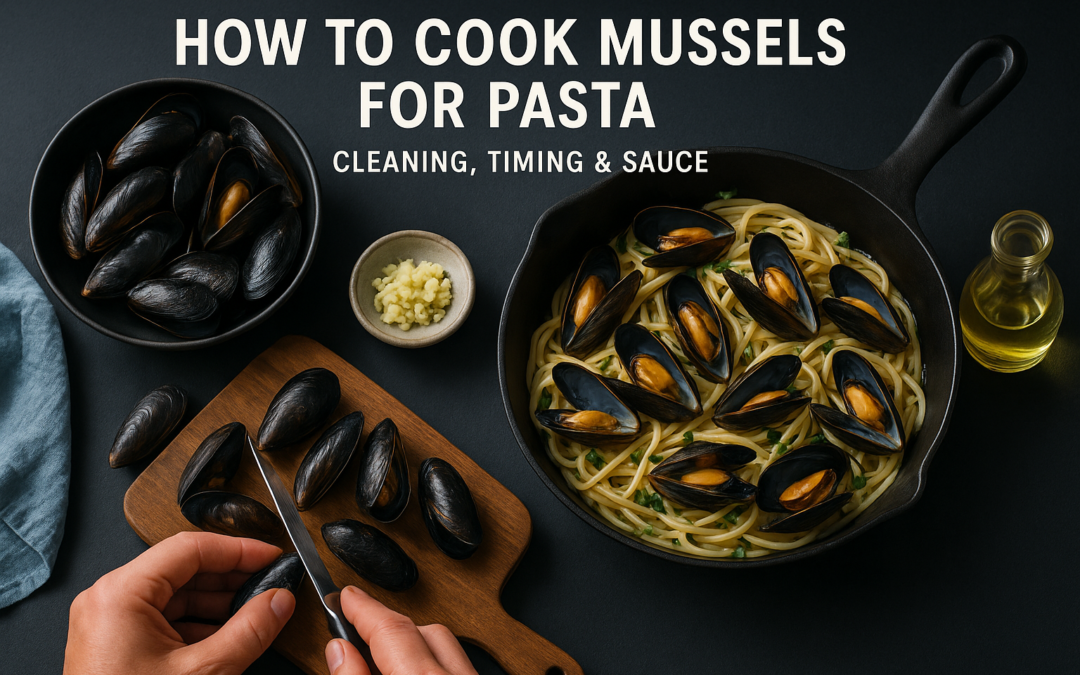
Mussels are one of the most rewarding shellfish you can cook at home, they’re affordable, they cook in minutes, and they bring a briny depth to pasta that’s hard to match. Knowing how to cook mussels for pasta starts with a few basics: proper cleaning, the right heat, and a well-built sauce that captures all those juices the shells release as they open.
At La Dolce Vita Cucina, our kitchen in Chicago’s Portage Park neighborhood works with seafood daily, and mussels are a staple we never take for granted. The difference between a forgettable mussel pasta and one that stops conversation at the table comes down to technique and timing, both of which are simpler than most people expect.
This guide walks you through every step, from scrubbing and debearding your mussels to building a sauce, whether that’s white wine and garlic or a slow-simmered tomato base, and tossing everything together so the pasta actually absorbs the flavor. We’ll cover common mistakes that lead to rubbery, sandy, or bland results, and how to avoid each one.
What you need before you start
Before you get into the steps of how to cook mussels for pasta, take five minutes to gather everything. Having your ingredients prepped and your equipment ready before you open the mussel bag makes the whole process move fast and prevents the most common mistake: leaving cleaned mussels sitting out too long while you scramble for a pan.
Ingredients
The ingredient list is short, but each item serves a specific job in the dish. Your mussels will release a salty, briny liquor as they steam, so you want a sauce that works with that liquid rather than against it. Below is what you need for a classic white wine garlic pasta for two, which you can scale up easily.
| Ingredient | Amount | Notes |
|---|---|---|
| Fresh mussels | 2 lbs | Roughly 40-50 mussels |
| Dry white wine | 1/2 cup | Pinot Grigio or Sauvignon Blanc |
| Garlic | 4 cloves | Thinly sliced, not minced |
| Extra virgin olive oil | 3 tablespoons | Use a good one here |
| Crushed red pepper flakes | 1/4 teaspoon | Optional, adjust to your taste |
| Linguine or spaghetti | 8 oz | Any long pasta works |
| Fresh flat-leaf parsley | 1/4 cup, chopped | Stirred in at the end |
| Kosher salt | For pasta water | Use enough to taste the salt |
Use a dry white wine you would actually drink. "Cooking wine" is salted and blunts the clean, bright flavor you are building in the sauce.
Equipment
You do not need specialized tools, but the right cookware makes a real difference in how your mussels cook. A wide, deep pan with a tight-fitting lid is the single most important piece. Without a solid seal, steam escapes, the mussels take longer to open, and the ones that open first overcook while you wait for the rest.
Here is what to have on your counter before you begin:
- Large pot (6-8 quart) for boiling pasta
- Wide, deep skillet or sauté pan (12-inch minimum) with a lid for the mussels
- Stiff-bristle brush for scrubbing the shells
- Large colander for rinsing
- Tongs for tossing pasta and pulling out any unopened shells
Step 1. Buy, store, and check mussels
Everything that follows in how to cook mussels for pasta depends on starting with live, fresh mussels. A mussel that is already dead before it hits the pan will not open properly, and it will bring an off smell and flavor that ruins the entire dish.
How to shop for fresh mussels
Buy mussels from a fishmonger or grocery store with high turnover. The shells should be tightly closed or snap shut immediately when you tap them. Avoid any bag that smells aggressively fishy, a clean ocean scent is normal, but a sharp ammonia smell is not.
Buy mussels the same day you plan to cook them. The longer they sit, the higher the chance of losing some to spoilage before you even start.
How to store and check them at home
When you get home, remove the mussels from any sealed plastic bag right away. They are alive and need to breathe. Place them in a bowl, cover with a damp cloth or damp newspaper, and set the bowl in the coldest part of your refrigerator.
Before you start cooking, go through every mussel individually. Tap any open shell firmly on the counter and wait a few seconds. If it closes, it is alive and safe to use. If it stays open, discard it. Also toss any shells that are cracked or broken, as those mussels are compromised and not worth the risk.
Step 2. Clean and debeard fast
Cleaning mussels is quick work once you know what you’re doing, and it takes no more than 10 minutes for a 2-pound bag. The goal is to remove grit, barnacles, and the fibrous beard before the mussels hit the pan.
How to scrub the shells
Hold each mussel under cold running water and use your stiff-bristle brush to scrub the outside of the shell. You are removing sand, dirt, and any small barnacles attached to the surface. Do not soak mussels in fresh water for extended periods, as this can kill them before you cook them.
Work in batches if you have a large quantity, keeping cleaned mussels in a colander over a bowl in the refrigerator while you finish the rest.
How to remove the beard
The beard is the stringy, fibrous cluster that pokes out from between the two shells. It is what the mussel used to anchor itself in the water. To remove it, grip the beard firmly between your thumb and the side of a knife, then pull it toward the hinge end of the shell with a sharp tug. Pulling toward the hinge rather than the opening protects the mussel inside.
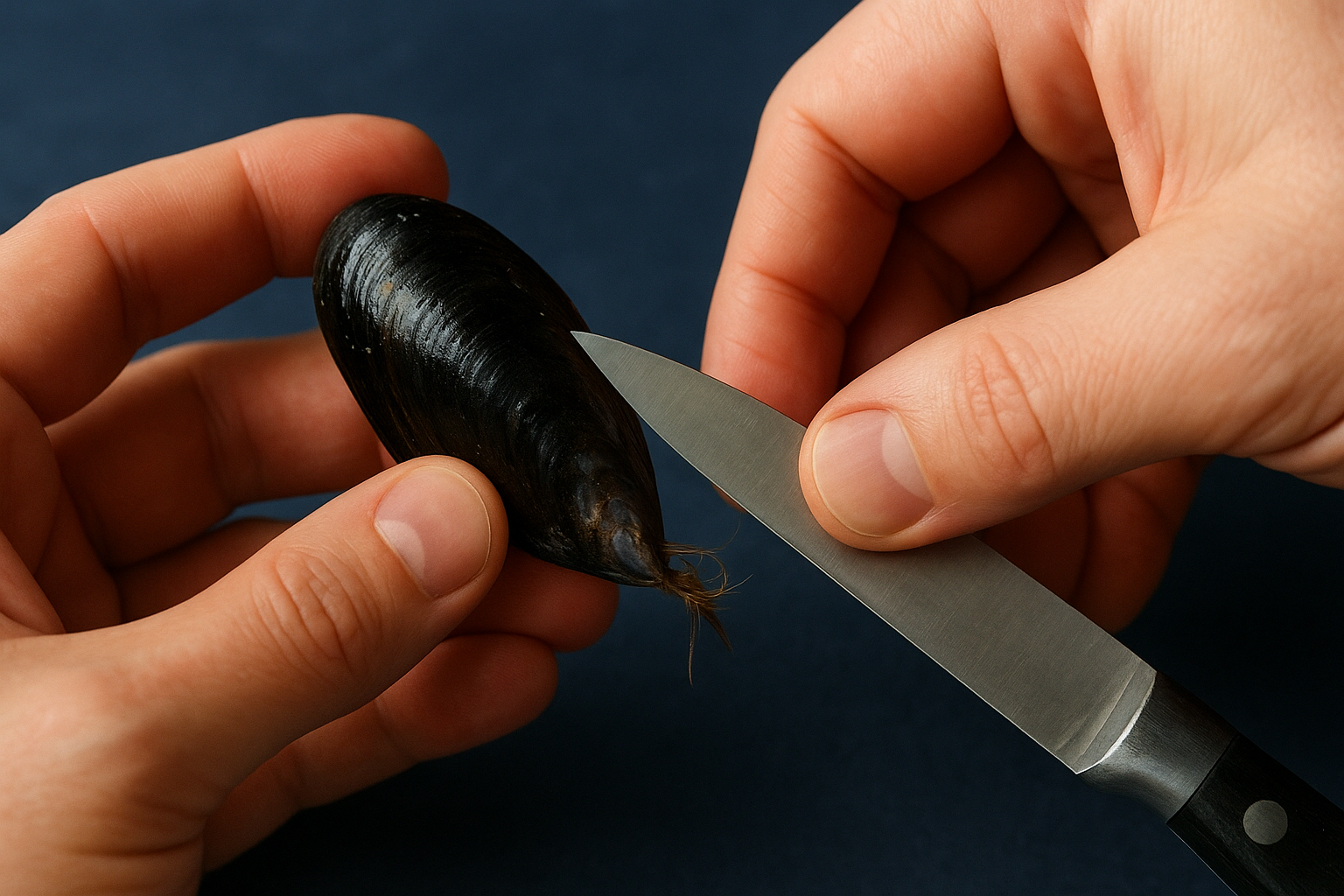
Some mussels you buy from the store will already be partially debearded by the supplier, but check each one regardless. A beard left on during cooking will not harm the dish, but it is unpleasant to chew.
Step 3. Steam mussels and save the broth
The steaming step is where the dish comes together, and it moves fast. Heat your wide skillet over medium-high before you add anything else. Once the oil shimmers, add the sliced garlic and red pepper flakes and let them cook for 60 seconds until fragrant but not brown.
Build the steam base
Pour in the dry white wine and let it bubble for about 30 seconds. Add all your cleaned mussels to the pan, spread them as evenly as possible, then lock the lid down tight. Steam will build quickly, and you will hear the shells clicking open within 3 to 4 minutes.
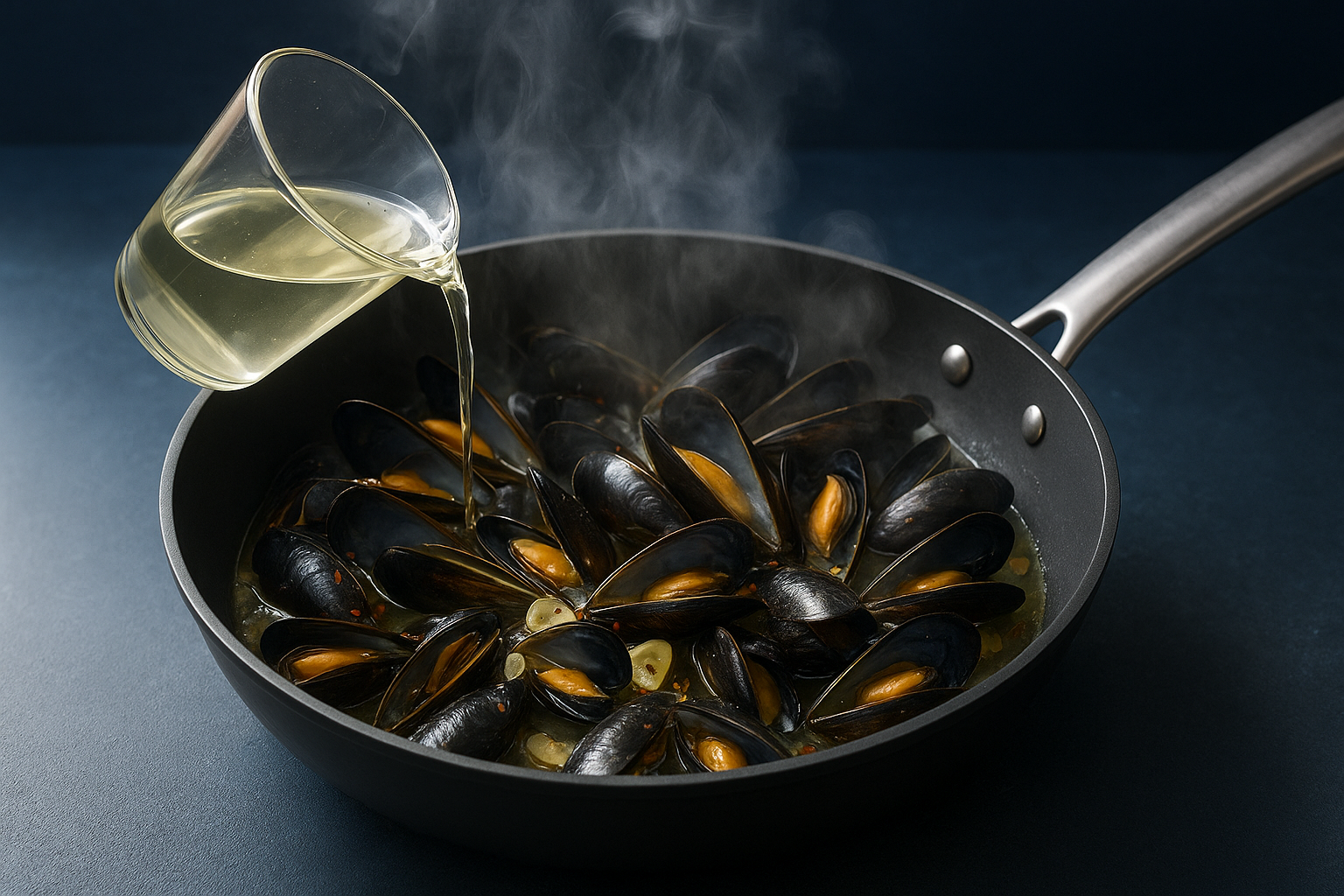
Do not lift the lid before the 3-minute mark. Every time you check, you release steam and extend the cooking time unevenly, which leads to overcooked mussels before the rest even open.
Save every drop of the liquid
Once the shells open, pull the pan off the heat immediately. Use tongs to transfer the opened mussels to a large bowl and cover loosely with foil to keep them warm. Discard any shells that stayed shut, they were not alive when they went in the pan.
Strain that liquid through a fine-mesh sieve into a heatproof cup or bowl to catch any sand or shell fragments. This strained broth is the most flavorful element in the entire dish, and knowing how to cook mussels for pasta well means never pouring it down the drain. You will add it back when you build the final sauce.
Step 4. Finish the sauce and toss with pasta
This is the step where knowing how to cook mussels for pasta pays off. Your pasta should finish cooking about two minutes before you need it, so time your boil accordingly. Pull the linguine while it still has a slight bite, because it will finish cooking in the pan with the sauce.
Build the sauce from the broth
Return the empty skillet to medium heat and pour in the strained mussel broth. Let it reduce for 90 seconds until it concentrates slightly, then add a drizzle of fresh olive oil to emulsify the liquid into a loose, silky sauce. Transfer the drained pasta directly into the skillet using tongs, and toss it continuously so the noodles absorb the broth rather than sit in it.
Reserve about 1/4 cup of pasta water before you drain it. If the sauce tightens up too fast, a splash of that starchy water loosens everything without diluting the flavor.
Return the mussels to the pan
Add the mussels back in during the final 30 seconds, tossing gently just to warm them through. Any longer and they turn rubbery. Pull the pan off heat, scatter the chopped flat-leaf parsley over the top, and taste for salt before plating. Serve immediately in wide, shallow bowls so the shells have room to sit without stacking.
Ready to cook
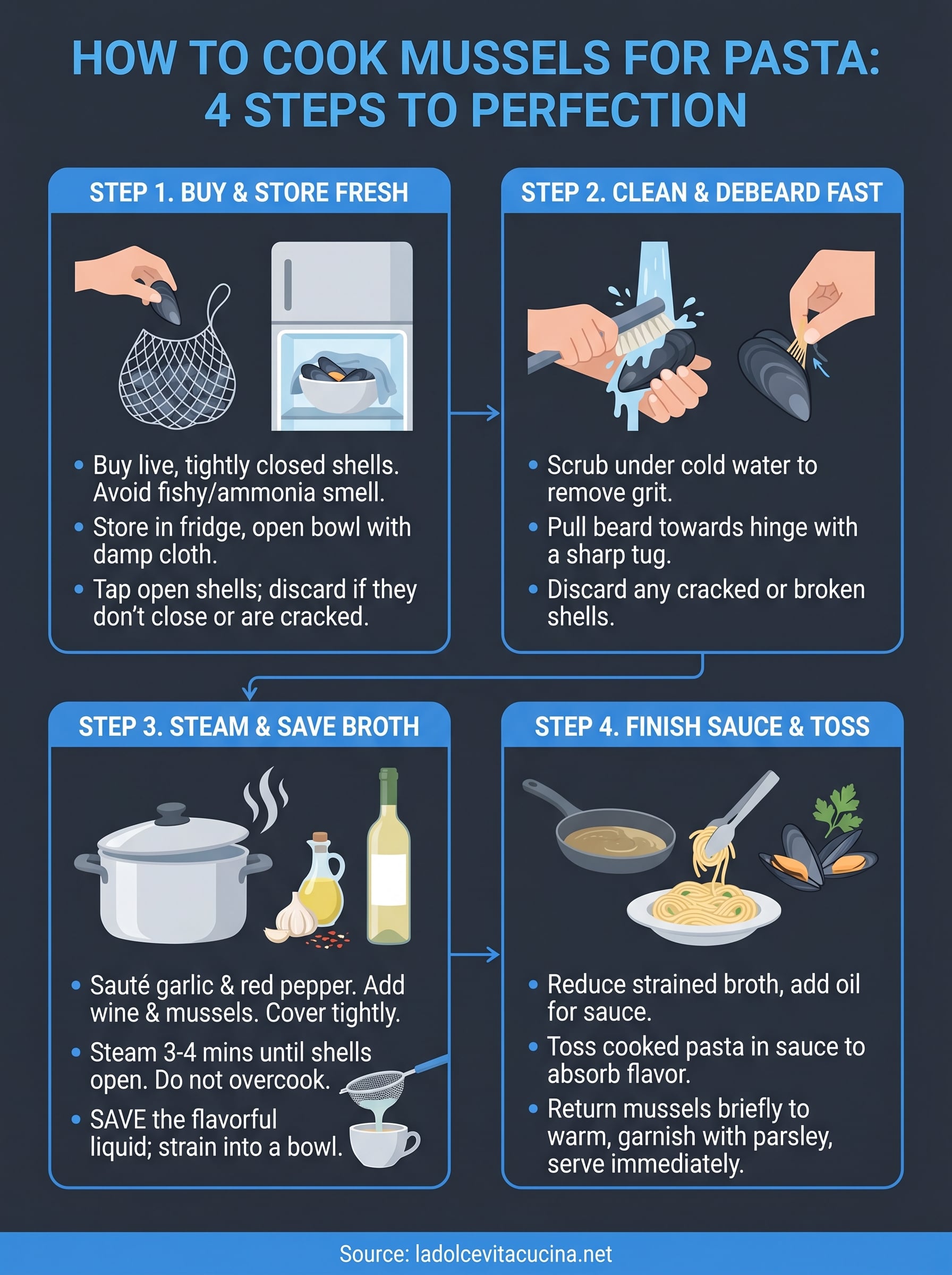
You now have everything you need to know about how to cook mussels for pasta from start to finish. The process breaks down into four straightforward steps: buy live mussels, clean and debeard them quickly, steam them and save the broth, then finish the pasta directly in that liquid. Follow the timing closely, especially the part about pulling mussels off heat the moment the shells open, and you will avoid the rubbery texture that puts most people off making this dish at home.
Practice this once and it becomes fast, reliable, and genuinely impressive. The mussel broth you build is the backbone of the sauce, and once you taste how much flavor those shells release in just a few minutes, you will understand why this dish appears on Italian menus everywhere. If you want to experience what a kitchen that works with fresh seafood daily produces, come visit us at La Dolce Vita Cucina in Chicago’s Portage Park.