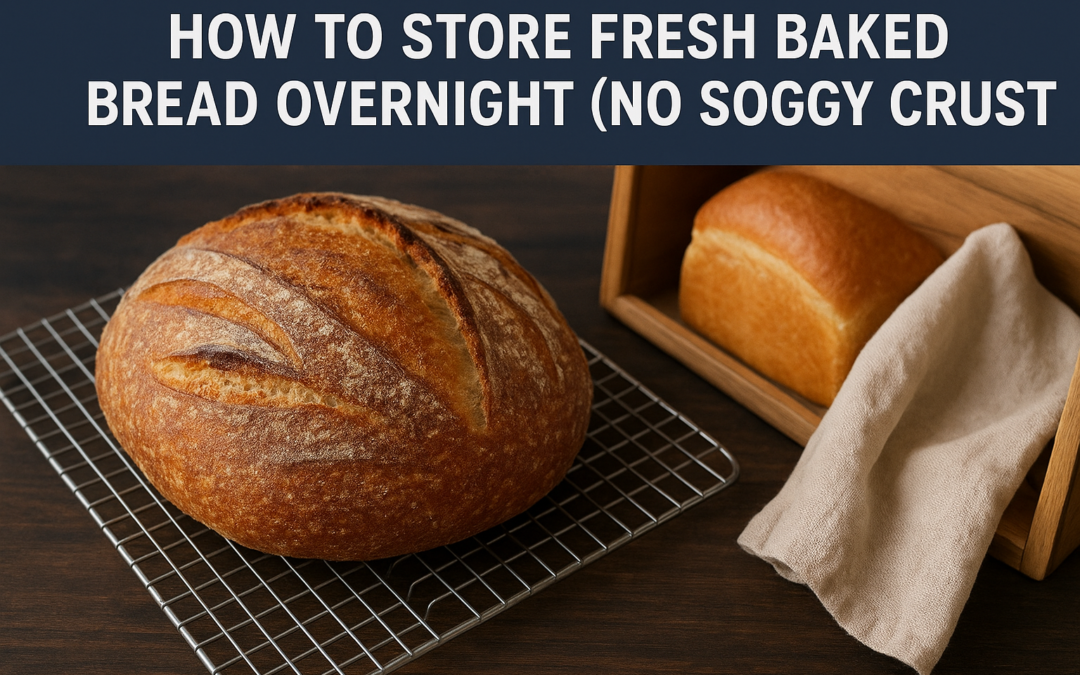
You pulled a beautiful loaf out of the oven, golden, crackling, filling your kitchen with that smell nothing else can replicate. But now it’s 9 PM, and you’re wondering how to store fresh baked bread overnight without waking up to a rock-hard crust or, worse, a sad, soggy mess. It’s a problem every home baker hits eventually, and the solution depends on a few simple choices you make in the next hour.
At La Dolce Vita Cucina, our kitchen in Chicago’s Portage Park neighborhood works with fresh bread and homemade pasta daily. We’ve learned firsthand that how you treat bread after baking matters just as much as how you bake it. The difference between a loaf that’s still worth eating the next morning and one that’s lost all its charm comes down to cooling, wrapping, and storage method.
This guide breaks down exactly what to do, step by step, so your bread stays crusty on the outside and soft on the inside until morning. We’ll cover why certain wrapping materials work better than others, whether a bread box actually helps, and the one mistake that ruins more homemade loaves than anything else.
What makes bread go stale or soggy overnight
Bread doesn’t go bad overnight by accident. Two separate processes work against your loaf at the same time: staling and moisture damage. Understanding both helps you make smarter decisions about how to store fresh baked bread overnight, because each problem calls for a slightly different fix. Most people treat them as the same issue, but they’re not, and confusing them leads to wrong storage choices that ruin an otherwise perfect loaf.
The science behind staling
Staling starts the moment your bread comes out of the oven, even before you put it away. The culprit is a process called starch retrogradation: the starch molecules inside the crumb that absorbed water during baking begin to re-crystallize as the loaf cools. This crystalline structure is what makes day-old bread feel dense and hard compared to a fresh slice. Temperature plays a major role here because starch retrogrades roughly six times faster at refrigerator temperatures (around 35-40°F) than it does at room temperature, which is why refrigerating fresh bread overnight is one of the worst things you can do to it.
Bread stales far faster in the refrigerator than at room temperature, so cold storage is almost never the right call for a fresh loaf you plan to eat the next morning.
Humidity slows retrogradation slightly, but it creates its own set of problems when it builds up inside packaging. So the goal is a stable moisture environment that keeps the crumb soft without letting condensation pool against the crust.
How trapped moisture damages the crust
Fresh bread holds a significant amount of steam inside the crumb immediately after baking. As the loaf cools, that steam migrates outward through the crust. If you wrap bread before it has fully cooled, that steam has nowhere to escape and condenses on the inside of your wrapping material, then soaks back into the crust. The result is a crust that started out crackling and golden but turns soft, almost chewy, by morning.
Condensation inside packaging can also accelerate mold growth, especially in warmer kitchens. Letting the loaf breathe completely before wrapping isn’t optional if crust quality matters to you, and skipping this step is the single most common reason home bakers end up disappointed the next day.
Why wrapping material makes such a big difference
The material you wrap bread in controls how much moisture stays in or escapes overnight. Plastic wrap and zip-lock bags create a sealed environment that traps humidity against the crust, which works well for soft sandwich loaves but destroys the texture of a crusty sourdough or ciabatta. Paper bags and linen cloths let the crust breathe but allow moisture to escape faster, which can dry out the crumb if you’re storing the loaf for more than a few hours.
Two competing forces pull against each other here: crust texture and crumb moisture. Each common wrapping option handles them differently:
| Wrapping Material | Crust Result | Crumb Result | Best For |
|---|---|---|---|
| Plastic bag or wrap | Soft, sometimes soggy | Stays very moist | Soft sandwich loaves |
| Paper bag | Stays crisp, may harden | Can dry slightly | Crusty artisan bread (short term) |
| Linen or cloth wrap | Crisp, breathable | Balanced moisture | Sourdough, baguettes |
| Bread box (unwrapped) | Best crust retention | Good moisture balance | Most bread types |
| No wrapping at all | Very hard by morning | Dry throughout | Not recommended |
Choosing the right option comes down to the specific bread you baked and the texture you want to eat the next morning.
Step 1. Cool bread the right way
Cooling is the most skipped step in how to store fresh baked bread overnight, and it’s the one that sets up everything else. Wrapping a warm loaf traps steam inside the packaging, which then condenses on the crust and turns it soft by morning. You need to let the bread reach room temperature completely before you introduce any covering or storage container, no exceptions.
How long to cool before storing
Most home bakers underestimate how long this actually takes. A standard 1-pound loaf typically needs at least 1 hour of cooling time on a wire rack. Larger loaves, like a 2-pound sourdough or a thick focaccia, need closer to 2 hours before the internal temperature drops enough to stop producing steam. Touch the bottom of the loaf with your palm – if it still feels warm, give it more time.
Cutting into bread too early also causes a gummy, undercooked-seeming crumb because the internal starches are still setting, so patience during cooling pays off twice.
Use this as a quick reference for cooling times by loaf type:
- Baguette or small rolls: 30 to 45 minutes
- Standard sandwich loaf (1 lb): 1 to 1.5 hours
- Sourdough or artisan round (1.5 to 2 lb): 1.5 to 2 hours
- Focaccia or flatbread: 45 minutes to 1 hour
The right surface and airflow setup
Where you cool your bread matters as much as how long you cool it. A wire cooling rack is the correct tool because it lifts the loaf off the counter and allows air to circulate underneath. Cooling bread on a solid surface like a cutting board or plate traps heat and moisture under the loaf, which softens the bottom crust and creates exactly the sogginess you’re trying to avoid.
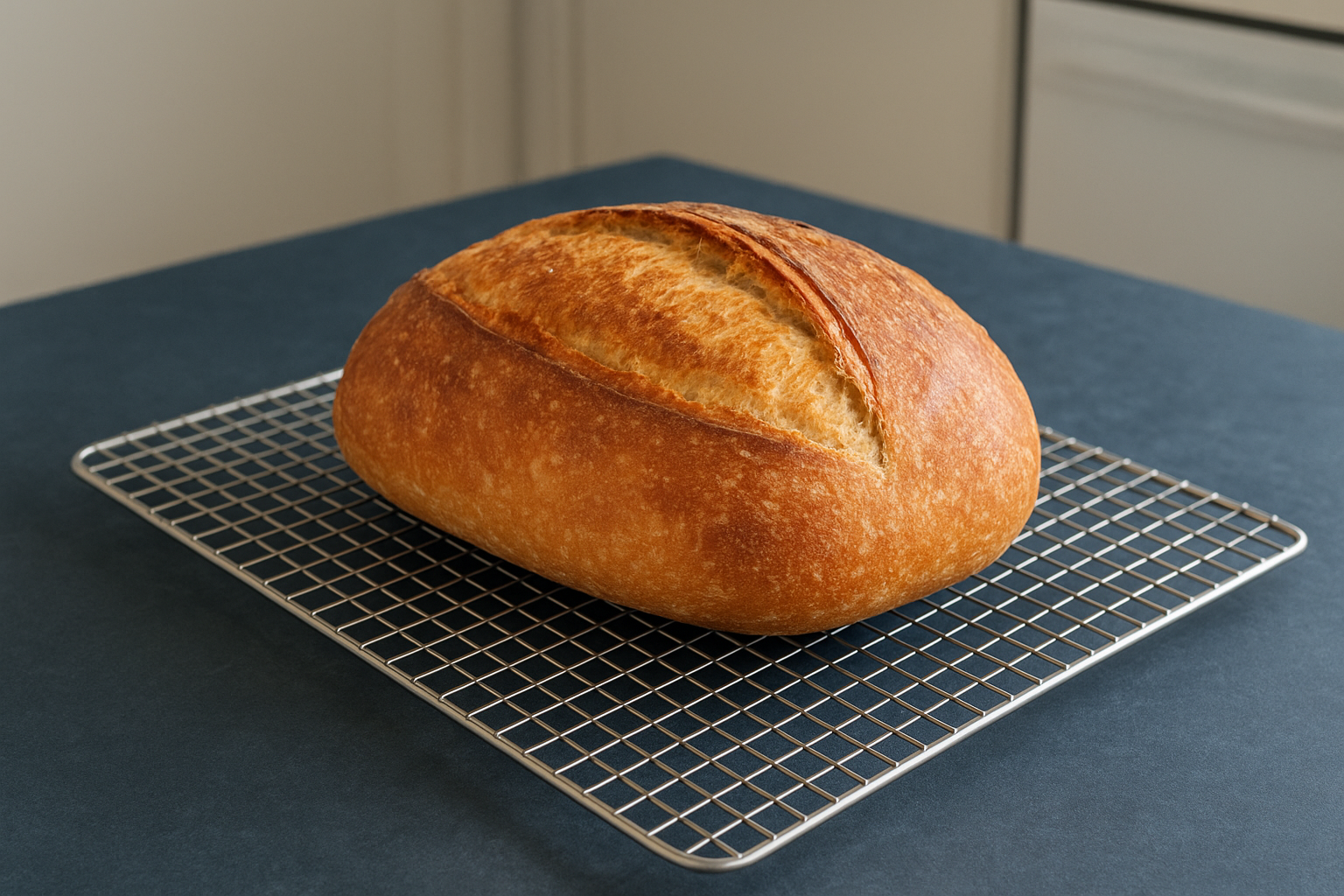
Your cooling rack placement in the kitchen also affects the outcome. Keep the rack away from drafts, direct sunlight, and heat sources like your stovetop or a running dishwasher. Extreme or uneven airflow can dry the crust surface unevenly and cause it to crack before you’ve even wrapped it. Gentle room-temperature air circulation is what you want, which means a stable counter spot away from windows and appliances works best for most home kitchens.
Step 2. Wrap it based on crust you want
Once your bread has cooled completely, your next decision directly controls what texture you eat the next morning. The wrapping method you choose works either for you or against you depending on the style of loaf you baked, and there is no single answer that fits every type. Knowing how to store fresh baked bread overnight starts with matching your storage material to the specific crust and crumb structure you want to preserve. Get this step right and everything else falls into place.
For crusty artisan bread
Sourdoughs, baguettes, ciabattas, and similar artisan loaves need to breathe. Sealing them in plastic overnight traps moisture against the crust and turns that satisfying crunch into something closer to softened cardboard by morning. Paper bags are a reasonable short-term option if you plan to eat the bread within 12 hours, but they draw moisture away from the crumb over a longer window. The most reliable method for an overnight hold is a linen or cotton bread bag, which regulates airflow without stripping moisture from the interior.
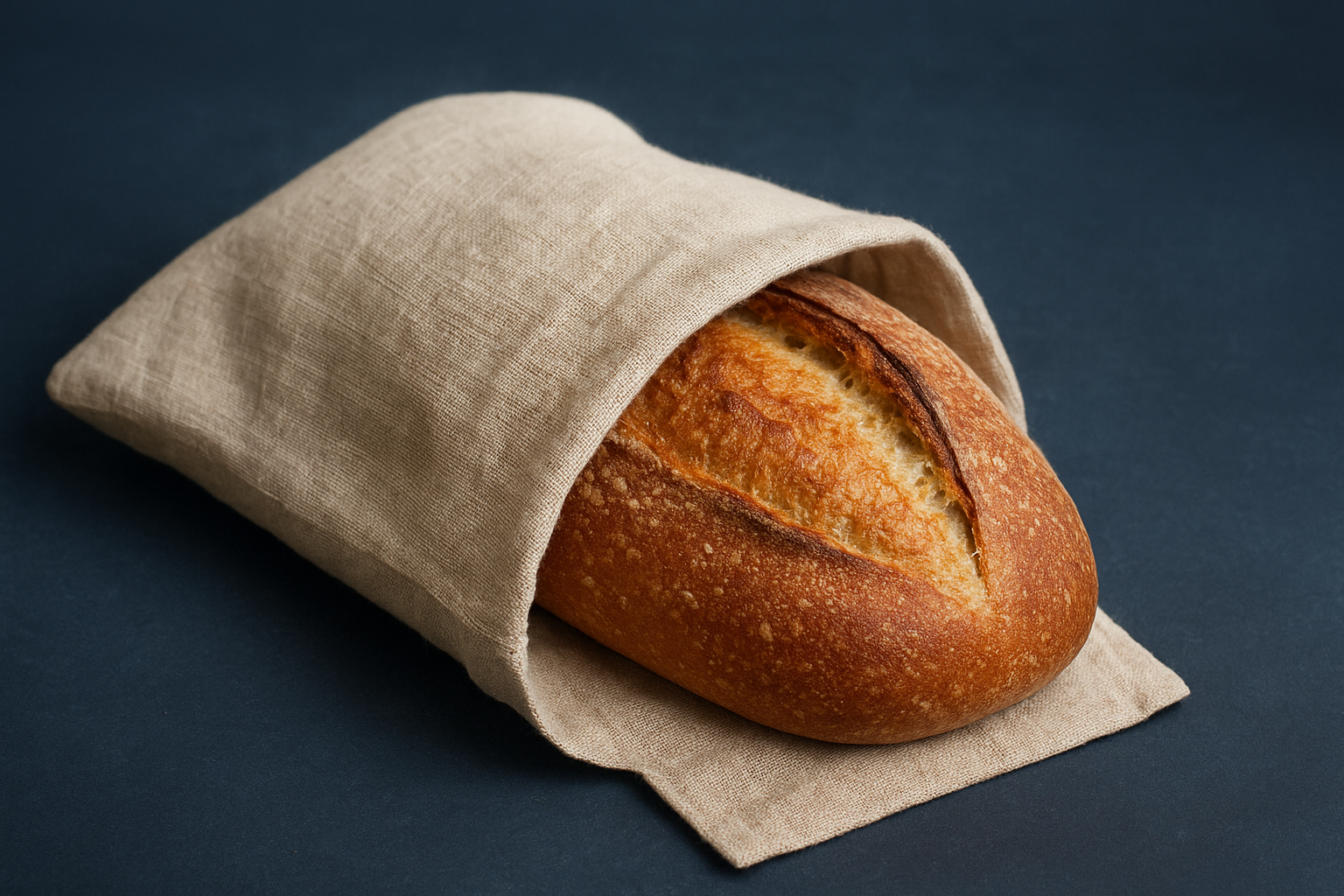
A linen wrap keeps the crust firm and protects the crumb because the natural fiber absorbs minor surface humidity without holding it directly against the bread.
Here is how to wrap a crusty loaf step by step:
- Confirm the loaf is fully cooled to room temperature before any wrapping.
- Slide the bread into a linen or cotton bag and fold the open end underneath the loaf.
- If you only have a paper bag, fold the top down twice to reduce airflow without sealing it completely shut.
- Never place a wrapped crusty loaf inside an airtight container or zip-lock bag overnight.
For soft sandwich loaves and enriched breads
Soft breads like sandwich loaves, brioche, and milk bread are built to hold moisture in the crumb, and their thin crust does not need the same protection that artisan loaves require. Plastic wrap or a resealable zip-lock bag sealed tightly works well here because it locks in the humidity the loaf already carries. If you have already sliced into the loaf, wrap the cut side first, pressing the plastic directly against the exposed crumb to stop that surface from drying and hardening overnight.
For an unsliced soft loaf, slide it into a resealable plastic bag, press out as much air as you can, and seal it fully. Room temperature storage overnight still applies here, the same as with crusty bread.
Step 3. Pick the best storage spot overnight
Where you place your wrapped loaf overnight matters more than most people realize. Even a perfectly cooled, correctly wrapped bread can lose its texture by morning if you store it in the wrong spot. The location controls ambient temperature, humidity exposure, and airflow around the package, all of which shape the result you pull out the next day.
Room temperature is almost always right
For the vast majority of breads, a cool, dry counter or pantry shelf at room temperature is the correct overnight storage spot. You are looking for a location that stays between 60°F and 75°F, away from direct heat and direct sunlight. Most kitchen counters work fine as long as they sit away from the stove, oven, or any appliance that generates heat during the night, like a slow cooker left running.
If your kitchen runs warm overnight (above 75°F), move the bread to a pantry or cupboard where the temperature is more stable and slightly cooler.
A bread box placed on the counter is one of the best options when you want to know how to store fresh baked bread overnight without extra wrapping. The interior of a bread box creates a small, semi-regulated microclimate that slows moisture loss while allowing just enough airflow to prevent the crust from going soggy. Unglazed wood or tin bread boxes outperform sealed plastic containers because they allow a small degree of air exchange rather than trapping humidity completely against the crust.
What to avoid: heat, light, and the fridge
Three locations consistently damage bread overnight, and knowing why helps you avoid them automatically. Direct sunlight and heat sources raise the surface temperature of the loaf unevenly, which accelerates moisture loss on the outside while leaving the interior warm enough to continue releasing steam. That combination softens the crust and creates dry, uneven patches in the crumb by morning.
The refrigerator is the most damaging option you can choose for fresh bread you plan to eat tomorrow. Cold temperatures speed up starch retrogradation dramatically, turning a fresh loaf hard and stale far faster than room temperature storage would. Unless you are storing bread for three days or more and plan to revive it in the oven, skip the fridge entirely.
Here is a quick reference for choosing your overnight spot:
| Location | Good For | Avoid If |
|---|---|---|
| Counter (cool, dry) | Most wrapped breads | Kitchen runs above 75°F |
| Bread box | Crusty artisan loaves | You only have a sealed plastic box |
| Pantry or cupboard | All bread types | Space is warm or humid |
| Refrigerator | Longer storage (3+ days) | Eating within 24 hours |
| Near stove or oven | Never | Always |
Step 4. Fix common overnight bread problems
Even when you follow every step correctly, bread can still surprise you in the morning. Knowing how to store fresh baked bread overnight includes knowing what to do when something goes wrong, because the fixes are often quick and the loaf is usually more salvageable than it looks.
When the crust went soft
A soft crust means moisture got trapped against the bread at some point, either from wrapping too early or using plastic on an artisan loaf. The fix is straightforward: preheat your oven to 375°F, place the unwrapped loaf directly on the oven rack, and bake for 5 to 10 minutes. The dry heat draws surface moisture back out and crisps the crust again. Let the loaf rest on a wire rack for 10 minutes before slicing so the crust has time to firm up properly.
A soft crust is almost always reversible in the oven, but you only get one good reheat before the crumb starts to dry out too much.
For rolls or smaller pieces, 5 minutes at 375°F is usually enough. Check after 4 minutes to avoid burning the surface.
When the crumb feels dry or dense
A dry crumb typically means the bread cooled too long before wrapping, or the wrapping material allowed too much air exchange overnight. If you catch this in the morning, wrap individual slices in a damp (not wet) paper towel and microwave on medium power for 10 to 15 seconds. The steam from the towel rehydrates the surface of the crumb just enough to make it palatable again without cooking it further.
For a whole dry loaf, brush the surface lightly with water using a pastry brush, wrap it loosely in foil, and place it in a 300°F oven for 10 minutes. Remove the foil for the last 2 minutes to let the crust breathe. This method works especially well for sourdoughs and larger rounds that dried out overnight.
When the bread tastes stale
Stale bread is a starch problem, not a moisture problem, so the fix is heat rather than rehydration. Wrap the entire loaf tightly in aluminum foil and place it in a 325°F oven for 15 minutes. The heat temporarily reverses starch retrogradation, which restores some of the softness and aroma the loaf had when it came out of the oven. Eat it within an hour of reheating, because the staling process accelerates again once the bread cools down.
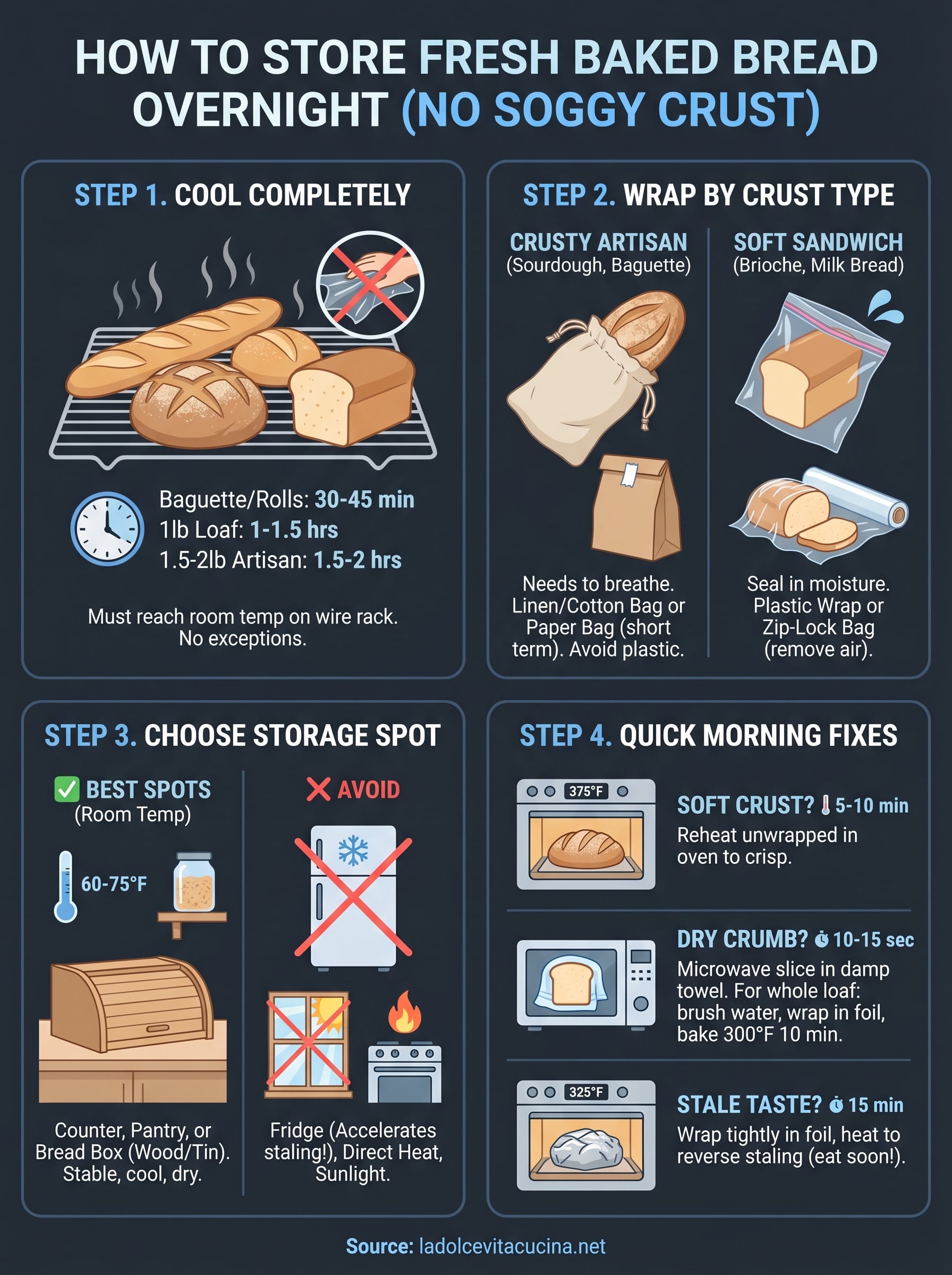
A quick recap for tomorrow morning
Knowing how to store fresh baked bread overnight comes down to three decisions you make after the loaf leaves the oven. Cool it completely on a wire rack before wrapping, match your wrapping material to the crust type you want to preserve, and keep it at room temperature in a stable, cool spot away from heat. Crusty artisan loaves need breathable linen or paper; soft sandwich loaves do best sealed in plastic. The fridge is almost always the wrong choice for bread you plan to eat the next morning.
When something does go wrong, the oven fixes most problems in under 15 minutes. A soft crust crisps back up at 375°F, and a stale crumb revives with a foil-wrapped stint at 325°F. Fresh bread deserves that extra care and attention. If great food and good craftsmanship matter to you, come experience our homemade pasta and fresh-baked flavors at La Dolce Vita Cucina in Chicago’s Portage Park neighborhood.