

At La Dolce Vita Cucina, we make risotto from scratch in our Portage Park kitchen, and yes, we use wine. But here’s the truth: can you make risotto without wine? Absolutely. Wine adds acidity and depth, but it’s not the only ingredient that can do that. Whether you’re cooking for someone who avoids alcohol, you simply ran out of Pinot Grigio, or you prefer to skip it altogether, a great risotto is still within reach.
The key is understanding what wine actually does in the dish, and then choosing a substitute that fills the same role. A splash of lemon juice, a pour of good stock, or a hit of white wine vinegar can all get you there. None of these are compromises; they’re just different paths to the same creamy, rich result.
This guide breaks down the best wine substitutes for risotto, explains when to use each one, and walks you through the technique so nothing gets lost along the way.
Do you need wine for risotto
Wine shows up in nearly every traditional risotto recipe, but it’s not a structural requirement for the dish. Its role is more about flavor and acidity than chemistry or texture. Understanding that distinction is what frees you to cook great risotto without it.
What wine actually does in the dish
When you pour wine into the hot pan after toasting the rice, two things happen. First, the alcohol burns off quickly, usually within a minute or two of constant stirring. Second, the wine’s natural acidity brightens the overall flavor, cutting through the fat from the butter and olive oil so the risotto doesn’t taste heavy or flat.
Most recipes call for a dry white wine like Pinot Grigio or Sauvignon Blanc, which adds a subtle tartness without sweetness. The wine also provides a small amount of liquid that starts the absorption process before you begin ladling in stock. But here’s what matters: the acidity is the functional part, not the alcohol itself.
If wine’s job is to add acidity and brightness, then anything that delivers those same qualities can stand in for it.
What happens when you leave it out entirely
If you skip wine and substitute nothing, the risotto will taste flat and one-dimensional. The butter, Parmesan, and starchy rice create a rich base, but without any acidity to balance them, the dish feels dense and heavy on the palate. It’s not inedible, but it won’t taste like a finished, complete dish.
You’ll also notice the finish lacks brightness at the end of each bite. That lift is mostly coming from the acidic component, whether that’s wine, lemon juice, or something else. Removing it without replacing it takes out an entire layer of flavor that the rest of the ingredients depend on.
Why skipping wine still works with the right swap
Can you make risotto without wine? Yes, and the dish can taste just as satisfying as the original when you choose the right substitute. The rice doesn’t know the difference between wine and lemon juice. What the rice cares about is liquid, heat, and consistent starch release, and all of that happens the same way regardless of what acidic ingredient goes into the pan.
The key is matching the acidity level and volume of what you’re replacing. A standard risotto recipe uses about half a cup of wine. Your substitute needs to fill that same functional role without overwhelming the dish with a flavor that clashes with everything else. White wine vinegar, for example, works well but needs dilution because it’s far more acidic than wine on its own. Getting the ratio right is the difference between a risotto that tastes bright and one that tastes sharp.
Best wine-free substitutes and when to use each
Several ingredients can replace wine in risotto without sacrificing the dish’s flavor balance or acidity. The right choice depends on what else is in your recipe and how strong you want the acidic note to be. Each substitute below has a specific use case, so you can pick the one that fits your dish and your pantry.
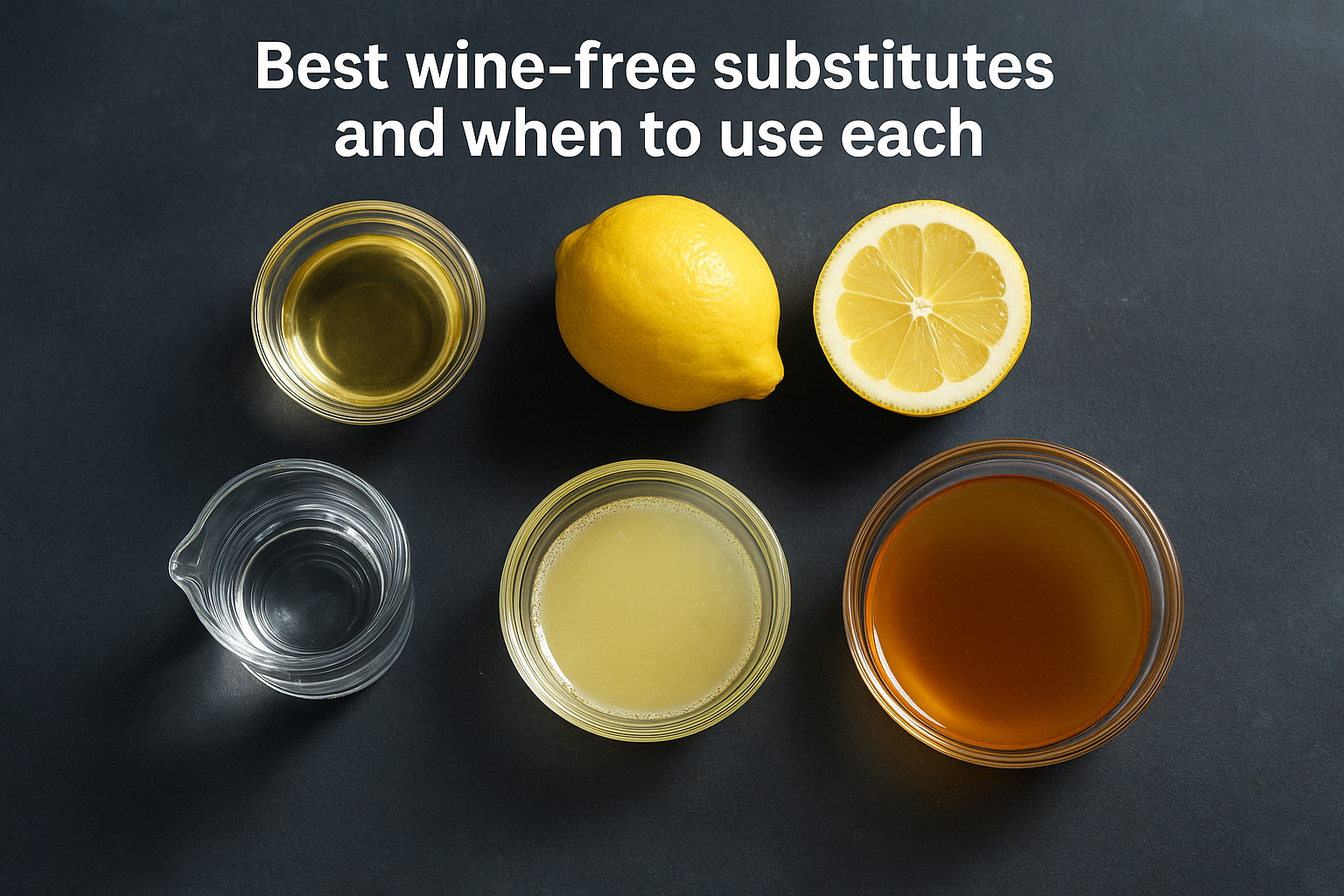
White wine vinegar or apple cider vinegar
These are the closest match to wine’s acidity and work well in almost any savory risotto. Because both vinegars are far more concentrated than wine, you need to dilute them before adding them to the pan. Mix one tablespoon of white wine vinegar with enough water to reach half a cup, then pour it in after toasting the rice.
Apple cider vinegar works the same way and adds a faint fruitiness that pairs especially well with mushroom or squash risotto. If you’re using white wine vinegar, stick with the plain white variety rather than red wine vinegar, which can turn your risotto an unexpected pink color and add a harsher edge.
Lemon juice
Fresh lemon juice is the most versatile substitute if you want clean, bright acidity. Use two tablespoons of lemon juice added toward the end of cooking rather than at the beginning, since heat can dull its sharpness. This works best in lighter risottos built around seafood, asparagus, or fresh herbs.
If you can only keep one substitute on hand for those nights when you’re asking yourself can you make risotto without wine, a lemon in your fridge is all you need.
Extra stock
Adding extra warm stock instead of wine gives you the least acidic result. Your risotto stays rich and savory, but you lose some brightness. This works best when your dish already includes naturally acidic ingredients like tomatoes, capers, or sun-dried tomatoes that carry the acidity on their own.
| Substitute | Amount | Best for |
|---|---|---|
| White wine vinegar + water | 1 tbsp + water to ½ cup | Most savory risottos |
| Apple cider vinegar + water | 1 tbsp + water to ½ cup | Mushroom, squash |
| Fresh lemon juice | 2 tbsp, added at end | Seafood, herb risottos |
| Extra stock | ½ cup | Tomato-based risottos |
How to make risotto without wine step by step
Making risotto without wine follows the same technique as a standard recipe, with one small adjustment at the point where wine normally goes in. If you understand that swap, the rest of the process stays identical. This recipe serves four and uses lemon juice as the substitute, which works well across most flavor profiles.
What you need before you start
Gathering everything in advance matters more with risotto than most dishes because constant stirring leaves no time to hunt for ingredients mid-cook. Set out the following before you turn on the heat.
- 1½ cups Arborio rice
- 5 to 6 cups warm chicken or vegetable stock
- 2 tablespoons fresh lemon juice
- 1 small yellow onion, finely diced
- 2 tablespoons olive oil
- 2 tablespoons unsalted butter, divided
- ½ cup freshly grated Parmesan
- Salt and black pepper to taste
Keep your stock warm in a separate pot on low heat throughout cooking. Cold stock slows the absorption process and makes it harder to build the right creamy consistency.
The step-by-step process
Start by heating olive oil and one tablespoon of butter in a wide, heavy-bottomed pan over medium heat. Add the diced onion and cook for four to five minutes until it turns soft and translucent. Add the Arborio rice and toast it for two minutes, stirring constantly, until the edges of each grain look slightly translucent.
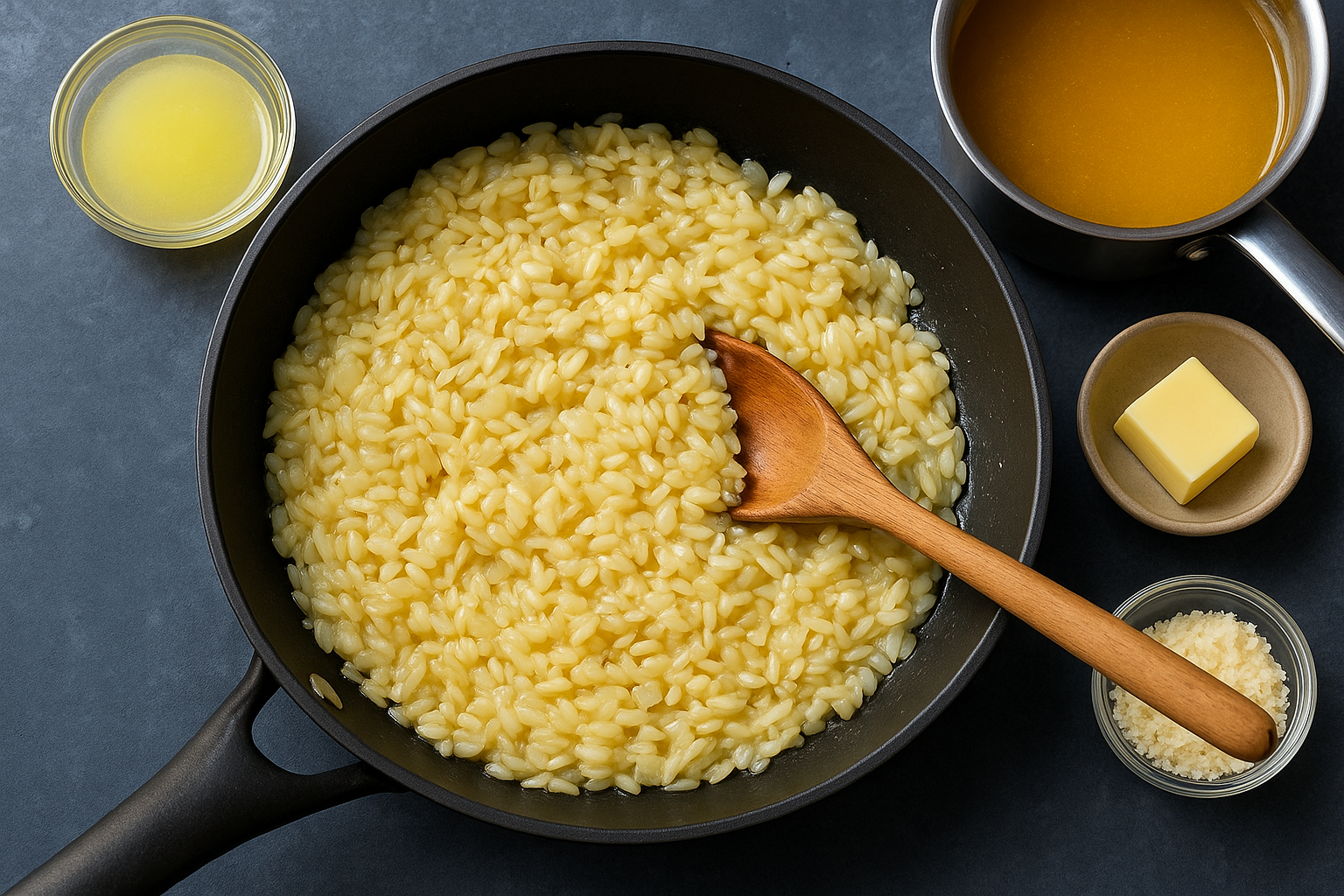
This toasting step is where risotto builds its foundation, so do not rush it.
Now add the lemon juice and stir until it absorbs fully, about thirty seconds. Begin adding warm stock one ladle at a time, stirring continuously and waiting until each ladle is fully absorbed before adding the next. This process takes eighteen to twenty minutes total. When the rice is tender but still has a slight bite, pull it off the heat.
Stir in the remaining tablespoon of butter and the Parmesan. Let the risotto rest for sixty seconds off the heat before serving. That rest allows the starch to loosen slightly, giving you the loose, flowing texture you want.
How to keep flavor and texture restaurant-level
The biggest gap between home risotto and restaurant risotto isn’t the wine. It’s technique and ingredient quality. When you ask can you make risotto without wine and still get a restaurant-quality result, the answer depends on how well you handle the details that most recipes mention briefly but rarely explain. Two areas make the biggest difference: what goes into your stock and how you finish the dish.
Use homemade or high-quality stock
Stock is the primary liquid in risotto, and it does most of the heavy lifting once you skip the wine. Weak or watery stock produces a flat, thin result no matter how carefully you stir. If you can make your own chicken or vegetable stock, the difference is immediate. Homemade stock has a natural gelatin content that gives the risotto extra body as it reduces.
If homemade stock isn’t an option, choose a low-sodium carton stock and simmer it with a Parmesan rind for ten minutes before you start cooking.
That small step concentrates the flavor significantly and adds richness that store-bought stock alone won’t deliver on its own.
Control heat and finish with cold butter
Medium heat is the correct setting for risotto from start to finish. High heat evaporates the stock too fast and locks the rice’s exterior before the center cooks through. Low heat draws the process out and produces a gluey, dense texture. Keep the flame consistent throughout the eighteen to twenty minutes of active cooking.
The finish, called mantecatura in Italian kitchens, is where texture becomes either creamy or heavy. Pull the pan completely off the heat, add cold butter cut into small cubes, and stir vigorously for sixty seconds. Cold butter emulsifies into the starch rather than simply melting, which creates the silky, flowing consistency you see plated at a restaurant. Your Parmesan goes in at the same moment, off the heat so it melts smoothly without turning grainy.
- Use cold butter, not room temperature butter
- Add Parmesan off the heat to prevent clumping
- Rest the risotto for sixty seconds before plating
Easy variations and what to serve with risotto
Once you’ve confirmed that can you make risotto without wine is a fully solvable problem, the next step is using that base technique to build different versions of the dish. The wine-free method works across all risotto styles, so the same substitution logic applies no matter which variation you’re making.
Flavor variations worth trying
Each variation below uses the same core technique from the step-by-step section, with adjustments to the aromatics, stock, and finishing ingredients. Swapping the stock type is the fastest way to shift flavor direction without changing anything else about the process.
- Mushroom risotto: Use vegetable stock, add 1 cup of sautéed cremini mushrooms after toasting the rice, and use apple cider vinegar diluted in water as your wine substitute.
- Lemon herb risotto: Use chicken stock, finish with two tablespoons of lemon juice and a handful of fresh parsley or basil stirred in off the heat.
- Tomato risotto: Add two tablespoons of tomato paste with the onion, use extra stock instead of any acidic substitute since the tomato carries that note naturally.
- Butternut squash risotto: Stir in one cup of roasted squash puree halfway through cooking and use apple cider vinegar diluted in water for the acidic swap.
Each variation tastes complete on its own, but the mushroom and lemon herb versions especially benefit from a finishing drizzle of good olive oil right before serving.
What to serve alongside it
Risotto works best as a standalone first course or a main dish with a simple side. You want the accompaniment to complement without competing. A crisp green salad with a light vinaigrette, roasted asparagus, or sautéed broccolini all work well because their slight bitterness contrasts the richness of the risotto.
If you’re serving it as a main, a thin slice of grilled chicken or a piece of pan-seared salmon alongside keeps the plate balanced without adding heaviness. Keep portions of the protein modest so the risotto stays the focus of the meal.
Quick wrap-up
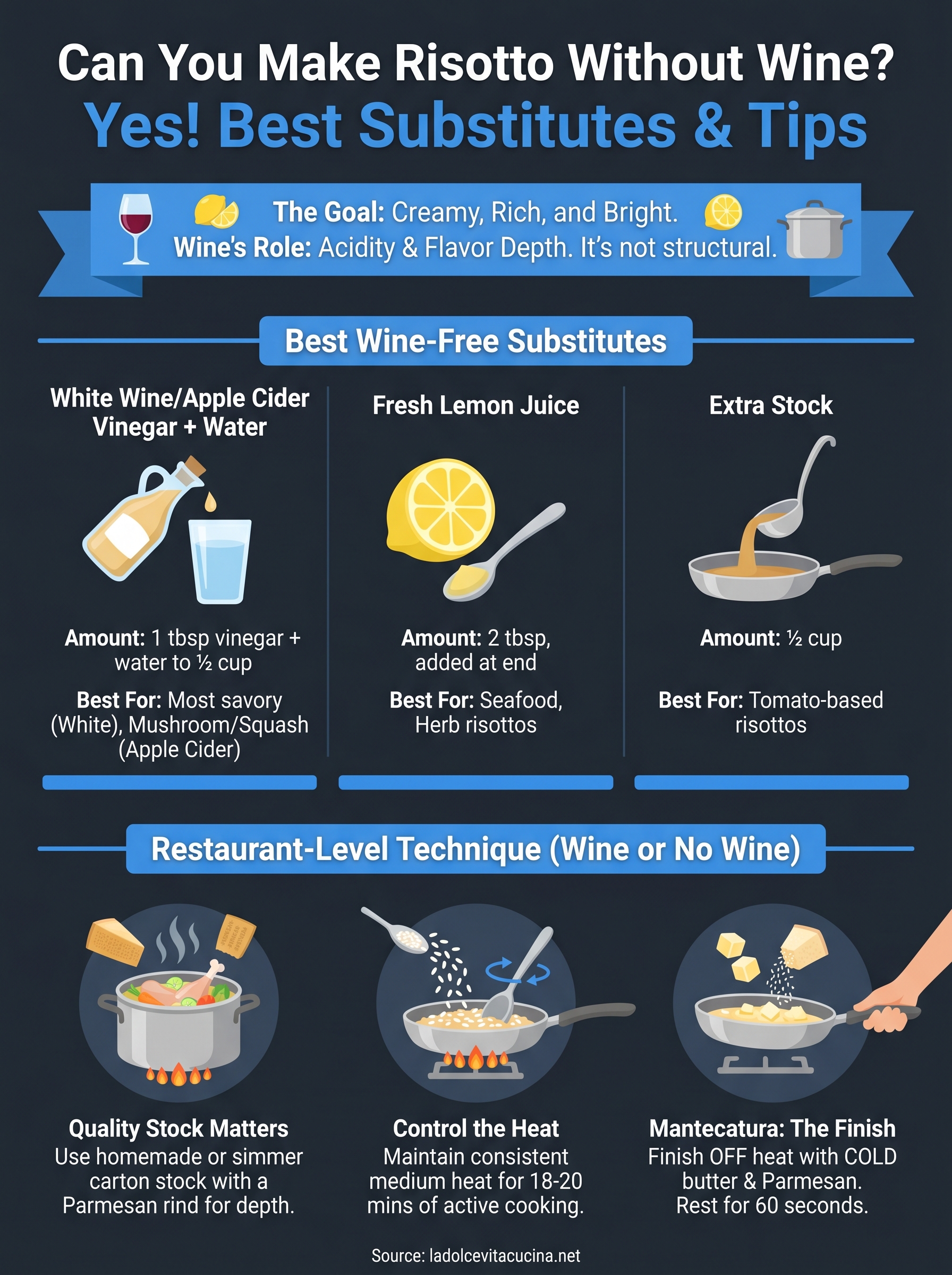
Can you make risotto without wine? Yes, and this guide gives you everything you need to do it well. Wine adds acidity and brightness, but it isn’t the only ingredient that can do that job. Lemon juice, diluted vinegar, or extra stock each fill that role depending on what flavor direction your dish is heading in, and the core technique stays exactly the same.
Getting the result right comes down to three things: choosing the correct substitute, using quality stock, and finishing the dish off the heat with cold butter and Parmesan. Follow those steps and your risotto will taste complete and restaurant-worthy every time you make it.
If you want to see how a properly built risotto compares when made by a kitchen that focuses on Italian cooking daily, visit La Dolce Vita Cucina in Chicago’s Portage Park neighborhood and try it for yourself.