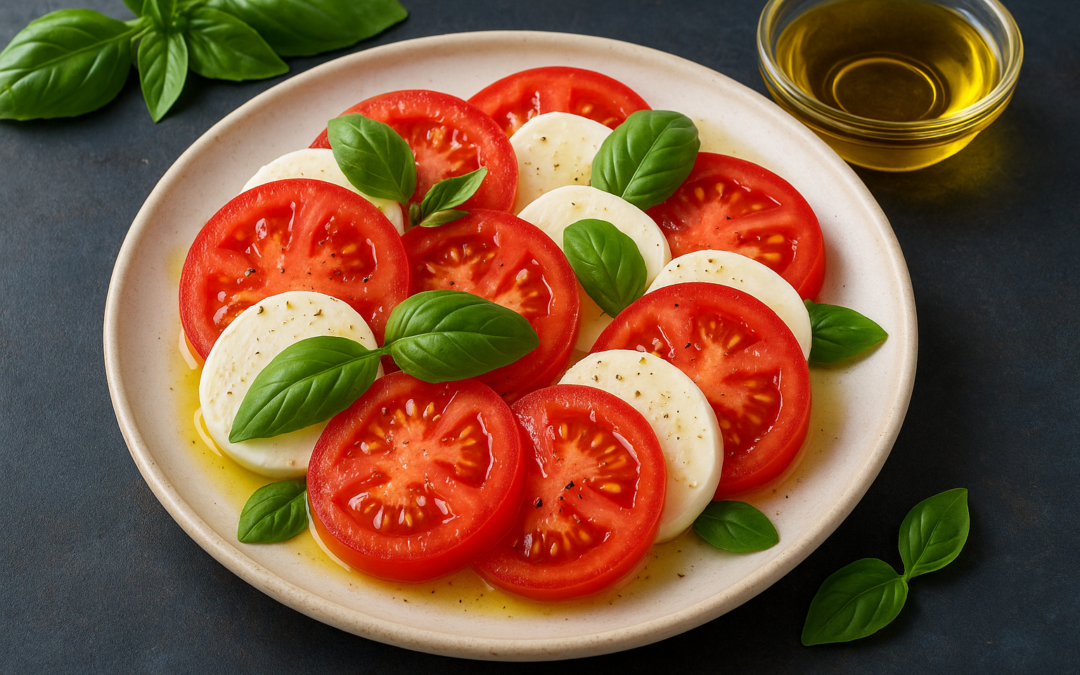
Few dishes capture the essence of Italian cooking quite like the Caprese salad. If you’re wondering what is in a Caprese salad, the answer is beautifully simple: ripe tomatoes, fresh mozzarella, fragrant basil, quality olive oil, and a touch of seasoning. That’s it. No complicated techniques, no lengthy ingredient lists, just a handful of components that, when sourced well, create something extraordinary.
At La Dolce Vita Cucina, we celebrate this philosophy daily in our Portage Park kitchen. Quality ingredients don’t need much interference, they need respect. This guide breaks down each element of the classic Caprese, explains how to select the best produce and cheese, and walks you through assembling it at home. Whether you’re preparing a light summer appetizer or a quick weeknight side, you’ll have everything you need to make it right.
What goes in a classic caprese salad
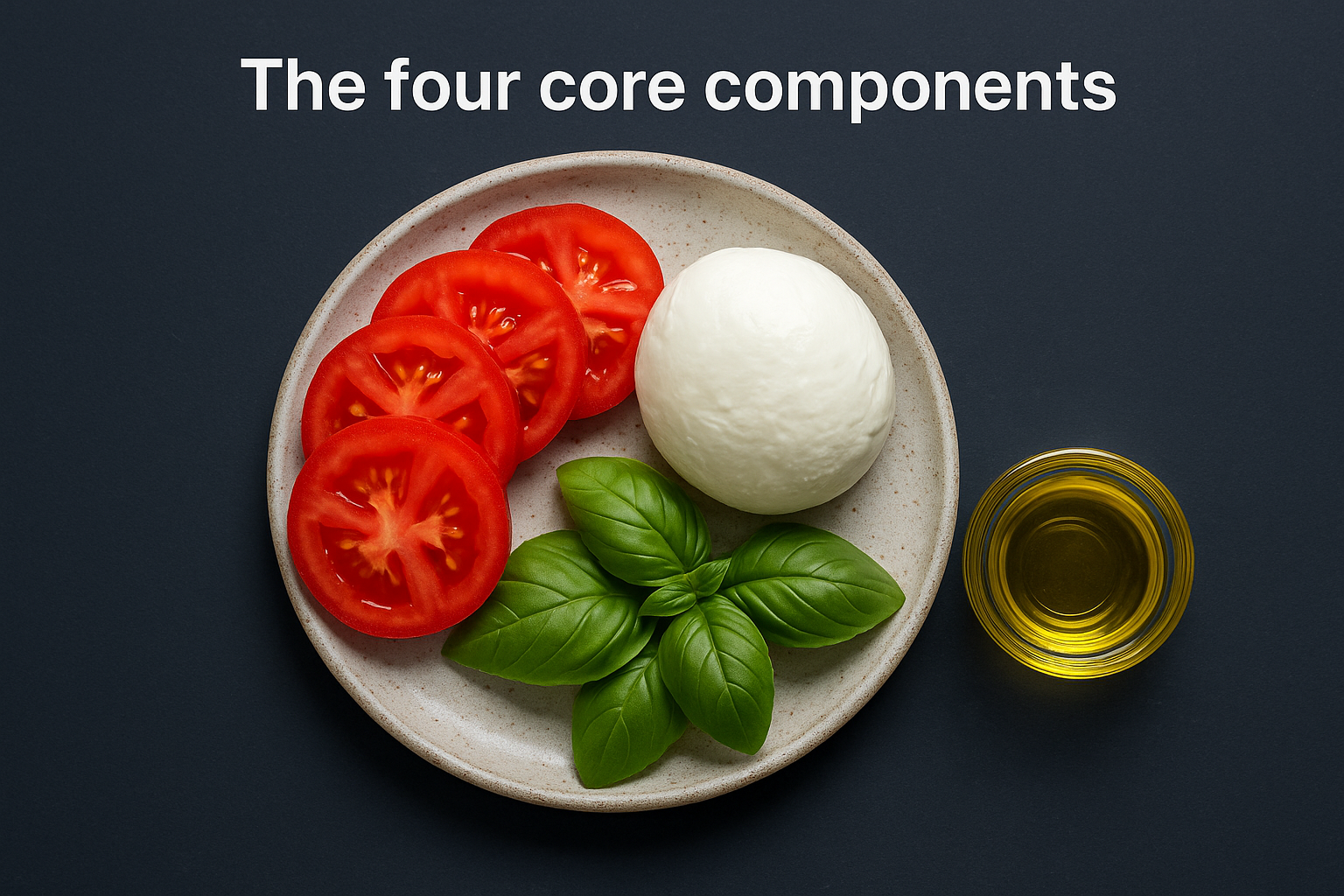
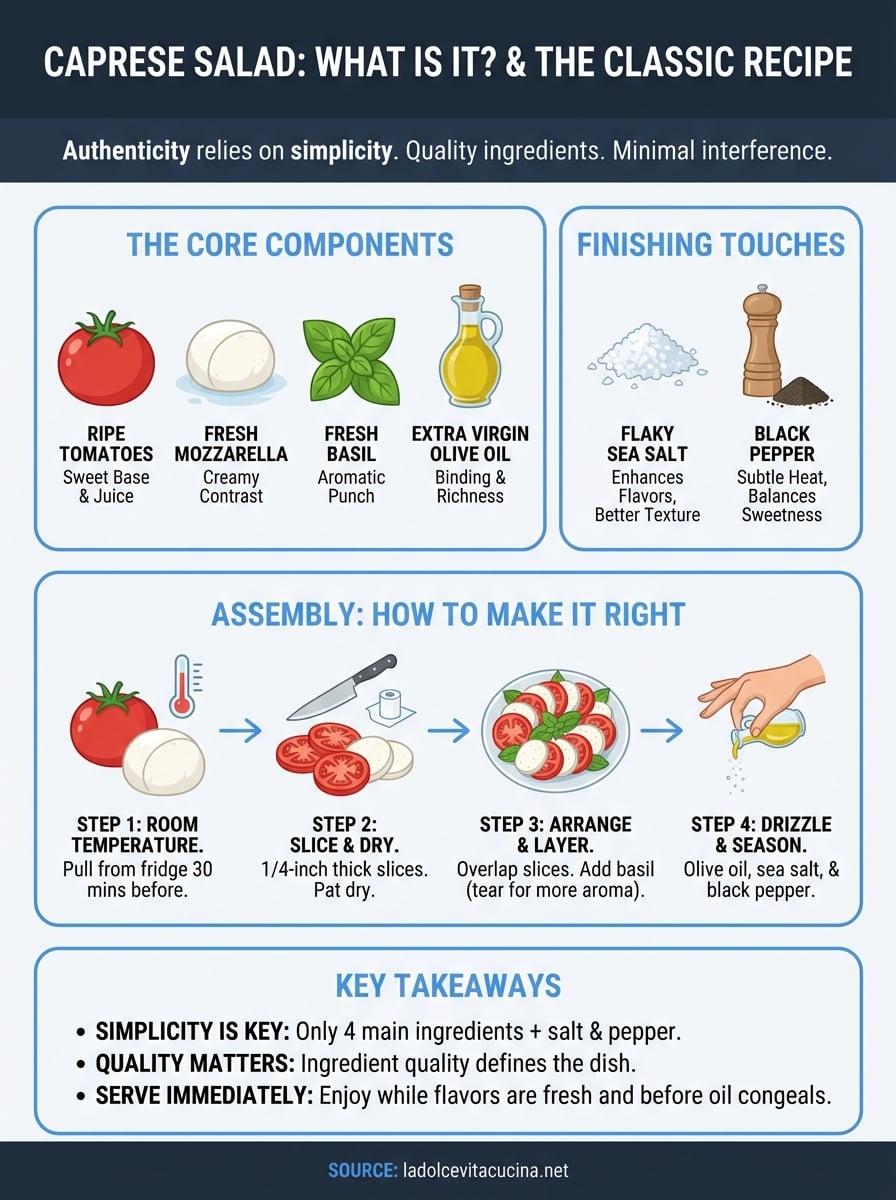
When you ask what is in a Caprese salad, you’re looking at four essential ingredients and a couple of finishing touches. The original recipe from the island of Capri keeps it minimal: ripe tomatoes, fresh mozzarella, basil leaves, and extra virgin olive oil. Salt and black pepper round out the dish. That’s the entire ingredient list. Nothing fancy, nothing fussy.
The four core components
Your shopping list stays short because authenticity relies on simplicity. Each ingredient plays a specific role, and you can’t substitute one without changing the character of the dish. The tomatoes provide sweetness and acidity, the mozzarella adds creamy richness, the basil brings aromatic freshness, and the olive oil ties everything together.
"The best Caprese salads use ingredients you can count on one hand, but each one matters."
Here’s exactly what you need:
| Ingredient | Amount (serves 2-3) | Purpose |
|---|---|---|
| Ripe tomatoes | 3-4 medium | Sweet base with juice |
| Fresh mozzarella | 8 oz (1 ball) | Creamy contrast |
| Fresh basil | 10-12 leaves | Aromatic punch |
| Extra virgin olive oil | 2-3 tablespoons | Binding and richness |
| Flaky sea salt | To taste | Enhances flavors |
| Black pepper | To taste | Subtle heat |
Seasoning and finishing touches
Salt and pepper do more work than you might expect. Flaky sea salt draws out moisture from the tomatoes, creating a natural dressing when it mixes with the olive oil. Regular table salt works, but coarse flakes give you better texture and control. Freshly cracked black pepper adds a gentle heat that balances the sweetness of peak-season tomatoes.
Some traditional recipes include a drizzle of aged balsamic vinegar, but purists skip it. The tomato juice and olive oil create enough moisture on their own. If your tomatoes taste dull or watery, balsamic can help, but truly ripe tomatoes don’t need the assist. You’re building layers of flavor, not masking poor ingredients.
How to choose the best tomatoes, mozzarella, and basil
Shopping for Caprese ingredients requires more attention than most recipes. You can’t hide behind heavy sauces or complex preparation, so every component needs to perform. When you understand what is in a Caprese salad, you realize that ingredient quality directly determines the final dish. Here’s how to pick the best options at your local market or grocery store.
Selecting ripe tomatoes
Look for tomatoes that feel heavy for their size and give slightly when you press them. Heirloom varieties work beautifully because they offer complex flavor, but standard beefsteak or vine-ripened tomatoes deliver great results too. Avoid refrigerated tomatoes at the store, they lose flavor and develop mealy texture. The skin should look smooth without soft spots or wrinkles.
"A perfectly ripe tomato smells sweet and earthy at the stem end, not like cardboard."
Color matters less than you think. Some heirloom varieties stay partially green when ripe, so trust your nose and touch over appearance alone. Peak season runs from July through September in most of the United States, though greenhouse tomatoes provide decent quality year-round.
Finding quality mozzarella
Fresh mozzarella sits in liquid, usually water or whey. Mozzarella di bufala (made from water buffalo milk) costs more but tastes richer and creamier than cow’s milk versions. You want cheese packed within the last few days. Check the production date on the container and choose the newest batch available.
Picking fresh basil
Fresh basil leaves should look vibrant green without brown edges or yellowing. Smaller leaves taste sweeter, while larger ones can develop a slightly bitter edge. The leaves should feel firm and smell intensely aromatic when you rub them between your fingers.
How to make caprese salad step by step
The actual assembly takes less than ten minutes once you understand what is in a Caprese salad. You’re arranging ingredients, not cooking them. Temperature matters more than technique here. Pull your mozzarella and tomatoes from the refrigerator 30 minutes before serving so they reach room temperature. Cold ingredients mute flavor and make the olive oil congeal slightly.
Assembly method
Start by slicing your tomatoes into 1/4-inch rounds, keeping the slices uniform so they stack evenly. Cut the mozzarella into similar thickness. Thicker slices hold up better and provide more contrast against the tomatoes. Pat both the tomatoes and cheese dry with paper towels to remove excess moisture that would dilute your dressing.
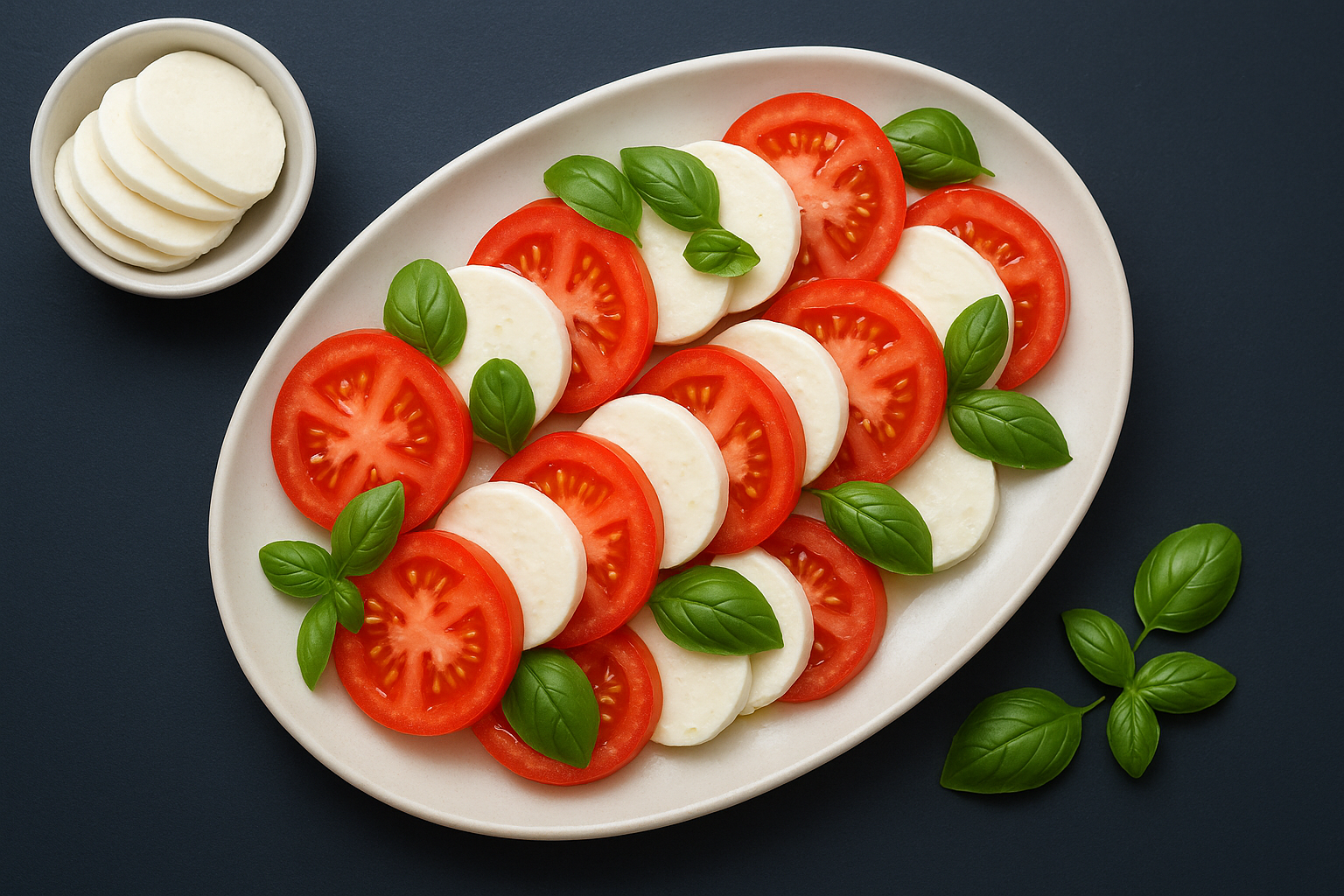
Arrange the slices on a serving platter in one of two ways:
- Traditional overlap: Alternate tomato and mozzarella slices in a single row or circular pattern, overlapping each piece slightly
- Stacked method: Place a mozzarella slice directly on top of each tomato slice, then add basil
- Clustered style: Group 3-4 tomato slices together, then 3-4 mozzarella slices, creating distinct sections
Tuck whole basil leaves between the slices or tear them and scatter over the top. Tearing releases more oils than cutting with a knife.
"Room temperature ingredients let you taste the actual flavor instead of just cold."
Finishing and plating
Drizzle the olive oil over everything in a zigzag pattern, using 2-3 tablespoons for a standard platter. Sprinkle flaky sea salt and crack fresh black pepper directly over the top. Serve immediately while the salt draws out the tomato juices.
Optional add-ons and variations that work
While you now know what is in a Caprese salad at its core, a few strategic additions can elevate the dish without compromising its identity. These variations respect the original simplicity while introducing new textures or flavor dimensions. You’re not reinventing the recipe, just expanding it thoughtfully.
Flavor additions that enhance
Aged balsamic vinegar adds sweetness and acidity when your tomatoes need help. Drizzle one teaspoon of thick, syrupy balsamic over the finished salad, not the watery grocery store version. Balsamic glaze works too, though it tastes sweeter. Fresh garlic provides punch without overpowering, slice one small clove paper-thin and tuck pieces between the tomato slices.
"The best additions complement the core ingredients instead of competing with them."
Other options include:
- Prosciutto: Drape thin slices over the salad for salty, meaty contrast
- Arugula or microgreens: Add peppery bite underneath the tomatoes
- Pine nuts or walnuts: Toast them first, then scatter on top for crunch
- Lemon zest: Grate sparingly over the finished dish for brightness
Seasonal variations
Winter tomatoes lack flavor, so consider burrata instead of regular mozzarella. The creamy center creates richness that compensates for less sweet produce. Roasted cherry tomatoes work when fresh tomatoes taste bland, roast them at 400°F for 15 minutes until they caramelize slightly. Grilled peaches replace tomatoes entirely during stone fruit season, their sweetness pairs beautifully with mozzarella and basil.
What to serve with caprese salad and common mistakes
Understanding what is in a Caprese salad helps you pair it correctly and avoid the errors that ruin otherwise perfect ingredients. This dish works as an appetizer, side, or light main course, depending on what you serve alongside it. The simplicity means small mistakes become obvious, so you need to know where most home cooks go wrong before you start slicing.
Pairing suggestions
Serve Caprese salad with crusty Italian bread to soak up the olive oil and tomato juices that pool on the plate. Grilled chicken or fish work as protein additions without overwhelming the fresh flavors. Prosciutto-wrapped melon makes an excellent companion appetizer, or pair it with pasta dishes like cacio e pepe or aglio e olio.
Other successful pairings include:
- Bruschetta or crostini for textural contrast
- Grilled vegetables (zucchini, eggplant, bell peppers)
- Light white wines like Pinot Grigio or Vermentino
- Soup such as minestrone or pasta e fagioli for a fuller meal
Mistakes to avoid
Refrigerating your ingredients until the last second kills flavor and creates watery, tasteless results. Cold mozzarella tastes like rubber, and chilled tomatoes lose their aromatic compounds. Using dried basil instead of fresh completely changes the dish, dried herbs lack the bright, peppery notes that make Caprese work.
"The biggest mistake is treating Caprese like a recipe that needs fixing instead of a showcase for quality ingredients."
Other common errors include cutting ingredients too thin (they fall apart), drowning everything in balsamic vinegar (the tomatoes get lost), or using pre-shredded mozzarella (it contains anti-caking agents that prevent proper texture).
A simple caprese takeaway
You now know exactly what is in a Caprese salad: ripe tomatoes, fresh mozzarella, basil, quality olive oil, and basic seasoning. The recipe demands minimal effort but maximum attention to ingredient quality. Room temperature components, proper slicing technique, and restraint with additions create the difference between an average arrangement and an authentic Italian experience that honors the dish’s origins on the island of Capri.
When you source peak-season tomatoes and genuine fresh mozzarella, the dish assembles itself in minutes. Skip the unnecessary variations that dilute the original vision and focus on what matters. Trust that simplicity works when you respect each ingredient’s role and refuse to overcomplicate what’s meant to stay pure and straightforward.
If you want to experience how professional kitchens handle these classic Italian fundamentals, visit us at La Dolce Vita Cucina in Chicago’s Portage Park neighborhood. Our kitchen showcases the same philosophy you’ve learned here: quality ingredients prepared with care and deep respect for Italian tradition. Book your table and taste the difference proper technique makes.