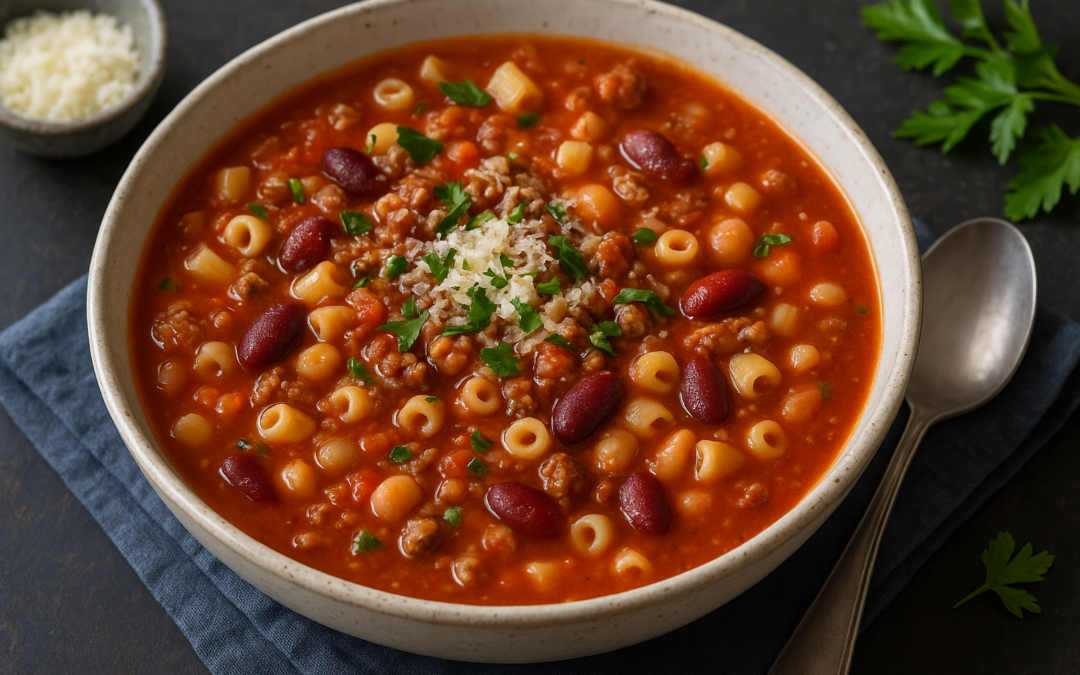
Pasta e fagioli is one of those dishes that proves the best Italian food comes from the simplest ingredients. A pot of beans, a handful of pasta, a good soffritto, that’s the foundation. At La Dolce Vita Cucina, our kitchen in Chicago’s Portage Park neighborhood celebrates exactly this kind of cooking: rustic Italian recipes built on quality and tradition. So when guests ask us how to make pasta e fagioli soup at home, we’re always happy to share what we know.
This recipe draws inspiration from the popular Olive Garden version, a slightly thicker, meat-sauce-style take that’s become a weeknight staple in homes across the country. It’s not the only way to make it (every Italian grandmother has her own), but it’s approachable, satisfying, and genuinely hard to mess up. We’ve refined the method with a few tips from our own kitchen experience to help you get a better result without any extra hassle.
Below, you’ll find a complete step-by-step walkthrough, from building the flavor base to getting the pasta-to-bean ratio right. Whether you’re making a big batch for the family or meal-prepping for the week, this guide covers everything you need to nail it on the first try.
What pasta e fagioli is and what you need
Pasta e fagioli (pronounced "pasta eh fah-JOH-lee") translates literally to "pasta and beans." It’s a Central and Southern Italian staple that dates back centuries, originally a peasant dish built to stretch cheap pantry ingredients into a filling meal. The Olive Garden version leans on a tomato-based broth with ground beef, ditalini pasta, kidney beans, cannellini beans, and a generous hit of Italian seasoning. It’s thicker and meatier than the traditional Roman style, which tends to be brothier and skips the meat entirely. Both versions are worth knowing, but this guide focuses on the richer, crowd-pleasing take.
The difference between a flat soup and a great pasta e fagioli comes down to building flavor in layers: fat, aromatics, tomato, and broth, in that order.
Knowing what you’re working with before you start is how you make pasta e fagioli soup that tastes like it came from a real kitchen. Once you have your ingredients staged and measured, the cooking moves quickly and there’s very little room to go wrong.
The ingredient list
You’ll need basic pantry staples alongside a few fresh aromatics. Everything on the list below is available at any standard grocery store, and nothing requires a specialty shop or Italian market. This batch yields around six generous servings.
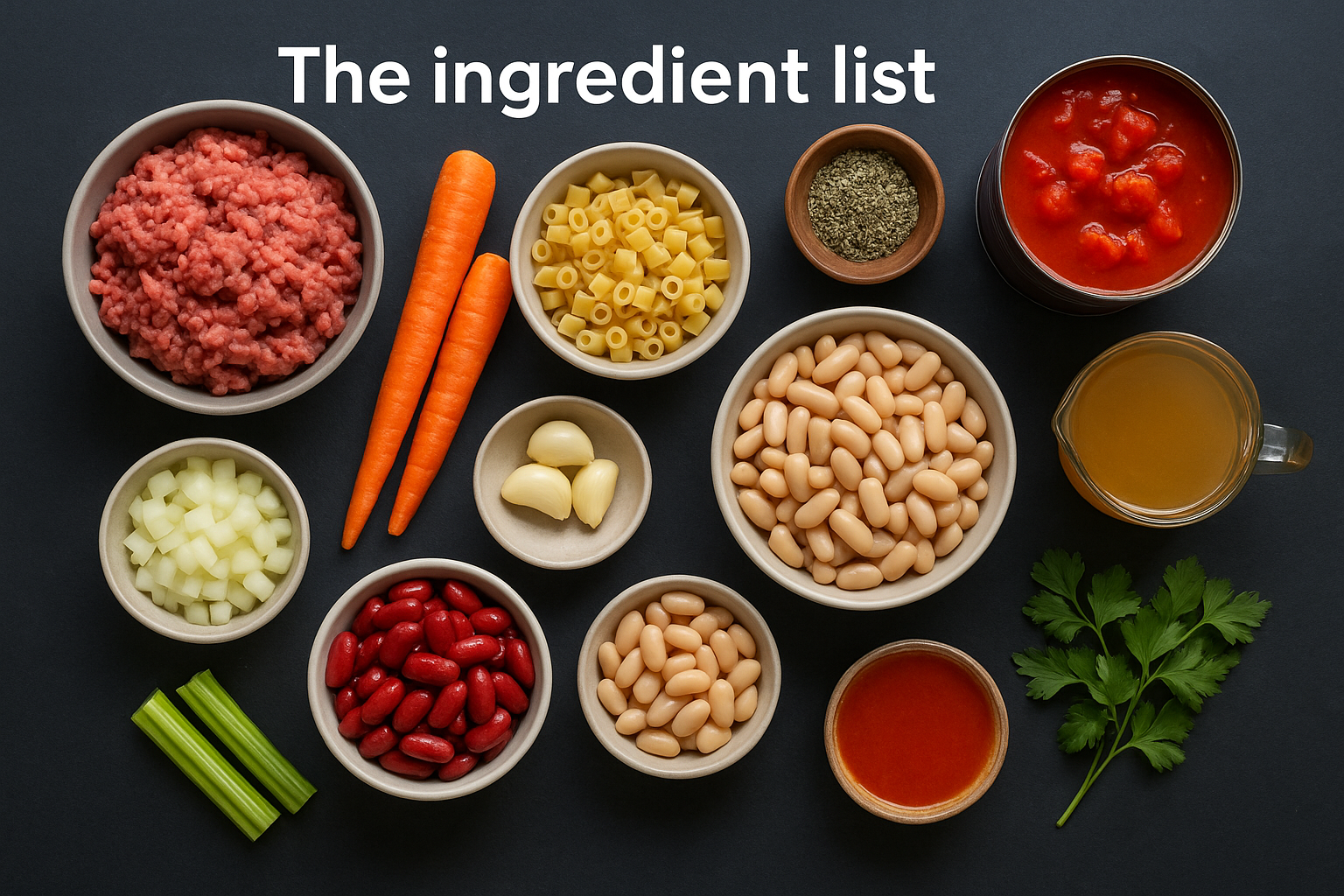
| Ingredient | Quantity |
|---|---|
| Lean ground beef or Italian sausage | 1 lb |
| Olive oil | 2 tbsp |
| Yellow onion, diced | 1 medium |
| Carrots, diced | 2 medium |
| Celery stalks, diced | 2 stalks |
| Garlic cloves, minced | 3 cloves |
| Canned diced tomatoes | 1 can (14.5 oz) |
| Tomato sauce | 1 can (15 oz) |
| Chicken or beef broth | 4 cups |
| Cannellini beans, drained | 1 can (15 oz) |
| Red kidney beans, drained | 1 can (15 oz) |
| Ditalini pasta, dry | 1 cup |
| Italian seasoning | 1½ tsp |
| Salt and black pepper | To taste |
| Fresh parsley | For garnish (optional) |
Swap the ground beef for mild or hot Italian sausage if you want more seasoning depth right out of the package. You can also skip the meat entirely for a vegetarian version; the beans provide enough body to hold the soup together. One thing you should not change is the pasta shape: ditalini’s small tube structure holds up in the broth without turning to mush as fast as larger pasta does.
Step 1. Brown meat and sauté the vegetables
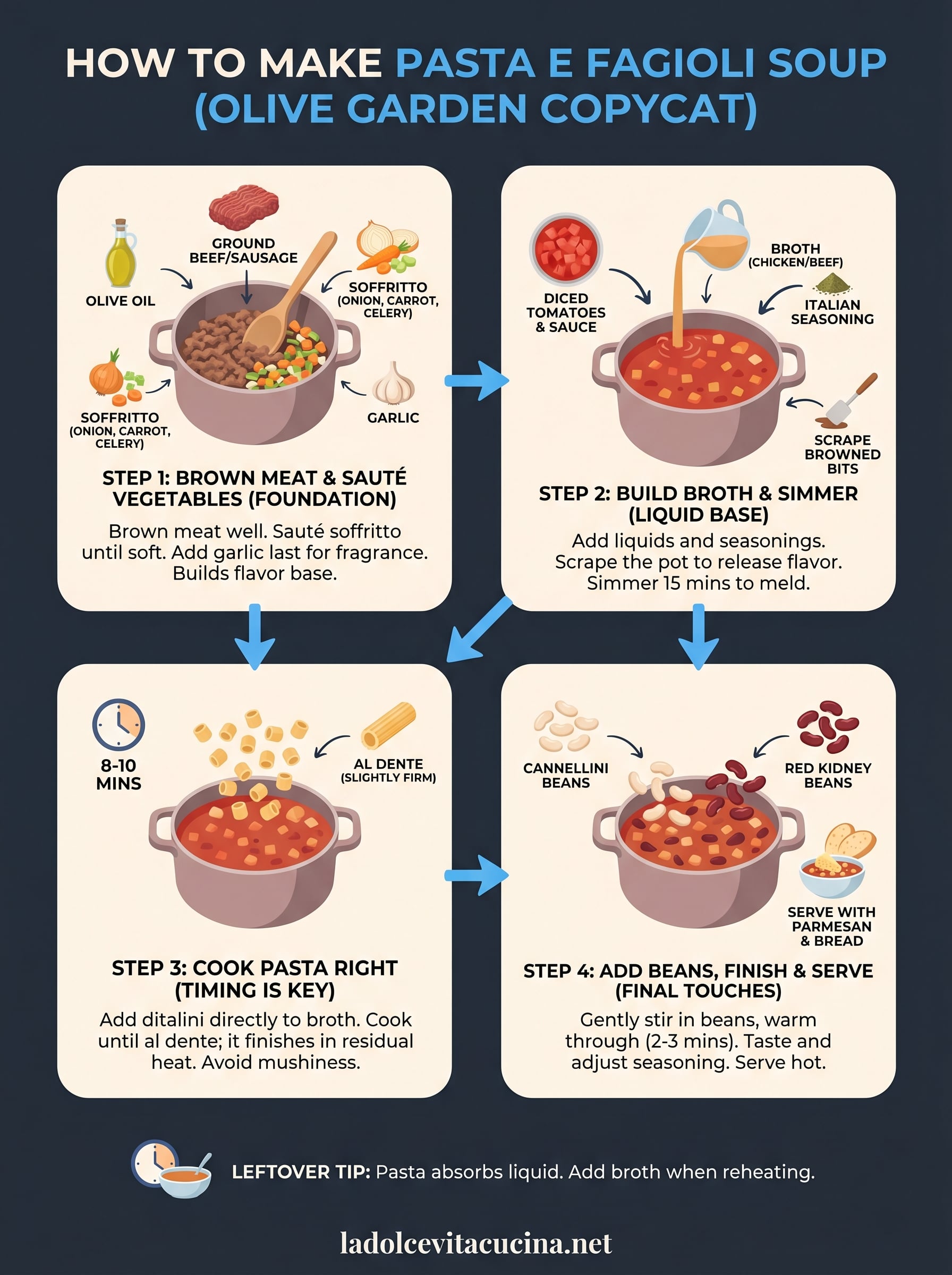
This first step sets the flavor foundation for the entire soup. Building a proper sear on the meat and a solid soffritto are the two things that separate a flat bowl from one with real depth. When you learn how to make pasta e fagioli soup well, this step is where most of the work actually happens.
Rushing through the browning and skipping a proper soffritto are the two most common reasons homemade pasta e fagioli tastes flat.
Brown the meat first
Heat 2 tablespoons of olive oil in a large Dutch oven or heavy-bottomed pot over medium-high heat. Add your ground beef or Italian sausage and break it apart with a wooden spoon. Cook for 5 to 7 minutes, stirring occasionally, until you see deep brown color on the meat, not just grey. Drain excess fat if needed, but leave a thin layer in the pot to carry flavor into the next step.
Soffritto: onion, carrot, and celery
Reduce the heat to medium and add your diced onion, carrot, and celery directly to the pot with the browned meat. Cook for 4 to 5 minutes until the vegetables soften and the onion turns translucent. Add your minced garlic and cook for another 60 seconds, stirring constantly, until fragrant. Do not let the garlic brown or it will turn bitter.
Watch for these signs that your soffritto is ready before moving on:
- Onion looks translucent and soft, not raw white
- Carrots have softened slightly but still hold their shape
- Garlic smells fragrant without any dark browning around the edges
Step 2. Build the tomato broth and simmer
With your meat and soffritto ready, you’re now going to layer in the tomatoes and broth to create the soup’s base. This step is where the flavors from Step 1 start working together as a unified dish. If you want to understand how to make pasta e fagioli soup that tastes like it simmered all day, getting this stage right matters more than most people expect.
Add the tomatoes and broth
Pour the canned diced tomatoes and tomato sauce directly into the pot with your meat and vegetables. Stir everything together and scrape any browned bits off the bottom of the pot. Those bits carry concentrated flavor, and you want them dissolved into the liquid, not stuck to the pan.
Don’t skip scraping the pot bottom after adding liquid; those browned bits hold a significant portion of the soup’s depth.
Add 4 cups of chicken or beef broth and your Italian seasoning. Stir once more to combine everything evenly. Chicken broth gives a lighter finish, while beef broth adds a deeper color and richer result overall.
Simmer until flavors come together
Bring the pot to a gentle boil over medium-high heat, then reduce immediately to a low simmer. Let it cook uncovered for 15 minutes, stirring occasionally. The soup will thicken slightly as the tomatoes break down and the broth absorbs the seasoning from the meat and vegetables. Taste after 10 minutes and adjust salt and pepper as needed before you move to the pasta step.
Step 3. Cook pasta right so it stays al dente
Pasta is the element most people get wrong when learning how to make pasta e fagioli soup. Add it too early and it turns to mush. Add it too late and it absorbs no flavor from the broth. The timing of when you add the pasta and how long you cook it make a bigger difference here than in almost any other soup.
Add pasta at the right time
Once your broth has simmered for 15 minutes, bring the pot back to a medium boil. Add 1 cup of dry ditalini directly into the soup, not in a separate pot. Cooking it in the broth lets it absorb flavor as it cooks, which builds a better-tasting bowl.
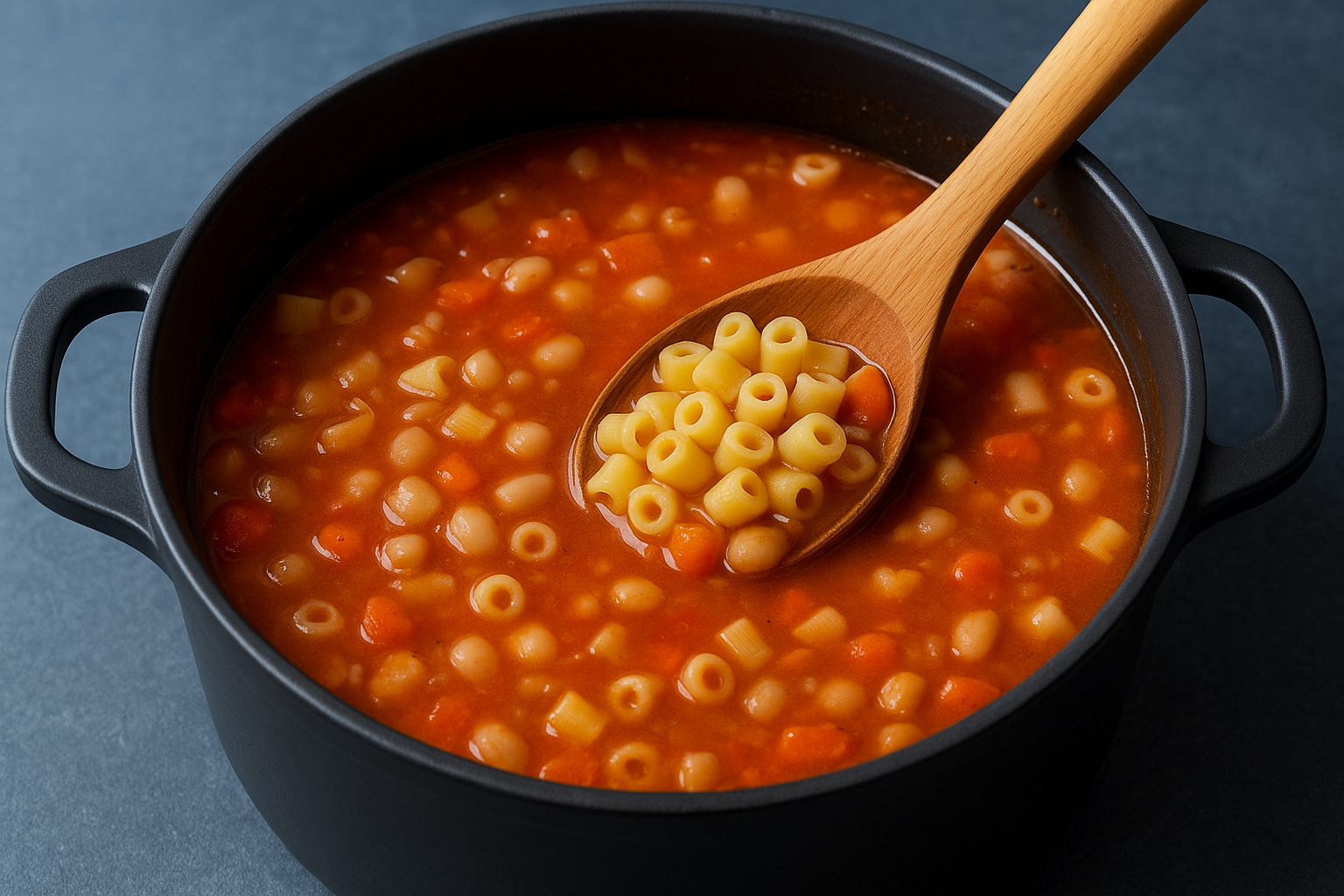
Cooking pasta directly in the soup gives it far more flavor than boiling it separately and adding it in later.
Stir the pot every minute or two to prevent the ditalini from sticking to the bottom. Cook for 8 to 10 minutes and start checking for doneness at the 8-minute mark rather than waiting until the full time is up.
Pull it just before it’s fully cooked
Your pasta should still have a slight firmness at the center when you take the pot off the heat. The residual heat in the soup will finish it. If you let it cook to fully soft, it will be overcooked and bloated by the time it reaches the table.
Signs your pasta is ready to come off the heat:
- Center has slight resistance when you bite a piece
- Broth has thickened visibly around the pasta
- Pasta looks slightly underdone compared to package directions
Step 4. Add beans, finish, and season
With the pasta just shy of done, you’re in the final stretch of learning how to make pasta e fagioli soup correctly. This last step brings everything together: the beans add body, and a careful seasoning pass makes sure every element is in balance before the soup reaches the bowl.
Stir in the beans
Add your drained cannellini beans and red kidney beans directly to the pot and stir them in gently. The cannellini bring a creamy, mild texture while the kidney beans hold their shape and add a slightly firmer bite. Cook for 2 to 3 minutes over low heat, just long enough to warm the beans through without breaking them down.
Stirring too aggressively after adding the beans will cause them to break apart and turn the broth cloudy, so use a light hand here.
Taste and adjust the seasoning
This is your last chance to correct the soup before serving, so take it seriously. Taste the broth directly and check for salt, pepper, and seasoning balance. If it tastes flat, a pinch of salt usually solves it. If it tastes one-dimensional, a small splash of olive oil stirred in at the end adds richness.
Use this quick checklist before you serve:
- Broth tastes savory and well-seasoned, not watery
- Pasta is tender but not mushy
- Beans are warm throughout and mostly intact
Enjoy now and save some for later
Now that you know how to make pasta e fagioli soup from start to finish, serve it hot with a drizzle of good olive oil and a generous handful of freshly grated Parmesan on top. A thick slice of crusty bread on the side turns this into a complete, satisfying meal without any extra effort.
Store leftovers in an airtight container in the refrigerator for up to four days. The pasta will continue to absorb liquid as it sits, so the soup thickens considerably overnight. Add a splash of broth or water when reheating to loosen it back to the right consistency. For longer storage, freeze the soup without the pasta and cook a fresh batch of ditalini when you’re ready to serve.
If this recipe has you craving more authentic Italian cooking, come experience the real thing at La Dolce Vita Cucina, right in Chicago’s Portage Park neighborhood.