
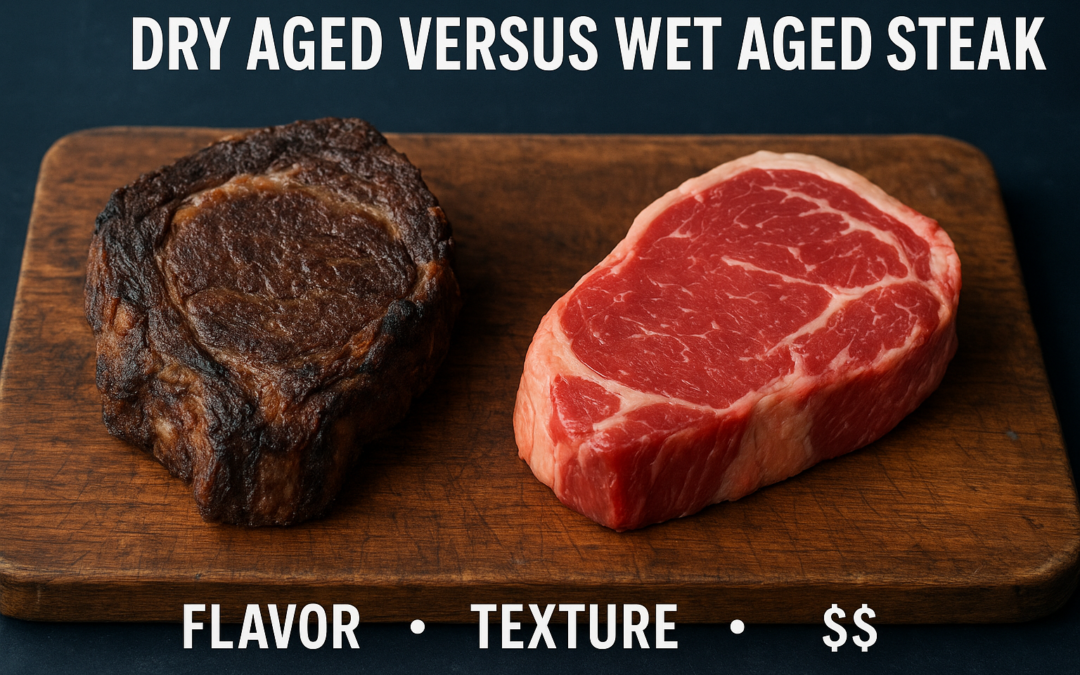
Walk into any quality steakhouse, and you’ll likely encounter a choice that separates casual diners from true beef enthusiasts: dry aged versus wet aged steak. Both methods transform a good cut into something exceptional, yet they produce remarkably different results on your plate. At La Dolce Vita Cucina, where our kitchen takes pride in serving premium cuts like our 16oz Ribeye, understanding these distinctions matters, both to us and to the guests we serve in Chicago’s Portage Park neighborhood.
The aging process fundamentally changes beef at a molecular level, affecting everything from tenderness to taste. Dry aging concentrates flavors through controlled dehydration, while wet aging uses vacuum-sealed environments to achieve tenderness without moisture loss. Each method carries its own price point, timeline, and flavor profile.
This guide breaks down exactly what happens during each aging process, how those changes translate to your dining experience, and which option delivers the best value for different occasions.
Why steak aging changes flavor and tenderness
Your steak undergoes a controlled transformation during aging that fundamentally alters its structure. Enzymes naturally present in beef begin breaking down muscle fibers and connective tissue the moment butchering occurs. This process, called enzymatic breakdown, continues for weeks under the right conditions, softening tough proteins into something your fork cuts through with ease. The aging environment determines whether you’re getting dry aged versus wet aged steak characteristics, but both rely on this same biological foundation.
Proper aging converts complex proteins into simpler amino acids, creating the tender, flavorful bite you associate with premium steakhouse cuts.
Temperature control matters more than you might expect. Meat aged between 34°F and 38°F allows enzymes to work without encouraging bacterial growth that would spoil your dinner. During this window, calpain enzymes specifically target the proteins holding muscle fibers together, while cathepsin enzymes break down collagen into gelatin.
The enzyme breakdown process
Protease enzymes work systematically through your steak’s structure, converting rigid muscle fibers into tender tissue. Calpains attack within the first week, making the most dramatic impact on texture during this initial period. These enzymes break down myofibrillar proteins, which give raw meat its characteristic toughness when you try to chew through an unaged cut.
Cathepsins require longer aging periods to produce noticeable effects, working steadily on connective tissues that calpains can’t touch. This extended breakdown explains why 21-day aged beef tastes noticeably different from 45-day aged options, even though the initial tenderization happens quickly.
Moisture and concentration effects
Water loss during aging intensifies beef flavor in ways that surprise first-time tasters. Dry aging removes up to 30% of a cut’s original weight through evaporation, concentrating the remaining proteins and fats into a smaller package. Wet aging preserves moisture content, keeping your steak’s weight stable while enzymes still tenderize the meat internally.
Fat oxidation adds nutty, complex notes that develop only with exposure to air, giving dry aged cuts their distinctive taste profile that wet aged versions can’t replicate.
How dry aging works and what it tastes like
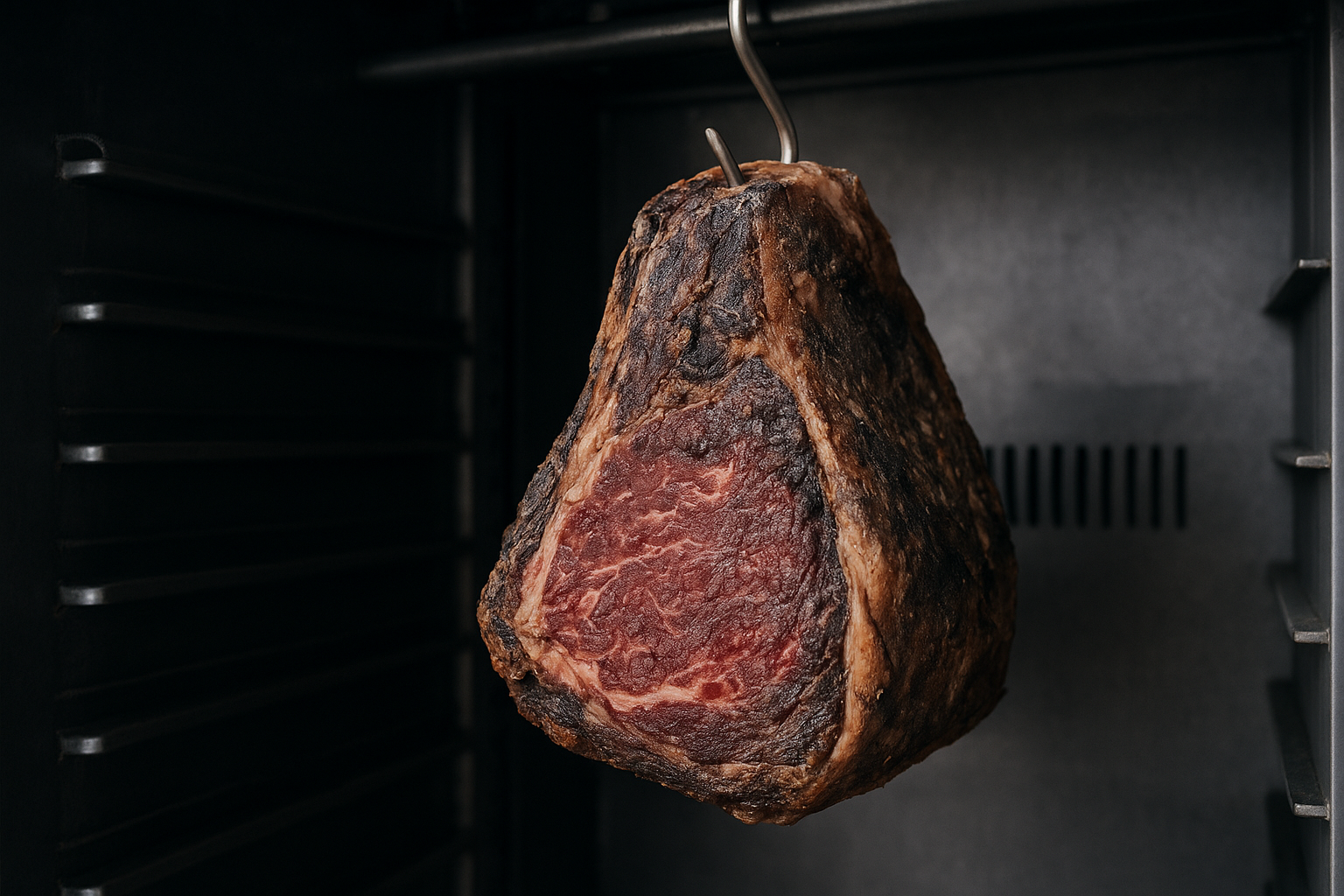
Dry aging exposes your beef to controlled airflow in a dedicated refrigeration unit where temperature stays between 34°F and 38°F, while humidity hovers around 85%. Butchers hang whole primal cuts or large subprimals in this environment for anywhere from 14 to 60 days, allowing the surface to form a protective crust while the interior transforms. This method defines one side of the dry aged versus wet aged steak debate, producing results that command premium prices at restaurants like ours.
The controlled exposure process
Air circulation around your steak removes moisture from the exterior, creating a dark, hardened bark that butchers trim away before cooking. This outer layer sacrifices itself to protect the interior meat while concentration occurs. The process requires dedicated equipment and constant monitoring, as temperature fluctuations or humidity spikes can ruin an entire batch through unwanted bacterial growth.
You’ll lose 15% to 30% of the original weight through evaporation, which explains the higher cost per pound when buying dry aged cuts.
Extended exposure to air allows beneficial mold to develop on the surface, contributing earthy, complex flavors that penetrate the meat.
Flavor profile of dry aged beef
Your palate encounters intense, concentrated beef flavor with nutty undertones and a slightly funky edge that some describe as blue cheese-like. Fat oxidation creates these distinctive notes, developing compounds that fresh beef simply doesn’t possess. The texture becomes noticeably tender while maintaining a firmer bite than wet aged alternatives, giving each piece more character on your fork.
How wet aging works and what it tastes like
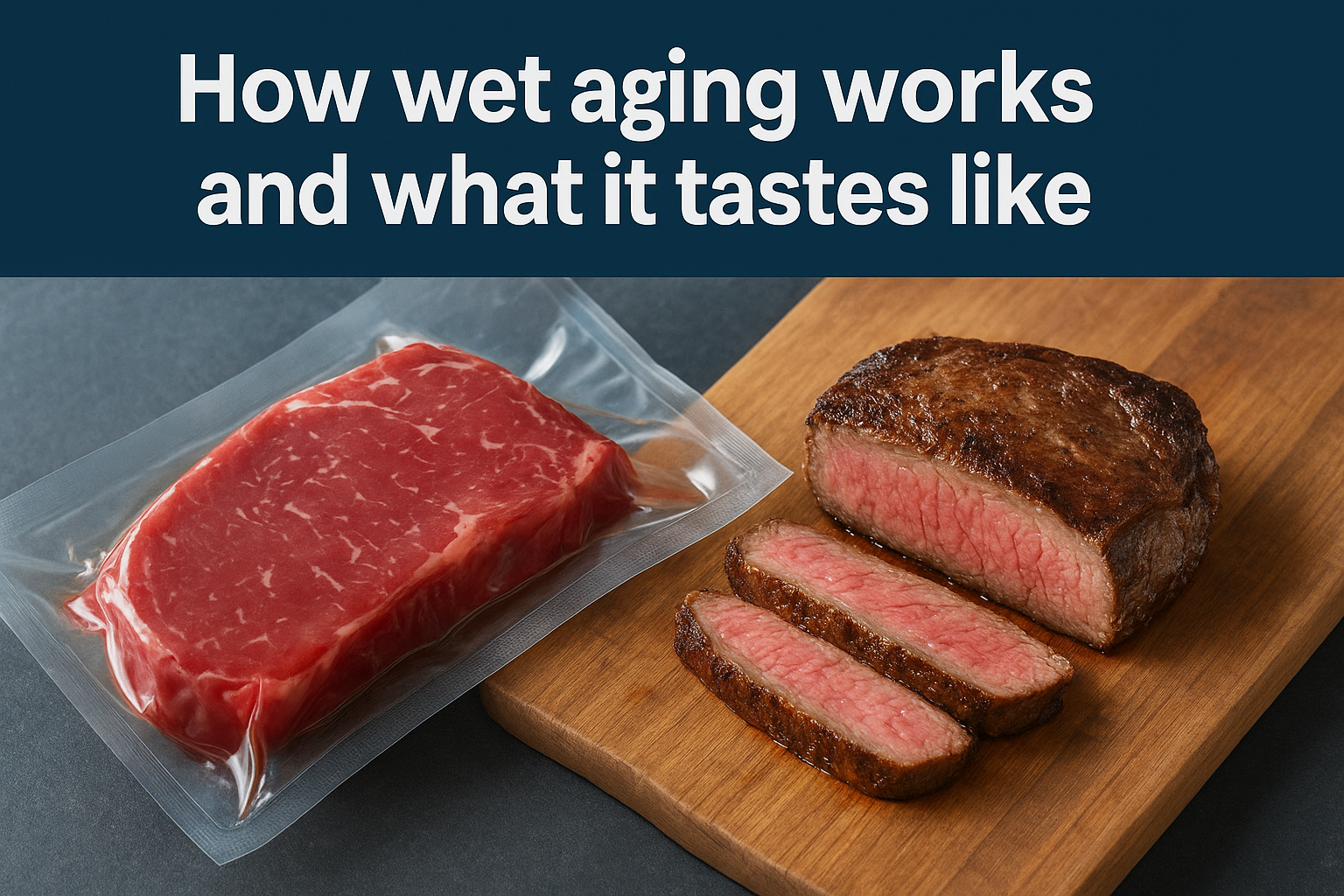
Wet aging seals your beef in vacuum-packed plastic immediately after butchering, trapping all natural moisture inside while enzymes still break down proteins. Butchers place these packages in refrigerated storage at 34°F to 38°F for 7 to 28 days, letting time do the work without any exposure to air. This method represents the other side of the dry aged versus wet aged steak comparison, delivering tenderness without the weight loss and complexity that dry aging requires.
The vacuum-sealed environment
Your steak ages in its own juices, maintaining every drop of moisture present at packaging. This sealed environment prevents oxidation, so you won’t get the funky, concentrated flavors that develop during dry aging. The lack of airflow eliminates evaporation, meaning butchers don’t need to trim away any hardened exterior before selling or cooking your cut.
Wet aging preserves the original weight and mild flavor profile while still allowing enzymatic tenderization to occur naturally.
Flavor profile of wet aged beef
You’ll taste clean, straightforward beef flavor without the intense concentration or nutty notes that characterize dry aged cuts. The texture stays soft and juicy, with moisture retained throughout each bite rather than concentrated into a denser package. Wet aged steaks deliver a bright, fresh quality that appeals to diners who prefer subtle beef taste without the acquired flavor complexity that develops through air exposure.
How to choose between dry and wet aged steak
Your decision between dry aged versus wet aged steak depends on personal taste preferences and the dining experience you’re after. Dry aged cuts suit adventurous eaters who appreciate bold, concentrated flavors with nutty complexity, while wet aged options appeal to those who prefer clean, straightforward beef taste without acquired notes. Consider both your palate and the specific occasion when making your selection.
Match aging method to your taste preferences
You’ll want dry aged beef if intense, funky flavors excite your taste buds and you enjoy steakhouse experiences that emphasize depth over subtlety. First-time tasters often find dry aged meat polarizing, with some immediately loving the concentrated character while others need time to appreciate its complexity. Wet aged steaks deliver consistent, familiar beef flavor that rarely disappoints, making them the safer choice when cooking for guests whose preferences you don’t know well.
Dry aging produces acquired tastes that reward adventurous diners, while wet aging maintains the approachable flavor profile most people expect from quality beef.
Consider the occasion and preparation
Special celebrations warrant dry aged cuts that create memorable dining moments through their distinctive character and premium positioning. Everyday meals benefit from wet aged beef, which costs less per pound while still delivering tender, satisfying results. Simple preparations like salt and pepper grilling showcase dry aged complexity better, whereas marinades and heavy sauces pair well with wet aged steaks that won’t compete with bold seasonings you add during cooking.
Cost, safety, and storage questions
Your wallet feels the impact of aging method more than you might expect. Dry aged steaks cost 20% to 50% more than comparable wet aged cuts because of weight loss during processing and the specialized equipment butchers require. Storage requirements and shelf life also differ significantly between methods, affecting both retailers and home cooks who want to maintain quality after purchase.
Price differences you’ll encounter
Expect to pay $18 to $30 per pound for dry aged ribeye versus $12 to $20 for wet aged versions at quality butcher shops. The price gap exists because dry aging sacrifices 15% to 30% of the original weight, forcing sellers to charge more per remaining pound to cover their costs. Restaurants pass these expenses to diners, which explains why dry aged versus wet aged steak selections on menus often show $10 to $15 price differences for identical cuts and portions.
Safety and storage considerations
Both methods remain safe when handled properly, though dry aging requires expert monitoring to prevent harmful bacterial growth that vacuum sealing naturally prevents. You can store vacuum-sealed wet aged beef in your refrigerator for 7 to 10 days after opening, while dry aged cuts need cooking within 3 to 5 days once the protective crust gets trimmed. Never attempt dry aging at home without proper equipment, as temperature and humidity fluctuations create serious food safety risks that commercial facilities avoid through constant monitoring.
Home refrigerators lack the precise environmental controls necessary for safe dry aging, making wet aged beef the only responsible choice for aging beef yourself.
Final take for your next steak night
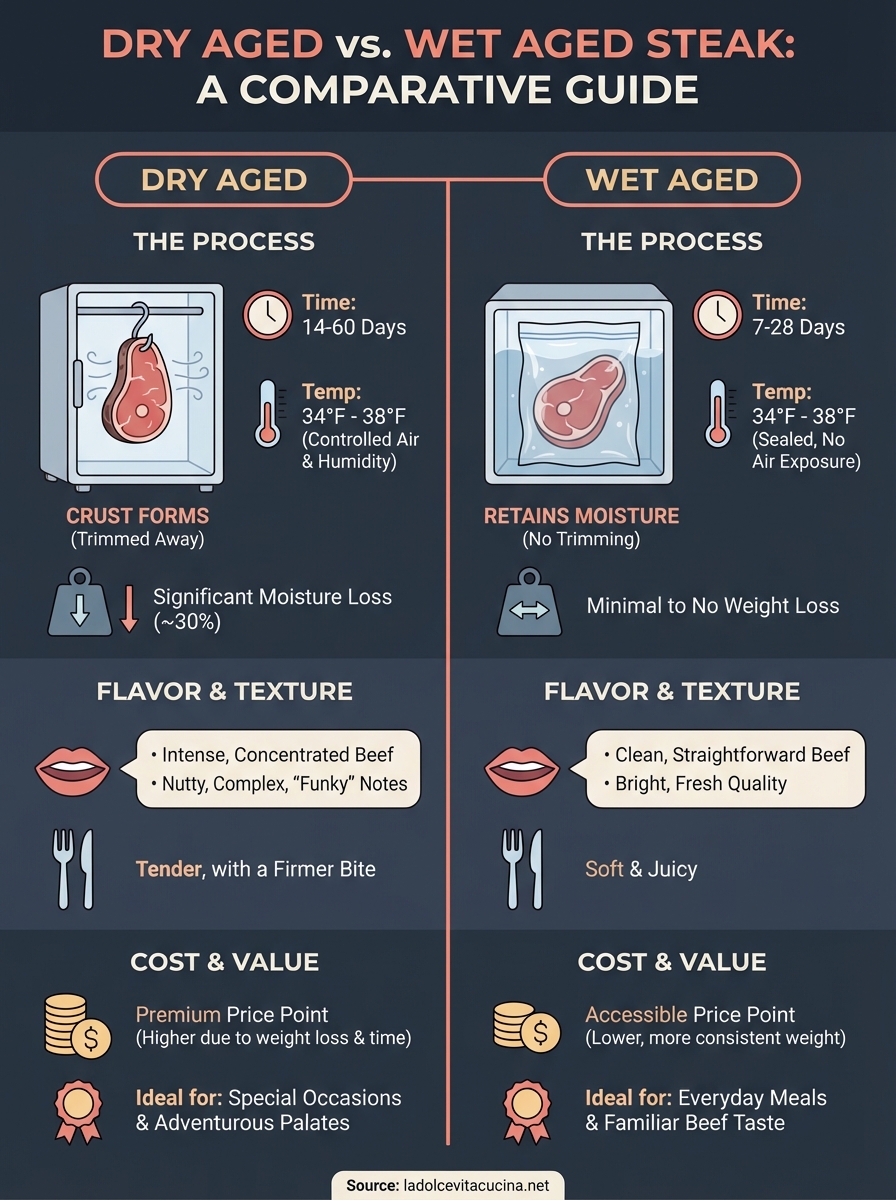
Your choice between dry aged versus wet aged steak ultimately comes down to personal preference and budget. Dry aged cuts deliver bold, concentrated flavors with nutty complexity that commands premium prices, while wet aged options provide tender, approachable beef taste at more accessible costs. Both methods transform good beef into exceptional dining experiences through natural enzymatic processes that require time and proper temperature control.
Understanding these differences empowers you to order confidently at restaurants and select cuts wisely at butcher shops. Quality matters more than aging method when you start with inferior beef, so seek out establishments that prioritize their sourcing and preparation. The aging process means nothing without proper handling from farm to table, which separates memorable meals from disappointing ones.
Ready to experience expertly prepared aged beef in a welcoming atmosphere? Visit La Dolce Vita Cucina in Chicago’s Portage Park neighborhood, where our kitchen serves premium cuts like our 16oz Ribeye alongside authentic Italian cuisine that celebrates the sweet life through every carefully crafted dish.