
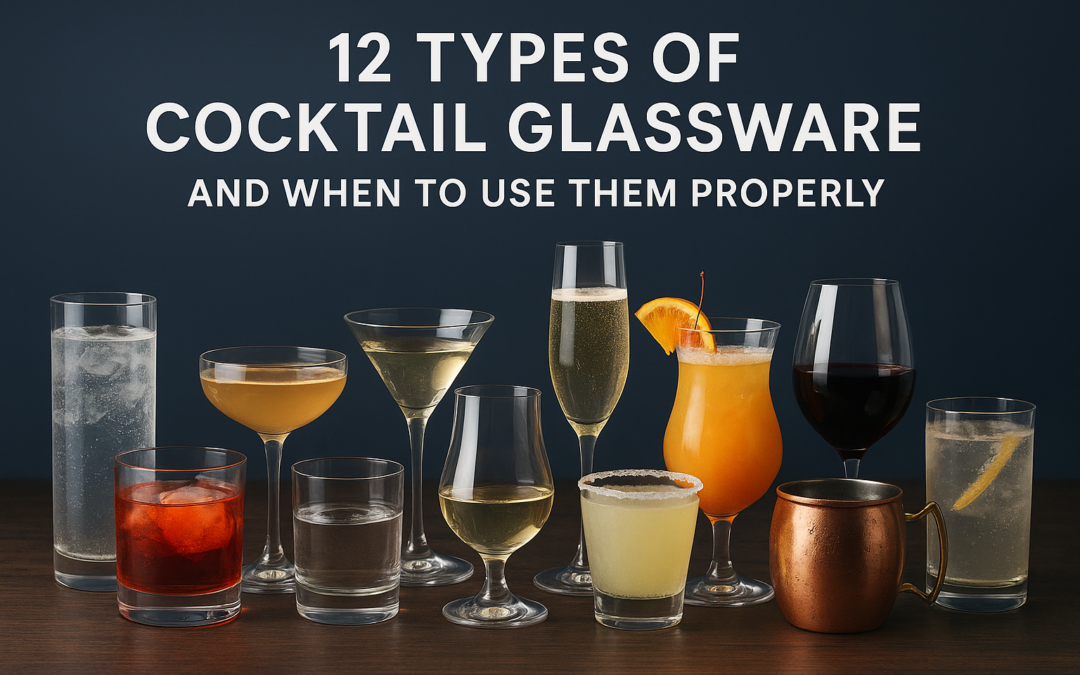
The glass holding your drink matters more than most people realize. At La Dolce Vita Cucina, where we craft Italian-inspired cocktails alongside our cuisine in Chicago’s Portage Park neighborhood, we’ve seen firsthand how the right vessel transforms a simple pour into a complete experience. Understanding types of cocktail glassware isn’t just bartender trivia, it’s the difference between a drink that looks amateur and one that feels intentional from the first sip.
Each glass shape serves a specific purpose, from preserving carbonation to concentrating aromas or simply keeping your drink at the perfect temperature. Whether you’re stocking a home bar, ordering confidently at a restaurant, or just curious why your martini never comes in a pint glass, knowing your stemware matters.
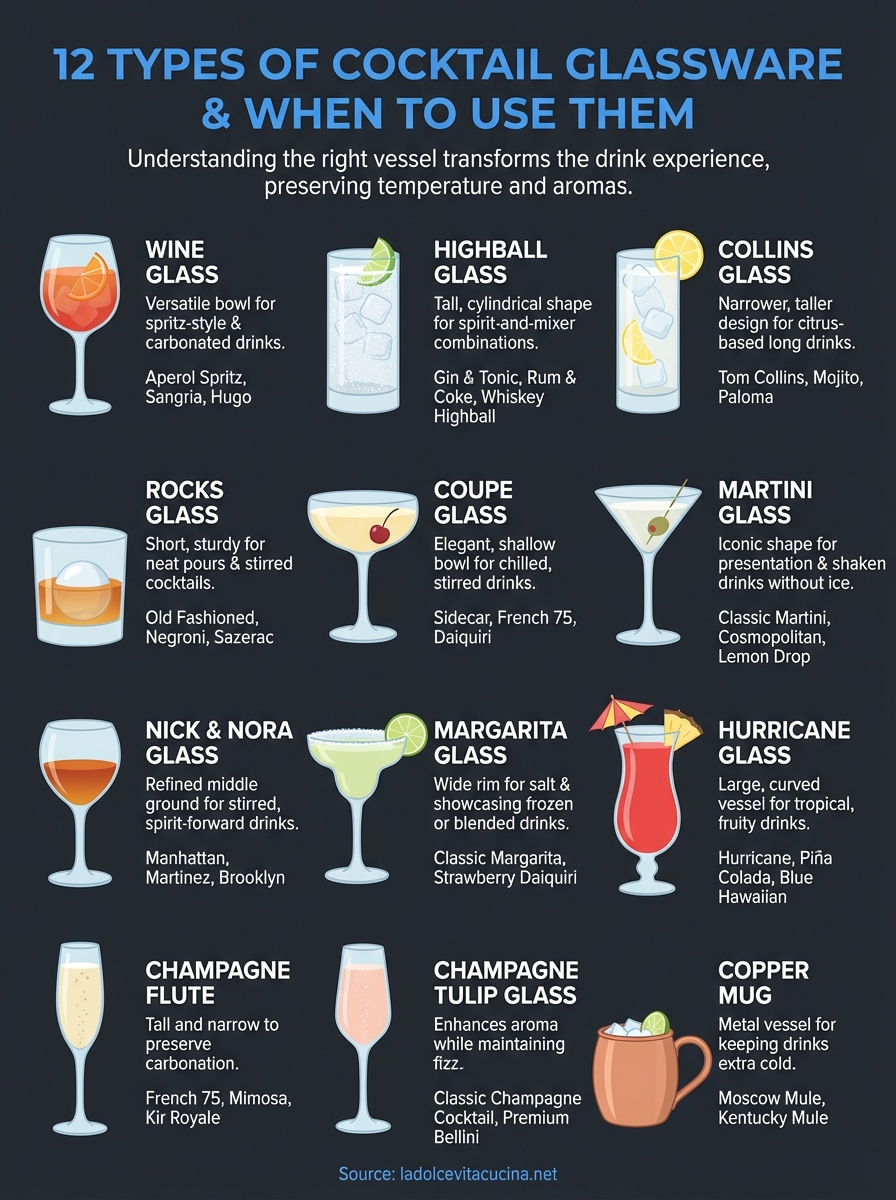
This guide breaks down 12 essential cocktail glasses, explaining their distinct characteristics and exactly which drinks belong in each one.
1. Wine glass
Wine glasses aren’t just for wine anymore. Among the many types of cocktail glassware, the versatile wine glass has become a favorite choice for bartenders crafting spritz-style cocktails and other drinks that benefit from a generous bowl and stem. You’ll find these glasses in nearly every bar and restaurant, making them practical for both professional settings and home entertaining.
What it is and typical size range
A standard wine glass features a rounded bowl, a stem for holding, and a flat base. The bowl’s width allows you to swirl liquids and release aromatics while the stem prevents your hand from warming the drink. Most wine glasses used for cocktails hold between 8 to 12 ounces, though larger burgundy-style glasses can accommodate up to 20 ounces. The shape varies from narrow tulip designs to wide-mouthed balloon styles, each affecting how aromas concentrate and how the drink hits your palate.
When to use it
You should reach for a wine glass when serving carbonated cocktails that need room to breathe or drinks with multiple garnishes that require visual presentation space. The wide opening makes adding ice, fruit, and herbs simple without crowding the glass. Wine glasses work particularly well for aperitif-style drinks meant for slow sipping throughout a meal or social gathering. Their familiar shape puts guests at ease while still signaling that you’ve put thought into the presentation.
Wine glasses give carbonated cocktails the space they need to maintain their fizz while showcasing layered ingredients.
Great cocktails to serve in it
The Aperol Spritz practically demands a wine glass, with its bright orange color displayed beautifully in the bowl and room for ice, prosecco, and an orange slice. Sangria also belongs here, where the fruit and wine mixture can breathe. Other excellent choices include the Hugo (prosecco with elderflower and mint), Lillet Spritz, and any vermouth-based cocktail that benefits from aeration.
Serving tips and smart substitutes
Fill your wine glass with ice before building the cocktail to keep everything properly chilled. Add garnishes last so they sit atop the ice rather than sinking to the bottom. If you don’t have wine glasses, a large rocks glass or even a stemless tumbler works in a pinch, though you’ll lose some of the elegant presentation. Keep the glass chilled in your freezer for 10 minutes before serving to maintain the drink’s temperature longer.
2. Highball glass
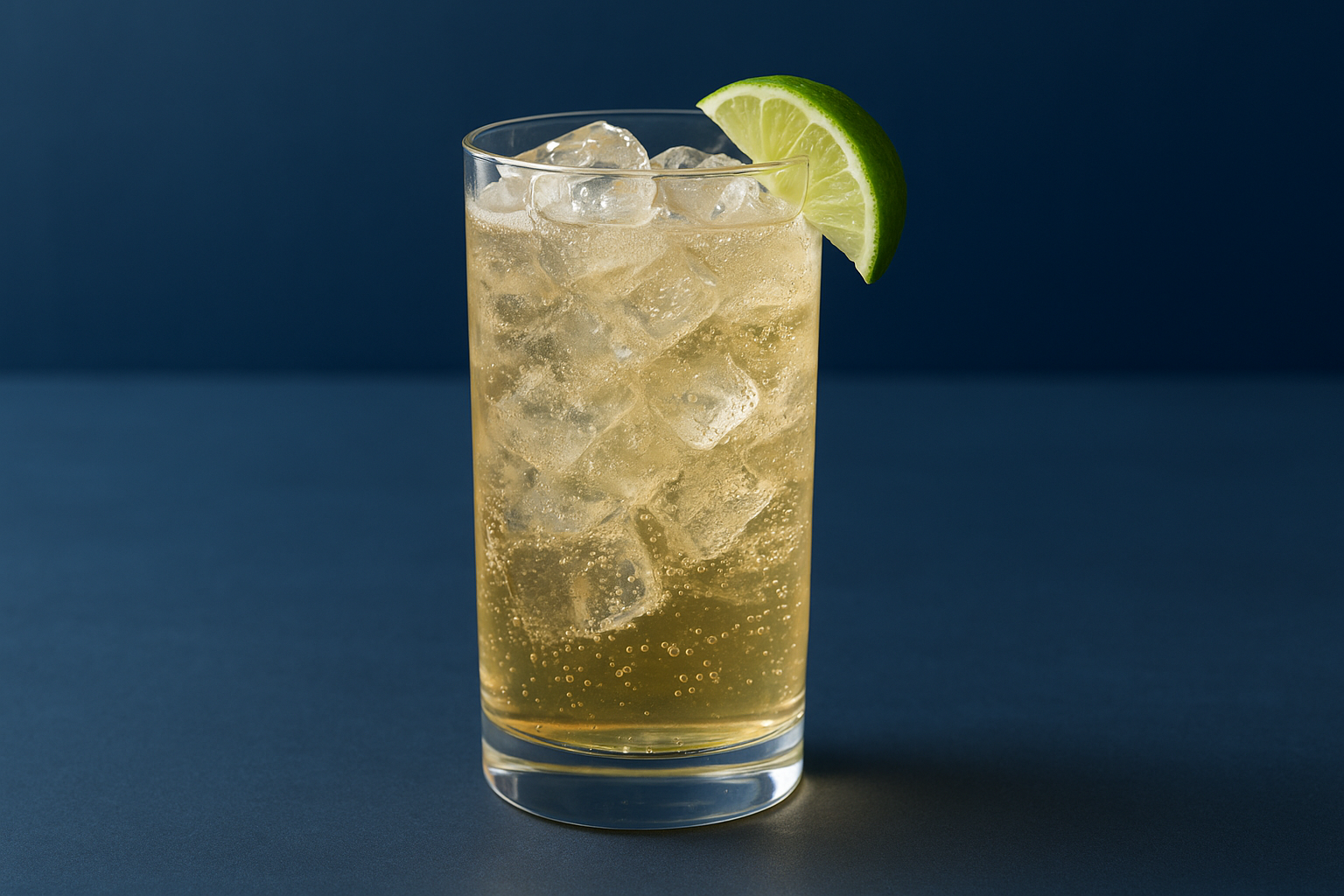
The highball glass ranks among the most practical types of cocktail glassware in any bar setup. This tall, straight-sided vessel handles everything from simple mixed drinks to elaborate tropical concoctions with equal efficiency.
What it is and typical size range
A highball glass features tall, straight sides with a flat, heavy base that provides stability. You’ll find these glasses typically holding between 8 to 12 ounces, though some larger versions stretch to 14 ounces. The cylindrical shape maximizes the ratio of liquid to ice while the narrow opening helps retain carbonation longer than wide-mouthed glasses.
When to use it
You should reach for a highball when mixing spirit-and-mixer combinations that require plenty of ice and a fizzy component. The tall design allows you to layer ingredients without overcrowding while giving visual appeal to simple two-ingredient drinks. These glasses work best for casual settings where durability matters as much as presentation.
Highball glasses keep carbonated drinks fizzy longer thanks to their narrow opening and tall shape.
Great cocktails to serve in it
The Gin and Tonic feels at home in a highball, as does the Rum and Coke or Whiskey Highball. Moscow Mules often appear in highballs when copper mugs aren’t available. Other classics include the Paloma, Dark and Stormy, and any simple spirit-mixer combination that benefits from ice and carbonation.
Serving tips and smart substitutes
Fill your highball glass with ice first, then pour the spirit, followed by your mixer to maintain carbonation. Add garnishes last to prevent them from sinking into the ice. If you lack highballs, a Collins glass works nearly interchangeably, or you can use a standard pint glass for casual settings. Keep several highballs chilled in your freezer for impromptu cocktails.
3. Collins glass
The Collins glass shares a similar silhouette with the highball but stands taller and narrower, making it one of the most distinctively shaped types of cocktail glassware for fizzy, spirit-forward drinks. Named after the Tom Collins cocktail, this glass has become the standard for citrus-based long drinks that balance strong spirits with fresh ingredients.
What it is and typical size range
A Collins glass features a tall, cylindrical shape that’s noticeably narrower than a highball, typically holding between 10 to 14 ounces. The extra height compared to a highball allows for more liquid volume while maintaining a slender profile that feels elegant in your hand. The straight sides and sturdy base provide stability despite the tall build, and the narrow opening concentrates citrus aromas toward your nose with each sip.
When to use it
You should use a Collins glass when serving spirit-heavy cocktails that include fresh citrus juice and carbonated mixers. The tall design accommodates plenty of ice to keep drinks cold during slow sipping while the narrow build maintains carbonation pressure better than wider glasses. These glasses work perfectly for outdoor entertaining or warm-weather drinks that need to stay refreshing throughout extended conversations.
Collins glasses keep citrus-forward cocktails properly balanced by providing the right ratio of spirit to mixer to ice.
Great cocktails to serve in it
The Tom Collins naturally belongs here, as does the Vodka Collins and John Collins (whiskey-based). Other excellent choices include the Fizz family of cocktails, Mojitos, Palomas, and any gin-based drink with fresh lemon or lime juice topped with soda water.
Serving tips and smart substitutes
Build your Collins cocktails directly in the glass by adding ice first, then spirit and citrus, and topping with soda last to preserve carbonation. Stir gently with a bar spoon rather than shaking to avoid over-dilution. If Collins glasses aren’t available, a standard highball serves as the closest substitute, or you can use a tall pilsner glass for casual settings.
4. Rocks glass
The rocks glass, also called an old fashioned glass or lowball, stands as one of the most essential types of cocktail glassware in both home and professional bars. This short, sturdy vessel handles everything from neat pours of whiskey to elaborate stirred cocktails with equal confidence.
What it is and typical size range
A rocks glass features a wide mouth, straight or slightly tapered sides, and a thick, heavy base that feels substantial in your hand. Standard rocks glasses hold between 6 to 10 ounces, with double rocks glasses reaching 12 to 14 ounces for larger pours or more ice. The wide opening allows you to appreciate aromatic spirits while the solid construction prevents tipping and provides temperature stability.
When to use it
You should reach for a rocks glass when serving spirits neat or on the rocks and stirred cocktails that don’t require dilution from shaking. The low profile keeps the drink close to your nose, concentrating aromatics with each sip. These glasses work perfectly for slow-sipping drinks where the spirit takes center stage rather than mixers or garnishes.
Rocks glasses keep spirit-forward cocktails at the right temperature while allowing you to appreciate the drink’s aroma and color.
Great cocktails to serve in it
The Old Fashioned defines this glass, as does the Negroni and Sazerac. Whiskey served neat or with a single large ice cube belongs here. Other classics include the Boulevardier, Manhattan on the rocks, and any stirred spirit-forward cocktail that benefits from a large ice cube or sphere.
Serving tips and smart substitutes
Use one large ice cube or sphere instead of multiple small cubes to minimize dilution while maintaining temperature. If you lack rocks glasses, a small tumbler or even a juice glass works for casual settings.
5. Coupe glass
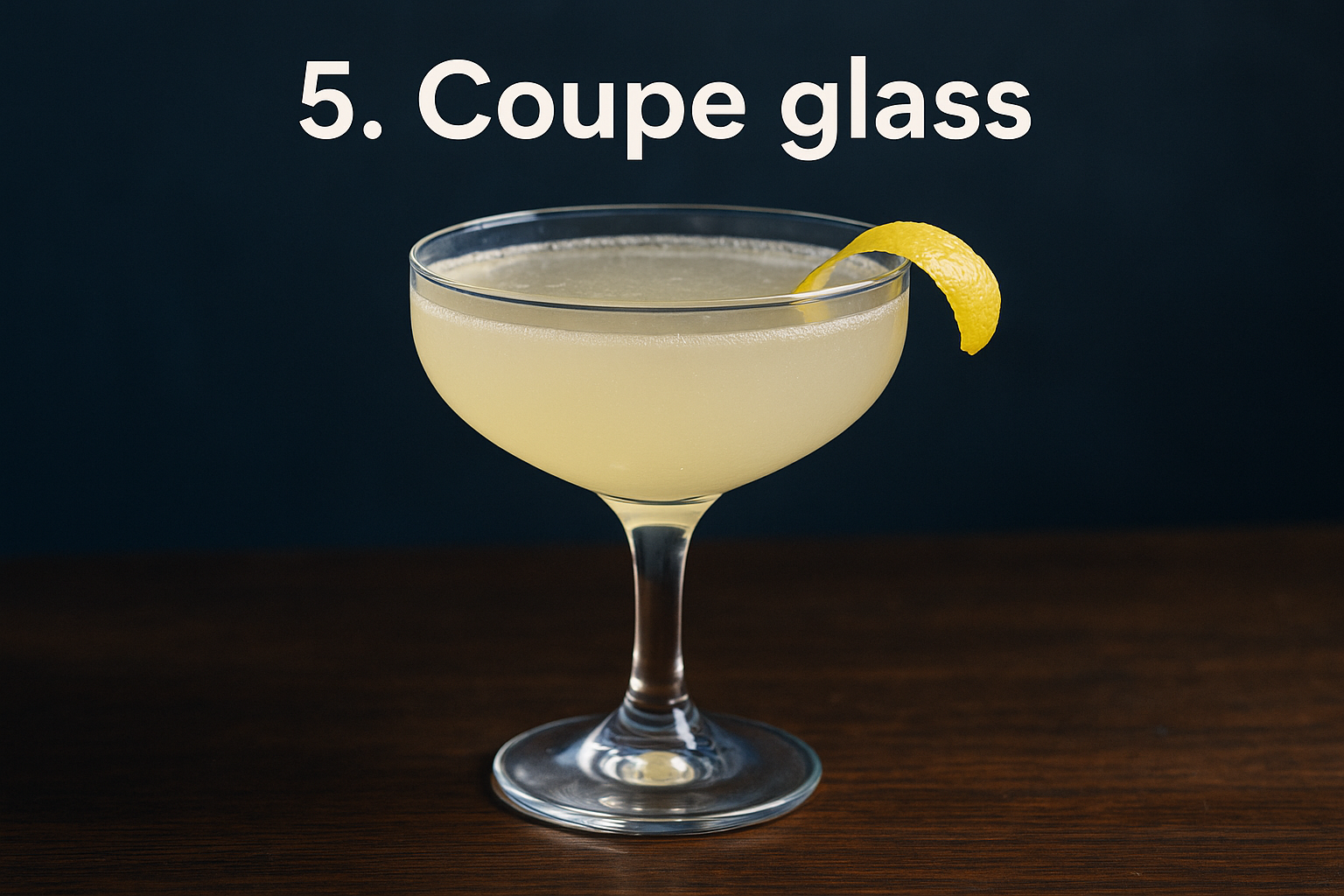
The coupe glass brings vintage elegance to modern bars as one of the most visually striking types of cocktail glassware available. This shallow, wide-bowled vessel with a delicate stem traces its origins to 1930s cocktail culture and has experienced a strong revival among bartenders who appreciate its classic aesthetic and practical design for stirred drinks.
What it is and typical size range
A coupe glass features a broad, shallow bowl that sits atop a slender stem with a circular base. You’ll find coupes holding between 5 to 7 ounces, making them smaller than martini glasses but with a much wider, more stable bowl. The shallow depth allows aromatics to reach your nose immediately while the wide rim provides space for expressing citrus oils or positioning delicate garnishes.
When to use it
You should use a coupe glass when serving chilled, stirred cocktails that don’t contain ice and spirit-forward drinks that benefit from immediate aroma exposure. The wide surface area allows drinks to breathe while the shallow bowl prevents the cocktail from warming too quickly in your hand. These glasses work beautifully for elegant occasions where presentation matters as much as taste.
Coupe glasses keep stirred cocktails at the perfect temperature while showcasing their clarity and garnishes.
Great cocktails to serve in it
The Sidecar shines in a coupe, as does the French 75 and Daiquiri. Aviation cocktails look stunning here with their pale purple color displayed in the wide bowl. Other excellent choices include the Gimlet, Corpse Reviver No. 2, and champagne cocktails that benefit from the vintage presentation style.
Serving tips and smart substitutes
Chill your coupe glasses in the freezer for at least 10 minutes before serving to maintain drink temperature. Strain cocktails carefully to avoid overfilling the shallow bowl. If coupes aren’t available, a Nick and Nora glass provides similar elegance, or you can use a small wine glass for casual settings.
6. Martini glass
The martini glass remains one of the most iconic types of cocktail glassware despite being notoriously impractical. This V-shaped stemware with its dramatic silhouette has become synonymous with sophistication and cocktail culture, though many bartenders now prefer alternatives for their actual martinis. The distinctive shape emerged in the early 20th century and continues to dominate cocktail imagery despite its tendency to spill.
What it is and typical size range
A martini glass features a wide, conical bowl that tapers to a point at the bottom, sitting atop a long, slender stem. Traditional martini glasses hold between 4 to 6 ounces, though oversized versions can reach 10 ounces or more. The wide mouth exposes maximum surface area to air, which releases aromatics but also causes drinks to warm quickly. The long stem prevents your hand from heating the cocktail while the distinctive V-shape provides instant visual recognition.
When to use it
You should use a martini glass when presentation matters more than practicality or when serving shaken cocktails without ice that guests will drink quickly. The wide opening works well for expressing citrus oils over the drink’s surface. These glasses suit formal occasions where the visual impact of the classic shape enhances the experience, though you’ll need to fill them carefully to prevent spilling.
Martini glasses deliver maximum visual impact but require careful handling to avoid spills from their wide, shallow design.
Great cocktails to serve in it
The Classic Martini naturally belongs here, whether gin or vodka-based. Cosmopolitans look striking in martini glasses with their pink hue displayed prominently. Other fitting choices include the Manhattan (served up), Lemon Drop, Espresso Martini, and any shaken cocktail traditionally served without ice.
Serving tips and smart substitutes
Chill your martini glass thoroughly in the freezer for 15 minutes before serving. Fill the glass no more than three-quarters full to prevent spilling while walking. If martini glasses aren’t available, a coupe glass provides better stability with similar elegance, or a Nick and Nora offers a more practical alternative.
7. Nick and Nora glass
The Nick and Nora glass offers a refined middle ground between the unstable martini glass and the shallow coupe, making it one of the most bartender-friendly types of cocktail glassware for stirred drinks. Named after characters from the 1930s film series "The Thin Man," this elegant vessel has gained popularity in craft cocktail bars for its perfect balance of style and function.
What it is and typical size range
A Nick and Nora glass features a rounded, bell-shaped bowl that curves gently inward at the rim, sitting on a shorter stem than a martini glass. You’ll find these glasses holding between 5 to 6 ounces, making them ideal for classic cocktail proportions without excess volume. The inward-curving rim helps concentrate aromatics while reducing spill risk compared to wide-mouthed alternatives.
When to use it
You should reach for a Nick and Nora when serving stirred, spirit-forward cocktails that benefit from aroma concentration and elegant presentation without impracticality. The rounded bowl keeps drinks colder longer than martini glasses while the comfortable size encourages proper portions. These glasses work beautifully for both professional and home settings where you want sophistication without the drama of balancing an overfilled V-shaped glass.
Nick and Nora glasses deliver cocktail elegance with practical stability that prevents spills and keeps drinks properly chilled.
Great cocktails to serve in it
The Manhattan shines in a Nick and Nora, as does the Martinez and Brooklyn. Classic martinis taste better here with proper temperature control. Other excellent choices include the Vieux Carré, Remember the Maine, and any stirred vermouth-based cocktail that benefits from concentrated aromatics.
Serving tips and smart substitutes
Chill your Nick and Nora glasses for 10 minutes in the freezer before straining cocktails into them. The smaller size naturally prevents overfilling. If these glasses aren’t available, a coupe provides similar elegance, or a small wine glass works for casual settings.
8. Margarita glass
The margarita glass ranks among the most recognizable types of cocktail glassware with its distinctive double-bowl shape that instantly signals party time. This festive vessel emerged specifically to showcase tequila-based cocktails with their signature salted rims, though its dramatic presentation has expanded beyond just margaritas in modern bars.
What it is and typical size range
A margarita glass features a wide, shallow upper bowl that sits atop a smaller secondary bowl or stem, creating a stepped silhouette. You’ll find these glasses holding between 12 to 16 ounces, with some party-sized versions reaching 20 ounces or more. The wide rim provides ample space for salt or sugar coating while the broad bowl displays the drink’s color and allows room for generous garnishes like lime wheels or fruit slices.
When to use it
You should use a margarita glass when serving frozen or blended drinks that benefit from the wide bowl’s capacity and tequila-based cocktails where the salted rim plays a key role. The broad surface area works well for layered drinks where visual presentation matters. These glasses suit casual, celebratory settings rather than formal occasions.
Great cocktails to serve in it
The Classic Margarita naturally belongs here, whether frozen, on the rocks, or straight up. Strawberry Daiquiris look stunning with their bright color displayed in the wide bowl. Other fitting choices include frozen piña coladas, blue margaritas, and any blended tequila cocktail that benefits from dramatic presentation.
Margarita glasses provide the perfect canvas for salted rims and colorful frozen drinks that need visual impact.
Serving tips and smart substitutes
Rim only half the glass with salt to give drinkers a choice with each sip. If margarita glasses aren’t available, a coupe glass works for smaller portions, or a large wine glass handles frozen drinks well.
9. Hurricane glass
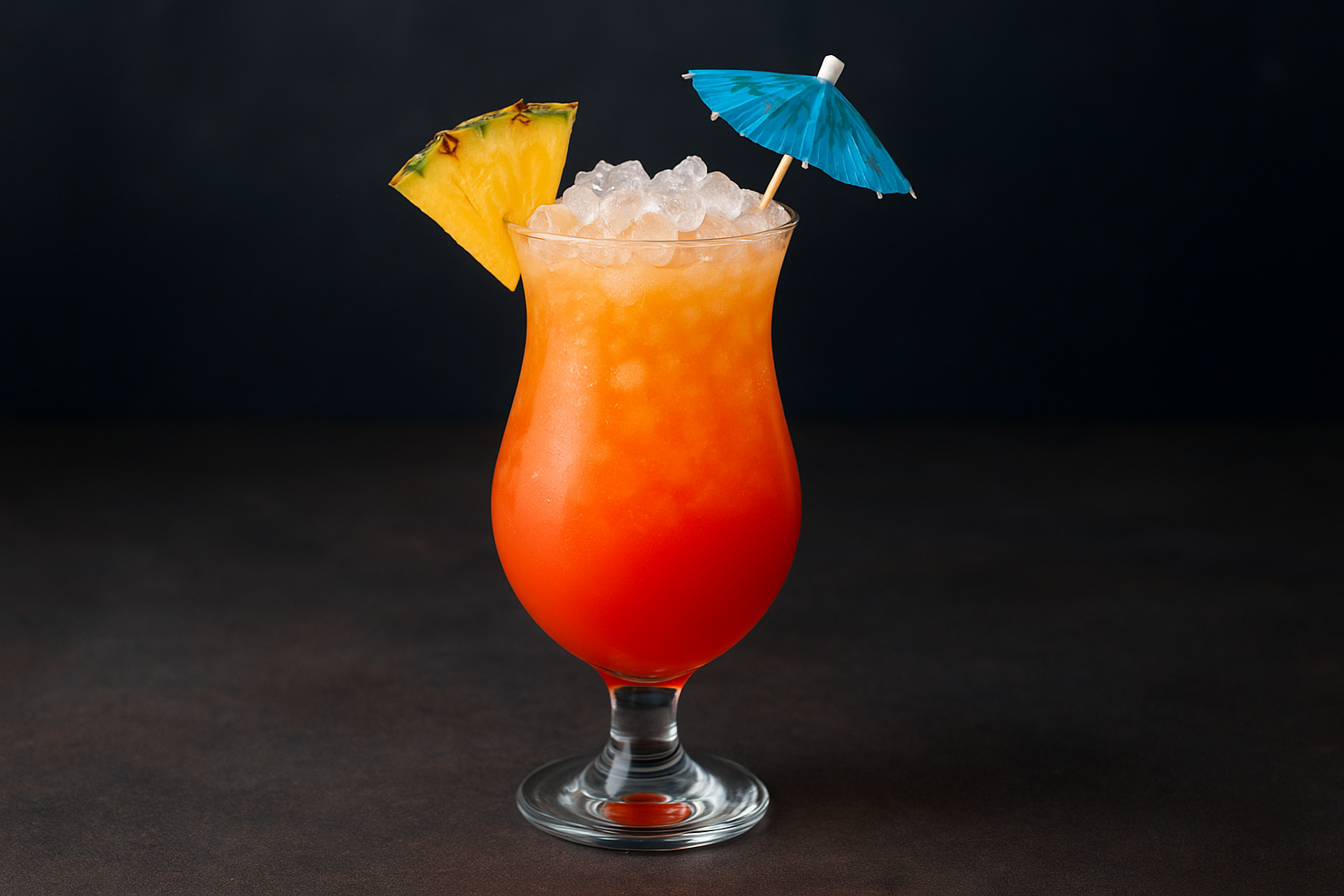
The hurricane glass stands tall among types of cocktail glassware designed specifically for tropical, fruity drinks that need visual drama. This curved, voluminous vessel takes its name from the famous Hurricane cocktail created at Pat O’Brien’s bar in New Orleans, and its distinctive shape has become synonymous with vacation-worthy drinks packed with rum and fruit juices.
What it is and typical size range
A hurricane glass features a short stem topped by a tall, curved bowl that resembles a hurricane lamp or hourglass shape. You’ll find these glasses holding between 15 to 20 ounces, making them among the largest cocktail vessels available. The wide bowl tapers slightly at the top while bulging in the middle, providing ample space for ice, multiple liquors, fruit juices, and elaborate garnishes like pineapple wedges or paper umbrellas.
When to use it
You should use a hurricane glass when serving rum-heavy tropical cocktails that contain multiple ingredients and frozen or blended drinks with generous portions. The large capacity accommodates plenty of ice to keep drinks cold in warm weather while the dramatic shape signals fun and celebration. These glasses work perfectly for poolside entertaining, tiki parties, or any casual setting where presentation matters.
Hurricane glasses transform ordinary tropical drinks into vacation experiences through their dramatic curves and generous capacity.
Great cocktails to serve in it
The Hurricane cocktail itself belongs here, as does the Piña Colada and Blue Hawaiian. Other excellent choices include the Bahama Mama, Zombie, and any rum punch that benefits from substantial volume and tropical garnishes.
Serving tips and smart substitutes
Fill your hurricane glass with crushed ice for authentic tiki-style presentation. If hurricane glasses aren’t available, a large goblet or oversized wine glass handles tropical drinks well for casual settings.
10. Champagne flute
The champagne flute stands as one of the most elegant types of cocktail glassware designed specifically to preserve carbonation and showcase visual appeal. This tall, narrow vessel serves sparkling wines and champagne-based cocktails with a sophistication that few other glasses can match, making it essential for celebrations and formal occasions.
What it is and typical size range
A champagne flute features a tall, slender bowl that tapers slightly inward at the rim, sitting atop a long, delicate stem. You’ll find these glasses holding between 6 to 8 ounces, though some variations reach 10 ounces. The narrow shape minimizes surface area exposure to air, which helps retain bubbles longer than wide-mouthed alternatives. The elongated bowl also creates a visual column of rising bubbles that adds to the drinking experience.
When to use it
You should reach for a champagne flute when serving sparkling wines and champagne-based cocktails where carbonation preservation matters most. The narrow opening traps carbon dioxide bubbles while directing aromatics toward your nose with each sip. These glasses work perfectly for toasts, formal celebrations, or any occasion where elegance takes priority.
Champagne flutes keep bubbles active longer than any other glass by minimizing air exposure through their narrow design.
Great cocktails to serve in it
The French 75 belongs in a flute, as does the Champagne Cocktail with its sugar cube and bitters. Mimosas look beautiful here with orange juice layered beneath champagne. Other excellent choices include the Kir Royale, Bellini, and any sparkling wine cocktail that benefits from sustained effervescence.
Serving tips and smart substitutes
Chill your flutes for 15 minutes in the freezer before pouring. If flutes aren’t available, a coupe glass provides vintage charm, or a white wine glass works for casual settings.
11. Champagne tulip glass
The champagne tulip glass represents a refined evolution among types of cocktail glassware designed for sparkling wines, offering better aroma concentration than traditional flutes while maintaining carbonation just as effectively. This tulip-shaped vessel has gained favor among sommeliers and craft bartenders who appreciate its ability to enhance both the visual and aromatic qualities of champagne-based drinks.
What it is and typical size range
A champagne tulip glass features a wider bowl than a flute that curves inward at the rim, creating a tulip-like silhouette on a slender stem. You’ll find these glasses holding between 6 to 8 ounces, similar to flutes but with a distinctly different shape. The wider middle section allows more room for aromas to develop while the tapered rim concentrates those aromatics toward your nose, providing a more complex sensory experience than straight-sided flutes.
When to use it
You should use a champagne tulip when serving premium sparkling wines and complex champagne cocktails that benefit from enhanced aroma exposure. The wider bowl allows you to appreciate subtle notes in high-quality champagnes while still preserving carbonation effectively. These glasses work beautifully for wine-focused occasions where you want to showcase the quality of your sparkling wines.
Champagne tulips deliver superior aroma concentration compared to flutes while maintaining the carbonation that makes sparkling drinks special.
Great cocktails to serve in it
The Classic Champagne Cocktail shines here, as does the Kir Royale with its cassis notes. Premium Bellinis benefit from the enhanced aroma exposure. Other excellent choices include vintage champagne served straight and any sparkling wine cocktail where the base wine’s quality deserves proper presentation.
Serving tips and smart substitutes
Chill your tulip glasses for 10 minutes before pouring to maintain optimal temperature. If tulip glasses aren’t available, a standard champagne flute works well, or a white wine glass serves as a practical substitute for casual settings.
12. Copper mug
The copper mug stands apart from traditional types of cocktail glassware by serving a dual purpose: it keeps drinks ice-cold through superior thermal conductivity while delivering a distinctive visual presentation. This metal vessel became famous for the Moscow Mule cocktail and continues to signal a specific drinking experience that combines temperature control with rustic charm.
What it is and typical size range
A copper mug features solid copper construction with a cylindrical shape and a sturdy handle attached to one side. You’ll find these mugs holding between 12 to 16 ounces, with walls thick enough to maintain structural integrity while maximizing heat transfer. The metal interior provides excellent temperature retention, keeping drinks colder longer than glass alternatives. Most copper mugs include a brass or copper-plated handle that stays cool to the touch even when the mug itself frosts over.
When to use it
You should use a copper mug when serving vodka-based cocktails that benefit from extreme cold and drinks where temperature maintenance matters throughout extended conversation. The metal’s thermal properties pull heat away from the liquid quickly and keep ice from melting as fast as in glass. These mugs work perfectly for outdoor entertaining in warm weather or any setting where you want drinks to stay refreshingly cold.
Copper mugs keep cocktails colder longer than any glass through metal’s superior heat conductivity.
Great cocktails to serve in it
The Moscow Mule defines this vessel with vodka, ginger beer, and lime served over ice. Kentucky Mules substitute bourbon for vodka while maintaining the ginger-lime profile. Other excellent choices include the Mexican Mule (tequila-based), Dark and Stormy, and any cocktail where ginger beer plays a central role.
Serving tips and smart substitutes
Chill your copper mugs in the freezer for 10 minutes before filling to maximize temperature retention. If copper mugs aren’t available, a highball glass works for Moscow Mules, or any metal tumbler provides similar benefits.
One last sip
Understanding the proper types of cocktail glassware transforms how you experience drinks, whether you’re mixing at home or ordering at a bar. Each glass serves a specific purpose beyond aesthetics, from maintaining carbonation in a champagne flute to keeping spirits properly chilled in a rocks glass. Knowing which vessel belongs with which drink helps you appreciate the craft behind cocktail culture while ensuring each sip tastes exactly as intended.
Your choice of glassware signals intention and respect for the drink itself. The right glass preserves temperature, concentrates aromas, and enhances visual appeal in ways that directly affect both flavor and enjoyment. Bartenders spend years mastering these details because they understand that presentation matters just as much as the quality of ingredients you pour into each vessel.
At La Dolce Vita Cucina, we apply this same attention to detail across our Italian-inspired cocktail program, pairing each drink with the proper glassware to elevate your complete dining experience in Chicago’s Portage Park neighborhood. Visit us to taste the difference that proper presentation makes.