A great Italian chopped salad starts with knowing exactly what goes into it. The right italian salad ingredients create that perfect balance of salty, tangy, and crisp that makes this dish a staple on menus and dinner tables alike. At La Dolce Vita Cucina in Chicago’s Portage Park neighborhood, we build our dishes around quality components and authentic Italian flavors, and salads are no exception.
The classic Italian salad is one of those recipes that looks simple but falls flat when you skip the details. Specific greens, cured meats, aged cheeses, and a proper vinaigrette all play a role, and each one matters. Whether you’re assembling a quick weeknight side or putting together a full chopped salad for a gathering, you need to know what belongs in the bowl, and what doesn’t.
This guide breaks down every ingredient in a traditional Italian salad, from the base greens to the dressing. We’ll cover what makes each component essential, share some variations worth trying, and give you a complete list you can take straight to the grocery store. Let’s get into it.
What makes a salad "Italian" in the US
The term "Italian salad" means something different depending on where you grew up. In Italy, a simple green salad dressed with olive oil and lemon is the everyday standard. In the US, the term almost always refers to a heartier, more loaded chopped salad built with a specific set of bold, layered ingredients that most Americans recognize instantly from Italian-American restaurant menus. Understanding that distinction helps you shop and prep with the right expectations before you even reach for a cutting board.
The Italian-American restaurant influence
Italian immigrants brought their food traditions to the US in the late 1800s and early 1900s, and those traditions shifted over generations into what most people now call Italian-American cuisine. The chopped Italian salad you find on menus across Chicago, New York, and beyond is a direct product of that cultural evolution. It stacks salty cured meats, sharp or creamy cheeses, briny olives or pepperoncini, and crisp fresh vegetables, all tossed in a tangy red wine vinaigrette that ties every element together into one cohesive bowl.
The Italian-American chopped salad is less about simplicity and more about building layers of contrasting flavor and texture in every single bite.
What sets it apart from other salads
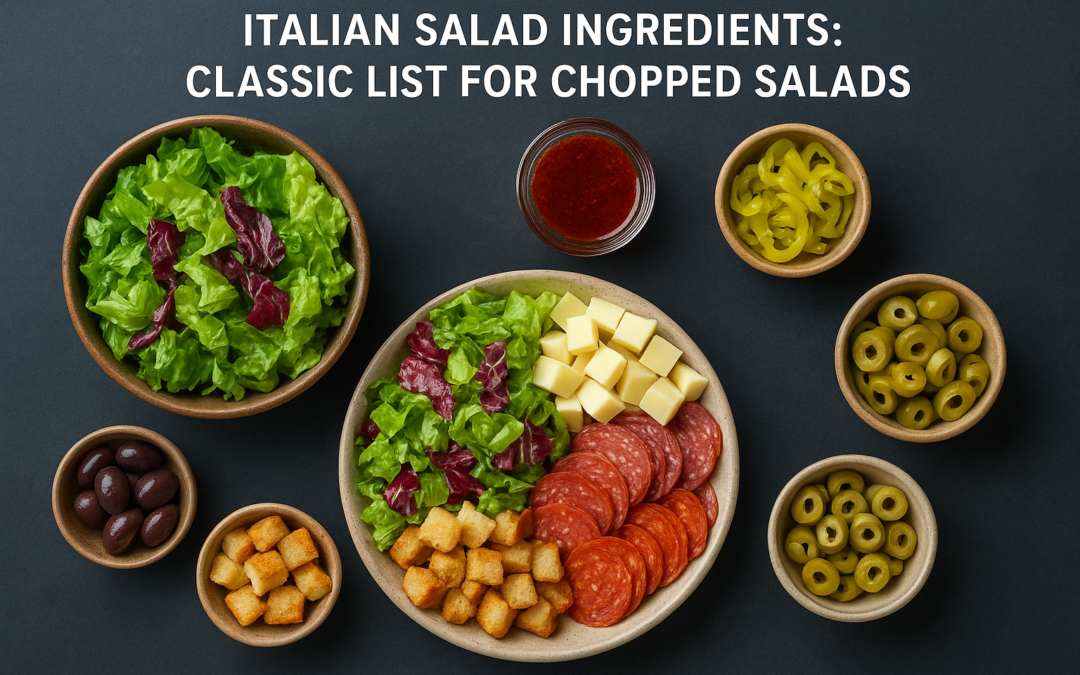
Most salads rely on one or two central ingredients. The Italian chopped salad works differently, pulling together six to ten components where each one contributes something specific. Below is how the core italian salad ingredients divide up by function:
| Ingredient Category | What It Contributes |
|---|---|
| Greens | Structure and fresh base |
| Cured meats | Salt, fat, and chew |
| Hard or crumbled cheese | Depth and richness |
| Pepperoncini or olives | Sharp, acidic contrast |
| Raw vegetables | Crunch and color |
| Red wine vinaigrette | Acidity and herb coating |
Why the ingredient list matters
When you build this salad at home, every component on your list earns its place. Removing the cured meat flattens the salt. Skipping the pepperoncini loses the acidic brightness that cuts through the fat. Each ingredient plays a functional role, not just a decorative one, and that is why knowing the full list before you shop produces a noticeably better result.
Getting familiar with the standard build also makes it easier to spot smart substitutions versus ones that will hurt the dish. Once you know what each ingredient is doing, you can swap an ingredient within its category without losing what makes the salad work.
Step 1. Choose your greens and crunchy base
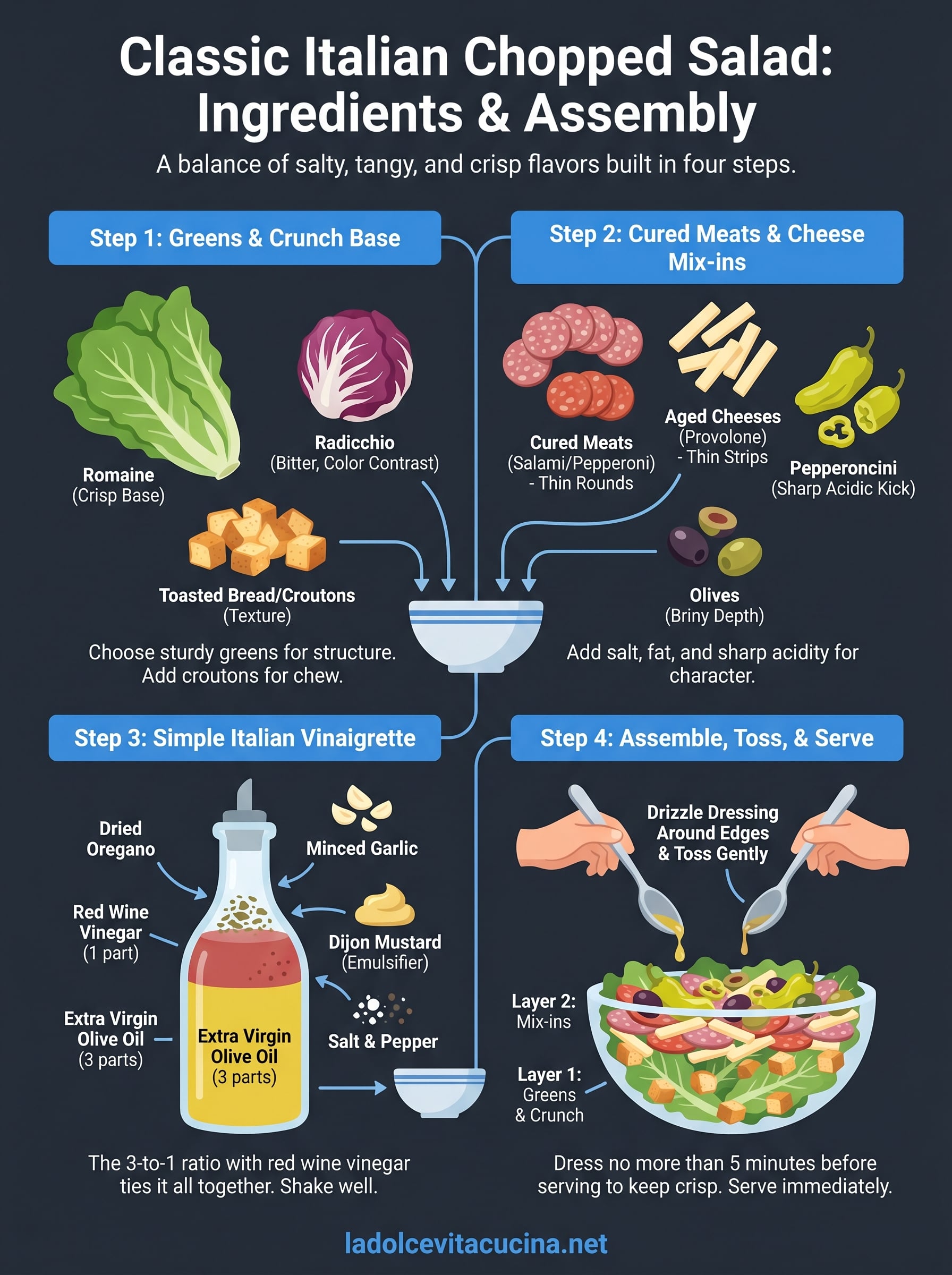
The foundation of any classic Italian chopped salad is the green base, and the one you pick sets the tone for every ingredient layered on top. Most italian salad ingredients lists start here because your greens determine how well the salad holds up once dressed, how much chew it delivers, and whether it can stand up to bold flavors like cured meats and sharp cheese.
The best greens for the job
Romaine lettuce is the standard choice for good reason. Romaine holds its crunch even after dressing, gives you a neutral backdrop that lets the other ingredients stand out, and chops cleanly into uniform pieces. You can also mix in radicchio for a slightly bitter, purple contrast that adds color and complexity without overwhelming the bowl. Iceberg works as a budget option and adds extra crispness, though it contributes less flavor than romaine.
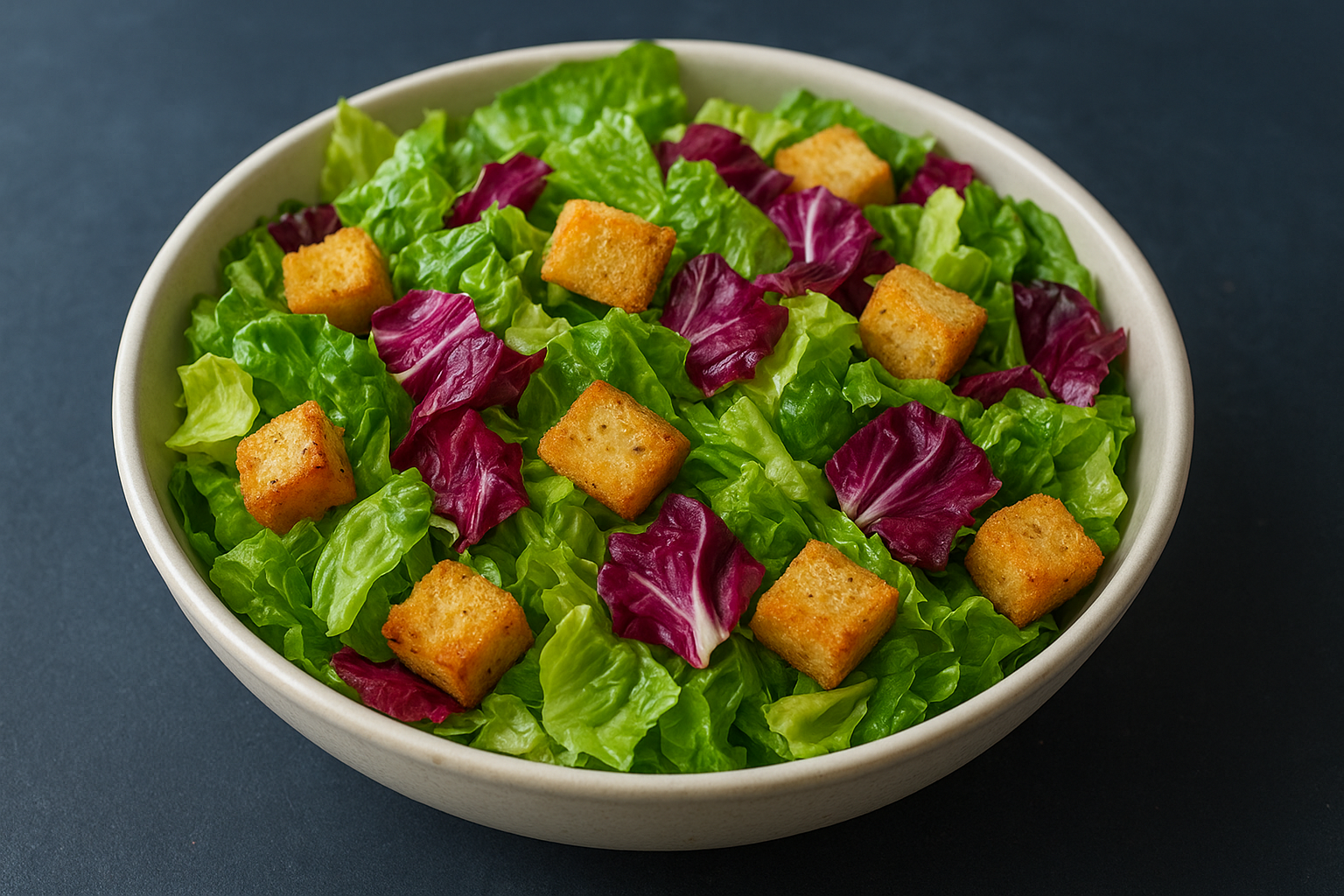
Radicchio and romaine together give you the color contrast and flavor range that most restaurant-style Italian chopped salads rely on.
| Green | Flavor Profile | Best Use |
|---|---|---|
| Romaine | Mild, crisp | Primary base |
| Radicchio | Bitter, bold | Accent or mix-in |
| Iceberg | Neutral, watery | Budget substitute |
Adding the crunch layer
Beyond greens, croutons or toasted breadcrumbs give the salad a textural contrast that keeps each bite interesting. Your best move is to use day-old Italian bread cut into small cubes and toasted with olive oil and garlic until golden. Skip the store-bought croutons when you can, since homemade ones absorb the vinaigrette without going soggy as quickly.
Step 2. Add the classic mix-ins and toppings
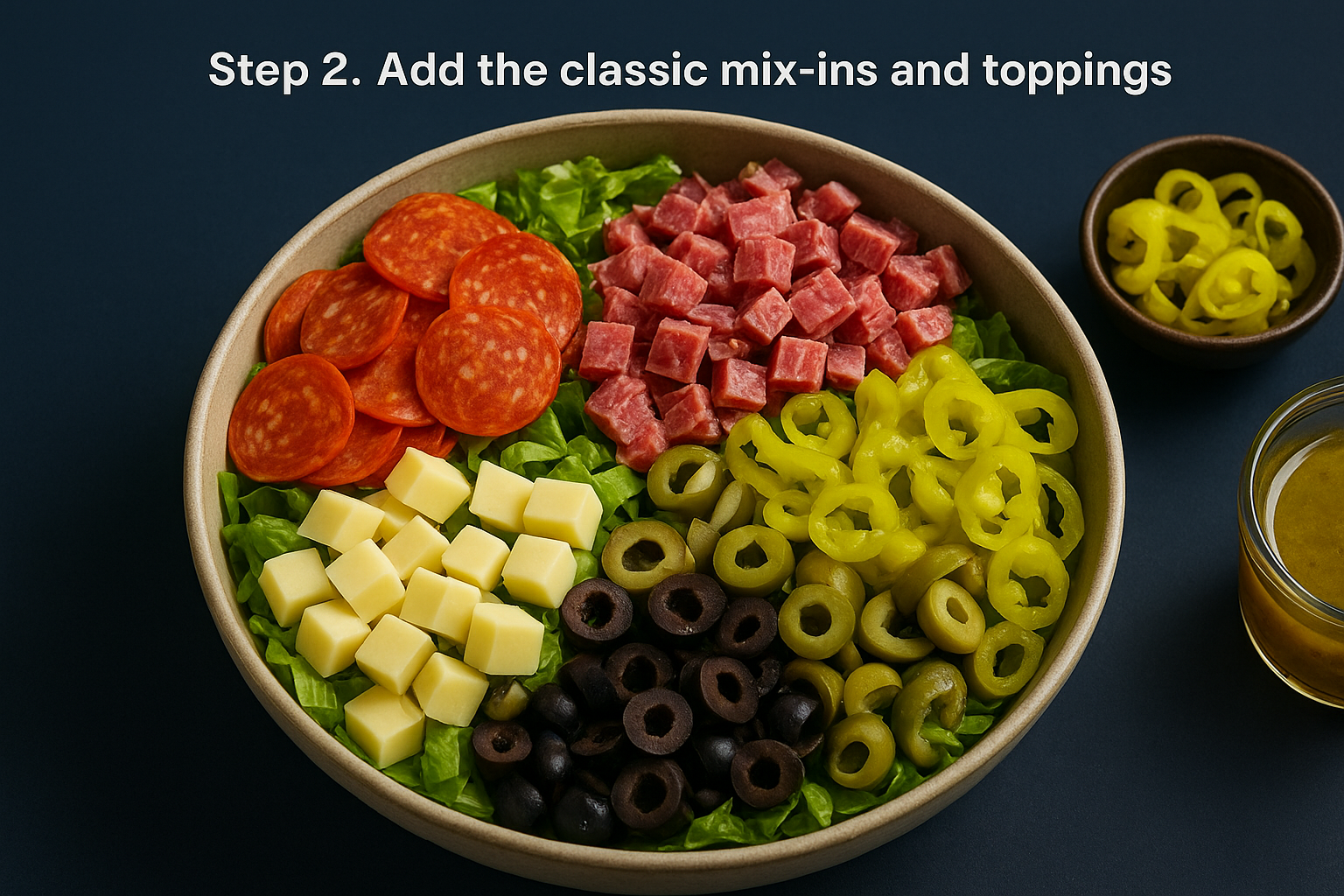
Once your greens are prepped, the mix-ins are where your Italian chopped salad picks up most of its character. These are the ingredients that separate a standard green salad from a full Italian build. When you select this layer of italian salad ingredients, focus on contrast: you want salt, fat, acid, and crunch hitting the bowl at the same time.
Cured meats and proteins
Salami and pepperoni are the most common meat choices, and both belong here in thin-sliced or quartered rounds. Salami brings a firmer texture and a deeper peppery flavor, while pepperoni adds a touch of heat. If you want to step up the build, add a few slices of Genoa salami or soppressata for a richer, more complex bite. Keep the pieces small enough that every forkful picks up a little of everything.
Cutting your meats into small, uniform pieces ensures the salad eats evenly from the first bite to the last.
Cheese, olives, and pepperoncini
For cheese, provolone and giardiniera are the Italian-American standard, though fresh mozzarella works if you prefer a milder, creamier option. Cut provolone into thin strips or small cubes. Add whole or sliced pepperoncini for the sharp, vinegary kick that defines this salad’s flavor profile, and toss in a handful of black or green olives for brine and depth.
| Mix-in | Form | Function |
|---|---|---|
| Salami or pepperoni | Thin rounds, quartered | Salt and fat |
| Provolone | Thin strips or small cubes | Richness |
| Pepperoncini | Sliced or whole | Acidic brightness |
| Olives | Halved | Brine and depth |
Step 3. Make a simple Italian vinaigrette that works
The dressing is what ties every italian salad ingredient together, and a bad vinaigrette can flatten even the best greens and meats you put in the bowl. A proper Italian vinaigrette uses red wine vinegar as its acid base, which gives you the sharp tang that cuts through the fat of the cured meats and cheese without overwhelming them. Make it fresh, right before you toss the salad, and your results will be noticeably better than anything out of a bottle.
The core ratio and ingredients
You need a solid starting ratio before you adjust anything to your own taste. The standard 3-to-1 oil-to-vinegar ratio works well for this salad because the other ingredients are already bold and briny. Use this as your base template:
| Ingredient | Amount |
|---|---|
| Extra virgin olive oil | 3 tablespoons |
| Red wine vinegar | 1 tablespoon |
| Dried oregano | 1/2 teaspoon |
| Garlic, minced | 1 small clove |
| Dijon mustard | 1/4 teaspoon |
| Salt and black pepper | To taste |
Combine everything in a small jar and shake it firmly for about 20 seconds until the dressing emulsifies into a uniform consistency.
How to build the flavor
Once you have your base ready, taste it before it hits the bowl. Dijon mustard acts as an emulsifier and adds a subtle depth, so do not skip it even if you add just a small amount.
A quick taste test lets you adjust the acid or salt before the dressing coats every ingredient in the bowl.
Add a small pinch of red pepper flakes if you want a mild heat note that complements the pepperoncini already in the salad.
Step 4. Assemble, serve, and keep it crisp
Getting your italian salad ingredients into the bowl in the right order is the difference between a salad that holds up on the table and one that wilts before everyone sits down. Start with your greens and croutons in the bowl first, add the mix-ins on top, and hold the dressing until you are ready to serve.
Toss in the right order
Add your greens to a large, wide bowl so you have enough room to toss without ingredients falling out. Layer the meats, cheese, pepperoncini, and olives over the greens, then drizzle the vinaigrette around the edges of the bowl rather than directly onto the center. This keeps the dressing from pooling in one spot and coating everything unevenly.
Tossing from the bottom of the bowl up ensures the dressing coats the greens first before it reaches the heavier toppings.
Use two large spoons or tongs to lift and fold the salad at least six to eight times until every component is evenly coated. Add the croutons last, right before you bring the bowl to the table.
Keep it crisp and prevent sogginess
Your biggest enemy is time. Dress the salad no more than five minutes before serving to prevent the greens from breaking down under the acid. If you are prepping ahead, store the greens, mix-ins, and dressing in three separate containers in the refrigerator and combine them only when you are ready to eat. This keeps everything at peak texture from prep to table.
Wrap-up
A well-built Italian chopped salad comes down to knowing your ingredients and using each one with intention. You now have the full picture: the right greens, the cured meats and cheeses that give the salad its character, the briny mix-ins that add contrast, and a red wine vinaigrette built from scratch that ties every component together. Each step in this guide gives you something concrete to act on the next time you shop and prep.
Take these italian salad ingredients into your kitchen and build the salad with confidence. Start with the greens, layer in the proteins and cheese, add your acid and brine, and dress it only when you are ready to eat. The result is a salad that actually delivers on flavor. If you want to taste what this comes together like at a proper Italian table, visit La Dolce Vita Cucina in Chicago’s Portage Park neighborhood and see it done right.