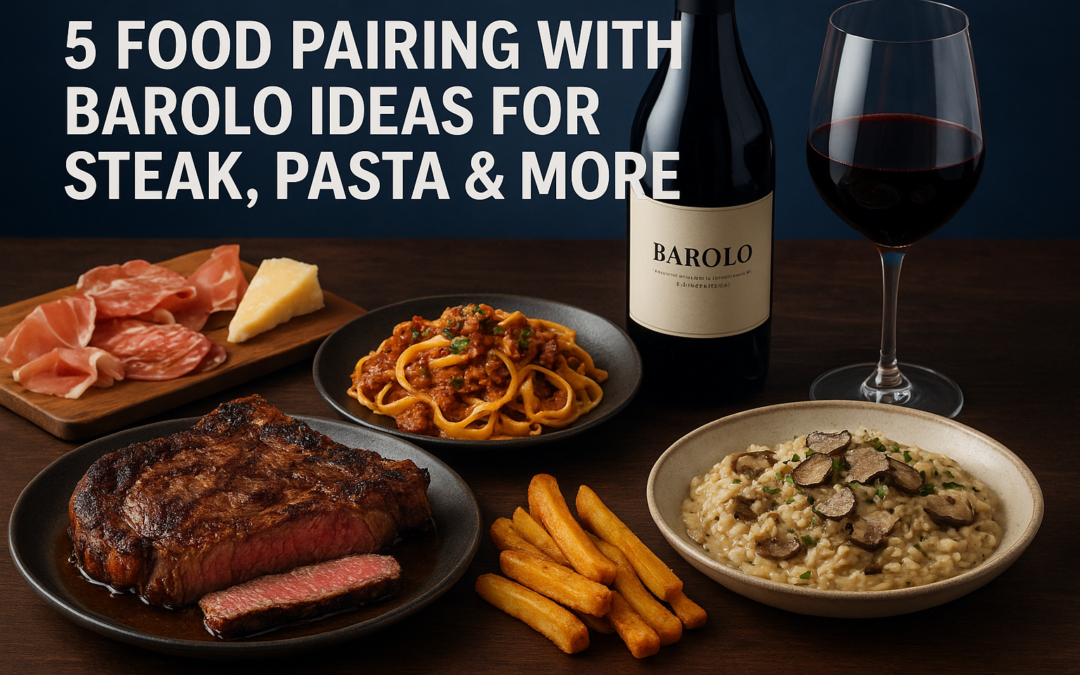
Barolo earns its reputation as the "King of Wines" for good reason, bold tannins, deep complexity, and a structure that demands equally bold food on the plate. But getting food pairing with Barolo right takes more than just grabbing a nice bottle and hoping for the best. The wrong dish can make even a great Barolo taste flat, while the right one transforms dinner into something genuinely memorable.
At La Dolce Vita Cucina in Chicago’s Portage Park neighborhood, we built our menu around exactly this kind of pairing, premium cuts like our 16oz Ribeye, homemade pastas, and rich Italian flavors that stand up to serious wines. So we have strong opinions about what belongs next to a glass of Barolo.
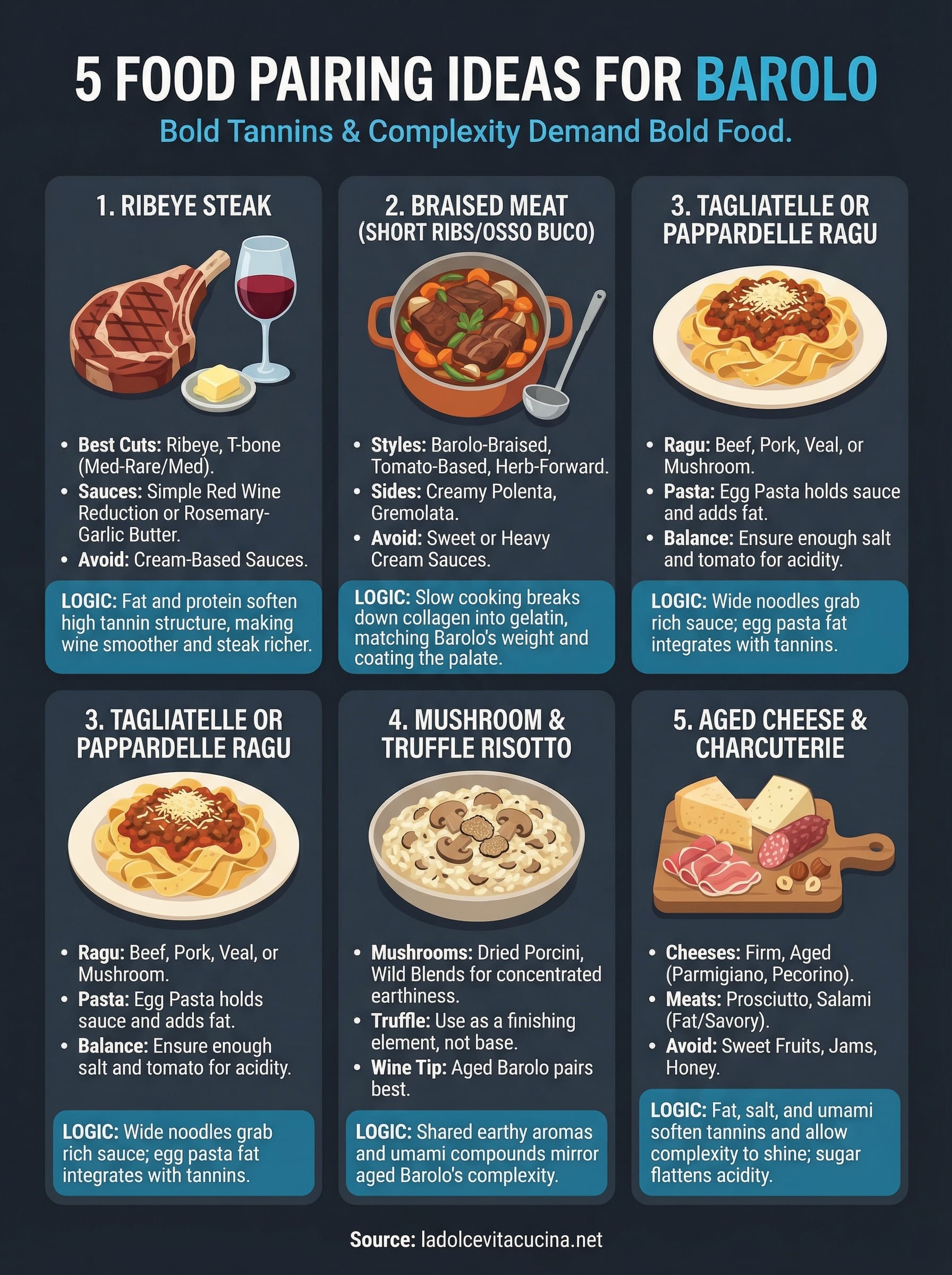
Below, you’ll find five tried-and-true pairing ideas spanning steak, pasta, cheese, and more, each one chosen because it actually enhances what makes Barolo special rather than competing with it.
1. Ribeye steak with Barolo
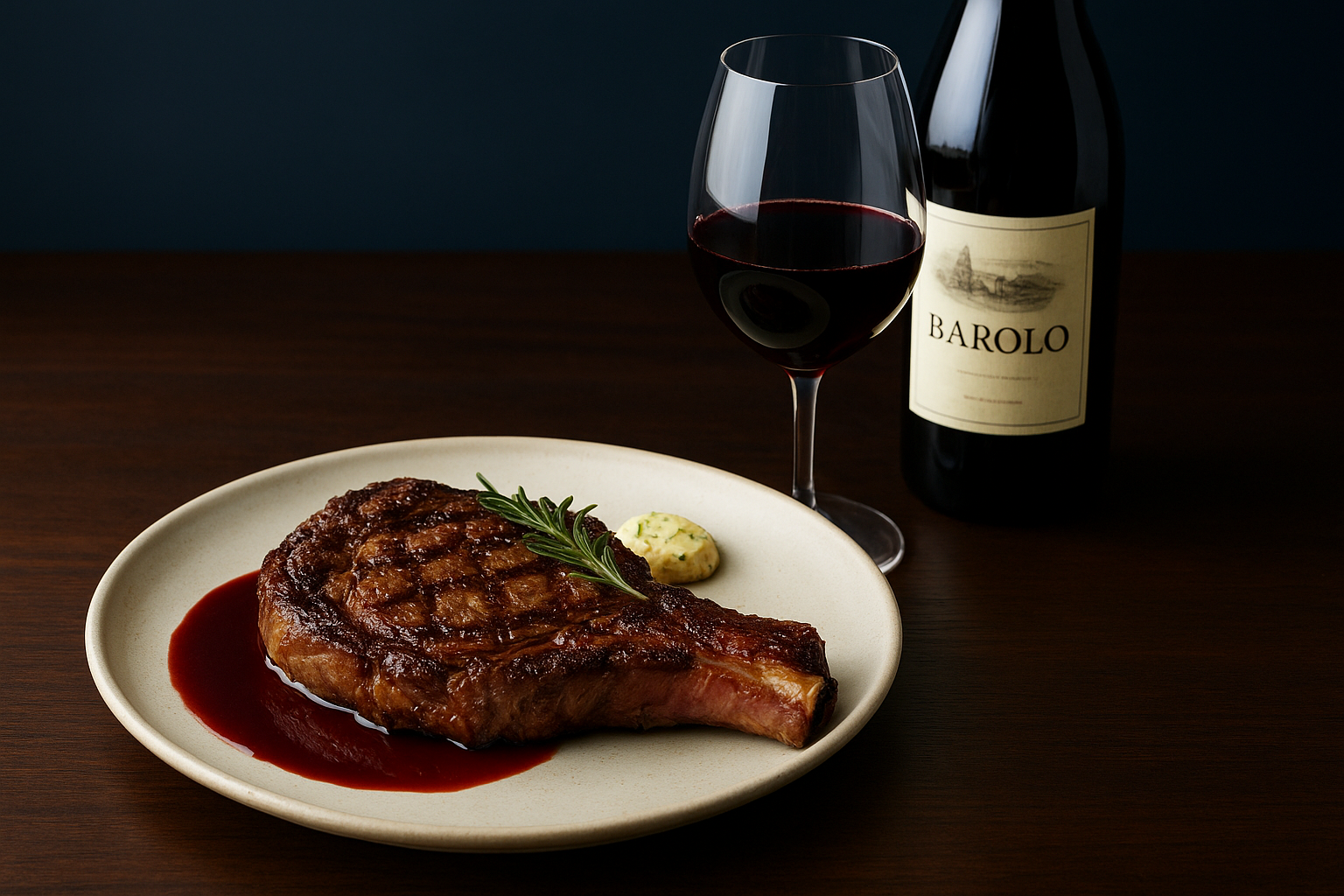
Few pairings in Italian dining carry more weight than a bone-in ribeye alongside a glass of Barolo. The combination hits every note: protein, fat, tannin, and acidity all pulling in the same direction. This is one of the most reliable examples of food pairing with Barolo you will find, and it holds up time after time.
Why this pairing works with Barolo tannins
Barolo’s high tannin structure needs fat and protein to soften. When you eat a fatty, well-marbled cut like ribeye, the fat coats your palate and binds with those tannins, making the wine taste smoother and the steak taste richer. Without enough fat and protein on the plate, Barolo can feel bitter, grippy, and drying rather than complex and satisfying.
Fat is not the enemy here. It is the bridge between a tannic wine and a genuinely great bite of steak.
Best steak cuts, doneness, and sauces that fit Barolo
Your best options are a ribeye, T-bone, or Florentine-style bistecca. Cook to medium-rare or medium. Going past medium-well dries the meat out and strips the fat that makes this pairing click. Keep sauces simple: a red wine reduction or rosemary-garlic butter works well with Barolo without drowning it out. Avoid cream-based sauces entirely because they flatten the wine’s acidity and make everything taste heavy.
Bottle age, decanting, and serving temperature for steak night
Younger Barolo (under 10 years) benefits from at least 90 minutes of decanting before dinner. Older bottles need far less, around 20 to 30 minutes. Serve the wine between 60 and 65 degrees Fahrenheit to keep the fruit present without muting the aromatics. Skipping the decant on a young bottle is the single most common mistake people make when pairing steak with Barolo.
Where to try it in Chicago at La Dolce Vita Cucina
At La Dolce Vita Cucina in Chicago’s Portage Park neighborhood, our 16oz Ribeye was made for exactly this kind of pairing. Come in for dinner and experience what a proper steak and Barolo night looks and tastes like.
2. Braised short ribs or osso buco
Braised short ribs and osso buco represent some of the most reliable and rewarding food pairing with Barolo options on this list. Slow-cooked meat builds a deep, savory richness that matches Barolo’s weight without competing against it.
Why slow-cooked meat makes Barolo taste smoother
Long braising breaks down collagen into gelatin, which coats your palate and softens Barolo’s firm tannins the same way fat does in a ribeye. The result is a wine that tastes rounder and more integrated with every bite.
The slow cook does half the work a sommelier would.
Best braising styles: Barolo-braised, tomato-based, and herb-forward
Your three best approaches are:
- Barolo-braised: Use the wine in the braise itself to build flavor continuity between plate and glass.
- Tomato-based: Adds acidity that mirrors the wine’s own tartness.
- Herb-forward: Rosemary and thyme bring aromatic alignment without adding sweetness.
Side dishes that elevate the pairing: polenta, potatoes, and gremolata
Creamy polenta absorbs the braising liquid and adds a starchy buffer that keeps the pairing balanced. Gremolata (lemon zest, parsley, garlic) cuts through the richness without clashing with the wine.
Common mistakes to avoid with braises and Barolo
Skip overly sweet braising sauces because sweetness flattens Barolo’s acidity quickly. Also avoid heavy cream additions to the braise, which muddy both the dish and the wine’s finish.
3. Tagliatelle or pappardelle with ragu
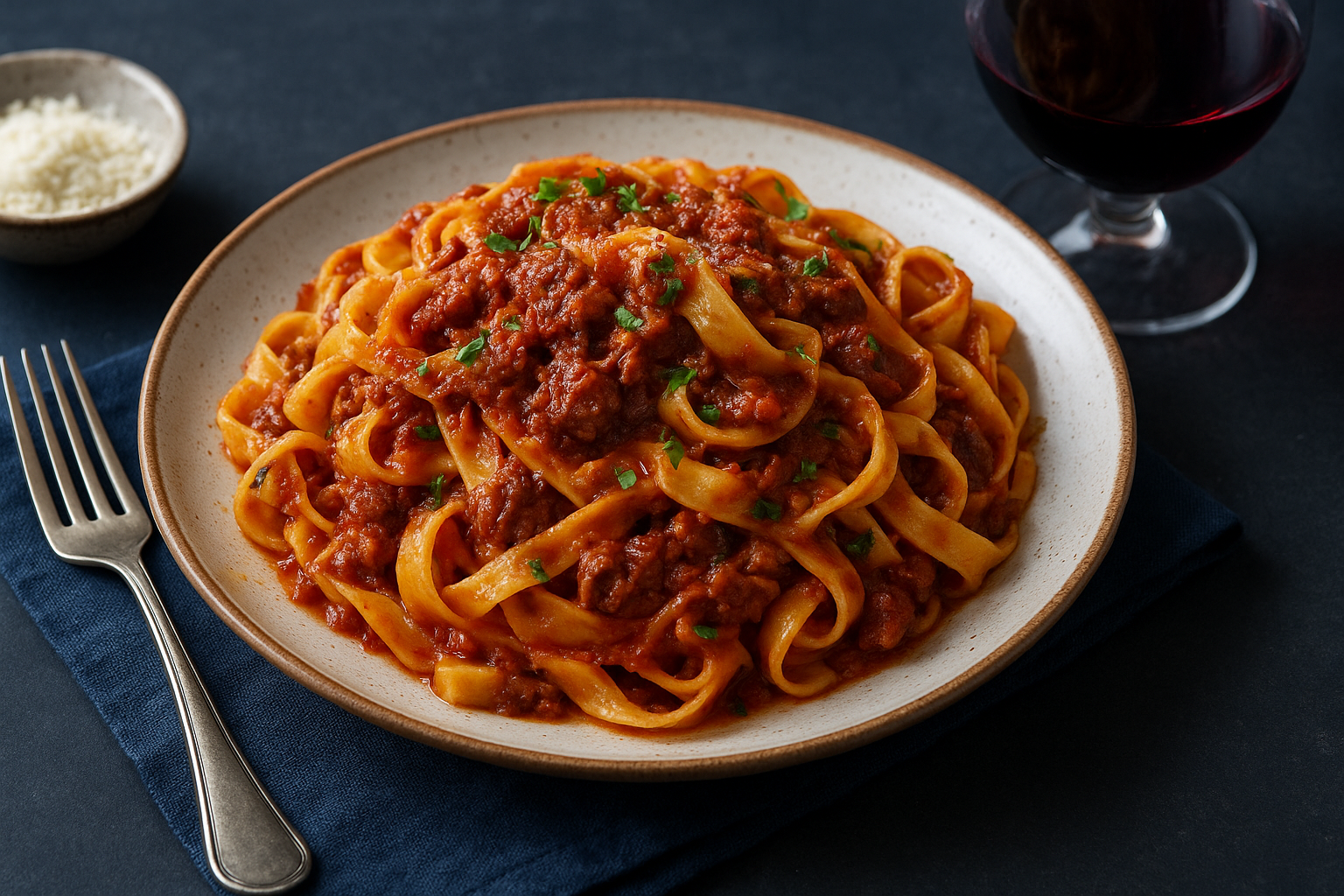
Egg pasta with ragu is one of the most classic examples of food pairing with Barolo, and it holds up because the components genuinely align at a structural level. Wide, flat noodles grab onto the sauce, creating bites that are rich enough to stand alongside the wine’s weight.
Why egg pasta and ragu match Barolo’s structure
Egg pasta carries more fat than dried semolina pasta, which softens Barolo’s tannins with every bite. Wide cuts like tagliatelle and pappardelle also hold thick meat sauces better, ensuring you get enough richness in each forkful to keep the wine balanced.
The pasta is not just a vehicle for sauce; it is an active part of the pairing.
Ragu options that work best: beef, pork, veal, and mushroom ragu
Your strongest choices are beef, pork, or veal ragu, all of which provide the protein and fat Barolo needs. A mushroom-based ragu works well too, especially with aged Barolo, because the earthy depth mirrors the wine’s tertiary aromas.
How to balance acidity, fat, and salt so the wine stays in focus
Season the ragu with enough salt and tomato to keep acidity balanced. Too little acidity makes the dish taste flat against the wine’s tartness.
Best Barolo styles for pasta: younger vs aged bottles
Younger Barolo pairs better with meaty, robust ragu because its tannins need more fat to integrate. Aged bottles, with softer tannins and more developed aromatics, match well with lighter veal or mushroom preparations.
4. Mushroom and truffle risotto
Mushroom and truffle risotto connects to Barolo through shared earthy aromas rather than fat and protein alone. This makes it a standout option for food pairing with Barolo, especially when you reach for an aged bottle whose tertiary notes of forest floor and dried rose mirror what’s already on the plate.
Why earthy flavors mirror Barolo’s aromas
Aged Barolo develops aromas of earth, leather, and dried herbs that align naturally with mushrooms. The umami compounds in mushrooms echo these characteristics on your palate, creating a sense that the wine and dish belong together from the first sip.
This is one of the few plant-forward pairings that genuinely matches Barolo’s depth without relying on meat.
Which mushrooms work best: porcini, cremini, and wild blends
Your best choices share one trait: concentrated earthiness that mirrors Barolo’s complexity. Combine dried and fresh varieties for the most complete result.
- Dried porcini: the deepest umami hit, ideal as a base flavor
- Wild mushroom blends: add aromatic range and complexity
- Fresh cremini: a useful filler that rounds out texture
How to handle truffle with Barolo without overpowering the wine
Use truffle as a finishing element, not a base flavor. A few shavings of black or white truffle on top preserve earthy depth without overwhelming the wine’s aromatics.
Wine timing tips: when to open and how long to decant
Open aged Barolo 30 to 45 minutes early so it has just enough air without losing its developed aromas. Younger bottles need 60 to 75 minutes in a wide decanter before dinner.
5. Aged cheese and charcuterie board
A well-built cheese and charcuterie board gives you one of the most flexible food pairing with Barolo options on this list. The combination of fat, salt, and umami from aged cheese and cured meat softens tannins and lets the wine’s complexity come forward.
Best cheeses with Barolo: firm, aged, and blue-leaning picks
Reach for Parmigiano-Reggiano, aged Pecorino, or Grana Padano as your anchors. Their crystalline texture and concentrated salt content bind Barolo’s tannins without competing with the wine’s acidity.
Best cured meats and nuts: salumi, hazelnuts, and simple accompaniments
Prosciutto, salami, and bresaola all work well because they deliver fat and savory depth without sweetness. Add toasted hazelnuts for a bridge to Barolo’s own nutty aromatic notes.
Keep accompaniments simple. Honey, fruit jam, and sweet crackers introduce sugar that flattens Barolo’s acidity fast.
How to build a board that won’t clash with Barolo
Anchor the board with two or three aged cheeses and fill the rest with cured meats, nuts, and plain crackers. Skip fresh sweet fruits and pickled items that introduce flavors pulling in opposite directions from the wine.
When to choose cheese over dessert with Barolo
Chocolate and fruit-based desserts clash with Barolo because sugar makes high-tannin wine taste bitter and hollow on the finish. Ending the meal with a cheese board keeps the wine as the centerpiece and delivers a satisfying close to dinner.
Your next Barolo night
Every idea on this list works because it respects what makes Barolo unique: bold tannins, deep acidity, and layered complexity that rewards equally serious food. Whether you go with a ribeye, a slow braise, egg pasta, an earthy risotto, or a well-built cheese board, the logic stays the same. Match fat, protein, and umami to the wine, and the whole meal improves from the first sip.
Getting food pairing with Barolo right does not require a culinary degree. It requires thoughtful choices and quality ingredients that give the wine room to shine. Pick one pairing from this list for your next dinner, decant early, and let the meal take shape from there. Start simple, and the results will follow.
Ready to experience premium Italian cuisine built around exactly these principles? Make a reservation at La Dolce Vita Cucina in Chicago’s Portage Park neighborhood and let us handle the rest.