
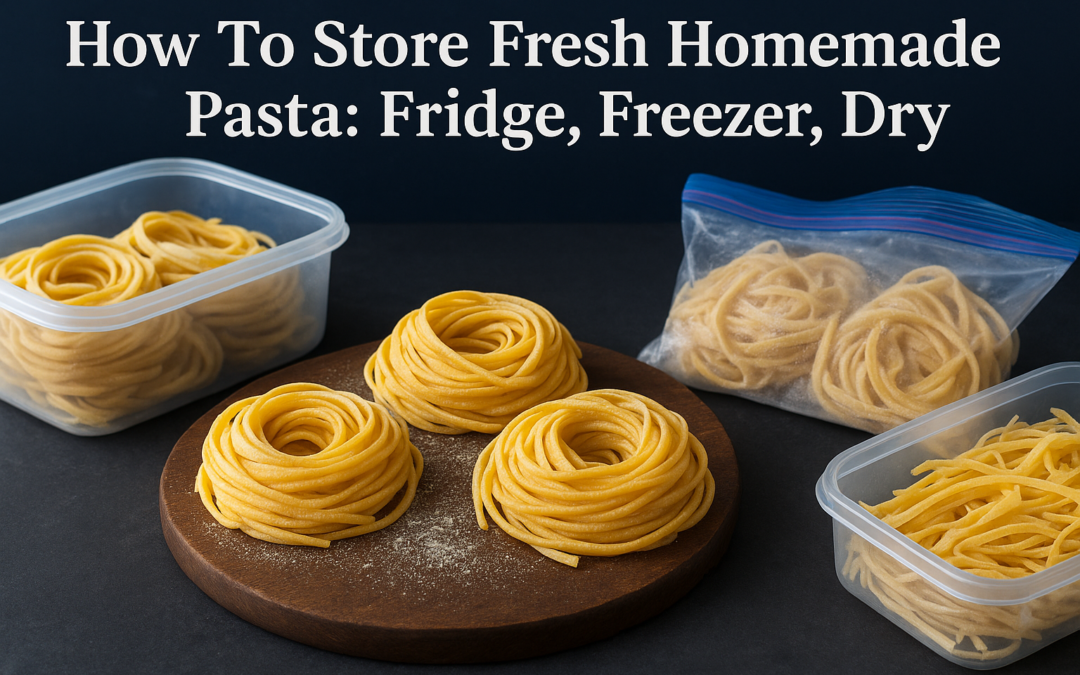
At La Dolce Vita Cucina, we make fresh pasta by hand every day in our Portage Park kitchen, homemade linguini, tagliatelle, and more. It’s one of the things our guests love most about dining with us. But we also know that plenty of you are rolling out pasta at home, and the biggest question after that first batch is always how to store fresh homemade pasta without ending up with a sticky, dried-out mess. It’s a fair concern, because fresh pasta behaves nothing like the boxed stuff sitting in your pantry.
The good news? You have options. Whether you made more than you can eat tonight or you’re meal-prepping for the week ahead, fresh pasta stores well in the fridge, freezer, or even dried on a rack, as long as you handle each method correctly. Get it wrong, and you’ll end up with clumped noodles or a texture that falls apart in boiling water. Get it right, and your Tuesday night dinner tastes just as good as the day you made it.
This guide breaks down each storage method step by step, refrigerating, freezing, and drying, so you can pick what works best for your schedule and your pasta shape. We’ll cover timing, containers, common mistakes, and a few things we’ve learned from years of working with fresh pasta in our own kitchen.
What affects fresh pasta shelf life
Fresh pasta is delicate because it’s made with raw eggs and high-moisture flour, unlike dried pasta, which has had that moisture removed. Those two ingredients give fresh pasta its soft, silky texture, and they’re also what make it spoil faster. Before you figure out how to store fresh homemade pasta the right way, it helps to understand what’s actually working against you once you stop rolling.
Ingredients and hydration level
The eggs in your dough are the biggest factor. Egg-based pasta like linguini or tagliatelle has a shorter shelf life than eggless pasta made with just semolina and water. The more eggs in the recipe, the more moisture in the dough, and the faster bacteria can grow if the pasta sits out at room temperature. Hydration level matters too: a wetter, softer dough needs to reach the fridge or freezer sooner than a stiffer, drier one.
Most egg-based fresh pasta should not sit at room temperature for more than two hours before you refrigerate or freeze it.
A second variable here is salt content. Salt draws out moisture from the dough surface, which can accelerate sticking when strands sit together in a pile. Lightly salted doughs are more forgiving to store, while highly seasoned pasta needs extra separation before you pack it away.
Shape, thickness, and kitchen environment
Thicker cuts like pappardelle or hand-rolled sheets hold up better during storage because they have less exposed surface area relative to their mass. Thinner shapes like angel hair or fine tagliolini dry out unevenly and clump together faster, which means they need careful separation before they go anywhere near a container or bag.
Your kitchen environment also plays a direct role. High humidity causes fresh pasta to get sticky before it even reaches the fridge, while a hot kitchen shortens your handling window significantly. Move freshly rolled pasta into storage quickly, especially in summer.
Step 1. Prep pasta to prevent sticking
Before you think about containers or bags, you need to handle the pasta correctly on your work surface. Fresh pasta sticks to itself almost immediately after cutting, and skipping this prep step will ruin any storage method you try, regardless of whether it goes in the fridge or freezer. This is the foundation of knowing how to store fresh homemade pasta well.
Dust with the right flour
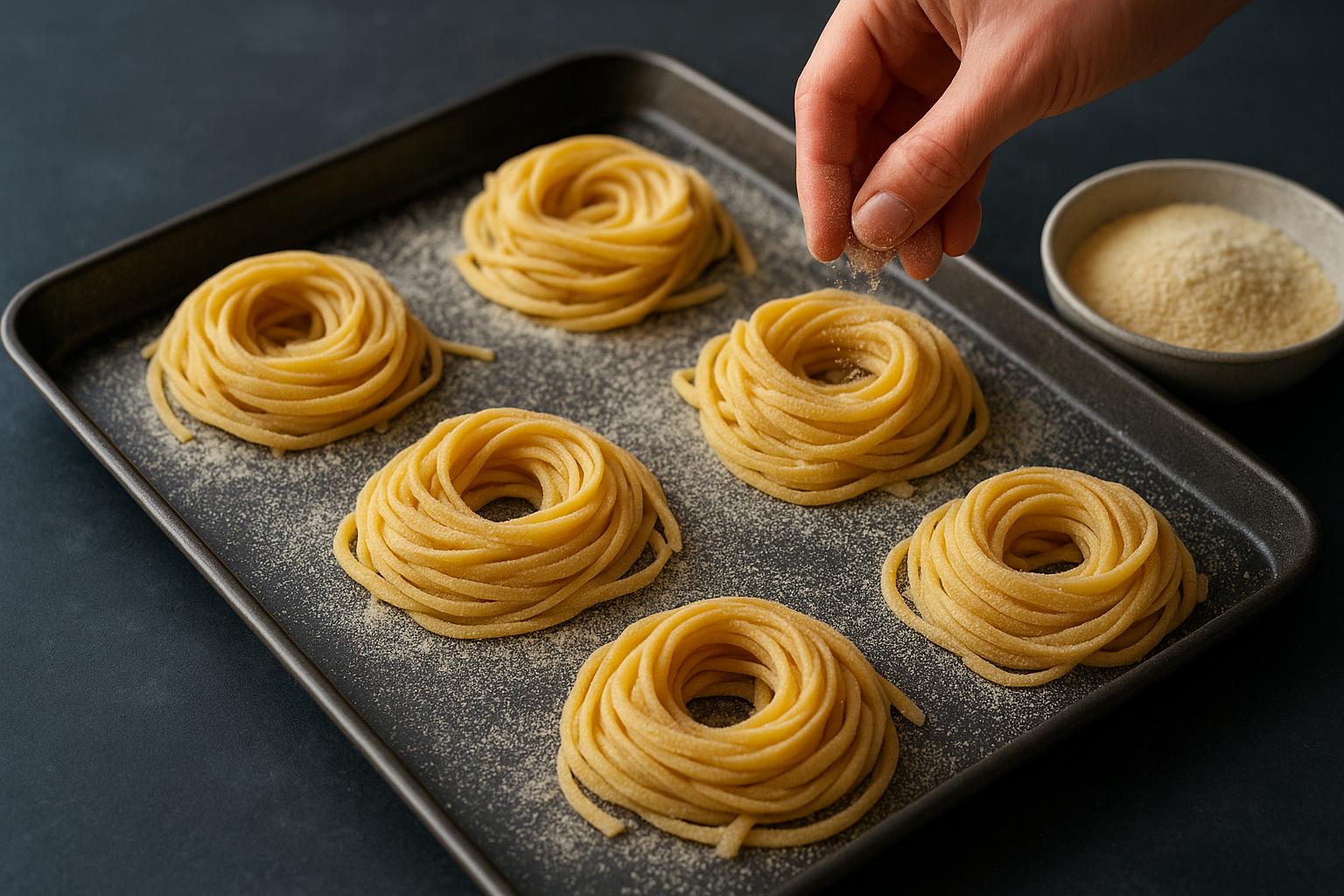
Semolina flour is your best option for dusting freshly cut pasta. It’s coarser than all-purpose flour, which means it coats the strands without absorbing into the dough and turning to paste when moisture builds up. Dust your cut pasta immediately after cutting, not after it has sat for several minutes.
Avoid using all-purpose flour for dusting if you plan to freeze the pasta. It creates a gummy layer when frozen and thawed.
Nest and portion before storing
Shape your pasta into loose nests using about one serving per nest, roughly 80 to 100 grams for a main course portion. Set each nest on a lightly floured baking sheet and let them rest for five to ten minutes before moving them to a container, bag, or drying rack. This short rest firms up the surface and reduces sticking during transfer.
Step 2. Store fresh pasta in the fridge
Once your pasta nests are prepped and dusted, refrigerate them within two hours of cutting. The fridge slows bacterial growth and keeps the dough from drying out, but temperature and packaging matter just as much as timing. This is one of the most practical ways to handle how to store fresh homemade pasta when you plan to cook within a day or two.
How long fresh pasta lasts in the fridge
Fresh egg-based pasta stays good in the refrigerator for up to two days. After that, the egg proteins break down, and you’ll notice the pasta getting sticky, discolored, or developing an off smell. Plan your meals around this window and don’t push it past 48 hours.
Check the pasta before cooking even if it falls within the two-day window. Any sour smell or unusually wet texture means you should discard it rather than cook with compromised dough.
If your fresh pasta smells sour or feels excessively wet, discard it rather than cook it.
Container and packing method
Use an airtight container rather than plastic wrap alone. Place your portioned nests in a single layer, or separate layers with parchment paper to prevent sticking. Seal the container tightly and store it toward the back of the fridge, where the temperature stays most consistent.
Before cooking, do not thaw or rinse refrigerated pasta. Drop it directly into well-salted boiling water and cut your cooking time significantly compared to dried pasta, usually one to three minutes depending on thickness.
Step 3. Freeze fresh pasta for later
Freezing is the best option when you know you won’t cook your pasta within two days. Fresh pasta freezes well and can hold for up to one month without a noticeable drop in quality, as long as you handle it correctly before it goes in the freezer. This method works for nearly every shape and cut, making it the most flexible way to approach how to store fresh homemade pasta across a longer stretch of time.
Flash freeze before bagging
Flash freezing is the step most home cooks skip, and it’s the main reason frozen pasta ends up as one solid clump. Place your portioned nests on a parchment-lined baking sheet and slide them into the freezer, uncovered, for 30 to 60 minutes. Once the nests feel firm to the touch, transfer them to a zip-lock freezer bag, squeeze out as much air as possible, and seal tightly. Store bags flat to save space and keep portions easy to separate later.
Label each bag with the pasta shape and the date it was made so you cook the oldest portions first.
Cooking pasta straight from frozen
Do not thaw frozen pasta before cooking it. Drop the nests directly into heavily salted boiling water and add 30 to 60 seconds to your usual fresh pasta cook time. Thawing first causes the strands to absorb excess water and turn soft, which undermines the texture you worked to create.
Step 4. Dry pasta for pantry storage
Drying is the third method for how to store fresh homemade pasta, and it works best for long, strand-based shapes like linguini, spaghetti, or tagliatelle. The goal is to remove enough moisture from the dough so it can sit at room temperature without spoiling, similar to commercial dried pasta.
Best shapes and conditions for drying
Eggless pasta made with semolina and water dries much better than egg-based dough. Egg pasta contains fat and protein that resist even drying and can turn rancid at room temperature over time. If you’re set on drying egg pasta, plan to use it within a week and store it somewhere cool and dry. For eggless pasta, properly dried noodles can last up to one month in an airtight container.
Dry pasta in a low-humidity environment, ideally below 60% relative humidity, to prevent mold from forming before the dough fully dries out.
How to dry pasta at home
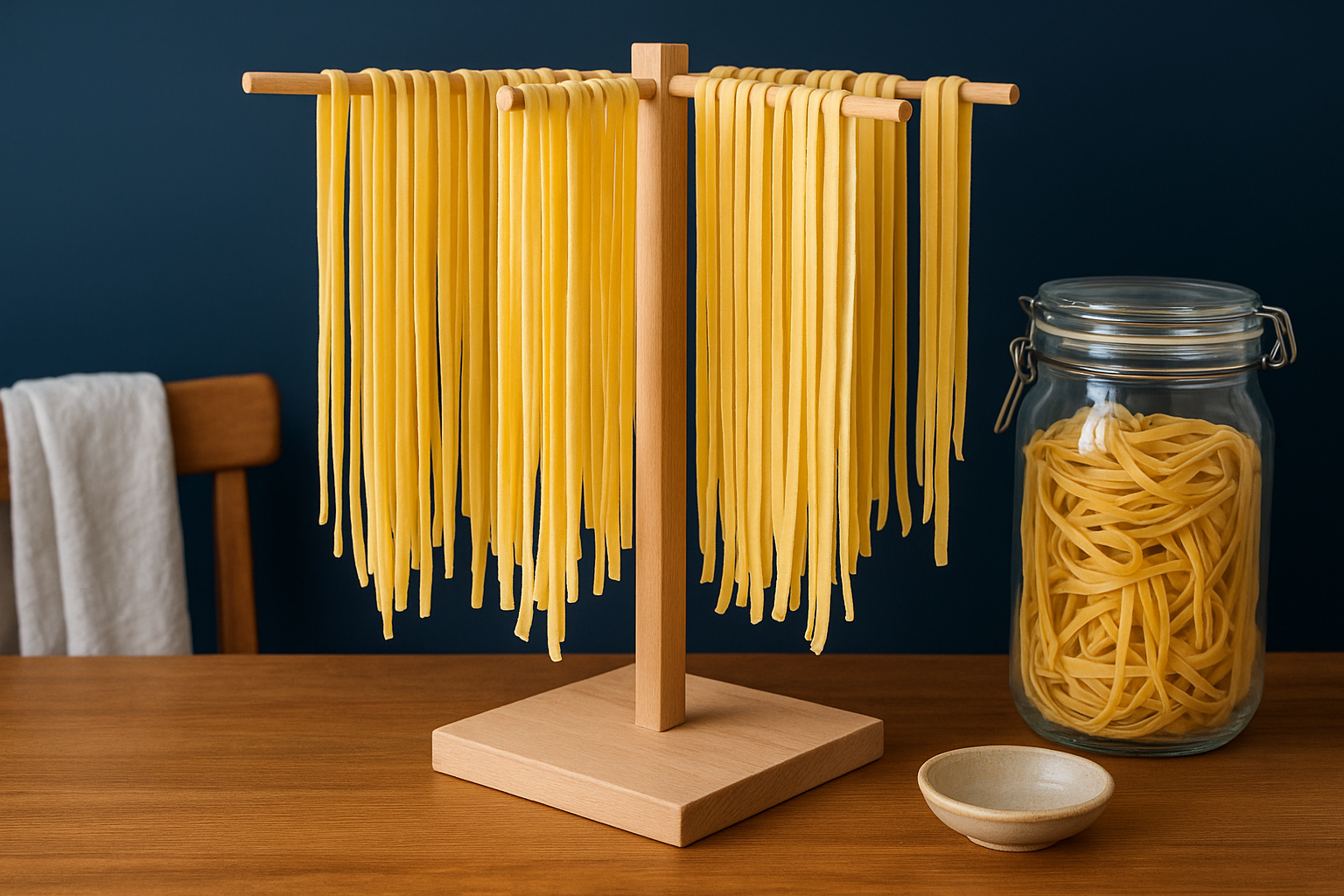
Hang your pasta strands over a pasta drying rack or drape them over the back of a clean chair covered with a lint-free towel. Space strands apart so air circulates on all sides. Let them dry for 12 to 24 hours at room temperature, turning them once halfway through. Once fully dry, the pasta should snap cleanly when you bend it, not flex. Pack dried pasta into an airtight glass jar or container and store it away from heat and direct light.
Quick recap and what to cook next
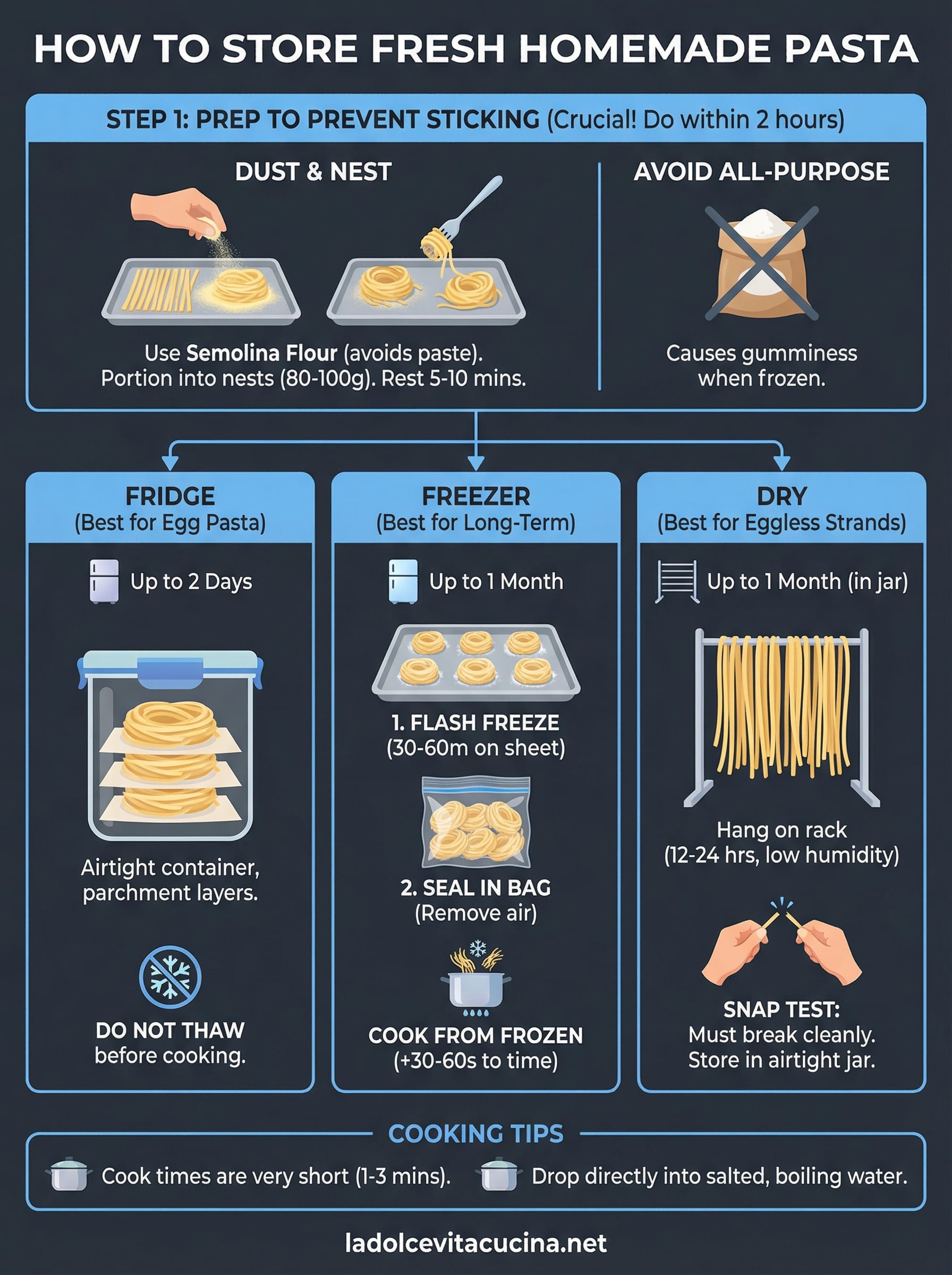
Knowing how to store fresh homemade pasta comes down to picking the right method for your timeline. Refrigerate egg-based pasta if you plan to cook it within two days, using an airtight container with portioned nests separated by parchment. Freeze it for up to a month by flash-freezing nests first, then sealing them in labeled bags with the air removed. Dry your pasta on a rack for pantry storage, but stick to eggless semolina dough for the best results and a longer shelf life.
Each of these methods works well when you nail the prep step: dust with semolina, portion into nests, and move quickly before the dough sticks to itself. Skipping that foundation is where most batches go wrong.
If you want to taste what properly made fresh pasta looks like on a plate, come visit us at La Dolce Vita Cucina in Portage Park and try the homemade linguini or tagliatelle for yourself.