
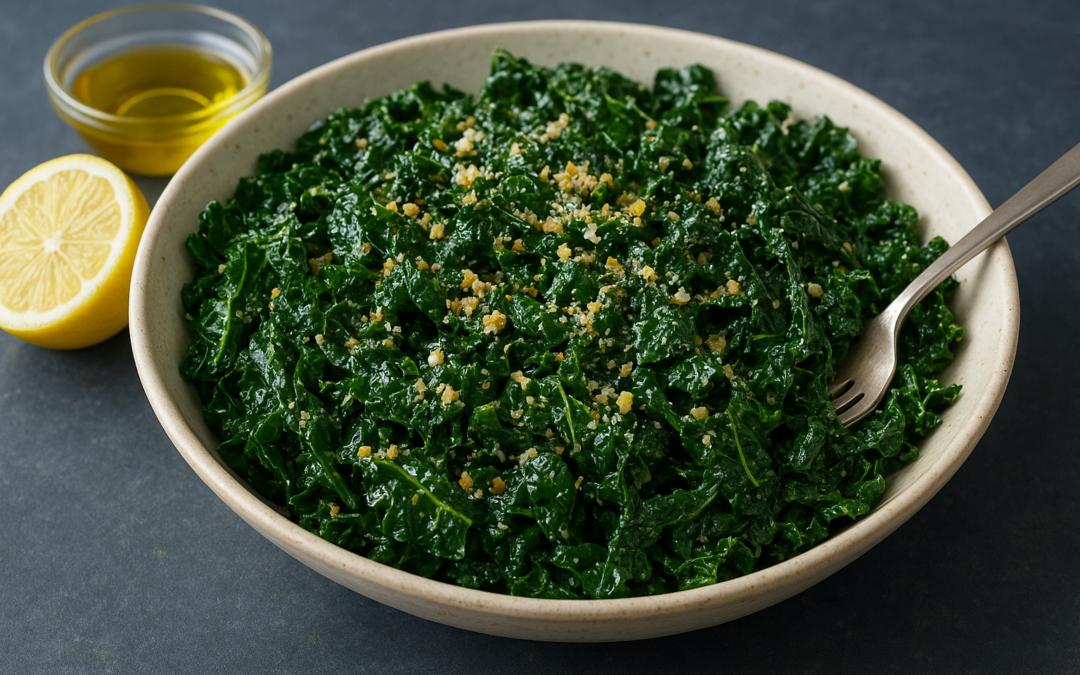
Tuscan kale, that dark, crinkly, slightly sweet green the Italians call cavolo nero, is one of the most underrated salad bases out there. At La Dolce Vita Cucina, our kitchen in Chicago’s Portage Park neighborhood builds dishes around ingredients like this: simple, honest, and packed with flavor when treated right. This Italian kale salad recipe is one we think every home cook should have in their back pocket, and it comes together in about 10 minutes flat.
The trick isn’t complicated. You start with Lacinato kale, massage it with a bright lemon vinaigrette, and finish it with sharp pecorino, toasted nuts, and a few savory touches that make the whole thing sing. It’s the kind of salad that holds up beautifully on its own or sits right next to a plate of homemade pasta, exactly the way we’d serve it at our restaurant on a Tuesday night.
Below, we’ll walk you through every step: picking the right kale, building a proper vinaigrette from scratch, choosing toppings that actually matter, and storing leftovers so nothing goes to waste. Whether you’re prepping lunch for the week or pulling together a quick side for dinner guests, this recipe earns its spot in your regular rotation.
Why Tuscan kale makes a better salad
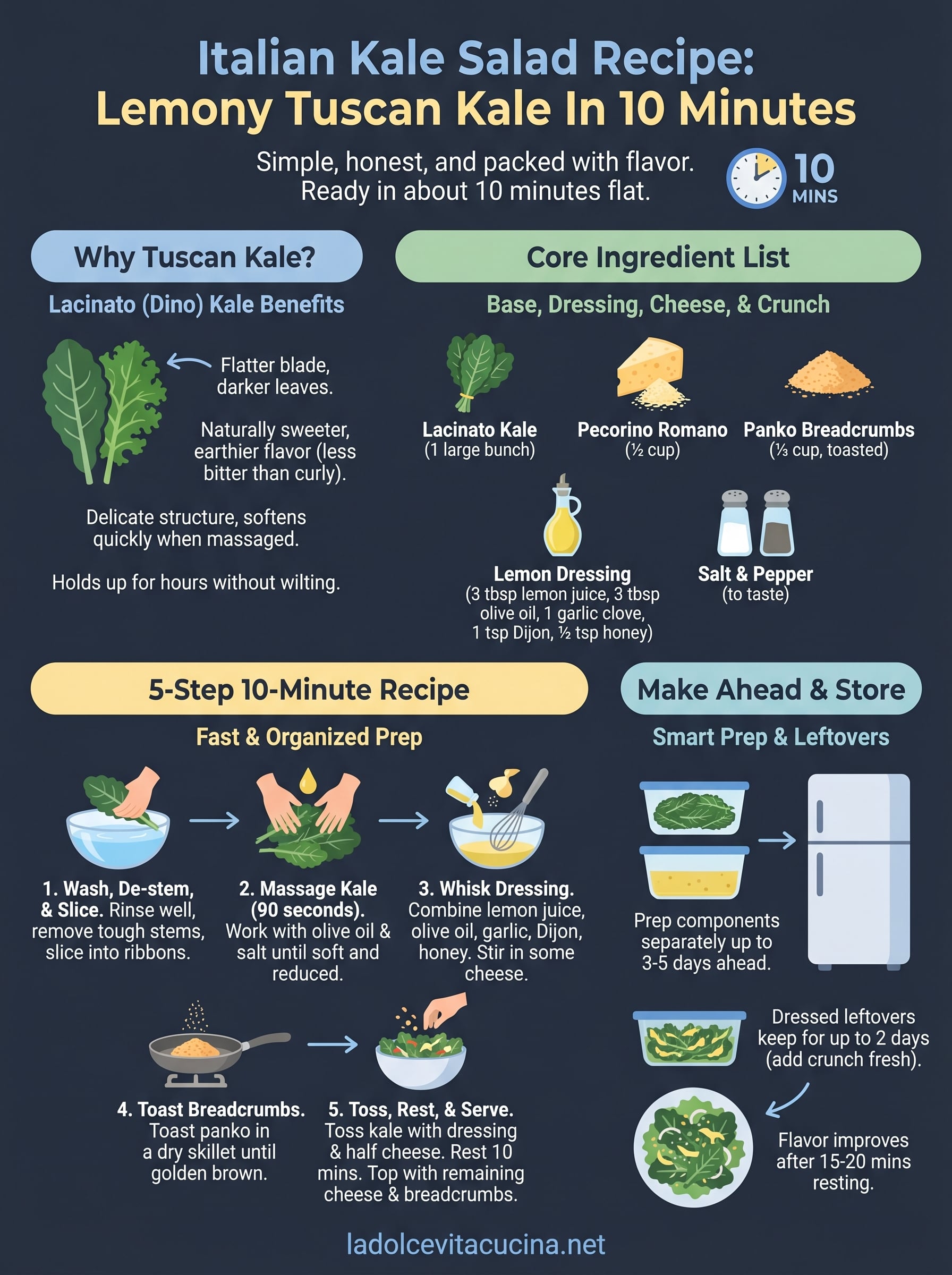
Not all kale is the same, and the type you choose will make or break your salad. Tuscan kale, also called Lacinato kale or cavolo nero, has darker leaves, a flatter blade, and a naturally sweeter, earthier flavor compared to the curly variety stacked in most grocery store produce sections. When you’re building an italian kale salad recipe designed to be ready in 10 minutes, that difference matters more than you might expect, and understanding why helps you make better choices every time you cook.
What sets Lacinato kale apart from curly kale
Curly kale is tough, bitter, and thick-stemmed. You can eat it raw, but taming it takes real effort: longer massaging times, stronger acids in your dressing, and even then it can feel dense and chewy in a way that doesn’t translate well to salad. Lacinato kale has a more delicate cell structure, which means it softens quickly when you work a dressing into it with your hands, often in under two minutes.
Tuscan kale’s thinner, flatter leaves absorb acid and oil much faster than curly kale, which cuts your active prep time significantly and makes the 10-minute timeline realistic.
The flavor profile is different too. Curly kale leans bitter and sharp, which can overpower a simple lemon vinaigrette. Tuscan kale sits closer to a mild, nutty sweetness that pairs well with lemon, garlic, and aged cheese. You’re not fighting the green to get a balanced bite; you’re building on top of a flavor base that already works in your favor.
How the leaf structure holds dressing better
Look closely at a Lacinato kale leaf and you’ll notice a slightly bumpy, pebbled surface running along the blade. That texture is not just visual. It gives the dressing something to grip onto. When you toss curly kale in a vinaigrette, the liquid tends to pool at the bottom of the bowl. With Lacinato, the dressing clings evenly to every bite, which means you taste the lemon and garlic and cheese in every forkful, not just in the saturated spots at the bottom.
This structural advantage also means you can use less dressing overall without ending up with a dry or underflavored salad. That matters if you’re watching calories or simply want a lighter, brighter result. The kale carries the flavor so the dressing doesn’t have to do all the heavy lifting.
Why kale outlasts lettuce in a salad bowl
Lettuce wilts fast. You dress a romaine or butter lettuce salad and you have maybe 20 to 30 minutes before it starts losing structure and turning limp. Kale holds up against acid and oil for hours without collapsing, which makes it ideal for meal-prepped lunches or dinner parties where the salad sits out longer than you planned.
Once you dress your Tuscan kale salad, it actually improves over the first 15 to 20 minutes as the leaves continue to soften and pull in flavor from the vinaigrette. You can dress it slightly ahead of time without the worry of pulling out a soggy, waterlogged bowl. That kind of durability is rare in a salad green, and it’s a big reason Italian cooks have leaned on cavolo nero for generations.
Ingredients and smart substitutions
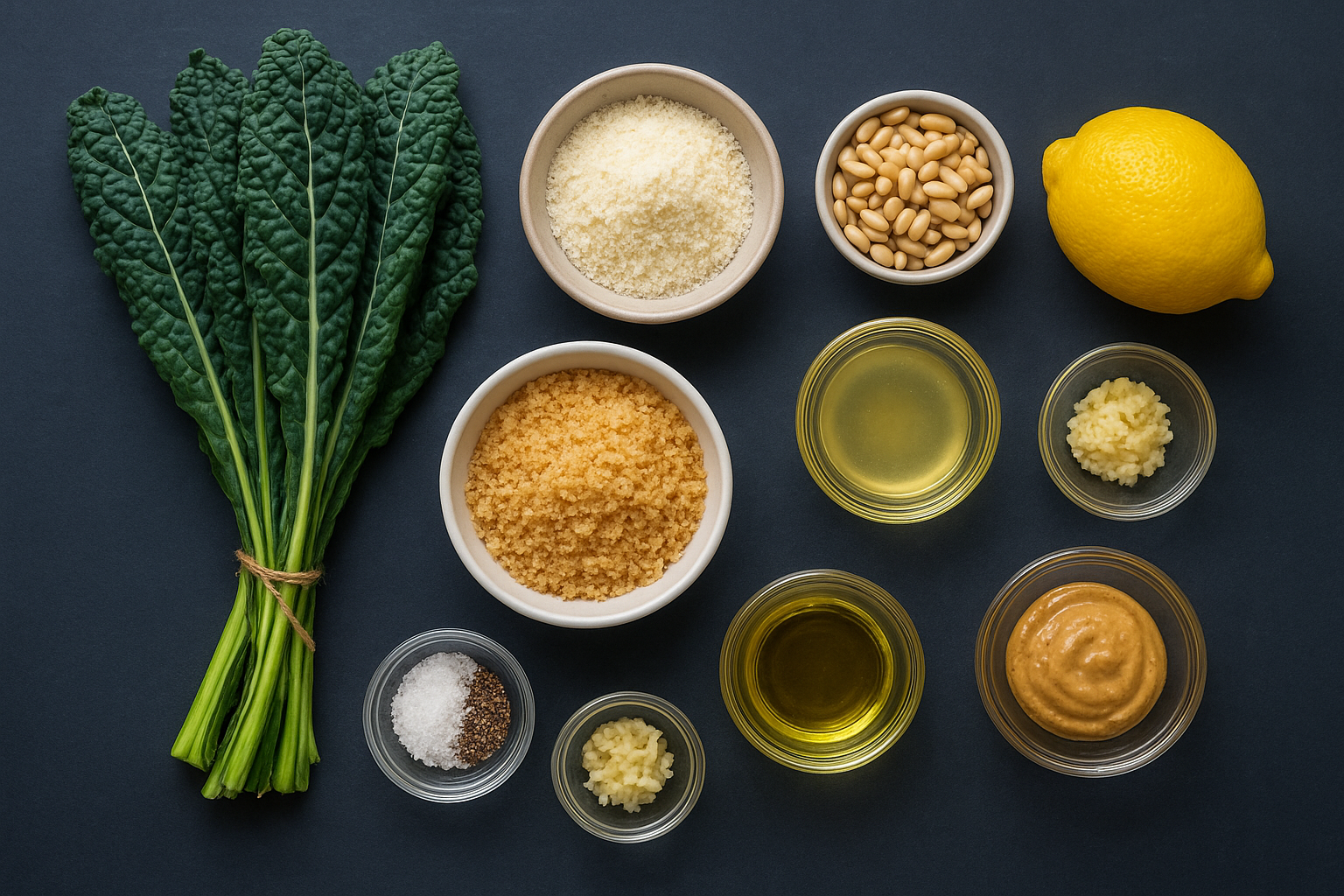
This italian kale salad recipe uses a short, focused ingredient list. Everything on it serves a purpose, and most of it is already sitting in a well-stocked kitchen. Before you start prepping, pull everything out and set it on your counter so the actual assembly stays fast and organized.
The core ingredient list
You only need two categories here: the salad base and the dressing. Keep them separate in your head and the whole recipe becomes easier to execute without second-guessing yourself mid-prep.
| Component | Ingredient | Amount |
|---|---|---|
| Base | Lacinato (Tuscan) kale | 1 large bunch (about 10 oz) |
| Cheese | Pecorino Romano, finely grated | ½ cup |
| Crunch | Panko breadcrumbs, toasted | ⅓ cup |
| Crunch (alt) | Pine nuts or toasted almonds | ¼ cup |
| Dressing | Fresh lemon juice | 3 tablespoons |
| Dressing | Extra-virgin olive oil | 3 tablespoons |
| Dressing | Garlic, minced or grated | 1 small clove |
| Dressing | Dijon mustard | 1 teaspoon |
| Dressing | Honey | ½ teaspoon |
| Seasoning | Kosher salt and black pepper | To taste |
Freshly squeezed lemon juice is non-negotiable here; bottled juice is too flat and lacks the brightness that lifts the whole dressing.
Smart substitutions that work
Pecorino Romano delivers a sharper, saltier punch than Parmesan, but Parmesan works well if that’s what you have on hand. Use a fine grater or microplane so the cheese distributes evenly rather than clumping in spots. Grana Padano is another solid option with a slightly milder bite.
For the crunch element, toasted panko breadcrumbs give you a light, consistent texture throughout the bowl. If you want to keep things gluten-free, swap in toasted pine nuts, sliced almonds, or pumpkin seeds instead. All three toast quickly in a dry pan over medium heat and add a nutty depth that holds up well against the lemon dressing.
The Dijon mustard in the dressing acts as an emulsifier, keeping the oil and lemon from separating as you toss. Whole grain mustard works as a substitute and adds a mild texture. If you want more heat, a small pinch of red pepper flakes stirred into the dressing adds a clean, sharp warmth without overwhelming the other flavors.
Prep checklist for a 10-minute salad
The reason this italian kale salad recipe stays under 10 minutes is not speed or shortcuts; it’s preparation before you pick up a knife. Getting your tools, ingredients, and workspace sorted before you start keeps you moving without stopping to search for a grater or wait for a pan to heat up. A few minutes of setup saves you five minutes of scrambling mid-recipe.
What to have ready before you start
Pull your equipment out first. You need a large mixing bowl for massaging the kale, a small bowl or jar for whisking the dressing, a cutting board, a chef’s knife, and a small skillet for toasting the breadcrumbs. A microplane or fine grater is worth finding before you start, since trying to grate cheese with the wrong tool mid-recipe slows everything down and throws off the texture of the finished salad.
Your kale should come out of the refrigerator a few minutes before you begin. Cold kale is stiffer and slower to absorb the dressing, so letting it sit at room temperature briefly gives you a head start on the massaging step without adding extra time. Set it on the counter while you gather your tools and it will be ready when you are.
Spending 2 minutes organizing your tools and ingredients before you begin makes the actual cooking feel effortless and keeps the 10-minute timeline within reach.
Your full prep checklist
Run through this list before you start slicing:
- 1 large bunch of Lacinato kale, removed from the refrigerator
- Large mixing bowl placed on the counter
- Small bowl or jar for building the dressing
- Chef’s knife and cutting board
- Microplane or fine grater for the cheese
- Small skillet on the stove, dry, ready for medium heat
- Panko breadcrumbs measured and waiting
- Lemon halved and ready to juice
- Garlic clove peeled
- Olive oil, Dijon mustard, honey, salt, and pepper within arm’s reach
- Pecorino Romano set out and ready to grate
Having everything in place before you start means you move through each step in sequence without backtracking. Organized prep is what separates a rushed, uneven salad from one that comes together cleanly and tastes exactly the way you intended.
Step 1. Wash, de-stem, and slice the kale
Starting with clean, properly prepped kale sets the foundation for everything that follows. Kale grown close to the ground collects more grit than almost any other salad green, so rinsing it thoroughly is not optional. This first step in your italian kale salad recipe takes about two minutes and directly affects how the dressing clings to the leaves and how the finished salad feels in the bowl.
How to wash kale without bruising it
Fill your large mixing bowl with cold water and submerge the kale leaves completely. Swish them around with your hands for about 30 seconds, then let them sit for another 30 seconds so any remaining grit settles to the bottom of the bowl. Lift the leaves out by hand rather than pouring the water out through the leaves, which would just deposit the grit right back onto them.
Lifting the kale up and out of the water, rather than draining it through a colander, keeps the grit at the bottom of the bowl where it belongs.
Shake the leaves over the sink to remove the bulk of the water, then lay them on a clean kitchen towel or paper towels and pat them dry. You want the leaves mostly dry before you de-stem them. Wet kale won’t hold a slice cleanly and dilutes your dressing during massaging.
De-stemming without wasting leaves
The stem running down the center of each Lacinato kale leaf is fibrous and tough, and it won’t soften during the massage step the way the leaf itself does. To remove it efficiently, hold the stem at the base with one hand and strip the leaf away from the stem with your other hand in one downward motion. The whole leaf comes off in about two seconds per piece.
Don’t throw away small, tender pieces that break off near the top of the stem. Those upper stem sections are thin enough to eat and add a bit of texture to the finished bowl. Discard only the lower two-thirds of each stem where the fiber is too dense to chew comfortably.
Slicing the kale into the right width
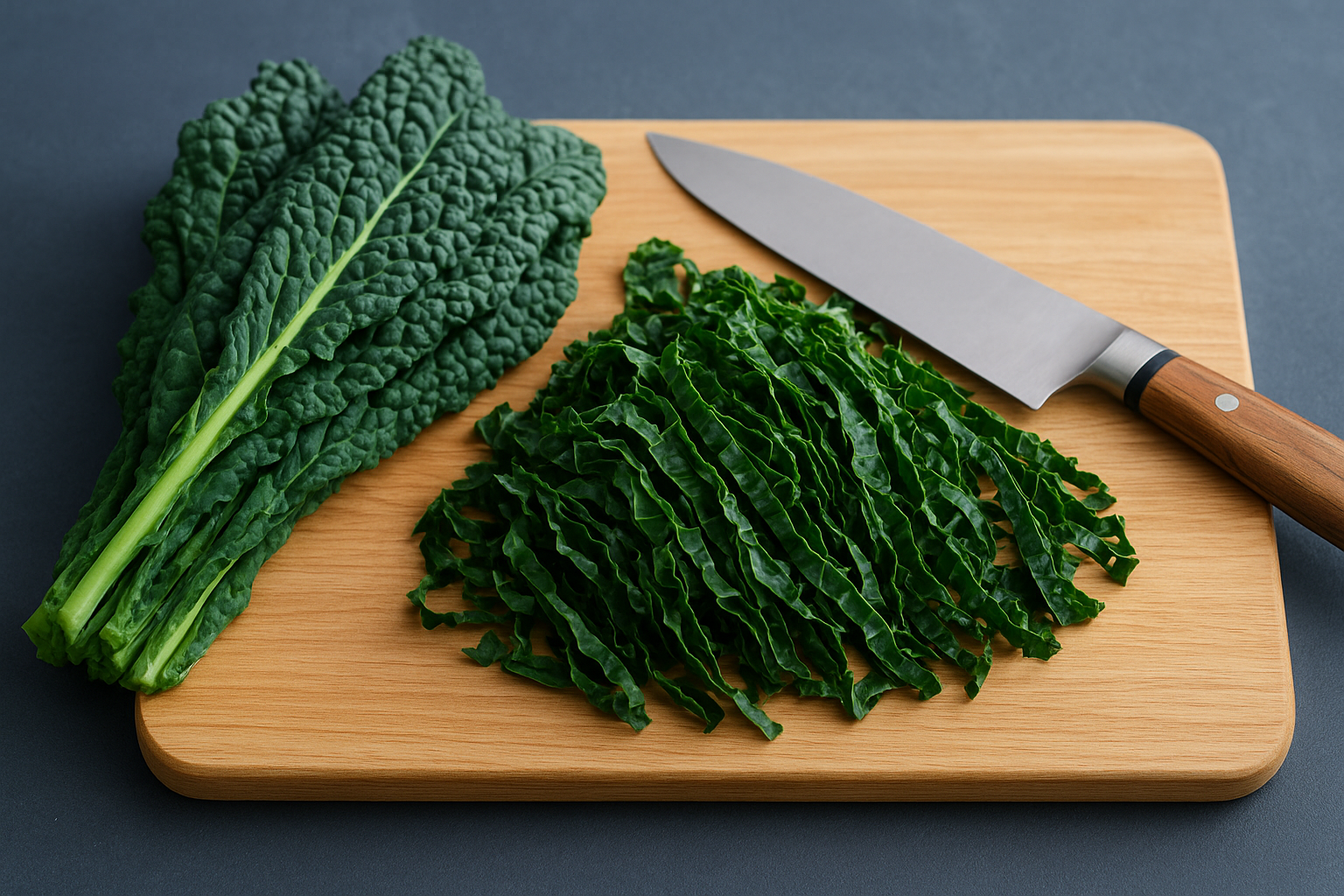
Stack four to five leaves on top of each other on your cutting board, then roll them into a loose cylinder. Slice across the cylinder into thin ribbons, roughly half an inch wide. This cut, called a chiffonade, creates strips that toss evenly with the dressing and are easy to eat without feeling like you’re wrestling with oversized leaves.
Step 2. Massage the kale to soften it fast
Massaging kale sounds like an unnecessary step, but it’s the single most important technique in this italian kale salad recipe. Raw Lacinato kale straight off the cutting board is still firm and slightly waxy on the surface. Working a small amount of salt and olive oil into the leaves by hand breaks down the cell walls, releasing moisture and turning a dense, chewy green into something tender, bright, and ready to absorb dressing evenly.
How much pressure to use and for how long
Add your sliced kale to the large mixing bowl, then drizzle about one teaspoon of olive oil and a small pinch of kosher salt directly over the leaves. Grip handfuls of kale firmly and squeeze and release repeatedly, working the oil and salt into every surface. Use real pressure with your palms and fingers, as if you’re kneading bread dough in smaller, faster motions. You’re not being gentle here; the goal is to physically compress the leaves and force the oil into the tissue.
90 seconds of firm, consistent massaging is enough to transform Lacinato kale from stiff and raw to silky and noticeably reduced in volume.
Most people under-massage because they stop too soon. After about 45 seconds, the kale will look slightly darker and feel softer, but keep going for a full 90 seconds total to get the complete effect. The leaves will shrink down noticeably, sometimes by nearly half their original volume, and the texture will shift from rigid to pliable and smooth under your hands.
Signs that the kale is ready to dress
You’ll know the kale is properly massaged when the leaves look darker green and slightly glossy from the olive oil, and when squeezing a handful releases a small amount of liquid rather than staying completely dry. The pile in your bowl will be visibly smaller, which tells you the cell structure has broken down enough to absorb the dressing without sitting on top of the leaves.
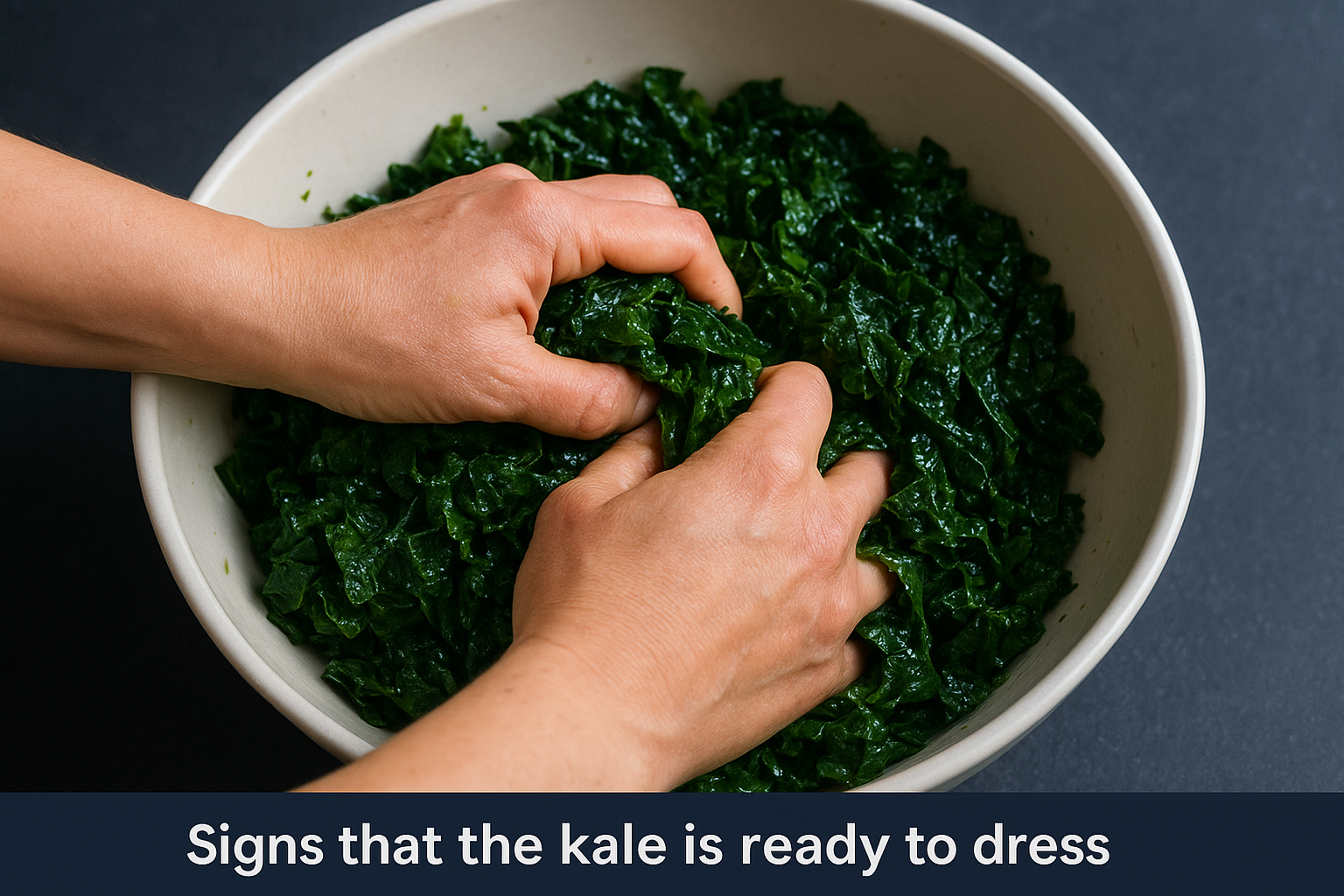
Run a quick check by tasting a single piece. A well-massaged leaf should feel tender without being limp, with a mild, slightly sweet flavor and no raw bitterness. If it still tastes sharp or feels tough against your teeth, work it for another 30 seconds and taste again. Getting this step right means every ingredient you add from here builds on a properly prepared base.
Step 3. Whisk the lemon garlic cheese dressing
The dressing for this italian kale salad recipe is built on four flavor pillars: acid from the lemon, fat from the olive oil, sharpness from the garlic, and a savory depth from the Pecorino Romano. Each element does a specific job, and getting the proportions right means you won’t need to taste and adjust more than once. Pull out your small bowl and a whisk, and keep the ingredients from your prep checklist within reach.
The ratios that balance acid and fat
Start with 3 tablespoons of fresh lemon juice and 3 tablespoons of extra-virgin olive oil. That 1:1 ratio gives you a brighter, more acidic dressing than the classic 3-parts-oil approach you’d use with a red wine vinaigrette, and it’s intentional. Kale is hearty enough to handle a stronger acid hit without the result tasting harsh, and the cheese you’ll add in the next step contributes its own fat and richness to soften the overall profile.
A 1:1 lemon-to-oil ratio works specifically because the massaged kale and aged cheese buffer the sharpness, giving you brightness without bitterness in the final bowl.
Add 1 teaspoon of Dijon mustard and half a teaspoon of honey to the bowl before you pour in any liquid. Whisking the mustard and honey together first ensures they disperse evenly once you add the lemon juice and olive oil, rather than sitting in a clump at the bottom. Grate or finely mince 1 small clove of garlic directly into the bowl, then pour in the lemon juice and olive oil and whisk steadily for about 20 seconds until the dressing looks cohesive and slightly creamy.
How to incorporate the cheese into the dressing
Finely grated Pecorino Romano goes directly into the dressing rather than being tossed on top of the salad at the end. Stirring about two tablespoons of the cheese into the vinaigrette while it’s still in the bowl thickens the dressing slightly and distributes the salty, nutty flavor evenly throughout every bite. Use a microplane for this step; coarsely grated cheese won’t dissolve into the dressing the same way and creates uneven pockets of flavor.
Taste the dressing on a single kale leaf before you pour it over the whole bowl. Adjust with a pinch of salt or a few extra drops of lemon juice if it needs sharpening, but hold off on adding too much salt since the remaining Pecorino you’ll scatter over the top will season the salad further as you toss.
Step 4. Toast the breadcrumbs for crunch
Toasted breadcrumbs are what separate this italian kale salad recipe from a standard dressed kale bowl. They add a light, even crunch that works across the whole surface of the salad rather than appearing only in spots the way nuts or croutons do. Panko breadcrumbs toast faster than standard breadcrumbs and stay crispier longer once they hit the dressed kale, which makes them the right choice for this step.
How to toast breadcrumbs without burning them
Set your small skillet over medium heat and let it warm up for about 60 seconds before adding anything. A properly preheated pan toasts breadcrumbs evenly from the first second they make contact with the surface, rather than sitting cold while the pan slowly heats up around them. Add one-third cup of panko breadcrumbs directly to the dry pan with no butter or oil. The fat already present in the panko is enough to produce a golden, even toast without adding anything extra.
Stirring the breadcrumbs constantly from the moment they hit the pan prevents hot spots from forming and keeps any single crumb from burning before the rest have finished toasting.
Use a wooden spoon or heat-safe spatula and keep the breadcrumbs moving the entire time. They go from pale to golden to burnt in a very short window, typically under three minutes on medium heat. Watch for the color to shift to a deep golden brown across the majority of the crumbs, then pull the pan off the heat immediately. The residual heat in the skillet will continue cooking them for another 10 to 15 seconds after you remove the pan from the burner, so don’t wait until every single crumb looks perfect before you act.
Timing the toast so it’s ready when you need it
Toast the breadcrumbs after you finish whisking the dressing but before you combine anything in the salad bowl. That sequence keeps the crumbs warm and freshly crisped at exactly the moment you need them, without letting them sit and cool into a dense, clumped pile on the counter. Transfer them out of the hot skillet and into a small bowl or onto a paper towel the second you pull the pan off the heat, so they stop cooking immediately and hold their texture until you’re ready to scatter them over the finished salad.
Step 5. Toss, rest, and serve
You’ve done the prep work, and now the final assembly brings every component together into a finished bowl. This last step in your italian kale salad recipe takes under two minutes, but how you toss, how long you wait, and how you plate the salad directly affects the texture and flavor every person at your table experiences.
How to toss without overdressing
Pour the dressing over the massaged kale in your large mixing bowl, then add half the remaining Pecorino Romano before you toss. Starting with the cheese in the bowl rather than scattering it only at the end ensures the savory, salty notes distribute throughout the salad rather than concentrating on the top layer.
Use clean hands or two large spoons to lift and fold the kale from the bottom of the bowl upward, turning it over repeatedly for about 20 to 30 seconds. You want the dressing coating every ribbon of kale evenly. If the bowl looks dry after the first pass, add a small drizzle of olive oil rather than more dressing, which can make the salad too sharp if you overdo it.
Why resting the salad matters
Set the tossed bowl aside for 10 full minutes before serving. This is not optional filler time. The dressing continues working into the kale during those 10 minutes, softening the leaves further and allowing the garlic, lemon, and cheese flavors to fully merge rather than tasting separate and sharp.
A 10-minute rest after tossing is what takes this salad from good to noticeably better, and it costs you nothing except a short wait.
At the 10-minute mark, taste a small portion and adjust the seasoning with a pinch of salt or a squeeze of fresh lemon if the flavor needs lifting. The kale absorbs salt during the rest period, so what tasted properly seasoned right after tossing may need a small correction before it hits the table.
Serving and plating
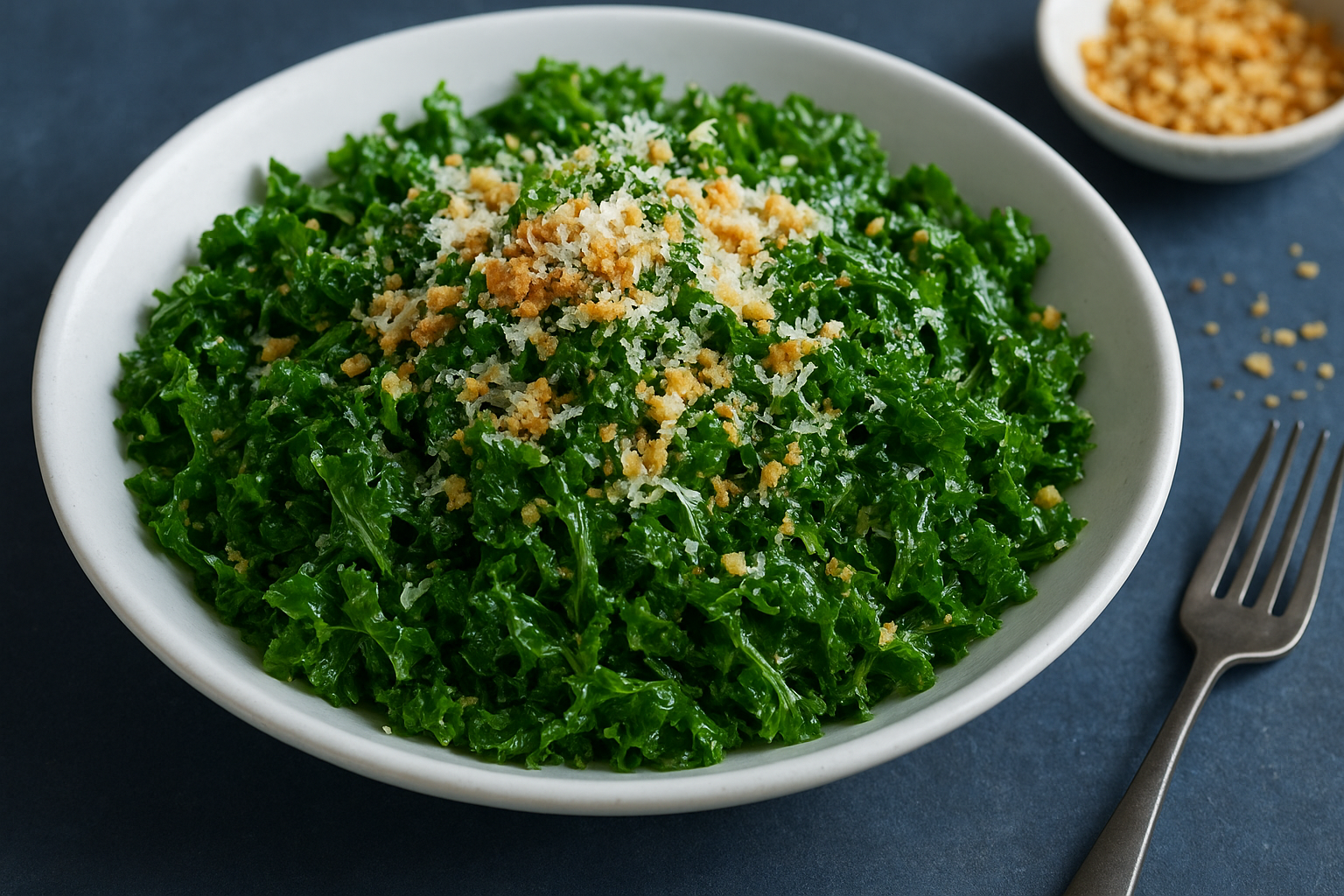
Transfer the salad to a wide, shallow serving bowl or individual plates so the toppings sit on the surface rather than sinking to the bottom of a deep vessel. Scatter the toasted breadcrumbs and remaining Pecorino Romano evenly across the top, then finish with a few grinds of black pepper and an optional light drizzle of olive oil over the surface. Serve immediately after plating so the breadcrumbs hold their crunch.
Make it ahead and store leftovers
One of the strongest advantages of this italian kale salad recipe is how well it holds up when you prepare it in advance. Unlike lettuce-based salads that collapse the moment dressing touches the leaves, massaged Lacinato kale stays firm and flavorful for days, which makes it one of the few salads worth building into a weekly meal prep routine.
How to prep components separately
The smartest approach to making this salad ahead of time is keeping the components separate until you’re ready to eat. Wash, de-stem, and slice the kale up to three days in advance, then store it in an airtight container or zip-seal bag lined with a dry paper towel. The paper towel pulls away any residual moisture and keeps the leaves from turning slimy before you’re ready to use them.
Whisk the dressing and store it in a small sealed jar in the refrigerator for up to five days. The olive oil will solidify slightly when cold, so pull the jar out about 10 minutes before you plan to use it and give it a firm shake to re-emulsify. Toast the breadcrumbs fresh each time rather than storing them, since they lose their crunch quickly once exposed to humidity.
Storing the kale and dressing separately is what makes a two-minute assembly possible on a busy weeknight without sacrificing any quality.
Storing dressed leftovers
If you’ve already tossed the full salad and have leftovers, transfer them into an airtight container and refrigerate immediately. Dressed kale holds its texture for up to two days, which is genuinely unusual for a salad green. By the second day, the leaves will be even more tender as the dressing continues working into the tissue, and many people find the flavor more developed than on day one.
Remove the breadcrumbs before storing any dressed leftovers, since they absorb moisture from the kale and dressing overnight and turn soft and pasty by morning. Set them aside in a separate small container at room temperature and scatter fresh-toasted crumbs over the salad when you pull it back out the next day. That single step keeps the texture contrast intact and makes day-two leftovers feel just as considered as the original serving.
Variations: protein, vegetables, and seasonal twists
This italian kale salad recipe works as a reliable base you can build on in almost any direction. Once you know how the massaged kale and lemon dressing behave together, swapping in different proteins, vegetables, or seasonal produce takes about 30 extra seconds of thought and no additional technique.
Adding protein to make it a full meal
A dressed kale salad becomes a complete weeknight dinner with the right protein added directly to the bowl before serving. Each option below requires zero extra cooking if you’re pulling from what’s already prepared in your kitchen.
| Protein | Quantity per serving | How to add it |
|---|---|---|
| Sliced grilled chicken breast | 4 oz | Slice thin, arrange over dressed kale |
| Canned or jarred tuna in olive oil | 3 oz | Flake directly into the bowl before tossing |
| Soft-boiled egg | 2 eggs | Halve lengthwise, place on top after plating |
| White beans (cannellini) | ½ cup | Fold into kale before adding dressing |
| Shaved prosciutto | 2 oz | Drape over the top after plating |
White beans and tuna are the two fastest options since neither requires cooking, and both add substance without pulling the flavor profile away from the Italian direction the salad is already going.
Vegetable additions that work with the dressing
The lemon garlic dressing in this recipe is strong enough to handle raw and roasted vegetables without becoming diluted or muddled. Thinly shaved raw fennel adds a clean anise note and holds its crunch even after the 10-minute rest. Halved cherry tomatoes fold in naturally and add a burst of acidity that amplifies the lemon in the dressing rather than competing with it. Roasted red peppers from a jar, sliced into strips and patted dry, bring a sweet, smoky element that contrasts well with the Pecorino.
Patting jarred roasted peppers completely dry before adding them prevents excess liquid from diluting the dressing and weakening the flavor balance of the finished salad.
Seasonal twists through the year
Rotating one or two ingredients based on what’s actually available keeps this salad from feeling repetitive if you make it regularly. In fall, swap the pine nuts for toasted walnuts and add thin slices of roasted butternut squash to the bowl. In winter, pomegranate seeds scattered over the top add tartness and color that brighten a heavy cold-weather plate. Spring peas, raw or lightly blanched, fold into the kale before dressing and add a natural sweetness that works especially well with a slightly sharper, more garlicky vinaigrette. In summer, grilled corn cut straight from the cob adds a smoky sweetness that makes the whole bowl feel like it belongs at an outdoor table.
Make it your new weeknight salad
This italian kale salad recipe earns its place in your regular rotation not because it’s trendy, but because it actually works on a busy evening. Ten minutes, one bowl, and a short list of pantry staples produce something you’ll want to make again the following week. The lemon dressing is bright, the massaged kale holds up without wilting, and the toasted breadcrumbs add the kind of crunch that makes a simple salad feel complete.
Build it as a side dish, bulk it up with protein, or swap one ingredient per season to keep things interesting. Every variation you try starts from the same reliable base, so the technique you learn once pays off every time you reach for a bunch of Lacinato kale. If Italian cooking like this inspires you, come experience what our kitchen does at La Dolce Vita Cucina in Chicago’s Portage Park neighborhood.