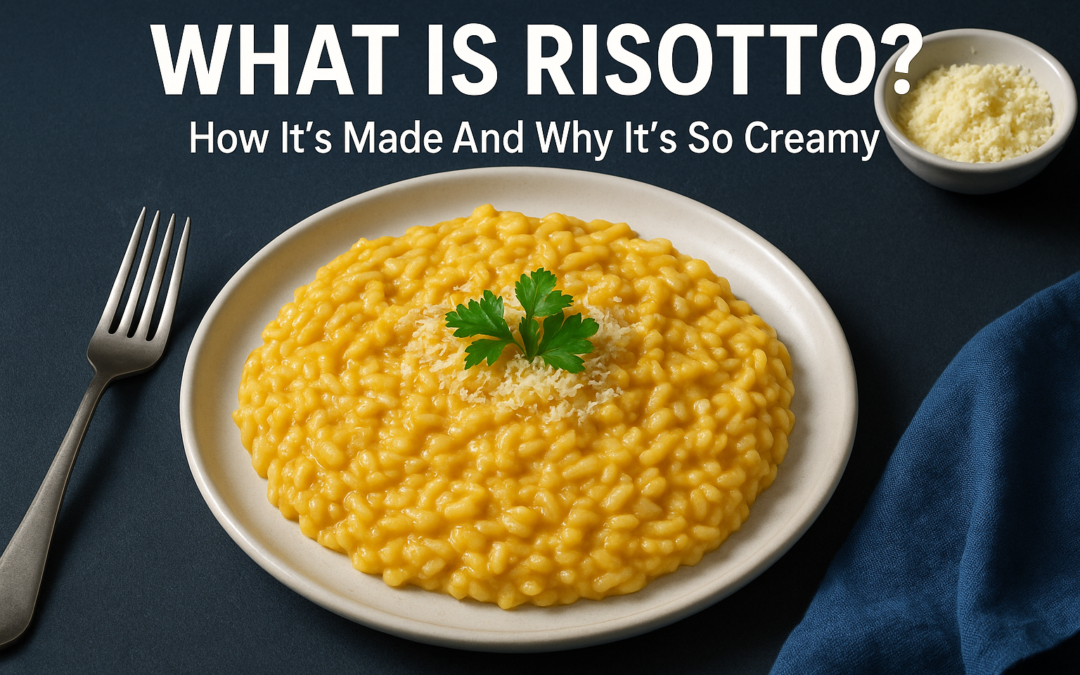
If you’ve ever wondered what is risotto, the short answer is this: it’s an Italian rice dish cooked slowly with broth until it reaches a rich, creamy consistency, without using any cream. But that one-liner barely scratches the surface. Risotto is a technique as much as it is a recipe, and understanding how it works changes the way you cook rice entirely.
At La Dolce Vita Cucina, our kitchen in Chicago’s Portage Park neighborhood treats risotto with the respect it deserves, prepared by hand, stirred with patience, and served the way it’s meant to be eaten: fresh from the pan. It’s one of those dishes that looks simple on the plate but carries real craft behind it, and we think more home cooks should know what goes into it.
This article breaks down everything about risotto: what makes it different from other rice dishes, which ingredients matter most, how the cooking process creates that signature texture, and how you can make a solid version at home. Whether you’re a first-timer or looking to tighten up your technique, you’ll walk away with a clear understanding of why this dish has earned its place in Italian cooking.
Why risotto feels different than other rice
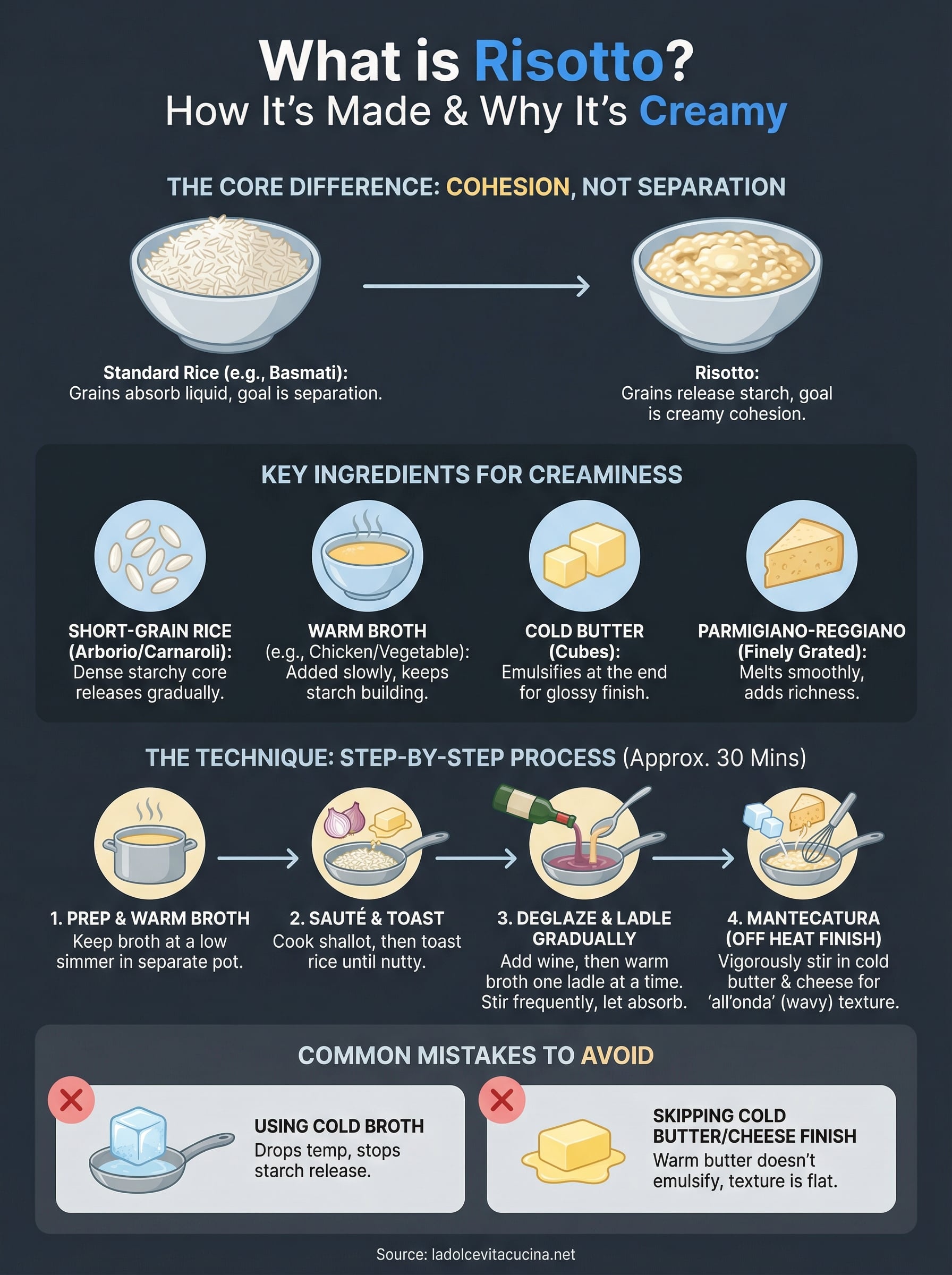
Most rice dishes work by absorbing liquid until the grain is fully cooked and relatively dry. Think of a pot of basmati or long-grain white rice: the goal is separate, individual grains that don’t clump together. Risotto is the opposite of that. The whole point of the technique is cohesion, where the grains release starch into the cooking liquid and create something thick, bound together, and almost saucy in texture. That fundamental difference in goal is what separates risotto from nearly every other rice preparation you know.
The rice variety makes all the difference
When you ask what is risotto at its most fundamental level, the answer starts with the rice itself. Standard long-grain varieties like basmati or jasmine don’t work here. They don’t carry enough surface starch, and they stay too firm through the cooking process. Risotto uses short-grain Italian rice, most commonly Arborio, Carnaroli, or Vialone Nano. These varieties have a dense starchy core and a softer outer layer that breaks down gradually as you cook.
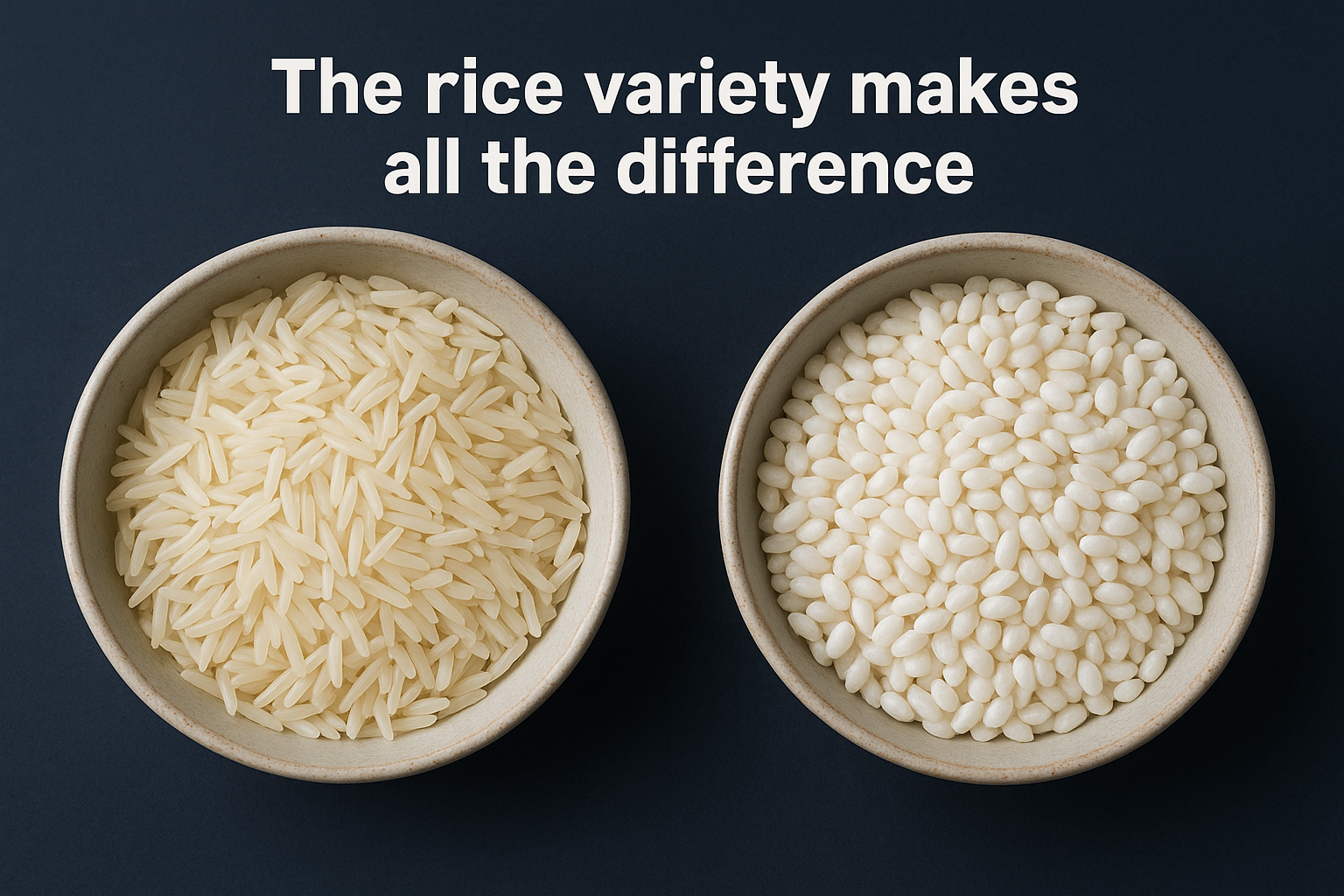
Carnaroli is widely considered the top choice among Italian chefs because it holds its shape slightly longer without going mushy, giving you a small window of time to nail the final consistency. Arborio is easier to find in most grocery stores and performs well, though it responds more quickly to heat. The rice variety you choose directly shapes the texture of your final dish, so it’s worth knowing the difference before you shop.
How you cook it changes everything
The second reason risotto stands apart from other rice dishes is the cooking method itself. You don’t add all the liquid at once and let it absorb passively. Instead, you add warm broth in small amounts, one ladle at a time, stirring frequently and waiting for each addition to absorb before adding the next. This process draws starch out of the rice gradually and builds a thick, creamy coating around each grain.
The patience required at this stage is exactly what separates a great risotto from a mediocre one.
Active cooking runs between 18 and 22 minutes from the moment the rice hits the pan, and that window is not flexible. Pull it off the heat too early and the center of each grain stays chalky. Leave it too long and you lose the slight resistance Italians call al dente. Hitting that window takes attention, which is why risotto has a reputation as a dish that keeps you in the kitchen and away from other distractions.
It’s treated as its own course
In Italian cooking, risotto isn’t a side dish that supports a protein. It’s a primo piatto, or first course, that follows the antipasto and comes before the meat or fish. That placement tells you a lot about how seriously Italians take it. Treating risotto as an afterthought or a bed for something else is a bit like using a well-made fresh pasta as a garnish. The dish is built to carry the meal on its own, and the effort that goes into making it reflects that.
How risotto gets its creamy texture
When people ask what is risotto and why it looks so glossy and rich, the answer comes down to one thing: starch. No cream goes into a traditional risotto. The creamy consistency you see in a properly made bowl comes entirely from the rice itself, released into the cooking liquid through a specific technique that most other cooking methods don’t use. Understanding this process makes the whole dish click.
Starch is the engine
Short-grain Italian rice varieties like Arborio and Carnaroli carry two types of starch: amylose and amylopectin. Amylopectin is the one that matters here. It sits close to the outer layer of each grain and dissolves into the surrounding liquid as you stir and cook. Over time, that dissolved starch thickens the broth into a coating that clings to every grain. The more you stir, the more surface contact the rice makes with the liquid, and the more starch gets released. This is why the stirring step isn’t just busywork. It’s the mechanism driving the entire texture.
The creaminess in risotto is built from the inside out, and the stirring is what unlocks it.
Each ladle of warm broth you add gets absorbed gradually, and the starch keeps building up in the pan. By the time you reach the final few minutes of cooking, the liquid in the pan looks almost sauce-like rather than watery. That’s exactly what you’re aiming for before you move to the final step.
The role of mantecatura
Italians call the final step mantecatura, and it’s what takes the texture from good to exceptional. You pull the pan off the heat, then stir in cold butter cut into cubes along with finely grated Parmigiano-Reggiano. The cold butter hits the hot rice and emulsifies quickly, binding with the starch-rich liquid to create a smooth, glossy finish that no amount of stirring during cooking can replicate on its own. Some cooks also add a small splash of the cooking liquid at this stage to loosen the consistency slightly before serving. This final step only takes about a minute, but skipping it leaves the dish noticeably flat.
The key ingredients in classic risotto
Classic risotto doesn’t need a long shopping list. What it needs is a short list of quality ingredients used correctly. Each component plays a specific role, and swapping out one for an inferior version shows up immediately in the final dish. Knowing what each ingredient does helps you make better decisions at the store and in the kitchen.
The foundation: aromatics, fat, and wine
Every risotto starts with finely minced shallot or onion cooked gently in butter or olive oil until soft. This base, called the soffritto, builds the first layer of flavor before the rice ever touches the pan. Shallots are milder and blend into the background more cleanly, which is why many Italian cooks prefer them over yellow onion for risotto.
Once the aromatics soften, you toast the rice directly in the pan for about two minutes. This step firms up the outer layer of each grain slightly and develops a nutty flavor that stays with the dish through the whole cooking process. After the toast, a splash of dry white wine goes in. It deglazes the pan and adds a bit of acidity that keeps the dish from tasting flat.
Skipping the wine or using cooking wine instead of something drinkable knocks back the flavor more than most people expect.
Broth and the finishing fat
The broth you use carries the majority of the flavor in your risotto. Chicken broth is the most common choice and works across nearly every variation. Vegetable broth works well for meat-free versions, and seafood broth pairs naturally with shellfish risottos. Whatever you choose, keep it warm in a separate pot while you cook. Adding cold broth to a hot pan drops the temperature and disrupts the cooking process.
At the finish, cold unsalted butter and finely grated Parmigiano-Reggiano go in together off the heat. The quality of both matters here. Finely aged Parmigiano-Reggiano melts into the starch more smoothly than pre-grated blends and adds a deeper, saltier bite. These two ingredients are what complete the mantecatura and give the dish its final texture.
Step-by-step: how to make risotto
Knowing what is risotto in theory only gets you so far. The real understanding comes from working through it yourself, and the process is more manageable than its reputation suggests. You’ll need about 30 minutes of focused cooking time and a willingness to stay at the stove from start to finish. Here’s the full process laid out clearly.
Set up before you start
Preparation before you turn on the burner saves you from scrambling mid-cook. Warm your broth in a separate pot and keep it at a low simmer the entire time you cook. Cold broth going into a hot pan disrupts the starch release and slows everything down. Also, measure your rice and have your cold butter and Parmesan ready before the rice hits the pan, since the final steps move quickly and you won’t have time to prep them once you’re in the middle of it.
Building the risotto in the pan
Start with a wide, heavy-bottomed pan over medium heat and melt two tablespoons of unsalted butter. Add finely minced shallot and cook it gently for two to three minutes until soft. Add your Arborio or Carnaroli rice and stir it around the pan for about two minutes until it smells slightly nutty. Pour in half a cup of dry white wine and stir until it absorbs fully.
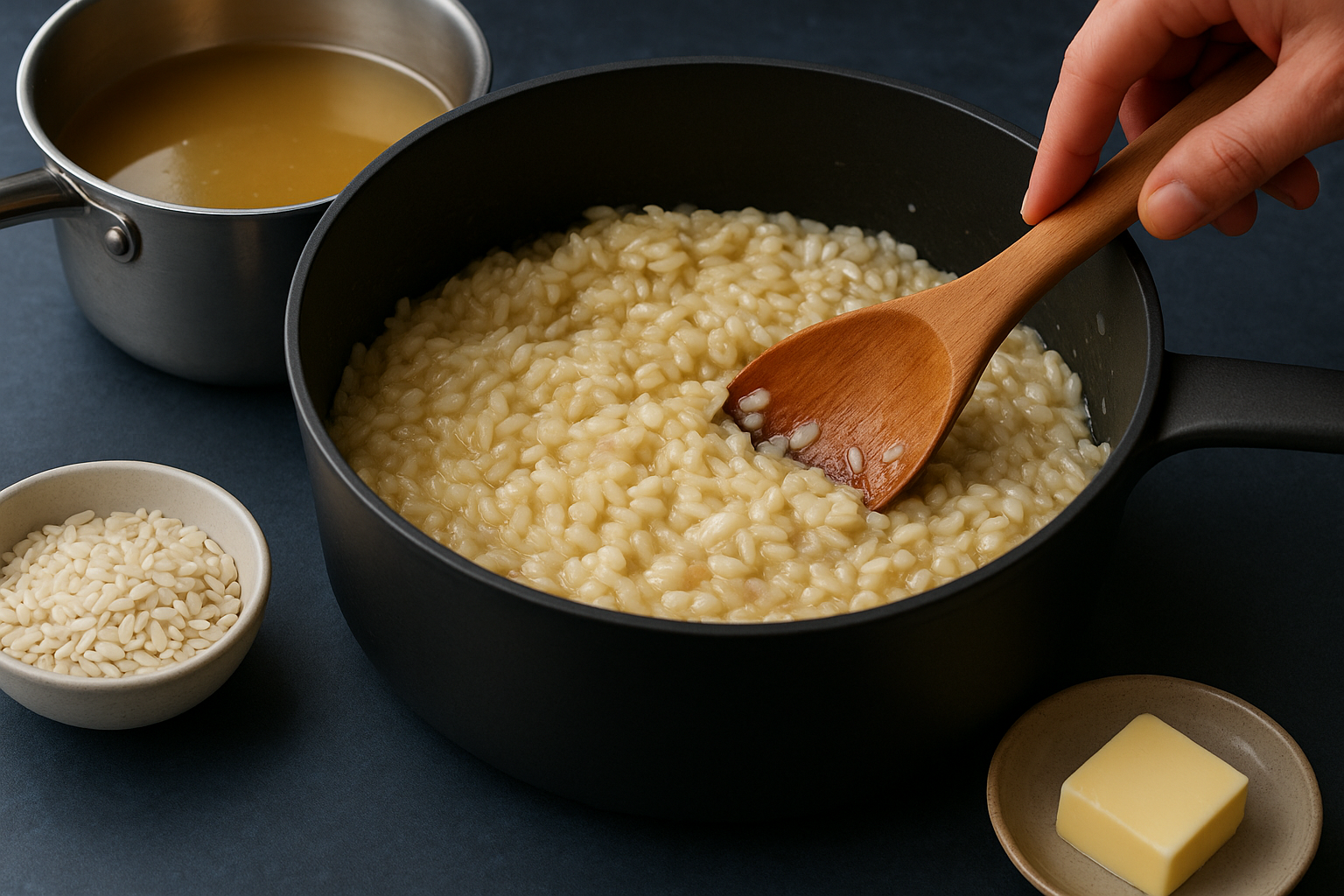
This is the moment you commit to the dish, so keep your attention on the pan from here until you’re done.
From there, add one ladle of warm broth at a time, stirring steadily and waiting for each addition to absorb before adding the next. Repeat this process for 18 to 22 minutes. You’ll know the rice is ready when it’s tender with a slight firmness at the center and the liquid in the pan looks thick rather than watery.
Finishing the dish
Pull the pan off the heat immediately when the rice hits that stage. Add cold butter cubes and freshly grated Parmigiano-Reggiano, then stir vigorously for about 60 seconds. The cold butter emulsifies with the starchy liquid and produces the glossy, flowing consistency that defines a properly finished risotto. Taste for salt, add a small splash of warm broth if it looks too tight, and serve right away.
Common risotto mistakes and fixes
Even once you understand what is risotto and how the technique works, a few recurring mistakes can knock the dish off course. Most of them happen because the process feels forgiving when it isn’t. Catching the error early and knowing how to correct it keeps the whole effort from going sideways.
Adding broth straight from the fridge
Cold broth is one of the most common ways to ruin the cooking process before it really gets going. When you pour cold liquid into a hot pan, the temperature in the pan drops sharply, which slows starch release and breaks the rhythm of absorption you’re trying to build. Keep a separate pot of broth at a gentle simmer on the stove beside your risotto pan, and ladle from there. Warm broth incorporates smoothly and keeps the starch building consistently from the first addition to the last.
Over-stirring or not stirring enough
Both extremes cause problems. If you stir constantly without pause, you wear the grains down too fast and end up with a mushy result before the rice is fully cooked. If you walk away and let the rice sit untouched for several minutes, the bottom scorches and the starch settles unevenly in the pan. The right approach sits in the middle: stir frequently enough to keep the rice moving and prevent sticking, but give the liquid a few seconds to absorb between passes.
Consistent, deliberate stirring is a skill that takes a few rounds to develop, and the dish gets noticeably better once you find the rhythm.
Skipping mantecatura or doing it with warm butter
Finishing the dish off heat with cold butter and grated Parmesan is not optional. Some cooks skip it to save time, and others reach for room-temperature butter thinking it doesn’t matter. Warm butter doesn’t emulsify the way cold butter does. It melts into the liquid instead of binding with it, and the glossy, flowing finish you’re looking for never comes together. Pull the pan off heat completely, add cold cubed butter and cheese together, and stir hard for about a minute. That one step determines whether the texture lands where it should.
Popular risotto styles and what to order
Once you understand what is risotto at the technique level, the next step is knowing which variations show up most often and what sets each one apart. The styles below represent the most recognized versions in Italian cooking, and each one follows the same core method while changing the flavoring ingredients to produce a completely different result.
Classic Italian varieties worth knowing
Risotto alla Milanese is the oldest and most traditional version, built on saffron-infused broth and beef marrow to produce a deep golden color and a richly savory flavor. It originated in Milan and often gets served alongside ossobuco. Mushroom risotto, or risotto ai funghi, swaps the saffron for porcini or a mix of wild mushrooms, producing an earthy, woodsy dish that works well in cooler months. Seafood risotto, called risotto ai frutti di mare, uses shellfish like shrimp, clams, and squid paired with a light seafood broth and finishes without Parmesan since cheese and seafood rarely work together in Italian cooking. Risotto al limone leans bright and acidic, made with lemon zest, white wine, and a lighter finishing fat, and it pairs well with fish or works cleanly on its own as a first course.
The version you order tells you something about what the kitchen prioritizes, so it’s worth scanning the menu for sourcing notes or daily specials before you decide.
What to look for when you order risotto at a restaurant
When you sit down and see risotto on the menu, the first thing to check is whether it’s listed as a daily or rotating special. Risotto made to order takes 20 minutes minimum, and restaurants that do it right often signal that on the menu rather than pre-cooking batches in advance. A risotto that arrives at the table in seconds typically sat in a hotel pan, and the texture will tell you immediately.
Properly served risotto flows slightly when you tilt the bowl rather than sitting stiff like a mound. Italians call this consistency all’onda, meaning "in waves," and it’s the standard worth holding any kitchen to when you evaluate what lands in front of you.
Bring risotto to your table
Now that you know what is risotto and how the technique works, you have everything you need to start cooking it at home. Reading about mantecatura and al dente timing only goes so far. Eating a properly made bowl tells you immediately what you’re building toward, and it gives you a reference point the first time you stand at your stove with a ladle in hand.
Risotto rewards patience every time, and the results show clearly when the technique comes together. Whether you’re making it at home for the first time or sitting down to let someone else handle the cooking, the dish delivers something most others can’t: a texture built from a short list of quality ingredients and nothing else.
If you want to experience that kind of Italian cooking firsthand, visit La Dolce Vita Cucina in Chicago’s Portage Park neighborhood. Our kitchen puts the same care into every dish we serve, and we’d be glad to have you at the table.