
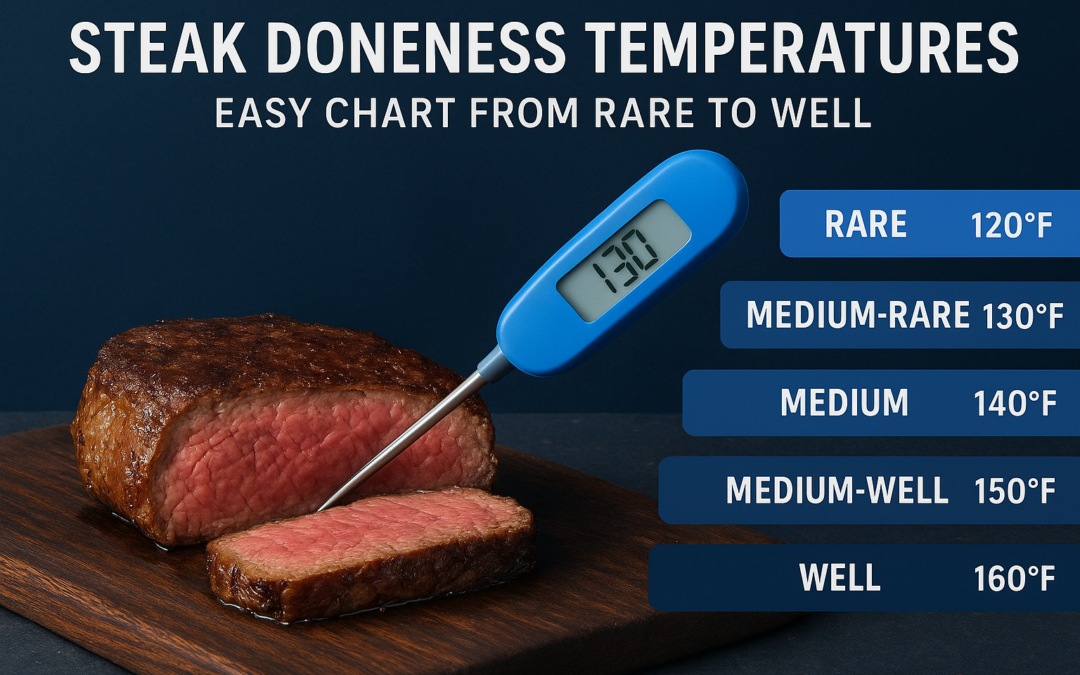
A few degrees can make or break a steak. Whether you’re working a cast iron skillet at home or deciding how to order your next ribeye at a restaurant, understanding steak doneness temperatures gives you control over the final result. The difference between a perfectly pink medium rare and an overcooked disappointment often comes down to just 5–10°F on a meat thermometer.
At La Dolce Vita Cucina, our kitchen in Chicago’s Portage Park neighborhood takes steak seriously, our 16oz Ribeye is one of our most recommended dishes for good reason. We know firsthand how much precision matters when cooking a quality cut of beef, and we want to share that knowledge with you, whether you’re dining with us or firing up your grill at home.
This guide breaks down the exact internal temperatures for every level of doneness, from rare through well done. You’ll get a clear, easy-to-reference chart, plus practical tips on how to nail each level consistently. No guesswork, no cutting into the meat to check, just reliable temperatures you can trust every time you cook.
Why steak doneness temperatures matter
Knowing your steak doneness temperatures isn’t just a professional kitchen habit. It’s the single most reliable way to get a consistent result on every cut of beef you cook, whether you’re working with a thin sirloin or a thick ribeye. Guessing based on color or touch leaves too much room for error, and one overcooked steak can make a good dinner feel like a waste of time and money.
Food safety starts at the right temperature
The USDA recommends cooking whole cuts of beef to a minimum internal temperature of 145°F, followed by a three-minute rest. For whole muscle cuts like steaks, this guideline reflects the point at which harmful bacteria on the surface have been destroyed. The interior of a whole steak is generally considered safe at lower temperatures because bacteria lives on the surface, not deep inside the muscle tissue, which is why many chefs and diners safely eat medium rare steaks regularly.
The USDA minimum of 145°F applies to whole muscle beef, but ground beef must reach 160°F because grinding distributes surface bacteria throughout the meat.
How temperature shapes taste and texture
Every degree matters when it comes to how your steak tastes and feels on the plate. A steak pulled at 125°F will have a cool, deep red center with a tender, almost buttery texture. Pull that same steak at 160°F, and the muscle fibers have contracted significantly, squeezing out most of the moisture and producing a firm, grey, and noticeably drier result.
The fat in a steak also renders differently depending on temperature. Intramuscular fat starts to melt and baste the surrounding meat around 130°F, which is one reason medium rare tends to deliver such a rich flavor on well-marbled cuts. Higher temperatures push past that rendering point and into territory where the fat cooks away rather than enhancing the bite. Understanding this makes temperature less of a technical requirement and more of a practical tool for getting the most out of your beef.
Steak doneness temperature chart from rare to well
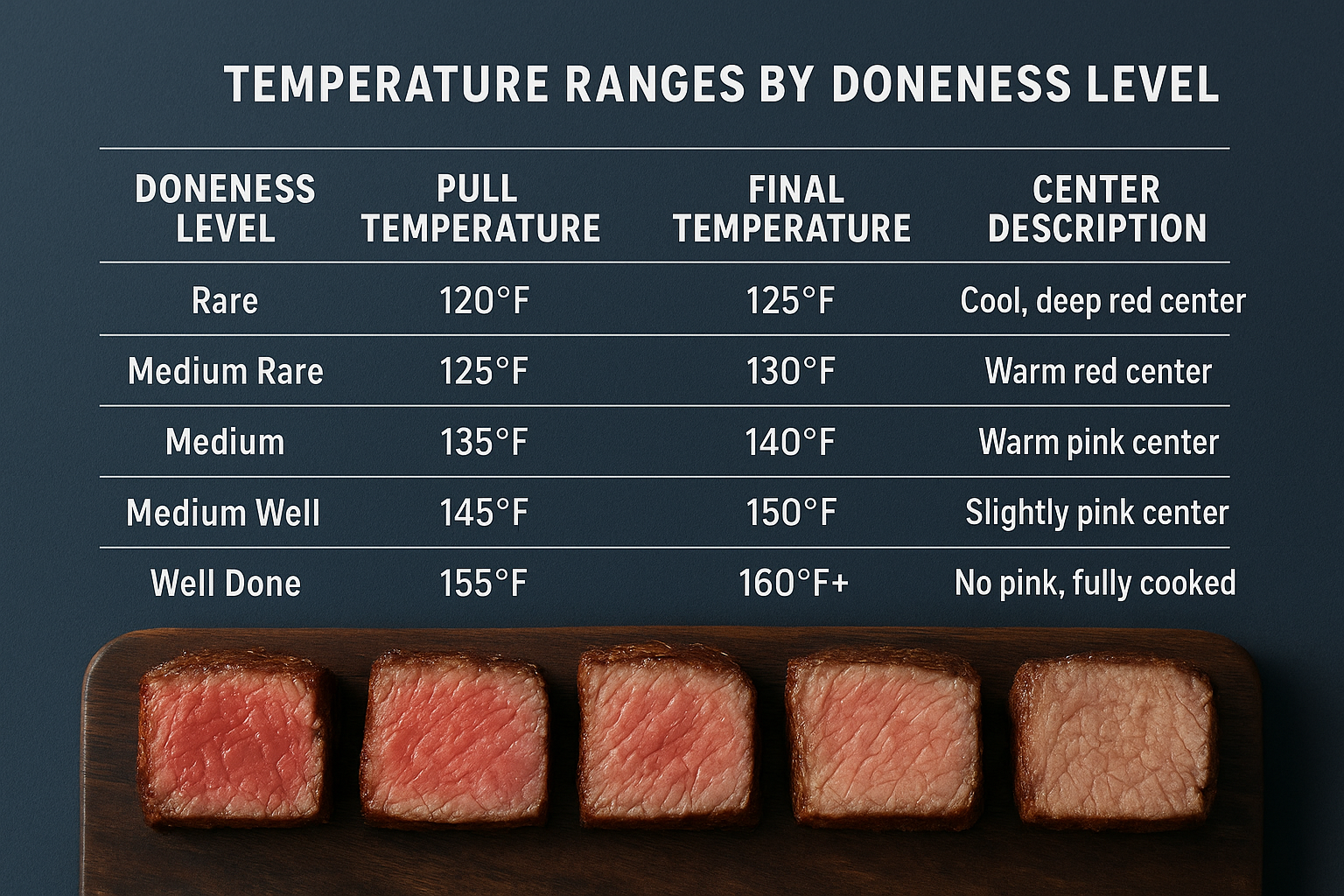
The table below gives you all the steak doneness temperatures you need in one place. These are the pull temperatures, meaning the internal reading at which you should remove the steak from heat before resting, not the final serving temperature.
Temperature ranges by doneness level
Use this chart as your go-to reference every time you cook beef. The pull temperature is what your thermometer reads the moment you take the steak off the heat. The final temperature is where the steak settles after resting for three to five minutes, which accounts for carryover cooking.
| Doneness Level | Pull Temperature | Final Temperature | Center Description |
|---|---|---|---|
| Rare | 120°F | 125°F | Cool, deep red center |
| Medium Rare | 125°F | 130°F | Warm red center |
| Medium | 135°F | 140°F | Warm pink center |
| Medium Well | 145°F | 150°F | Slightly pink center |
| Well Done | 155°F | 160°F+ | No pink, fully cooked |
Medium rare (130°F final) is widely considered the sweet spot for maximizing flavor and tenderness on well-marbled cuts like ribeye.
A note on USDA guidelines and personal preference
Federal food safety guidelines set 145°F as the minimum recommended temperature for whole muscle beef cuts, which places that recommendation squarely in the medium well range. Many experienced cooks regularly serve steaks at lower temperatures because the interior of an intact steak carries minimal bacterial risk compared to ground beef. Knowing both the official standard and your own preference puts you in full control every time you cook or order.
How to measure steak temperature accurately
Getting your steak doneness temperatures right depends entirely on how accurately you measure them. Even a quality thermometer gives you bad data if you use it wrong, so technique matters just as much as the tool itself. A few straightforward habits will take you from inconsistent results to pulling the correct temperature every single time.
Choose the right thermometer
An instant-read digital thermometer is the most reliable option for home cooks. It delivers a reading in two to three seconds, which means less heat escapes from the steak while you check it. Avoid dial-style probe thermometers for steaks, since they sample a wide range along the probe shaft rather than a single point, producing inaccurate readings on thinner cuts. Budget-friendly digital models work well for most home kitchens and keep you in full control of the result.
An instant-read thermometer is one of the best practical investments you can make for consistent cooking results at any skill level.
Where to insert the probe
Probe placement is where most home cooks go wrong. Insert the thermometer into the thickest part of the steak, away from bone and fat pockets, which don’t reflect actual muscle temperature. Slide the probe in from the side rather than from the top, so it reaches the center of the meat horizontally and gives you a true core reading.
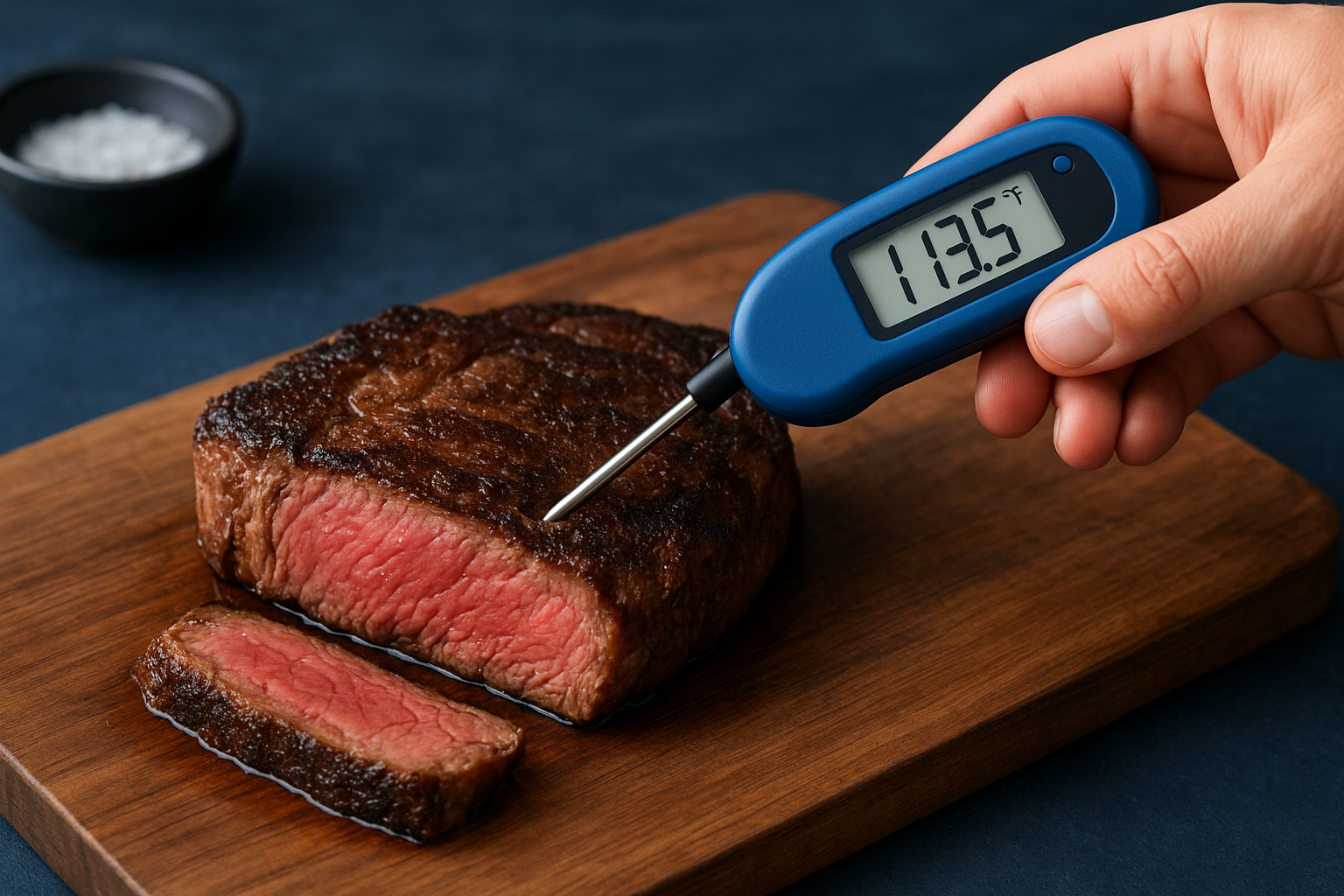
Your goal is a single accurate number from the center, not an average across different zones of the steak. Check the reading quickly, then pull the probe out to avoid letting too much heat escape during the process. With the right tool and correct placement, you’ll hit your target temperature on every cook.
Carryover cooking and resting: the 5°F reality
Pulling your steak off the heat is not the finish line. The moment you remove the steak from the pan or grill, residual heat stored in the outer layers continues cooking the center for several minutes. This process is called carryover cooking, and it explains why every steak doneness temperatures chart lists a pull temperature that sits 5°F below the final serving target.
Why the temperature keeps rising off the heat
Heat flows from hot to cool, so when the steak leaves the cooking surface, the outer crust continues pushing warmth toward the cooler center. On a thick cut like a ribeye, that transfer can raise the internal temperature by as much as 5 to 10°F before the steak stabilizes. Skipping this fact is one of the most common reasons home cooks overshoot their target and end up with a medium steak when they ordered medium rare.
Always pull your steak 5°F below your target final temperature to account for carryover cooking during the rest period.
How to rest a steak properly
Resting lets the muscle fibers relax and reabsorb the juices that intense heat pushes toward the center during cooking. A steak sliced immediately off the heat loses those juices onto the cutting board, not into your bite. Give your steak three to five minutes on a warm plate before cutting into it.
Follow these steps for a reliable rest:
- Remove the steak at the correct pull temperature
- Place it on a warm plate to prevent rapid heat loss from below
- Tent loosely with foil to retain warmth without trapping steam
- Wait the full rest time before slicing
FAQs and quick fixes for common mistakes
Home cooks run into the same handful of problems when working with steak doneness temperatures, and most of them come down to two things: pulling at the wrong moment or skipping the thermometer entirely. The fixes are straightforward once you know what to look for.
My steak is always overcooked – what am I doing wrong?
The most common reason is not accounting for carryover cooking. If you wait until the thermometer reads your target final temperature before pulling the steak off the heat, you’ve already gone too far. The internal temperature continues rising by up to 5 to 10°F after the steak leaves the pan or grill.
Pull your steak 5°F early, every single time, and let the rest period do the final work.
Fix it by checking the temperature earlier than you think you need to, always targeting the pull temperature in the chart above rather than the final serving temperature.
Can I trust color alone to judge doneness?
Color is unreliable on its own. Myoglobin, the protein responsible for beef’s red color, can cause a steak to look pink even when fully cooked, or appear grey well before it reaches a safe temperature. Lighting, the specific cut, and storage time all influence the color you see on the plate.
Your thermometer gives you the only accurate reading of what is actually happening inside the meat. Use it on every cook, no matter how many steaks you have made before, and you will stop second-guessing your results entirely.
Final temperature takeaways
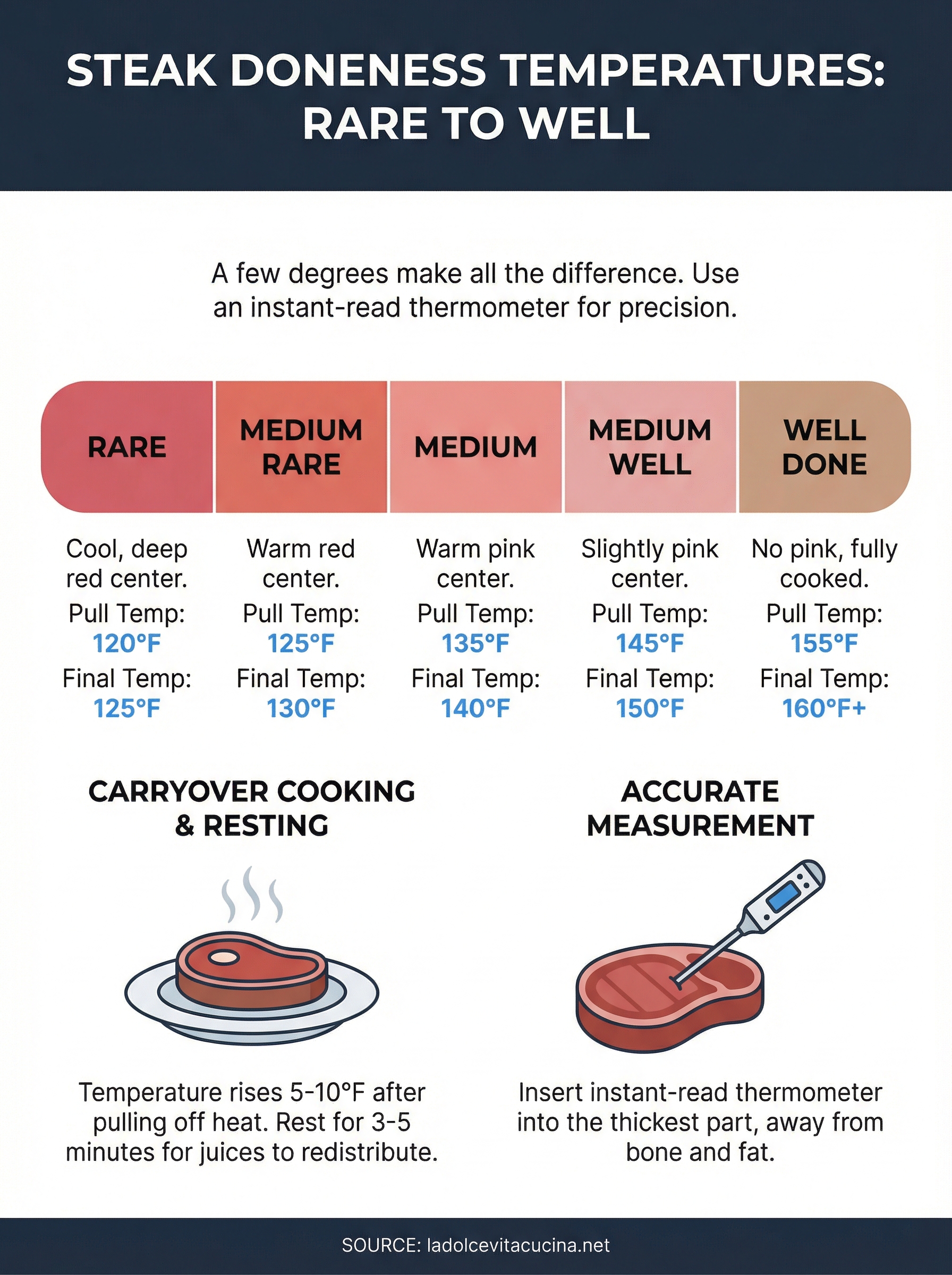
Mastering steak doneness temperatures comes down to three habits: use an instant-read thermometer every time, pull the steak 5°F below your target, and let it rest before you cut into it. These steps take less than ten minutes combined and will consistently deliver the result you want, from a cool red rare center to a fully cooked well done.
Temperature is the only honest measure you have when cooking beef. Color, firmness, and timing all vary too much between cuts, thicknesses, and cooking surfaces to be trustworthy on their own. Your thermometer removes the guesswork entirely and puts you in control of every cook.
If you want to experience what precise cooking looks like on a quality cut, our 16oz Ribeye is a great place to start. Reserve your table at La Dolce Vita Cucina and let our kitchen show you what the right temperature delivers on the plate.