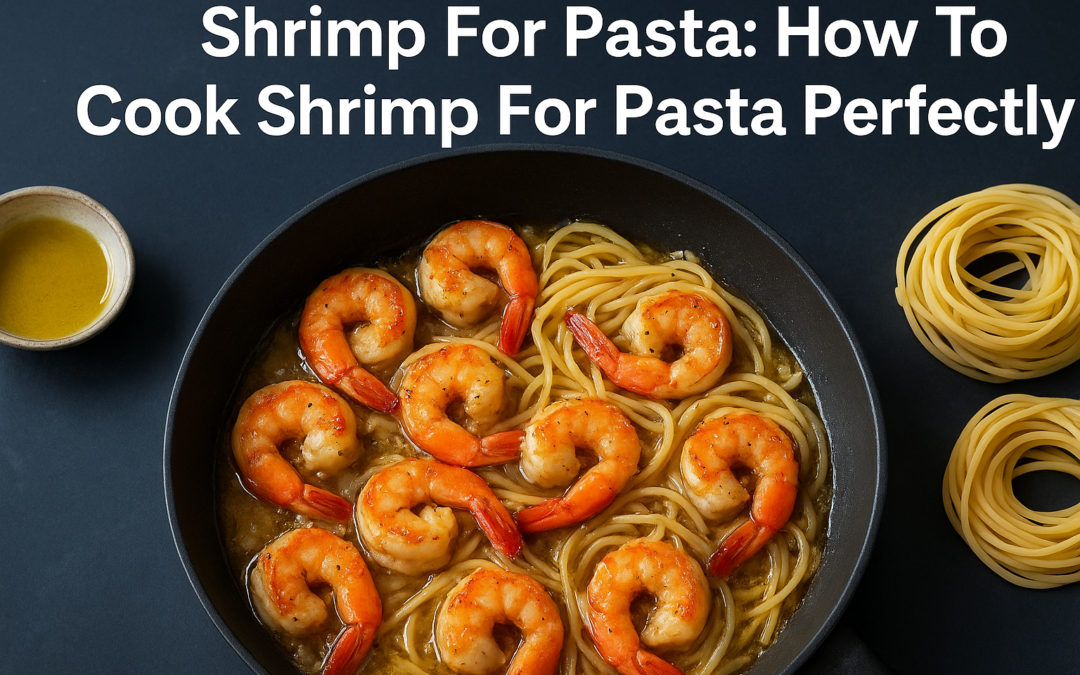
At La Dolce Vita Cucina, our kitchen in Chicago’s Portage Park neighborhood turns out pasta dishes with perfectly cooked shrimp night after night. It’s one of those skills that looks effortless on the plate but requires real attention at the stove. Knowing how to cook shrimp for pasta is something every home cook should have in their back pocket, and it’s a technique our chefs take seriously with every seafood dish that leaves our kitchen.
Shrimp goes from tender and juicy to rubbery and tough in a matter of seconds. That narrow window is exactly why so many people struggle with it. Overcooking is the most common mistake, and it usually comes down to heat management and timing. The good news? Once you understand what to look for, the curl, the color, the texture, you can nail it consistently without second-guessing yourself.
This guide breaks down the full process: selecting the right shrimp, prepping it properly, and cooking it so it pairs beautifully with your pasta. We’ll cover sautéing techniques, seasoning approaches, and the timing details that make all the difference. Whether you’re making a quick weeknight aglio e olio or a rich shrimp scampi for date night, you’ll walk away with everything you need to get it right.
What to prep before you start
Good prep is what separates a smooth cooking session from a stressful one. When you know how to cook shrimp for pasta, having everything organized before you turn on the stove lets you focus entirely on timing and technique instead of scrambling for a missing ingredient mid-cook. Shrimp cooks in under three minutes, and that speed means there is zero time to hunt for the garlic once the pan is screaming hot.
The equipment you need
The right tools make a real difference with shrimp. You want a wide, heavy-bottomed skillet, ideally a 12-inch stainless steel or cast iron pan. The wide surface area means the shrimp sit in a single layer, which gives you direct contact with the hot surface and a proper sear instead of a steam. A pair of kitchen tongs is also essential since you will need to flip each shrimp quickly and individually to control doneness on both sides.
A crowded pan drops the temperature fast and turns your shrimp into a steamed, rubbery disappointment. Give them room.
Here is a quick equipment checklist before you start:
- 12-inch stainless steel or cast iron skillet
- Kitchen tongs
- Large pot for boiling pasta (at least 6 quarts)
- Colander
- Microplane or box grater for fresh garlic and parmesan
- Measuring spoons
- Small prep bowls for each ingredient
The ingredients to have ready
Before you touch the shrimp, measure and set out every ingredient you plan to use. For most shrimp pasta dishes, that means minced garlic, olive oil, unsalted butter, white wine or fresh lemon juice, red pepper flakes, kosher salt, and fresh parsley all sitting in small prep bowls within arm’s reach. Trying to measure while your shrimp are already in the pan is how you end up with burnt garlic and overcooked protein.
Your pasta water should already be boiling or very close to it before you start cooking the shrimp. The timing between your pasta finishing and your shrimp finishing needs to be tight, because neither one holds well. Salt the water generously, about one tablespoon of kosher salt per quart of water, so the pasta itself carries flavor before you ever add sauce or toss in the shrimp.
Finally, pull your shrimp out of the refrigerator about 10 to 15 minutes before cooking. Starting with shrimp that are too cold means the outside cooks before the inside catches up, which makes even-doneness harder to hit consistently.
Step 1. Choose and prep the shrimp
The shrimp you buy and how you handle it before it hits the pan determines a lot about the final result. For pasta dishes specifically, large or jumbo shrimp (21/25 or 16/20 count per pound) work best because they stay juicy and hold their texture through the brief cooking time. Smaller shrimp cook so fast that they are already overdone by the time the rest of your dish comes together.
Pick the right size and form
Fresh shrimp is great if you have access to it, but frozen shrimp is often the better choice for home cooks because it is flash-frozen shortly after harvest, which locks in quality. Look for shrimp labeled "IQF" (individually quick frozen) with no added sodium or preservatives. Thaw them overnight in the refrigerator, or place them in a colander under cold running water for about 10 minutes if you need them faster.
Avoid pre-cooked shrimp for pasta. They turn rubbery the moment heat touches them again.
Here is a quick reference for shrimp sizing:
| Count Per Pound | Size Label | Best Use |
|---|---|---|
| 16/20 | Jumbo | Pasta, grilling |
| 21/25 | Large | Pasta, sautéing |
| 26/30 | Medium | Soups, stir-fry |
Devein and dry the shrimp properly
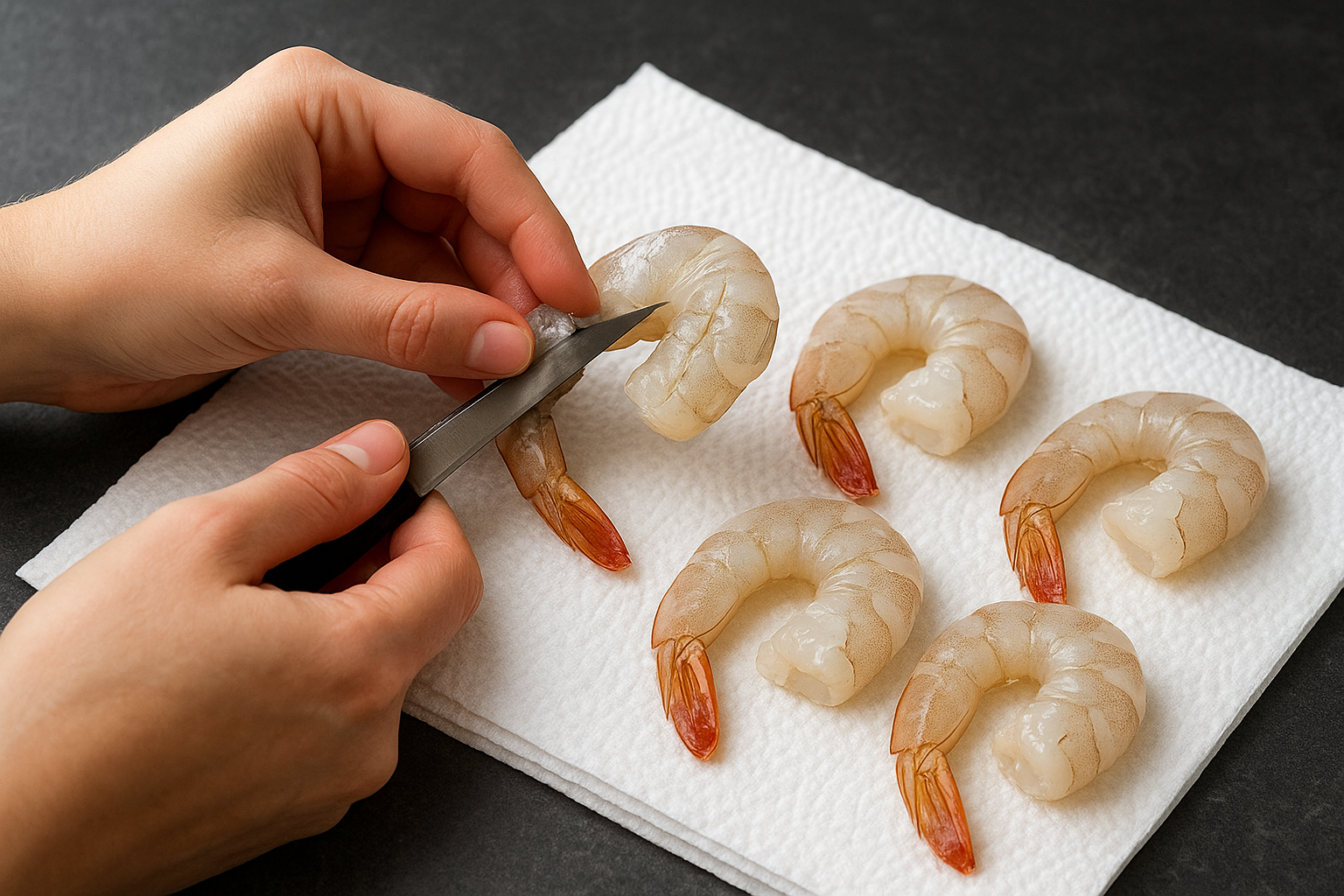
Knowing how to cook shrimp for pasta well starts before the pan even gets hot. After thawing, peel and devein each shrimp by making a shallow cut along the back with a small knife and pulling out the dark vein. Then spread them on a paper towel and pat them completely dry before seasoning. Any surface moisture turns into steam in the hot pan, which prevents a proper sear and leads to uneven cooking.
Step 2. Sauté shrimp to the perfect doneness
The single biggest factor in how to cook shrimp for pasta is pan temperature. A properly preheated pan gives you a fast, even sear that locks in moisture instead of slowly cooking it out.
Get the pan temperature right
Add your oil to the cold pan, then bring it up to medium-high heat before anything goes in. Wait until the oil shimmers and moves around freely, which usually takes about 60 to 90 seconds. Drop a single shrimp in and listen for a strong sizzle. No sizzle means the pan is too cold and you will end up steaming instead of searing.
A cold pan is the fastest way to ruin perfectly prepped shrimp.
Pour in one tablespoon of olive oil and one tablespoon of unsalted butter together for the best result. The oil raises the smoke point while the butter adds richness. Drop in your minced garlic and let it cook for 30 seconds before adding the shrimp, spreading them in a single layer so every piece makes direct contact with the hot surface.
Read the visual cues for doneness
You do not need a thermometer here because the shrimp tell you exactly when they are done. Place each shrimp flat and leave it alone for 60 to 90 seconds. Flip it the moment you see the color creep halfway up the side from pink to opaque, then cook the second side for another 45 to 60 seconds and pull the pan off the heat immediately.
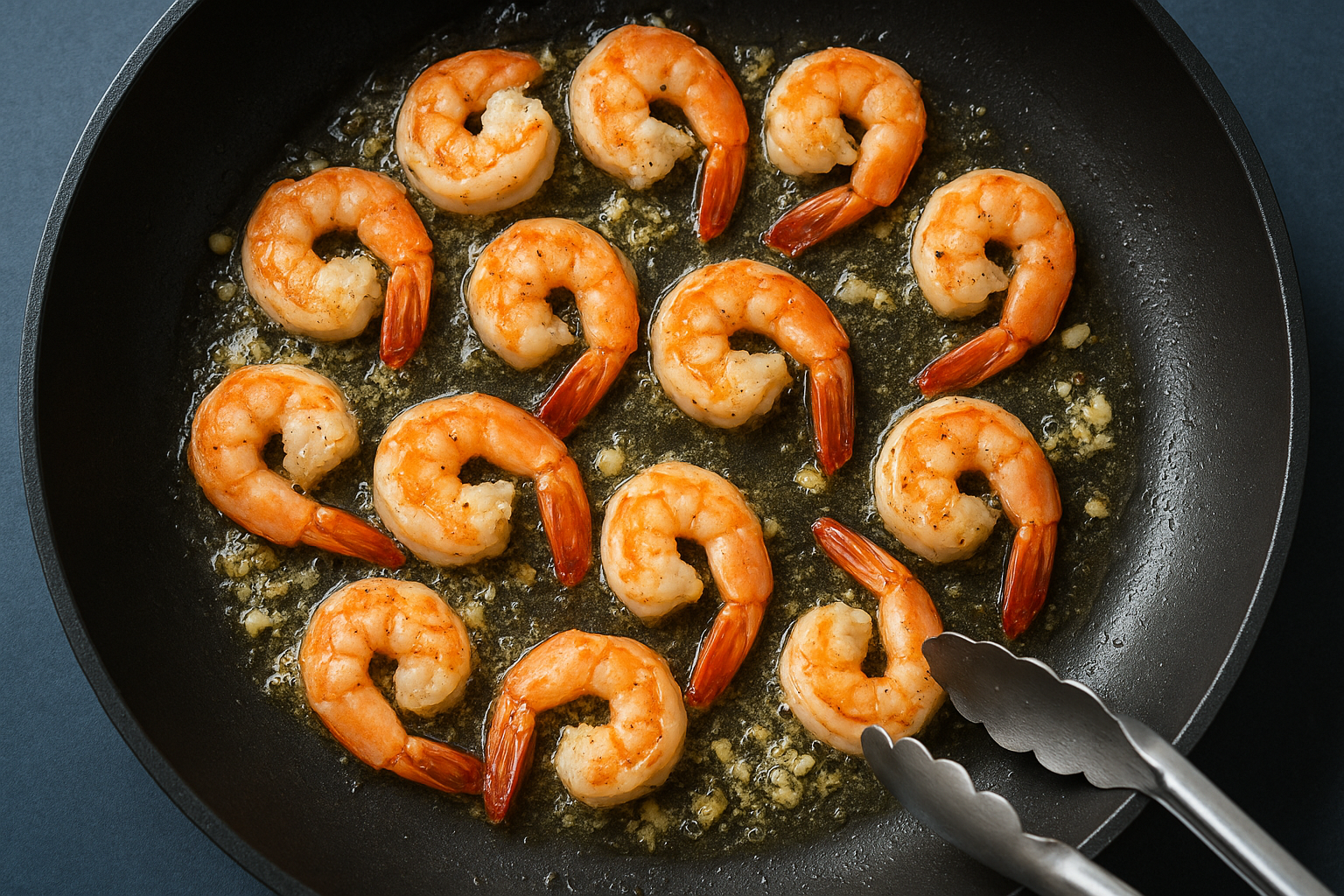
Here is what to watch for:
- Color: Fully pink on the outside, white and opaque through the center
- Curl: A loose "C" shape means done; a tight "O" shape means overcooked
- Texture: Firm but with slight give when pressed gently with tongs
Step 3. Combine shrimp and pasta the right way
Combining shrimp and pasta is where everything comes together, and the order you do it in matters as much as the cooking itself. Timing is the most critical factor here: your pasta should finish within one to two minutes of your shrimp coming off the heat. If either one sits and waits, the pasta clumps or the shrimp keep cooking from residual heat and turn rubbery before they ever reach the plate.
Time the pasta and shrimp together
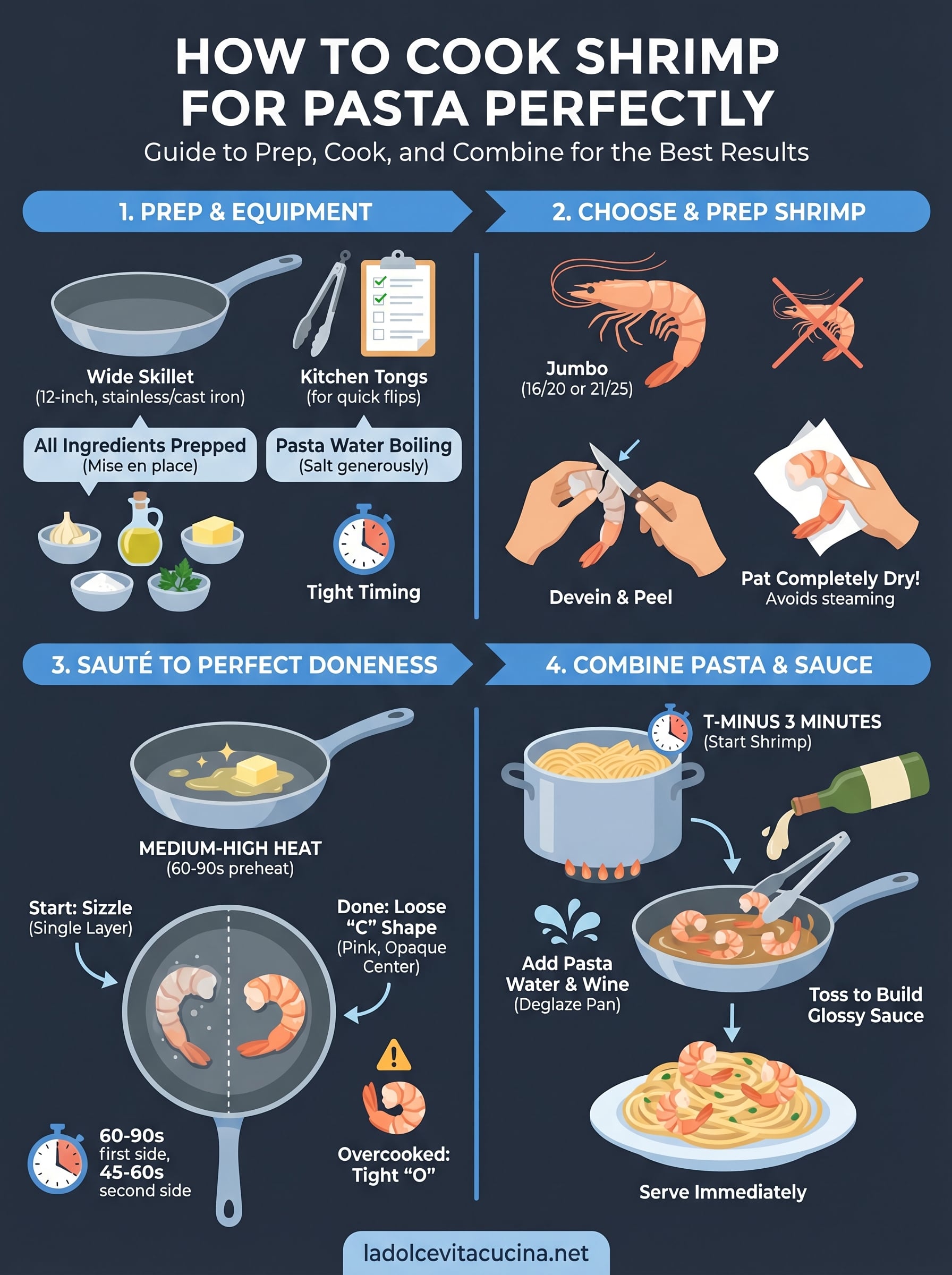
Start your pasta first, then begin cooking the shrimp when your pasta has two to three minutes left in the pot. This tight window means both elements land at the same time. Pull the pasta one minute before the package suggests and finish it directly in the pan with the sauce so it absorbs flavor instead of just getting coated on top.
Pasta that finishes in the sauce tastes completely different from pasta that gets sauce poured over it.
Here is a simple timing sequence to follow:
- Bring salted water to a boil and add pasta
- At T-minus 3 minutes, heat your pan and start the shrimp
- At T-minus 1 minute, transfer pasta with tongs directly to the shrimp pan
- Add a splash of starchy pasta water and toss everything together for 60 seconds
- Remove from heat and plate immediately
Build the sauce in the pan
After you pull the shrimp out and set them aside briefly, deglaze the pan with two to three tablespoons of white wine or pasta water, scraping up the browned bits with a wooden spoon. Those bits carry concentrated flavor that defines how to cook shrimp for pasta at its best. Add a pat of cold butter and swirl the pan to build a glossy, cohesive sauce that coats every strand, then return the shrimp last, toss once, and serve immediately.
Fix common problems and store leftovers
Even when you follow every step, things can go sideways at the stove. Knowing how to cook shrimp for pasta also means knowing how to recover quickly and how to handle what you do not finish at the table. Both skills keep your effort from going to waste.
Fix the most common mistakes
The two problems that come up most often are rubbery shrimp and a watery sauce. Rubbery shrimp almost always trace back to overcooking or a pan that was not hot enough to begin with, which causes the shrimp to steam rather than sear. A watery sauce usually means you skipped the step of reducing your pasta water and wine addition before tossing in the pasta.
Pull the shrimp off the heat one full minute before you think they are done, and the residual heat will finish the job.
Here is a quick fix reference for the problems you are most likely to hit:
| Problem | Likely Cause | Fix |
|---|---|---|
| Rubbery texture | Overcooked or pan too cold | Use higher heat, shorten cook time |
| Watery sauce | Too much liquid, not reduced | Let liquid reduce 60 seconds before adding pasta |
| Bland flavor | Under-seasoned shrimp | Season shrimp with salt right before they hit the pan |
| Shrimp sticking | Pan not hot enough | Preheat longer, add oil just before shrimp |
Store and reheat leftovers properly
Store leftover shrimp pasta in an airtight container in the refrigerator for no more than two days. Keep the shrimp and pasta together since separating them causes the pasta to dry out faster. When reheating, use a skillet over low heat with a splash of water or broth to loosen the sauce, and warm it gently for two to three minutes rather than microwaving, which turns shrimp rubbery instantly.
Ready for your next pasta night
Now you have everything you need to know about how to cook shrimp for pasta without overcooking it or losing flavor at any step. The key takeaways are straightforward: hot pan, dry shrimp, tight timing between your pasta and shrimp finishing, and pulling both together in the pan with a splash of starchy water for a cohesive sauce.
Practice this process once and you will notice every step feeds directly into the next one. Prep comes first, heat management comes second, and combining both elements at the right moment is what pulls the whole dish together. Shrimp pasta is one of the most rewarding weeknight meals you can make at home once the technique clicks.
If you want to see what properly cooked shrimp pasta looks like on a plate before you perfect it yourself, visit La Dolce Vita Cucina in Chicago’s Portage Park neighborhood and let our kitchen show you how it is done.