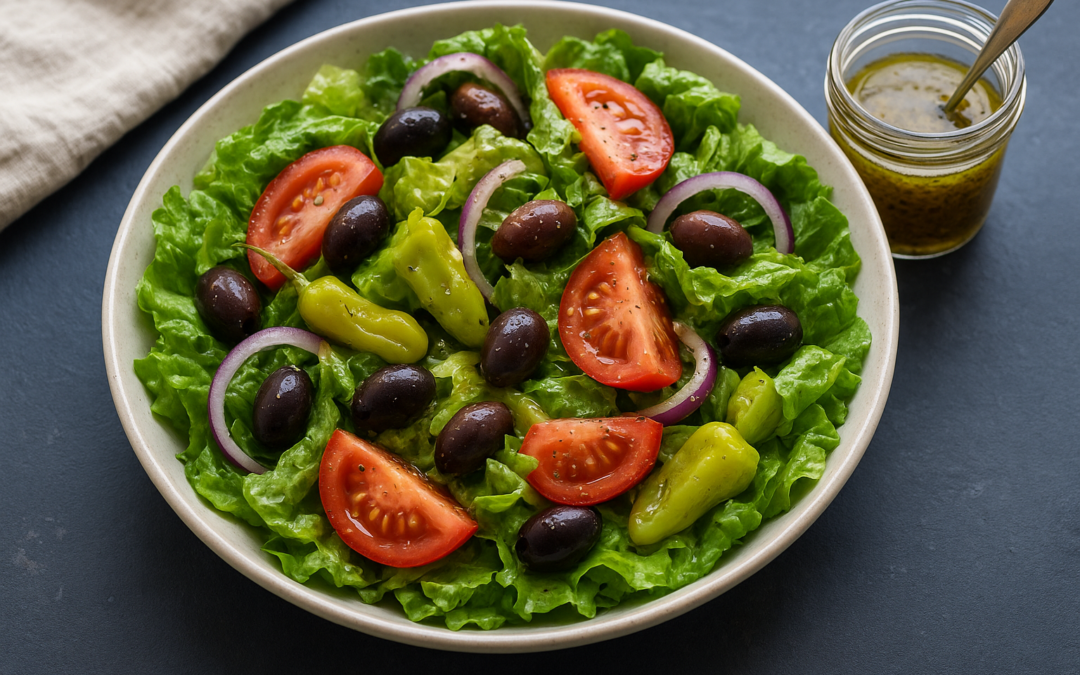
A great Italian meal never starts with the main course alone. At La Dolce Vita Cucina in Chicago’s Portage Park neighborhood, we pair our homemade pastas and premium steaks with bright, crisp salads that wake up the palate before anything else hits the table. That same philosophy is exactly what drives a good traditional Italian salad recipe, it’s simple, it relies on quality ingredients, and it doesn’t try to compete with the rest of the meal.
The real thing looks nothing like those overdressed, iceberg-heavy bowls you find at chain restaurants. An authentic Italian salad uses fresh greens, briny olives, tangy pepperoncini, and a vinaigrette you can whisk together in about two minutes. No bottled dressing required. The flavors are clean, sharp, and designed to complement whatever comes next on your plate.
This recipe walks you through every step, from selecting the right ingredients to mixing a classic vinaigrette that actually tastes like something you’d get at a restaurant in Rome, or, if we do say so ourselves, right here on our tables in Portage Park. Whether you’re building a weeknight dinner or prepping a spread for guests, this salad belongs on every Italian menu at home.
What defines a traditional Italian salad
Most people associate Italian salads with a specific set of ingredients, but the real definition goes deeper than a list. A traditional Italian salad recipe is built on restraint. Italians don’t pile on seventeen toppings or drown the greens in a thick, creamy sauce. Instead, every element on the plate earns its place, and nothing competes with the core freshness of the vegetables.
The greens and vegetables that matter
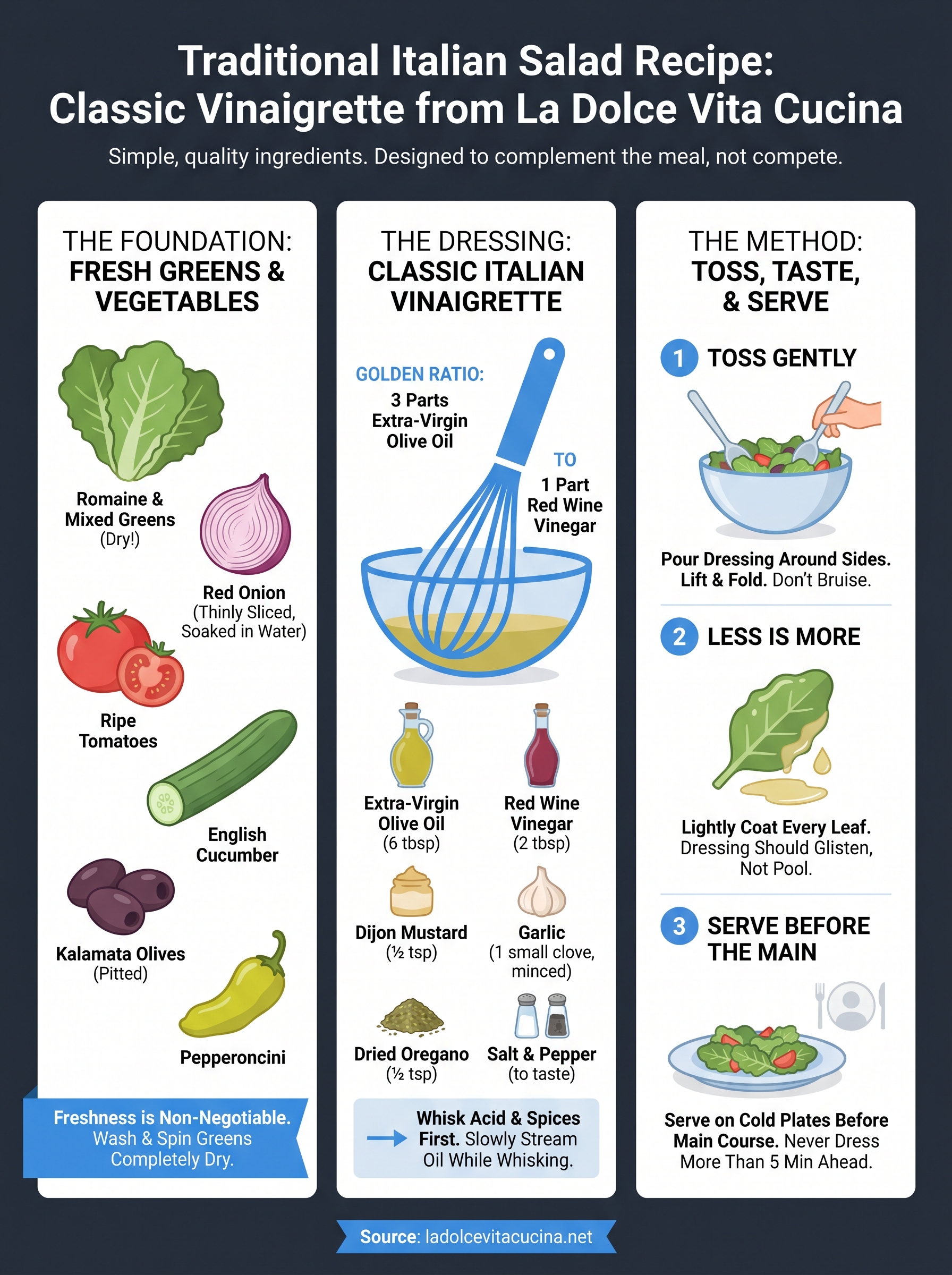
The foundation of any authentic Italian salad starts with romaine lettuce or mixed greens, sometimes a combination of both. You’ll also find red onion, ripe tomatoes, and cucumber as standard supporting players. Kalamata olives and pepperoncini show up in virtually every version because they bring a brininess that pulls the whole bowl together. Some cooks add marinated artichoke hearts or roasted red peppers, but those are optional additions, not requirements.
The vegetables carry the salad, so freshness is non-negotiable. Wilted greens or mealy tomatoes will undermine even the best vinaigrette.
Worth noting: croutons soaked in butter, thick slabs of bacon, or sweet dressings don’t belong here. A light shaving of Parmesan is acceptable in some regional versions, but it’s not a defining feature of the classic preparation.
The dressing philosophy
Italian vinaigrette follows a three-to-one ratio of olive oil to red wine vinegar, seasoned with salt, pepper, garlic, and dried oregano. That ratio matters more than any other single variable in this recipe. You want the oil to coat the leaves, not pool at the bottom of the bowl. A small amount of Dijon mustard acts as an emulsifier, keeping the oil and vinegar from separating the moment you stop whisking.
On its own, the dressing should taste sharp and assertive. Once it coats the greens, that sharpness softens and balances out. The contrast between raw vinegar and mellow, grassy extra-virgin olive oil is what separates a proper Italian salad from every other version you’ve tried.
Step 1. Pick and prep the ingredients
Getting your ingredients right is the first place a traditional Italian salad recipe can succeed or fail. Shop the day you plan to serve this salad if you can, and choose produce that is firm, bright, and free of soft spots.
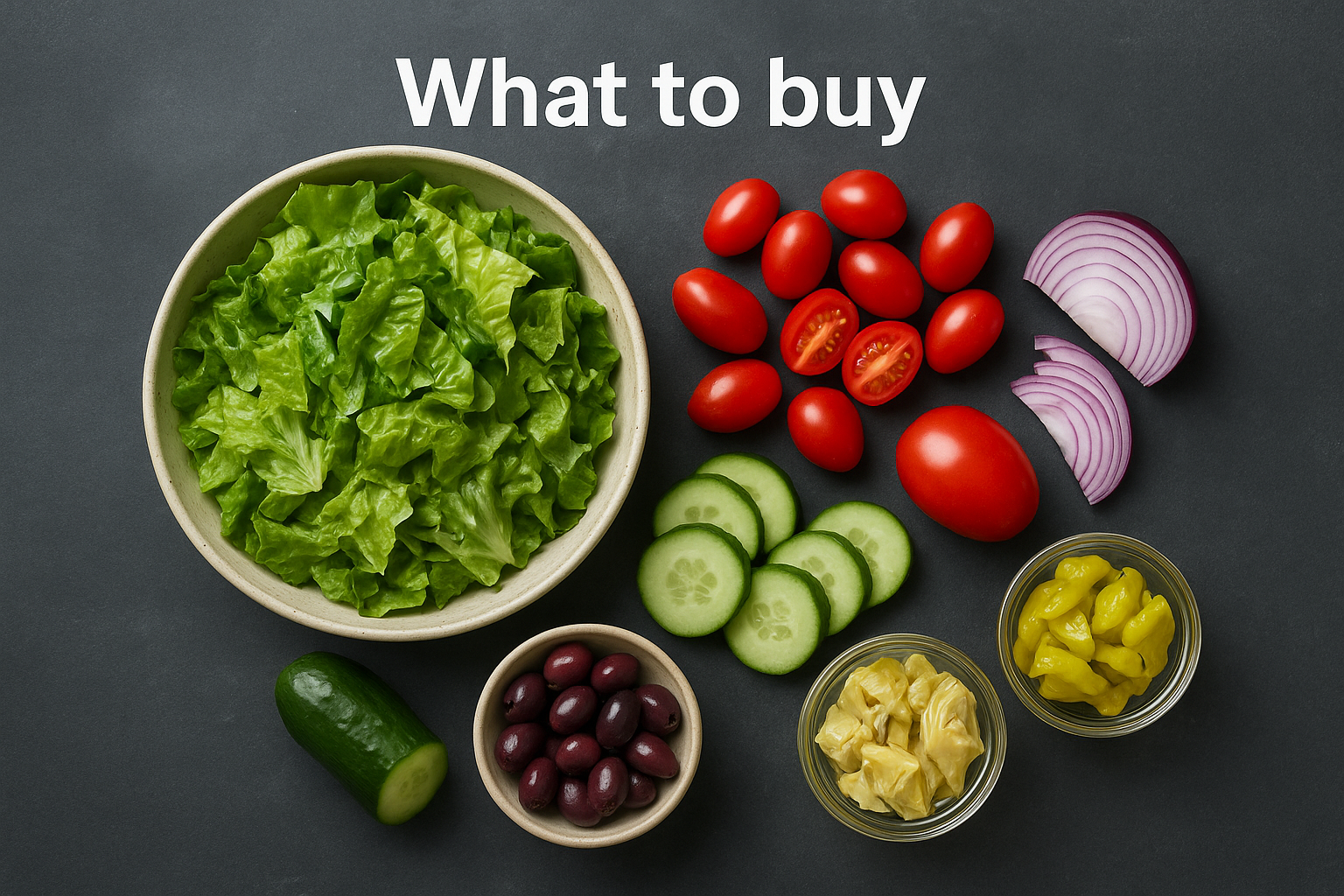
What to buy
Your shopping list is short, which means every item needs to carry its weight. Skip any ingredient that looks tired or off-season.
| Ingredient | Amount |
|---|---|
| Romaine lettuce or mixed greens | 1 head or 5 oz |
| Cherry tomatoes (halved) or Roma tomatoes (sliced) | 1 cup or 2 medium |
| Red onion, thinly sliced | ½ medium |
| English cucumber, sliced into half-moons | ½ |
| Kalamata olives, pitted | ½ cup |
| Pepperoncini peppers, drained | ¼ cup |
| Marinated artichoke hearts (optional) | ½ cup |
How to prep before you toss
Wash your greens in cold water and spin them completely dry in a salad spinner before anything else. Wet leaves repel the vinaigrette and dilute the flavor of the entire bowl.
Dry greens are not optional. Any moisture left on the leaves will break the dressing and make the salad taste flat.
Slice the red onion thin and soak those slices in cold water for five minutes. That step pulls out the sharpest bite without sacrificing the crunch you need in every forkful.
Step 2. Make the classic Italian vinaigrette
The vinaigrette is the most important element in any traditional Italian salad recipe, and it takes less than three minutes to build from scratch. You need extra-virgin olive oil, red wine vinegar, Dijon mustard, garlic, dried oregano, salt, and black pepper. Nothing more.
The ratio and the ingredients
Getting the oil-to-vinegar ratio right is the single step that separates a flat dressing from one that pulls the whole salad together. Stick to three parts olive oil for every one part red wine vinegar, and do not adjust this until you taste the finished result.
| Ingredient | Amount |
|---|---|
| Extra-virgin olive oil | 6 tablespoons |
| Red wine vinegar | 2 tablespoons |
| Dijon mustard | ½ teaspoon |
| Garlic, minced | 1 small clove |
| Dried oregano | ½ teaspoon |
| Salt | ¼ teaspoon |
| Black pepper | To taste |
How to whisk it together
Add the vinegar, mustard, garlic, oregano, salt, and pepper to a small bowl first and stir them together. Then pour the olive oil in slowly while you whisk continuously. That order matters because the mustard needs to coat the acid before the oil enters the mix.
Taste the dressing on its own before you use it. If it tastes sharp and slightly aggressive, it is ready. That edge softens the moment it coats the greens.
Step 3. Toss, taste, and serve at the right time
Tossing a salad correctly changes the result more than most home cooks realize. For a traditional Italian salad recipe, your goal is even coating without bruising the leaves. Add all your prepped vegetables to a large bowl, pour the vinaigrette around the sides rather than directly onto the center, and use clean hands or two large spoons to lift and fold everything from the bottom up.
How to toss without overdressing
Add less dressing than you think you need, then taste before adding more. You want every leaf lightly coated, not wet or heavy. Pick up a single leaf and check it. If it glistens without pooling liquid at the stem, your dressing ratio is right.
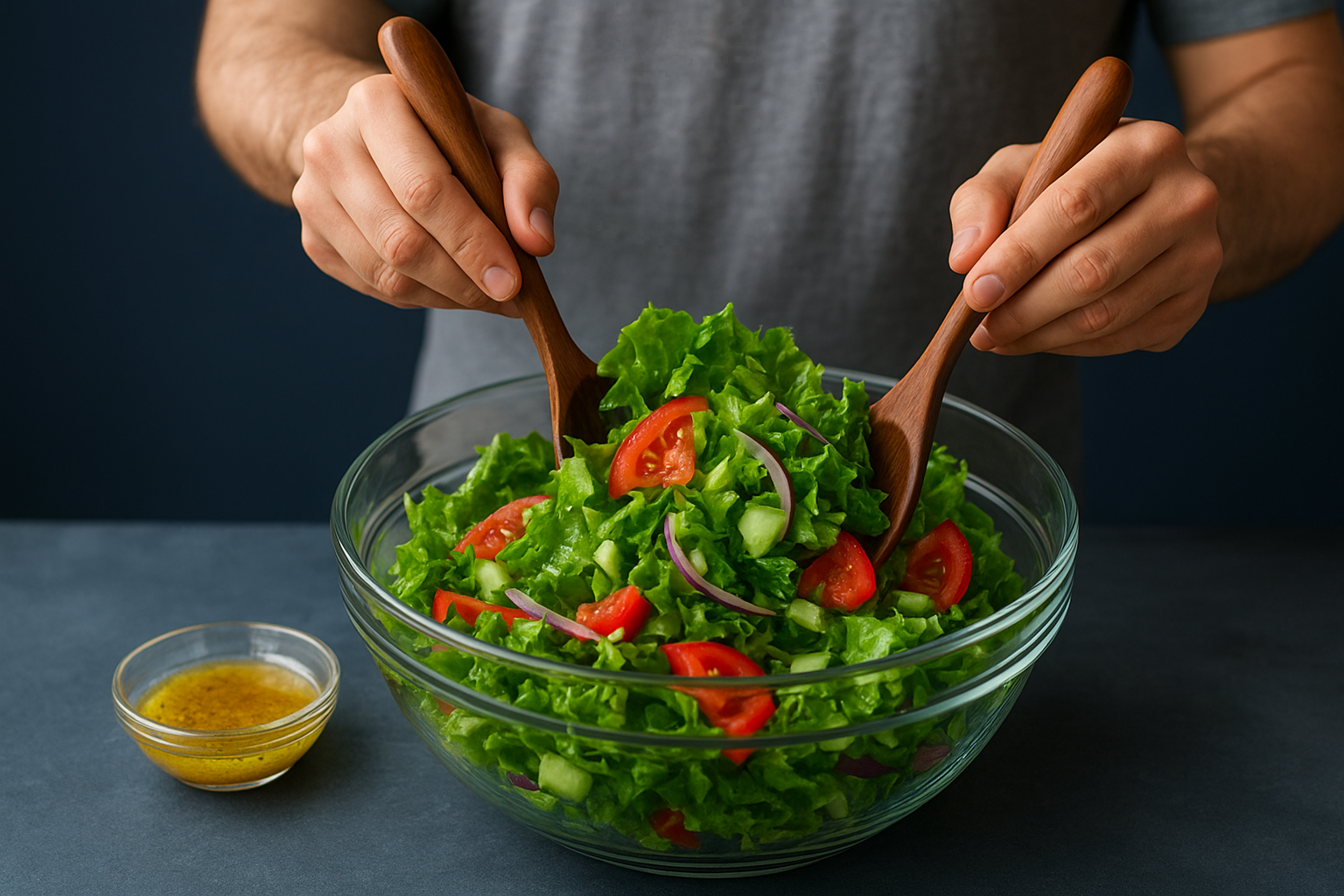
Never dress the salad more than five minutes before serving or the greens will wilt and lose their texture.
When to serve and in what order
Serve this salad before the main course, not alongside it. That sequence follows the Italian approach to eating, where each course gets its own moment at the table. Cold plates keep the salad crisp from bowl to table, so chill your serving dishes in the refrigerator for about ten minutes before plating.
Plate individually rather than leaving the salad in a communal bowl when you’re hosting guests. Individual portions give you better control over dressing distribution, and the colors and textures of the vegetables present far more cleanly on a single plate.
Step 4. Variations, add-ins, and make-ahead tips
Once you’ve mastered the base version of this traditional Italian salad recipe, adjusting it for different meals is straightforward. A few well-chosen additions can shift the salad from a light opener to a satisfying main course without losing the clean character that makes it work.
Variations and add-ins worth trying
The most common upgrades involve protein and cheese. Sliced grilled chicken, canned tuna packed in olive oil, or fresh mozzarella all fit the flavor profile without fighting the vinaigrette. Keep any additions small and briny rather than rich, a few shavings of Parmesan or crumbled feta both work well here.
Add proteins and cheese in small amounts. The vegetables should still dominate the bowl.
- Grilled chicken strips (sliced thin)
- Canned tuna in olive oil (drained)
- Fresh mozzarella (torn, not cubed)
- Parmesan shavings
- Chickpeas (rinsed and dried)
Make-ahead tips
Prep your vegetables and dressing separately up to 24 hours in advance and store them in separate refrigerator containers. Dress the salad only right before serving to keep the greens from wilting and the textures intact.
| Component | Make-ahead window | Storage method |
|---|---|---|
| Chopped vegetables | Up to 24 hours | Airtight container, refrigerated |
| Vinaigrette | Up to 3 days | Small jar, refrigerated, shake before use |
| Dressed salad | Do not prep ahead | Dress right before serving |
Ready to serve
You now have everything you need to build a traditional Italian salad recipe from scratch, from selecting the right greens to whisking a vinaigrette that actually holds together. The whole process takes under fifteen minutes, and the result is a salad that stands on its own without leaning on shortcuts or bottled dressings.
Keep the ingredients simple, dress the salad right before you serve it, and taste as you go. Those three habits will carry you further than any advanced technique. The salad works as a first course opener or a side that complements pasta, grilled proteins, or a light soup.
When you want to experience what these flavors look like on a full Italian table built by people who care about every detail, visit La Dolce Vita Cucina in Chicago’s Portage Park neighborhood. Our menu brings these same principles to life in ways that are worth tasting firsthand.