
If you’ve ever stood in front of a gelato case wondering "is gelato gluten free?", you’re not alone. It’s one of the most common questions we hear at La Dolce Vita Cucina, where we make our gelato in-house at our Portage Park, Chicago location.
The short answer: traditional gelato, in its simplest form, is made from milk, sugar, and natural flavors, no wheat, no flour. But the full picture isn’t that simple. Certain flavors, mix-ins, and production methods can introduce gluten where you wouldn’t expect it, which matters a great deal if you have Celiac disease or a gluten sensitivity.
This article breaks down exactly which gelato ingredients are safe, where hidden gluten tends to show up, and what to look for, whether you’re dining out or picking up a pint at the store. We’ll also share how cross-contamination works and which steps make a real difference in keeping your dessert gluten free.
What makes gelato gluten-free or not
Traditional gelato starts with milk or water, sugar, and a flavoring base like fruit puree or nut paste. None of those core ingredients contain gluten, which is why plain gelato is naturally gluten-free in its traditional form. When you ask "is gelato gluten free," the honest answer depends on what gets added after that simple foundation.
The base ingredients
The foundational recipe for gelato relies on dairy (or a dairy-free alternative), sugar, and natural flavorings to build that dense, creamy texture. Unlike ice cream, gelato uses less fat and less air, which means the flavor comes from the ingredient itself rather than from bulking additives. A simple fruit gelato or a plain pistachio gelato carries no wheat-based ingredients at all. Eggs appear in some traditional recipes, particularly for custard-style bases, and those are also gluten-free by nature.
If the gelato contains only milk, sugar, eggs, and natural fruit or nut flavors, it is almost always safe for gluten-free diners.
Where gluten enters the picture
Problems arise when mix-ins and flavoring agents enter the recipe. Cookie pieces, brownie chunks, wafer cones, and certain chocolate coatings all introduce wheat directly into what would otherwise be a clean product. Beyond the obvious add-ins, some flavor pastes and stabilizers used in commercial production can contain gluten-based thickeners or maltodextrin derived from wheat.
Manufacturers also sometimes use the same production equipment to process both plain gelato and flavored varieties that include gluten-containing ingredients. That shared equipment is where contamination happens, even in a product that looks completely clean on its label. Reading the full ingredient list, not just the flavor name, gives you a much clearer picture of what you are actually eating.
Why cross-contamination matters for celiac
For people with Celiac disease, even a tiny trace of gluten can trigger an immune response that damages the small intestine. So even if you’re asking "is gelato gluten free" and the answer is technically yes, cross-contamination during production or serving can make a product unsafe regardless of its ingredient list.
How contamination happens in a gelato shop
Scoops and serving tools move between different gelato containers throughout the day. A scoop used in a cookie dough or tiramisu flavor and then placed near a fruit sorbet carries residual gluten directly to your serving. Shared display cases create the same problem when flavors sit close together and particles transfer between them.
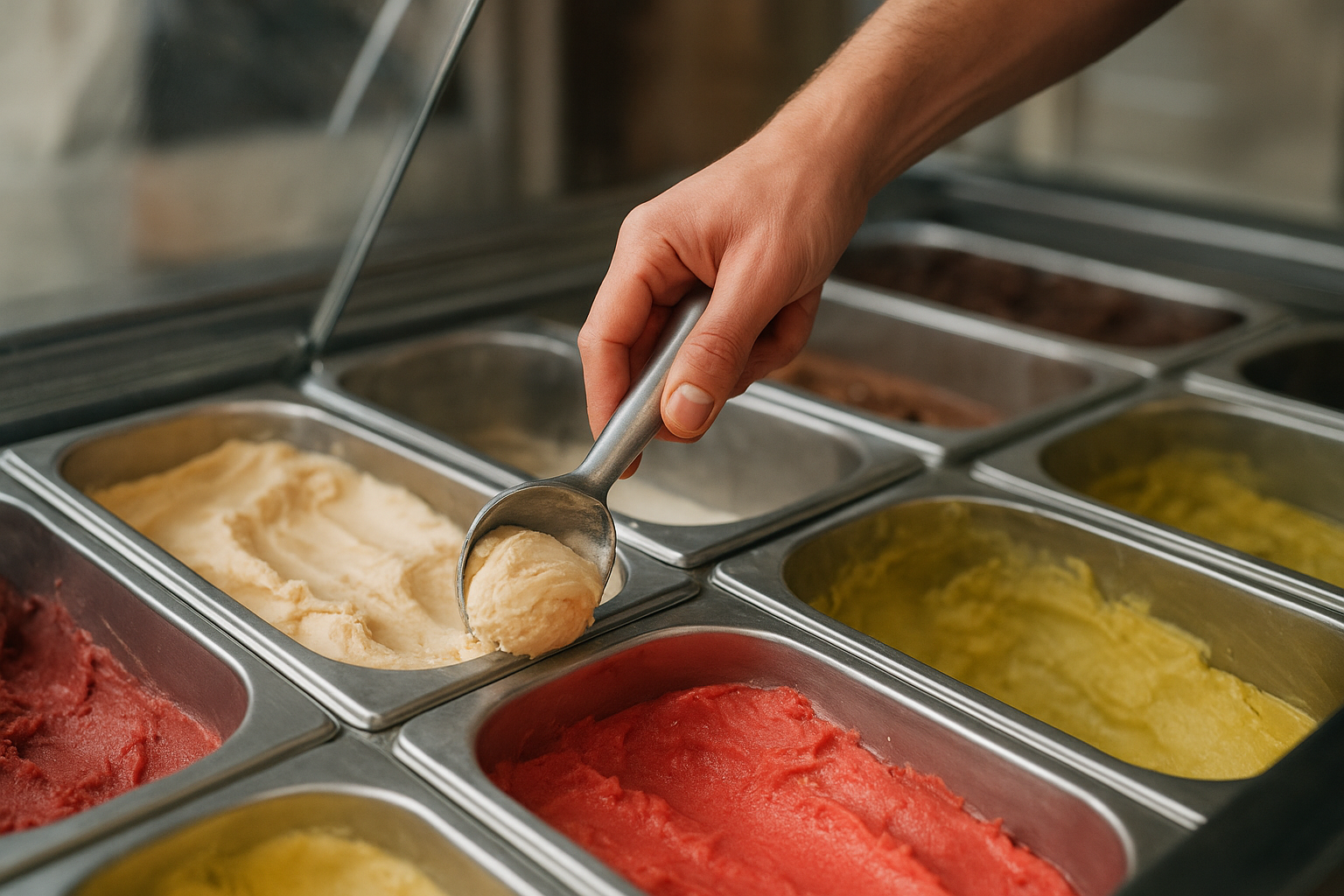
Even a gelato with zero gluten ingredients can become unsafe if it shares a scoop, tray, or prep surface with a gluten-containing flavor.
Production facilities carry similar risks. Manufacturers who make both standard and gluten-containing flavors on the same equipment face the challenge of thorough cleaning between batches. When that cleaning step is incomplete, gluten residue ends up in products labeled as plain or natural. Always ask staff directly about their handling and cleaning protocols before ordering.
How to choose gluten-free gelato safely
When you’re asking "is gelato gluten free" at a shop or a grocery store, the answer matters only if you know what to verify. Reading labels carefully and asking staff the right questions puts you in control of whether your gelato is actually safe to eat.
Look for certified gluten-free labels
Certified gluten-free labels follow strict testing standards, meaning the product has been verified to contain fewer than 20 parts per million of gluten, the threshold recognized by the FDA. A plain "no gluten ingredients" claim is not the same thing. Certified labels offer a much higher level of assurance, especially if you have Celiac disease and need more than just a basic ingredient check.
Certification signals that an independent body has tested and approved the product, not just that the brand believes their ingredients are clean.
Ask the right questions before ordering
At a gelato shop, ask staff directly whether they use dedicated scoops for flavors with no gluten-containing ingredients. Find out if their facility processes wheat-based products on the same equipment. Key questions to ask include:
- Do you use separate scoops per flavor?
- Is any equipment shared with gluten-containing products?
- Do you have a dedicated gluten-free prep area?
Common gelato flavors and gluten risks
When you ask is gelato gluten free, the specific flavor you choose matters as much as the base ingredients. Some flavors are naturally free of gluten risk, while others are essentially built around wheat-containing components from the start.
Low-risk flavors
Fruit-based gelatos carry the lowest gluten risk because they rely on real fruit or puree as the primary flavoring, with no cookies, pastry, or wheat-derived thickeners involved. Generally safe options include:
- Lemon and other citrus varieties
- Strawberry, mango, and raspberry
- Plain pistachio or hazelnut (without added cookie pieces)
- Sorbetto made with water instead of dairy
High-risk flavors to watch
Tiramisu, cookies and cream, cannoli, and biscotti flavors are almost always unsafe for gluten-sensitive diners. Each one incorporates wheat-based ingredients directly into the mix, whether that’s ladyfinger crumbs, cookie pieces, or crushed pastry shells. Chocolate flavors with brownie chunks or wafer layers carry the same problem.
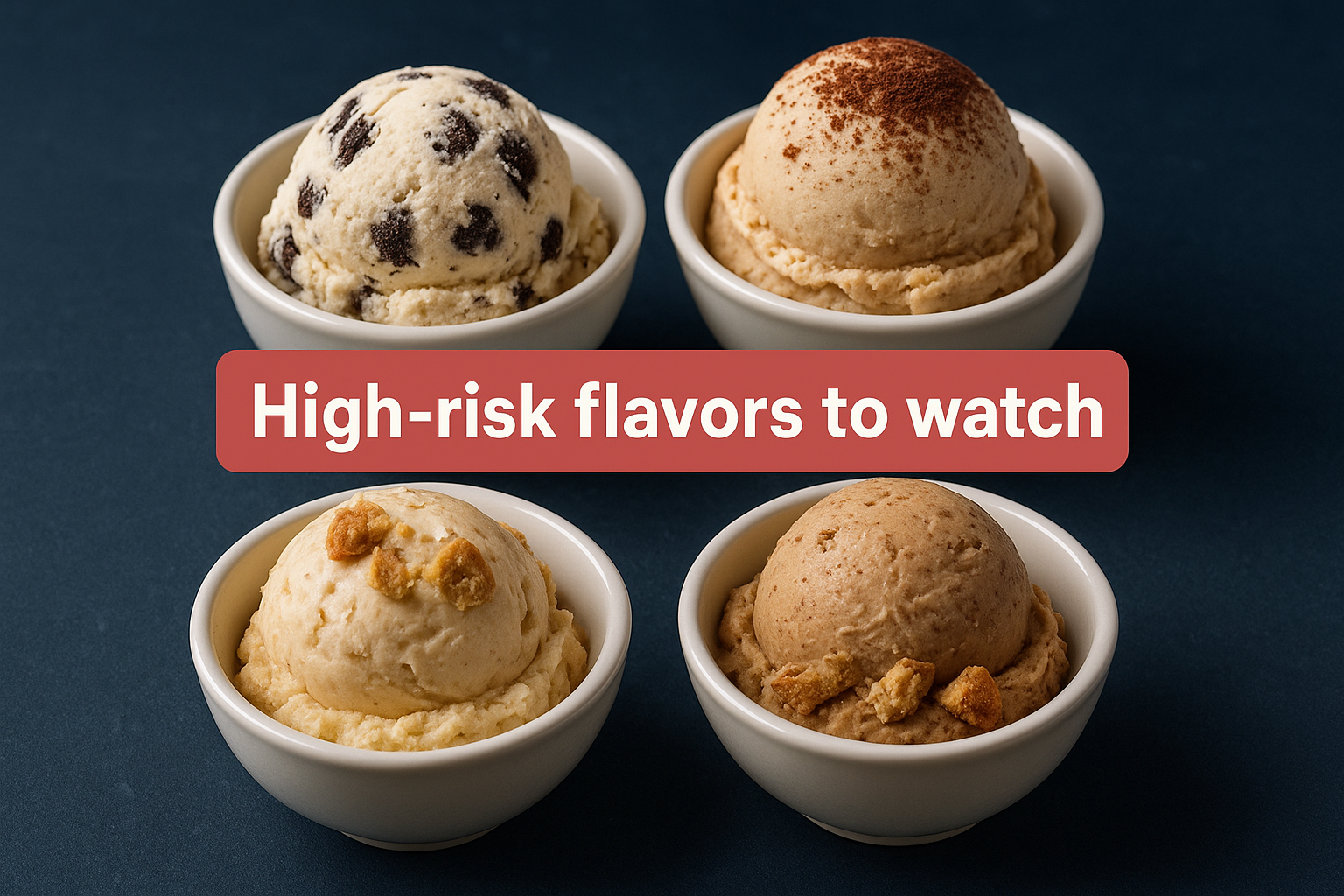
If the flavor name references a pastry, cookie, or baked good, treat it as containing gluten until you can confirm otherwise.
Vanilla and plain chocolate bases tend to be safer choices, but always verify that no stabilizers or mix-ins containing wheat have been added before you order.
Gluten-free ordering tips at gelato shops
When you’re at a shop and asking is gelato gluten free, how you order matters as much as what you choose. Visiting early in the day reduces your risk because scoops are fresher and less likely to carry residue from repeated use across multiple flavors throughout the service period.
Communicate your needs clearly
Tell staff about your Celiac disease or gluten sensitivity before they reach for a scoop. Saying "I have Celiac disease" signals a medical need, not a preference, and most staff respond with noticeably more care when they understand the stakes.
Asking for a fresh, clean scoop directly removes one of the most common sources of cross-contamination at the point of service.
Useful things to communicate at the counter:
- You need a clean, unused scoop pulled from a fresh rinse
- You want your gelato served in a cup, not a cone
- You need to know whether any equipment is shared with gluten-containing flavors
Choose cups over cones
Standard wafer and sugar cones contain wheat, so always order your gelato in a cup instead. Beyond the cone itself, toppings and drizzles carry the same gluten risk, so skip any additions you haven’t confirmed are safe before you accept your order.
Some shops offer gluten-free cone alternatives, but verify with staff that those alternatives are stored and handled separately from standard cones before assuming they are safe.
Final take
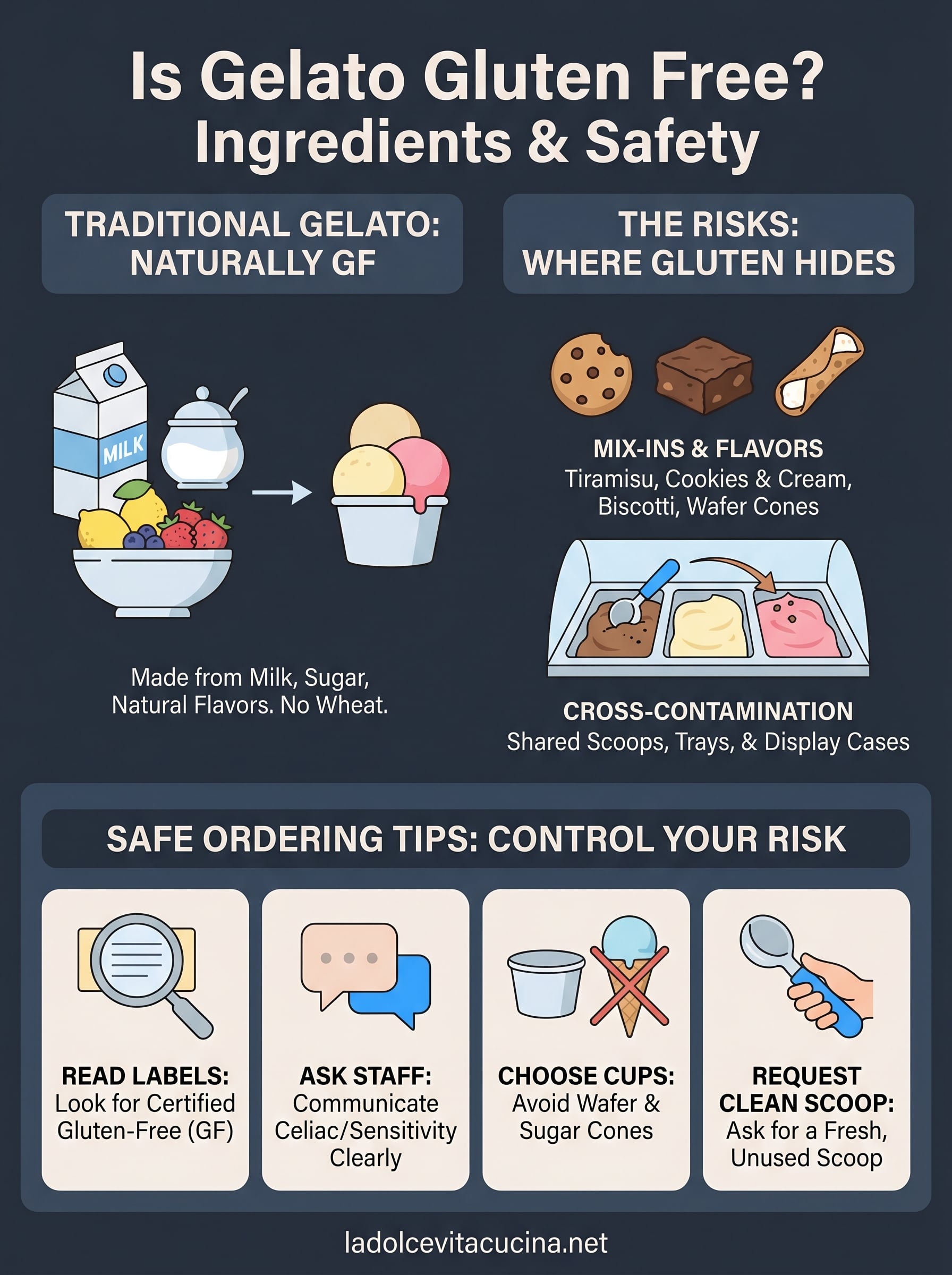
So, is gelato gluten free? Traditional gelato made with milk, sugar, and natural flavors carries no gluten by nature, but mix-ins, flavor pastes, and shared equipment can change that quickly. Your safest approach combines choosing low-risk flavors like fruit or plain nut bases, asking staff direct questions, and looking for certified gluten-free labels when you shop at a grocery store or specialty counter.
A cup beats a cone every time, and communicating your sensitivity clearly at the counter gives staff the chance to take the extra care that actually protects you. Ordering early in the day and requesting a fresh scoop removes two of the most common contamination risks before they become a problem.
If you want to try house-made gelato crafted with real ingredients in a relaxed neighborhood setting, stop by and see us. Visit La Dolce Vita Cucina in Portage Park, Chicago, and we’ll walk you through exactly what goes into each flavor before you order.