
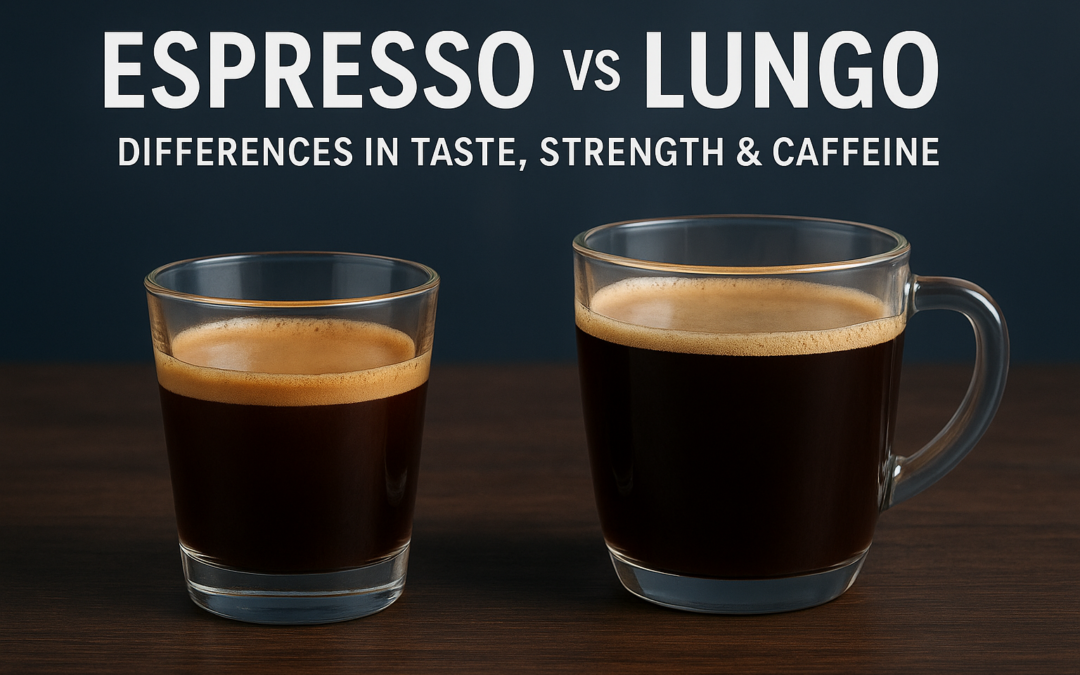
Order a coffee in Italy and you’ll get an espresso, no questions asked. But ask for something longer, and you’ll enter the espresso vs lungo debate that’s been part of Italian coffee culture for generations. At La Dolce Vita Cucina, our kitchen in Chicago’s Portage Park neighborhood runs on both, and the distinction between them matters more than most people realize. They start with the same beans and the same machine, yet they produce two noticeably different drinks.
The difference comes down to how much water passes through the coffee grounds and for how long. That single variable changes the taste, the body, the caffeine content, and even which drinks each one works best in. Getting it right means understanding what’s actually happening during extraction, not just picking the smaller or larger cup.
This article breaks down the real, measurable differences between espresso and lungo: how they’re pulled, what they taste like, how strong each one actually is, and when you’d choose one over the other.
Espresso and lungo basics
Both drinks come from the same foundation: hot water forced through finely ground, tightly packed coffee at high pressure. That process is called espresso extraction, and it’s what gives both drinks their intensity and concentration. The difference between espresso and lungo sits entirely in how long you let the water run and how much ends up in your cup. Same machine, same grind, same beans, but two noticeably different results.
What is an espresso?
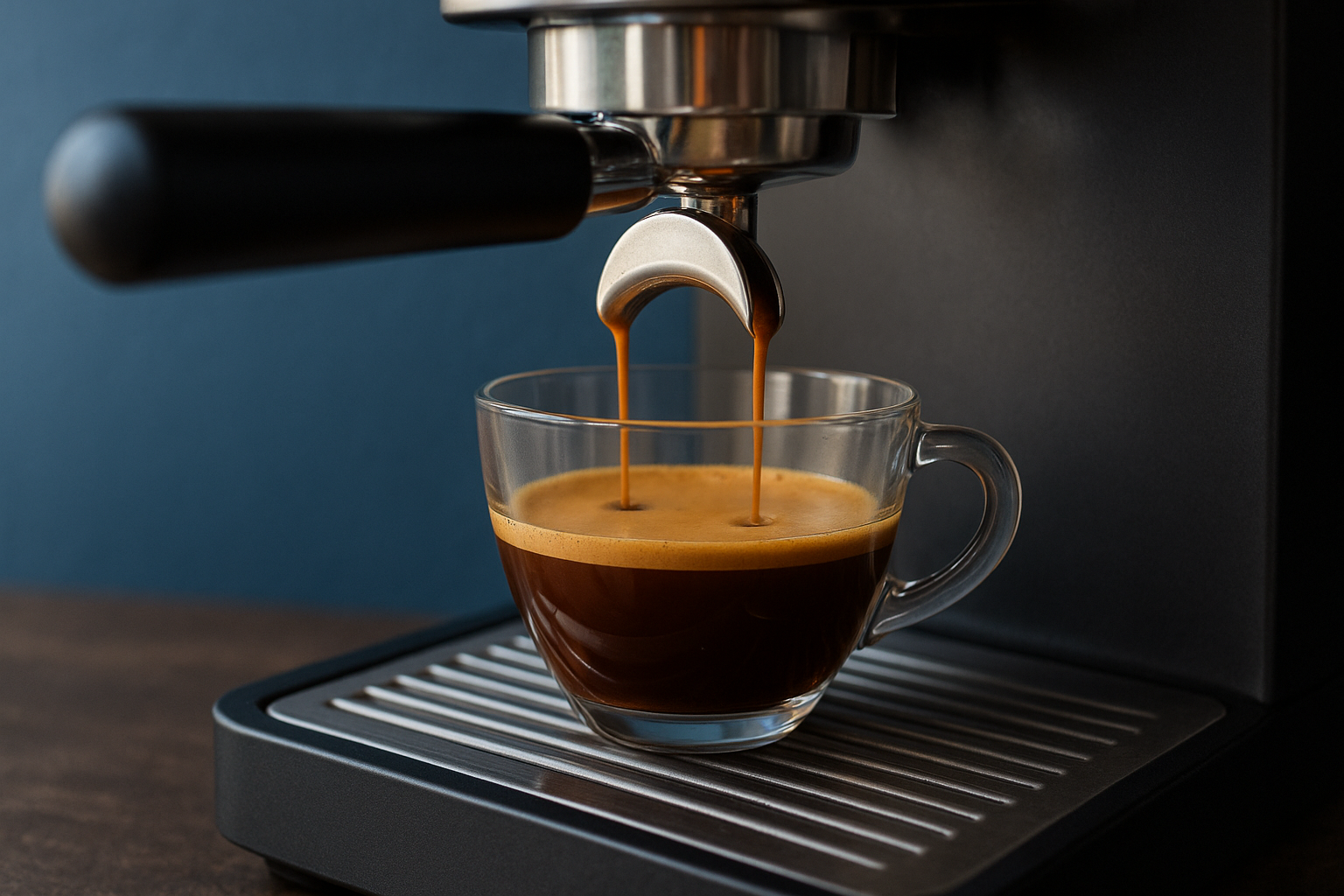
An espresso is a short, concentrated shot pulled with roughly 30ml (about 1 oz) of water passing through 7-9 grams of ground coffee in approximately 25-30 seconds. The result is a small, thick beverage with a golden crema on top, a dense body underneath, and a complex flavor that balances bitterness, acidity, and sweetness simultaneously. Espresso is the standard coffee across Italy and the base for many drinks you likely already order: cappuccino, latte, Americano, and flat white all build directly on it.
The crema on an espresso is more than visual; it signals that the beans were fresh and the extraction ran at proper pressure.
What is a lungo?
A lungo, which means "long" in Italian, uses the same espresso setup extended with additional water, typically bringing the total volume to around 60-90ml (2-3 oz). The machine runs longer, which pulls additional compounds from the grounds that a standard espresso never reaches. Those compounds include more bitter-tasting solids and a slightly higher caffeine yield per shot, which shifts the flavor profile considerably. Where espresso is dense and rich, a lungo is lighter in body and noticeably more bitter.
Knowing both definitions clearly is what makes the espresso vs lungo comparison actually useful. You’re not picking between a small cup and a larger one based on thirst. Each drink extracts different chemical characteristics from the same coffee, and those differences show up directly in how each one tastes, how much caffeine it delivers, and how well it works for different preparations and moods.
Espresso vs lungo: ratios, time, and volume
When you look at the espresso vs lungo comparison through actual numbers, the difference becomes concrete. Water volume and extraction time are the two variables that separate these drinks, and both affect what ends up in your cup far more than most people expect.
The numbers behind each shot
Here’s how each drink breaks down technically:
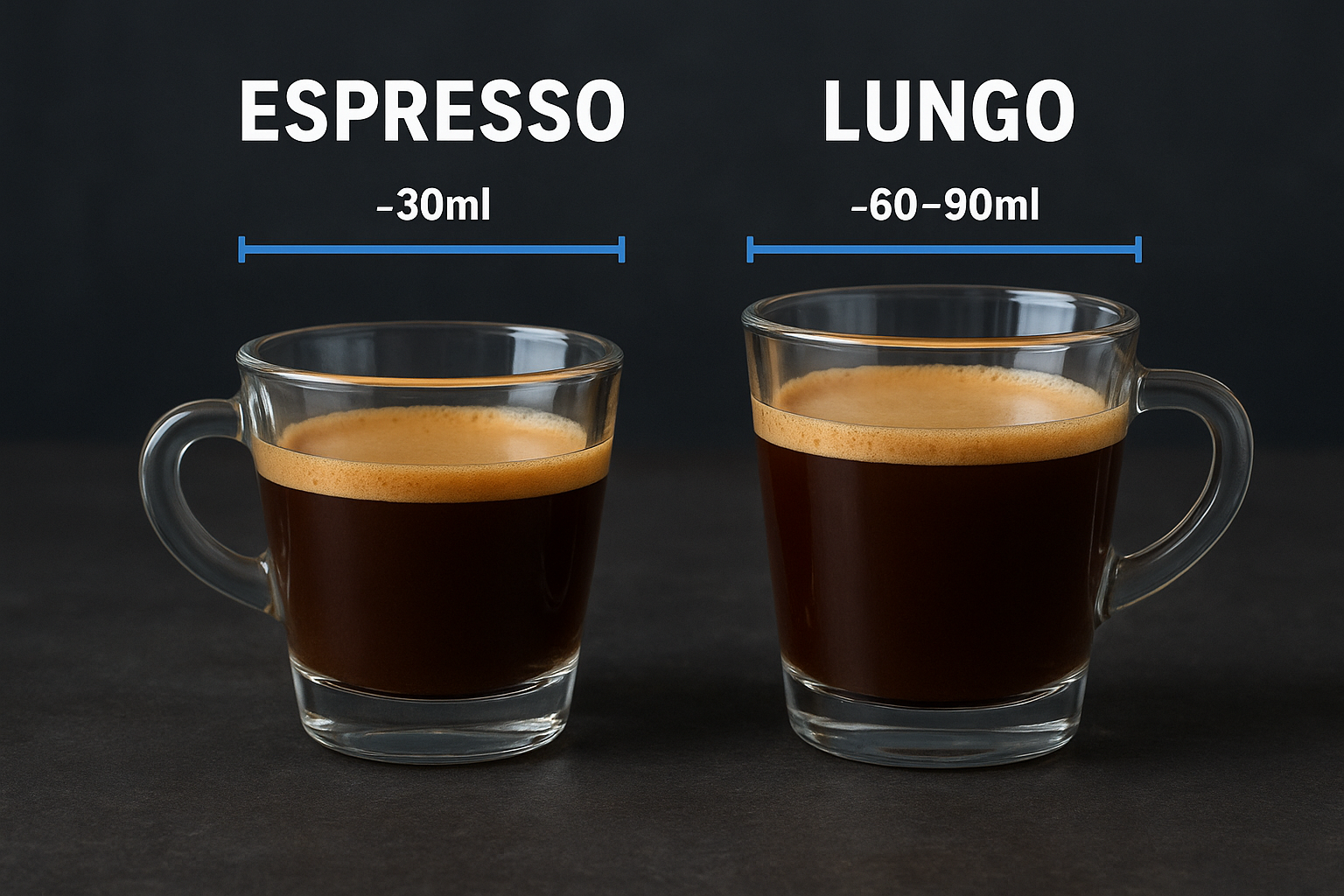
| Measurement | Espresso | Lungo |
|---|---|---|
| Water volume | ~30ml (1 oz) | ~60-90ml (2-3 oz) |
| Extraction time | 25-30 seconds | 45-60 seconds |
| Coffee dose | 7-9g | 7-9g |
The coffee dose stays identical for both drinks. What changes is how much water passes through it and how long the machine runs. That extended run time in a lungo pulls additional dissolved solids from the grounds, including compounds that a standard espresso never reaches.
Why extraction time changes everything
Espresso pulls the most soluble compounds first: the oils, sugars, and acids that create its signature sweetness and dense body. Stop the water there and you preserve that balance cleanly.
Letting water run longer doesn’t just dilute the shot; it actively extracts different flavor compounds that weren’t present in the shorter pull.
Bitter-tasting solids and a slightly higher caffeine yield come out later in the extraction cycle, which is precisely what a lungo captures that a standard espresso does not.
Taste, strength, and caffeine differences
The espresso vs lungo comparison gets most interesting when you place both drinks side by side. Espresso delivers a concentrated, layered flavor with natural sweetness and a slightly acidic finish. Lungo tastes noticeably more bitter and thinner in body because the extended extraction pulls compounds that espresso leaves behind in the grounds.
How the flavors compare
Espresso hits you with rich, caramel-like sweetness balanced by mild acidity and a thick, coating mouthfeel. That balance is what makes it so effective as a standalone drink or as a base for milk-based coffee. Lungo, by contrast, pulls bitter phenolic compounds that develop later in extraction, giving it a sharper, more astringent finish that some drinkers enjoy and others find too harsh.
If you prefer sweetness and body in your cup, espresso wins clearly. If you want something closer to a strong drip coffee, lungo fits that profile better.
Caffeine: which one has more?
Most people assume espresso has more caffeine because it tastes stronger. Concentration and caffeine content are not the same thing. Lungo’s longer extraction pulls slightly more caffeine from the same dose of coffee, meaning you get a marginally higher yield per shot despite the drink tasting less intense.
The difference is small, roughly 5-10% more caffeine in a lungo, but it is worth knowing if caffeine output factors into your drink choice.
How to pull a great espresso or lungo at home
Pulling a quality shot at home comes down to three core variables: grind size, dose, and water volume. Most home setups fail at the grind stage, not the machine. The espresso vs lungo distinction becomes clearest when you control each variable deliberately rather than guessing between sessions.
Getting your espresso right
Your grind needs to be fine enough to create resistance so 30ml of water takes 25-30 seconds to pass through. If the shot runs faster, grind finer; if it stalls past 35 seconds, go coarser. Use 7-9 grams of fresh coffee and tamp evenly to avoid channeling, which collapses extraction before it can develop properly.
A fresh grind matters more than almost any other factor; pre-ground coffee loses volatile compounds within minutes of opening.
Pulling a lungo without over-extracting
For a lungo, keep the same dose and grind as your espresso but let the machine run until you reach 60-90ml in the cup. Watch the liquid stream as it flows into the cup. Stop when the stream turns pale and watery, even if you haven’t hit your target volume yet. Running too long extracts bitter, astringent compounds that ruin the drink. Two quick checkpoints help you stay consistent:
- Stop extraction when the stream fades to a light brown or near-clear color
- Use 45-55 seconds as your baseline extraction time before adjusting
Which one to order for your drink and mood
The espresso vs lungo choice comes down to what you’re making and what you want from the cup. Neither drink is universally better; they serve different purposes, and picking the right one for the moment will get you a noticeably better result.
Choose espresso when you want richness and balance
Espresso belongs in your cup when you want concentrated flavor or plan to build a milk-based drink. If you’re ordering a cappuccino, latte, or flat white, espresso is the correct base because its dense body and natural sweetness hold up against steamed milk without disappearing into it. It also works perfectly as a standalone two-sip drink after a meal, the way it’s traditionally served in Italy.
Espresso’s crema and body break down when you add too much water, which is exactly why a lungo doesn’t substitute for it in milk drinks.
Choose lungo when you want something longer and more bitter
Lungo fits the moment when you want more liquid in your cup but don’t want to water down a shot with extra hot water the way an Americano does. It suits black coffee drinkers who find espresso too small or too sweet, and it works well when you want a slightly higher caffeine yield from a single dose. Skip lungo as a base for milk drinks since its thinner body and bitter finish don’t hold up the same way espresso does.
Final takeaway
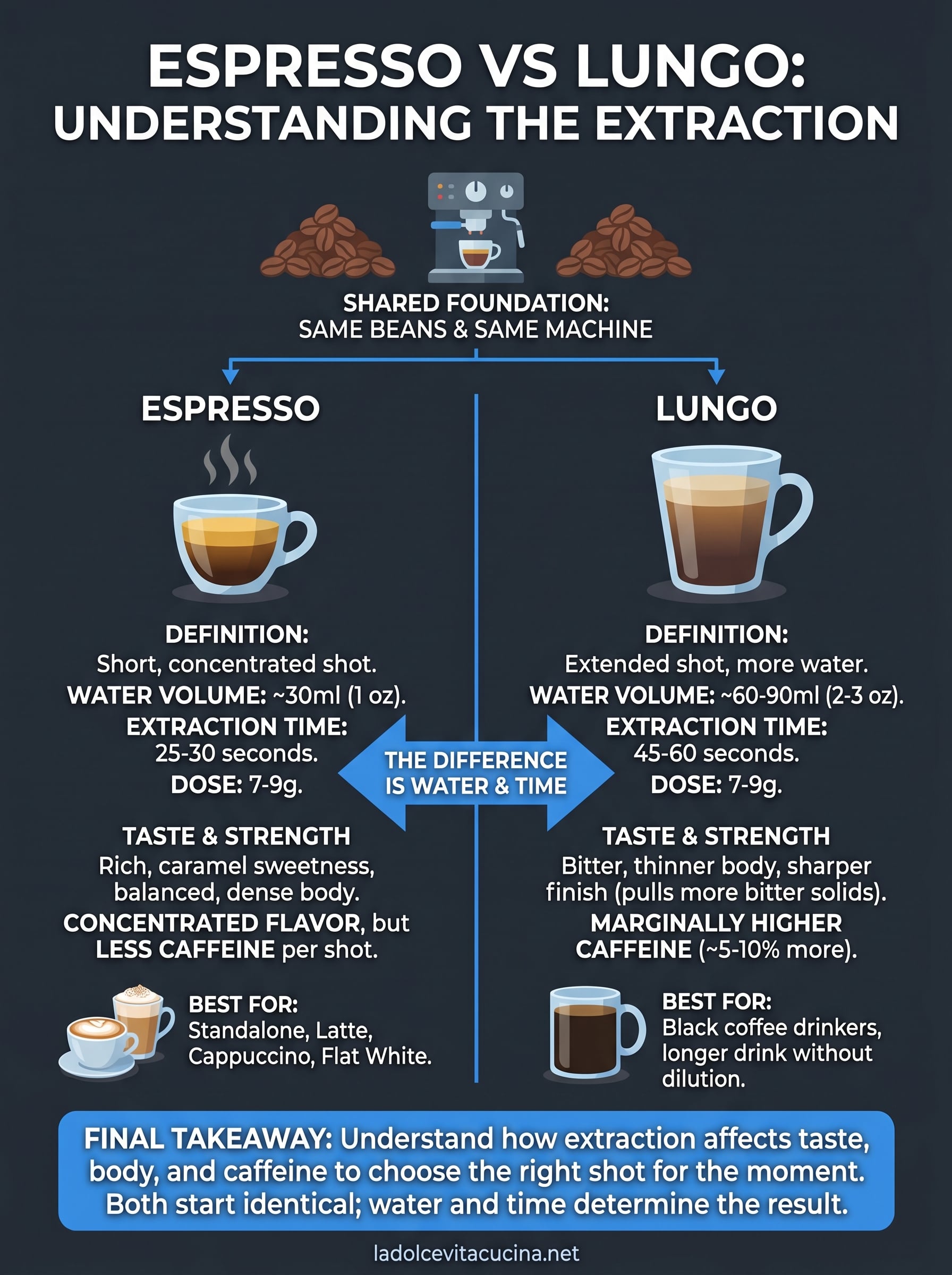
The espresso vs lungo comparison isn’t about which drink is superior. It’s about understanding what each one actually does so you can order or pull the right shot for the right moment. Espresso gives you concentrated flavor, natural sweetness, and a dense body built for sipping straight or as a milk drink base. Lungo gives you more volume, a slightly higher caffeine yield, and a bitter, drier finish that works well for black coffee drinkers who want something longer without dilution.
Both drinks start identically and diverge entirely based on water volume and extraction time. Once you know that, the choice becomes straightforward. If you want to experience both done well alongside genuinely good Italian food, visit us at La Dolce Vita Cucina in Chicago’s Portage Park neighborhood. Our team pulls each shot with the same attention the rest of the menu gets.