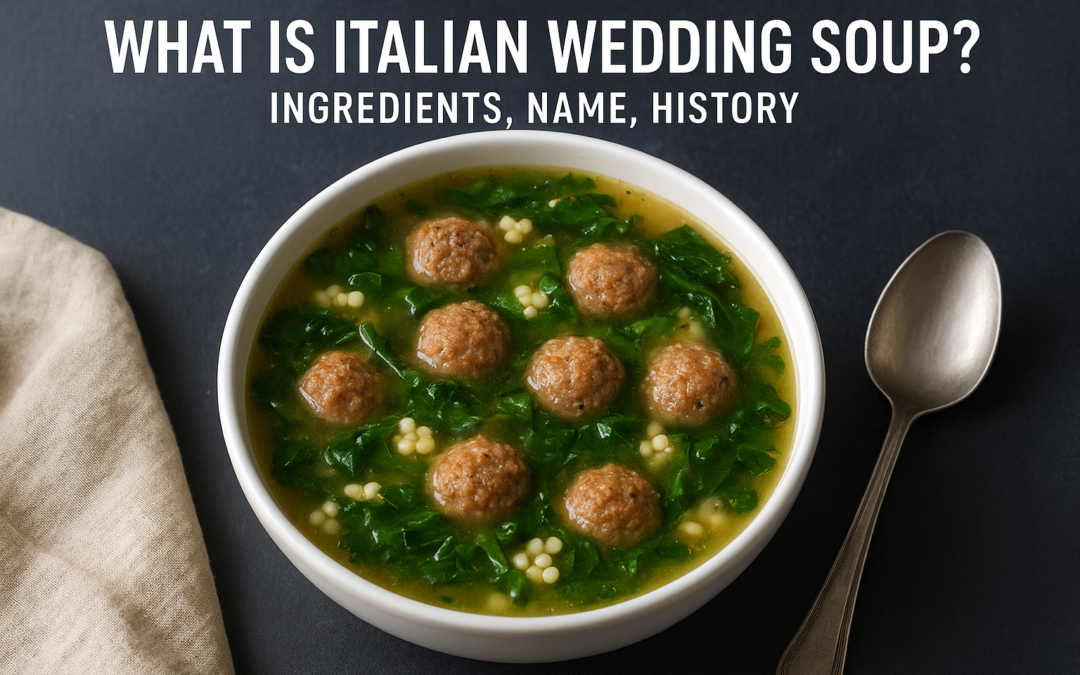
If you’ve ever wondered what is Italian wedding soup, you’re not alone, and despite what the name suggests, it has nothing to do with wedding receptions. This beloved Italian-American classic is a hearty broth loaded with small meatballs, leafy greens, and tiny pasta, and its name actually refers to a "marriage" of flavors rather than a matrimonial celebration.
At La Dolce Vita Cucina, our kitchen in Chicago’s Portage Park neighborhood is rooted in authentic Italian cooking traditions, the kind that produced dishes like this one. We know firsthand how Italian recipes carry stories, travel across oceans, and change shape along the way. Italian wedding soup is one of the best examples of that evolution, with origins that stretch back centuries in Southern Italy before becoming a staple on American tables.
This guide breaks down everything you need to know: the real meaning behind the name, the traditional and modern ingredients that define the soup, and its history from Italian kitchens to American homes. We’ll also walk you through how to make it yourself so you can bring a taste of Italy into your own kitchen.
What Italian wedding soup is
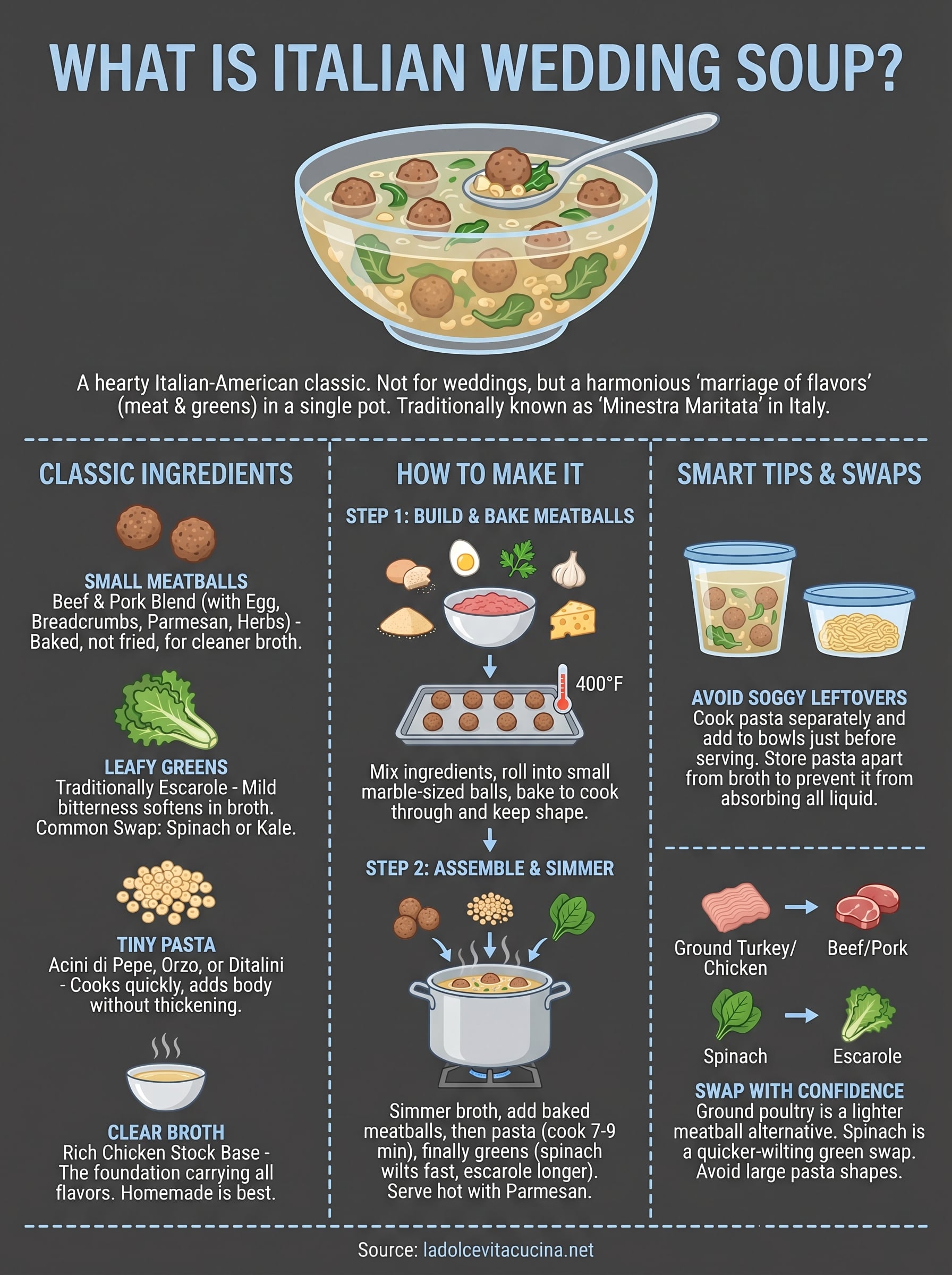
Italian wedding soup is a warm, broth-based soup built around three core components: small seasoned meatballs, leafy green vegetables, and tiny pasta shapes. The broth is typically chicken-based, though some versions use beef or a combination of both. Everything cooks together in a single pot, and the result is a soup that feels both light and satisfying at once. If you’ve been asking what is Italian wedding soup, the short answer is that it’s one of the most comforting and well-balanced soups in the Italian-American kitchen.
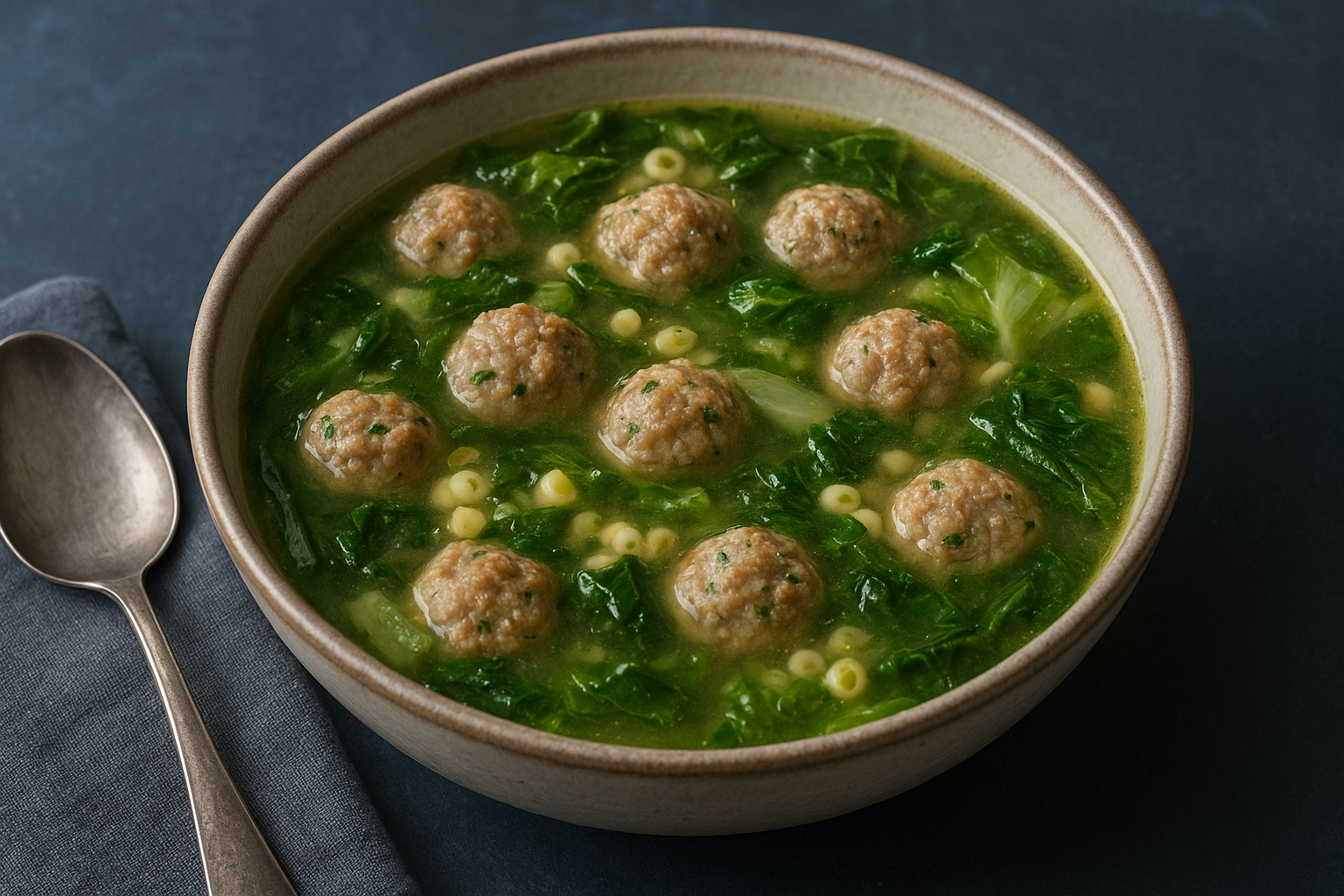
The combination of protein-rich meatballs, iron-packed greens, and starchy pasta in one bowl makes Italian wedding soup a genuinely complete meal on its own.
The broth
The foundation of this soup is its broth, and that matters more than any single ingredient you add to the pot. A rich chicken stock or homemade broth gives the soup its depth, carrying the flavors of the meatballs and greens without overwhelming them. Many Italian home cooks make broth from scratch using a whole chicken, aromatics like onion and celery, and a generous pinch of salt.
Store-bought broth works in a pinch, but you’ll notice the difference in body and overall flavor. The broth should taste clean and savory before anything else goes in. If yours tastes flat, simmer it with an extra celery stalk, a halved onion, and a small piece of Parmesan rind for about 20 minutes before building the soup.
The meatballs
Small meatballs are the defining element of this soup, and they’re different from the large ones you’d put on pasta. In Italian wedding soup, the meatballs are typically the size of a marble or small grape, rolled small enough to fit on a spoon. The traditional mix uses a combination of ground beef and ground pork, seasoned with garlic, parsley, salt, breadcrumbs, and egg to bind everything together. Some cooks add a grating of Parmigiano-Reggiano directly into the meat mixture for extra richness.
Ground turkey or chicken meatballs make a lighter alternative and still hold their shape during cooking. What you want to avoid is making them too large, since the whole point is that each spoonful of broth carries a meatball right along with it.
The greens and pasta
Escarole is the traditional green used in this soup, particularly in the Neapolitan-style version that inspired the dish. It has a mild bitterness that softens completely once it hits the hot broth, blending into the background without taking over. In the United States, many home cooks swap escarole for spinach or kale, both of which are easier to find and work just as well.
The pasta in Italian wedding soup is always small. Acini di pepe, orzo, or ditalini are the most common choices. These tiny shapes cook quickly and don’t absorb too much broth, which keeps the soup from turning thick or starchy as it sits on the stove.
Why it’s called wedding soup
The name "Italian wedding soup" throws a lot of people off. No wedding banquet inspired it, and no Italian bride has a particular claim to the recipe. The name is actually a translation error that stuck, and understanding the original Italian phrase changes how you think about the dish entirely.
The original Italian phrase
The soup comes from "minestra maritata", which translates more accurately as "married soup" rather than "wedding soup." The word "maritata" comes from the Italian verb "maritare," meaning to marry or to pair. In this context, it describes the harmonious pairing of meat and vegetables in a single pot, not a ceremony. Southern Italian cooks, particularly in the Naples region and surrounding Campania, used this phrase to describe how well fatty, flavorful meat and bitter greens complement each other when cooked together in broth.
The "marriage" in Italian wedding soup refers to the union of ingredients, not a celebration, and once you understand that, the dish makes perfect sense.
This kind of flavor pairing philosophy was common in traditional Italian cooking, where the goal was always balance. Bitter greens like escarole soften and mellow against the richness of pork or beef, creating something more complete than either ingredient on its own. That balance is exactly what Italian cooks meant when they called it "married."
How the name changed in English
When Italian immigrants brought the dish to the United States in the late 19th and early 20th centuries, the recipe traveled through translation and adaptation. "Maritata" is close enough to "matrimonial" in English that the phrase shifted to "wedding soup" at some point, and the new name stuck fast in Italian-American communities. Nobody corrected it because the dish itself was already beloved.
Today, if you ask what is Italian wedding soup in Italy, you may get a puzzled look. The dish is regional and not universally known across the country, but minestra maritata remains a recognized part of Neapolitan culinary tradition.
Classic ingredients and smart swaps
When people ask what is Italian wedding soup, they’re usually thinking about the specific combination of ingredients that makes it recognizable. Every bowl relies on a short list of components that work together: seasoned meatballs, leafy greens, small pasta, and a solid broth. Once you understand what each one contributes, you’ll find it easier to adjust the recipe based on what you have on hand without losing the character of the dish.
The core ingredient list
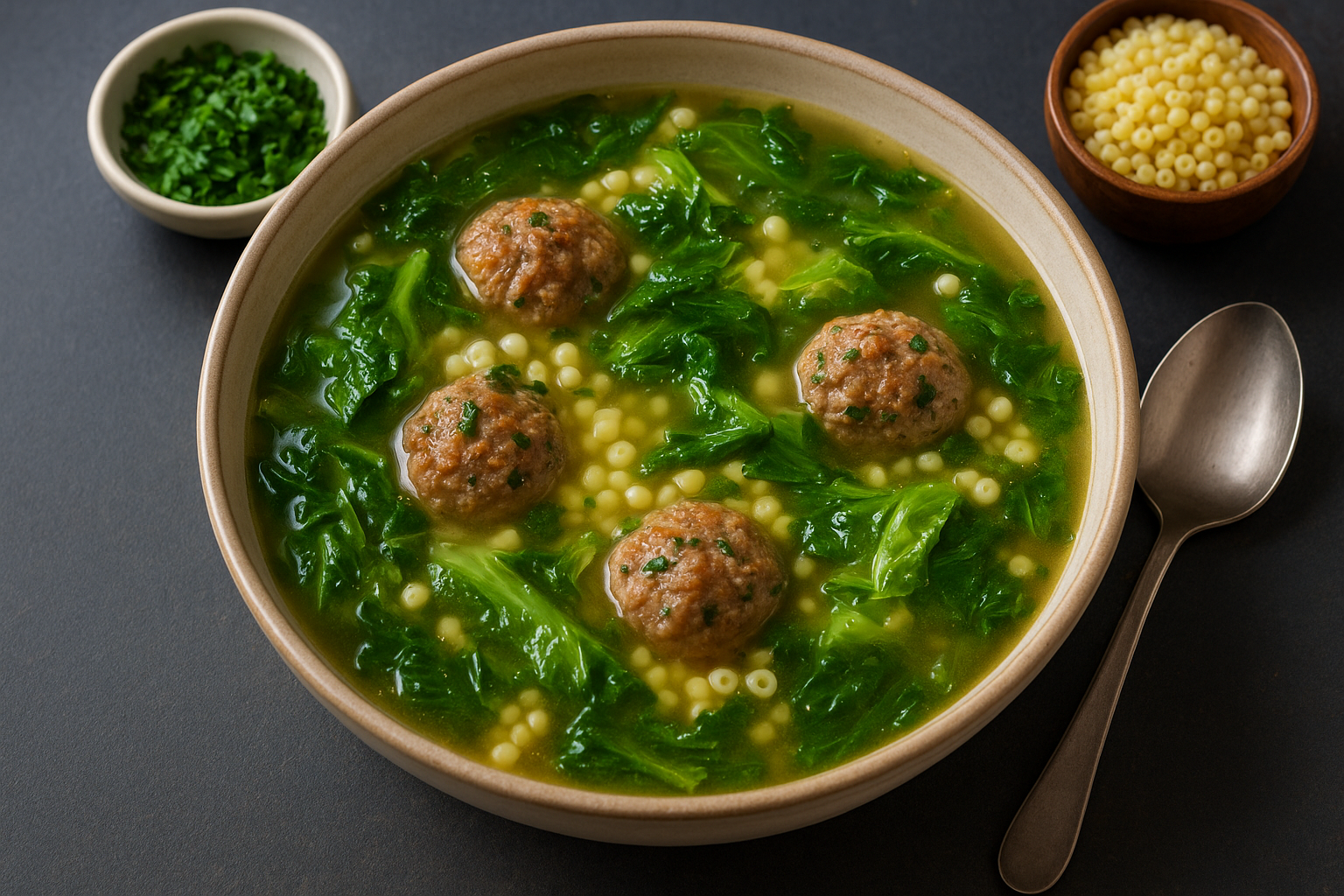
A classic batch calls for straightforward pantry staples. Ground pork and beef blend together for the meatballs, bound with egg, breadcrumbs, minced garlic, and fresh parsley. The broth is chicken-based, and the greens are typically escarole, with acini di pepe or orzo rounding out the bowl. Here’s a breakdown of each component and what it does:
| Component | Traditional Choice | What It Does |
|---|---|---|
| Meatball meat | Ground beef and pork | Adds fat, richness, and deep flavor |
| Meatball binder | Breadcrumbs, egg, Parmesan | Holds shape during cooking |
| Broth | Chicken stock | Light base that carries all the flavors |
| Greens | Escarole | Mild bitterness that balances the meat |
| Pasta | Acini di pepe or orzo | Adds body without thickening the broth |
Swaps that work
You have more flexibility here than most recipes suggest. Ground turkey or chicken replaces the beef-pork blend cleanly, and the meatballs still hold together well as long as you don’t skip the egg and breadcrumbs. Spinach or baby kale work in place of escarole and require almost no prep, since they wilt down fast once they hit hot broth.
If you swap escarole for spinach, add it in the last two minutes of cooking, since it wilts much faster and turns muddy if left too long.
Ditalini or small shells substitute for acini di pepe without issue if that’s what your pantry holds. The one swap to avoid is using large pasta shapes, since they absorb too much broth and throw off the balance of the entire bowl.
How to make Italian wedding soup at home
Making this soup at home is more straightforward than most people expect. The process breaks into two distinct parts: rolling and cooking your meatballs, then building the soup in a single pot. If you understand what is Italian wedding soup at its core, you already know the sequence: meatballs first, broth next, greens and pasta last. Getting that order right keeps every component in good shape when the bowl hits the table.
Build your meatballs first
Combine the following in a mixing bowl and stir until just combined, since overmixing toughens the meat and makes your meatballs dense:
- 1/2 pound ground beef + 1/2 pound ground pork
- 1/4 cup plain breadcrumbs
- 1 large egg
- 2 tablespoons fresh parsley, finely minced
- 2 garlic cloves, minced
- 2 tablespoons grated Parmigiano-Reggiano
- Salt and black pepper to taste
Roll the mixture into balls roughly 3/4 of an inch across, about the size of a large marble. Place them on a rimmed sheet pan and bake at 400°F for 12 to 14 minutes until cooked through. Baking keeps their shape intact and saves you from standing over the stove frying in batches.
Baking the meatballs instead of pan-frying them keeps excess oil out of your broth and gives you more consistent results across the whole batch.
Assemble the soup
Bring 6 cups of chicken broth to a gentle simmer in a large pot over medium heat. Add the cooked meatballs directly to the simmering broth and let them warm through for about 3 minutes. Stir in 1/2 cup of dry acini di pepe or orzo and cook for 7 to 9 minutes until just tender, checking the package time since brands vary.
Add 2 cups of roughly chopped escarole or fresh spinach and stir to combine. Spinach wilts in under 2 minutes, while escarole needs 4 to 5 minutes to soften fully. Taste the broth, adjust the salt, and finish each bowl with a fresh grating of Parmesan before you serve it.
Pasta, greens, and leftovers without mush
One detail that rarely comes up when people ask what is Italian wedding soup is how the pasta and greens behave after the pot comes off the heat. Both components keep absorbing broth even in the refrigerator, and by the next morning you’re looking at a thick, starchy bowl instead of the clear, light soup you made the night before. A few simple techniques prevent that from happening without adding much time to your process.
Keep pasta and broth separate
The most reliable way to protect your soup is to cook the pasta separately and store it apart from the broth. Boil your acini di pepe or orzo in salted water, drain it, and toss it lightly with a small amount of olive oil to prevent sticking. Keep it in its own container in the fridge. When you’re ready to serve, spoon the cooked pasta directly into each bowl before ladling the hot broth and meatballs over the top. This takes two extra minutes and completely solves the problem.
Storing pasta separately is the single most effective step you can take to keep Italian wedding soup tasting like it did on day one.
Reheat without overcooking the greens
Greens are the second component that suffers when you reheat the whole pot. Spinach in particular turns dark and loses its texture quickly. When you reheat the soup base, bring the broth and meatballs to a gentle simmer over medium-low heat rather than a rolling boil. If you used spinach, add fresh leaves to the hot broth in the last 90 seconds before serving, even if the original batch already had spinach cooked into it.
Escarole holds up better than spinach in leftovers, which is one reason it remains the traditional choice in classic recipes. If you know you’re making a large batch to reheat later, escarole is worth tracking down. Your stored soup will keep three to four days in the refrigerator, and the meatballs and broth actually deepen in flavor by day two once everything has settled together.
Ready for a bowl
Now you know what is Italian wedding soup from every angle: its name, its history, its ingredients, and how to keep it from turning into a starchy pot of leftovers overnight. Minestra maritata started as a simple celebration of balance in Southern Italian kitchens, and that balance is exactly what makes it worth cooking at home today. The combination of seasoned meatballs, tender greens, and clear savory broth delivers something that feels both humble and genuinely satisfying in a single bowl.
Making it yourself is one option. Another is letting someone else do the cooking for you. La Dolce Vita Cucina brings authentic Italian flavors and homemade cooking traditions to Chicago’s Portage Park neighborhood. Our kitchen draws from the same culinary roots that gave the world dishes like this one. Stop in for a meal, make a reservation, or explore the full menu online and plan your next visit.