
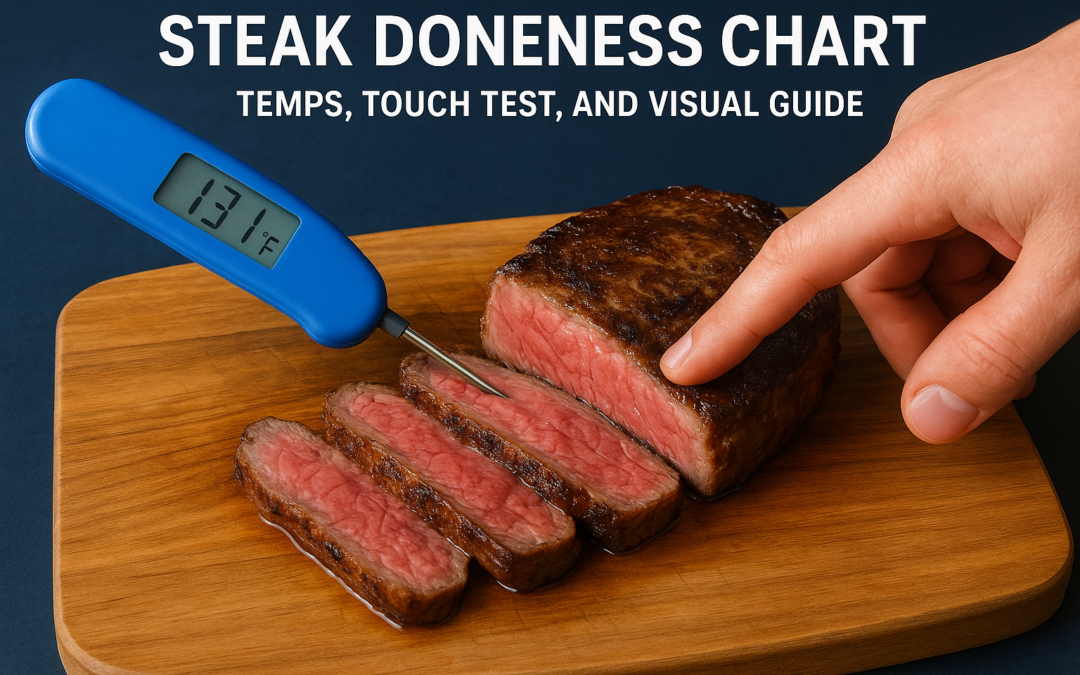
The difference between a perfect steak and a disappointing one almost always comes down to doneness. A few degrees too far in either direction, and that beautiful cut loses its ideal texture, juiciness, and flavor. Whether you’re cooking at home or ordering at a restaurant, a reliable steak doneness chart gives you the confidence to get exactly what you want, every single time.
At La Dolce Vita Cucina in Chicago’s Portage Park neighborhood, we take steak seriously. Our 16oz Ribeye is one of our most recommended dishes, and our kitchen team knows that nailing the right internal temperature is non-negotiable. That hands-on experience with premium cuts every day shaped what we’re sharing here, a practical guide built from real knowledge of how steak behaves under heat.
This article breaks down each level of doneness from rare through well-done, covering exact internal temperature ranges, the touch test method, and visual cues so you can read your steak without second-guessing. Think of it as your go-to reference the next time you’re standing over a grill, cast iron, or restaurant menu.
Why steak doneness matters
Steak doneness is not just a preference. It’s the difference between a meal you remember and one you regret. Whether you’re cooking a ribeye at home or ordering one at a restaurant, understanding exactly what’s happening inside the meat as it cooks gives you control over the outcome. A steak doneness chart is only as useful as your understanding of why each level exists in the first place.
Food safety starts with temperature
When you cook steak, internal temperature directly controls bacterial safety. The USDA recommends cooking whole muscle beef steaks to a minimum internal temperature of 145°F (63°C), followed by a three-minute rest. This applies specifically to steaks that haven’t been mechanically tenderized or blade-tenderized, since those processes can push surface bacteria deeper into the meat.
Whole muscle beef cuts cooked to 145°F and rested properly are considered safe by USDA food safety standards.
For most diners, a medium-rare steak falls right at or just below that threshold, which is why sourcing quality beef from a trusted butcher or restaurant matters more than people realize. The lower the internal temperature you prefer, the more critical it is that the beef is handled properly from farm to plate.
Texture and juice are tied to heat
Beyond safety, doneness controls how tender and juicy your steak feels when you cut into it. Muscle fibers in beef begin to tighten and squeeze out moisture as temperatures rise. A rare steak stays loose and soft because those fibers haven’t fully contracted. By the time you reach well-done territory, most of that moisture has cooked off, leaving a firmer, drier result that no amount of sauce fully rescues.
Fat rendering also shifts across the doneness spectrum. In a well-marbled cut like a ribeye, the intramuscular fat starts to melt and baste the meat from the inside around 130°F. Hit that window correctly, and every bite carries richness and depth that overcooking simply destroys.
Steak doneness chart by temperature
Internal temperature is the only truly reliable way to confirm doneness. The steak doneness chart below gives you the precise ranges used by professional kitchens, so you stop guessing and start cooking with confidence. Every number reflects the temperature at the center of the thickest part of the steak, measured after you remove it from heat but before resting.
Always pull your thermometer reading from the thickest point of the steak, not near the edges or bone, where temperatures run hotter.
The temperature ranges you need to know
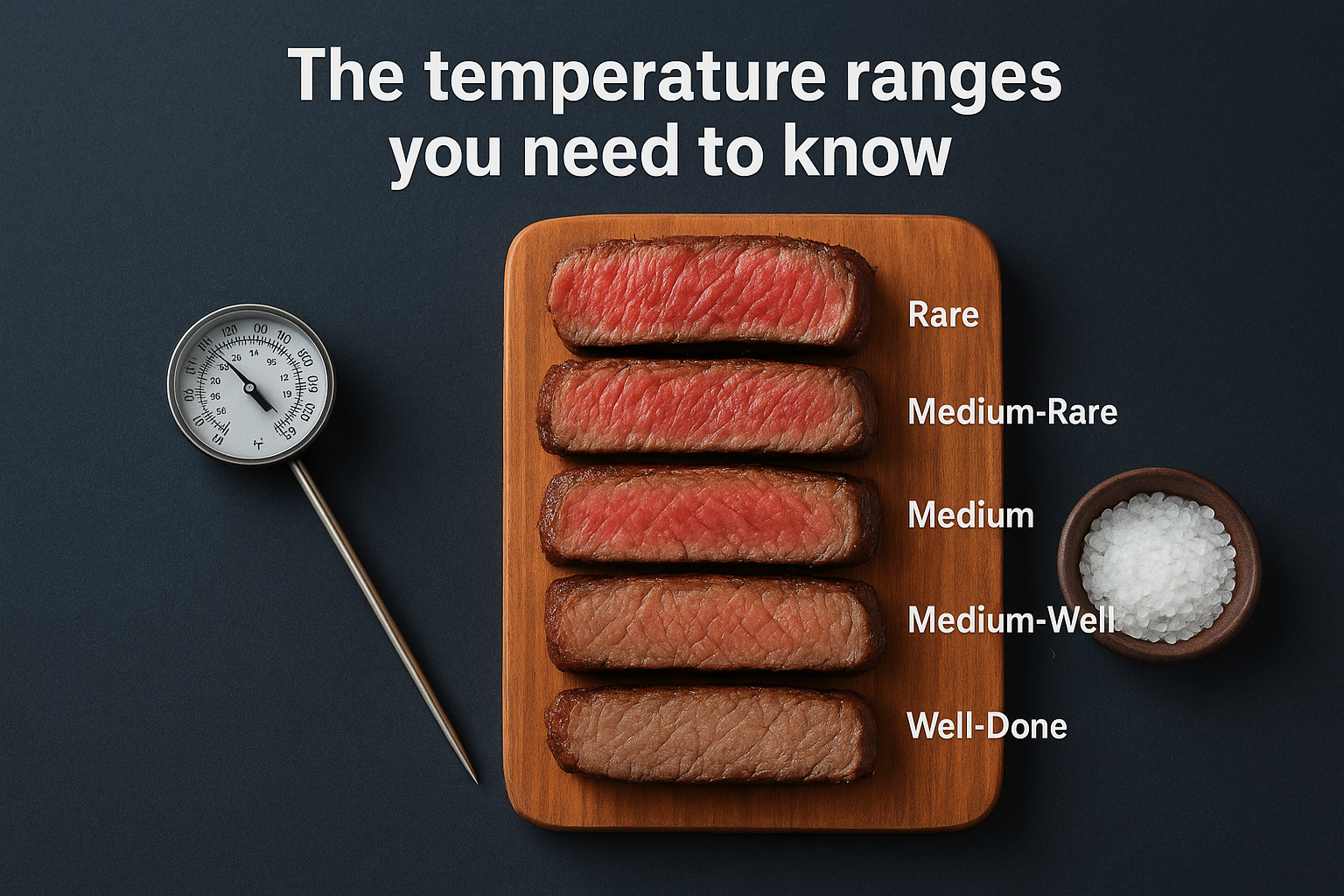
Each doneness level produces a distinct combination of color, texture, and moisture inside the cut. Use this table as your go-to reference every time you cook or order.
| Doneness | Temp (°F) | Temp (°C) | Center Color | Texture |
|---|---|---|---|---|
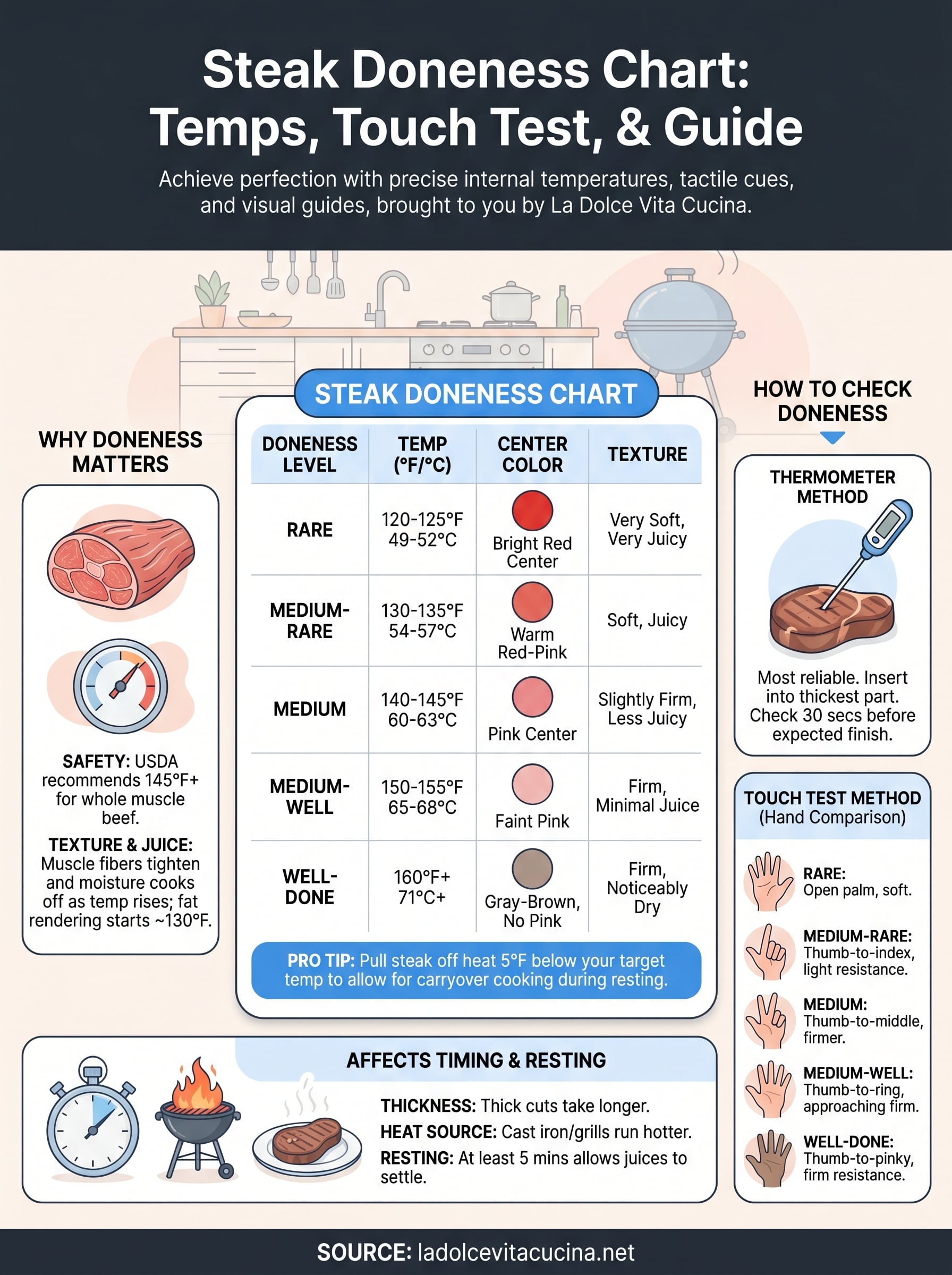
| Rare | 120-125°F | 49-52°C | Bright red | Very soft, very juicy |
| Medium-Rare | 130-135°F | 54-57°C | Warm red-pink | Soft, juicy |
| Medium | 140-145°F | 60-63°C | Pink center | Slightly firm, less juicy |
| Medium-Well | 150-155°F | 65-68°C | Faint pink | Firm, minimal juice |
| Well-Done | 160°F+ | 71°C+ | Gray-brown, no pink | Firm, noticeably dry |
Pull your steak off the heat 5°F below your target temperature, since carryover cooking during the rest period closes that gap. This single adjustment eliminates most cases of accidentally overcooked steak before it even hits the plate.
How to check steak doneness
A thermometer gives you the most reliable reading, but it’s not the only method worth knowing. Understanding multiple approaches to checking doneness makes you a more flexible cook, whether you’re grilling at home or ordering at a restaurant. Each technique here pairs directly with the steak doneness chart temperatures covered in the previous section.
The thermometer method
Insert a digital instant-read thermometer into the thickest part of the steak, keeping the probe away from bone or fat pockets, which run hotter than the surrounding meat. Check the temperature about 30 seconds before you expect the steak to finish, since you can always add more heat but you cannot undo overcooking.
A digital instant-read thermometer is the single most accurate tool for confirming steak doneness, both at home and in a professional kitchen.
The touch test method
Your hand gives you a surprisingly accurate tactile reference to doneness when no thermometer is within reach. Press the center of the steak with your fingertip and compare the resistance to the feel of your own palm and fingers.
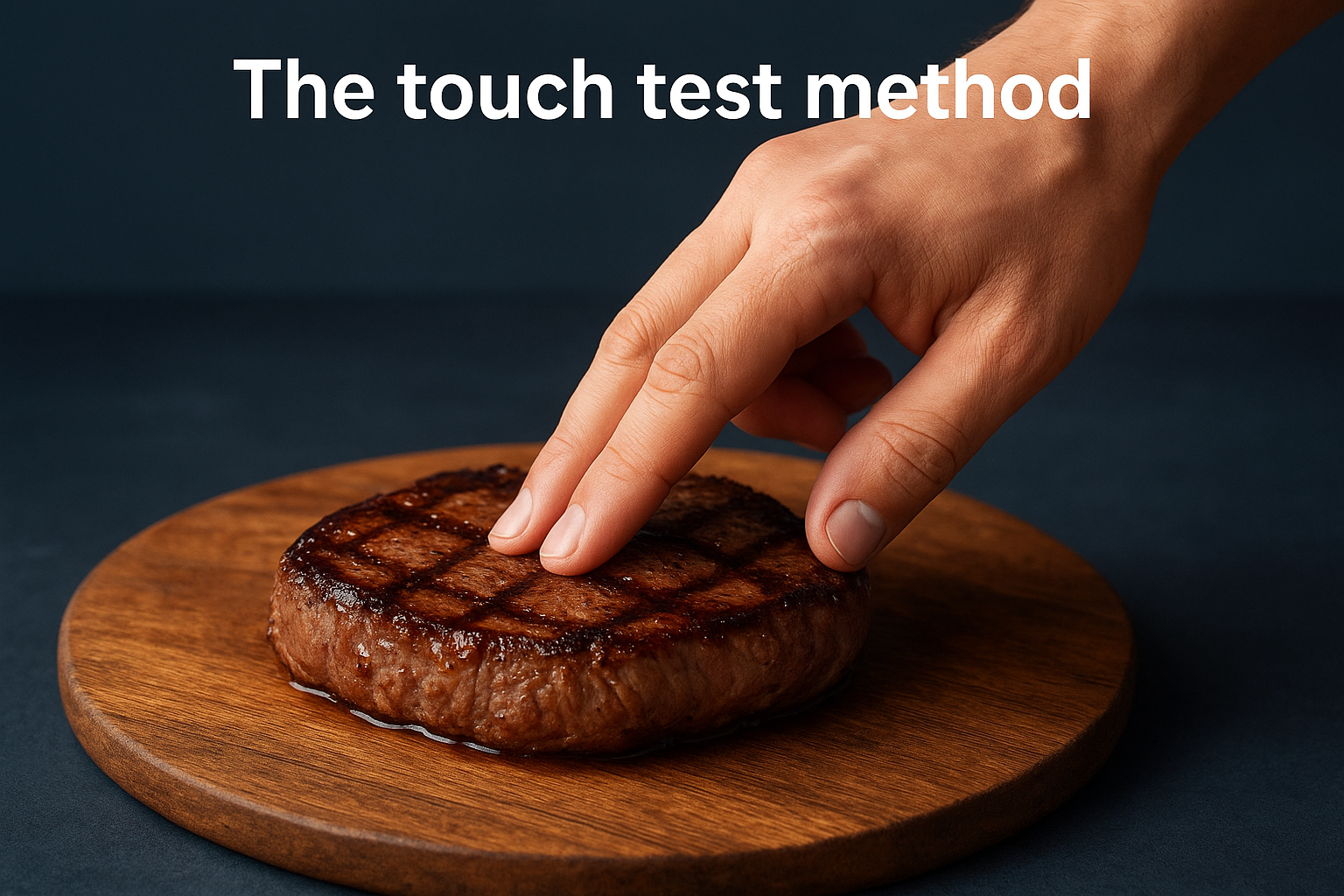
- Rare: feels as soft as your open, fully relaxed palm
- Medium-rare: matches the resistance of a light thumb-to-index-finger touch
- Medium: firms up like a thumb-to-middle-finger connection
- Medium-well: approaches the firmness of a thumb-to-ring-finger press
- Well-done: matches the firm resistance of a thumb-to-pinky press
How long to cook steak and what affects timing
Cooking time and internal temperature work together, but time alone never tells the full story. Two steaks targeting the same doneness can cook at very different rates depending on several variables. Using your steak doneness chart alongside an awareness of what drives timing keeps you accurate rather than guessing.
Thickness and heat source
Steak thickness is the single biggest factor controlling how long your cook takes. A one-inch ribeye over high heat needs roughly 3 to 4 minutes per side for medium-rare, while a two-inch cut requires closer to 5 to 7 minutes per side and often benefits from finishing in the oven to avoid charring the outside before the center catches up. Cast iron and high-output grills run hotter than standard electric burners, so your heat source matters just as much as your timer.
Starting with steak at room temperature, about 30 minutes out of the refrigerator, promotes more even cooking from edge to center.
Resting time
After you pull the steak from heat, resting for at least 5 minutes lets the internal temperature climb a few more degrees and allows juices to settle back into the muscle fibers. Cutting too soon forces those juices straight onto the cutting board instead of staying in the meat. A warm plate during the rest keeps the steak from cooling too fast before it reaches the table.
Steak doneness FAQs
A few questions come up repeatedly when people start using a steak doneness chart for the first time. The answers below cover the most common points of confusion so you can cook with fewer doubts and better results.
What is the safest doneness level for steak?
The USDA sets 145°F (63°C) as the minimum safe internal temperature for whole muscle beef, followed by a three-minute rest. That places medium doneness at the low end of the safe zone for most diners. If you prefer medium-rare, sourcing high-quality, properly handled beef from a reputable butcher or restaurant reduces your risk significantly.
The USDA guidelines apply specifically to whole muscle cuts, not ground beef, which requires a higher internal temperature of 160°F.
Does color alone tell you if a steak is done?
Color gives you a rough visual cue, but it is not a reliable substitute for temperature. Myoglobin, the protein that gives beef its red color, can behave unpredictably depending on the cut’s age, storage conditions, and pH level. Some steaks stay pink even at well-done temperatures, while others brown faster than expected. Always confirm with a thermometer rather than relying on color alone.
Should you rest steak after cooking?
Resting lets the internal temperature stabilize and keeps the juices inside the meat rather than losing them on the cutting board. Five minutes is the minimum for a standard one-inch steak, and thicker cuts benefit from up to ten minutes before slicing.
Bring it to your table
Now you have everything in this steak doneness chart to cook and order with real confidence. From rare to well-done, you understand the exact temperatures, visual cues, and touch tests that separate a great steak from a forgettable one. Use the temperature table as your kitchen reference, pull your steak off heat 5°F early, and always let it rest before slicing. That sequence alone puts you ahead of most home cooks and helps you communicate clearly when ordering at any restaurant.
Putting this knowledge into practice is where it really clicks. If you want to experience what properly cooked premium beef looks and tastes like, come visit us in Chicago’s Portage Park neighborhood. Our 16oz Ribeye is a chef-recommended cut that our kitchen handles with the same care and precision this guide covers. Reserve your table at La Dolce Vita Cucina and taste the real difference that getting doneness right makes every time.