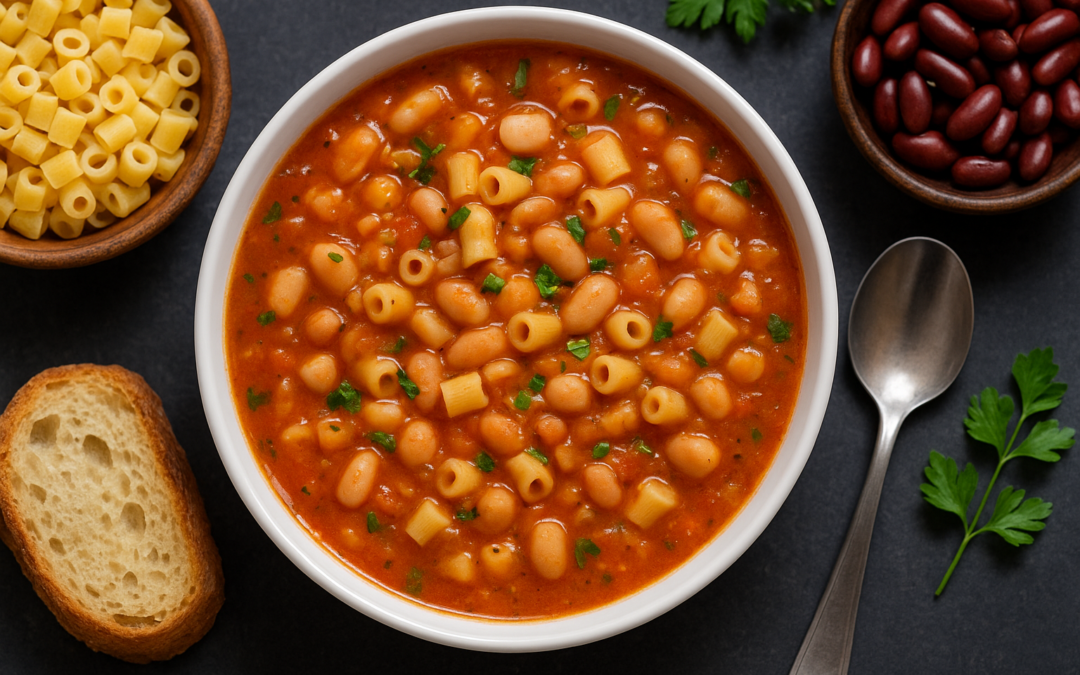
If you’ve ever wondered what is pasta e fagioli soup, you’re asking about one of Italy’s most beloved comfort dishes, a hearty, rustic bowl built on beans, pasta, and a slow-simmered tomato broth. It’s the kind of recipe that has fed Italian families for generations, born out of simplicity and perfected through tradition.
At La Dolce Vita Cucina in Chicago’s Portage Park neighborhood, we cook with that same philosophy every day. Authentic Italian food doesn’t need to be complicated, it needs good ingredients, care, and respect for where it came from. Pasta e fagioli is a perfect example. It’s also a dish that gets confused with minestrone constantly, and the two are more different than most people realize.
This guide breaks down the classic ingredients in pasta e fagioli, explains exactly how it stands apart from minestrone, and walks you through making it at home, including the popular Olive Garden copycat version. Whether you’re here to settle a debate or find a recipe worth keeping, you’re in the right place.
What pasta e fagioli soup is
If you want to understand what is pasta e fagioli soup at its core, start with the name itself. "Pasta e fagioli" is Italian for pasta and beans, and that pairing is exactly what defines the dish. This is a thick, filling soup rooted in the cucina povera tradition, which translates to "poor kitchen," meaning food made with cheap, available ingredients that still manages to satisfy completely. It is not a light starter. It eats like a full meal.
Where it comes from
Pasta e fagioli traces back to rural southern and central Italy, particularly regions like Campania, Lazio, and Veneto. Peasant cooks developed it as a way to stretch a small amount of meat or none at all into something that could feed a whole family. Cannellini or borlotti beans supplied the protein, small pasta shapes added bulk, and a base of tomatoes, garlic, and aromatics pulled it all together.
Pasta e fagioli is not a restaurant invention. It is a farmhouse staple that found its way onto fine dining menus because it is genuinely that good.
Different regions put their own spin on it. The Neapolitan version tends to be thicker, almost like a stew, while northern interpretations can be brothier and sometimes include pancetta or smoked pork. The one thing every version shares is the combination of creamy beans and tender pasta in a deeply flavored base.
What makes it a meal
The reason this soup has lasted centuries on Italian tables is simple: it fills you up without leaving you heavy. The beans break down slightly during cooking, creating a naturally creamy texture that thickens the broth without any cream or flour. That texture is what separates pasta e fagioli from a standard vegetable soup.
Each bowl delivers protein, carbohydrates, and fiber in one shot, which is why Italian families served it as the main course, not a side. If you have never had it done properly, the richness of the finished broth will catch you off guard in the best possible way.
Ingredients that define pasta e fagioli
Knowing what is pasta e fagioli soup also means knowing exactly what goes into it. The ingredient list is short, but each component does a specific job. Nothing is filler. Beans, pasta, and a well-built broth form the backbone of every authentic version, and skipping or swapping the wrong element changes the character of the dish entirely.
The base and beans
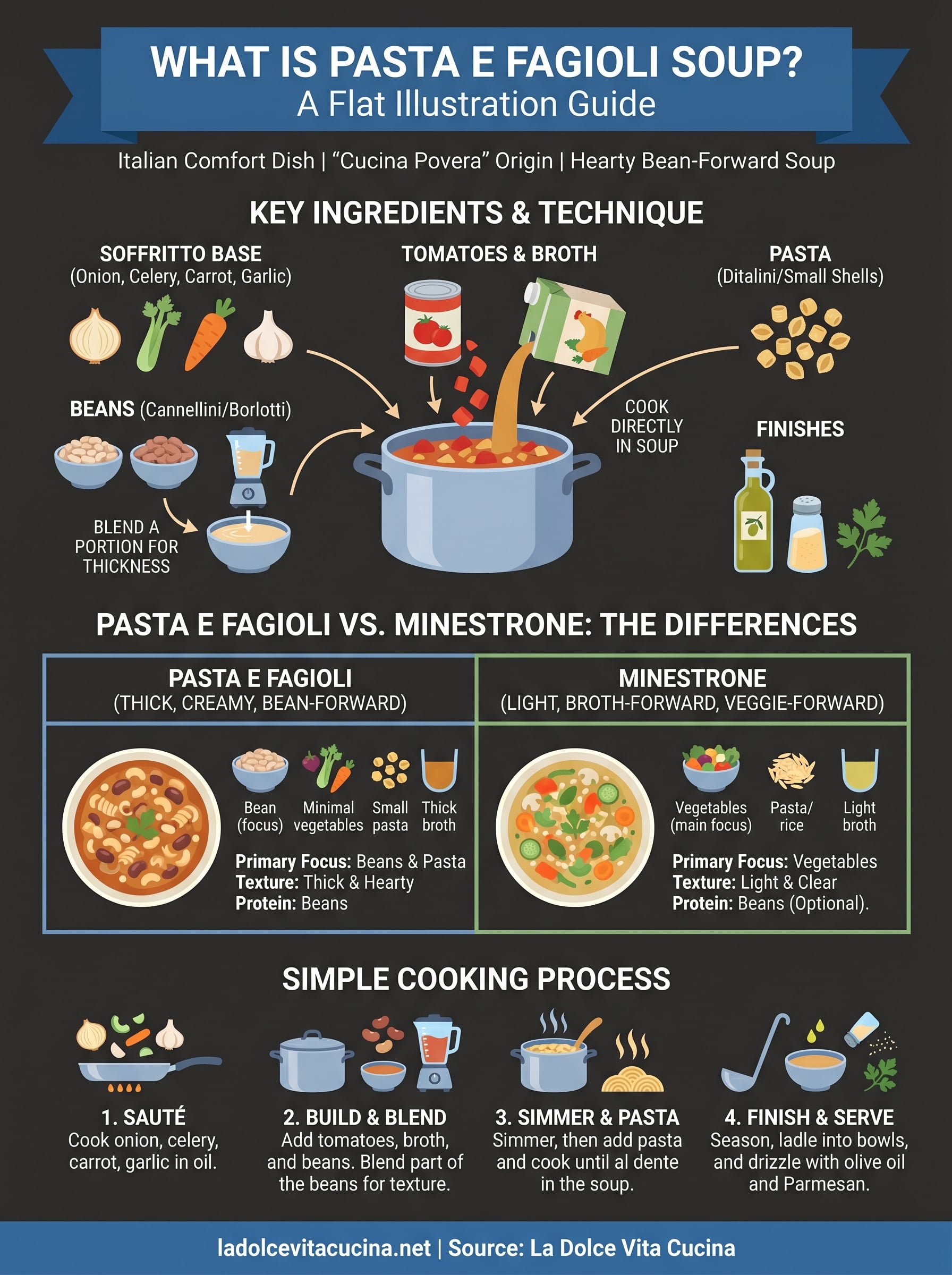
The flavor foundation starts with olive oil, garlic, and diced tomatoes cooked down until the raw edge is gone. From there, you add chicken or vegetable broth and let the aromatics fully develop in the liquid. Most recipes also include onion, celery, and carrot, the classic Italian soffritto that gives the soup its savory depth.
Beans are not an afterthought in this soup. They are the protein, the thickener, and the texture all at once.
Cannellini beans are the most common choice, though borlotti beans appear in older regional recipes. A technique worth using is to blend a portion of the beans before stirring them back into the pot. This thickens the broth naturally without any cream or added starch.
The pasta
Small pasta shapes work best here. Ditalini is the traditional pick, but elbow macaroni or small shells hold up equally well. Cook the pasta directly in the soup during the final minutes so it absorbs flavor from the broth rather than sitting in plain water. Pull it off the heat while the pasta still has a slight bite.
Pasta e fagioli vs minestrone
The comparison comes up constantly, and it’s an honest mistake. Both soups are Italian and share common pantry ingredients, so they blend together in most people’s minds. But once you understand what is pasta e fagioli soup at its core, the distinction becomes clear. These are fundamentally different dishes built around different priorities and textures.
Where the confusion starts
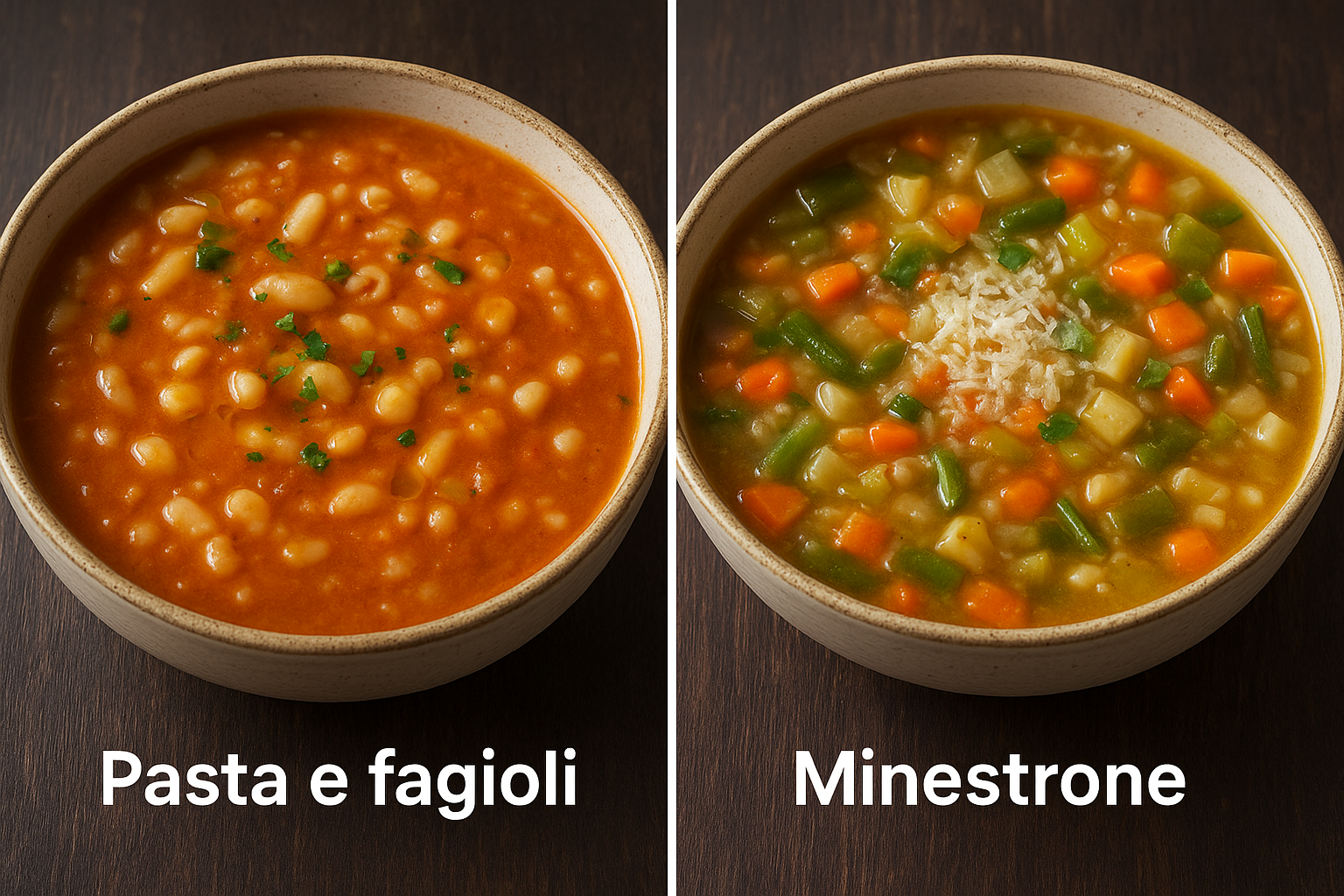
Most people encounter both soups in the same context, a casual Italian restaurant or a cold-weather dinner table, which makes them blur together. Minestrone is a vegetable soup that uses whatever produce is on hand, with pasta or rice added as a secondary element. Pasta e fagioli is built specifically around beans and pasta as the central ingredients, not vegetables. The bean-forward base gives it a thickness and heartiness that minestrone rarely achieves.
If minestrone is a vegetable soup with pasta in it, pasta e fagioli is a bean soup where the pasta belongs.
The key differences
Here is a direct comparison so you can see exactly where the two soups diverge. The texture alone tells the story: pasta e fagioli runs thick from blended beans, while minestrone stays light and broth-forward regardless of what vegetables you add.
| Feature | Pasta e fagioli | Minestrone |
|---|---|---|
| Main ingredient | Beans and pasta | Mixed vegetables |
| Broth texture | Thick, creamy | Light, broth-forward |
| Protein source | Beans primarily | Beans optional |
| Vegetable variety | Minimal soffritto base | High, seasonal |
| Typical finish | Drizzle of olive oil | Parmesan, olive oil |
How to make it at home step by step
Making pasta e fagioli at home takes about 45 minutes from start to finish, and you likely have most of what you need in your pantry already. This recipe serves four and delivers the thick, bean-forward texture that defines what is pasta e fagioli soup done right.
What you need
Gather these ingredients before you start so the cooking moves without interruption. Every item on this list pulls weight, so avoid skipping the soffritto base or the bean-blending step.
- 2 tablespoons olive oil
- 1 small onion, diced
- 2 celery stalks, diced
- 2 medium carrots, diced
- 4 garlic cloves, minced
- 1 can (14 oz) diced tomatoes
- 2 cans (15 oz each) cannellini beans, drained and rinsed
- 4 cups chicken or vegetable broth
- 1 cup ditalini pasta
- Salt, black pepper, and red pepper flakes to taste
- Fresh parsley and Parmesan to finish
The cooking process
Follow these steps in order. The bean-blending step in the middle is what gives the broth its signature creaminess, so do not skip it.
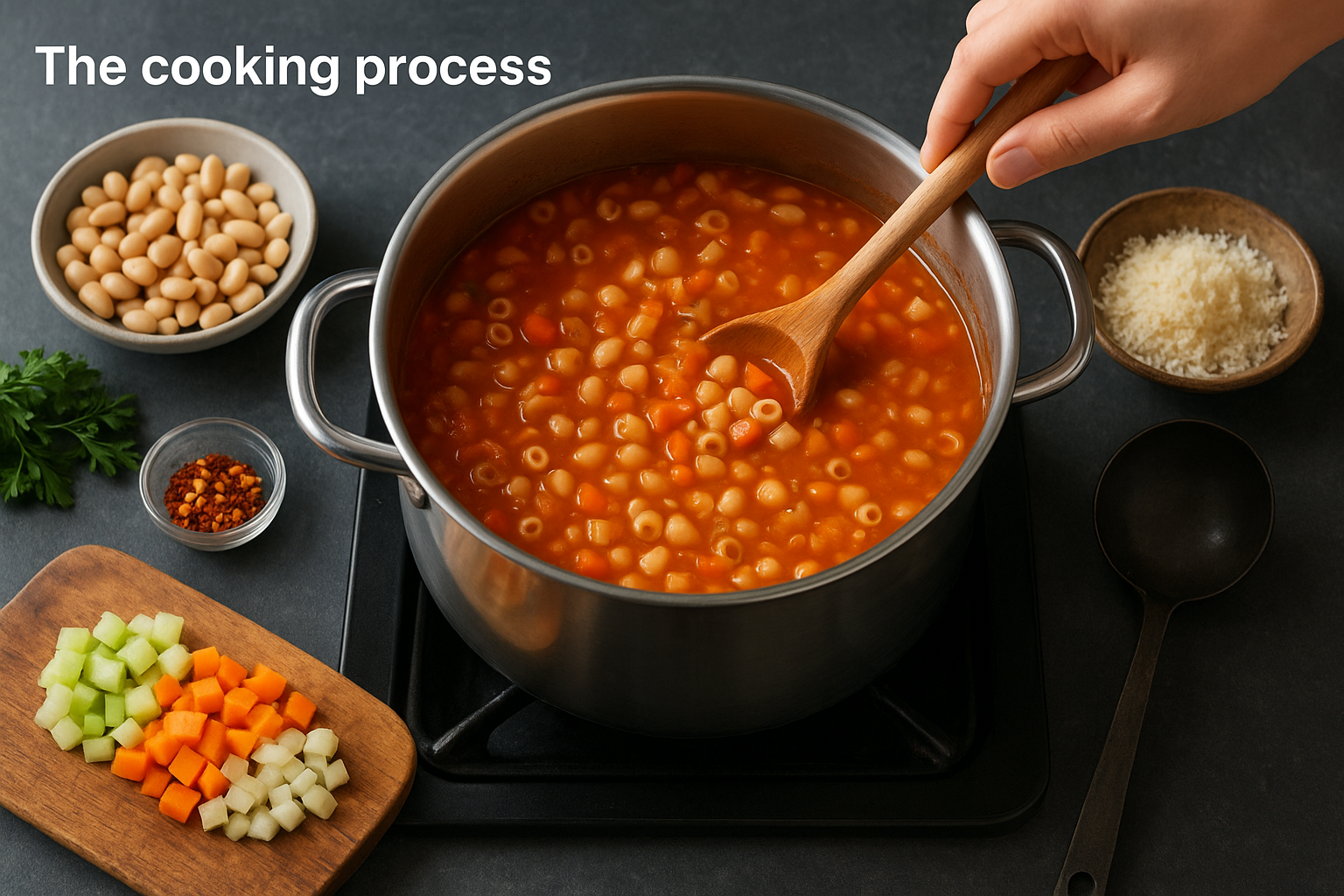
Blending one full can of beans directly into the broth changes the texture entirely and removes the need for any cream or thickener.
- Heat olive oil in a large pot over medium heat. Add onion, celery, and carrot. Cook for 5 minutes until softened.
- Add garlic and cook for 1 minute.
- Stir in diced tomatoes and cook for 3 minutes.
- Add broth and one can of beans. Blend the second can smooth and stir it into the pot.
- Simmer for 15 minutes, then add pasta. Cook until just al dente, about 8 minutes.
- Season, ladle into bowls, and finish with a drizzle of olive oil and Parmesan.
Olive Garden-style version and easy swaps
The Olive Garden version of pasta e fagioli is the reason many home cooks first search what is pasta e fagioli soup in the first place. That restaurant version leans heavier on ground beef and Italian seasoning, which pushes it closer to a meat-forward American adaptation than a traditional Italian preparation. Knowing that difference helps you decide which direction to take it at home.
What makes the Olive Garden version different
The Olive Garden recipe adds browned ground beef to the soffritto base before the broth goes in, which makes it richer and more filling than the Italian original. It also calls for kidney beans alongside cannellini, giving the soup a slightly different texture and a deeper color from the tomato-heavy broth. You still finish it with ditalini cooked directly in the pot, so that core technique stays the same.
Starting with browned ground beef in the pan, then building the rest of the soup on top of it, layers in a savory depth that carries through to the last spoonful.
Simple swaps to fit your kitchen
You can adapt this recipe in several directions without losing what makes it work. Each swap below keeps the structure intact while adjusting for diet, availability, or preference.
- No ground beef: Use Italian sausage removed from the casing for more flavor, or skip meat entirely for a vegetarian version
- No ditalini: Elbow macaroni or small shells work just as well
- No cannellini: Great Northern beans are nearly identical in texture and taste
- Low sodium: Use homemade broth or a low-sodium store brand and skip added salt until the end
Bring it to the table
Now you know exactly what is pasta e fagioli soup: a thick, bean-forward Italian classic built on pantry staples that has fed families for centuries. The difference from minestrone is clear, the ingredients are straightforward, and you have both a traditional and an Olive Garden-style path to follow depending on what you want out of the bowl.
Getting it right at home comes down to two steps most cooks skip: building a proper soffritto base and blending a portion of the beans to thicken the broth naturally. Do those two things, and the soup takes care of the rest.
If this kind of cooking speaks to you, you will find the same commitment to Italian tradition on every plate at La Dolce Vita Cucina in Chicago’s Portage Park. Come sit down and taste what happens when simple ingredients get the attention they deserve.