

You’re planning an event, maybe a milestone birthday, a corporate dinner, or a wedding reception, and someone suggests hiring a caterer. You start researching, and the first question that comes up is what is full service catering and whether it’s actually worth the investment. It’s a fair question, especially when budgets are tight and other options like drop-off catering exist.
Full service catering covers far more than just the food. It typically includes staffing, setup, service, and cleanup, essentially handing over every logistics headache so you can focus on your guests. At La Dolce Vita Cucina, we host private events and celebrations at our Portage Park restaurant, so we understand firsthand what goes into delivering a seamless dining experience from start to finish.
This article breaks down exactly what full service catering includes, what it costs, how staffing works, and how it compares to other catering styles, so you can make the right call for your next event.
What full-service catering includes
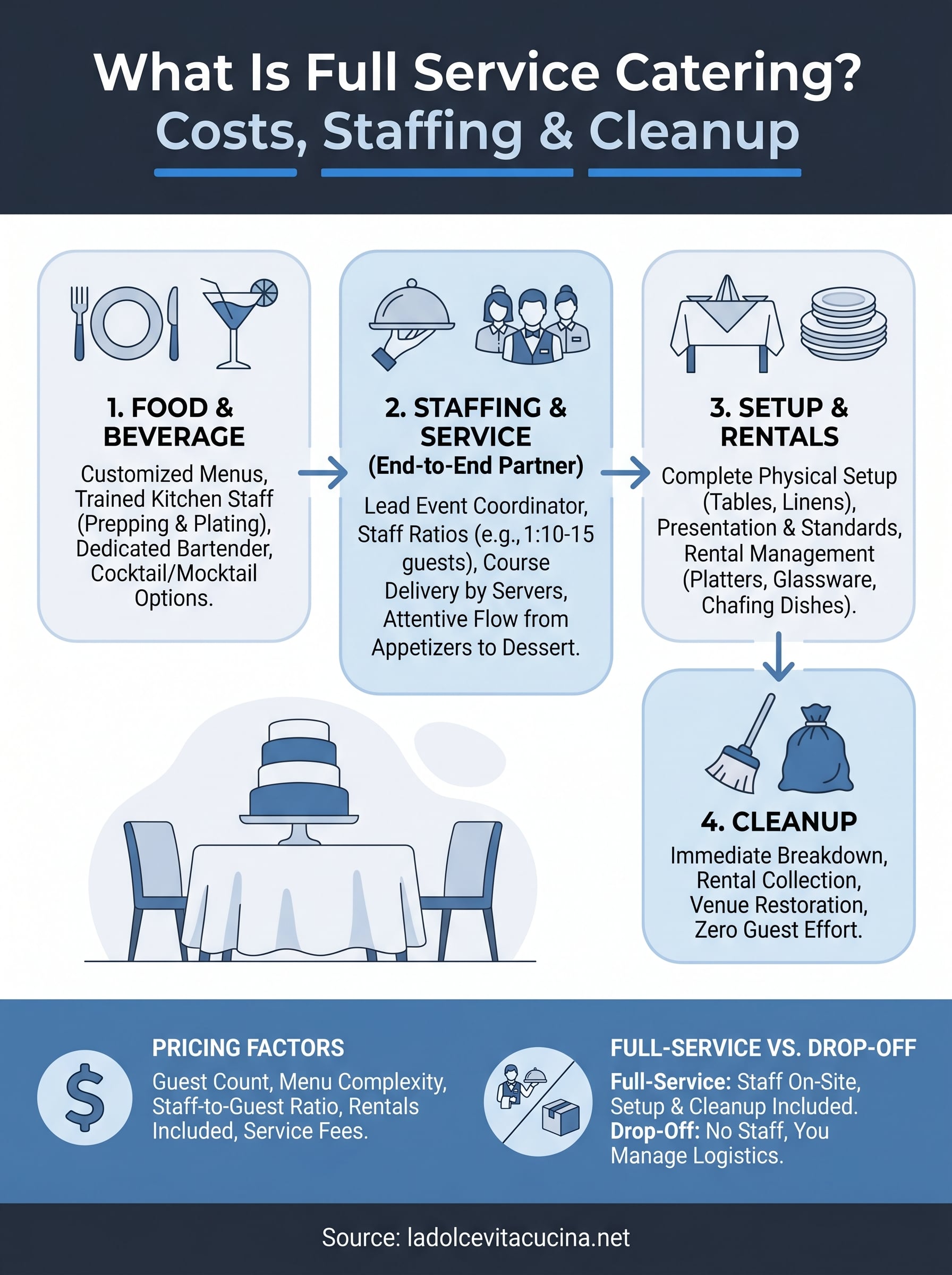
When people ask what is full service catering, the honest answer is that it covers every touchpoint of your event’s food and hospitality, not just the cooking. A full-service caterer acts as an end-to-end partner, managing everything from the first plate to the last table cleared. Think of it as hiring an experienced restaurant team and bringing that entire operation directly to your venue or event space.
Food and beverage
Full-service catering starts with a customized menu built around your event’s theme, guest count, and dietary needs. You work with the caterer ahead of time to finalize courses, portion sizes, and any special accommodations like gluten-free or vegetarian options. On the day itself, trained kitchen staff prepare and plate the food, while servers deliver each course directly to your guests at the table, keeping the experience attentive and polished throughout.
The level of menu personalization in full-service catering is what separates it from simply placing a large food order.
Beverage service is part of the package too. That means a dedicated bartender or beverage station, cocktail and mocktail options matched to your event, and staff actively refilling glasses so no guest sits with an empty drink for long.
Setup and presentation
Before a single guest arrives, the catering team handles the complete physical setup of your dining or service area. That covers arranging tables, laying linens, positioning serving stations, and confirming every detail matches your event’s layout plan. You don’t touch a chair or fold a napkin.
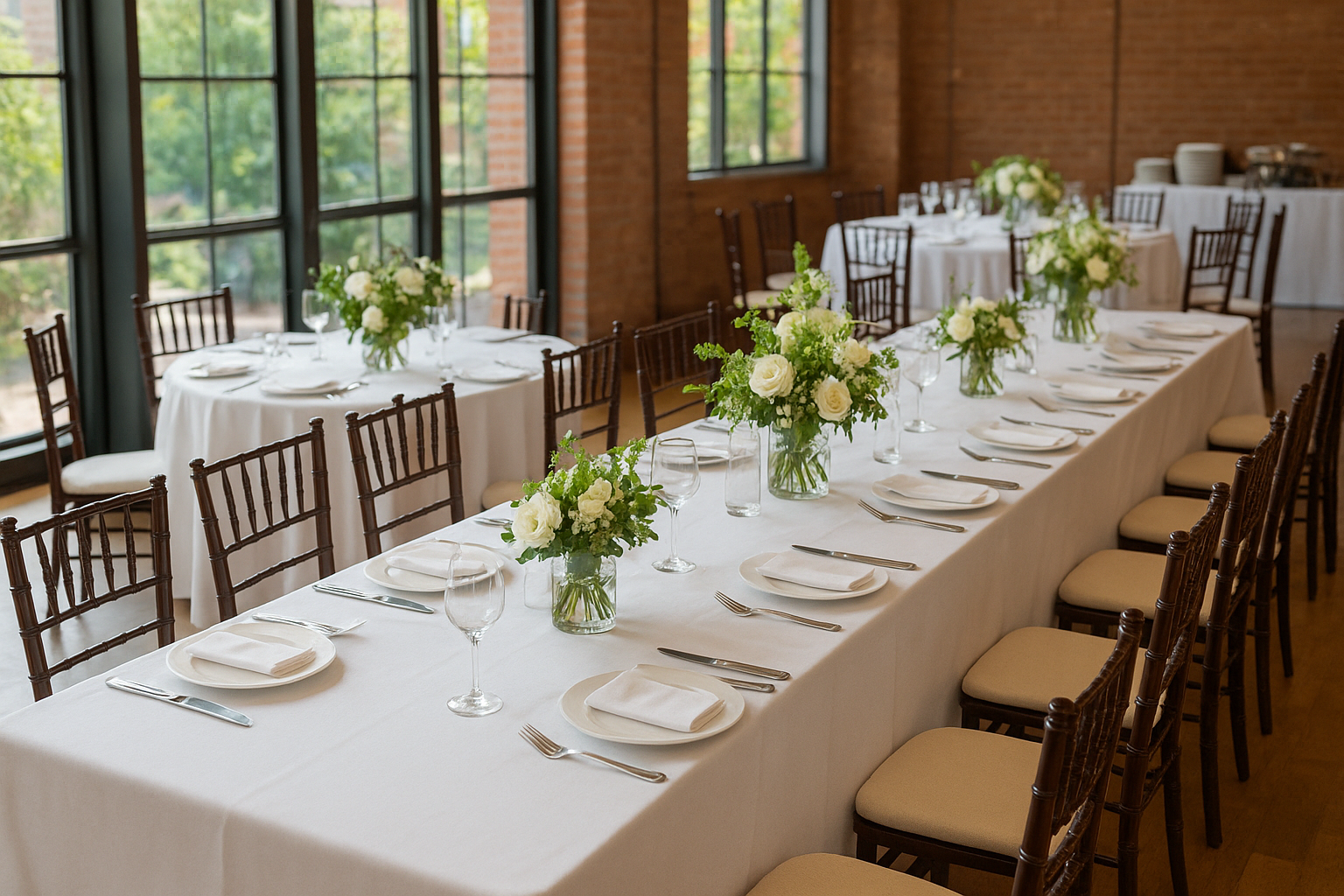
Presentation also falls under this umbrella. Staff take care of plating standards and display consistency across every table, so the food looks as good as it tastes. For events where first impressions matter, that visual consistency carries real weight with your guests.
How full-service catering works on event day
Understanding what is full service catering on paper is one thing, but seeing how it plays out on the actual day clarifies why so many event hosts choose it. The catering team typically arrives several hours before your guests to begin setup, run through timing, and coordinate with any other vendors working the event.
Before guests arrive
The team runs a full walkthrough of the venue well before the first guest walks in. Staff confirm table arrangements, check that serving equipment sits at the right temperature, and stage food stations or kitchen prep areas. By the time your guests arrive, every detail is locked in and the team is ready to execute without asking you a single logistical question.
During the event
Once your event starts, the catering staff manage the entire flow of service from appetizers through dessert. Servers circulate the room, clear finished plates promptly, and respond to individual guest needs without you having to direct anyone. The lead coordinator monitors timing between each course so the meal moves at a natural pace and no dish sits under a warmer longer than it should.
A well-run catering team operates in the background, which means your guests enjoy the event without ever noticing the effort behind it.
Staffing, rentals, and cleanup explained
When you dig into what is full service catering, three operational pillars keep everything running smoothly: the catering staff, rental equipment, and post-event cleanup. Each one requires real coordination, and a full-service caterer handles all three so you don’t have to manage a single moving part on the day.
The staffing structure
A full-service catering team typically includes a lead event coordinator, kitchen staff, servers, and a bartender. Staff ratios matter here. Most caterers assign one server for every 10 to 15 guests at a seated dinner, keeping service attentive and consistent throughout the event without the floor feeling crowded or chaotic.
Understaffing is one of the most common reasons service breaks down, so confirm staff ratios with your caterer before signing anything.
Rentals and cleanup
Full-service caterers often supply or source table linens, serving platters, chafing dishes, and glassware through rental vendors. Before you commit to a contract, ask whether rental costs are bundled into the quoted price or itemized separately, since this varies significantly by caterer and event size.
Cleanup follows immediately once the event closes. The team breaks down all serving stations, collects every piece of rented equipment, and restores the venue to the condition they found it. You leave your own event without lifting a single plate.
How much full-service catering costs
When you’re figuring out what is full service catering worth budget-wise, the honest answer is that pricing varies based on several factors: guest count, menu complexity, staffing needs, and whether rentals are included. Most full-service caterers charge on a per-person basis, and that number can shift significantly depending on what you’re asking for.
What drives the per-person price
Most full-service catering quotes fall between $75 and $200 per person for a standard seated dinner, though high-end events with premium ingredients and larger staff teams can push well beyond that range. The biggest cost drivers are the number of courses you select and the staff-to-guest ratio your event requires. A four-course plated dinner with a bartender and dedicated servers costs considerably more than a simpler buffet-style setup.

Always request an itemized quote so you can see exactly where your budget is going before you sign anything.
What to watch for in a contract
Some caterers include rentals, gratuity, and service fees in the base quote, while others add them as separate line items. Before you finalize anything, ask specifically whether cake-cutting fees, setup charges, or overtime rates apply. These additions can increase your total by 20% or more, so reading the contract closely protects you from surprises on the final invoice.
Full-service vs drop-off catering
Once you understand what is full service catering, the comparison with drop-off catering becomes straightforward. Drop-off catering means a company delivers your food to the venue and leaves, giving you no staff, no setup help, and no cleanup support on the day of your event.
| Feature | Full-Service | Drop-Off |
|---|---|---|
| Staff on site | Yes | No |
| Setup and breakdown | Included | Your responsibility |
| Cleanup | Included | Your responsibility |
| Per-person cost | Higher | Lower |
When drop-off catering makes sense
Drop-off works well for casual office lunches, small team gatherings, or informal events where budget is the top priority and you have enough help to manage service yourself. If your guest count stays under 20 people and the vibe is relaxed, drop-off is a practical option.
Drop-off catering shifts all the logistics back to you, so factor in the real time and effort that requires before you commit to it.
When full-service is the better fit
Full-service becomes the right call when your event carries real stakes, such as a wedding reception, a corporate client dinner, or a milestone celebration. You’re investing in professional staff, consistent execution, and zero operational stress on the day itself, which is exactly what high-expectation events demand.
Quick Recap and Next Step
Now you know what is full service catering and what separates it from simpler alternatives. A full-service caterer handles every operational detail, from customized menus and staffed service to rentals and cleanup, so your event runs without you managing a single logistics problem. Per-person costs reflect the staff, food quality, and services included, so always request an itemized quote before committing to a contract.
Drop-off catering works fine for casual, low-stakes gatherings, but when your event carries real expectations, full-service is the investment that protects both your experience and your guests’. The difference shows up most clearly in how smoothly the day actually runs when you’re not chasing down servers, managing cleanup, or answering logistical questions mid-event.
If you’re planning a private dinner, milestone celebration, or corporate gathering in the Chicago area, explore private event options at La Dolce Vita Cucina and talk to our team about what we can build for your specific event and guest count.