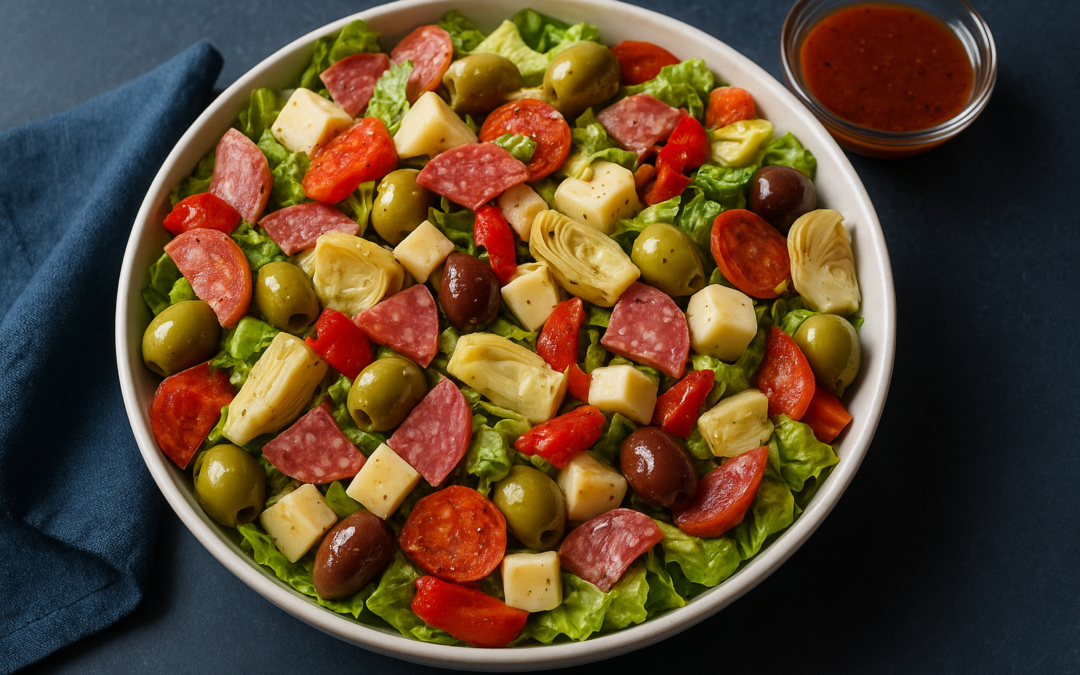
A great antipasto salad recipe starts the same way it does at our table here at La Dolce Vita Cucina in Chicago’s Portage Park, with quality ingredients and zero shortcuts. It’s the kind of dish we put together using cured meats, sharp cheeses, briny olives, and marinated vegetables that actually taste like something. Simple assembly, big payoff.
At the restaurant, our antipasto plates set the tone for the entire meal. At home, they can do the exact same thing. The key is a proper homemade vinaigrette, not the stuff from a bottle, and knowing which ingredients pull their weight together on the plate. Once you nail those two things, you’ve got a salad that works as a starter, a side, or an entire lunch on its own.
Below, you’ll find our approach broken down step by step: the ingredient list, the vinaigrette, the assembly, and a few tips we’ve picked up from years of making Italian food in our kitchen. Everything here is straightforward, adaptable, and built to actually impress the people sitting at your dinner table.
What makes an antipasto salad
Antipasto literally means "before the meal" in Italian. It’s the first course in a traditional Italian meal, designed to open the appetite rather than fill it. In its salad form, it takes all those individual components, the cured meats, pickled vegetables, cheeses, and olives, and brings them together in one bowl. The result delivers more flavor than a standard green salad because every single ingredient earns its place on the plate.
The core components
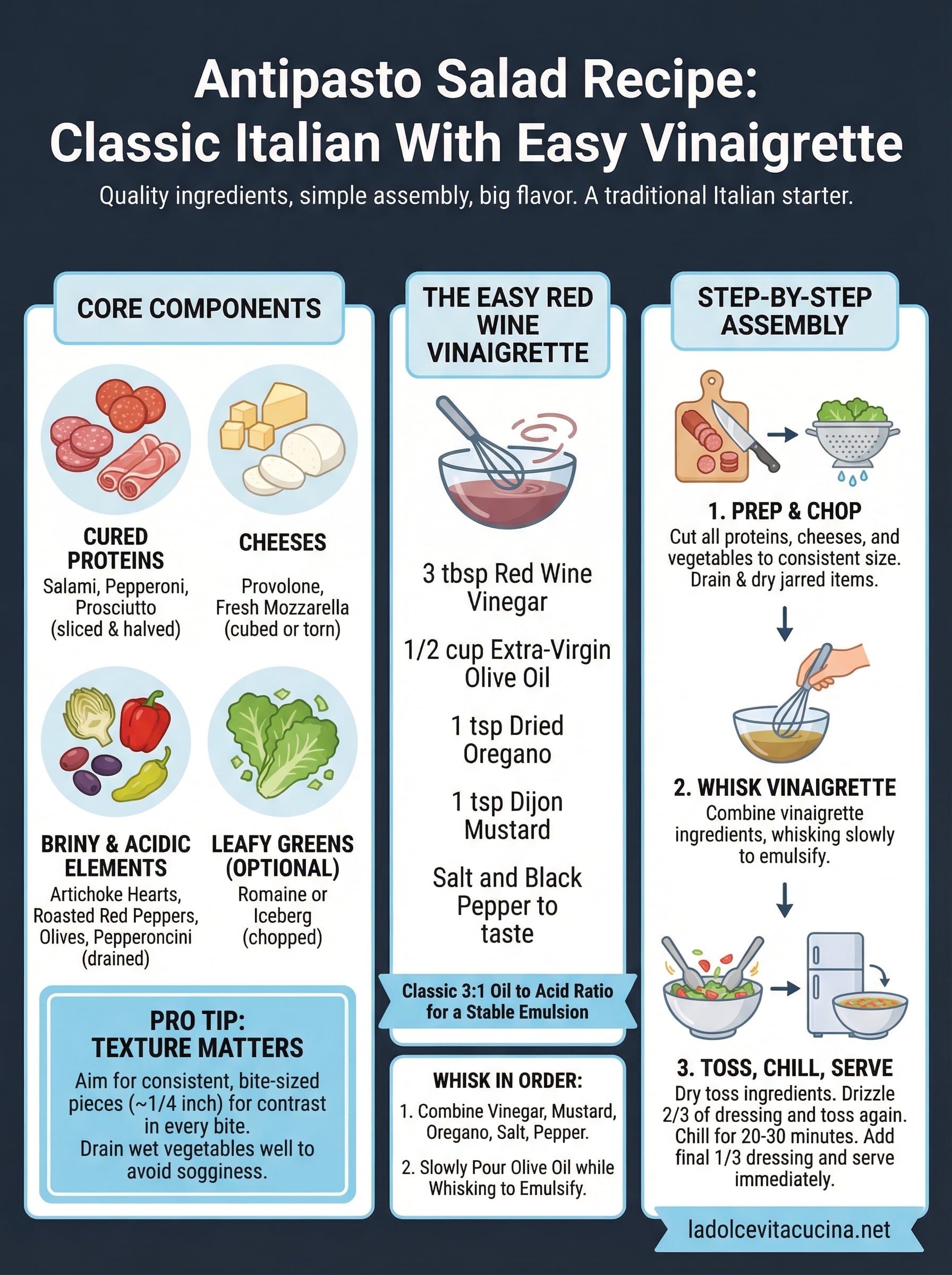
A proper antipasto salad recipe is built around specific ingredient categories, not a loose collection of whatever’s in your fridge. You need cured or preserved proteins like salami, pepperoni, or prosciutto. You need a firm, flavorful cheese, most often provolone or fresh mozzarella. Then come the briny, acidic elements: olives, pepperoncini, artichoke hearts, and roasted red peppers. These items give the salad its character and keep each bite interesting.
The best antipasto salads balance salt, fat, and acid across every component, not just the dressing.
Some versions add leafy greens like romaine or iceberg as a base. Others skip the greens entirely and lean into a purely composed, charcuterie-style bowl. Both approaches work well. What matters is that each ingredient carries its own distinct flavor and holds up to the vinaigrette without going soft or limp by the time it hits the table.
Why texture matters as much as flavor
Most salads reward you through their dressing or their greens. An antipasto salad rewards you for the contrast between ingredients. You get the chew of salami against the creaminess of mozzarella. You get the snap of a pepperoncini against the smooth give of a marinated artichoke. Cutting everything into consistent, bite-sized pieces is what keeps that contrast working from the first forkful to the last.
Pay close attention to how you slice your proteins and cheeses before assembly. Thick cuts tend to overpower the rest of the bowl. Thin cuts disappear into the background. Aim for pieces around a quarter-inch thick so every bite delivers a little of everything without any single ingredient taking over.
Ingredients list and smart substitutions
Before you start chopping, you need everything ready on the counter. A reliable antipasto salad recipe calls for specific ingredients in each category, from proteins and cheeses to briny vegetables, so pull this list together before you begin.
Buying your deli meats and cheeses from the counter rather than pre-packaged gives you better control over thickness and freshness.
The full ingredient list
Here is what you need to build the salad and the vinaigrette for four to six people:
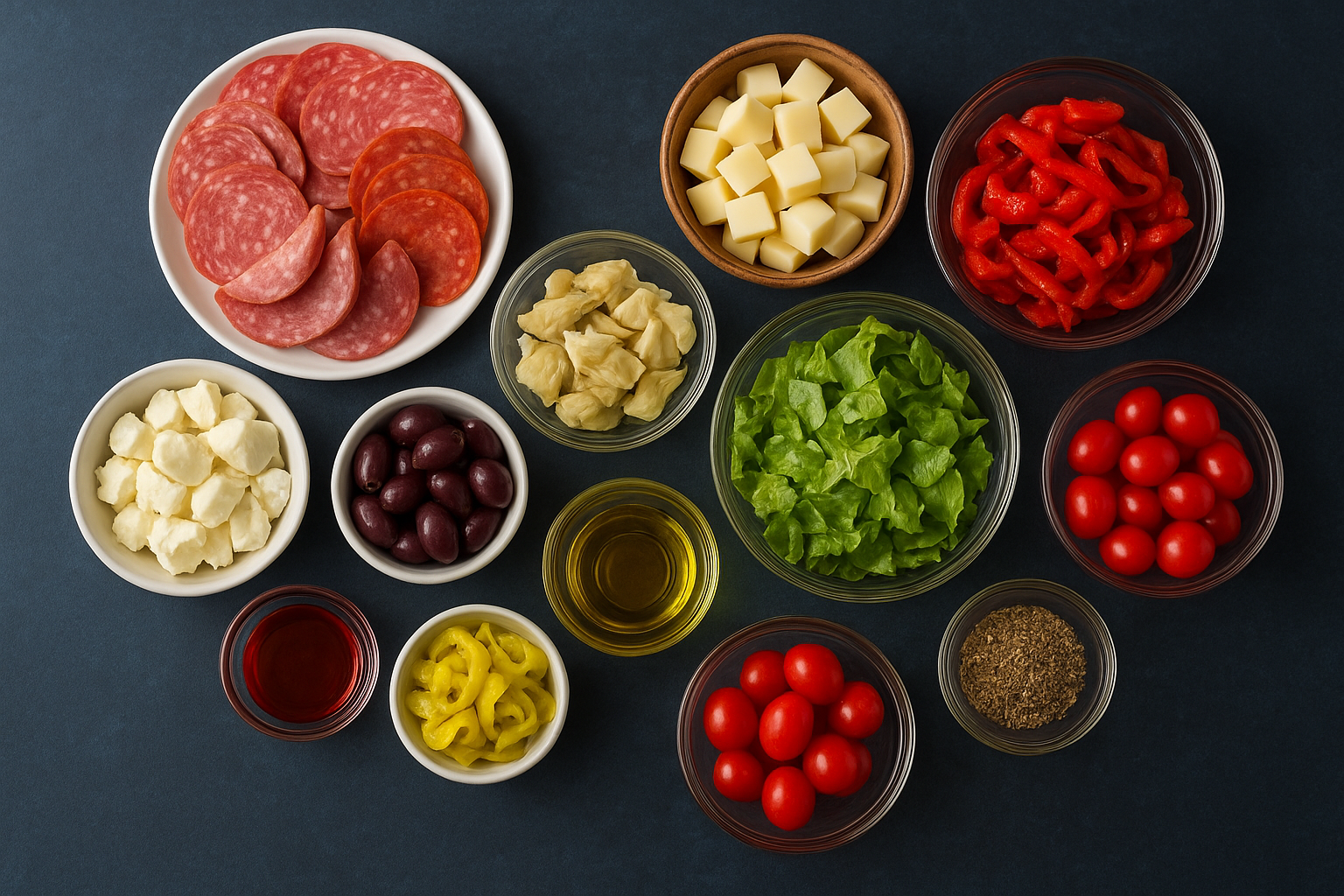
- 4 oz salami, sliced and halved
- 4 oz pepperoni, sliced
- 4 oz provolone, cubed
- 4 oz fresh mozzarella, torn or cubed
- 1 cup marinated artichoke hearts, drained
- 1 cup roasted red peppers, sliced
- 1/2 cup Kalamata olives, pitted
- 1/2 cup pepperoncini, sliced
- 1 small head romaine lettuce, chopped
For the red wine vinaigrette:
- 3 tablespoons red wine vinegar
- 1/2 cup extra-virgin olive oil
- 1 teaspoon dried oregano
- 1 teaspoon Dijon mustard
- Salt and black pepper to taste
Smart substitutions
Not every ingredient needs to be exact. You can swap provolone for pecorino or aged Asiago if that’s what your deli carries that day. Prosciutto works well in place of salami when you want something lighter in fat and saltiness. If you skip the romaine base entirely, add a cup of cherry tomatoes to keep volume and freshness in the bowl.
Sun-dried tomatoes replace roasted red peppers with a more concentrated, chewy result. Castelvetrano olives work in place of Kalamata when you want less brine and a buttery finish instead. Keep the ratios similar and the salad holds together the same way.
Step 1. Prep and chop everything evenly
Before anything goes into the bowl, take five minutes to organize your cutting board. A well-prepared antipasto salad recipe depends on uniform pieces, because uneven cuts mean some bites deliver too much of one ingredient and not enough of another. Pull everything out, drain your jarred vegetables thoroughly, and set them in separate piles so you can work through each item with full attention.
Cut your proteins and cheeses to the same size
Your salami, pepperoni, and provolone should all end up at roughly the same quarter-inch thickness. If you bought your deli meats pre-sliced, fold each piece in half and cut it into half-moon strips. For block cheeses, slice into planks first, then cube them so the pieces stay consistent. Torn fresh mozzarella is fine here since its irregular shape adds visual contrast without throwing off the balance of the bowl.
Consistent sizing is the single most important prep step because it controls how the vinaigrette coats each ingredient.
Drain and dry your vegetables before adding them
Marinated artichoke hearts and roasted red peppers carry a lot of liquid in the jar, and that liquid will water down your dressing if you skip this step. Drain them in a colander, then press them lightly with a paper towel to pull off extra moisture. Pepperoncini slices should get the same treatment. Once every ingredient is drained, dried, and cut to size, you’re ready to bring the vinaigrette together.
Step 2. Whisk the easy red wine vinaigrette
Your vinaigrette is what ties every component in this antipasto salad recipe together. You need something bold enough to cut through the fat in the salami and provolone without overwhelming the delicate mozzarella or the briny pepperoncini. A red wine vinaigrette does exactly that, and it takes less than three minutes to make from scratch.
Get your ratios right
The classic vinaigrette ratio is three parts oil to one part acid, and this recipe follows it closely. You’re working with three tablespoons of red wine vinegar and half a cup of extra-virgin olive oil. The Dijon mustard in this version does two things: it adds a mild sharpness and acts as an emulsifier, which keeps the oil and vinegar from separating the moment you stop whisking.
A proper emulsion means the dressing coats every ingredient evenly rather than pooling at the bottom of the bowl.
Here is the full vinaigrette at a glance:
| Ingredient | Amount | Purpose |
|---|---|---|
| Extra-virgin olive oil | 1/2 cup | Fat base |
| Red wine vinegar | 3 tablespoons | Acid |
| Dijon mustard | 1 teaspoon | Emulsifier and sharpness |
| Dried oregano | 1 teaspoon | Herbal depth |
| Salt and black pepper | To taste | Balance |
Whisk in the right order
Start by combining the red wine vinegar, Dijon mustard, and oregano in a small bowl. Whisk those three together first until the mustard fully dissolves into the vinegar. Then pour your olive oil in slowly, whisking continuously as you add it. That gradual addition creates a stable, creamy emulsion that clings to the salami, cheese, and vegetables instead of sliding off them.
Step 3. Toss, chill, and serve without sogginess
With your ingredients prepped and your vinaigrette ready, the final step is bringing everything together without turning the salad into a soggy mess. The biggest mistake people make at this stage is adding all the dressing at once and then letting the salad sit too long before serving. This antipasto salad recipe gives you control over both, as long as you follow the sequence below.
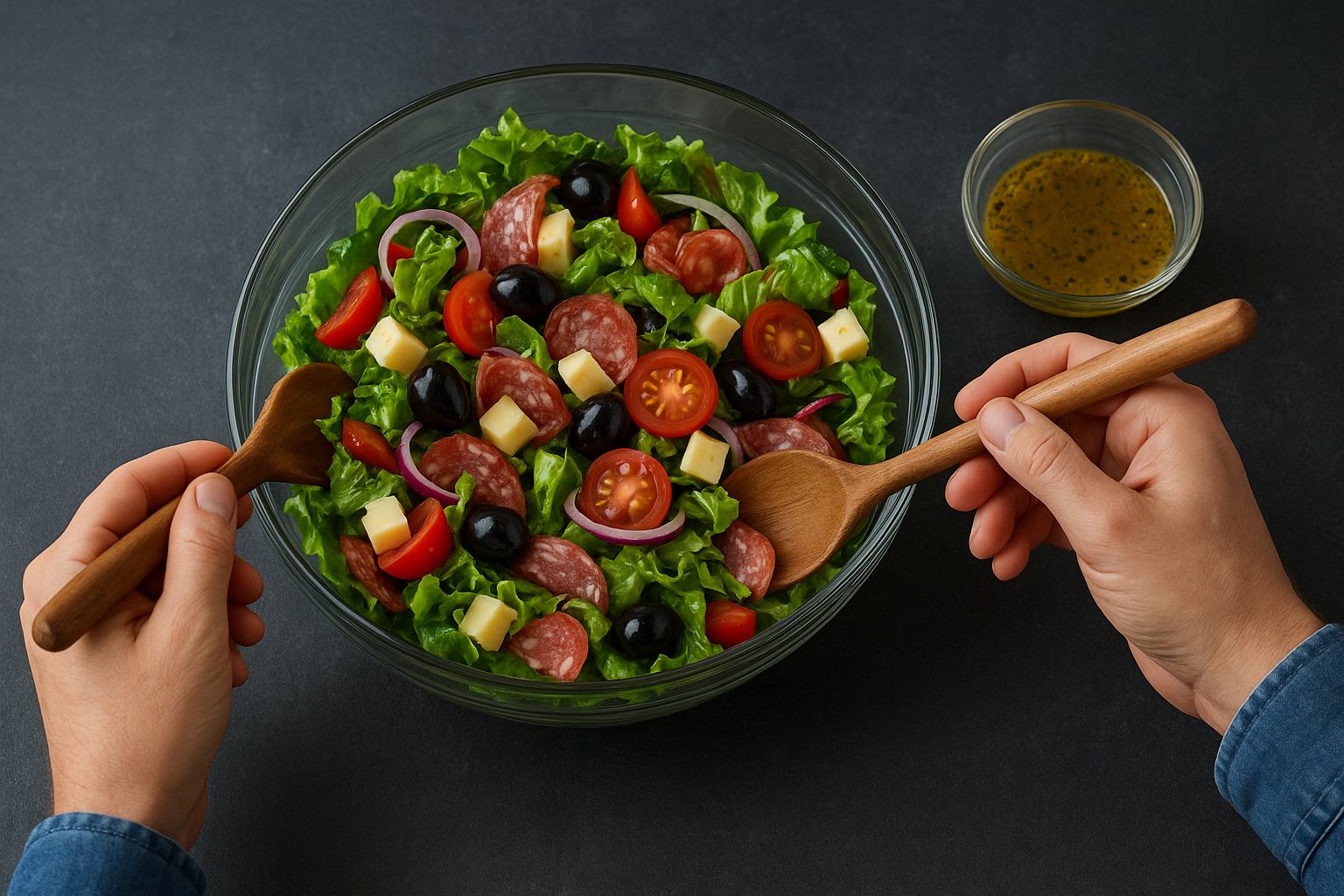
Add the dressing at the right moment
Combine all your salad ingredients into a large bowl and toss them together first without any dressing. This dry toss ensures even distribution of meats, cheeses, and vegetables before the oil touches anything. Then drizzle in about two-thirds of your vinaigrette and toss again, turning the bowl contents from the bottom up with a large spoon or tongs.
Reserve the final third of your dressing to add right before serving so you control how coated each bite is.
How long to chill and when to serve
Cover the tossed salad and refrigerate it for 20 to 30 minutes before serving. That short rest lets the oregano and vinegar work into the proteins and vegetables without breaking down the mozzarella or wilting the romaine. Do not go beyond 45 minutes or the greens will start to soften.
Pull the bowl out, drizzle on the reserved dressing, give it one final toss, and serve immediately. If you are making this ahead for a party, keep the greens separate and combine them with the other ingredients only when you are ready to put it on the table.
Ready to serve
This antipasto salad recipe gives you everything you need to build a proper Italian starter from scratch, including a vinaigrette that actually holds together and a prep sequence that keeps your ingredients tasting fresh. Follow the steps in order, drain your vegetables well, and add the dressing in two rounds, and you will put a bowl on the table that holds its own against anything you have had at a restaurant.
When you want someone else to handle the Italian cooking for a night, visit La Dolce Vita Cucina in Chicago’s Portage Park neighborhood. Our kitchen puts the same care into every plate that you just put into yours at home. Reservations are available online, and our team is ready to walk you through a full Italian meal from antipasto to dessert, including house-made gelato to finish the night right.