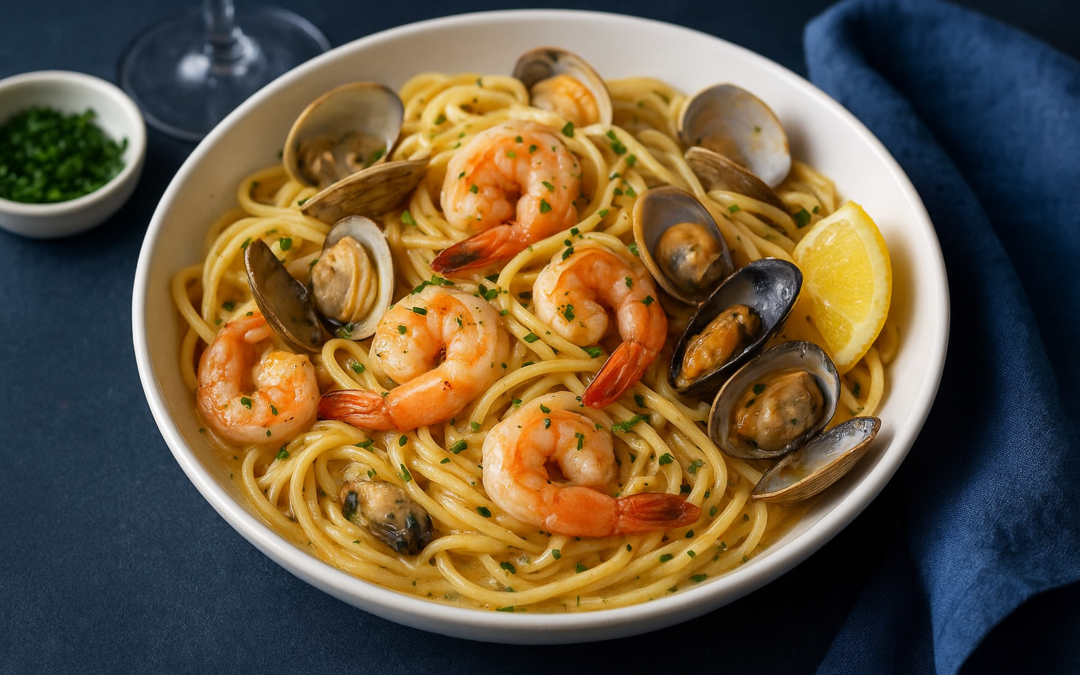
A great seafood pasta with white wine sauce comes down to a few things done right: fresh shellfish, proper timing, and a sauce that actually coats the noodle instead of pooling at the bottom of the bowl. It’s one of those dishes that looks impressive on the plate but doesn’t require culinary school to pull off, just good technique and honest ingredients.
At La Dolce Vita Cucina, our kitchen in Chicago’s Portage Park neighborhood turns out seafood pasta that keeps guests coming back. We build the sauce from scratch, white wine, garlic, butter, a hit of lemon, and finish it in the pan with the pasta so everything melds together. It’s a method rooted in Italian tradition, and it’s exactly what we’re breaking down for you here so you can recreate that experience at home.
This guide walks you through every step: selecting the right seafood, building a balanced white wine sauce, cooking your pasta to the correct texture, and bringing it all together like a professional kitchen would. No guesswork, no vague instructions, just a clear path to a dish that tastes like it belongs on a restaurant menu.
What you need for a great white wine seafood pasta
Before you start cooking, organize your ingredients and understand why each one is there. Seafood pasta with white wine sauce is built on a short, deliberate ingredient list, and every item pulls real weight in the final dish. Skip the fillers, buy the best versions you can afford, and the cooking becomes much more straightforward than you might expect.
Fresh shellfish and a dry, drinkable white wine are non-negotiable in this recipe, and no amount of technique compensates for cutting corners on either one.
The seafood
Your smartest move is to pick one or two types of shellfish rather than cramming in everything at once. Shrimp, clams, mussels, and scallops all belong in this dish. Clams and mussels release briny cooking liquid as they open, which adds depth to the sauce that you cannot fake with seasoning alone. Shrimp brings natural sweetness and body, while scallops deliver a meaty, substantial bite that makes the plate feel complete.
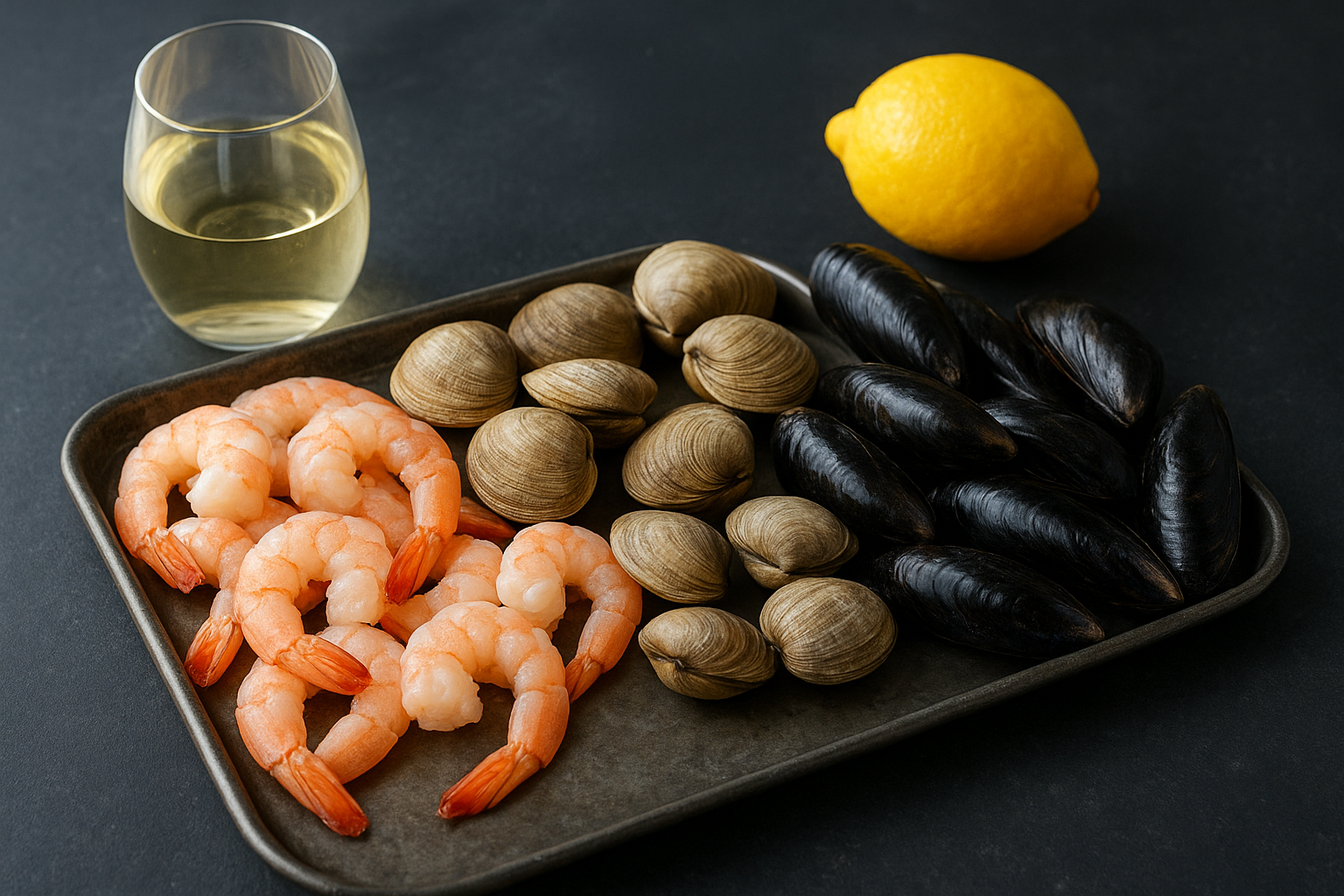
For shrimp, go with wild-caught, 21/25 count, peeled and deveined. For clams, littlenecks open quickly and stay tender without much fuss. If you buy mussels, use them the same day and debeard them right before you cook.
The pasta
Linguine is the traditional choice for this style of dish. The flat, narrow shape holds the sauce without the noodle becoming heavy or soggy. Spaghetti runs a close second and works just as well. What you want to avoid is thick, ridged pasta like rigatoni or penne because the delicate sauce will not cling to a heavier shape the way it needs to.
Dry pasta from a quality Italian brand works perfectly here. Cook it in heavily salted boiling water until it sits about two minutes short of the package time. It finishes cooking in the sauce, so pulling it early is correct, not a mistake.
The sauce building blocks
The sauce relies on just a few ingredients working together: dry white wine, garlic, butter, olive oil, and fresh lemon juice. Use a wine you would pour into a glass, something like a Pinot Grigio or Sauvignon Blanc. Avoid anything labeled "cooking wine" at the grocery store because the added salt throws off your seasoning from the start.
Round out your prep with these finishing elements:
- Red pepper flakes for clean, background heat
- Flat-leaf parsley, roughly chopped, stirred in at the very end
- Cold unsalted butter, one extra tablespoon added off the heat for a glossy finish
- Reserved pasta water, about half a cup, to loosen and emulsify the sauce when you toss everything together
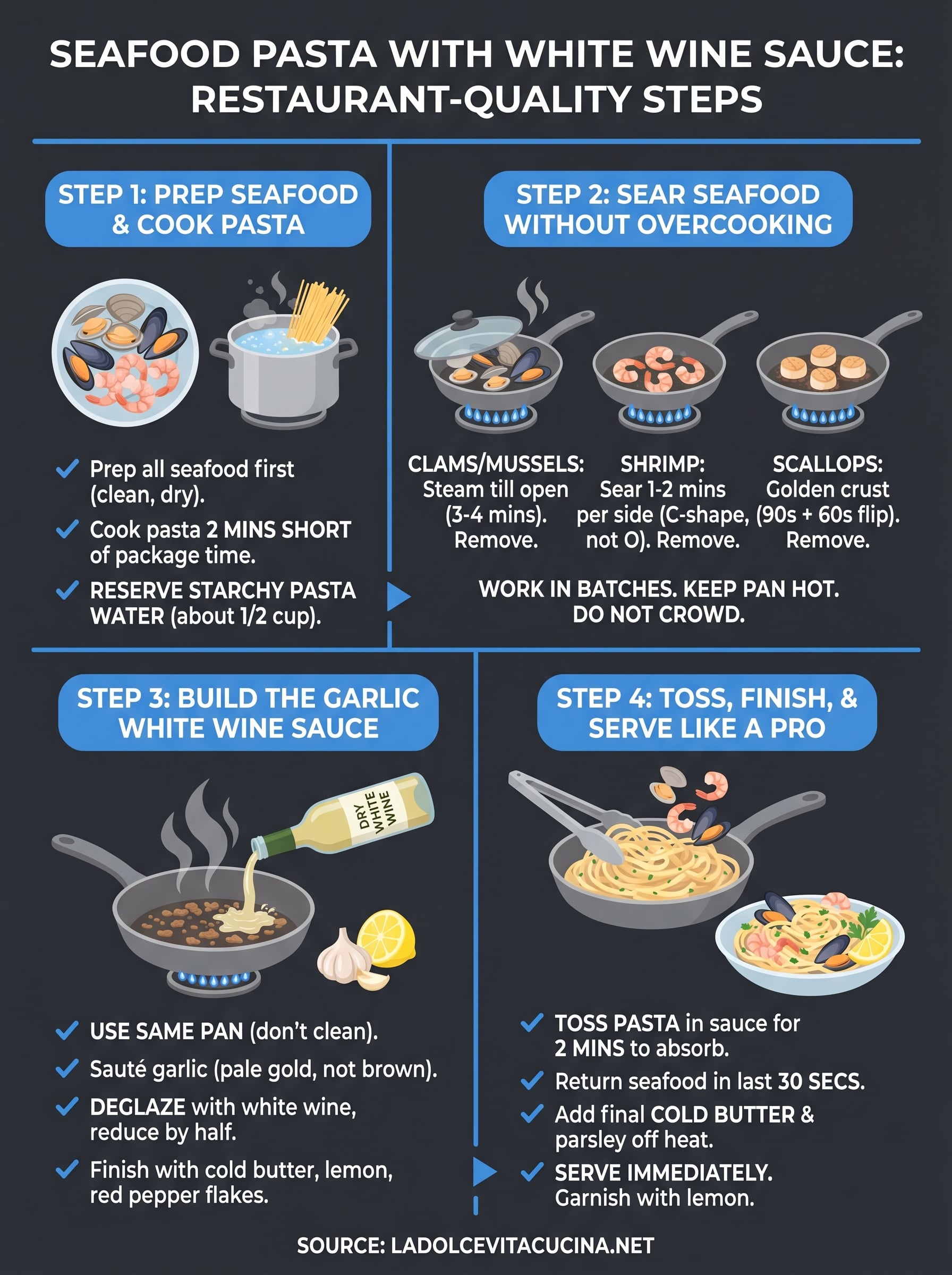
Step 1. Prep seafood and cook pasta
Everything in this dish moves fast once the pan gets hot, so prep all your seafood and start your pasta water before you turn on a single burner. Think of this step as laying the groundwork for the actual cooking. When your shrimp is cleaned, your clams are scrubbed, and your pasta is nearly done, you can focus entirely on the sauce without scrambling to catch up.
Cleaning and prepping your shellfish
Scrub your clam shells under cold running water with a stiff brush to remove grit from the outside. Discard any clam or mussel that stays open when you tap it against the counter, because that shell is no longer alive and will not open during cooking. For shrimp, pat them completely dry with paper towels right before they hit the pan, since moisture is the single biggest obstacle to a proper sear.
Dry shrimp sear and build color in 60 to 90 seconds per side; wet shrimp steam instead and turn rubbery before the sauce even starts.
Follow this prep checklist before you heat your pan:
- Scrub clam shells, discard any that stay open
- Debeard mussels, discard any that stay open
- Peel and devein shrimp, pat dry just before cooking
- If using scallops, remove the side muscle and pat dry
Timing your pasta
Bring a large pot of heavily salted water to a full rolling boil before you drop the linguine. For this seafood pasta with white wine sauce, you want the pasta to finish cooking inside the sauce, so pull it two full minutes before the package time and transfer it directly to the pan using tongs.
Keep a half cup of starchy pasta water set aside before you drain. You will use it in Step 3 to loosen the sauce and help it cling to every strand of pasta instead of sliding to the bottom of the bowl.
Step 2. Sear seafood without overcooking
This step separates good seafood pasta from great seafood pasta with white wine sauce. Heat management is the single most important skill here, because shellfish cooks in minutes, and the line between perfectly done and rubbery is about 30 seconds. Get your pan screaming hot, work in batches, and resist the urge to move anything around before it has time to develop color.
A wide, heavy-bottomed stainless steel or cast iron pan gives you the even, sustained heat that shellfish needs to sear properly instead of stewing in its own moisture.
Cook each shellfish type separately
Your shrimp, clams, and scallops all need different amounts of time, so cooking them together guarantees at least one item gets overdone. Start with clams and mussels first. Add them to your hot pan with a splash of white wine, cover with a lid, and cook for three to four minutes until every shell has opened. Pull them out and set them aside, shells and all.
Next, sear your shrimp in a single layer with a tablespoon of olive oil. Do not crowd the pan or the temperature drops and you get steaming instead of searing. Cook two minutes per side until pink and slightly golden at the edges, then remove them before they tighten up.
Know when to stop cooking
Seafood tells you clearly when it is done. Shrimp curl into a loose C shape, not a tight O, when they hit the right temperature. Scallops develop a deep golden crust on one side after about 90 seconds and need only a quick flip for another 60 seconds on the second side. Pull everything off heat while it still looks slightly underdone, because it will finish in the sauce during Step 3.
Step 3. Build the garlic white wine sauce
With your seafood resting off the heat, the pan you just cooked in holds the most flavor in your kitchen right now. Do not wipe it out. Those browned bits and rendered juices at the bottom are the foundation for the sauce, and they dissolve into the liquid as you deglaze, adding layers that a clean pan simply cannot deliver.
The goal here is a sauce that clings to pasta rather than sitting in a puddle, and that balance comes from reducing the wine far enough and finishing with cold butter at the right moment.
Get the garlic right
Drop your heat to medium and add a thin pour of olive oil plus two or three thinly sliced garlic cloves. You want the garlic to turn pale gold and fragrant in about 60 to 90 seconds, not brown. Burnt garlic turns bitter and pulls the entire sauce down with it, so stay close and keep the pan moving.
Deglaze, reduce, and finish with butter
Pour in about half a cup of dry white wine and scrape the bottom of the pan immediately with a wooden spoon to lift every bit of fond into the liquid. This is where your seafood pasta with white wine sauce gets its backbone. Let the wine reduce by half over medium heat, which takes roughly two to three minutes.
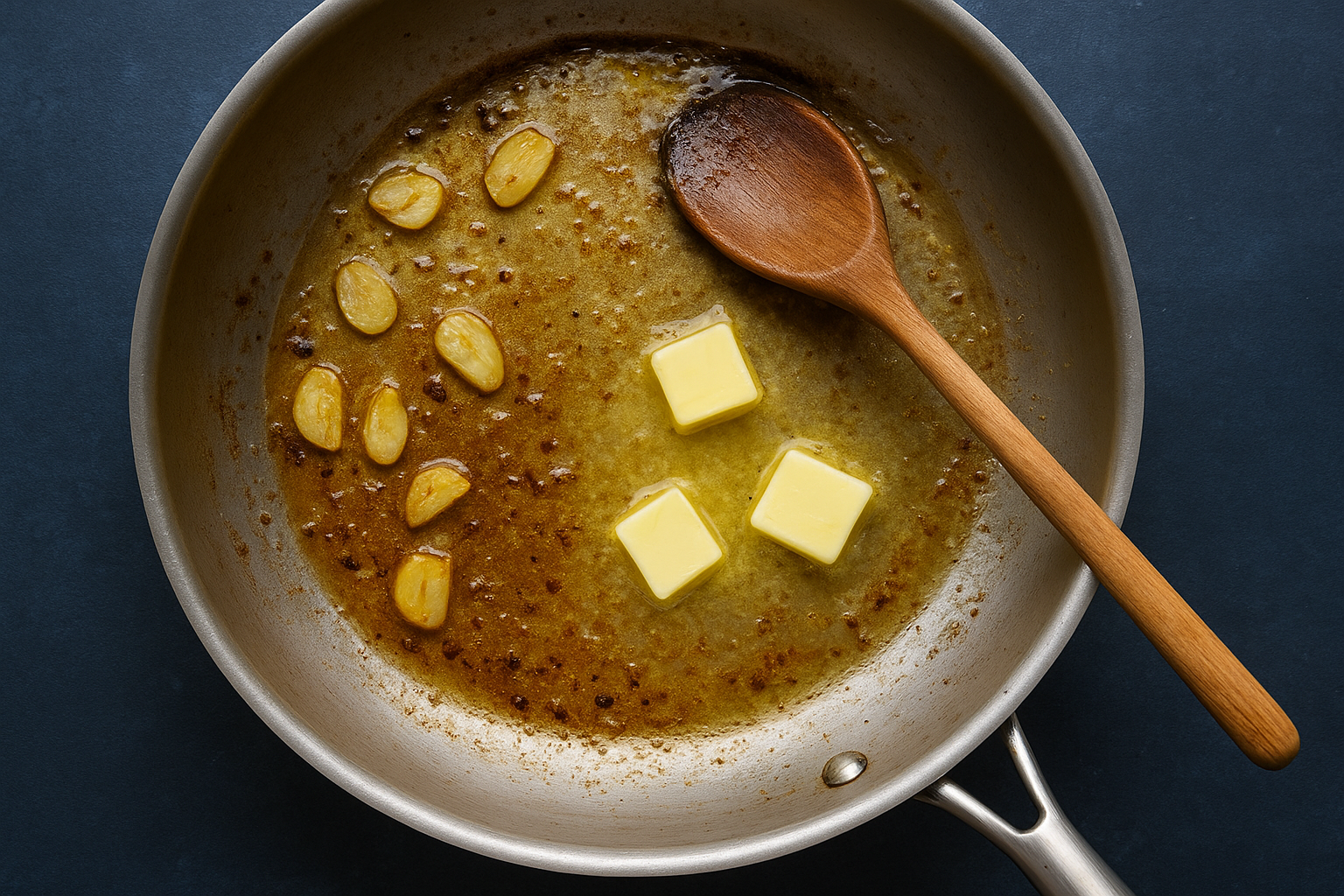
Add a squeeze of fresh lemon juice and a pinch of red pepper flakes, then turn the heat to low. Drop in two tablespoons of cold unsalted butter and swirl the pan until it melts into a glossy, emulsified sauce that coats the back of a spoon.
Step 4. Toss, finish, and serve like a pro
This is where every component you have prepared earns its place. Pull your undercooked linguine directly from the boiling water using tongs and drop it into the pan with the sauce. The pasta carries some starchy water naturally, but add another splash if the sauce tightens up too fast. Toss everything over medium heat for two full minutes so the noodle absorbs the sauce rather than floating loose in it.
This two-minute toss is what transforms separate components into a unified, restaurant-quality seafood pasta with white wine sauce where every element connects.
Return the seafood to the pan
Add your seared shrimp, clams, and mussels back in during the last 30 seconds of tossing. This gentle reheating brings the shellfish up to temperature without pushing it past done. Keep the heat at medium and give the pan a few firm tosses to spread the seafood evenly so every serving gets a balanced mix.
Drop one final tablespoon of cold unsalted butter into the pan and swirl it in off the heat. This creates a glossy finish and binds the sauce to the pasta so nothing separates on the way to the table.
Plate and garnish with intention
Twist the pasta into a tight mound at the center of a wide, shallow bowl using tongs. Arrange the clams and shrimp on top so they stay visible, not buried under noodles. Finish each bowl with a generous pinch of chopped flat-leaf parsley, a light drizzle of olive oil, and a lemon wedge on the side so your guest can adjust brightness to taste.
Serve immediately. Shellfish texture falls off quickly once the heat drops, and no amount of reheating restores what a two-minute delay costs you.
Bring it to the table
You now have everything you need to cook a seafood pasta with white wine sauce that holds up against what any serious Italian kitchen produces. The technique is straightforward: prep everything before the heat goes on, cook each type of shellfish separately, build your sauce in the same pan, and finish the pasta inside that sauce so the two become one dish instead of two things sharing a bowl.
Practice the timing once, and the second time feels automatic. The garlic, the wine reduction, the cold butter finish are all habits worth building because they carry into dozens of other dishes beyond this one. None of it requires special equipment or hard-to-find ingredients, just attention and a hot pan.
If you want to taste what this dish looks like when a professional kitchen executes it, come find us at La Dolce Vita Cucina in Chicago’s Portage Park neighborhood.