
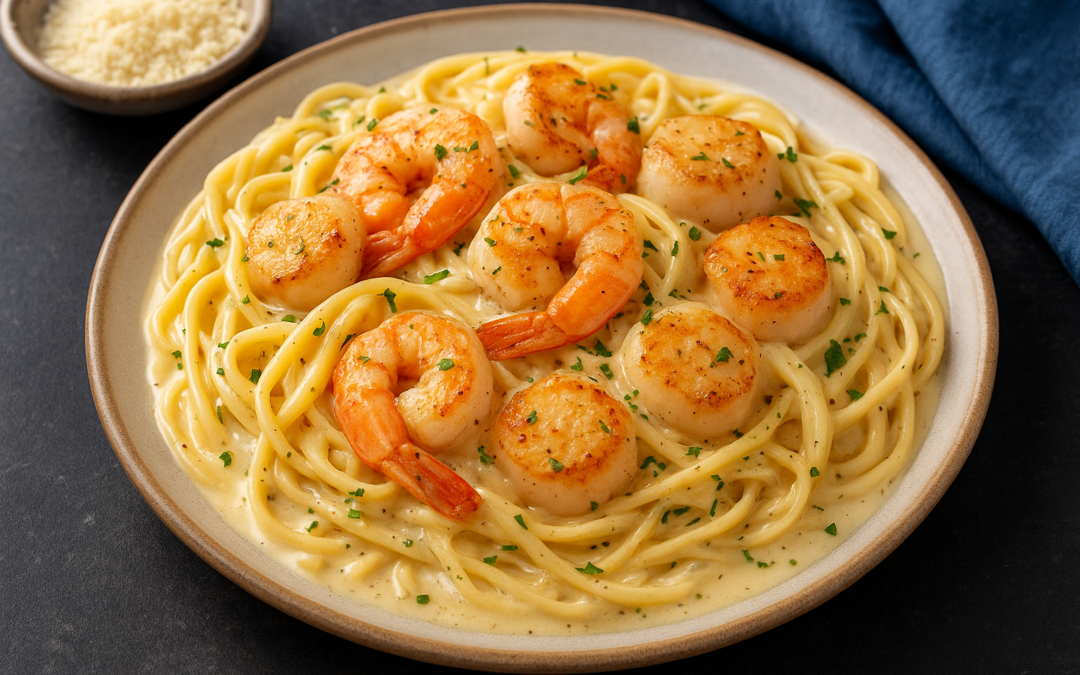
At La Dolce Vita Cucina, our kitchen in Chicago’s Portage Park neighborhood runs on one belief: great Italian food doesn’t need to be complicated. Our chefs build dishes around quality seafood, fresh pasta, and simple techniques that let the ingredients speak for themselves. That same philosophy works just as well at home, and this easy seafood pasta recipe is proof. With plump shrimp, seared scallops, and a creamy garlic sauce, you get a restaurant-worthy plate without the fuss.
The whole dish comes together in under 30 minutes. No obscure ingredients, no tricky methods, just straightforward cooking that delivers big, satisfying flavor every time. Whether it’s a Tuesday night dinner or something special for the weekend, this recipe fits the moment without demanding your entire evening. It’s the kind of meal that makes you feel like you pulled off something impressive, even though the process is refreshingly simple.
Below, we’ll walk you through every step: from selecting your seafood and building the garlic cream sauce to cooking your pasta to the right texture. You’ll also find our tips on ingredient swaps and plating techniques we use at the restaurant, so you can adapt this recipe to whatever you have on hand.
What you need for creamy seafood pasta
Getting the ingredients right sets the foundation for this entire dish. This easy seafood pasta recipe uses everyday staples you can find at any grocery store, plus two quality pieces of seafood that do most of the heavy lifting. Before you touch a pan, gather everything and set it on the counter — this dish moves fast once the heat is on, and you don’t want to scramble for missing ingredients mid-cook.
Seafood: choosing shrimp and scallops
The star ingredients here are large shrimp (16/20 count) and dry-packed sea scallops. Size matters for both. Shrimp in the 16/20 range are substantial enough to hold up against the rich sauce and cook evenly without turning rubbery. For scallops, buy dry-packed rather than wet-packed. Dry scallops sear properly and develop the golden crust that makes them worth the extra dollar or two per pound. Wet-packed scallops are treated with a sodium solution that causes them to steam instead of sear, which wrecks the texture.
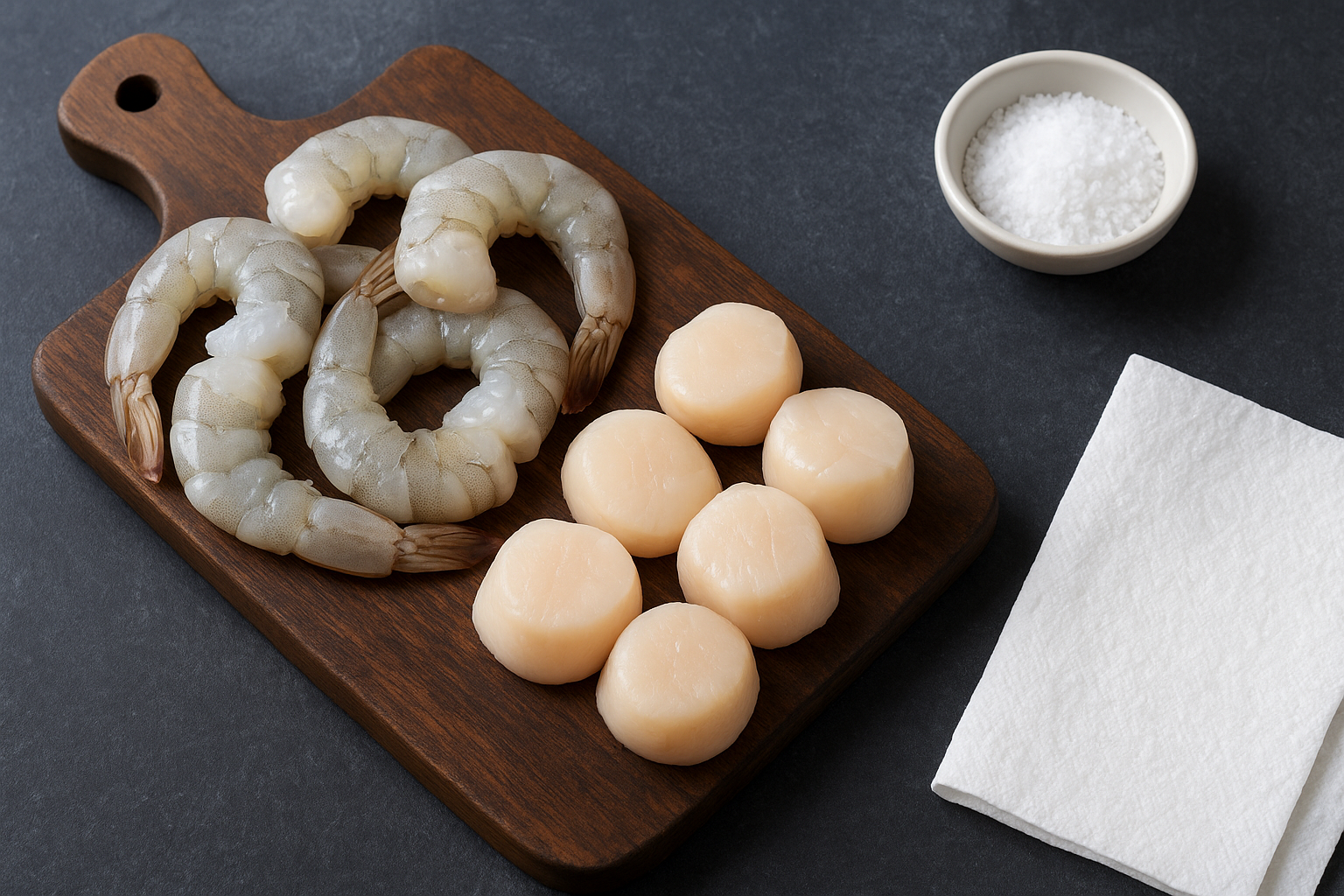
Always pat your seafood completely dry with paper towels before cooking — moisture is the single biggest enemy of a proper sear.
Fresh or thawed-from-frozen seafood both work well in this recipe. If you buy frozen, thaw overnight in the refrigerator and dry thoroughly before cooking. For shrimp, buy them peeled and deveined to save yourself prep time.
Pasta shape and quantity
Linguine or fettuccine work best here because the long, flat strands catch the creamy sauce in every bite. A 12-ounce package serves four people comfortably as a main course. Spaghetti is a fine substitute if that’s what you have on hand. Avoid short pasta shapes like penne or rigatoni — they don’t integrate with a cream sauce the same way, and you’ll lose that silky, cohesive finish that makes this dish feel restaurant-quality.
Sauce ingredients and aromatics
The creamy garlic sauce comes together from pantry and refrigerator basics. Here’s exactly what you need:
| Ingredient | Amount | Notes |
|---|---|---|
| Unsalted butter | 4 tablespoons | Divided: seafood sear + sauce |
| Garlic, minced | 6 cloves | Fresh only, not jarred |
| Dry white wine | ½ cup | Pinot Grigio or Sauvignon Blanc |
| Heavy cream | 1 cup | Full-fat for proper body |
| Parmesan, freshly grated | ¾ cup | Not pre-shredded |
| Crushed red pepper flakes | ½ teaspoon | Adjust to your preference |
| Fresh parsley, chopped | 2 tablespoons | Added at the finish |
| Lemon juice | 1 tablespoon | Brightens the whole sauce |
| Olive oil | 2 tablespoons | For searing the seafood |
| Kosher salt and black pepper | To taste | Season every layer |
Pre-shredded Parmesan contains anti-caking agents that prevent it from melting smoothly into the sauce. Buy a wedge and grate it yourself — it takes two minutes and makes a real difference in texture. For the wine, choose something dry and acidic that you’d actually drink. If you prefer to skip it, substitute an equal amount of low-sodium chicken broth with a squeeze of extra lemon to maintain the brightness.
Step 1. Prep the seafood, pasta, and add-ins
Good prep makes this easy seafood pasta recipe run smoothly. Since the cooking happens fast, you want every component ready before you turn on the heat: seafood dried and seasoned, pasta water boiling, garlic minced, and cream measured. Treat this like mise en place (the French kitchen term for "everything in its place"), and you’ll move through the cook with confidence rather than scrambling at the stove.
Dry and season your seafood
Lay your shrimp and scallops on a double layer of paper towels and press another layer firmly on top. Leave them for two to three minutes, then press again. Any remaining surface moisture will steam the seafood instead of searing it, and you’ll lose the golden crust that makes this dish worthwhile. Once dry, season both sides of the scallops and shrimp with kosher salt and black pepper right before you plan to cook them. Don’t season too early: salt draws out moisture, which works against the dry surface you just created.
Season your seafood immediately before cooking, not while the oil is heating, so you maintain the dry surface you worked for.
Get your pasta water going
Fill your largest pot with generously salted water and bring it to a rolling boil. The water should taste like the sea, so use about one tablespoon of kosher salt per four quarts. You want the pasta ready to drain right when the sauce finishes, so time your pasta to cook in the final eight to ten minutes of the overall process. For linguine or fettuccine, follow the package time but test one minute early, pulling it out when it’s still slightly firm (al dente).
Prep your aromatics and liquids
Mince your six garlic cloves and set them in a small bowl. Measure your wine, heavy cream, and lemon juice so you can add each one without stopping to measure mid-cook. Chop your fresh parsley and grate your Parmesan now as well. Having these ready in separate small bowls keeps the sauce-building stage clean and controlled.
Step 2. Sear shrimp and scallops without overcooking
This is the step most home cooks rush and regret. Overcooking seafood by even one minute turns shrimp rubbery and scallops chalky, and no cream sauce can fix that. The goal here is a quick, high-heat sear that builds a golden crust on the outside while keeping the center just cooked through. Keep a close eye on the timing below, and pull the seafood from the pan earlier than you think you need to.
Heat the pan correctly
Set a large, heavy-bottomed skillet (cast iron or stainless steel) over high heat for two full minutes before adding anything. Add one tablespoon of olive oil and one tablespoon of butter, and wait for the butter to stop foaming. That foam disappearing tells you the pan has reached the right temperature. A properly heated pan is the single most important factor in getting a real sear instead of a steam.
If the oil and butter don’t immediately sizzle when the seafood hits the pan, your heat isn’t high enough — remove the seafood and wait another full minute before trying again.
Cook shrimp and scallops in separate batches
Place the scallops flat side down in a single layer, making sure none of them touch each other. Crowding the pan drops the temperature and causes steaming rather than searing. Cook scallops for 90 seconds per side without moving them, then transfer to a plate. Next, add your shrimp in a single layer and cook for 60 to 90 seconds per side, just until they curl into a C-shape and turn pink. A C-shape means done; an O-shape means overcooked.
Use this quick reference for timing:
| Seafood | Per Side | Done Signal |
|---|---|---|
| Sea scallops | 90 seconds | Deep golden crust, opaque center |
| Large shrimp (16/20) | 60-90 seconds | Pink, curled into a C-shape |
Both go back into the sauce at the very end, so pulling them slightly underdone here is intentional. They’ll finish cooking when you toss everything together in the final step of this easy seafood pasta recipe.
Step 3. Make the creamy garlic sauce fast
With the seafood off the pan and resting, you’re ready to build the sauce in the same skillet. Don’t wipe it out — those browned bits stuck to the bottom are loaded with flavor, and the sauce will pull every last bit of them up as it cooks. This is the fastest part of this easy seafood pasta recipe, taking under five minutes from start to finish if your ingredients are already measured and within reach.
Build the base with garlic and wine
Reduce the heat to medium and add one tablespoon of butter to the still-hot pan. Once it melts, add all six cloves of minced garlic and cook for 60 seconds exactly, stirring constantly. Garlic burns fast at this stage, and bitter garlic will ruin the sauce before it starts. The moment it turns fragrant and just barely golden at the edges, pour in your half cup of dry white wine and scrape the bottom of the pan with a wooden spoon to lift all the browned bits. Let the wine reduce by half, which takes about two minutes over medium heat.
The wine reduction step is non-negotiable — it cooks off the alcohol and concentrates the acidity, which balances the richness of the cream that comes next.
Finish with cream and Parmesan
Pour in one cup of heavy cream and stir to combine with the reduced wine. Add the crushed red pepper flakes and a pinch of salt, then let the sauce simmer over medium-low heat for three to four minutes, stirring occasionally, until it thickens enough to coat the back of a spoon. Remove the pan from the heat before adding the freshly grated Parmesan, stirring it in gradually so it melts smoothly without clumping. Finish with one tablespoon of lemon juice and taste for salt. The sauce should feel rich but not heavy, with a bright, sharp edge from the lemon cutting through the cream.
Step 4. Toss, balance, and serve like a pro
The final step is where pasta, seafood, and sauce become one cohesive dish rather than three separate things sharing the same bowl. Return the skillet to low heat and use tongs to transfer your drained linguine directly from the pot into the sauce. Before you drain the pasta, reserve at least half a cup of pasta water in a small cup and keep it within reach throughout this step.
Bring everything together in the pan
Add the pasta to the sauce and toss firmly for about 60 seconds, letting the noodles absorb the cream and coat every strand. If the sauce feels too thick, add pasta water one small splash at a time until it reaches a consistency that slides easily off the tongs. Starchy pasta water makes the sauce cling to the noodles rather than pool at the bottom of the bowl.
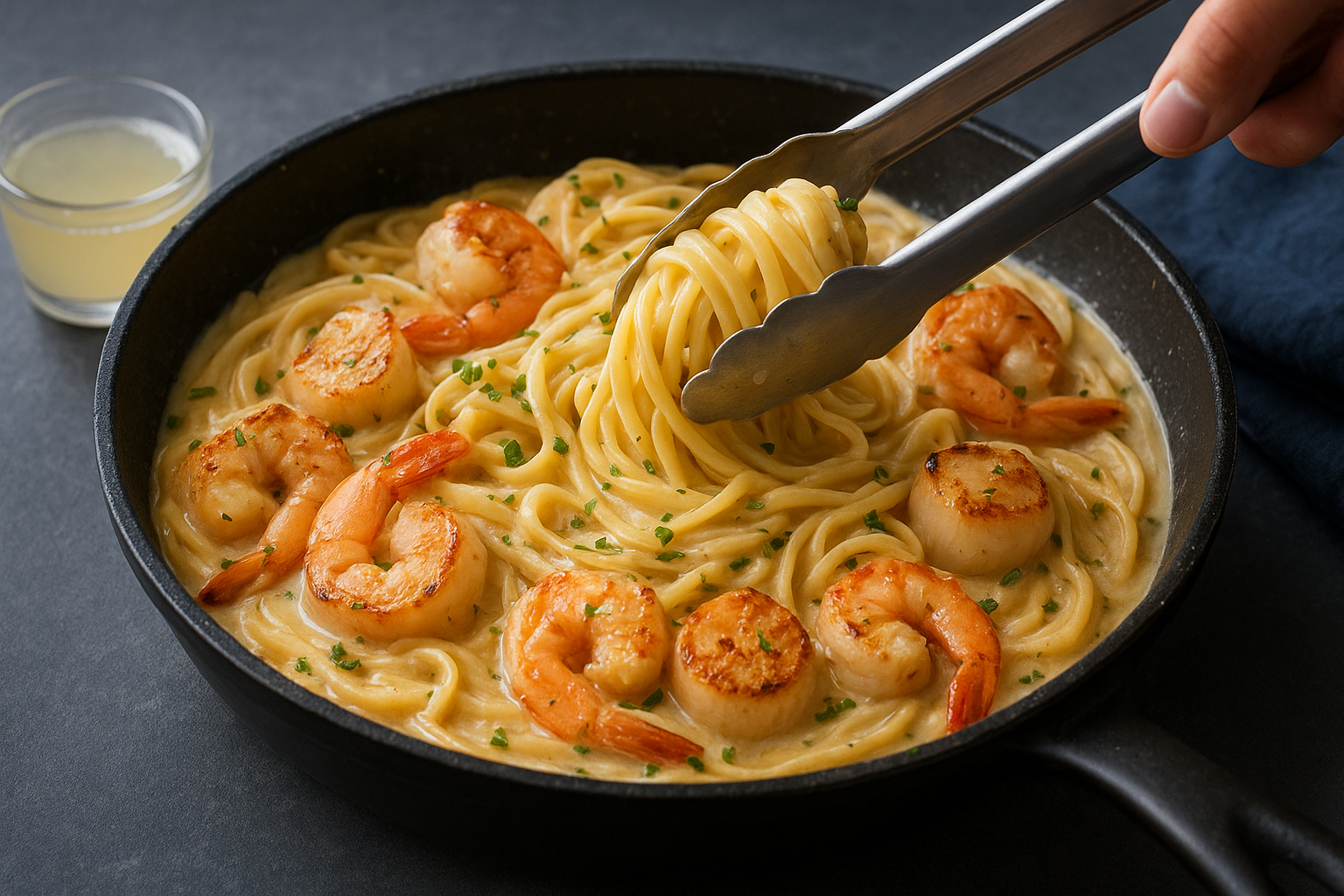
Pasta water thins the sauce without diluting the flavor, which makes it a far better adjustment tool than adding extra cream or plain water.
Once the pasta is evenly coated, nestle the shrimp and scallops back into the pan and toss everything together for 30 seconds more. That brief return to heat finishes the seafood through without overcooking it, completing the intentional undercook you left in Step 2. Check the seasoning one final time and add a small pinch of salt if the sauce needs it.
Plate for maximum impact
Divide the pasta between four wide, shallow bowls by using tongs to twist the noodles into a mound at the center of each one. Position two or three scallops on top where they stay visible, then arrange several shrimp around them. Wide bowls give the sauce room to settle properly without spilling over the edge, and keeping the seafood on top shows the quality of your sear.
Finish each plate with a pinch of fresh parsley, a light grating of Parmesan, and a crack of black pepper. A small lemon wedge on the side lets each person adjust the brightness to their own taste, and that small detail is what takes this easy seafood pasta recipe from a good weeknight dinner to one people ask you to make again.
Make it your go-to weeknight seafood pasta
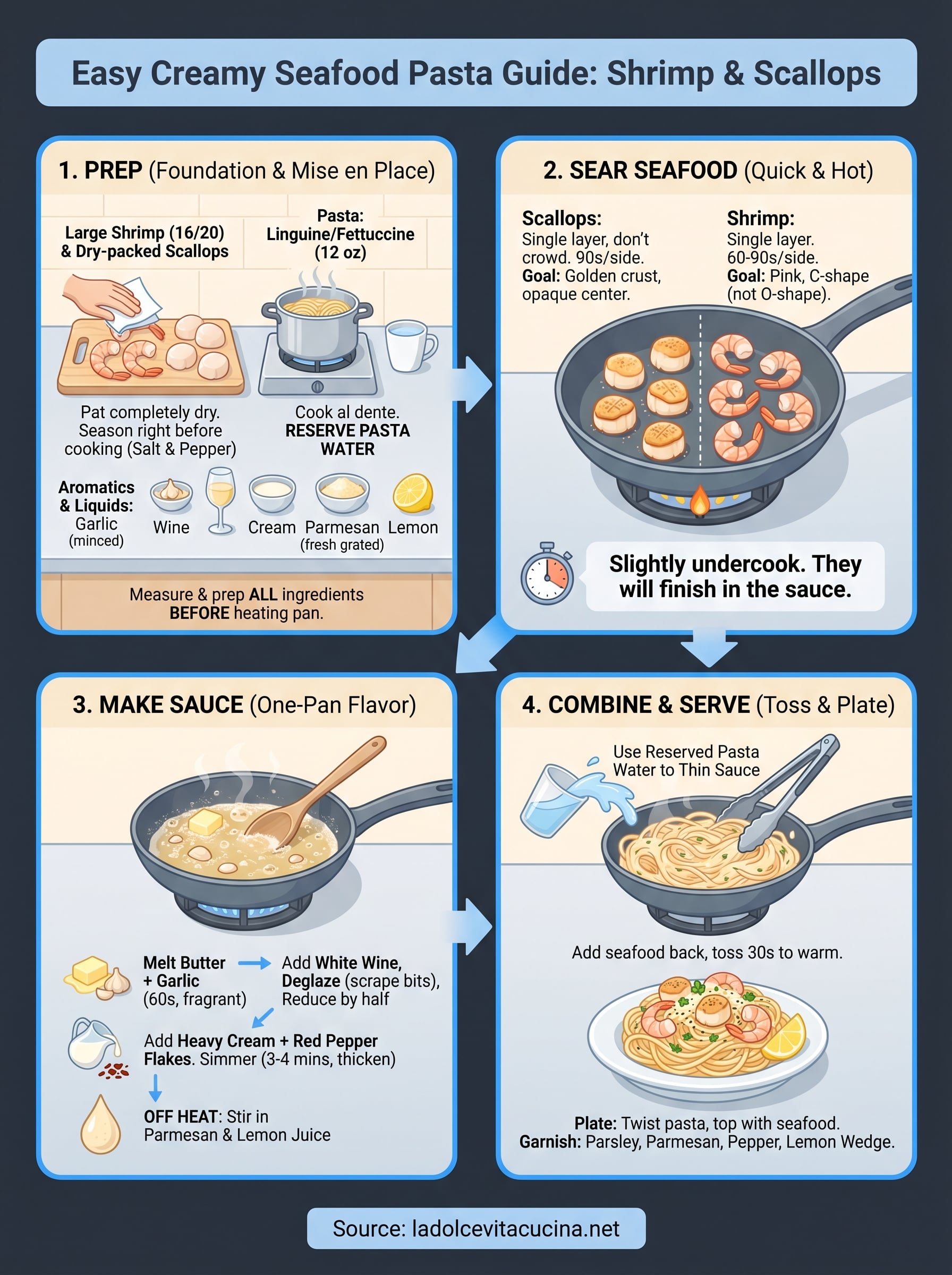
This easy seafood pasta recipe earns its place in your regular rotation because it delivers every time without demanding much from you. The techniques stay the same no matter what you swap in: dry your seafood, sear it hot and fast, build the sauce in the same pan, and toss everything together at the end. Master those four steps once, and you can riff on the dish endlessly, swapping in clams, lobster tail, or crab, adjusting the heat level with more red pepper, or trying the sauce over a different pasta shape on nights when that’s what you have available.
When you want to skip the home cooking and taste what a professional Italian kitchen does with fresh seafood and house-made pasta, come visit us in Chicago’s Portage Park neighborhood. Our team at La Dolce Vita Cucina brings that same care and precision to every plate we serve, and we’d love to cook for you.