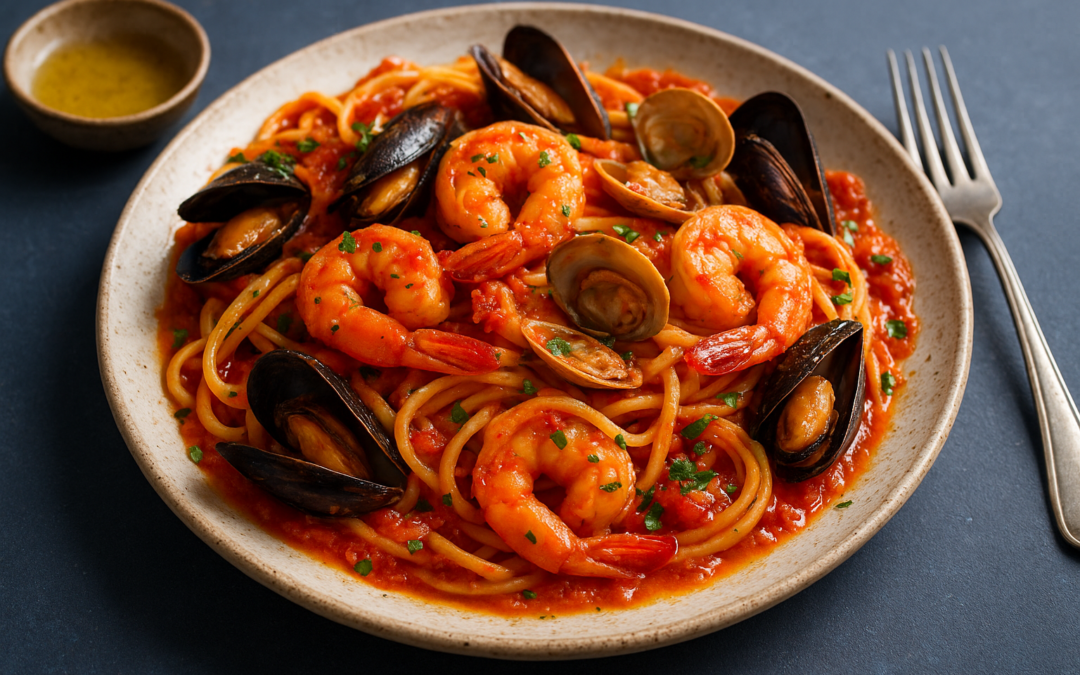
A good spicy seafood pasta hits every note at once, briny shellfish, a kick of red pepper, garlic-soaked tomato sauce clinging to each strand of linguini. It’s the kind of dish we build entire evenings around at La Dolce Vita Cucina in Chicago’s Portage Park neighborhood, and it’s one you can absolutely pull off in your own kitchen.
Fra Diavolo, Italian for "Brother Devil", is a Southern Italian-American sauce built on crushed tomatoes, garlic, and dried chili flakes. Toss in shrimp, mussels, and clams, and you’ve got a dish that looks like it took hours but comes together in about 30 minutes flat. No specialty equipment. No hard-to-find ingredients. Just solid technique and good seafood.
This guide walks you through every step, from selecting the right shellfish to building a sauce with real depth of flavor. Whether you’re cooking for a Friday night date or feeding a table full of friends, you’ll have a restaurant-quality Fra Diavolo on the table before the pasta water even cools down.
What makes fra diavolo-style pasta spicy
Fra Diavolo sauce gets its heat from crushed red pepper flakes, which go into hot olive oil at the very start of cooking, before the garlic, before the tomatoes, before anything else. That order is intentional. When dried chili hits hot fat, it releases capsaicin and fat-soluble compounds that distribute evenly through the entire sauce rather than sitting in isolated pockets. The result is a steady, building warmth that coats every bite of your spicy seafood pasta instead of hitting you in unpredictable bursts.
The chili-to-garlic ratio matters
Most traditional Fra Diavolo recipes use between one-half teaspoon and two full teaspoons of red pepper flakes per pound of pasta. That range gives you real control over intensity. At the lower end, the heat reads as background warmth, something you notice after you swallow. At the higher end, it commands your attention from the first bite without scorching your palate clean.
Garlic is the other side of this equation, and the way you cut it changes the final flavor. You want at least 4 to 6 cloves, sliced thin rather than minced. Thin slices soften slowly in the oil and release a mellow, rounded flavor instead of turning bitter. That balance between garlic and chili is what keeps the sauce from feeling one-dimensional.
The moment your garlic starts to turn golden at the edges, pull the pan slightly off the heat. Burned garlic makes the entire sauce taste acrid, and no amount of tomato will fix it.
How tomatoes lock in the heat
Crushed tomatoes do more than add body to the sauce. Their natural acidity softens the raw sharpness of dried chili and lets the heat spread gradually across your palate instead of landing all at once. San Marzano-style tomatoes work especially well here because their lower water content produces a thicker, more concentrated sauce without an extra 20 minutes of reducing time.
Adding a small splash of dry white wine right before the tomatoes deglazes the pan and lifts any toasted chili and garlic stuck to the bottom. Those browned bits carry concentrated flavor, and pulling them into the sauce adds real depth to every forkful.
Step 1. Choose seafood and prep everything
The best spicy seafood pasta comes from a deliberate combination of shellfish. Shrimp, mussels, and clams are the classic Fra Diavolo trio. Each one cooks at a different rate, so your prep work before the pan heats up determines whether everything finishes perfectly or turns rubbery.
Pick the right shellfish combination
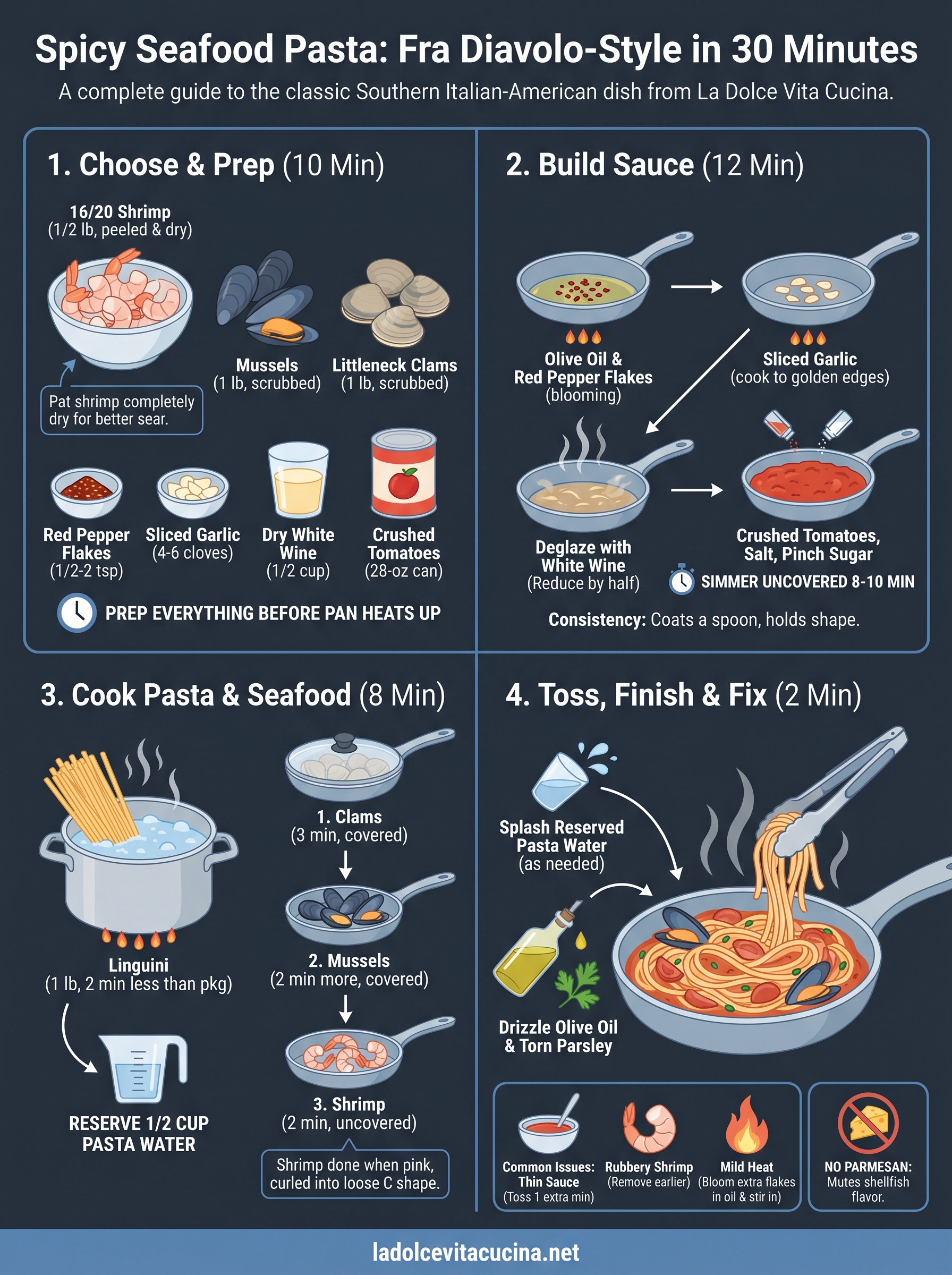
For one pound of pasta, start with these amounts:
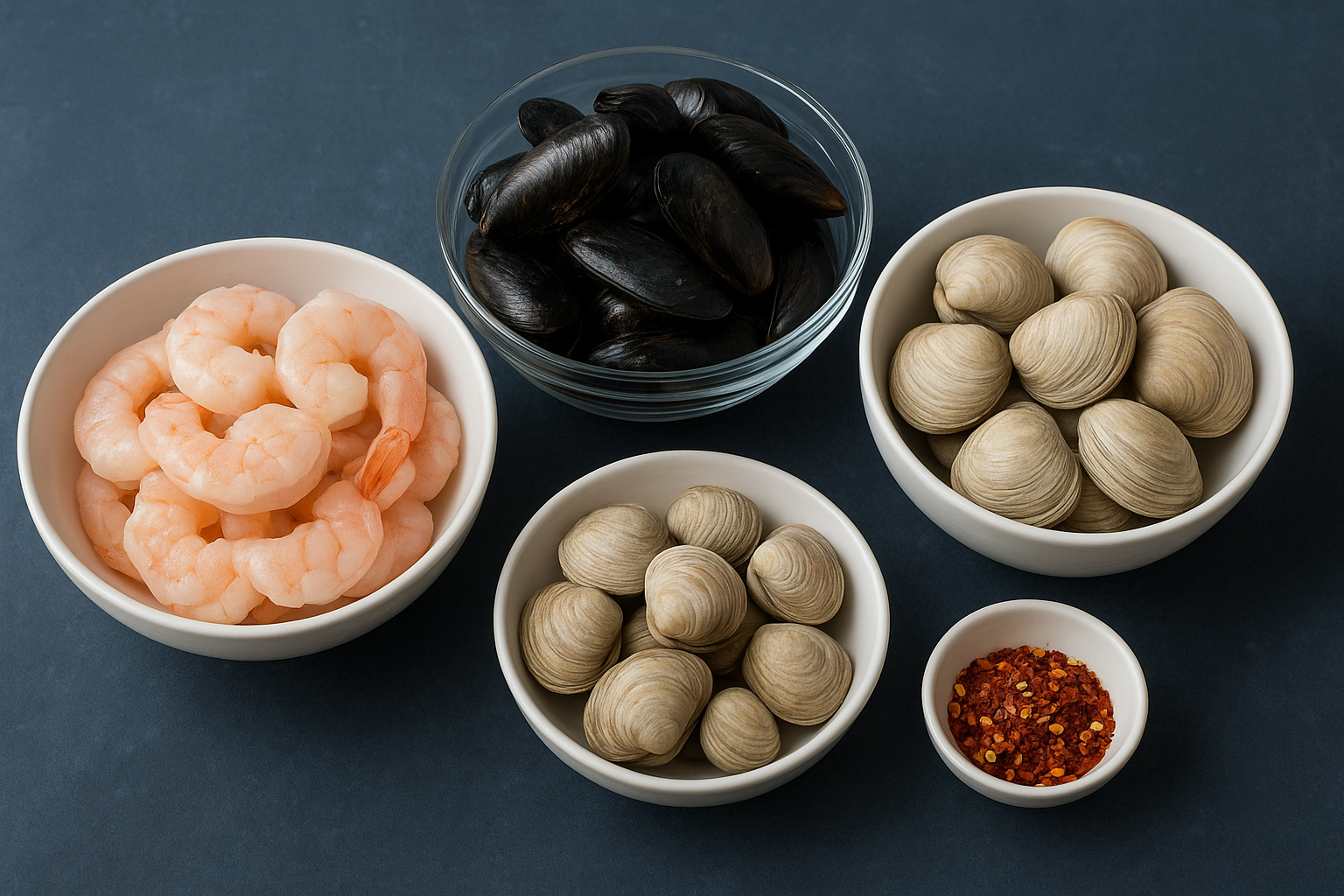
- Large shrimp (16/20 count): half a pound, peeled and deveined
- Mussels: one pound, scrubbed and debearded
- Littleneck clams: one pound, scrubbed under cold running water
That ratio fills a bowl without overwhelming the sauce. Scrub mussel and clam shells thoroughly under cold running water, then pull the beard off each mussel with a firm tug toward the hinge.
Discard any mussel or clam that stays open after a sharp tap on the counter. An open shell before cooking means the shellfish is dead and should not go in your pan.
Prep everything before the pan heats up
Fra Diavolo moves fast once it starts. Having every ingredient measured and ready before you turn on a burner keeps you in control rather than scrambling between steps. Set out your red pepper flakes, sliced garlic, crushed tomatoes, and white wine in separate prep bowls before anything hits the stove.
Pat the shrimp completely dry with paper towels. A damp shrimp drops the pan temperature the moment it hits hot oil, which causes steaming instead of searing and leaves the outside of your shellfish soft rather than lightly caramelized.
Step 2. Build a fast tomato-chili sauce
With your ingredients prepped, heat 2 tablespoons of olive oil in a wide, heavy-bottomed skillet over medium-high heat. Add your red pepper flakes first, let them sizzle for about 30 seconds, then slide in the sliced garlic. You’re building the spicy base that defines Fra Diavolo before any liquid touches the pan.
Deglaze and add tomatoes
Once your garlic turns golden at the edges, pour in half a cup of dry white wine and scrape the bottom of the pan immediately with a wooden spoon. The alcohol lifts every toasted bit of chili and garlic off the surface and pulls that flavor into your sauce. Let the wine reduce by half, which takes about 90 seconds at medium-high heat, then add one 28-ounce can of crushed tomatoes.
San Marzano-style tomatoes give you a thicker, more concentrated base without extra cooking time, so they’re worth seeking out over standard crushed tomatoes.
Season and reduce to the right consistency
Stir in the seasoning and let the sauce do its work uncovered. Use this reference while the sauce simmers:
| Ingredient or step | Amount | Why it matters |
|---|---|---|
| Kosher salt | 1 teaspoon | Seasons the whole sauce evenly |
| Sugar | 1 small pinch | Balances tomato acidity |
| Simmer time | 8 to 10 minutes | Thickens sauce to coat a spoon |
Your spicy seafood pasta sauce should hold its shape when you drag a finger across a coated spoon. That thickness is what keeps the sauce from sliding off the pasta when you toss everything together in the final step.
Step 3. Cook pasta and seafood without overdoing it
Your pasta and seafood need to finish at roughly the same time, which means starting the pasta water early and cooking the shellfish in stages. Bring a large pot of water to a boil with 2 tablespoons of kosher salt, which seasons the pasta from the inside out and makes the final dish taste cohesive rather than flat.
Time the pasta correctly
Drop 1 pound of linguini into the boiling water and cook it 2 minutes less than the package directions suggest. That keeps the center slightly underdone, because the pasta will finish cooking inside the sauce during the toss. Pull out half a cup of pasta water before you drain it and set it aside.
Never rinse cooked pasta. Rinsing washes off the starch that helps sauce cling to every strand of your spicy seafood pasta.
Add shellfish in stages
Return to your simmering sauce and add the clams first, cover the pan, and cook for 3 minutes. Clams take the longest and need a head start. Then add the mussels, cover again, and cook for 2 more minutes. Finally, lay the shrimp in a single layer across the top of the sauce. Use this timing guide:
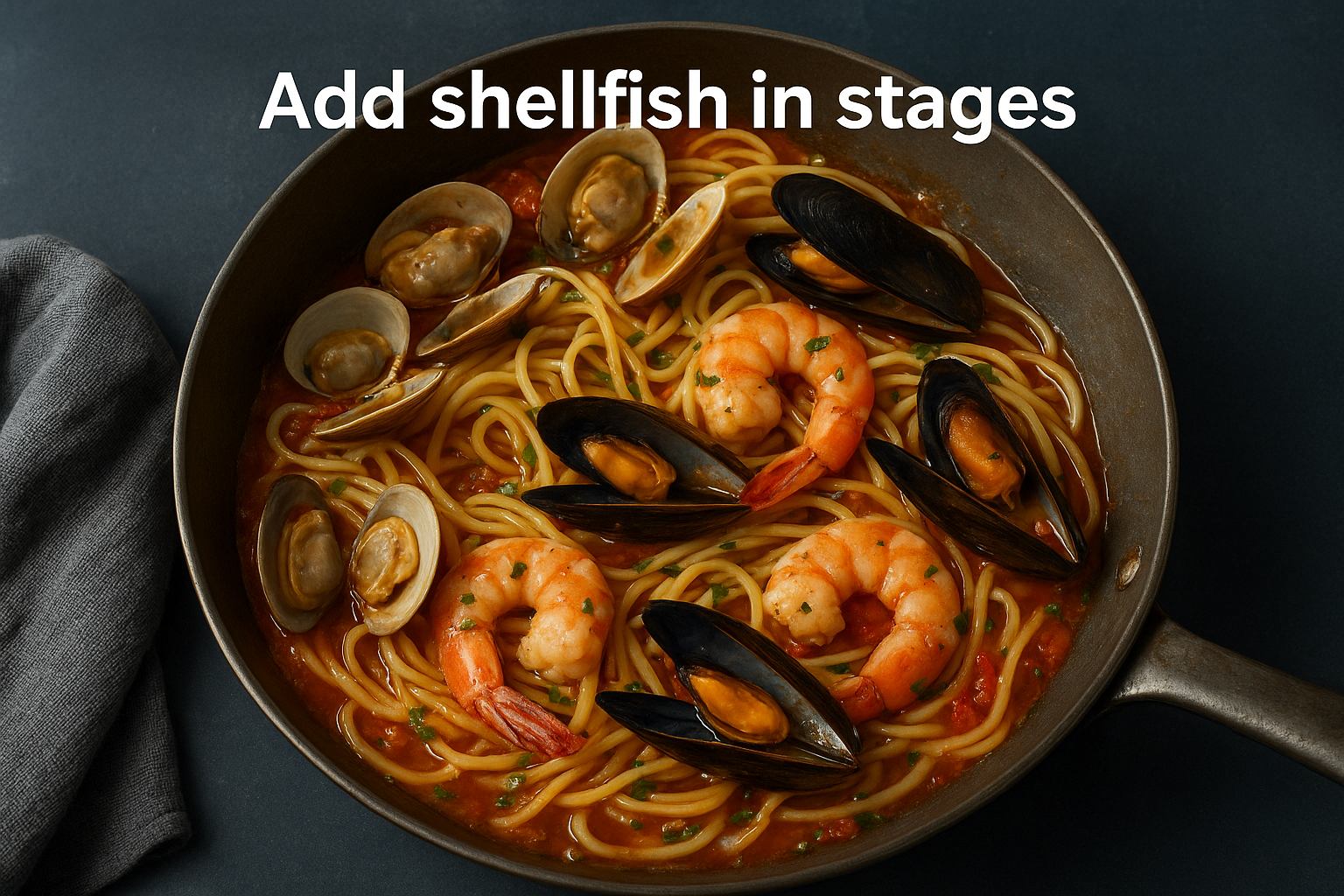
| Shellfish | When to add | Cooking time |
|---|---|---|
| Littleneck clams | First | 3 minutes covered |
| Mussels | After clams | 2 minutes covered |
| Large shrimp | Last | 2 minutes uncovered |
Shrimp are done the moment both sides turn pink and the tail curls into a loose C shape. A tight curl means overcooked, so pull the pan off the heat immediately.
Step 4. Toss, finish, and fix common issues
Add your drained linguini directly into the skillet with the shellfish and sauce. Turn the heat to medium and use tongs to fold the pasta through the sauce for about 90 seconds, letting each strand absorb the tomato-chili base rather than just sitting on top of it. This is the step that separates a plate of pasta with sauce from a true, cohesive dish.
How to finish the toss
Splash in 2 to 3 tablespoons of reserved pasta water as you toss. The starchy water loosens the sauce just enough to coat every strand without turning it thin or watery. Finish with a drizzle of good olive oil and a handful of fresh parsley torn over the top. Parsley cuts through the richness and adds a clean, green note that balances the heat of your spicy seafood pasta.
Skip the Parmesan here. Cheese on seafood pasta mutes the briny flavor of the shellfish and works against everything you built in the sauce.
Fix the three most common problems
Even a fast recipe can run into trouble. Use this quick reference to correct the most frequent issues before you plate:
| Problem | Likely cause | Fix |
|---|---|---|
| Sauce too thin | Pasta water added too fast | Toss over medium heat for 1 extra minute |
| Shrimp rubbery | Cooked too long | Remove them earlier next time; residual heat finishes them |
| Heat too mild | Flakes added too late | Bloom extra flakes in olive oil and stir into finished sauce |
Your next pasta night
You now have everything you need to put a complete Fra Diavolo on the table in 30 minutes. Start the sauce before the pasta water boils, prep your shellfish in advance, and add each piece of seafood in the right order. Those three habits are what keep your spicy seafood pasta from turning into a rushed, uneven plate of rubbery clams and broken sauce.
Practice this recipe once and it becomes part of your regular rotation. The sauce scales up easily for a larger group, and the shellfish combination is flexible enough to swap in scallops or squid whenever the market has something worth buying.
When you want the Fra Diavolo experience without turning on your own stove, the team at La Dolce Vita Cucina in Chicago’s Portage Park neighborhood is ready to cook for you. Reserve a table and let us handle the pasta water.