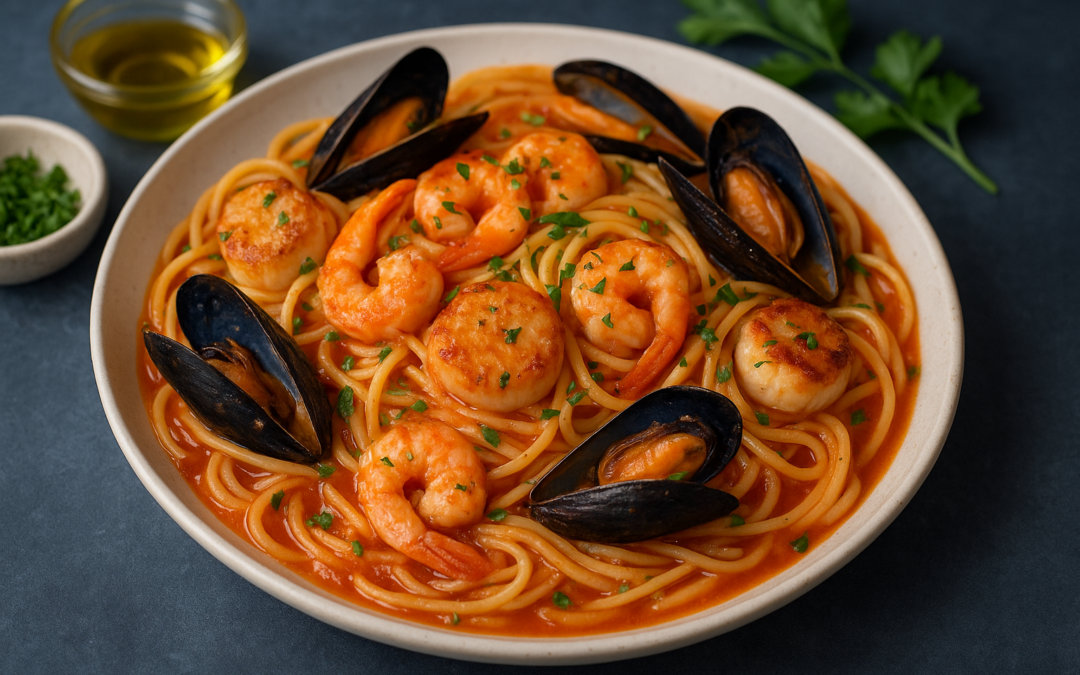
At La Dolce Vita Cucina, our kitchen in Chicago’s Portage Park neighborhood runs through pounds of fresh shrimp, mussels, and scallops every week. We know firsthand that learning how to make seafood pasta doesn’t require culinary school or hours of prep time. It requires good ingredients, the right technique, and a bit of confidence at the stove.
This dish sits at the heart of Italian cooking, simple enough for a Tuesday night, impressive enough for guests on Saturday. Whether you’re working with a creamy garlic sauce or a bright tomato-based one, the fundamentals stay the same: cook your seafood properly, build flavor in your sauce, and time your pasta right.
In this guide, we’re breaking down our approach to a restaurant-quality seafood pasta you can pull together in 30 minutes flat. We’ll walk you through ingredient selection, sauce options, step-by-step instructions, and the small details that separate a forgettable plate from one people actually talk about. No filler, no fluff, just a straight path from your cutting board to the table.
What you need for 30-minute seafood pasta
Getting the ingredients right is where 30-minute seafood pasta either works or falls apart. Fresh seafood and a well-stocked pantry do most of the heavy lifting before you even turn on the stove. If you shop smart and organize your ingredients before you start cooking, the actual cook time stays tight.
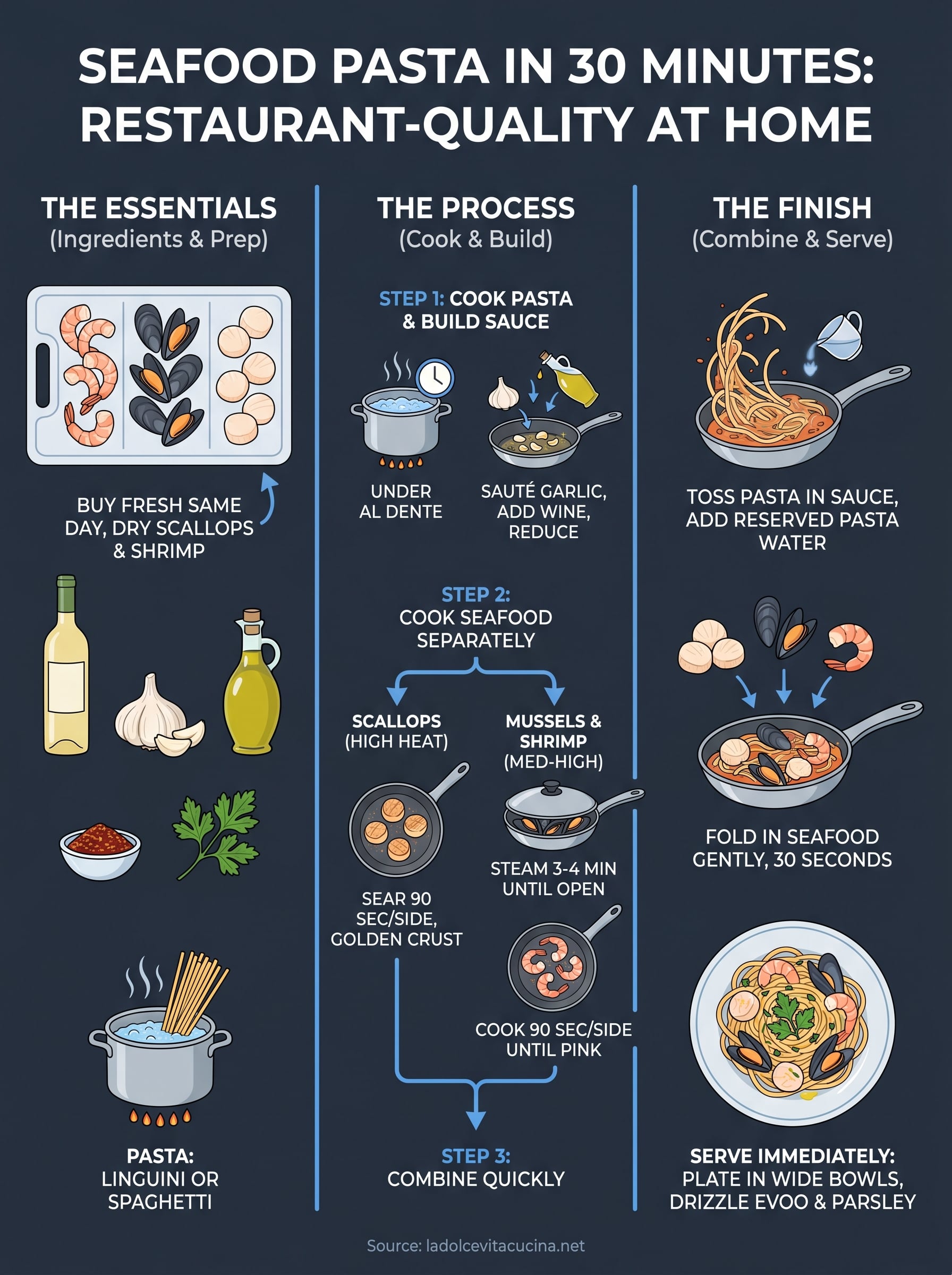
Buy your seafood the same day you plan to cook it – freshness is the single biggest factor in how the final dish tastes.
The seafood lineup
For this recipe, you’ll work with shrimp, mussels, and scallops as your core trio. Each one cooks fast, handles a sauce well, and brings a different texture to the finished dish. Buy shrimp that are peeled and deveined to cut your prep time significantly. For mussels, look for tightly closed shells with no cracks. Scallops should be dry-packed, not wet-packed, because wet-packed scallops hold added liquid and won’t sear correctly in the pan.
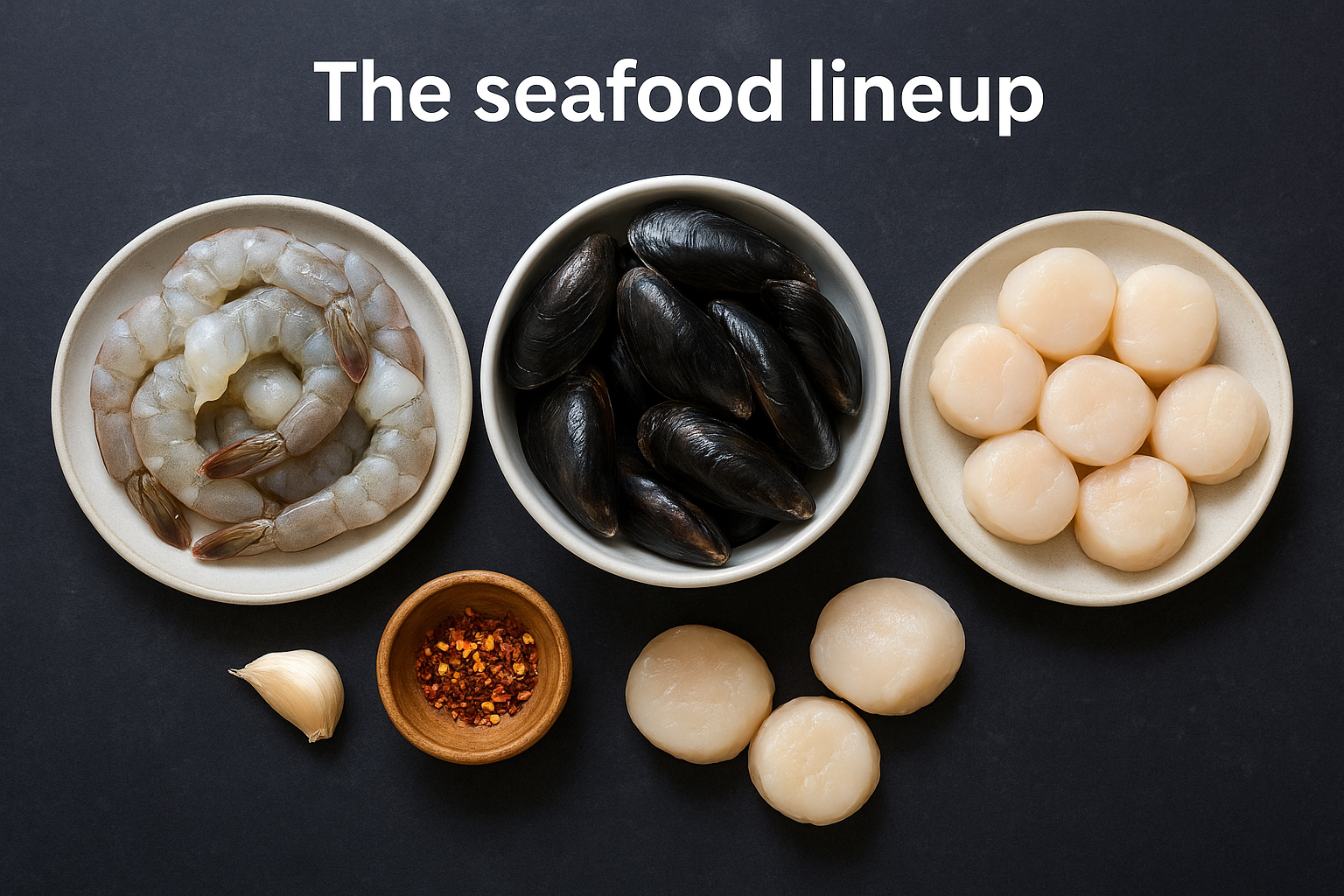
Here’s a complete shopping list for two servings:
| Ingredient | Amount | Notes |
|---|---|---|
| Shrimp (peeled, deveined) | 8 oz | 16/20 count size works best |
| Mussels | 8 oz | Discard any that won’t close |
| Sea scallops | 6 oz | Dry-packed only |
| Linguini or spaghetti | 8 oz | Or your preferred long pasta |
| Garlic cloves | 4 cloves | Freshly minced |
| Cherry tomatoes | 1 cup | Halved, for tomato-based sauce |
| Heavy cream | ½ cup | For the creamy garlic version |
| Dry white wine | ½ cup | Pinot Grigio or Sauvignon Blanc |
| Extra virgin olive oil | 3 tbsp | Use a good bottle here |
| Red pepper flakes | ½ tsp | Adjust to your heat preference |
| Fresh flat-leaf parsley | ¼ cup | Chopped, for finishing |
| Kosher salt and black pepper | To taste | Season every layer |
Pantry staples and aromatics
Your sauce lives or dies on garlic and good olive oil. You need at least four cloves of fresh garlic, minced finely right before cooking. Pre-minced jarred garlic won’t give you the sharp, clean flavor that builds a proper sauce base. Keep a bottle of dry white wine ready as well; a half cup goes into both sauce versions and adds a layer of acidity that keeps the dish from tasting heavy.
Kosher salt and red pepper flakes are not optional finishes – they are the seasoning structure that keeps every element tasting defined. Add fresh flat-leaf parsley right before you plate, not during cooking, so it stays bright and doesn’t wilt into the sauce.
Prep seafood safely and quickly
Good prep keeps your seafood clean and your cook time short. Work through each type in order – mussels first, then shrimp, then scallops – so you keep your cutting board organized and avoid cross-contamination between varieties. Keep your seafood refrigerated until the moment you need it, and rinse each piece under cold running water right before it goes into the pan.
Clean mussels and check for bad ones
Mussels require a quick inspection before anything else. Discard any mussels with cracked shells or open shells that refuse to close when you tap them firmly against the counter – these are dead and unsafe to eat. For the ones that pass, scrub the exterior with a stiff brush under cold water, then pull off the beard (the stringy fibers protruding from the shell) by gripping it and yanking firmly toward the hinge end.
Pull the beard off mussels right before cooking, not hours ahead, because removing it causes the mussel to die faster.
Run through this quick checklist before any mussel goes into your pan:
- Shell is intact with no visible cracks
- Mussel closes when tapped on the counter
- No strong ammonia smell
- Beard is fully removed
Pat your scallops and shrimp dry
Moisture is the enemy of a good sear. After rinsing your scallops and shrimp, lay them flat on a paper towel and press another towel firmly on top. Two minutes of drying time makes a visible difference in the pan.
Dry scallops turn golden brown during cooking while wet ones steam and turn rubbery. Season both lightly with salt and black pepper right before they hit the hot oil, not earlier, or the salt pulls moisture back out of the seafood.
Cook the pasta and build the sauce
When you learn how to make seafood pasta, the pasta and sauce need to work together, not separately. Timing your pasta so it finishes just before your seafood is ready is the key move here. Bring a large pot of water to a full rolling boil, then add two tablespoons of kosher salt before the pasta goes in. Under-salted water produces bland pasta that no sauce can fix later.
Cook pasta to just under al dente
Pull your linguini or spaghetti two minutes before the package directions say it’s done. The pasta will finish cooking inside the sauce, absorbing flavor as it goes. Reserve one full cup of pasta water before you drain – this starchy liquid is your main tool for adjusting sauce consistency at the end without diluting flavor.
Never rinse cooked pasta under water. Rinsing strips the surface starch that helps sauce cling to every strand.
Build the sauce base while pasta cooks
Heat two tablespoons of olive oil in a wide skillet over medium heat. Add your minced garlic and red pepper flakes and cook for 60 seconds until fragrant. Pour in your white wine and let it reduce by half, about two minutes. At this point, your sauce splits into two directions depending on which version you’re making.
For the tomato-based sauce, add your halved cherry tomatoes and crush them gently with the back of a spoon. Let them cook down for four minutes. For the creamy garlic version, pour in the heavy cream after the wine reduces and stir until the sauce thickens slightly, about three minutes. Either way, your sauce base is ready to receive the seafood.
Cook each seafood the right way
When you learn how to make seafood pasta properly, cooking order separates a great plate from a messy one. Each seafood type has a different cook time, and dropping them all into the pan at once guarantees some come out overcooked while others are undercooked. Work in a single skillet over high heat and add each type separately before combining everything with your sauce.
Sear the scallops first
Scallops need the hottest pan and the most attention. Raise your skillet heat to high, add a tablespoon of olive oil, and let it shimmer before placing scallops flat side down. Leave them alone for 90 seconds until a golden crust forms, then flip once and cook for another 60 seconds. Remove them immediately and set aside on a plate.
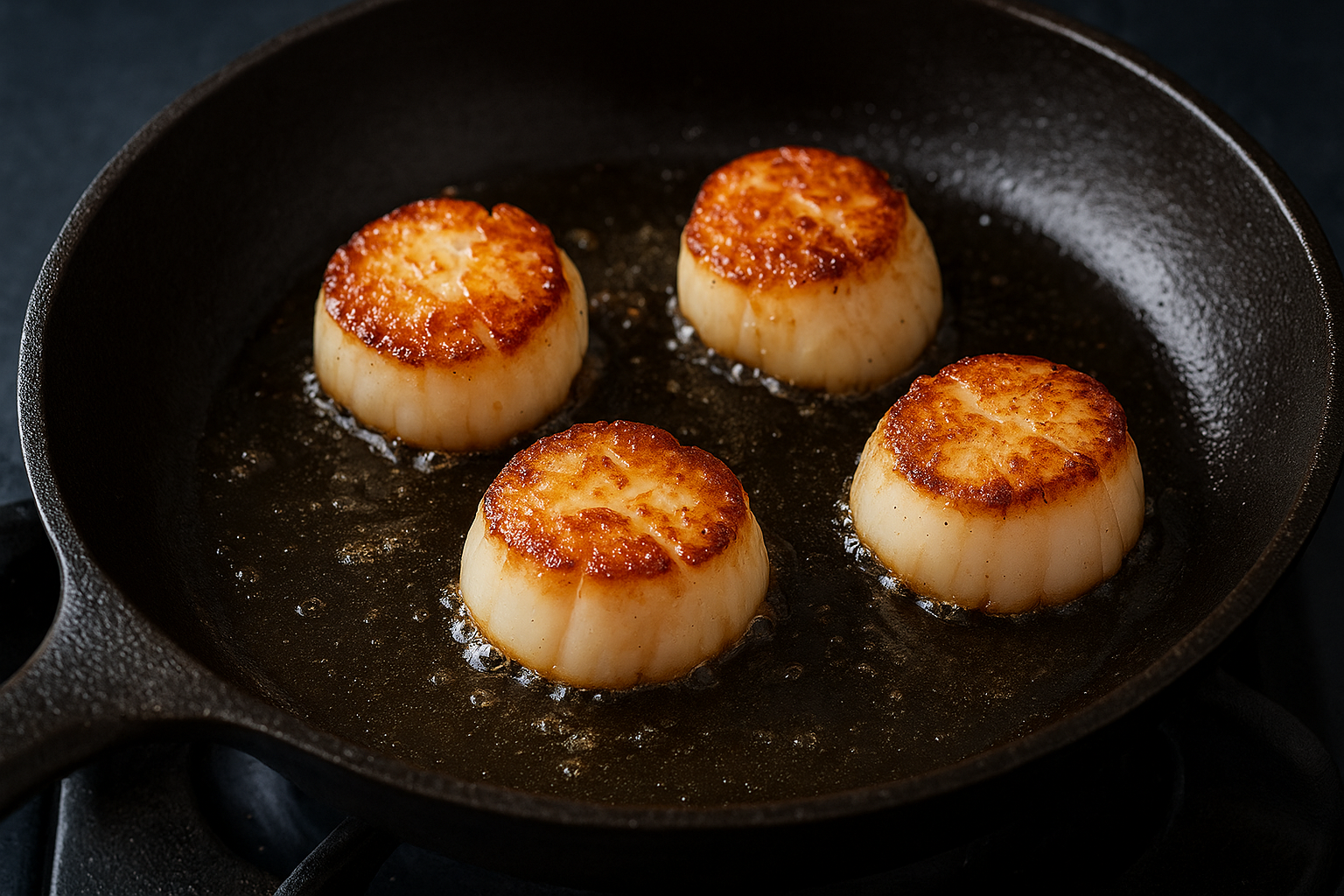
Never move scallops around in the pan while they sear – constant contact with the hot surface is what builds the crust.
These delicate pieces continue cooking off heat, so pulling them slightly early is always correct. A properly seared scallop turns opaque in the center with a visible golden-brown crust on both flat sides.
Add mussels and shrimp in stages
Lower the heat to medium-high and add mussels to the same skillet. Cover with a lid and steam for three to four minutes until the shells open wide. Discard any that stay shut after five minutes. Push mussels aside and lay your shrimp in a single layer, cooking 90 seconds per side until pink and curled into a loose C shape.
Use this quick timing reference before you combine everything with the sauce:
- Scallops: 90 seconds per side on high heat
- Mussels: 3 to 4 minutes covered on medium-high
- Shrimp: 90 seconds per side on medium-high
Finish, serve, and store leftovers
Once your seafood is cooked and your sauce is ready, the final step in learning how to make seafood pasta is combining everything quickly and getting it onto the plate while the heat is still working for you. This stage takes under two minutes, so have your bowls ready before you start.
Combine pasta with sauce and seafood
Add your drained pasta directly into the skillet with your sauce over medium-low heat. Toss everything together and pour in a splash of your reserved pasta water, starting with a quarter cup. The starchy water loosens the sauce and helps it coat every strand without turning watery. Add more if the sauce still looks too thick after the first toss.
Return your scallops, shrimp, and mussels to the pan and fold them in gently. Thirty seconds on the heat is enough to warm them through without pushing them past done. Finish with a drizzle of extra virgin olive oil and a handful of fresh flat-leaf parsley scattered over the top.
Taste the pasta before plating and adjust salt here, not earlier, because the pasta water and sauce both carry salt that builds as they reduce.
Plate it properly and store what’s left
Divide the pasta between two wide shallow bowls using tongs, twisting as you lift to build some height. Arrange the scallops on top and place mussels shell-side up so they stay visible. Crack fresh black pepper over everything right before you serve.
For leftovers, transfer pasta and seafood into an airtight container and refrigerate within two hours. Use it within one day – seafood pasta does not hold well past 24 hours. Reheat gently in a skillet with a splash of water over low heat, never in a microwave.
Your next seafood pasta night
Now you have everything you need to pull off a restaurant-quality plate at home. Learning how to make seafood pasta comes down to three things: fresh ingredients, correct timing, and cooking each seafood type separately before combining. Follow those three rules and your results will be consistent every time.
Practice this recipe once and you’ll see how quickly the technique becomes second nature. Shrimp, mussels, and scallops each take under five minutes to cook, and the sauce builds itself in the same pan while your pasta finishes boiling. The whole process stays inside 30 minutes when you prep ahead and keep your mise en place tight.
When you want to experience this dish at a professional level before your next home attempt, visit La Dolce Vita Cucina in Chicago’s Portage Park neighborhood. Our kitchen applies these same principles to every plate we send out, and seeing the finished dish in person gives you a clear target to aim for next time you cook.