
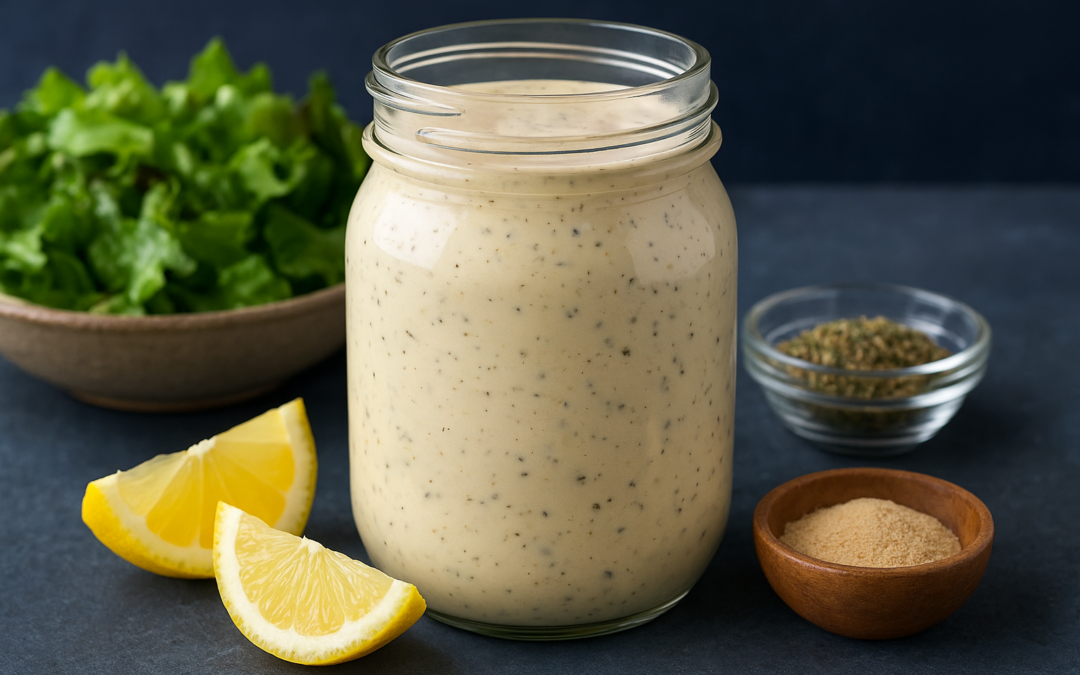
At La Dolce Vita Cucina, our kitchen in Chicago’s Portage Park neighborhood runs through a lot of dressing. We toss it with fresh greens, drizzle it over antipasti, and use it as a marinade for grilled proteins. So when guests ask us for a creamy italian dressing recipe they can make at home, we’re happy to share what we know. A good one beats anything you’ll find in a bottle, no contest, every single time.
The secret isn’t some rare ingredient flown in from Italy. It’s balance. Real mayonnaise, quality olive oil, dried herbs, and a hit of acid that cuts through the richness just enough. Once you nail the ratio, you’ll stop reaching for store-bought for good. The whole thing comes together in about five minutes with a whisk or a blender.
Below, we’re breaking down our approach step by step, the exact ingredients, the technique, and the small adjustments that take this dressing from good to restaurant-quality. Whether you’re dressing a simple salad or prepping for a dinner party, this recipe holds its own at any table.
What makes creamy Italian dressing restaurant-style
Most bottled dressings use water, stabilizers, and cheap oil to stretch the product. That’s why they taste flat or overly sharp, nothing like what lands on your table at a good Italian restaurant. The difference comes down to how the fat, acid, and seasonings interact, and whether those components are treated with any care at all. A restaurant-style creamy Italian dressing recipe starts with better building blocks and a technique that locks everything together.
The fat-to-acid ratio drives everything
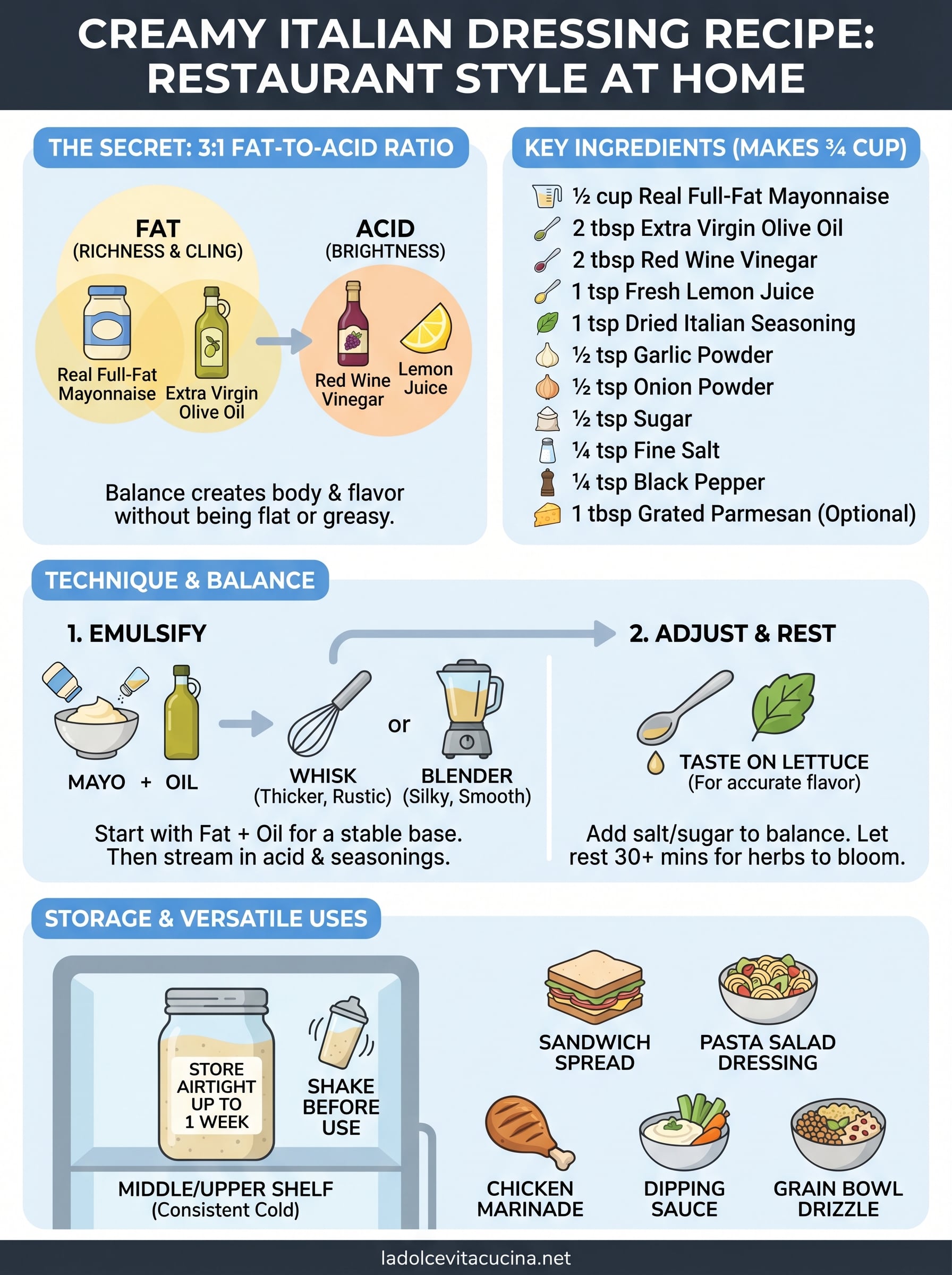
The single biggest factor in restaurant-quality dressing is the ratio of fat to acid. Most home cooks either over-acid the dressing, making it mouth-puckering, or go too heavy on the fat and end up with something that tastes greasy. The target is roughly 3 parts fat to 1 part acid. The fat comes from a combination of real mayonnaise and olive oil, giving you both creaminess and fruity richness. The acid comes from red wine vinegar and a touch of lemon juice, which brightens the whole thing without overwhelming it.
| Component | Source | Purpose |
|---|---|---|
| Fat (3 parts) | Mayonnaise + olive oil | Richness, body, and cling |
| Acid (1 part) | Red wine vinegar + lemon | Brightness and balance |
A 3:1 fat-to-acid ratio is the foundation. Everything else you add is seasoning.
Dried herbs outperform fresh in this application
Dried herbs behave differently than fresh ones in a dressing like this. Because the base is emulsified fat, dried oregano, basil, and parsley actually bloom and release more flavor than fresh herbs would. That’s the opposite of what you’d do in a pasta sauce. You want dried Italian seasoning, garlic powder, and onion powder, not their fresh counterparts, for the most consistent and rounded flavor in this format.
Time also matters. Letting the finished dressing rest for at least 30 minutes in the refrigerator before serving allows the dried herbs to rehydrate and the garlic powder to fully mellow into the fat. The difference between fresh-made and rested is noticeable. If you can make this dressing the night before, do it.
Why real mayonnaise beats every substitute
Swap in light mayo or Greek yogurt and you’ll notice it immediately. Full-fat mayonnaise creates the stable emulsion that gives the dressing its body and cling. The richness you’re after comes from the following:
- Real eggs and oil, which bind the dressing together
- Higher fat content that coats lettuce leaves instead of sliding off
- A neutral but rich base that carries the Italian seasonings without competing with them
Don’t shortcut this part. The mayo is structural, not just creamy.
Step 1. Gather ingredients and choose your base
Before you whisk anything together, pull everything out and measure it. Having your ingredients ready prevents you from eyeballing amounts mid-mix, which is where ratios go wrong. This creamy italian dressing recipe uses pantry staples you likely already have, with one or two items worth upgrading if you can.
The full ingredient list
Here’s exactly what you need to make roughly ¾ cup of dressing, enough for four to six salad servings:
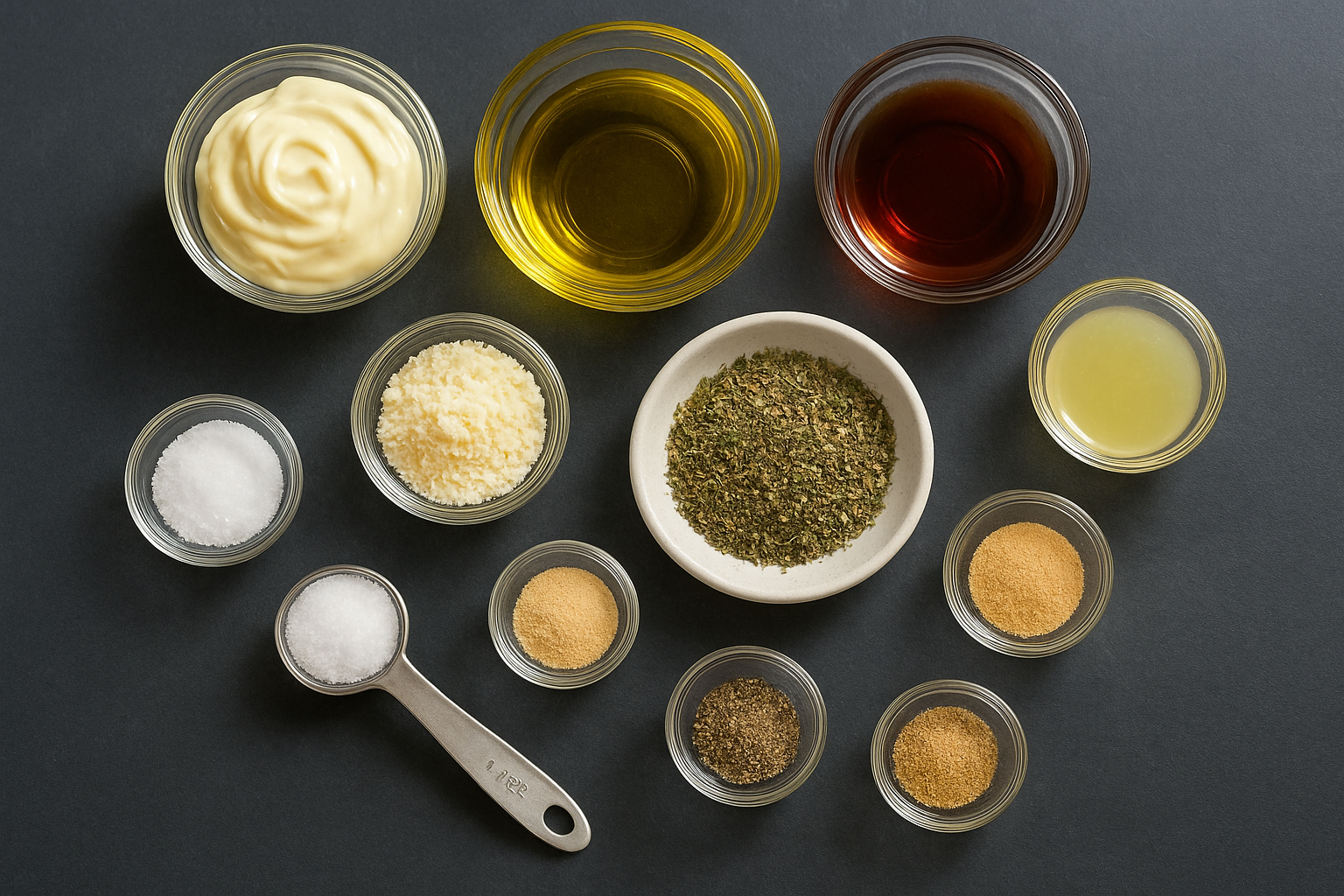
- ½ cup real full-fat mayonnaise
- 2 tablespoons extra virgin olive oil
- 2 tablespoons red wine vinegar
- 1 teaspoon fresh lemon juice
- 1 teaspoon dried Italian seasoning
- ½ teaspoon garlic powder
- ½ teaspoon onion powder
- ½ teaspoon sugar
- ¼ teaspoon fine salt
- ¼ teaspoon black pepper
- 1 tablespoon grated Parmesan (optional, adds depth)
Measure the vinegar and lemon juice into a separate small cup before you start so you can control the acid input precisely when you combine everything.
Choosing your mayo base
Full-fat mayonnaise is non-negotiable if you want the dressing to cling to greens and hold its texture. Brands like Hellmann’s or Duke’s work well because they use a higher egg-to-oil ratio, which creates a firmer and more stable base for the olive oil to blend into.
Your olive oil should be extra virgin and mild-tasting, not a heavily peppery or grassy variety that would compete with the herbs. A standard supermarket extra virgin works fine here. Save your premium finishing oils for something else entirely.
Step 2. Mix it for a smooth, stable emulsion
The order you add ingredients matters as much as the ingredients themselves. Start with the mayonnaise and olive oil, whisking them together before anything else touches the bowl. Building the fat base first creates a stable structure that accepts acid without breaking apart. Once you see a uniform, pale yellow mixture, you’re ready to stream in the vinegar and lemon juice slowly while whisking continuously.
Whisk method vs. blender method
Both approaches work, but they produce slightly different results. A hand whisk gives you a thicker, more textured dressing, while a blender or immersion blender creates something silkier and more uniform, closer to what you’d expect from a restaurant kitchen. Here’s a quick comparison to help you choose:
| Method | Texture | Best for |
|---|---|---|
| Hand whisk | Thick, slightly rustic | Casual weeknight salads |
| Blender or immersion blender | Silky and smooth | Dinner parties, drizzling |
Use whichever tool you have. The fat-to-acid ratio does more work than your mixing method when it comes to the final flavor and body.
How to tell when you’ve hit a proper emulsion
Your creamy Italian dressing recipe has emulsified correctly when it no longer separates if you tilt the bowl. The mixture should look glossy and fully cohesive, not streaky or watery around the edges.
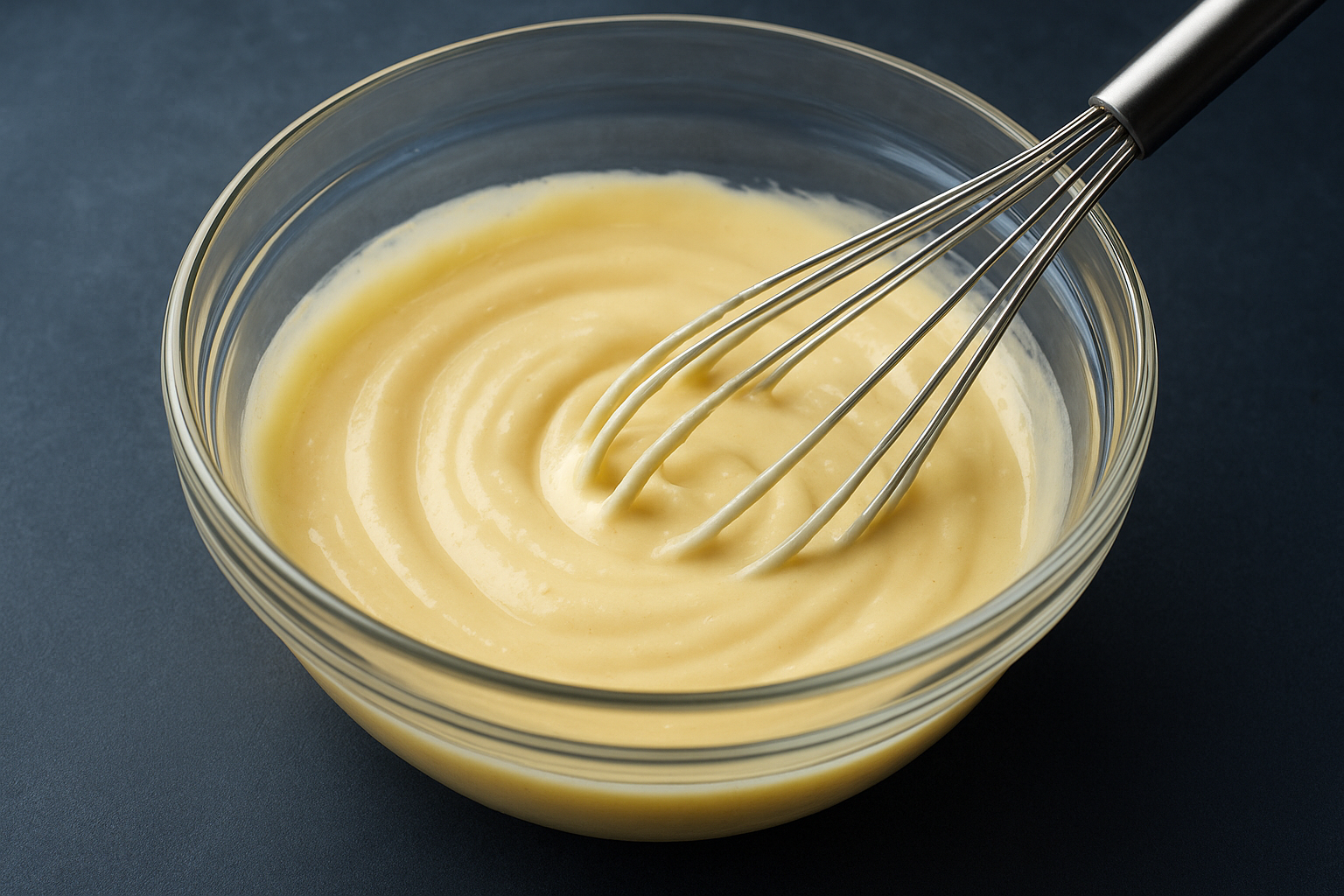
If you see pooling liquid at the bottom of your bowl, whisk for another 30 seconds and add a small extra teaspoon of mayonnaise to pull it back together.
Once it holds, taste the unseasoned base before moving forward. It should taste rich and mildly tangy, ready to carry the herbs and seasonings in the next step.
Step 3. Dial in tang, herbs, sweetness, and salt
With your emulsion stable, add all dry seasonings at once: the Italian seasoning, garlic powder, onion powder, salt, and pepper. Stir them in fully, then taste before you touch the acid or sugar. This baseline tells you exactly where your creamy italian dressing recipe needs to go from here.
Adjusting tang without over-acidifying
Red wine vinegar is your primary tang control, and a little goes a long way. If the dressing tastes flat after adding the measured vinegar, increase it in quarter-teaspoon increments, not by pouring freely. Tasting between each small addition keeps you from crossing into sour territory, which is the most common mistake at this stage.
Add acid in small steps. You can always add more, but you cannot pull it back once it’s in the bowl.
Your lemon juice plays a different role from the vinegar. It adds brightness without the sharp edge, so if the whole dressing tastes dull rather than flat, a few extra drops of lemon are usually the precise fix you need.
Balancing herbs, sweetness, and salt
Sugar and salt work together here, not against each other. The sugar softens the vinegar’s bite, and the salt pushes all the herb flavors forward. If the dressing tastes one-dimensional, add a pinch of fine salt first and wait ten seconds before adjusting anything else. Most of the time, salt alone brings the herbs into focus without disrupting the underlying balance.
Taste the finished dressing with an actual piece of romaine or iceberg, not just your finger. Fat and water in the lettuce change your perceived flavor, so tasting on greens gives you a far more accurate read before you serve.
Step 4. Store it right and use it beyond salad
Your creamy Italian dressing recipe keeps well in the refrigerator for up to one week when stored in an airtight glass jar or sealed container. Plastic works in a pinch, but glass doesn’t absorb odors or stain from the vinegar, making it the better option for anything acidic. Give the jar a quick shake before each use because the olive oil will naturally rise to the top after sitting overnight.
Keep it cold and contained
Always store the dressing on a middle or upper refrigerator shelf, not in the door. Door temperatures fluctuate more than the main cabinet, which can cause the emulsion to break down faster than it otherwise would. Label the jar with the date you made it so you’re never guessing whether it’s still good.
Dressing made with real mayonnaise should not sit at room temperature for more than two hours. Keep it cold and it stays fresh and safe for a full seven days.
Take it further than lettuce
This dressing works on far more than salad greens. Once you have a cold jar ready in your fridge, you’ll find yourself reaching for it across multiple meals throughout the week. Here are five practical ways to use it:
- Sandwich spread: Use it in place of plain mayo on a hoagie or Italian sub
- Pasta salad dressing: Toss with rotini, olives, salami, and pepperoncini
- Chicken marinade: Coat chicken thighs and let them sit for at least 30 minutes before grilling
- Dipping sauce: Serve alongside raw vegetables or warm crusty bread
- Grain bowl drizzle: Pour over farro or quinoa with roasted vegetables
Ready to dress your next salad
You now have everything you need to make a creamy Italian dressing recipe that holds up against anything a restaurant kitchen produces. The five-minute investment pays off every time you open that jar and find a properly balanced, herb-forward dressing waiting and ready to go on whatever you’re making.
Put it on a weeknight salad tonight, or pull it out for your next dinner party spread. Either way, the same rules apply: quality fat, measured acid, rested herbs, and a cold jar sitting in your fridge. Once you’ve made this a few times, the ratios become second nature and you’ll stop consulting the recipe entirely.
If this kind of cooking speaks to you, come experience Italian cuisine done right in Chicago’s Portage Park neighborhood. Reserve your table at La Dolce Vita Cucina and see for yourself what balanced, thoughtful cooking tastes like on a real plate.