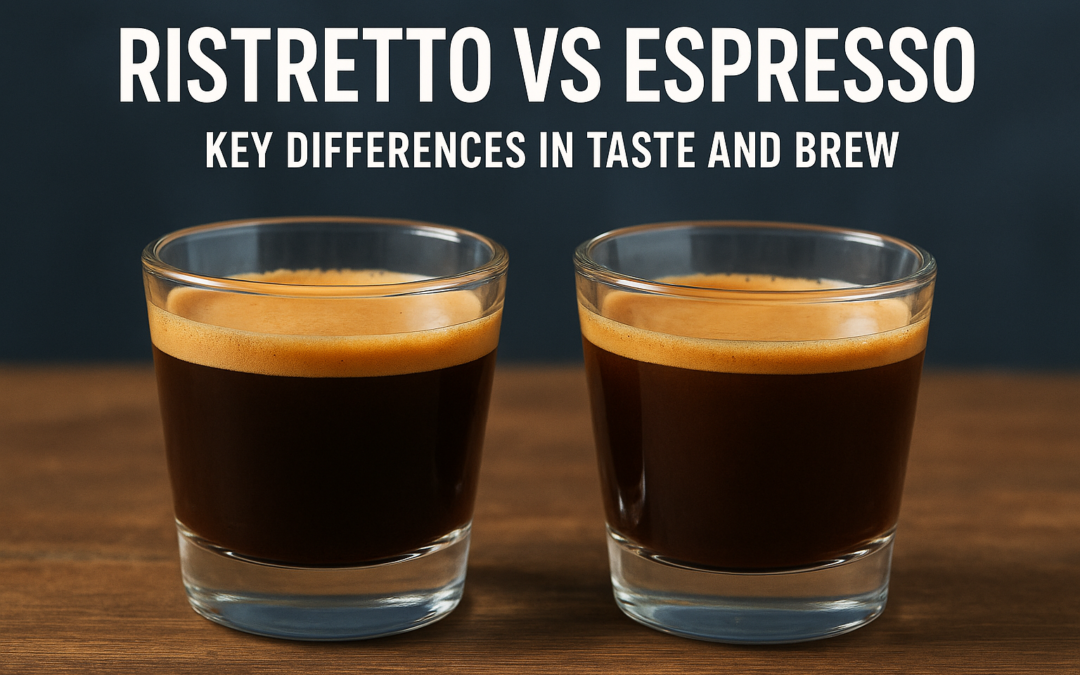
Order an espresso at any Italian coffee bar and you’ll get a small, punchy shot of concentrated coffee. But ask for a ristretto, and you’ll get something even more concentrated, pulled with less water and a shorter extraction time. The difference between ristretto vs espresso might sound minor on paper, but it changes everything about what ends up in your cup: the flavor, the body, the sweetness, and even which coffee drinks taste best with each as a base.
At La Dolce Vita Cucina, our Italian roots in Chicago’s Portage Park neighborhood mean we care about these details. The same precision that goes into our homemade pasta and house-made gelato applies to how we think about every element of Italian food and drink culture. Understanding what separates these two shots helps you order with confidence, whether you’re at our table or your favorite café.
This guide breaks down the real differences between ristretto and espresso, covering brewing technique, flavor profiles, caffeine content, and when to choose one over the other.
Why ristretto vs espresso matters
The distinction between these two shots goes beyond volume. Italian coffee tradition treats both as distinct drinks with specific roles, and understanding the difference helps you make better choices at the café counter or when you dial in a shot at home. The ristretto vs espresso debate comes down to how much you want from a single shot, what role that shot plays in a larger drink, and how your palate responds to different flavor profiles.
The role of extraction in flavor
Every espresso shot extracts flavor compounds from coffee grounds in a specific sequence. Sweetness and acids come out out first, and bitterness follows later in the extraction. A ristretto cuts the process short by using roughly half the water, which means you capture mostly those early, sweeter compounds and leave much of the bitterness behind. The result is a dense, syrupy shot that tastes more intense without the sharp bite you get from a longer pull.
The shorter the extraction, the more you favor sweetness and body over bitterness in the final cup.
Why baristas and drinkers care
Baristas rely on the ristretto-versus-espresso distinction depending on what drink they’re building. Milk-based drinks like lattes and cappuccinos often taste better with a ristretto base because the concentrated sweetness cuts through steamed milk without disappearing into it. A standard espresso, on the other hand, holds up well as a standalone shot or in longer drinks like an Americano where you need a more balanced, slightly bitter backbone.
Your preference matters just as much as technique. If you find standard espresso too sharp or astringent, a ristretto might suit your palate better. The choice isn’t about which shot is superior but about matching extraction style to what you actually enjoy drinking.
Brew differences that change the cup
The brewing process is where ristretto vs espresso splits into two clearly separate techniques. Both shots use the same finely ground coffee and the same machine pressure, around 9 bars, but the total amount of water you push through the grounds changes everything about the resulting cup.
Water volume and dose
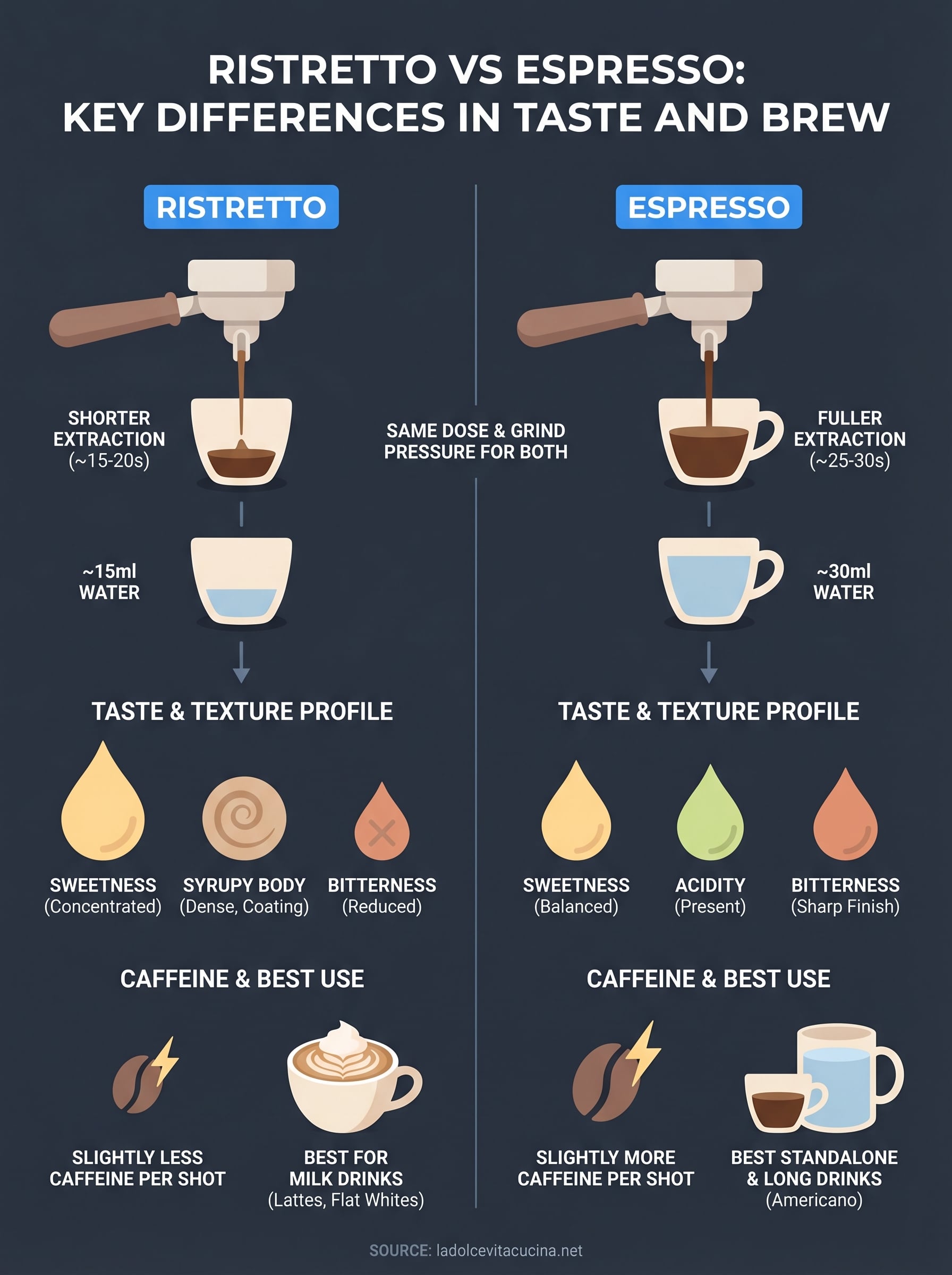
A standard espresso uses roughly 30ml of water to pull a 25-30 second shot through 18-20 grams of ground coffee. A ristretto cuts that water volume to around 15ml, stopping the extraction roughly halfway through. You get a denser, more concentrated shot with a noticeably thicker texture.
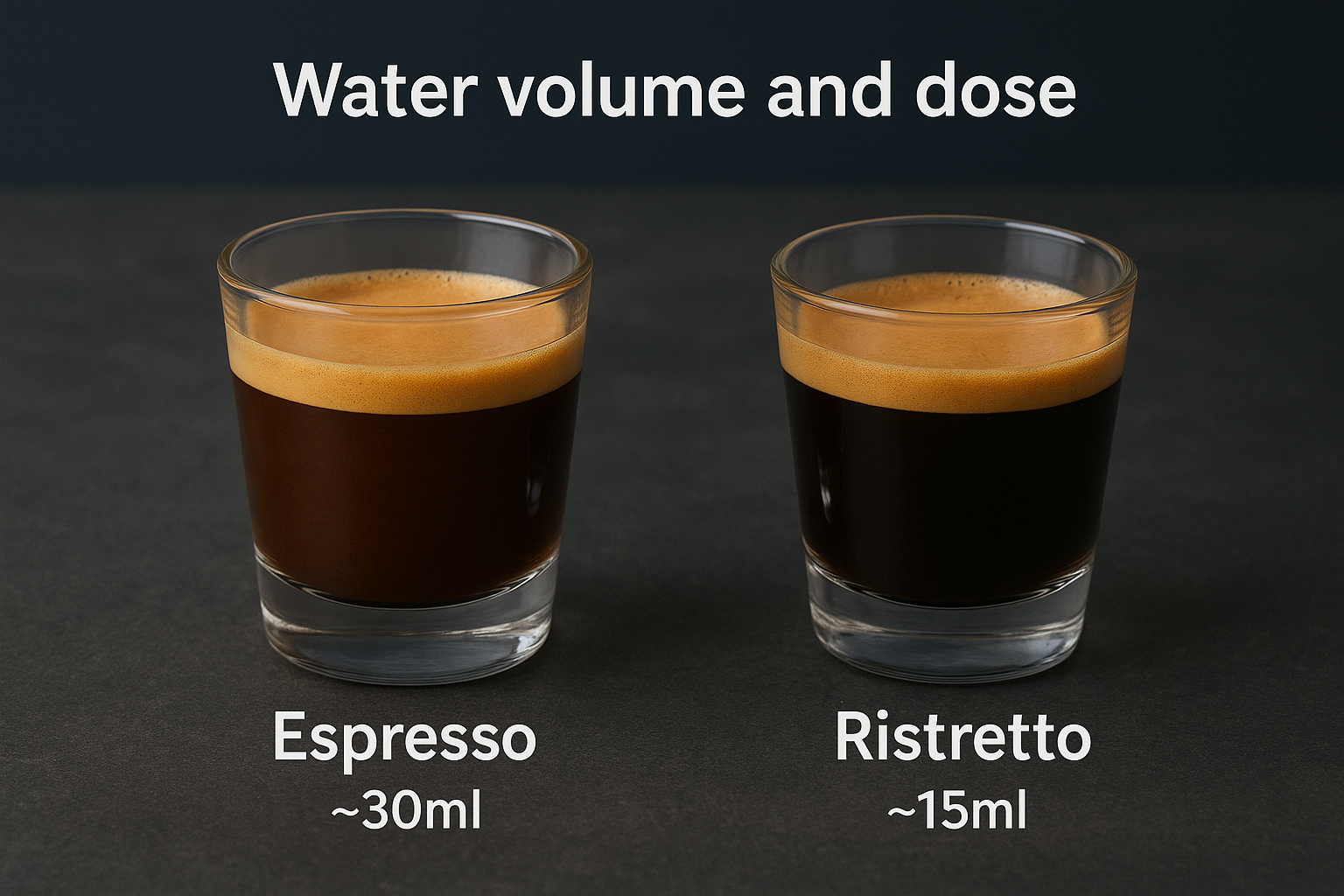
Less water means fewer extracted compounds reach the cup, which shifts the flavor toward sweetness and away from bitterness.
| Shot | Water Volume | Extraction Time |
|---|---|---|
| Espresso | ~30ml | 25-30 seconds |
| Ristretto | ~15ml | 15-20 seconds |
Pressure and grind stay the same
You don’t need to adjust your grind size or machine pressure to pull a ristretto. The barista simply stops the shot earlier by controlling how much water flows through the coffee puck. This means the same coffee dose can produce two very different results based on one variable: how long you let water run through the grounds. Small change, big impact on flavor.
Taste, body, and caffeine differences
Beyond the brewing numbers, ristretto vs espresso produces two genuinely different sensory experiences. A ristretto tastes sweeter and more syrupy because it captures the early-extracted compounds and stops before bitterness has a chance to build. A standard espresso hits with a more balanced flavor, blending acidity, sweetness, and bitterness into a familiar café-style shot.
Flavor and texture
A ristretto feels noticeably thicker in the mouth. The shorter extraction pulls more oils and fewer bitter late-stage compounds, giving the shot a dense, coating texture that lingers on the palate. Many drinkers describe the flavor as intensely fruity or chocolatey, depending on the coffee origin.
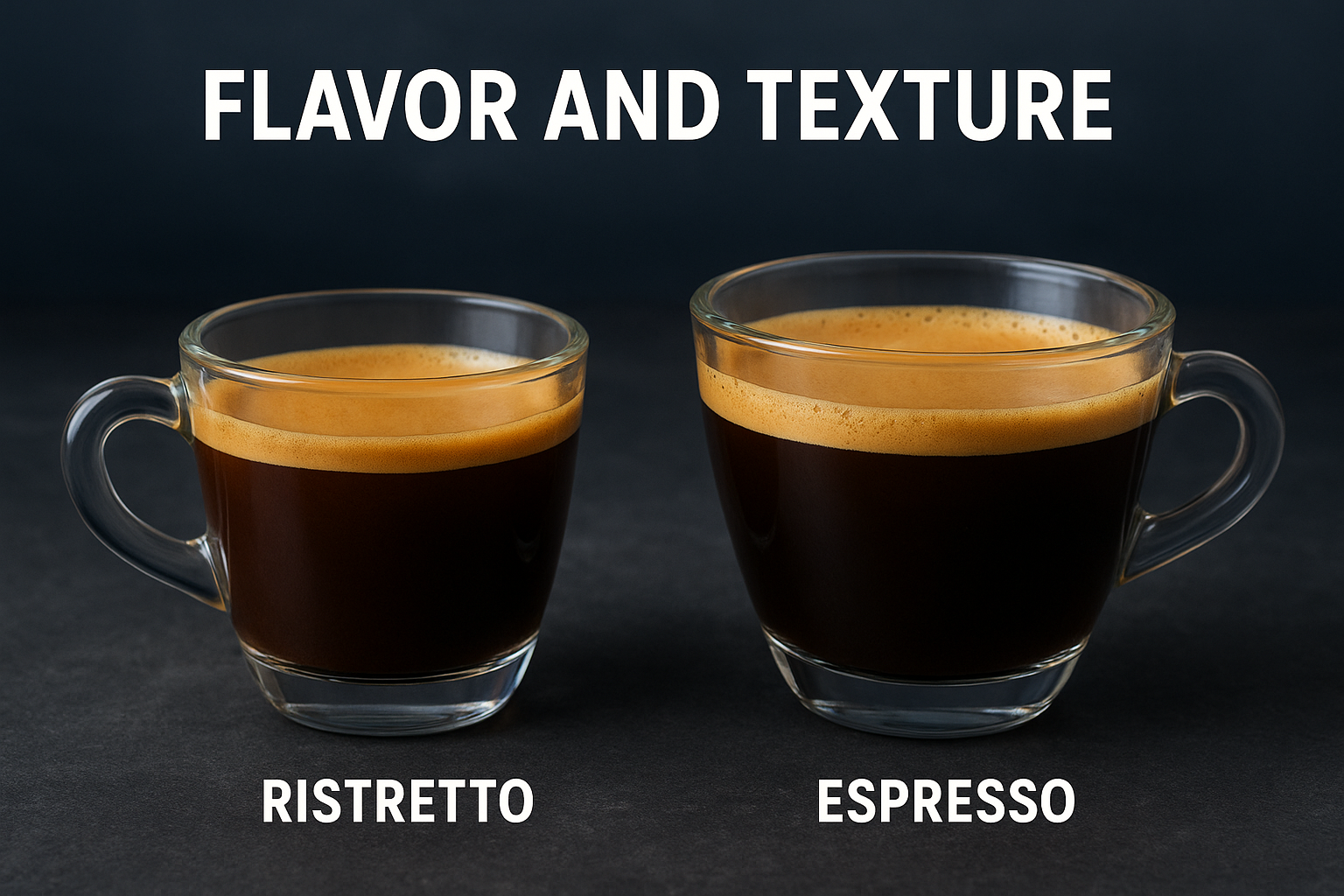
Espresso carries a thinner but more complex body, with a distinct crema layer that holds aroma and a slightly sharper finish. If your palate finds standard espresso too sharp, a ristretto often resolves that without requiring a different coffee bean.
Caffeine: which shot is stronger
Most people assume a more concentrated shot means more caffeine, but that is not accurate. Caffeine extracts progressively throughout the pull, so cutting the extraction short means less caffeine actually reaches your cup. A standard espresso delivers slightly more caffeine per shot, even though it tastes less intense.
Flavor intensity and caffeine content move in opposite directions when you shorten extraction.
How to choose the right shot for your drink
Deciding between ristretto vs espresso comes down to two things: your personal flavor preference and the specific drink you plan to build or order. Neither shot is universally better, but each one suits certain situations more naturally than the other.
When to order a ristretto
Choose a ristretto when you want maximum sweetness and body without the sharpness that espresso can carry. It works especially well as the base for milk-heavy drinks like lattes and flat whites, where its concentrated sweetness holds up through a generous pour of steamed milk. If you find standard espresso bitter or thin, switching to a ristretto using the same beans often solves the problem immediately.
A ristretto base makes milk drinks taste richer without requiring a different roast or grind.
When to stick with espresso
Espresso is the better choice when you want a balanced, standalone shot or when you are building a longer drink. An Americano, for example, relies on espresso’s fuller body and mild bitterness to maintain character after hot water dilutes it. Ristretto disappears too quickly in those formats. If you enjoy sipping a shot on its own, espresso gives you more complexity in a single cup.
How to order and pull ristretto correctly
When you order or prepare a ristretto, a few specific details make the difference between a proper shot and a muddled one. The ristretto vs espresso gap becomes obvious the moment you taste a correctly pulled ristretto alongside a standard shot, so knowing how to ask for one or dial one in at home saves you from guesswork.
Ordering at a café
Simply ask your barista for a ristretto shot in place of espresso. Most trained baristas know the term immediately. If the café does not list ristretto on the menu, use these clarifying phrases:
- "Short shot, same dose"
- "Stop the pull at half the usual volume"
- "Less water, same grind"
Pulling one at home
You do not need to change your grind size or machine pressure to pull a ristretto at home. Use your standard espresso dose and simply stop the extraction at around 15 seconds rather than letting it run to the full 25-30.
Watch the color as the shot pours. Once the stream shifts from golden-brown to pale and watery, stop the pull immediately. Color gives you a more reliable signal than a timer alone because grind consistency and bean freshness shift slightly each session.
Stopping at the right color beats relying on the clock every time.
Final thoughts
The ristretto vs espresso choice comes down to one simple question: what do you actually want in your cup? A ristretto gives you concentrated sweetness and a thick, syrupy body by cutting extraction short, while espresso delivers a more balanced shot with slightly more caffeine and a familiar sharp finish. Neither is the wrong answer. Your palate, the drink you are building, and the beans you are using all point you toward one or the other.
Now that you understand the brewing mechanics, the flavor differences, and when each shot works best, you can order or pull either one with real confidence. Start with a side-by-side comparison using the same beans and see which one your palate prefers. That single experiment teaches you more than any description can.
If you want to experience authentic Italian flavors in a setting that takes these details seriously, come visit us at La Dolce Vita Cucina in Chicago’s Portage Park neighborhood.