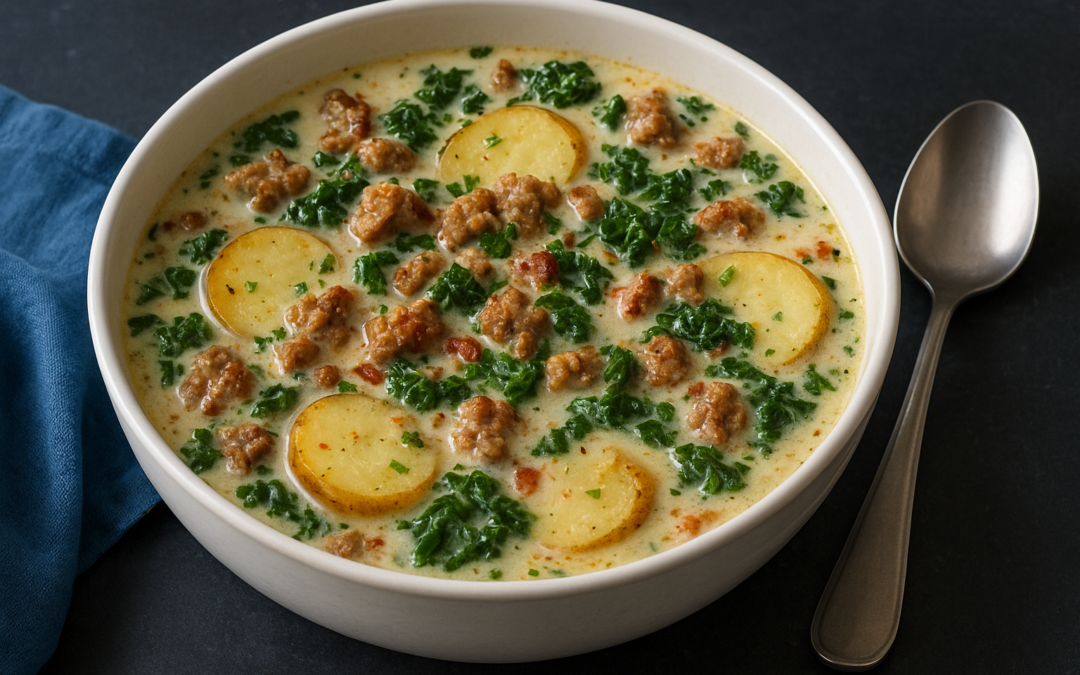
If you’ve ever wondered what is Zuppa Toscana soup, you’re probably thinking of that creamy, sausage-loaded bowl that became famous through Olive Garden. It’s one of those dishes that people crave on repeat, and for good reason. The combination of Italian sausage, tender potatoes, and fresh kale in a rich, slightly spicy broth hits every comfort food note without being heavy.
At La Dolce Vita Cucina in Chicago’s Portage Park neighborhood, we cook Italian food rooted in tradition but never afraid to embrace the dishes people actually love. Zuppa Toscana is a perfect example: a rustic Tuscan-inspired soup that found massive popularity in the U.S. and earned its place on dinner tables everywhere. We appreciate any recipe that gets people excited about Italian flavors at home.
This article breaks down exactly what goes into Zuppa Toscana, what makes it taste so good, and how to make it yourself from scratch. We’ll cover the key ingredients, walk through an easy step-by-step recipe, and share a few tips we’ve picked up in our own kitchen to help you get the flavor right every time.
What is zuppa toscana soup
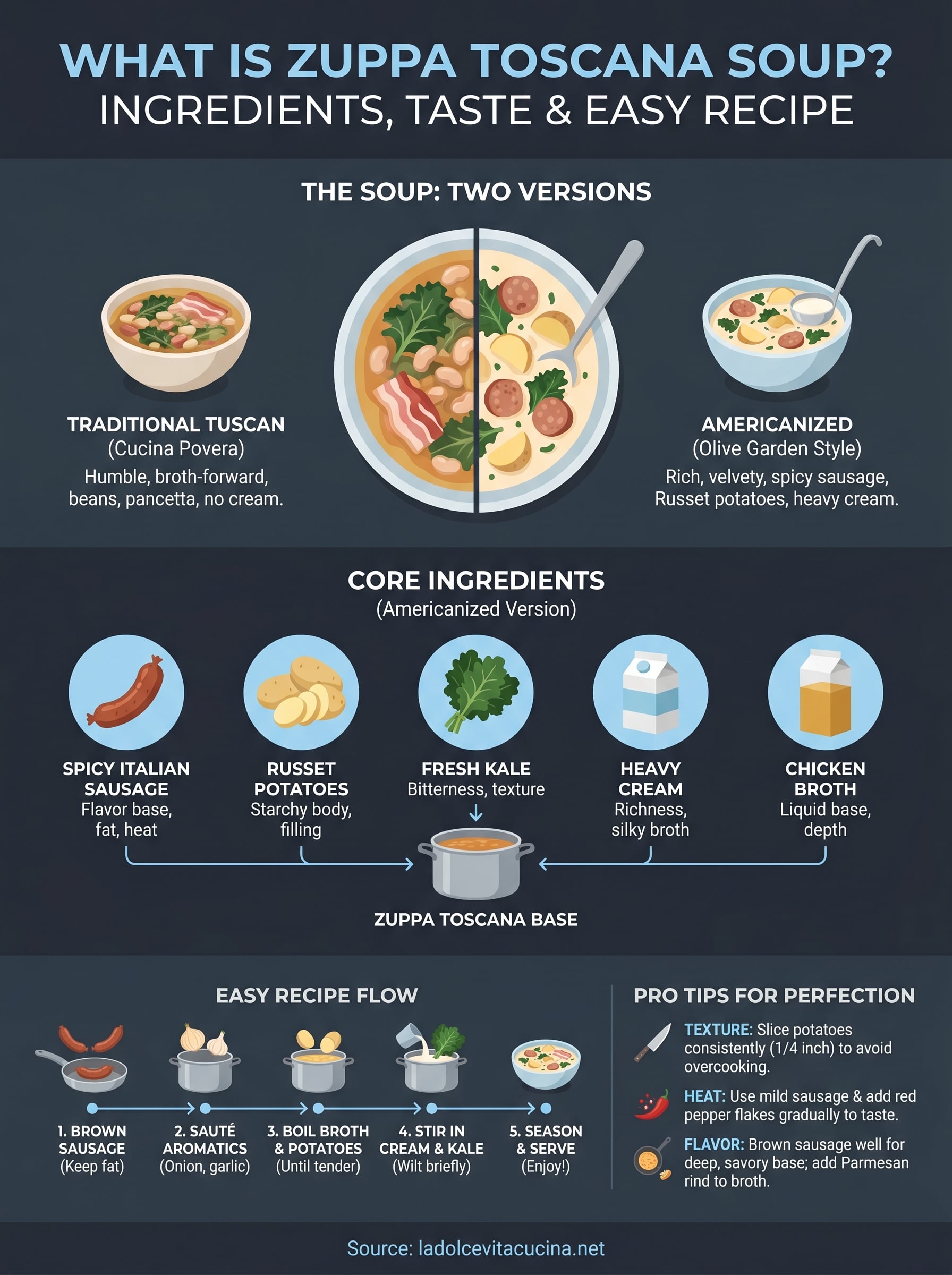
Zuppa Toscana translates directly from Italian as "Tuscan soup," and the name points to its origins in the Tuscany region of central Italy. If you’ve ever asked what is Zuppa Toscana soup and expected one clean answer, the reality is more layered than that. Two distinct versions carry the same name: the traditional Italian dish and the Americanized version that Olive Garden put on the cultural map. Both share a common spirit, but they differ noticeably in ingredients, richness, and overall character.
The original Tuscan dish
In its authentic form, Zuppa Toscana is a humble, peasant-style soup built around simple, affordable ingredients that Tuscan cooks have used for generations. The traditional recipe centers on cavolo nero (Tuscan black kale), cannellini beans, potatoes, and pancetta, simmered together in a light broth seasoned with garlic and good olive oil. You won’t find heavy cream in a traditional version. The dish reflects the broader Italian philosophy of cucina povera, meaning "poor kitchen," where cooks coaxed deep flavor from minimal, seasonal ingredients rather than masking anything with richness.
Tuscan cooking prizes restraint: a handful of quality ingredients, treated with care, consistently outperforms a cluttered pot.
This version runs thinner in texture and more broth-forward, letting each ingredient contribute clearly to the finished bowl. Kale and beans provide both body and nutrition, while potatoes add filling substance. You’ll find variations from village to village across Tuscany, but the soul of the dish stays consistent: warm, unfussy, and built to satisfy without excess.
The Olive Garden version that changed everything
When Olive Garden developed their take for American diners, they rebuilt the recipe from the ground up around U.S. comfort food preferences. The chain swapped cannellini beans for sliced russet potatoes, replaced pancetta with spicy Italian sausage, and stirred in heavy cream to produce a rich, velvety broth that felt more indulgent than anything coming out of a Tuscan farmhouse. Kale stayed in the bowl, providing color, texture, and a slight bitterness that balances the fat in the broth.
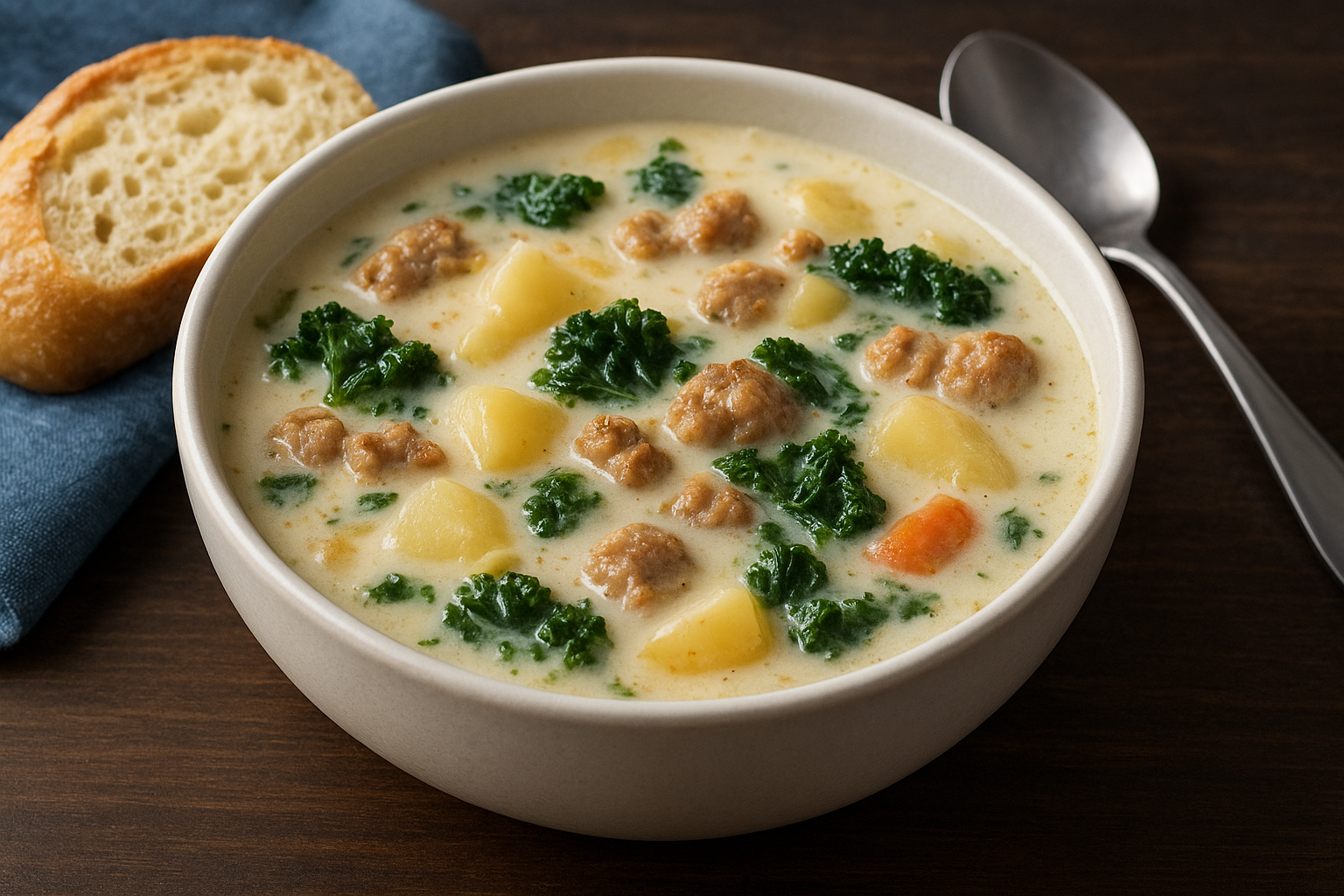
The result was a soup that felt both familiar and exciting to American diners who had little exposure to traditional Italian peasant cooking. It struck the right balance between approachable and flavorful, and the combination of sausage, starch, and cream made it deeply satisfying on a cold night. That formula worked so well that the dish became one of the most requested items on the menu.
This version now drives most of the home cooking interest you see around Zuppa Toscana. Copycat recipes became a fixture online because people wanted to recreate that exact bowl at home without the restaurant markup. The ingredients are available at any grocery store, the process fits a standard weeknight schedule, and the result tastes like something you put real effort into. Knowing both versions gives you a useful starting point before you decide which direction to take your own recipe.
What zuppa toscana tastes like
Zuppa Toscana delivers a layered, savory flavor profile that’s rich without being heavy. The Americanized version most people know lands somewhere between a creamy chowder and a spicy Italian stew, and that middle ground is exactly what makes it so satisfying. If you want to understand what is Zuppa Toscana soup before committing to making it, the short answer is: warming, slightly spicy, and deeply comforting.
The broth
The broth is where most of the flavor lives. Spicy Italian sausage releases fat and seasoning directly into the base as it cooks, and that rendered fat becomes the foundation for everything else. When you add chicken broth and finish with heavy cream, the liquid turns silky and coats the back of a spoon without feeling overly thick. The heat level stays moderate by default, but it builds steadily as you eat.
The cream softens the spice from the sausage rather than eliminating it, which keeps every spoonful interesting from start to finish.
The ingredients and texture
Each ingredient contributes something distinct to the final bowl. Russet potato slices absorb the broth as they cook and turn tender without falling apart, adding a starchy, filling quality that makes the soup genuinely satisfying as a full meal. Kale brings a slight bitterness and chew that contrasts with the richness of the cream and the softness of the potato.
The sausage adds bursts of concentrated, fennel-forward flavor throughout each bowl, so no two spoonfuls taste exactly alike. Together, the textures range from silky broth to tender potato to slightly firm kale, which keeps the eating experience varied and interesting. You’re not dealing with a one-note soup here; every component pulls its own weight and adds something the others can’t replace.
Key ingredients and easy substitutions
Once you understand what is zuppa toscana soup at its core, the ingredient list becomes straightforward. The Americanized version that most people want to recreate at home uses five main components, each doing a specific job in the bowl. Knowing what each ingredient contributes also tells you exactly where you can swap without losing the character of the dish.
The core ingredients
The five key players work together to build the flavor and texture that define this soup. Spicy Italian sausage is the backbone of the broth, releasing seasoning and fat as it browns. Russet potatoes, sliced thin, soak up the broth and provide the starchy bulk that makes the soup filling enough to serve as a full meal. Kale adds bitterness and texture, heavy cream adds richness, and chicken broth ties everything together into a cohesive base.
Getting each ingredient right matters more than technique here – quality sausage and fresh kale will consistently outperform mediocre versions of either.
| Ingredient | Role in the dish |
|---|---|
| Spicy Italian sausage | Flavor base, fat, heat |
| Russet potatoes | Starchy body, filling substance |
| Kale | Bitterness, texture, color |
| Heavy cream | Richness, silky broth |
| Chicken broth | Liquid base, depth |
Simple substitutions that work
If you need to adjust the recipe, several swaps hold up well without breaking the dish. Mild Italian sausage works if you prefer less heat, and you can add a pinch of red pepper flakes to control the spice level yourself. Yukon Gold potatoes are a solid alternative to russets and hold their shape slightly better during longer cooking times.
Spinach replaces kale in a pinch and wilts faster, so add it in the final two minutes of cooking. Half-and-half cuts the fat content compared to heavy cream while still producing a creamy broth. For a dairy-free version, full-fat coconut milk delivers a similar richness without cream, though the flavor shifts slightly in a warmer, sweeter direction.
Easy zuppa toscana recipe you can make at home
Now that you know what is Zuppa Toscana soup and what each ingredient brings to the bowl, putting it together at home is straightforward. This recipe follows the Americanized version most people are looking to recreate, and the whole process runs about 45 minutes from start to finish. You don’t need any special equipment beyond a large pot or Dutch oven.
What you’ll need
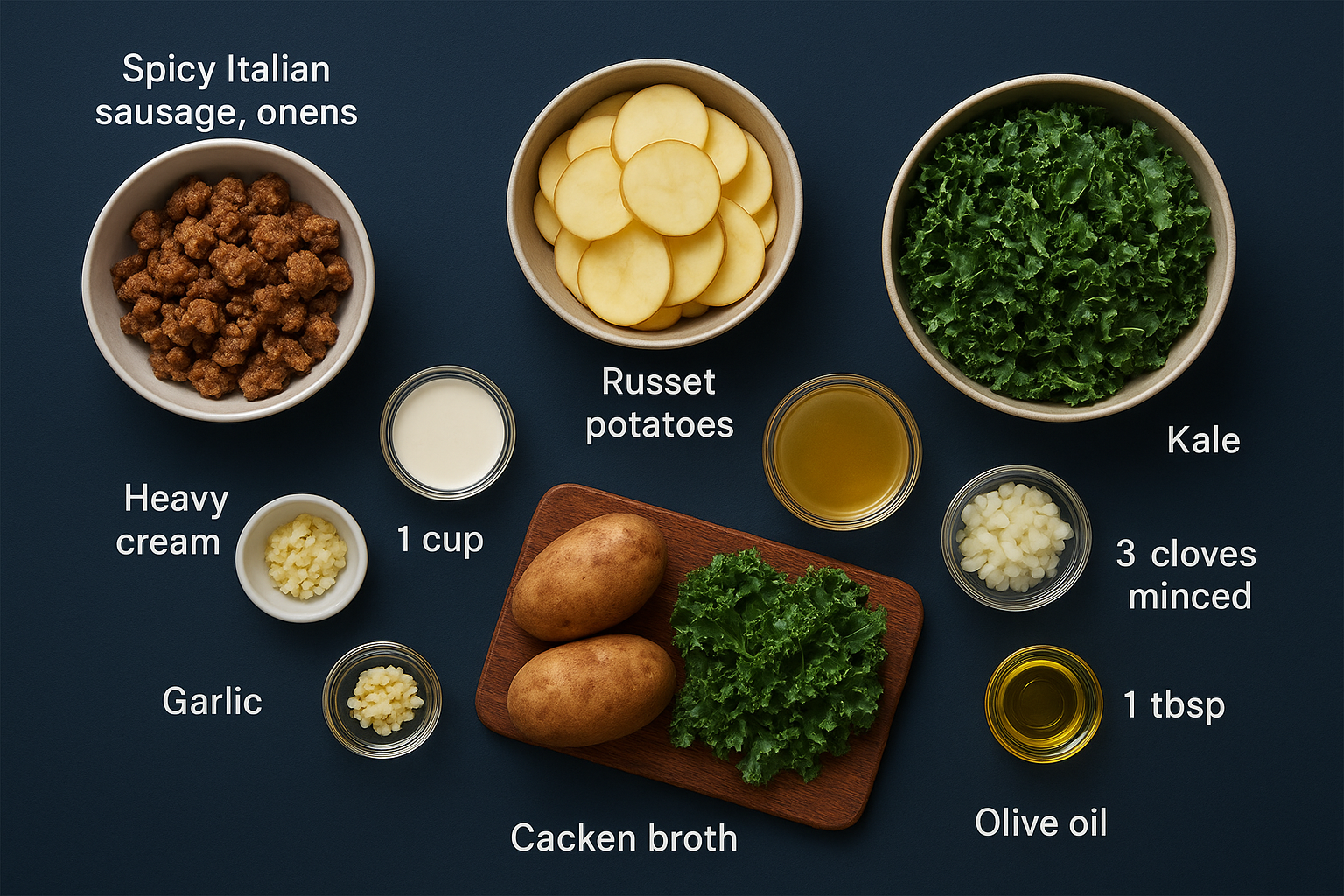
This ingredient list serves four to six people and keeps things simple. Every item is available at a standard grocery store, and you can apply the substitutions from the previous section without changing the method.
| Ingredient | Amount |
|---|---|
| Spicy Italian sausage | 1 lb, casings removed |
| Russet potatoes | 3 medium, thinly sliced |
| Fresh kale | 3 cups, stems removed, roughly chopped |
| Chicken broth | 4 cups |
| Heavy cream | 1 cup |
| Garlic | 3 cloves, minced |
| Yellow onion | 1 medium, diced |
| Olive oil | 1 tbsp |
| Salt and black pepper | To taste |
Step-by-step instructions
Follow these steps in order and the broth will build flavor at every stage rather than tasting flat at the end.
- Heat olive oil in a large pot over medium-high heat. Add sausage and break it apart as it browns, about 5 to 7 minutes. Remove sausage and set aside, leaving the rendered fat in the pot.
- Add diced onion to the pot and cook for 3 minutes. Stir in minced garlic and cook for another minute.
- Pour in chicken broth and bring to a boil. Add potato slices and cook for 10 to 12 minutes until tender.
- Return sausage to the pot. Reduce heat to medium-low and stir in heavy cream.
- Add kale and simmer for 3 to 4 minutes until wilted. Season with salt and pepper, then serve immediately.
Browning the sausage first and keeping that fat in the pot is the single step that separates a flat broth from one with real depth.
Tips for the best texture, heat, and flavor
Once you’ve followed the recipe, a few targeted adjustments separate a good bowl from a great one. Understanding what is Zuppa Toscana soup means knowing how to fine-tune it after your first attempt. These tips cover the three areas where home cooks most often struggle: potato texture, heat balance, and broth depth.
Control the texture of your potatoes
Slicing your potatoes to a consistent quarter-inch thickness is the most direct way to control texture. Even slices cook through at the same rate, so you avoid some pieces falling apart while others resist a fork. Pull the pot off the heat as soon as a fork slides through each slice cleanly and move immediately to the next step.
Potatoes that overcook in a cream-based broth dissolve and turn the soup starchy and thick rather than silky.
Adjust the heat level without losing flavor
The spice level depends entirely on your sausage choice, making it the easiest variable to control. Start with mild Italian sausage and add red pepper flakes gradually during the simmering stage, tasting as you go. This approach lets you hit your exact preference without locking yourself into the heat of spicy sausage from the start.
Serving crushed red pepper on the side lets everyone at the table adjust their own bowl. Your guests with lower heat tolerance stay comfortable, and anyone who wants more heat can add it without you having to change the whole pot.
Build deeper flavor from the start
Browning the sausage well before adding liquid is the most important flavor step in this recipe. Let it sit undisturbed between stirs so it develops a crust on the bottom of the pot. Those browned bits deglaze into the broth when you add chicken stock, creating concentrated savory depth that simmering alone can never replicate.
Adding a Parmesan rind to the simmering broth is an easy upgrade. It won’t change the texture, but it contributes a quiet, savory depth that makes the finished bowl taste more complete than the ingredient list suggests.
You’re ready to make it
Now you know what is Zuppa Toscana soup, what makes it taste the way it does, and exactly how to build it from scratch at home. The recipe is straightforward, and the technique is forgiving enough that your first batch will still deliver a satisfying bowl. Focus on browning your sausage well, slicing your potatoes consistently, and adding kale at the very end to keep it from turning mushy.
From here, the only thing left is to actually make it. Gather your ingredients, clear some space on the stove, and give yourself about 45 minutes. The result is a rich, creamy soup that works for a weeknight dinner or a casual gathering with friends. If this kind of Italian-inspired cooking gets you excited about sitting down to a real Italian meal, visit La Dolce Vita Cucina in Chicago’s Portage Park neighborhood for a full dining experience done right.